Inspiration
The Extended Response essay on the GED RLA exam is worth up to 12 points, yet most students in my country lack access to fast, affordable, and standardized grading. Practice options are often expensive or lack rubric-specific feedback. I built this project to give students a free, pixel-perfect simulation of the actual test environment combined with instant, double-weighted AI evaluation based on the official GED scoring rubric.
What it does
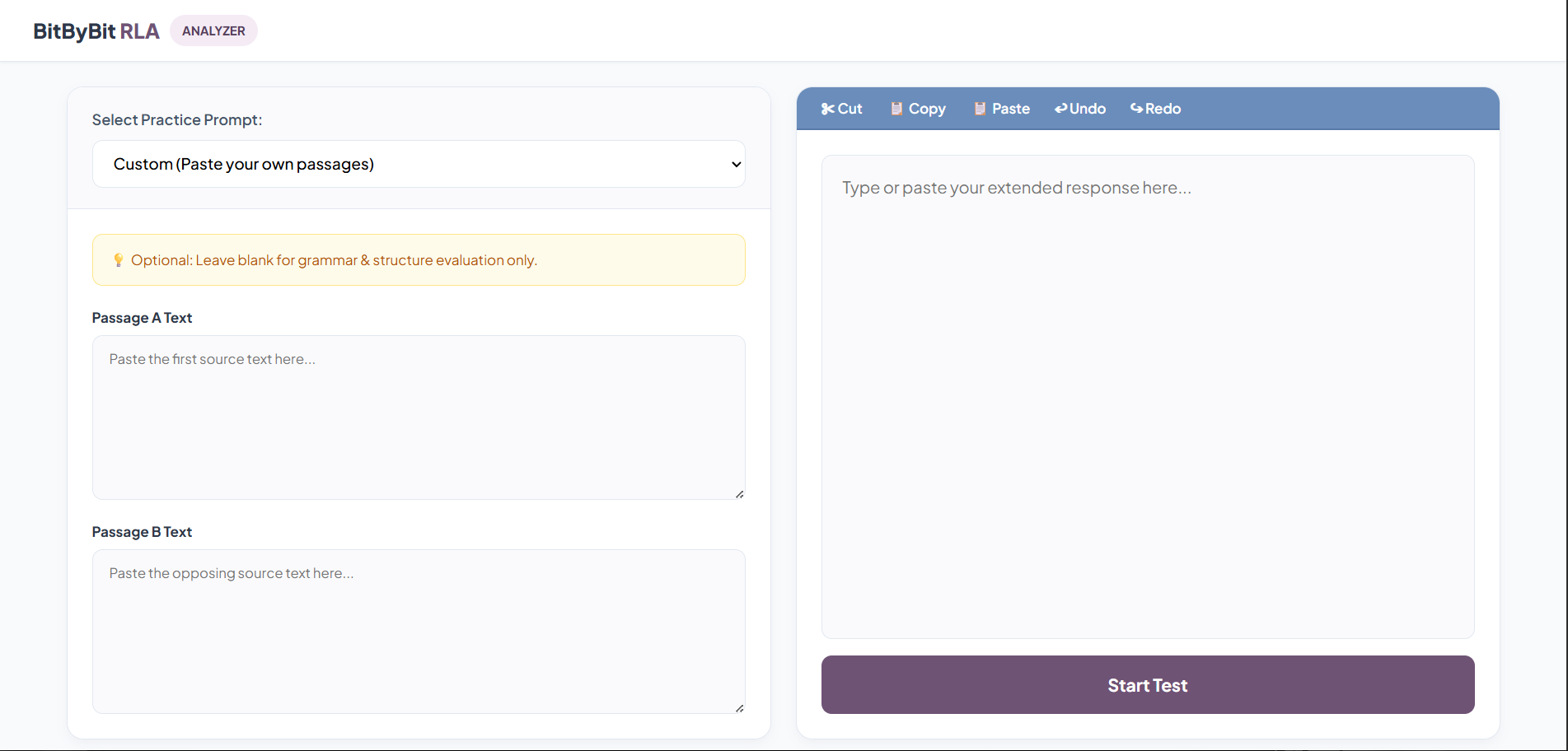
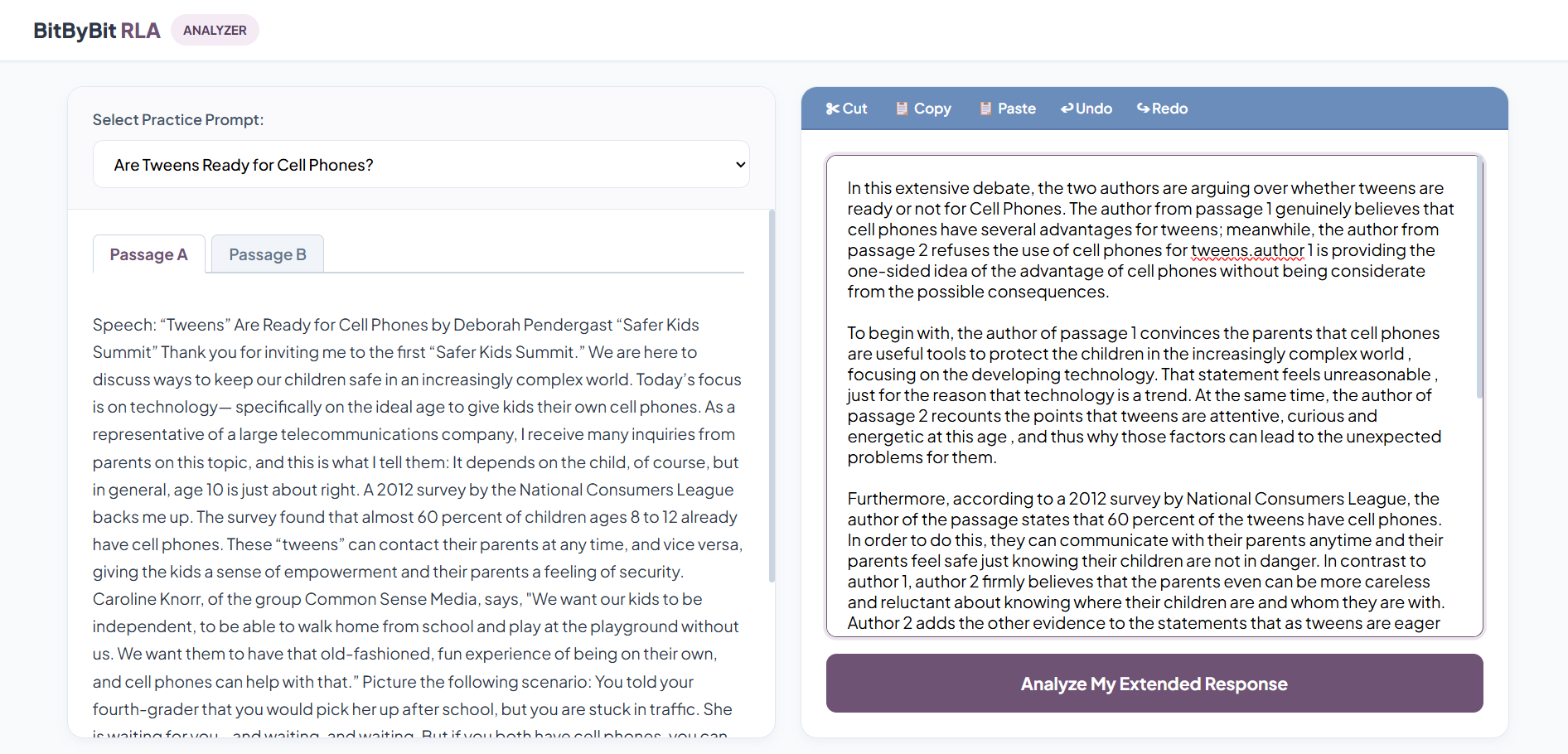
- Built-in Source Materials: Provides pre-loaded, paired reading passages (Passage A & Passage B) for students to analyse, while also allowing users to paste their own custom source materials.
- Authentic Exam Environment: Replicates the official GED test interface with dual passage tabs, custom prompt options, and a 45-minute countdown timer with overtime tracking.
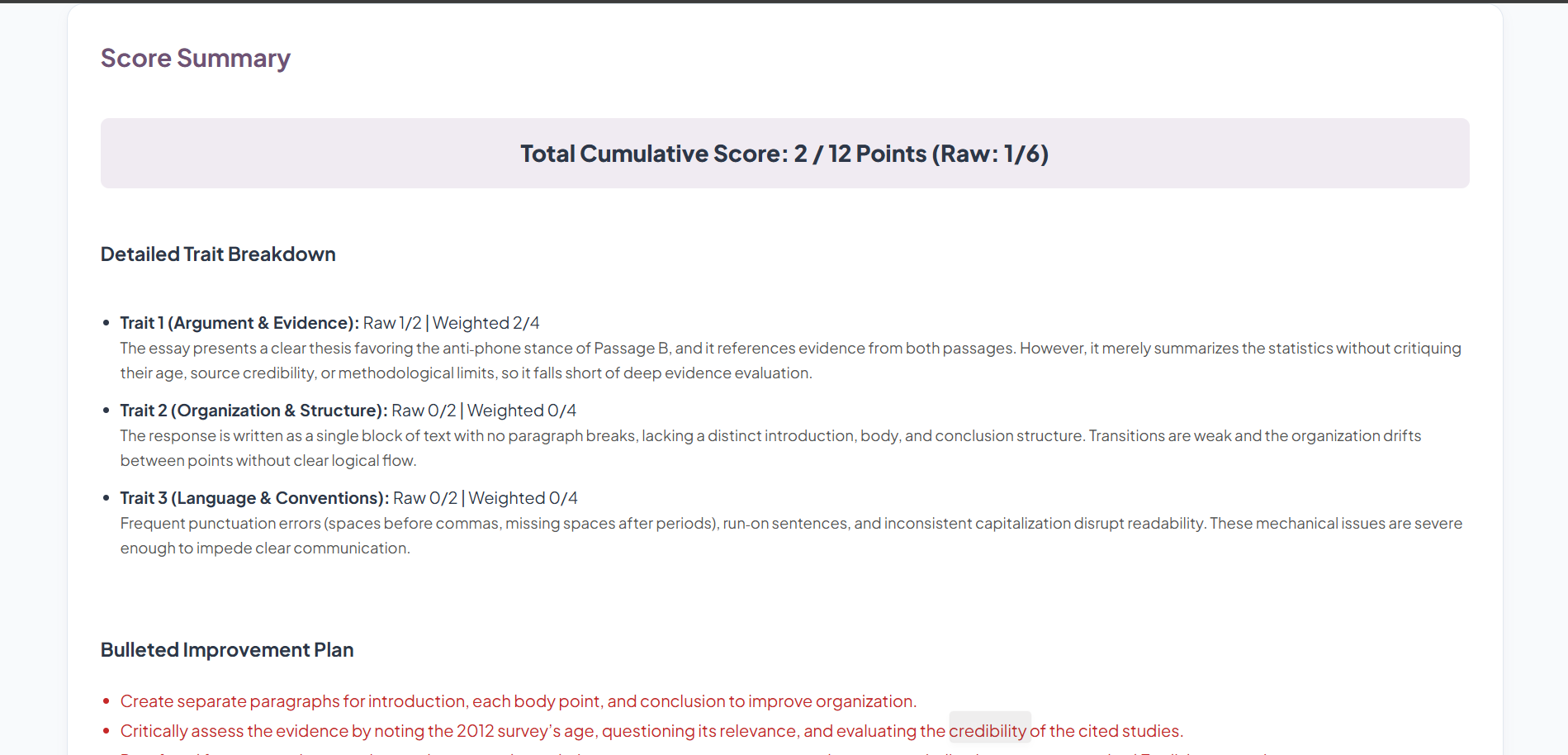
- Instant AI Rubric Evaluation: Grades essays across all three official GED traits—Argument, Organization, and Conventions to deliver a raw score out of 6 and a weighted score out of 12.
- Actionable Feedback: Generates clear trait breakdowns and tailored improvement tips to help students score higher on test day.
How I built it
- Frontend: Built with plain HTML5, CSS3, and Vanilla JavaScript for clean, responsive, fast performance without framework bloat.
- Database: Utilized Supabase to store and fetch pre-loaded dual-passage practice prompts dynamically.
- Serverless AI Backend: Configured a Vercel serverless function (
/api/analyze) that securely routes essay payloads toopenai/gpt-oss-120bwith specialized system prompts. - Version Control: Managed development via Git feature branches (
test-api-callmerged intomain) to ensure deployment stability.
Challenges I ran into
The biggest challenge was optimizing the system prompt and backend parsing to force the AI model to consistently function as an official GED examiner. Fine-tuning the strict JSON output schema was critical to ensuring the 12-point double-weighted score calculations were 100% accurate and mathematically reliable across every essay submission.
Accomplishments that I'm proud of
- Successfully recreating the look, feel, and timer pressure of the real GED RLA exam environment.
- Achieving fast, accurate AI rubric evaluation without requiring user registration or complex onboarding.
- Keeping the repository completely open-source and free for students preparing for their high school equivalency diploma.
What I learned
- Setting up serverless API routes on Vercel to protect API credentials and manage requests smoothly.
- Tuning system prompts for strict JSON schema output and standardized rubric evaluation.
- Managing exam UI state logic, countdown timers, and navigation exit protections (
beforeunload).
What's next for GED ER Analyzer
- Expanding the Supabase database with a larger bank of official-style source materials.
- Adding user authentication and history tracking so students can log in and monitor their score progress over time.
- Implementing daily usage limits to prevent spam and ensure fair, free access for as many students as possible.


Log in or sign up for Devpost to join the conversation.