-
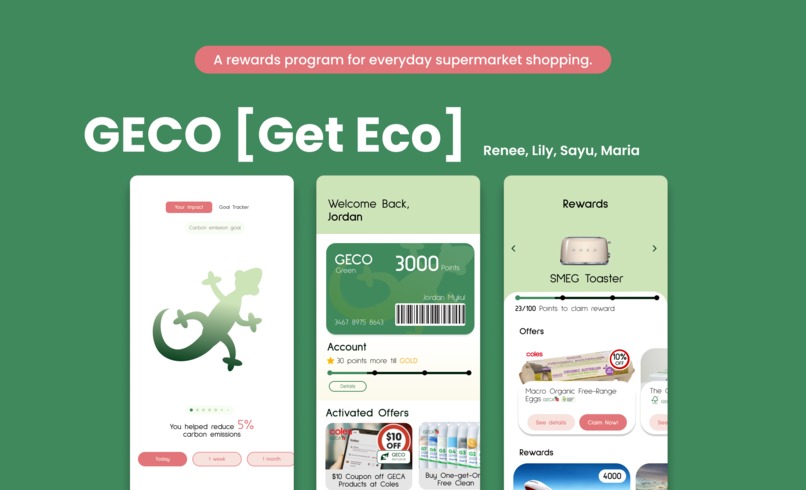
Get EcO
Inspiration
This time-sensitive issue revolves around the urgent need to align with the 2030 Australian Emissions Policy, responding to growing public demand for sustainability. A major contributing factor to environmental harm is the staggering level of food waste, with 1/3 of food intended for consumption being wasted at both retail and consumer levels (Robinson, 2024). This waste significantly impacts the environment, exacerbating greenhouse gas emissions. As a response, the project was inspired by the need to make sustainability more actionable and accessible in daily life.
What it does
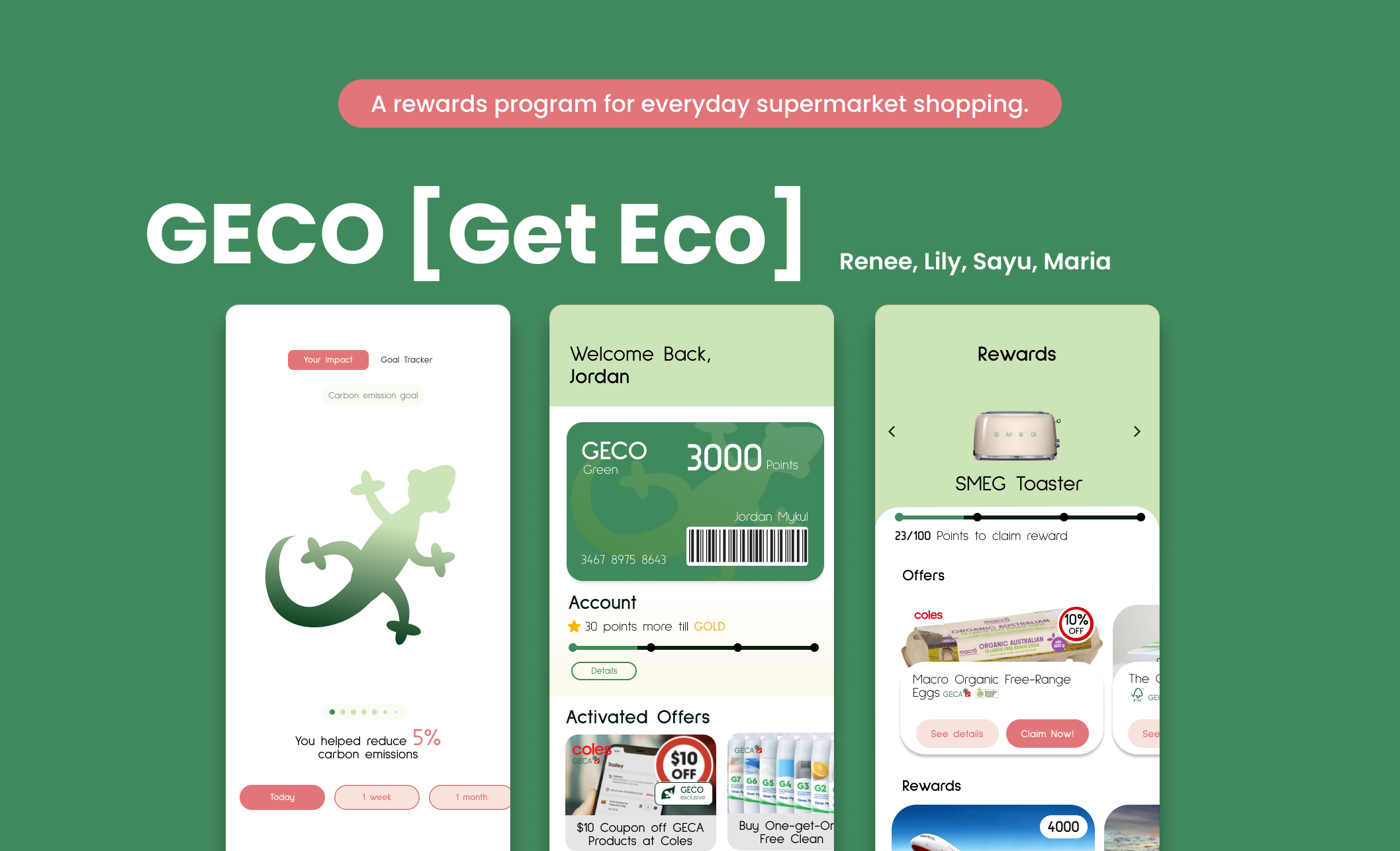
The solution is a rewards-based system integrated within existing banking structures. It allows users to earn sustainability points by purchasing eco-friendly products, engaging in sustainable practices, or opting for sustainable services. These points can then be exchanged for sustainable deals or discounts. The system also tracks users' sustainable behaviors and showcases their tangible environmental impact, promoting accountability and motivating more sustainable choices. By integrating sustainability into financial transactions, it simplifies responsible consumption and encourages greener habits.
How we built it
We used a holistic approach, combining both attitudinal and observational data to inform the design. By employing data triangulation, we ensured that our insights were well-rounded and relevant to both consumers and businesses. To gather meaningful data:
We conducted primary research by surveying consumers to understand their attitudes toward sustainability. We interviewed an ESG (Environmental, Social, Governance) expert to explore how businesses can contribute to making sustainable consumption more accessible and practical for consumers. Our team began the ideation phase using the Crazy 8s brainstorming technique, where each member generated eight ideas in rapid succession. We then combined the best elements from each idea to create a solution that addresses our design problem statement: How can we make sustainability more accessible and rewarding for everyday consumers?
Challenges we ran into
One of the main challenges was sourcing reliable, up-to-date information on product sustainability. Many Sourcing Reliable Data: One of the major challenges was accessing accurate, up-to-date information on the sustainability of different products. Many consumer goods lack transparent data regarding their environmental impact, making it difficult to calculate and display Eco-Scores for products effectively. Designing an Effective Rewards System: Another challenge was balancing the need to offer meaningful rewards without inflating costs. We had to ensure the financial sustainability of the platform while making the rewards valuable enough to incentivize users. Striking a balance between cost-effectiveness and user engagement required thorough planning and testing.
Accomplishments that we're proud of
The use of data triangulation allowed us to approach the problem from multiple perspectives, ensuring a solution that benefits both consumers and businesses.
What we learned
We gained valuable insights into the complexity of consumer decision-making around sustainability. While many consumers express interest in sustainable practices, the challenge lies in providing affordable and accessible options that fit into their daily lives. The importance of transparent data on product sustainability cannot be overstated. Without clear and accurate information, it's difficult for consumers to make informed decisions, and this is an area that requires industry-wide improvements. Balancing financial incentives with environmental goals is key to making a sustainable platform both economically viable and meaningful to users.
What's next for Geco
Expanding Features: The next phase will include adding features that allow users to set personal sustainability goals and track their progress over time, making their environmental impact even more engaging and actionable.
Built With
- figma


Log in or sign up for Devpost to join the conversation.