-
-
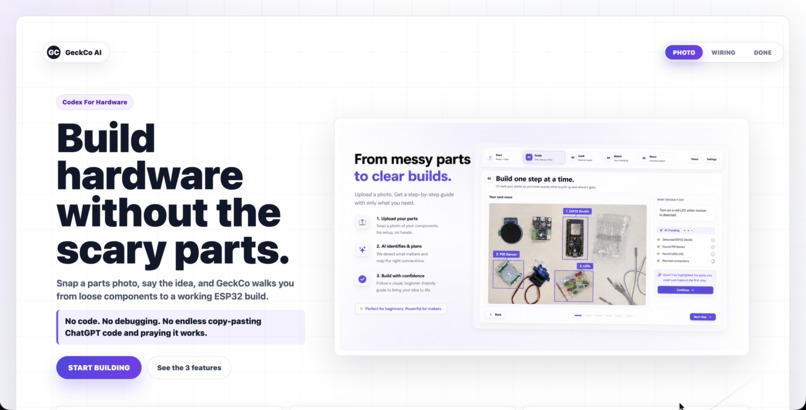
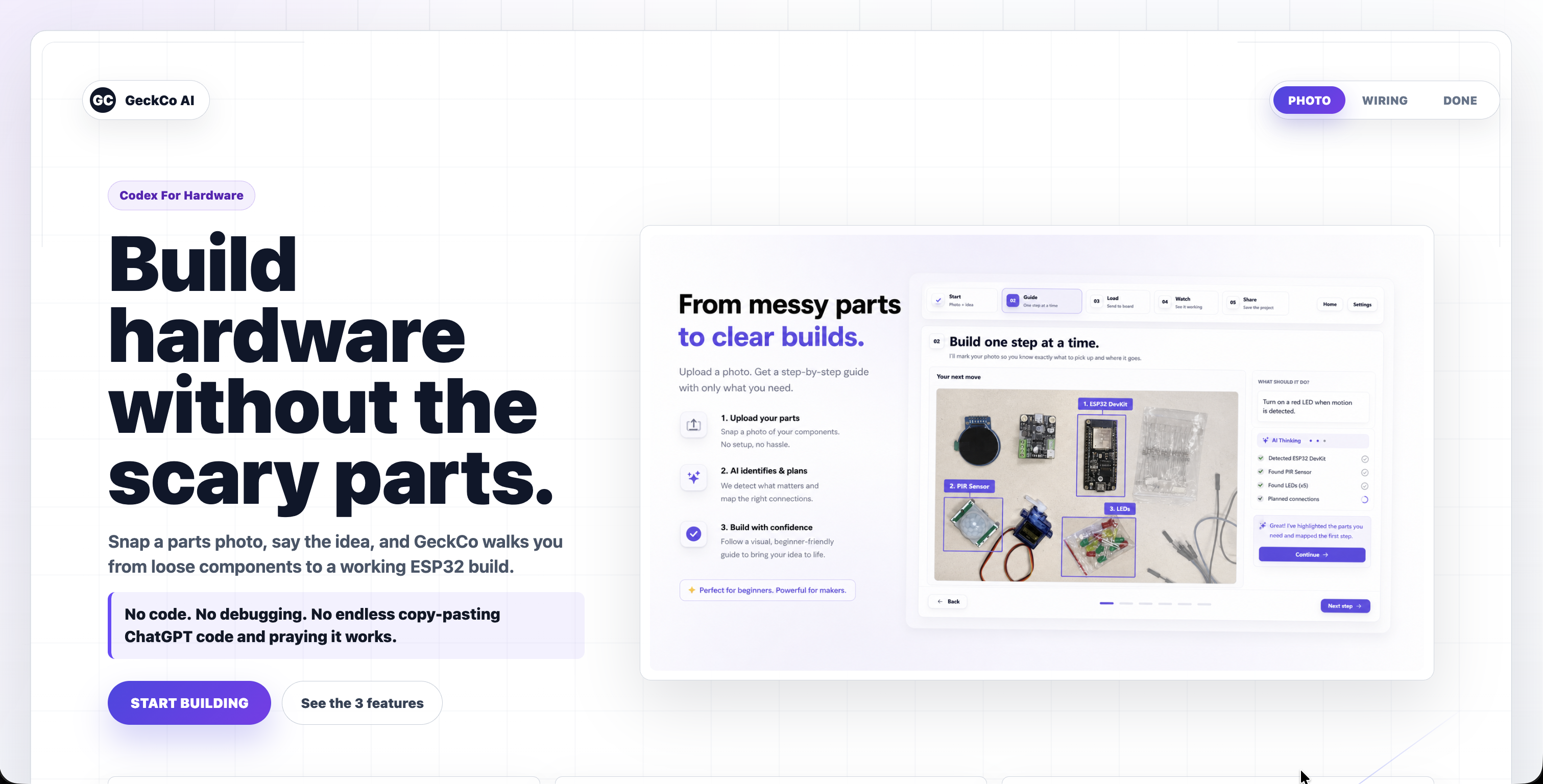
Landing Page
-
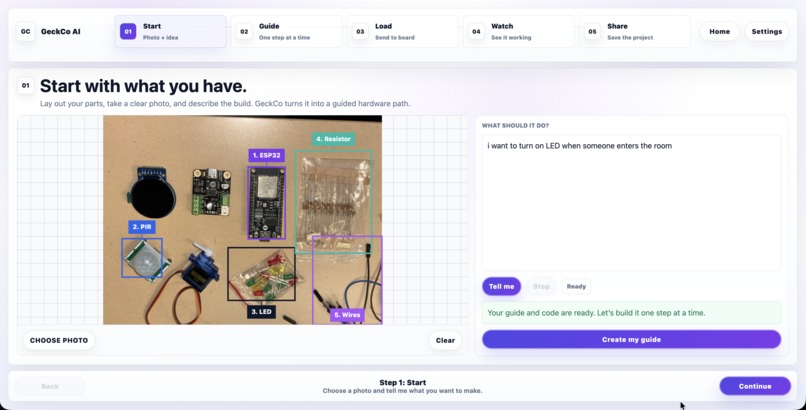
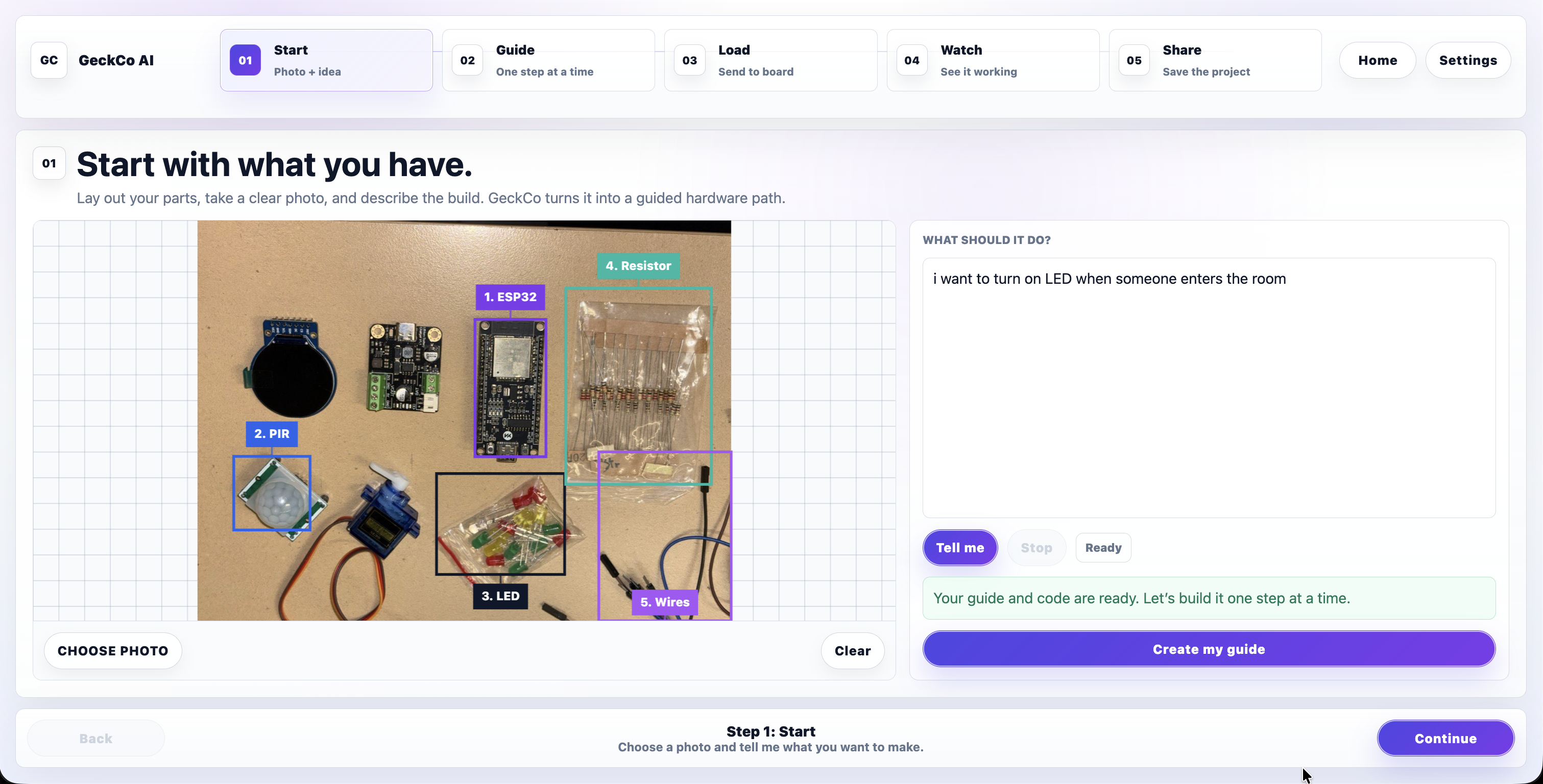
Lay out your parts, and decribe your idea
-
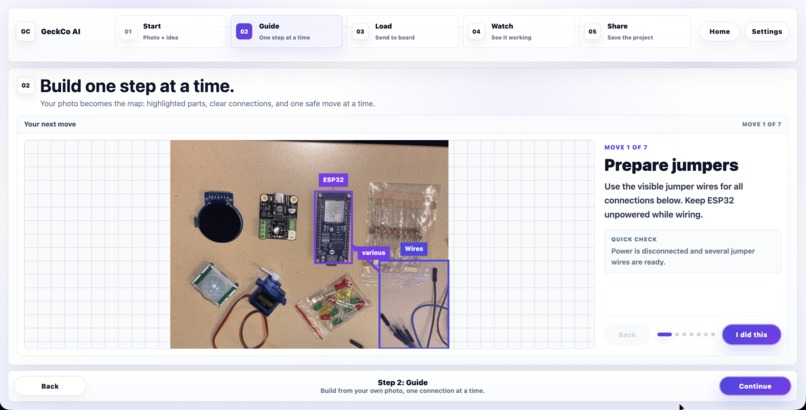
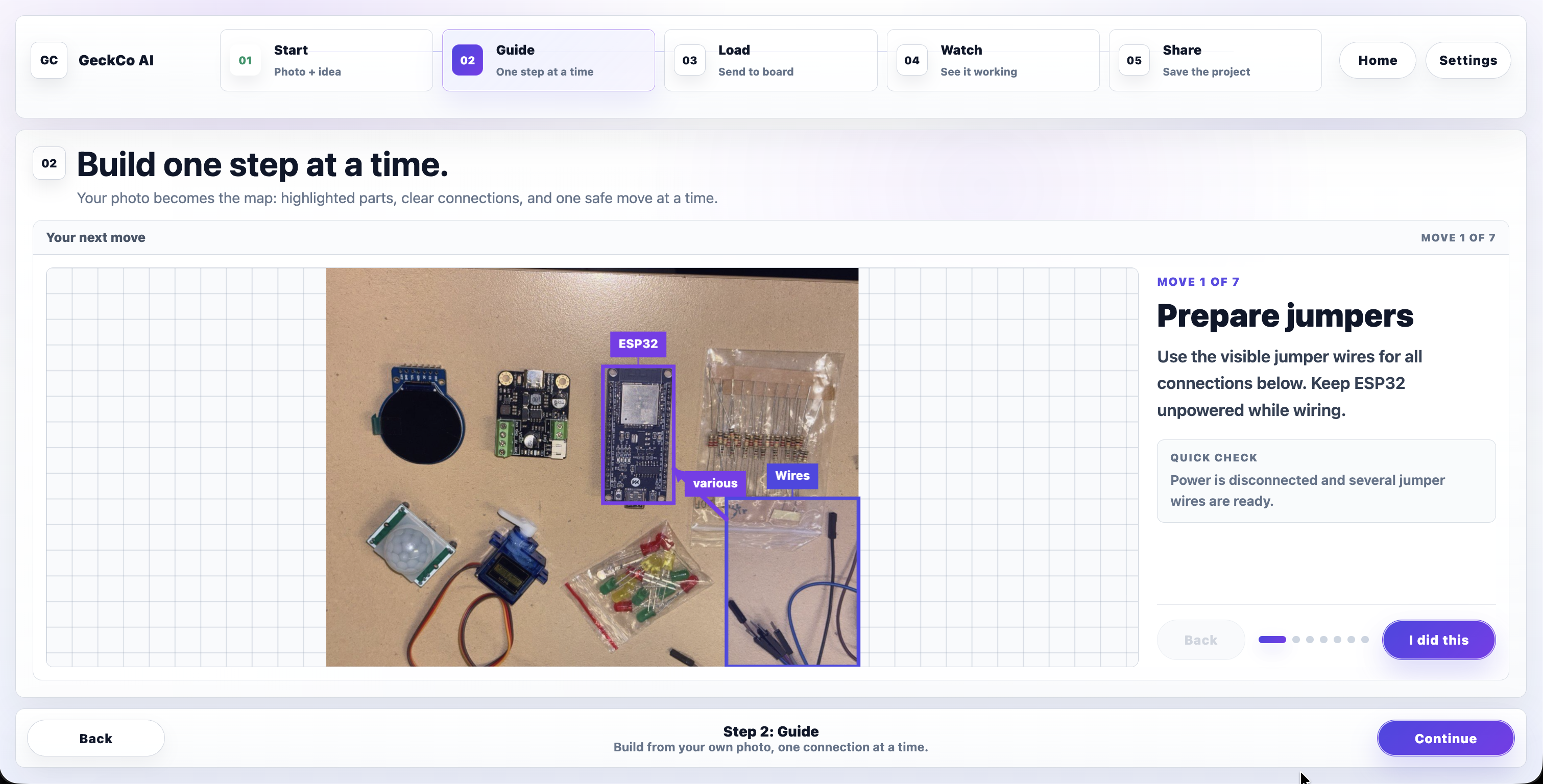
AI will annotate your step by step build guide
-
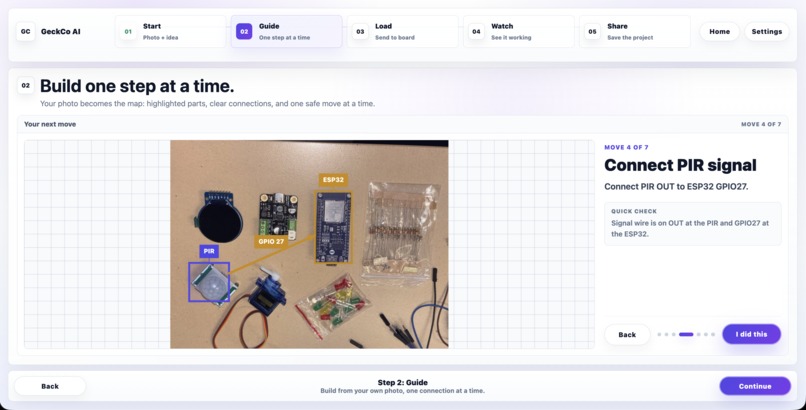
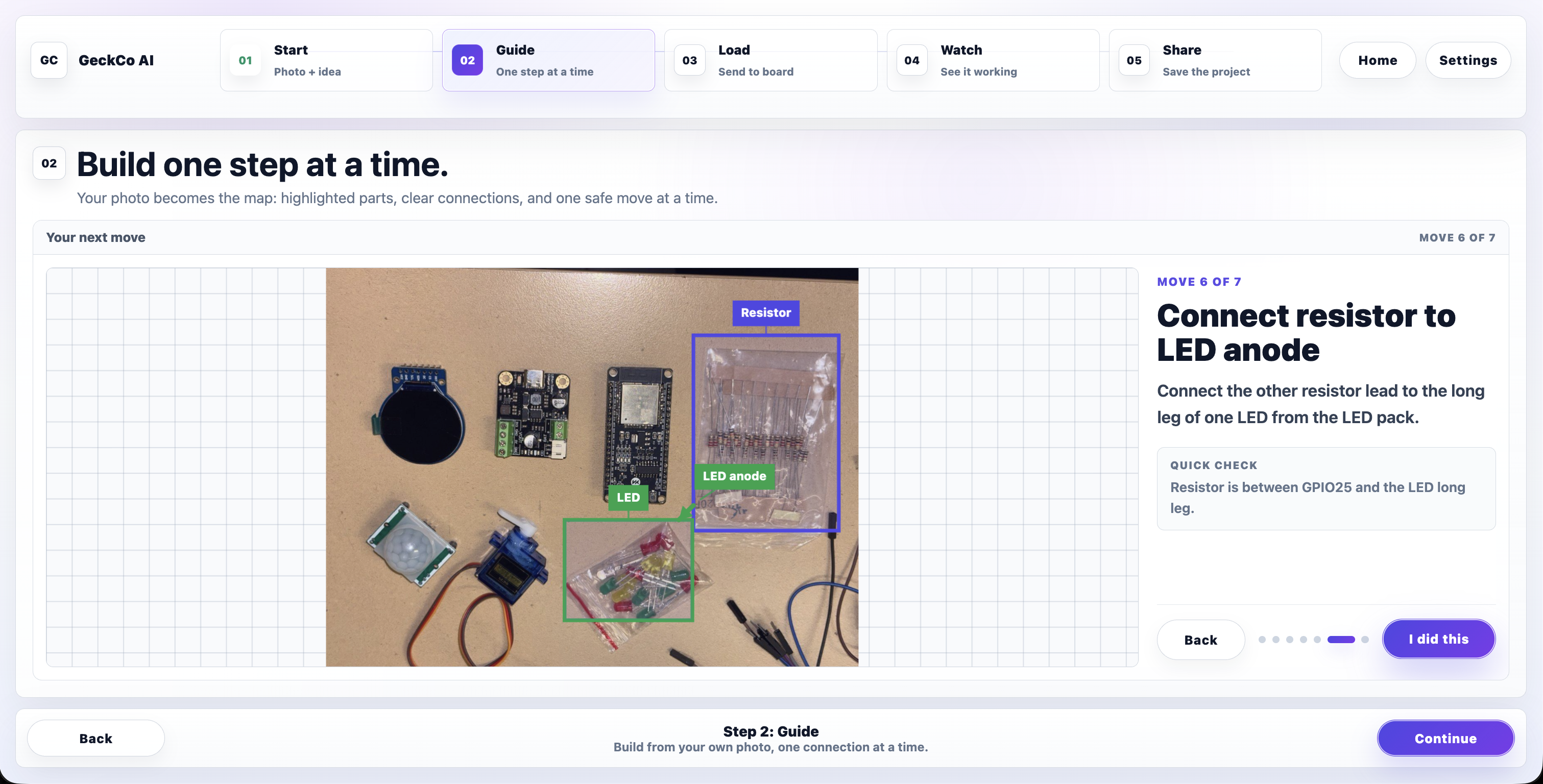
AI will annotate your step by step build guide
-
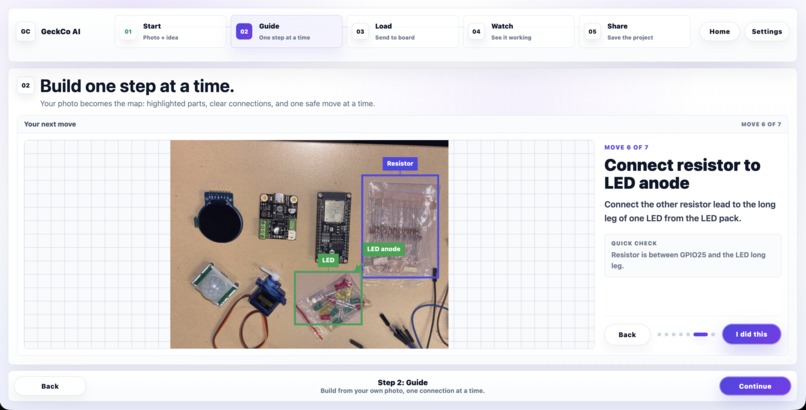
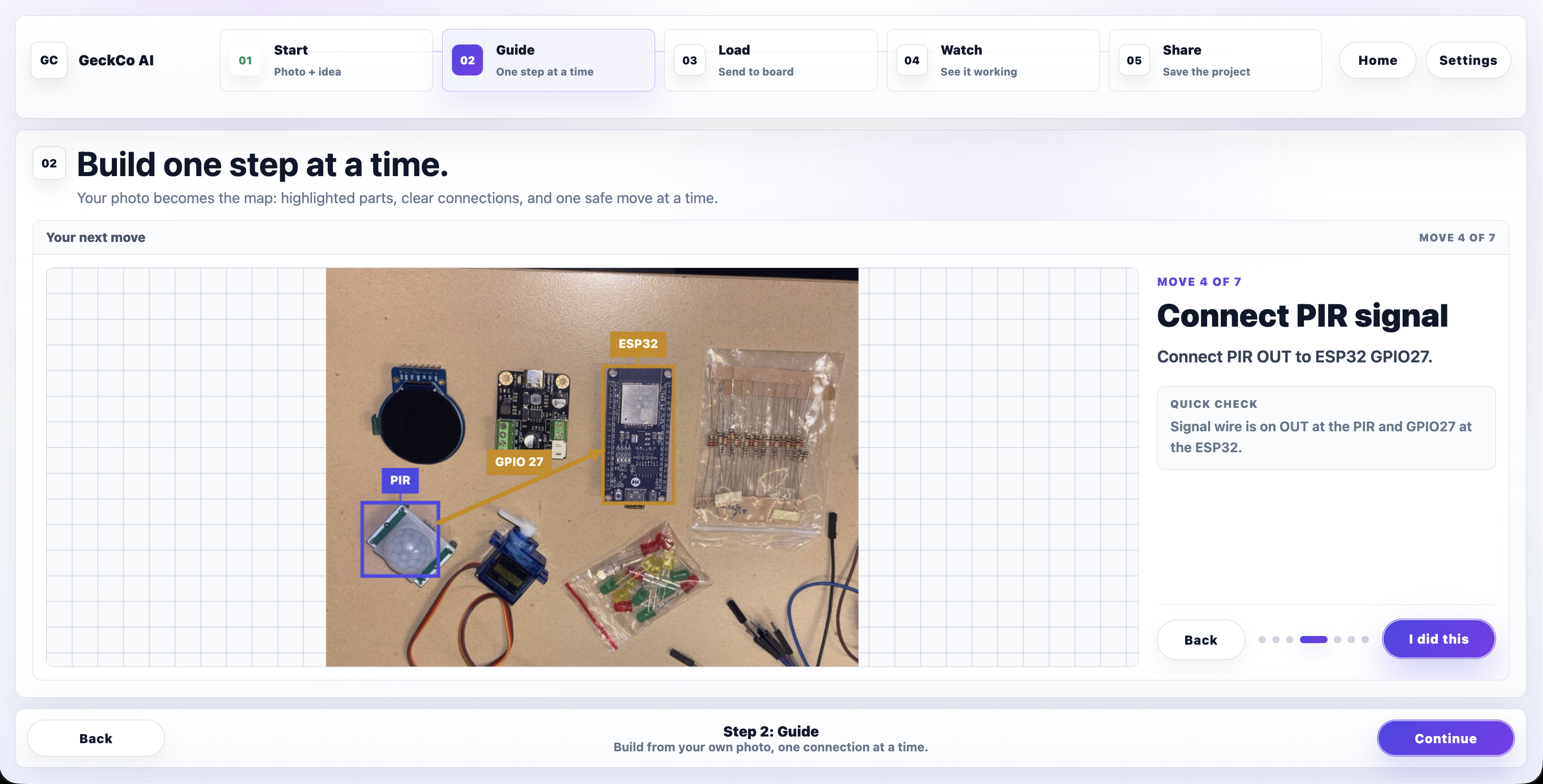
AI will annotate your step by step build guide
-
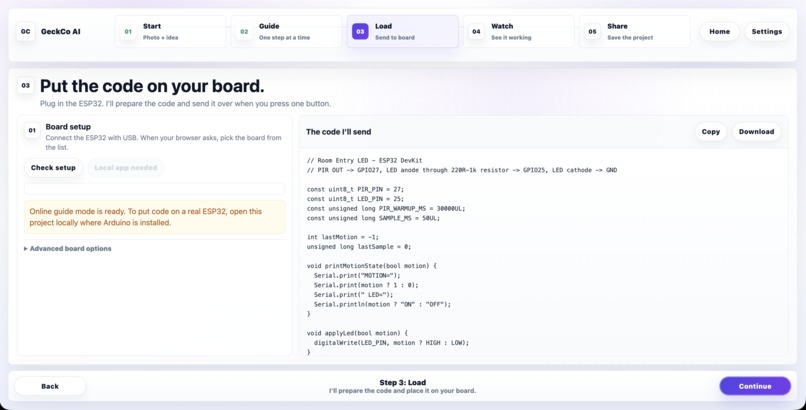
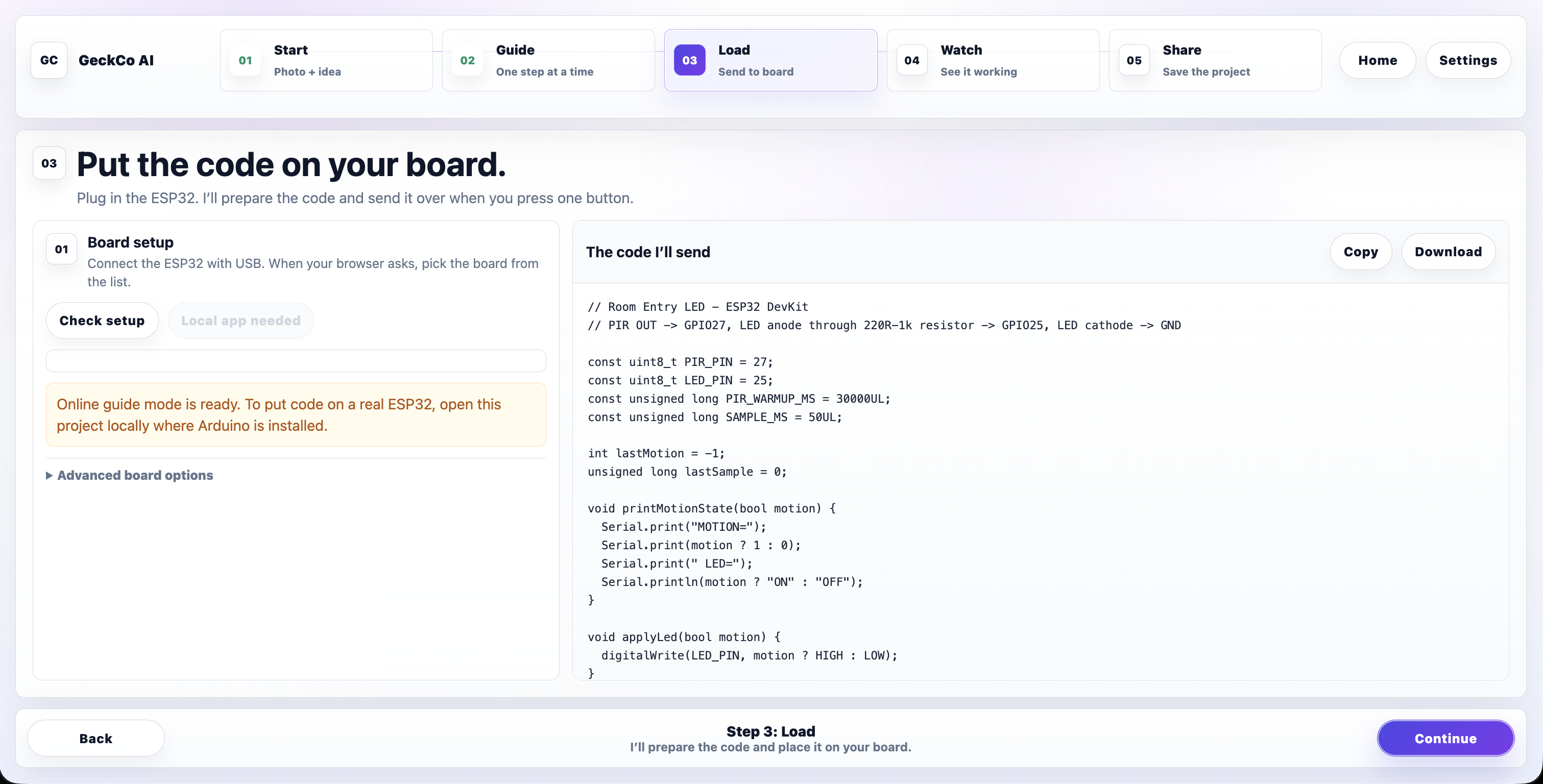
AI will upload the code directly into your microcontroller, no more touching code anymore!
-
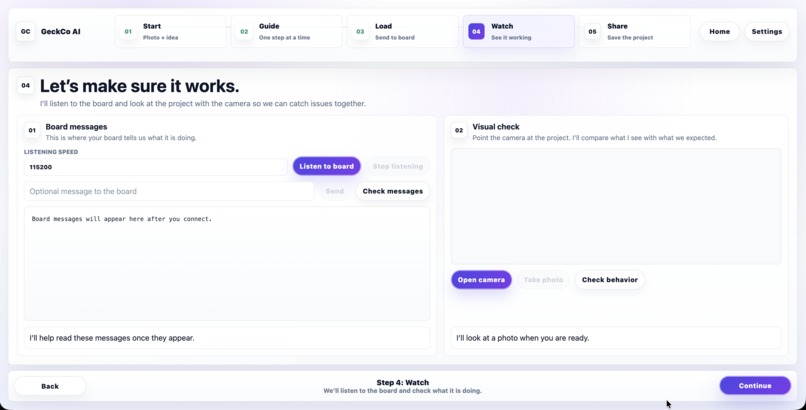
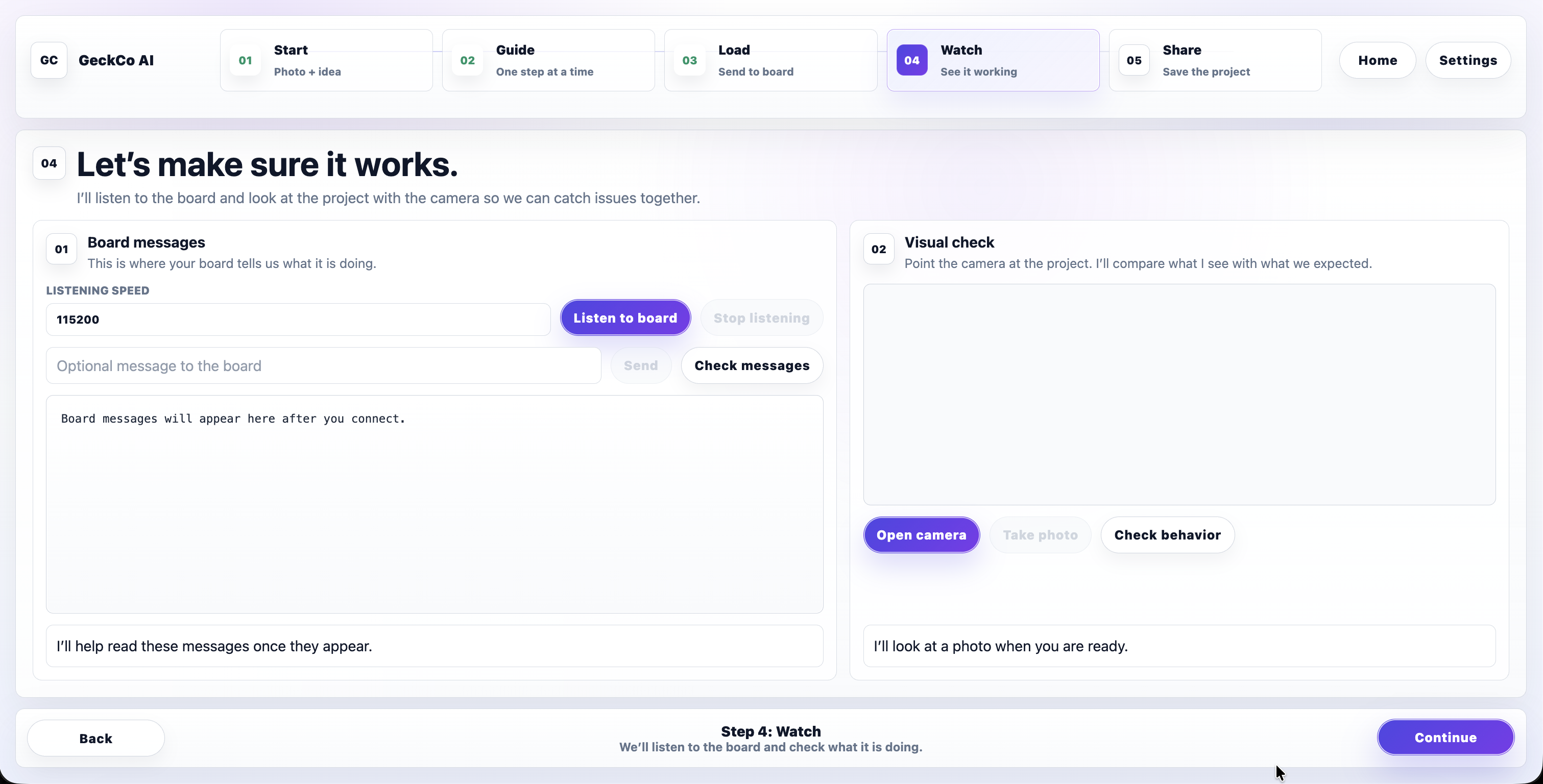
AI will monitor the sensor logs and self diagnose issues, like a closed feedback loop system, and reupload the working code until it works
-
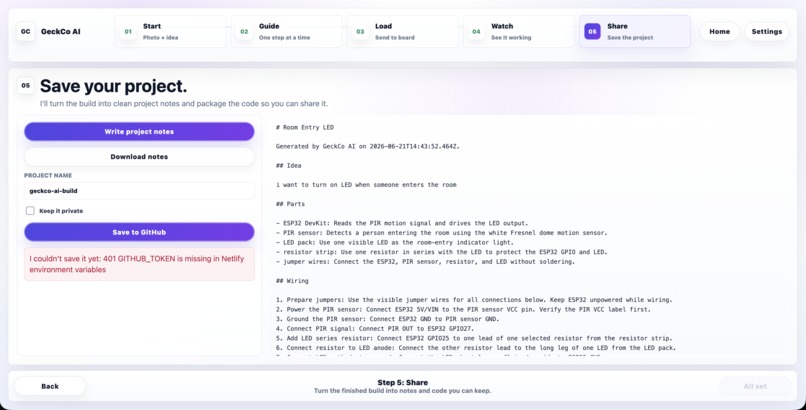
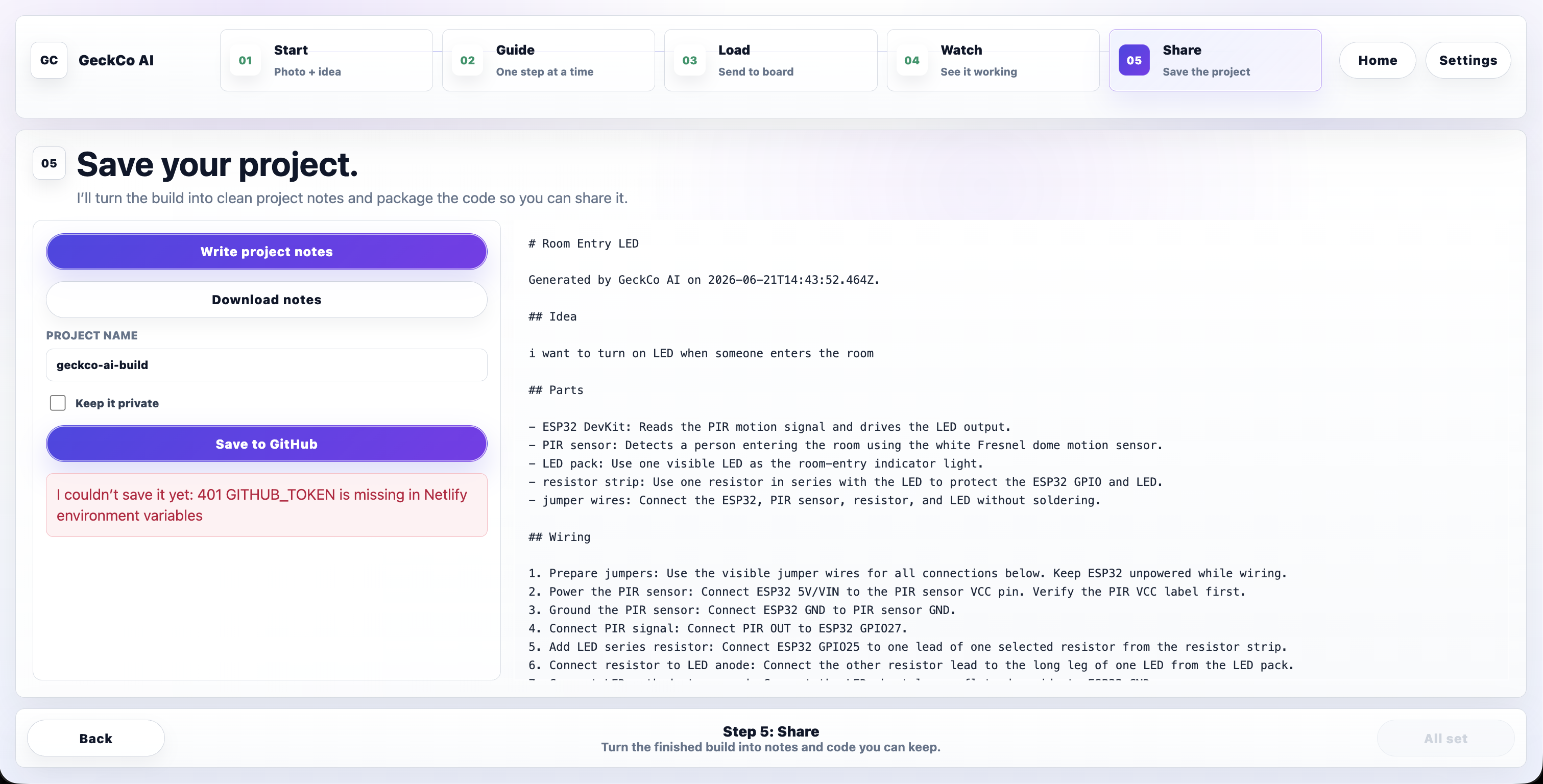
Documentation made easy, just project directly to github
Inspiration
Building hardware should feel magical, but for beginners it often feels like being trapped in wire spaghetti. One wrong pin, one missing ground, one scary Arduino error, and the whole project stops. We wanted to make hardware building feel more like LEGO: visual, guided, calm, and actually fun. 🧩⚡
What it does
GeckCo AI: Codex For Hardware helps users turn a rough IoT idea into a working ESP32 prototype.
Users upload a photo of their real parts, describe what they want to build, and GeckCo AI:
- Identifies the useful components in the photo 📸
- Annotates the parts visually
- Creates a step-by-step picture-based build guide
- Generates ESP32 firmware
- Flashes code directly to the board, no Arduino IDE needed
- Checks serial logs and webcam evidence to verify the real hardware behavior
- Creates GitHub-ready documentation for the finished project
How we built it
We built GeckCo AI as a lightweight web app using HTML, CSS, and JavaScript, with a small Node.js backend for API proxying and local hardware support.
The core stack includes:
- OpenAI Responses API for multimodal reasoning, hardware planning, firmware generation, and verification
- Deepgram for voice-to-text idea input
- Arduino CLI for compiling ESP32 firmware
- Web Serial + esptool-js for flashing the board from the browser
- Webcam APIs for physical behavior verification
- GitHub API for one-click documentation export
- Netlify Functions for hosted guide mode
Challenges we ran into
Hardware is beautifully annoying. 😭
Some of the biggest challenges were:
- Making image annotations accurate and useful instead of cluttered
- Getting AI responses structured enough to turn into real UI and firmware
- Handling long-running AI calls without timeout issues
- Flashing ESP32 firmware directly from the browser
- Fixing firmware image size and flash offset issues
- Designing a beginner-friendly flow that hides complexity without hiding safety
- Making the AI verify not just code, but actual physical behavior
Accomplishments that we're proud of
We are proud that GeckCo AI is not just a chatbot that gives advice.
It closes the loop:
photo → guide → wiring → firmware → flashing → logs → webcam proof → GitHub docs
That means the AI does not stop at “here is some code.” It helps the user build, upload, test, and document a real hardware prototype. We are especially proud of the direct ESP32 flashing flow and the closed-loop debugging idea, because that is where many beginner hardware projects usually fall apart. 🚀
What we learned
We learned that beginner hardware support is not just about better tutorials. It is about reducing the number of scary decisions the user has to make at once.
We also learned that AI is most useful here when it acts like a careful build companion, not an all-knowing answer machine. The best experience is one small step at a time, with uncertainty shown clearly and the human still in control of physical wiring and safety.
What's next for GeckCo AI: Codex For Hardware
Next, we want to make GeckCo AI more reliable across more boards, sensors, and beginner projects.
Planned next steps:
- Support more hardware kits and microcontrollers
- Improve part recognition accuracy
- Add safer pin and power checks
- Build better instructor/mentor views for workshops
- Expand the visual verification system
- Make GitHub documentation cleaner and more automatic
- Run pilot workshops with students and STEM learning centers
The dream is simple: anyone should be able to build real electronics without feeling lost in the wires. ⚡
Built With
- arduino-c++
- arduino-cli
- browser-webcam-api
- canvas-api
- css
- deepgram-api
- esp32
- esptool-js
- github-actions
- github-rest-api
- html
- javascript
- mediarecorder
- netlify
- netlify-functions
- node.js
- openai-responses-api
- web-serial-api

Log in or sign up for Devpost to join the conversation.