-
-
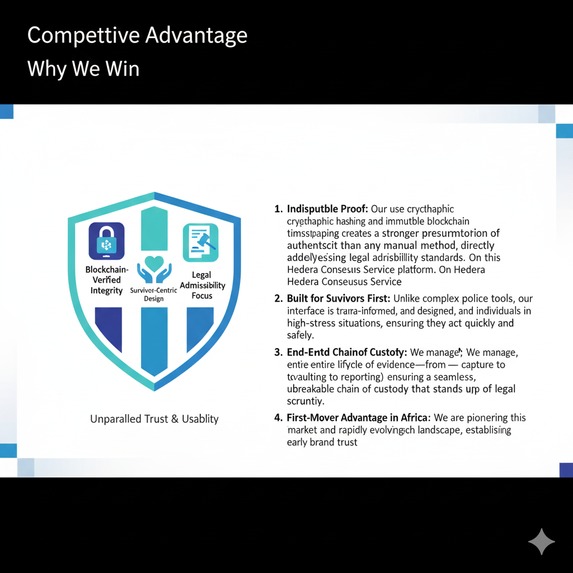
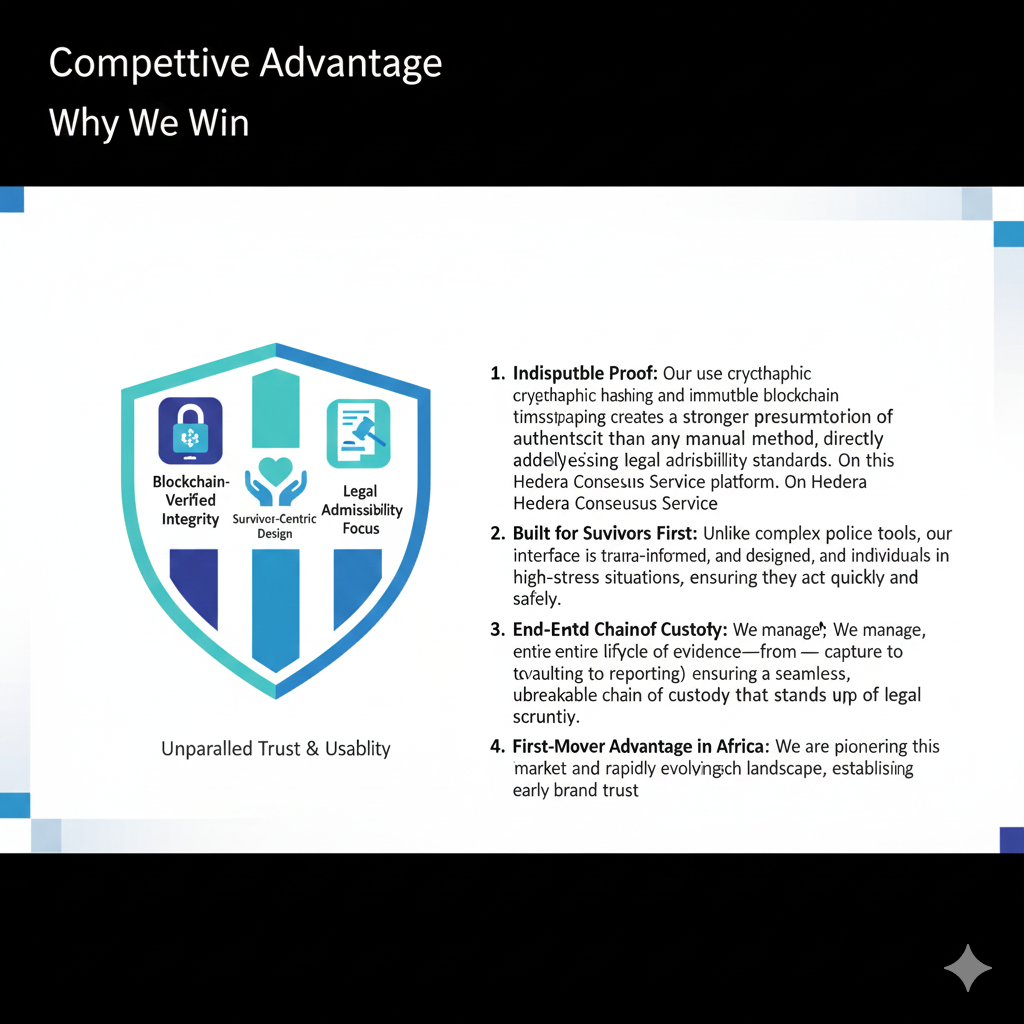
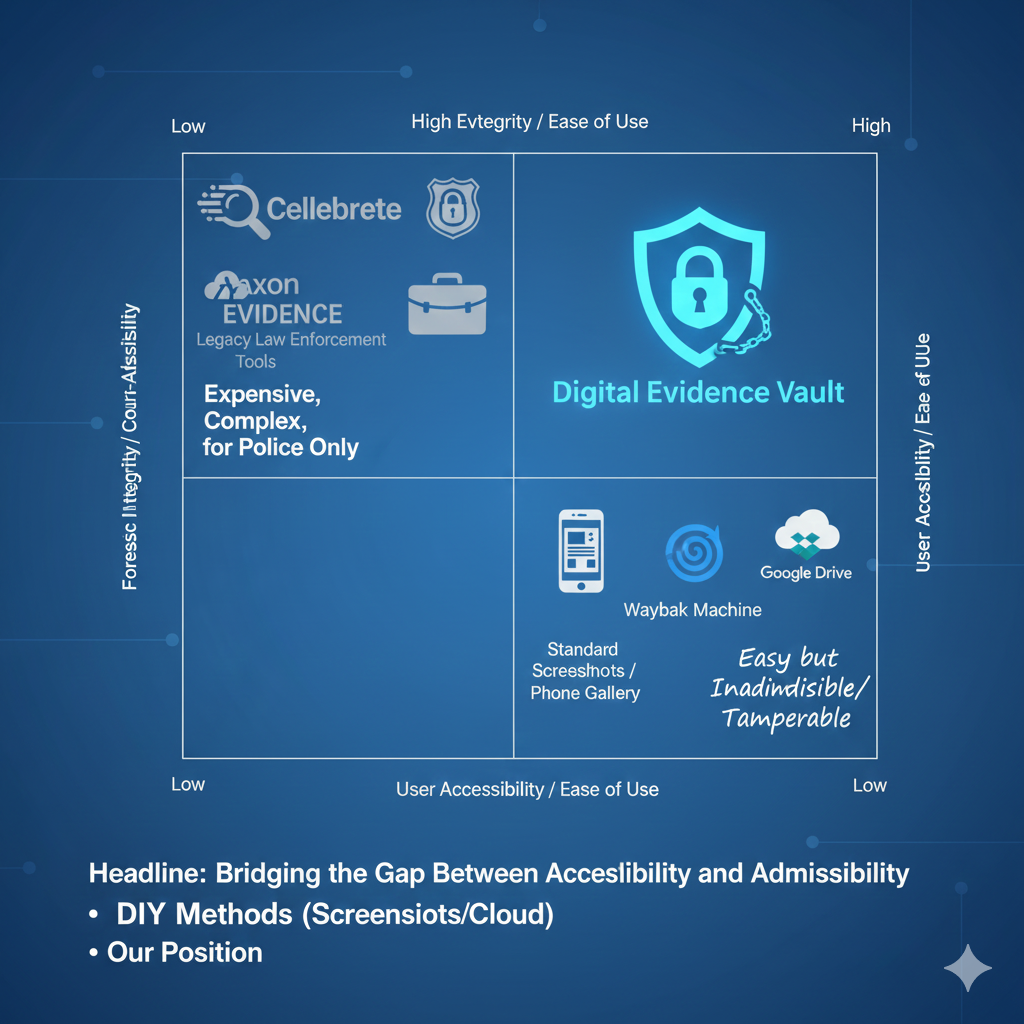
Competitive Advantage
-
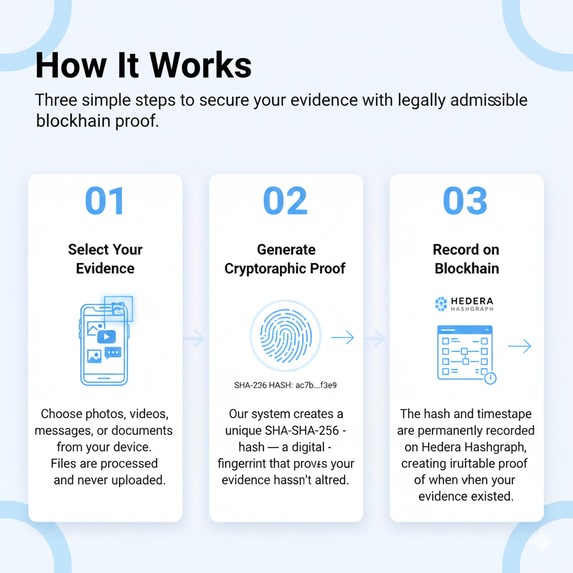
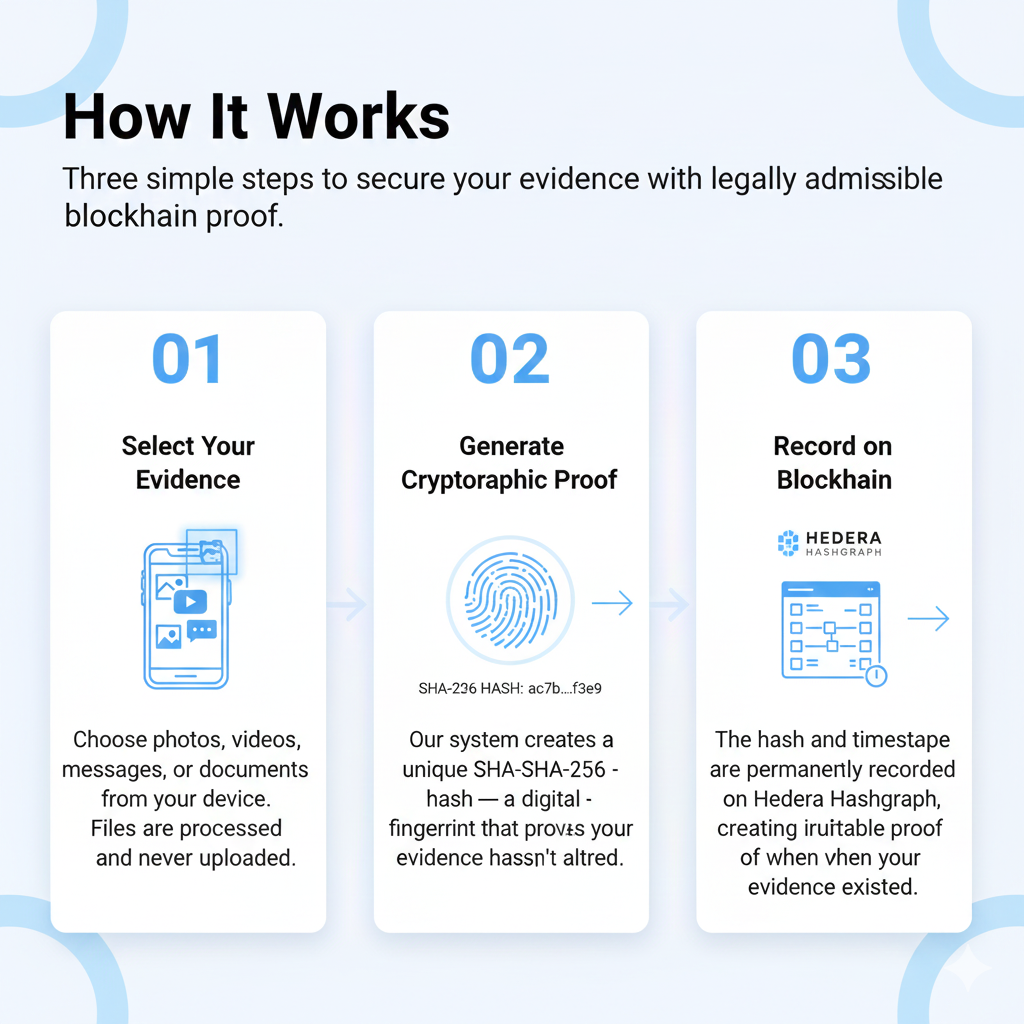
How it works
-
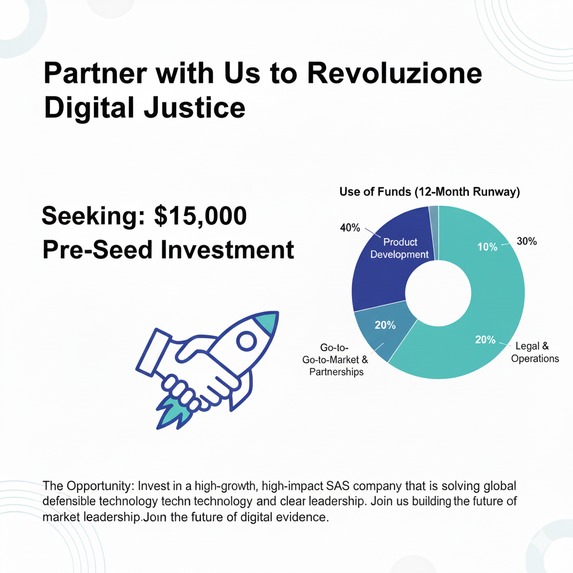
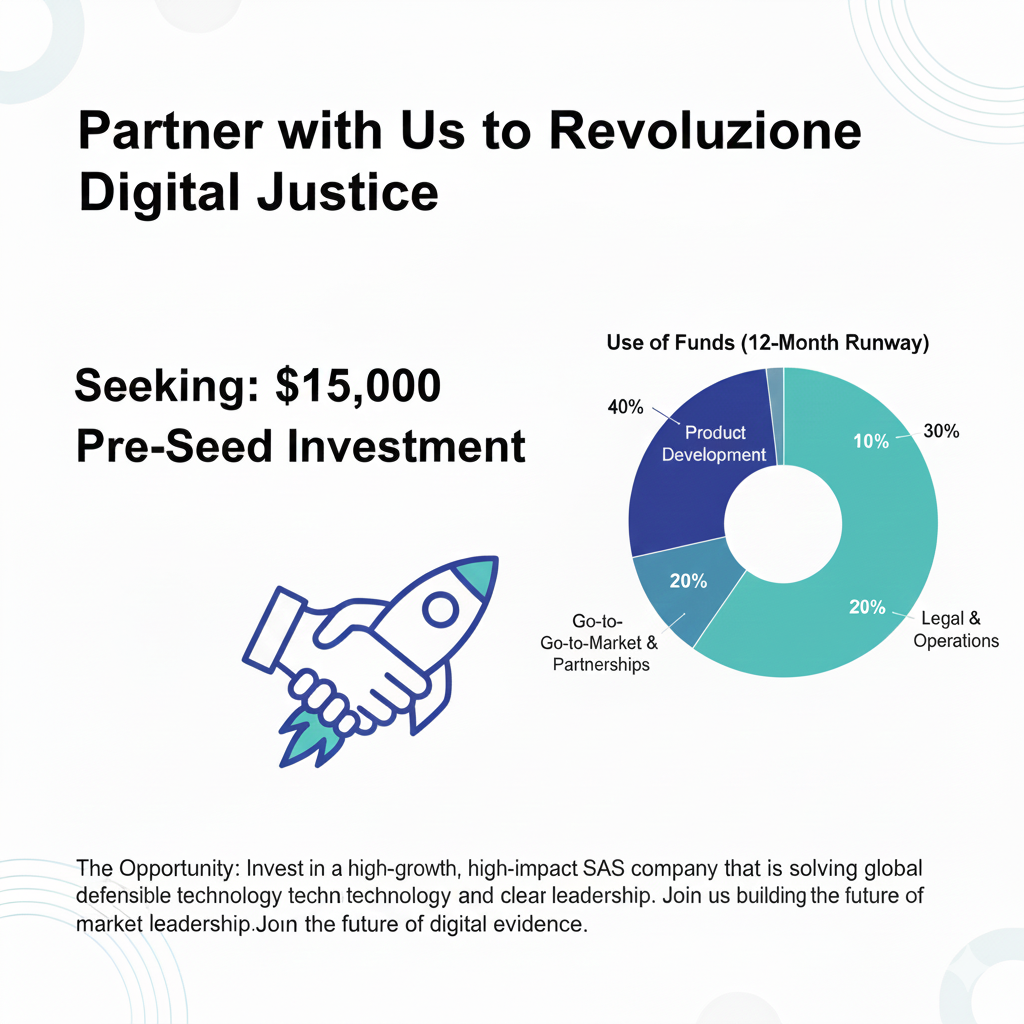
Our Ask
-
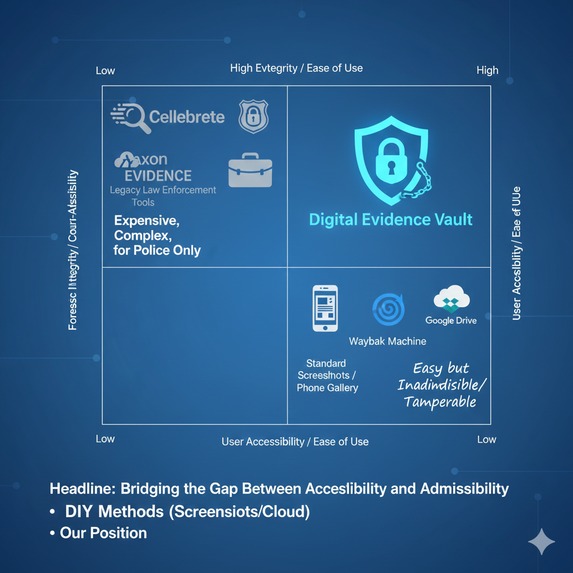
Competitor
-
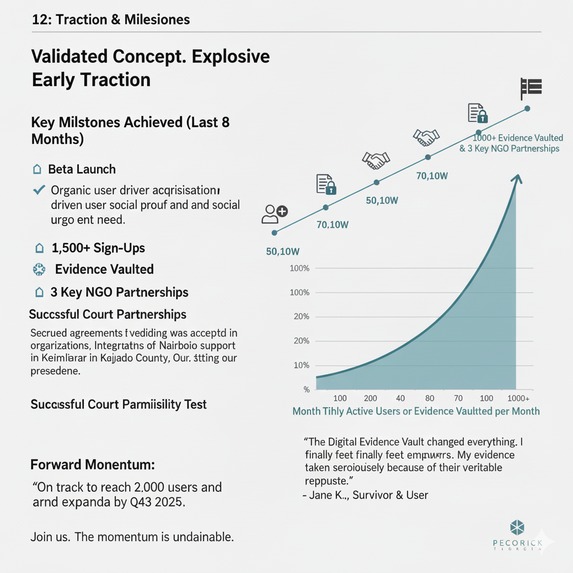
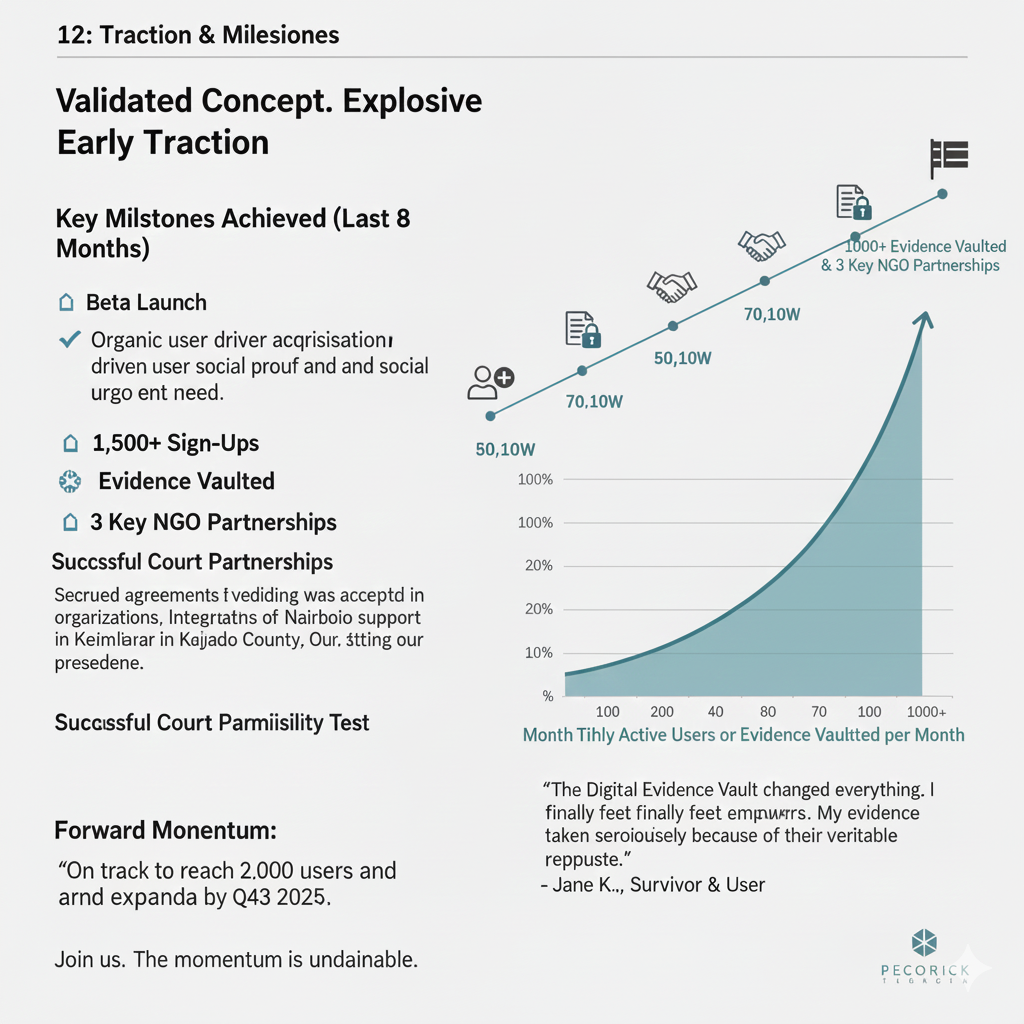
Project Traction
-

Go to market strategy
-
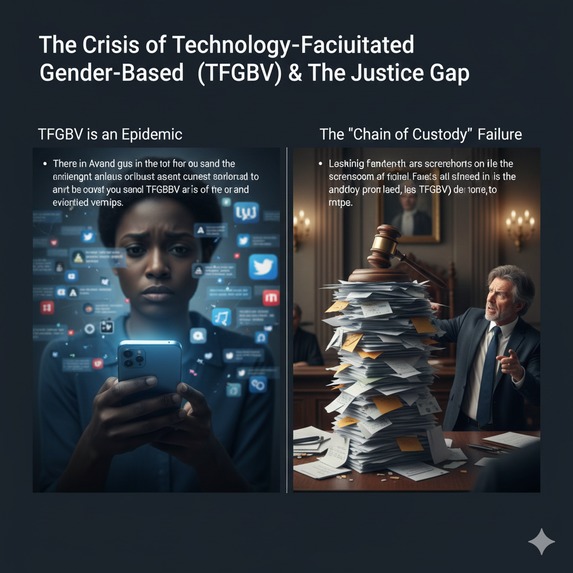
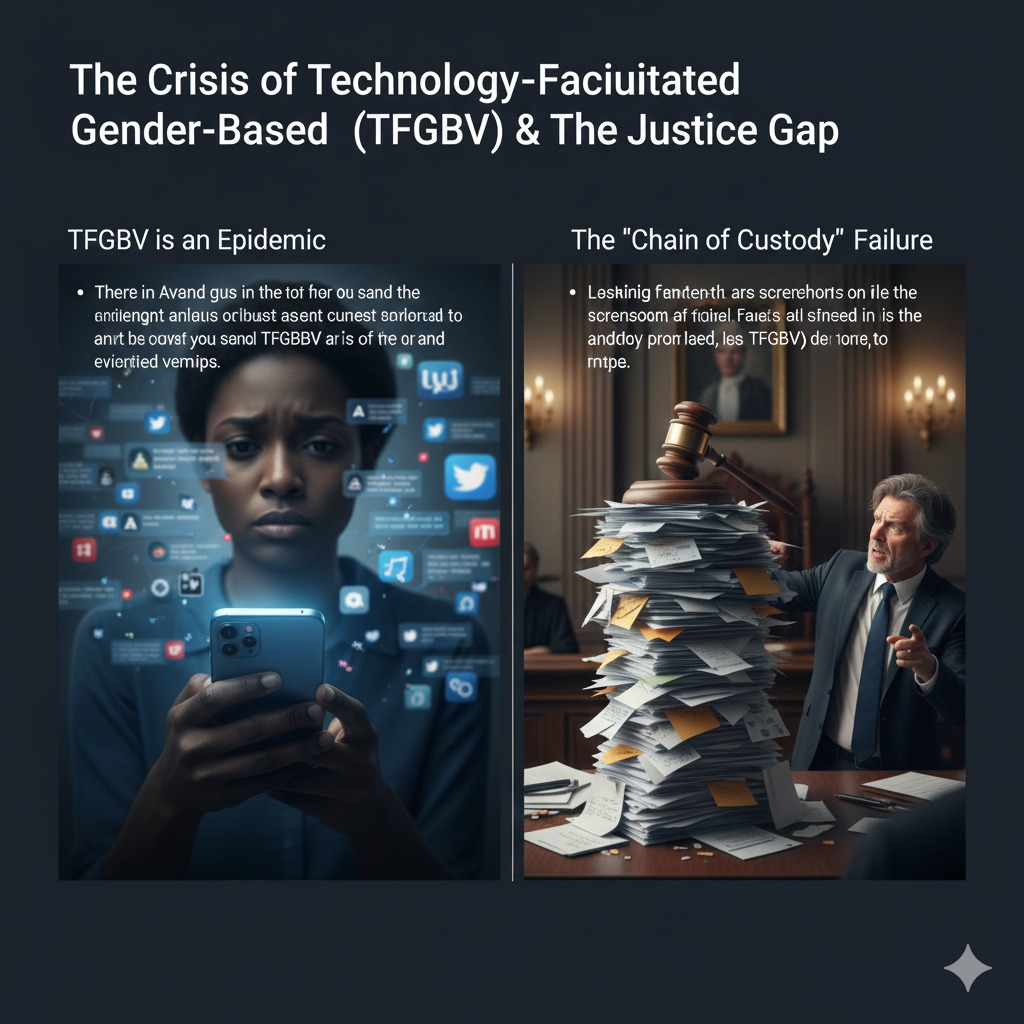
Problem Statement
-
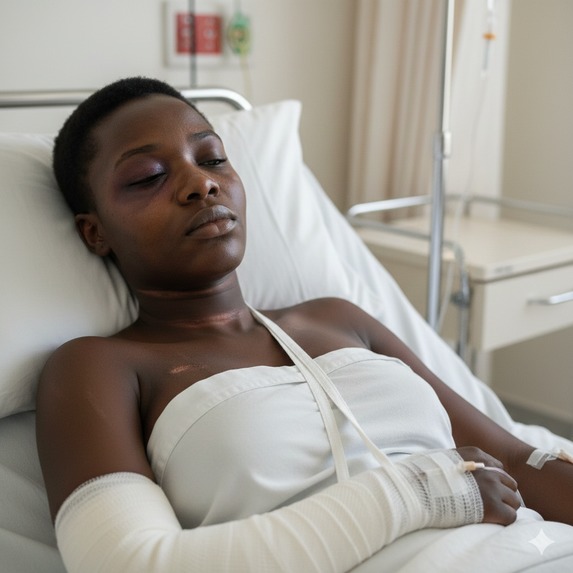
Evidence 1
-
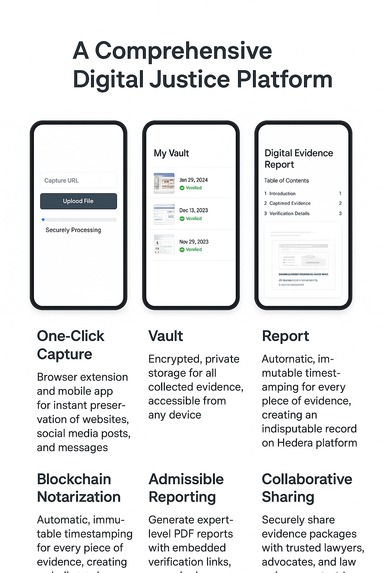
Product
-
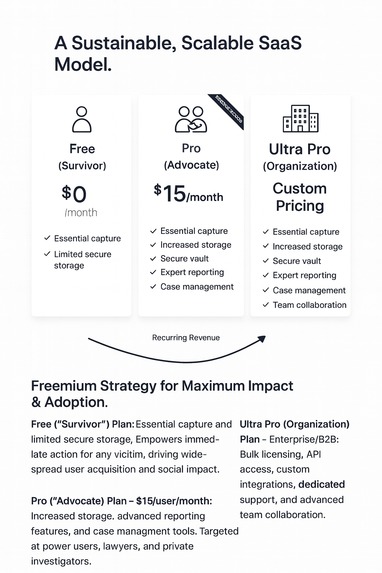
Subscription Model
-
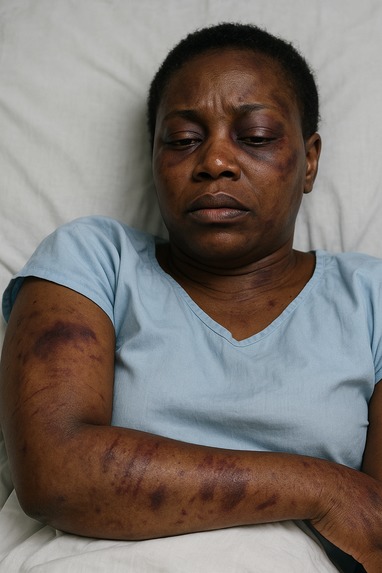
Evidence 2


Inspiration
Gender-based violence remains one of the most under-reported and under-prosecuted crimes in Kenya and across East Africa. Many survivors described the same painful experience:
“When I finally had the courage to report, the police questioned the authenticity of my screenshots…”
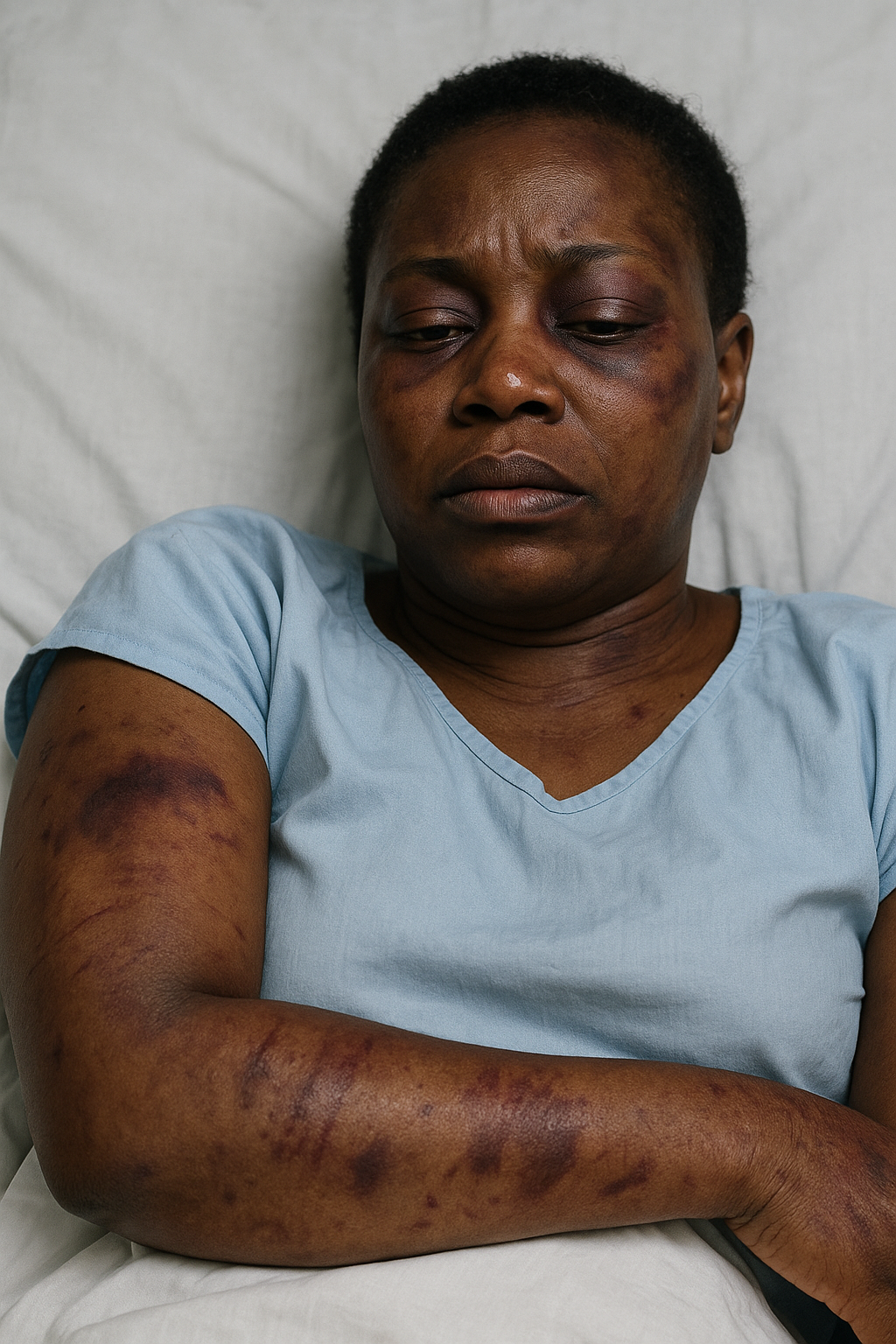
For countless survivors, the challenge is not only surviving abuse — it’s proving it.
Evidence gets deleted. Devices are destroyed. Screenshots are dismissed as fabricated. Yet justice requires proof.
This project was inspired by the stories of survivors whose cases collapsed not because the abuse did not occur, but because they lacked legally trusted verification. We heard testimonies like:
A survivor in Nairobi County whose evidence was doubted until blockchain timestamps validated her screenshots.
Mary W. in Mombasa, whose ex-husband claimed the threatening messages were fake — until Hedera verification proved the truth, and the judge accepted the evidence without hesitation.
Their courage demanded a solution. Their struggle demanded innovation.
What it does
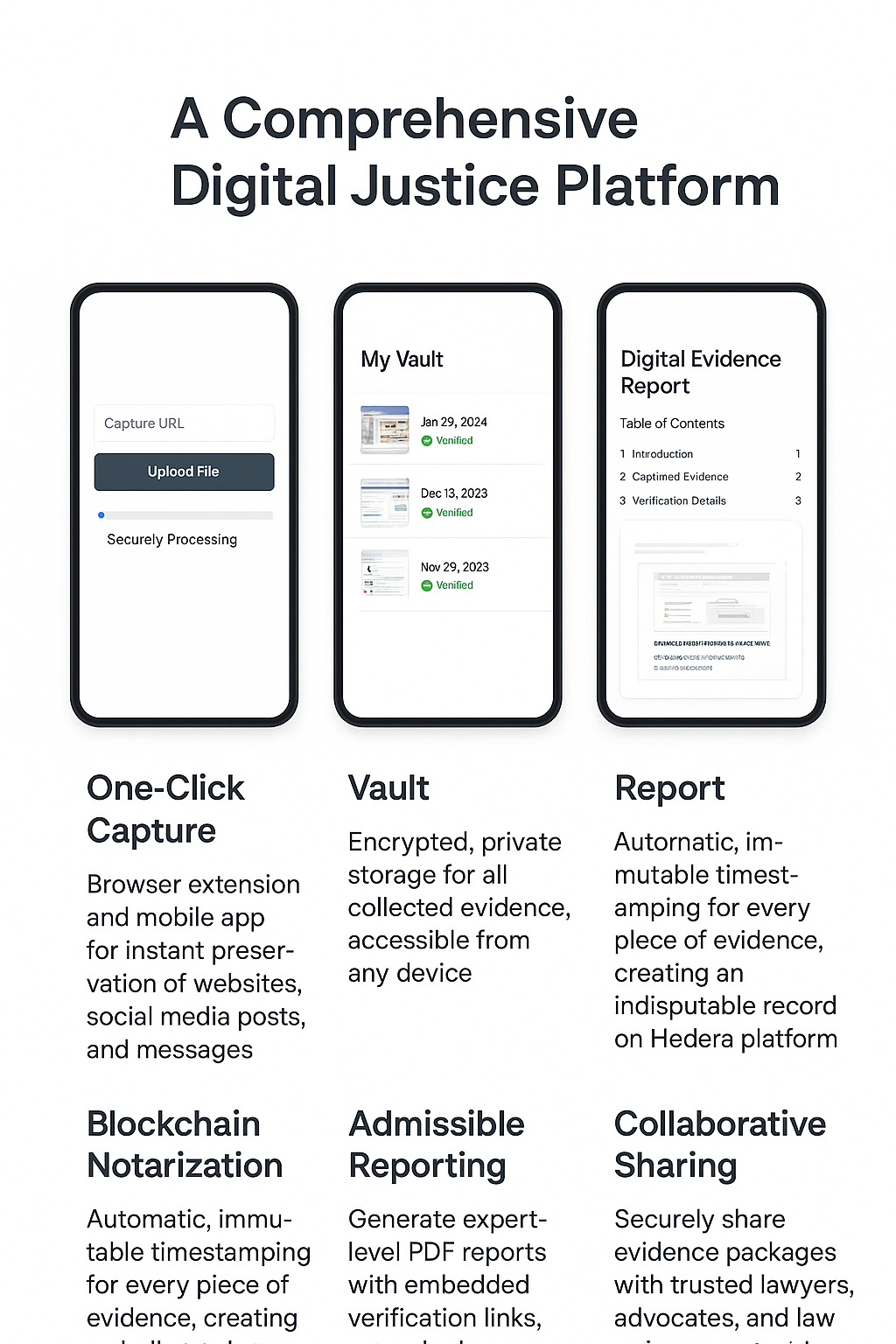
GBV Digital Evidence Vault is a secure, private, and blockchain-verified digital evidence preservation platform designed specifically for survivors of gender-based violence.
Survivors can safely preserve evidence without uploading files anywhere. Only cryptographic proofs — never the files themselves — are stored on the Hedera public ledger.
Your Evidence. Your Power. Your Justice.
The system ensures:
Evidence never leaves the survivor’s device
Only tamper-proof hashes are recorded
Timestamps are permanent and court-verifiable
Survivors remain anonymous and in full control
The process aligns with Kenyan digital evidence standards
The platform is built in collaboration with legal aid organizations, women’s shelters, and law enforcement partners across East Africa.
How we built it
We combined blockchain technology, digital forensics, and survivor-centered design to create a solution that is secure, lightweight, and legally credible.
Key development steps included:
Integrating Hedera Hashgraph for immutable timestamp verification
Building a fully client-side hashing engine so files never upload
Designing a simple interface usable under stress or danger
Implementing local encryption for offline safety
Ensuring workflows comply with the Kenyan Evidence Act
Conducting consultations with survivors, legal experts, and GBV support organizations
Everything was built around one core principle: Protect the survivor more than the data.
Challenges we ran into
Developing a platform for such sensitive use cases came with significant challenges:
Preventing exposure of identity or metadata
Making evidence admissible under Kenyan digital evidence regulations
Ensuring the app runs smoothly on low-end devices
Eliminating all cloud storage while maintaining verification
Designing safety features for situations where a device is seized
Helping legal partners understand blockchain-based proof
Balancing innovation with real-world survivor safety risks
Each challenge strengthened the final solution.
Accomplishments that we're proud of
Building the GBV Digital Evidence Vault has been a journey of innovation, empathy, and collaboration. Some of the accomplishments we are most proud of include:
✅ 1. Creating a Survivor-Centered, Privacy-First Platform
We successfully built a system where evidence never leaves the survivor’s device. Only cryptographic proofs are recorded — ensuring complete privacy and safety.
✅ 2. Achieving Blockchain-Verified, Court-Ready Timestamps
By integrating Hedera Hashgraph, we created an immutable timestamping mechanism that aligns with Kenya’s digital evidence standards, making it legally defensible in court.
✅ 3. Designing Trauma-Informed User Experiences
Every feature — from the interface to workflow — was crafted with the emotional state of survivors in mind. Simple, fast, and safe.
✅ 4. Establishing Partnerships Across East Africa
We collaborated with legal aid centers, shelters, and GBV organizations to ensure real-world usefulness and legal relevance.
✅ 5. Helping Survivors Be Believed
Our proudest accomplishment is hearing real stories of survivors whose evidence was validated because of blockchain timestamps — stories where justice became possible.
✅ 6. Building a Fully Offline-Capable System
The tool works even without internet access, ensuring safety in remote or high-risk environments.
✅ 7. Advocating for Tech-Driven Justice
We contributed to awareness around using emerging technology to support human rights, not just financial innovation.
What we learned
Through this project, we learned that:
Survivors need privacy, safety, and simplicity above all
Legal systems demand strict, auditable chains of authenticity
Blockchain can have real impact beyond finance — especially in justice
Trauma-informed design is essential to avoid re-triggering survivors
Community partnerships improve both safety and usability
We also learned the importance of transparency so users can trust the technology protecting them.
What's next for GBV Vault
As we continue building the platform, our roadmap focuses on scale, security, and survivor empowerment.
🔜 1. Mobile App (Android & iOS)
A fully offline-capable native mobile app to make evidence preservation faster and more accessible.
🔜 2. Automated Legal Reports for Court Use
Generate tamper-proof, judge-ready evidence verification documents with a single tap.
🔜 3. Secure Emergency Escape Mode
A safety feature that instantly hides or disguises the app if a survivor is in danger.
🔜 4. Integration with Legal Aid Networks
Allow survivors to securely share verification proofs with authorized advocates only when they choose.
🔜 5. Multi-Language Support
Support for Swahili, Sheng, and other East African languages to increase accessibility.
🔜 6. AI-Assisted Evidence Organization
Help survivors categorize, label, and understand the evidence they collect — without uploading anything online.
🔜 7. Expanding Across Africa
Extend the platform to Uganda, Tanzania, Rwanda, and beyond through regional partnerships.
🔜 8. Formal Certification for Admissibility
Work with judiciary and law enforcement bodies to create standardized digital evidence protocols powered by blockchain technology.
Built With
- clerk
- hedera
- next.js
- node.js
- postgresql
- prisma
- typescript

Log in or sign up for Devpost to join the conversation.