Inspiration
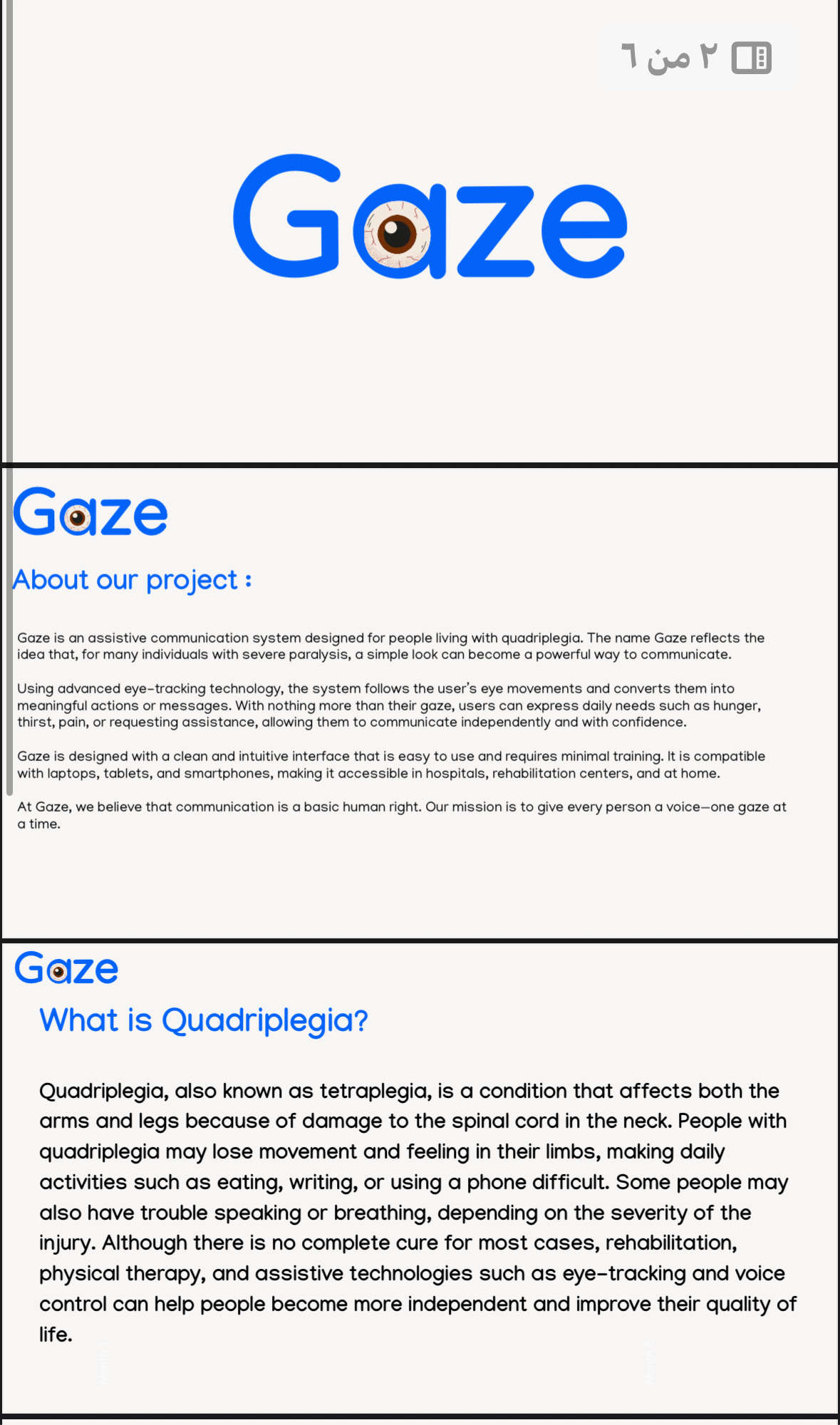
In her final years, my beloved grandmother was paralyzed and bedridden until she passed away. During those difficult days, our family faced a heartbreaking reality: we had no way to communicate with her, and she couldn't speak a single word. It was deeply agonizing to watch someone you love stripped of the most basic human right—unable to even ask for a simple cup of water to quench her thirst.
Out of that profound grief and helplessness, the inspiration for this project was born. We looked at the current medical landscape and questioned why families must spend thousands of dollars and face bureaucratic medical monopolies for assistive tech. Driven by the belief that technology should empower lives, we set out to prove that reclaiming human dignity and restoring autonomy should cost absolutely $0.
What it does
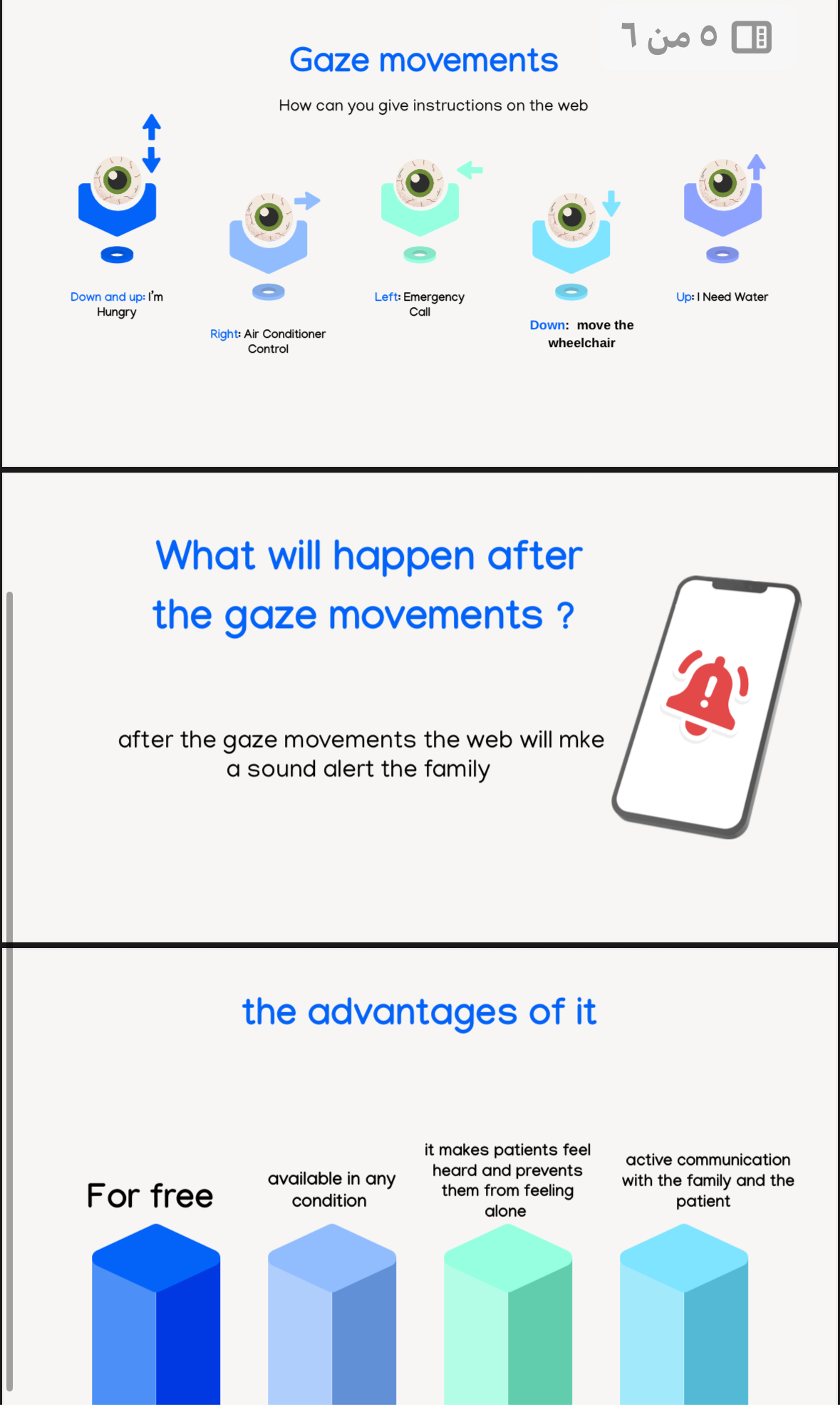
Our project transforms any standard, old laptop camera into a complete, high-precision home safety and automation system for severely paralyzed individuals. It completely replaces expensive, specialized medical hardware with an accessible, free software solution.
With this system, patients can communicate critical needs, like asking for water, and manage their home appliances strictly through eye movements. It breaks the financial barrier entirely, giving individuals back their independence without putting a heavy financial burden on their families.
How we built it
We engineered a lightweight web application powered by WebGazer.js to track and analyze eye movements using a basic, built-in webcam. The application codes a calibration system that maps the user's gaze coordinates $(x, y)$ directly onto the screen.
To prevent natural eye jitter from triggering wrong commands, we designed an algorithm to calculate sequential fixation points over a temporal window $\Delta t$, registering only intentional "dwell clicks". Finally, we integrated webhook APIs that trigger smart home automation routines, simulating environment control, appliance management, and emergency alerts.
Challenges we ran into
Building something highly precise with zero-dollar hardware came with serious technical hurdles. First, standard webcams perform poorly in changing light or with background movement. This required us to write predictive smoothing filters to stabilize the tracking vector and keep the system functional.
Second, unlike expensive infrared hardware, basic webcams completely lack depth perception. We had to refine our mathematical mapping models extensively so that minor shifts in a patient's posture wouldn't break the calibration matrix, ensuring it stayed reliable for $0.
Accomplishments that we're proud of
We are incredibly proud to have successfully built a highly responsive, life-changing accessibility tool utilizing consumer-grade software without requiring any premium hardware. We managed to break a massive financial barrier, creating a reliable system that operates effectively at a literal cost of $0.
What we learned
This journey completely changed how we view accessibility, showing us that advanced assistive technology can be fully democratized and shifted away from expensive physical paywalls. On a human level, we learned that user experience (UX) for limited-mobility interfaces must be incredibly minimalist, high-contrast, and highly forgiving of involuntary movements to avoid frustrating the user.
What's next for gaze
Moving forward, we plan to expand the system's integration to support broader smart-home ecosystems and custom assistive speech generation modules. We are also focused on refining our computer vision models to enhance tracking stability across an even wider range of low-end hardware and adverse environmental lighting conditions.
Built With
- replit

Log in or sign up for Devpost to join the conversation.