-
-
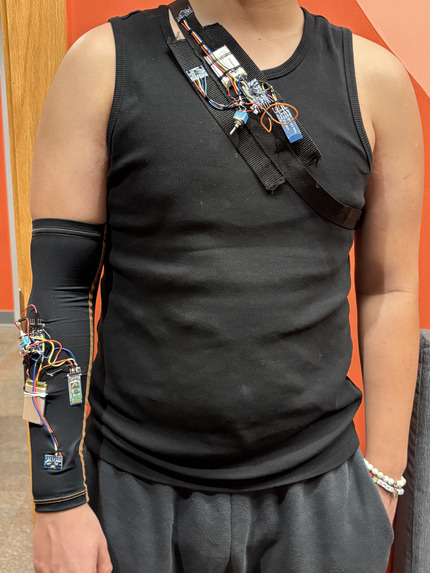
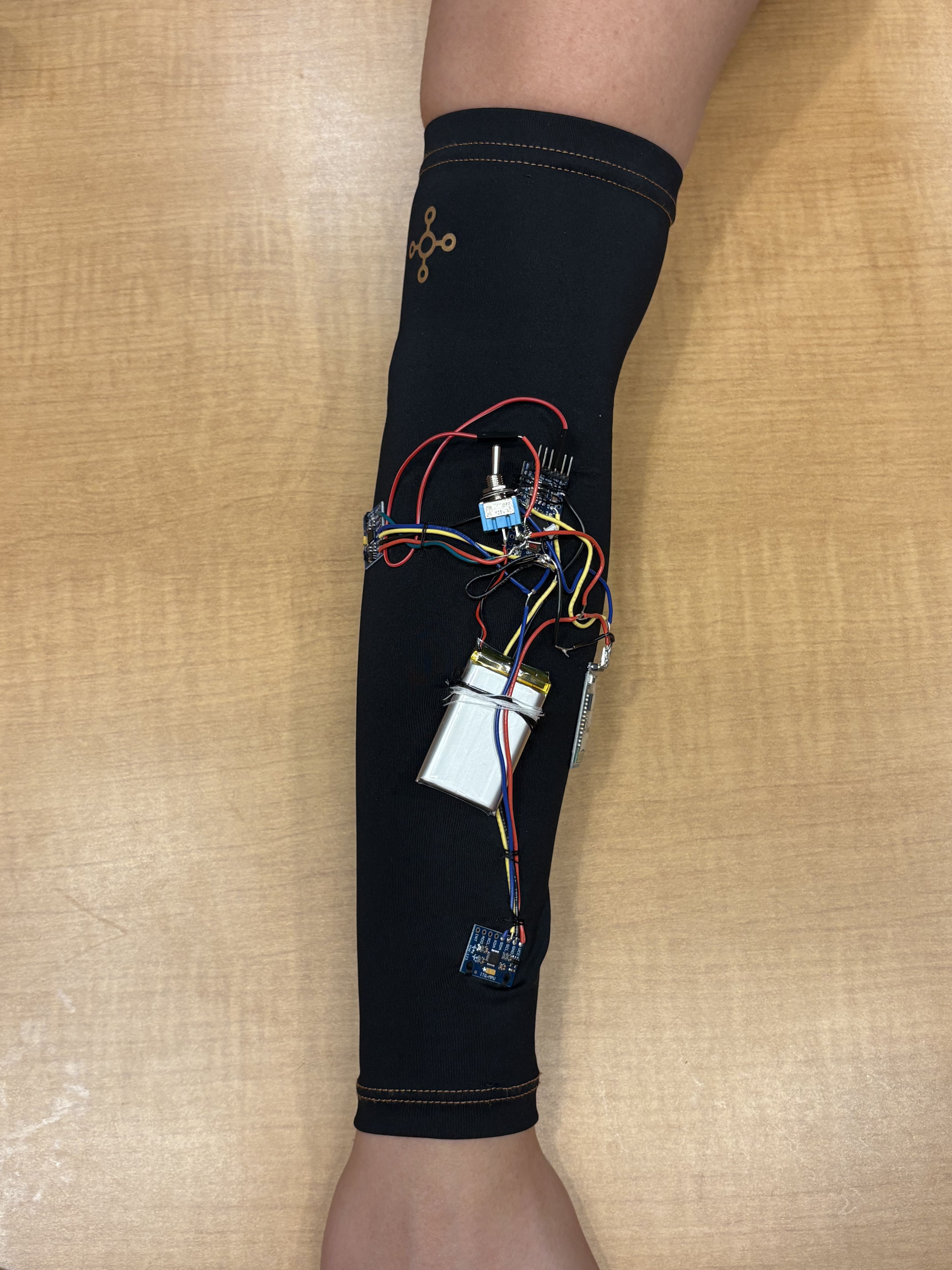
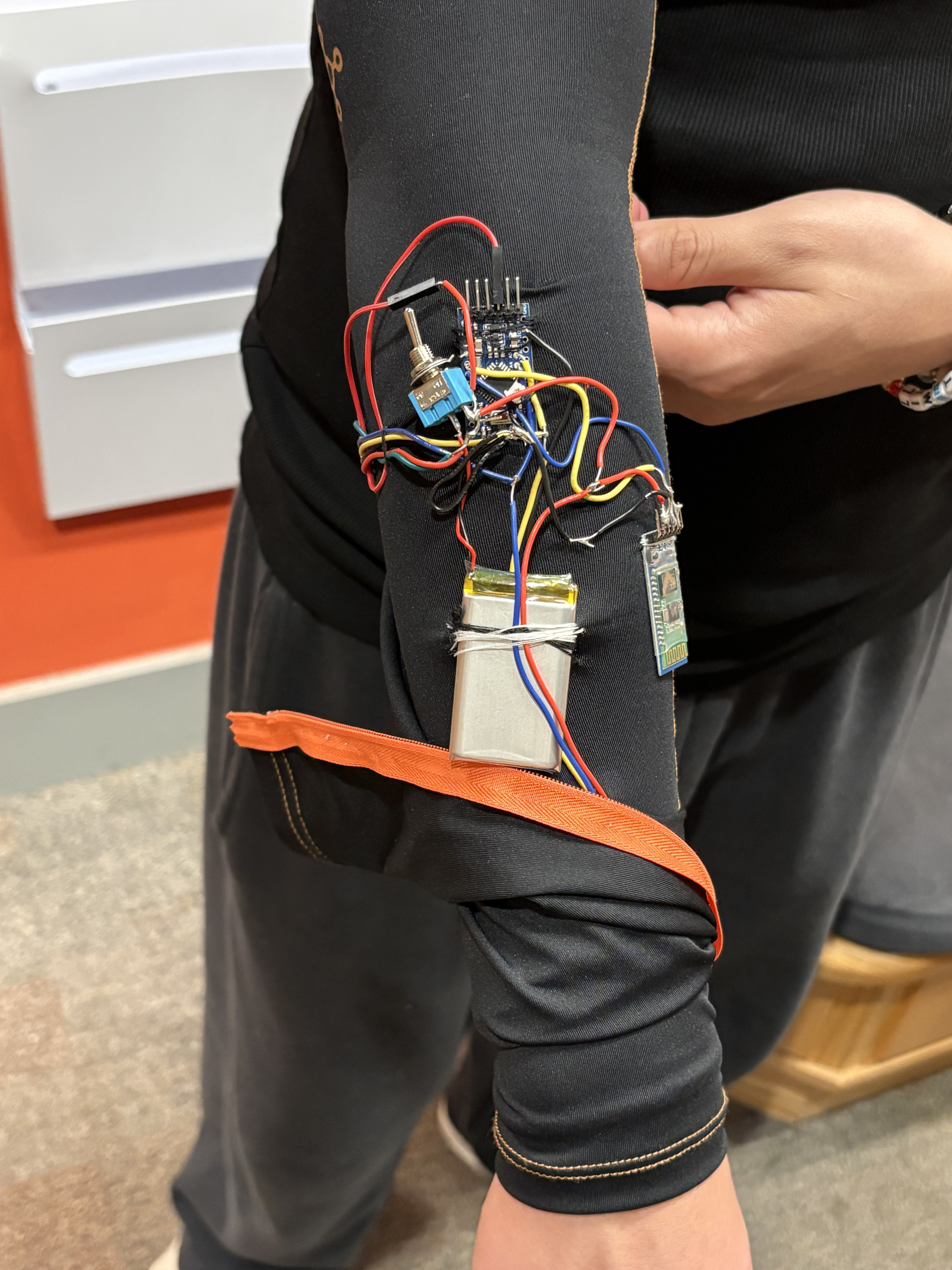
Arm sleeve & chest strap
-
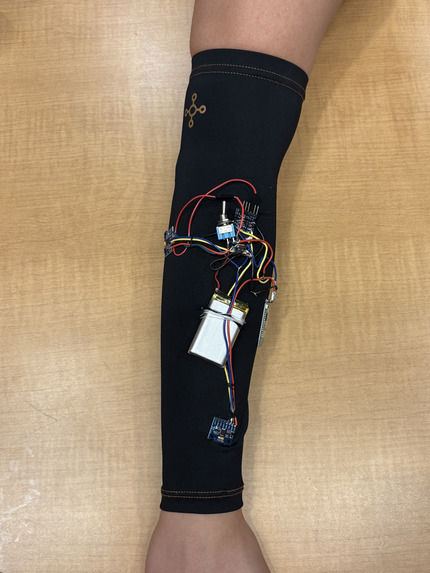
Arm sleeve
-
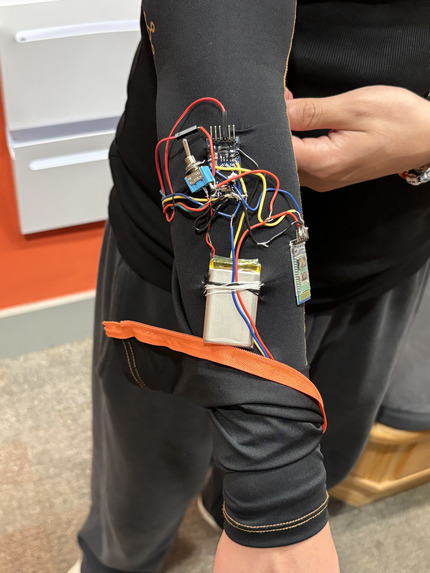
Arm sleeve with cover (zip-able)
    Form is one of the hardest things to self-correct in any physical activity. In the gym, mistakes are usually only caught when a training partner is watching or self-reviewing a recording post-workout. A lack of confidence and fear of injury from improper technique are top reasons for decreased gym attendance, as insecurity and confusion about exercise form reduces motivation to exercise.
    In physical therapy, the problem is even more significant, as patients complete prescribed exercises at home without any feedback on whether they are performing the movements correctly, which can slow recovery or lead to injuries. Towards this, GauntLift is a wearable capable of tracking and classifying movement in real time to help both beginner gym-goers correct their forms and patients rehabilitating injuries.
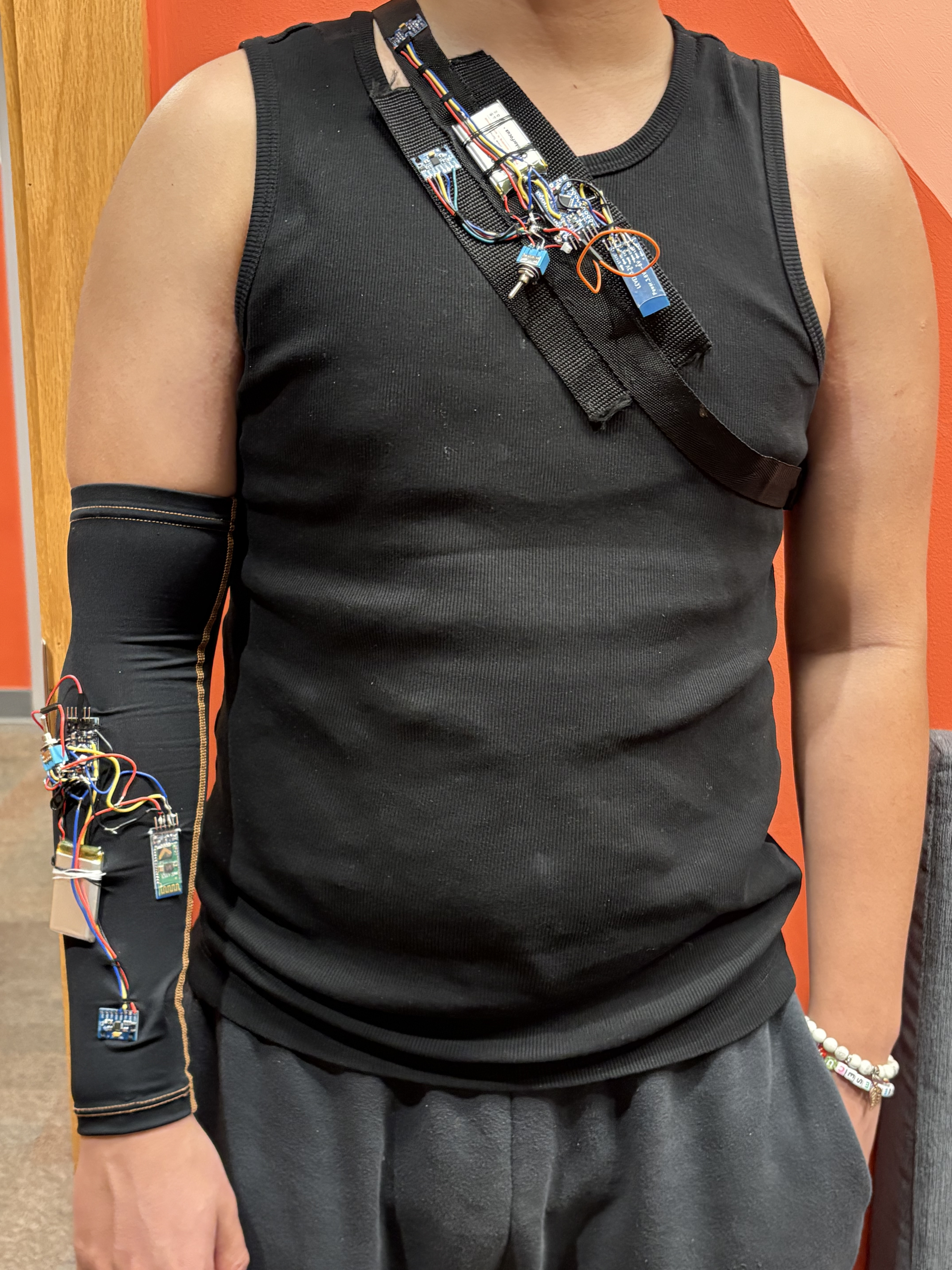
    GauntLift is a wearable system consisting of a compression sleeve and chest strap embedded with inertial sensors that capture acceleration and orientation data during movement. The device streams this data to an Arduino, which runs a classifier trained to recognize specific exercises. For this prototype, the system was trained on bicep curls and push-ups, and it provides immediate feedback on each repetition so that the user can adjust form mid-set rather than finding errors after the workout.
The hardware combines an Arduino, two IMUs, and BlueTooth module that records accelerometer and gyroscope readings. The training data was collected by recording and labeling reps of each target exercise, and that dataset was used to train a classifier capable of identifying movements from the live sensor stream. The electronics were integrated into a compression sleeve for the arm and a chest strap for the shoulder, which positions the sensors directly on the muscle groups involved in each movement. Then, the output (the type of workout and whether it is “good” and “bad”) to the user as immediate feedback on each rep. The first major challenge was signal noise, so a lot of time went into filtering and windowing the signal so that the classifier could learn from the motion rather than the noise around it. The second challenge was the fabric integration, as incorporating the electronics into a stretchy garment that keeps sensors reliably positioned through a full range of motion required many iterations on how the electronics were mounted and secured. This wearable design is as much a mechanical and textile innovation as it is an electronics solution.

Log in or sign up for Devpost to join the conversation.