-
-
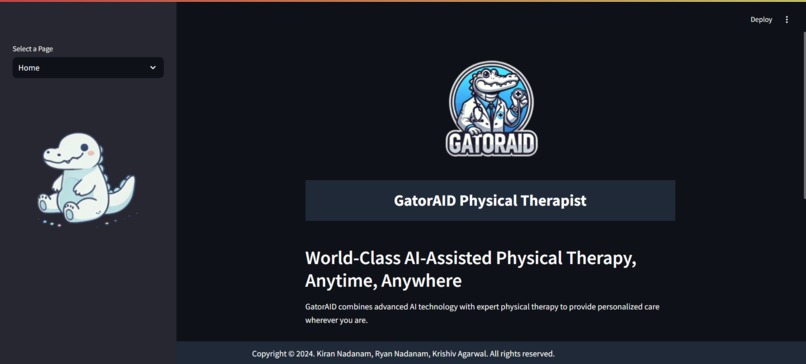
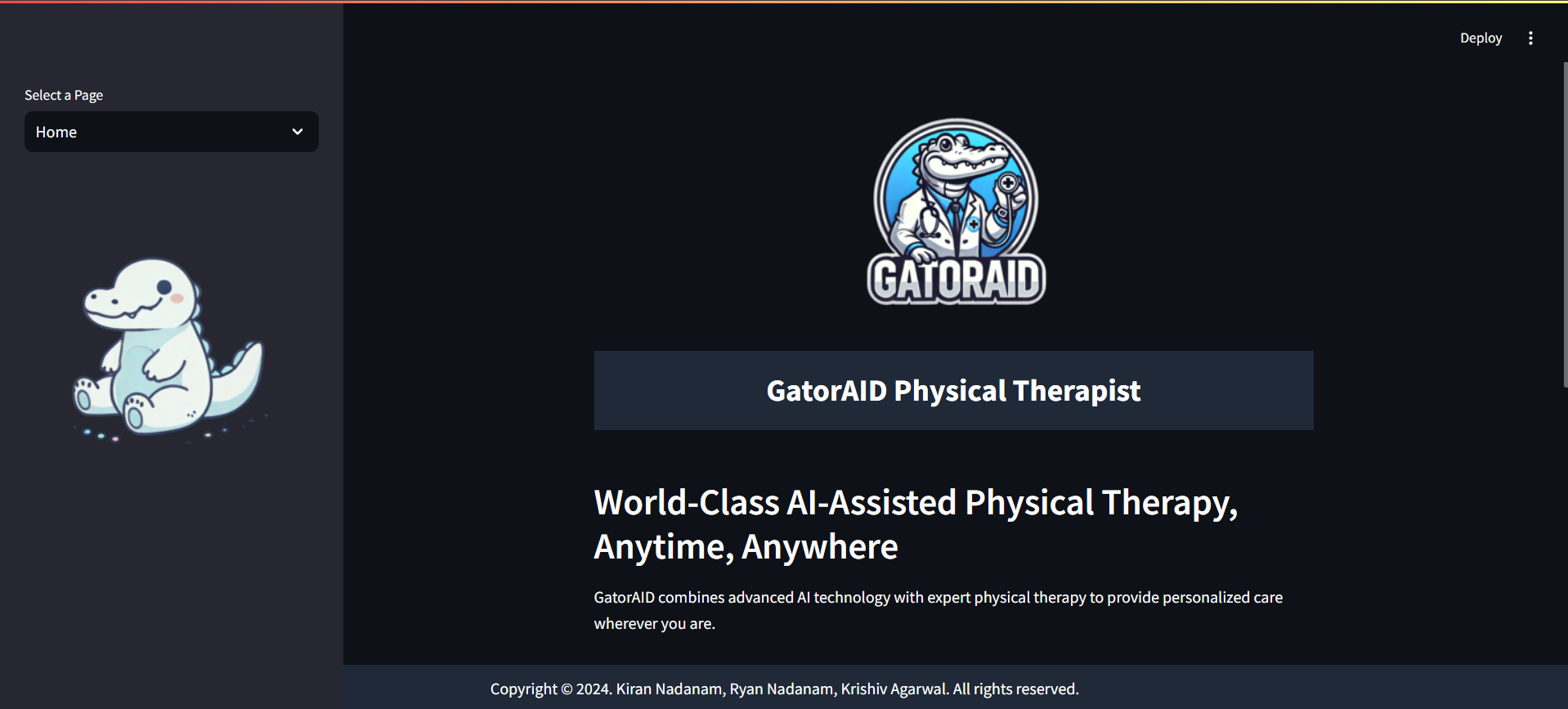
Home Page
-
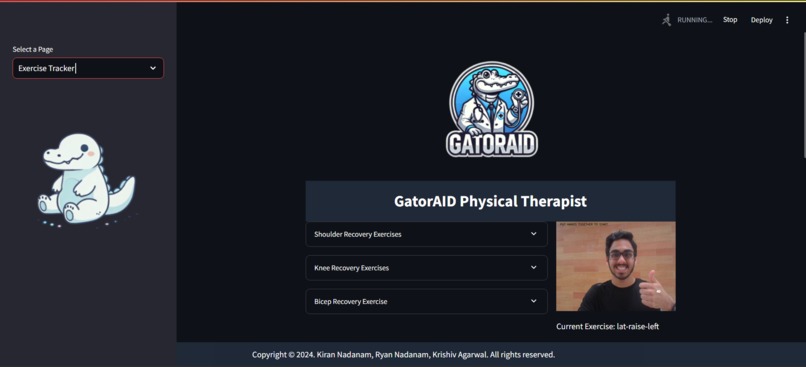
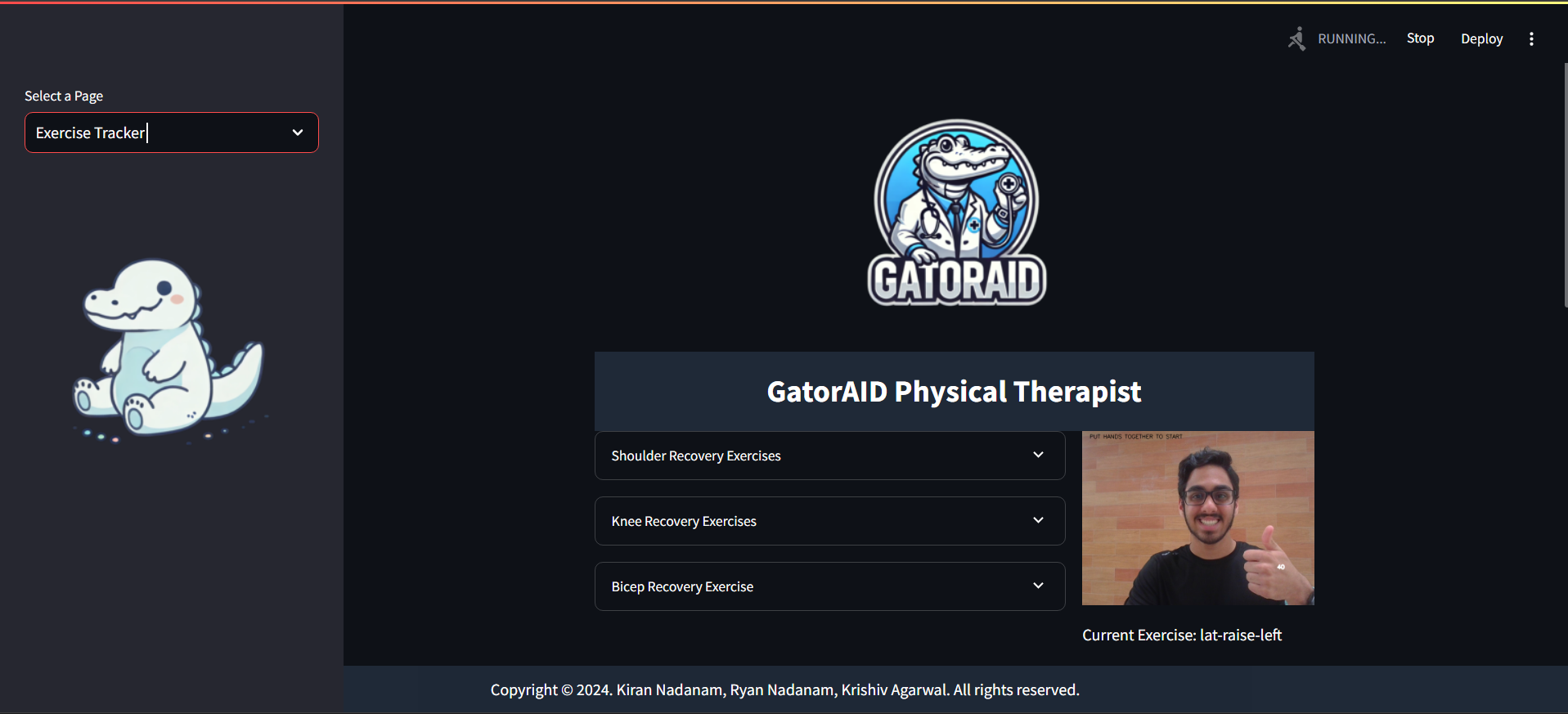
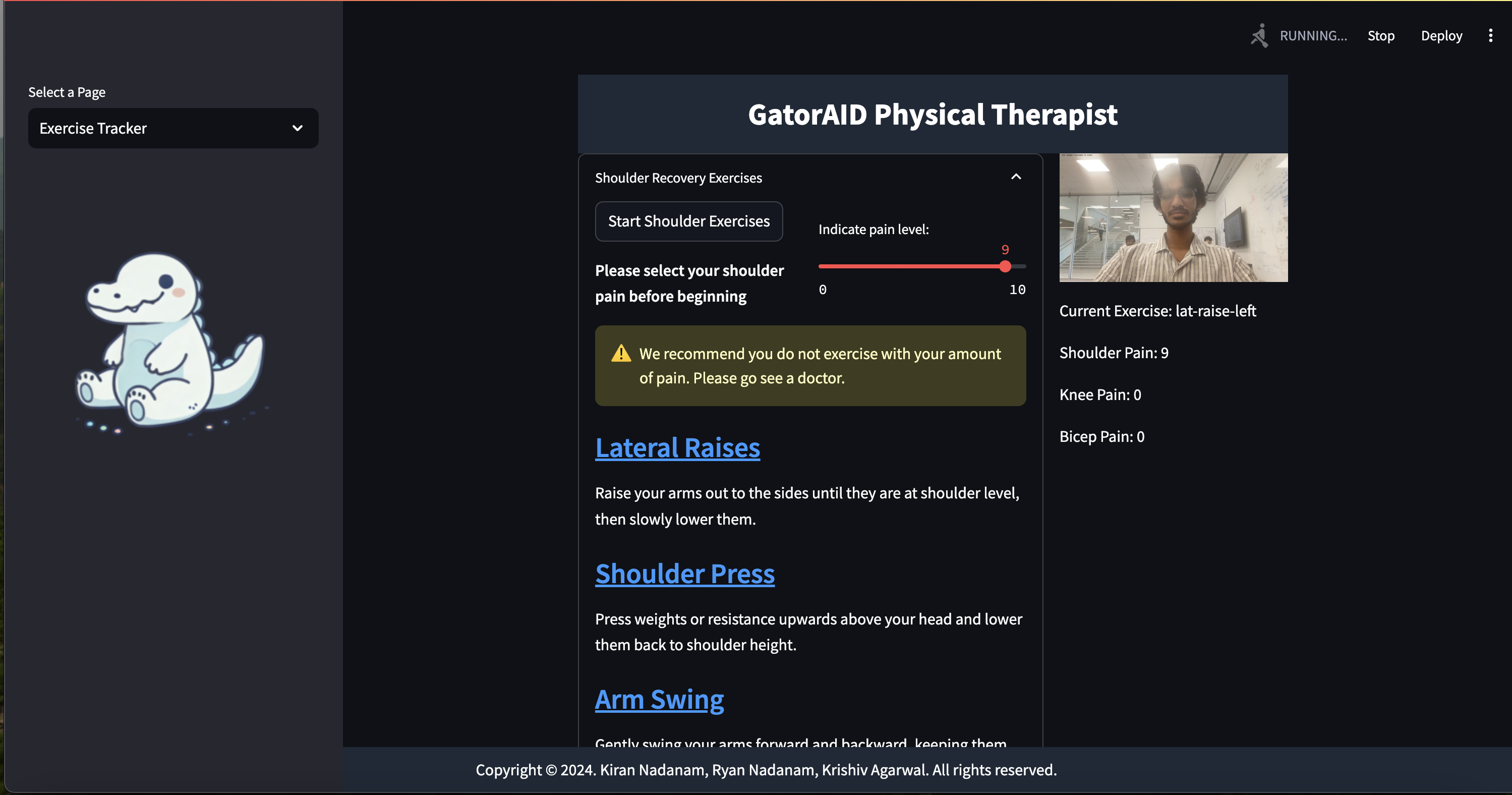
Exercise Tracker Page
-
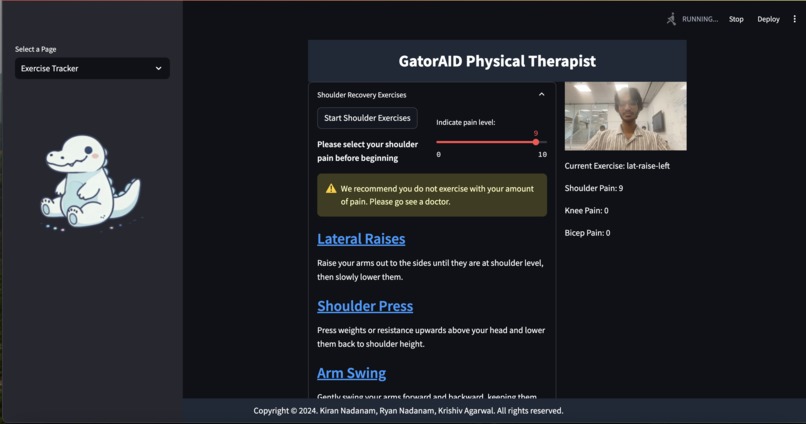
Shoulder Pain Drop Down Menu with High Starting Pain Level
-
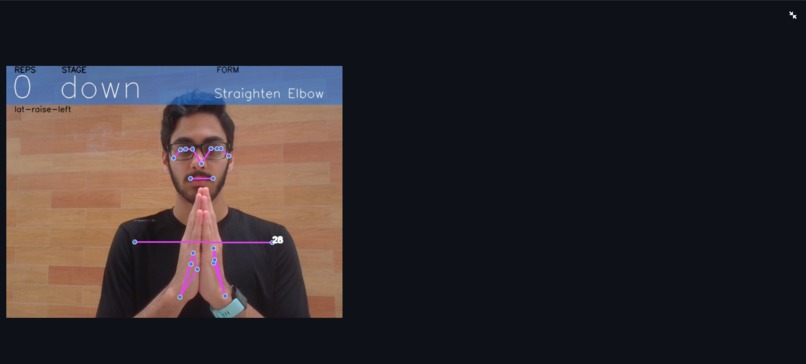
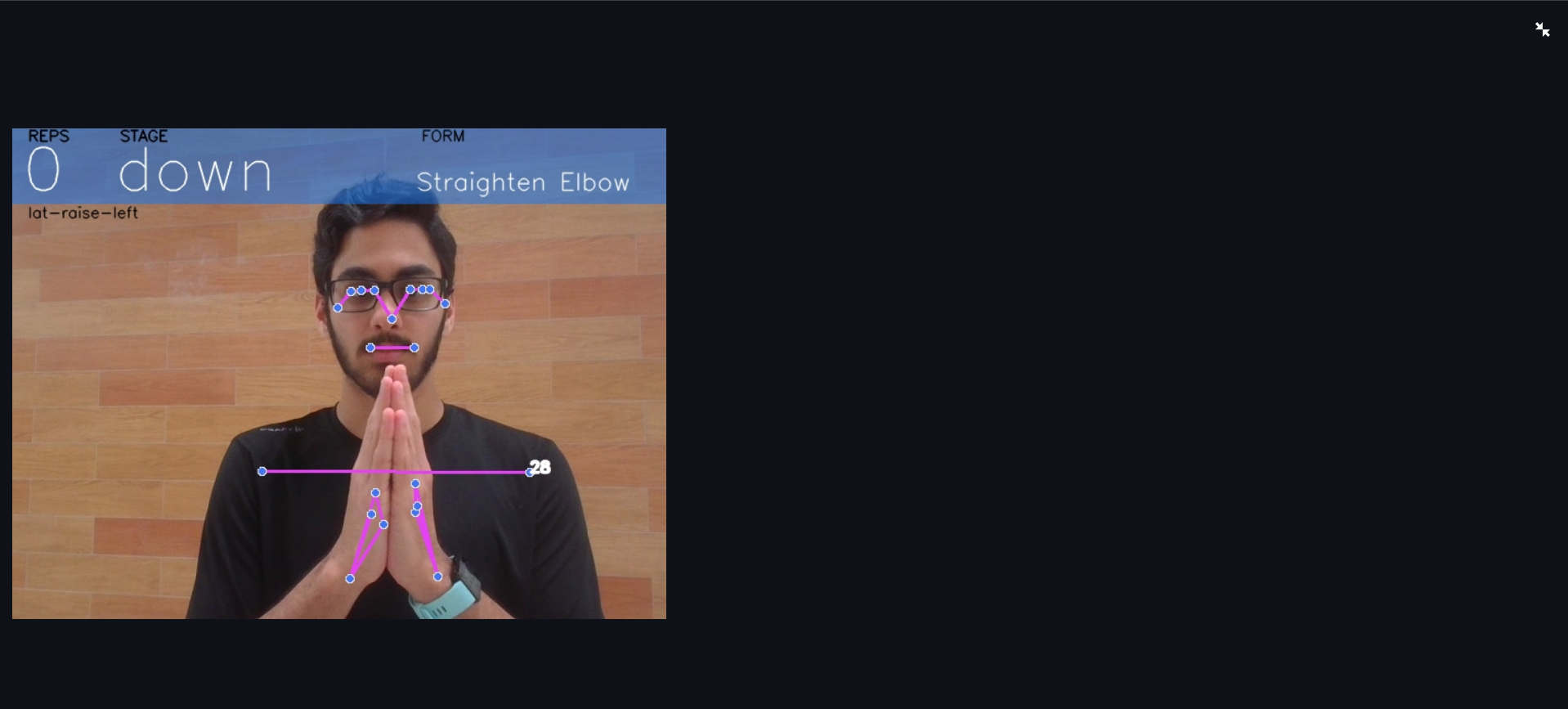
Clap hand to start exercise
-
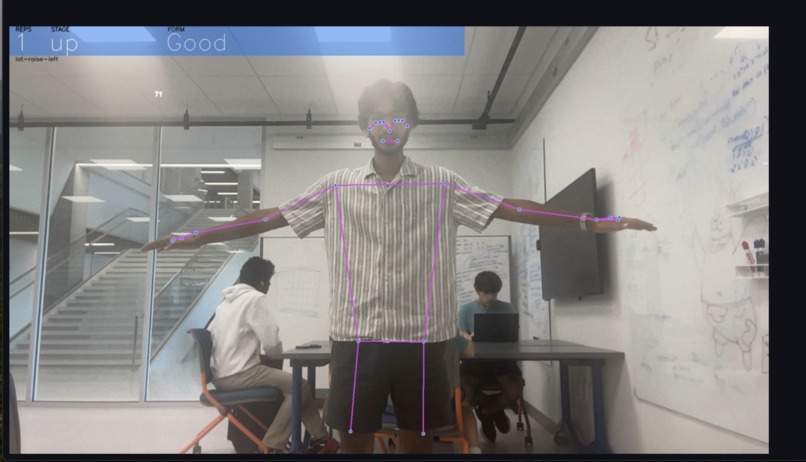
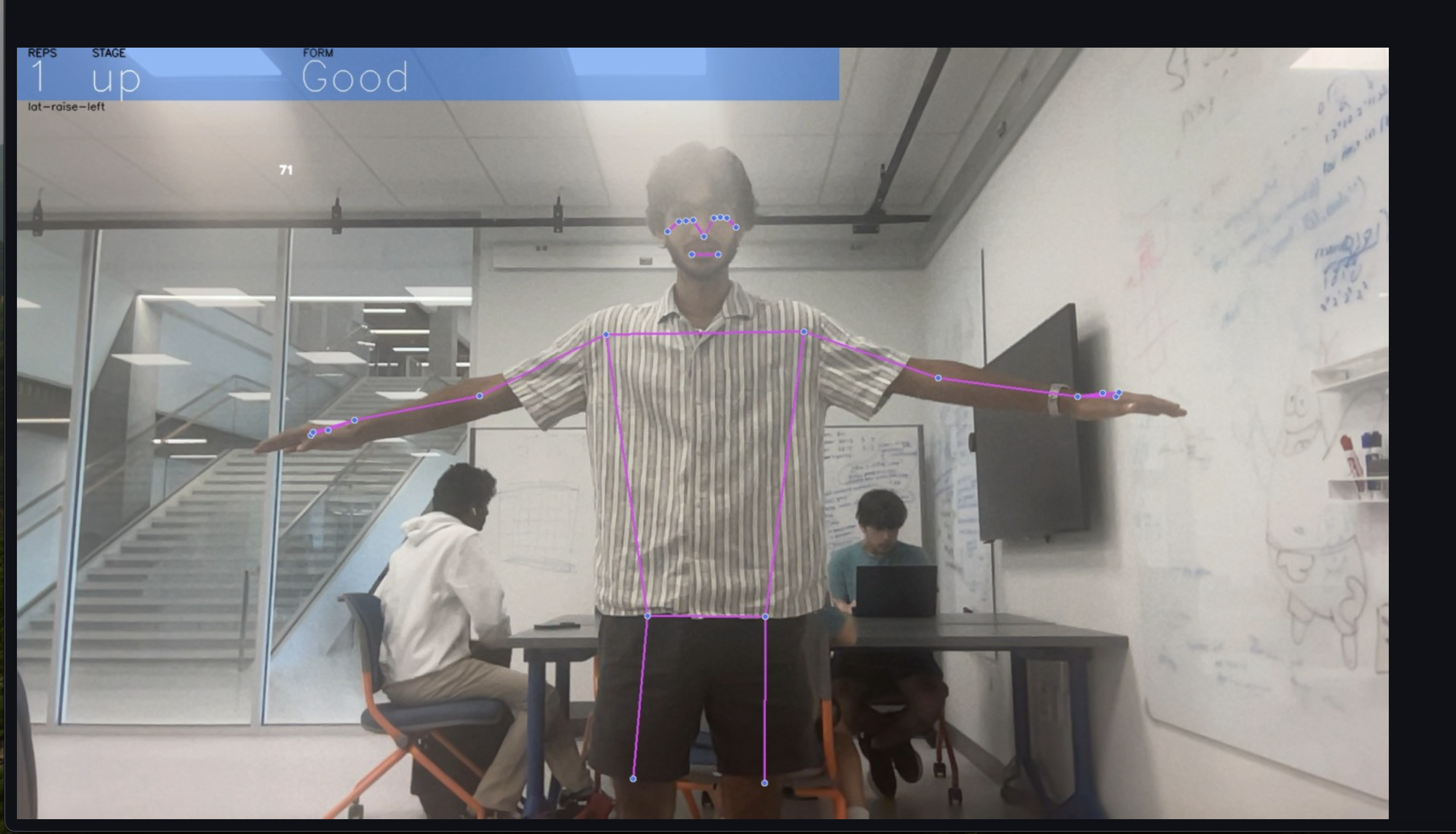
Correct Form for Lat Raises
-
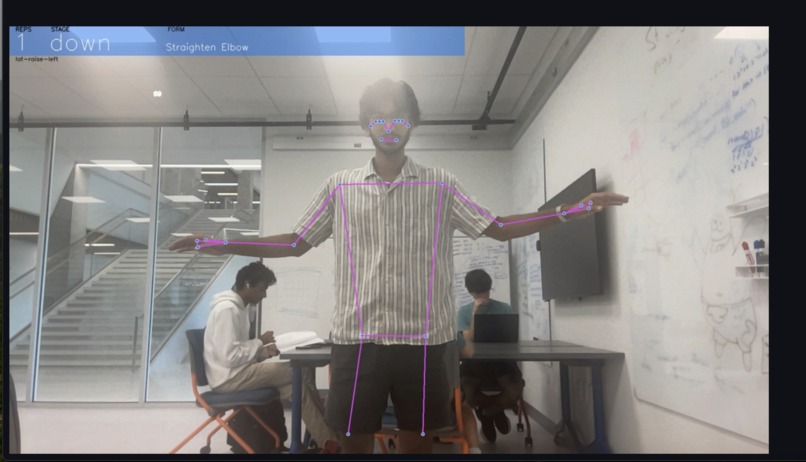
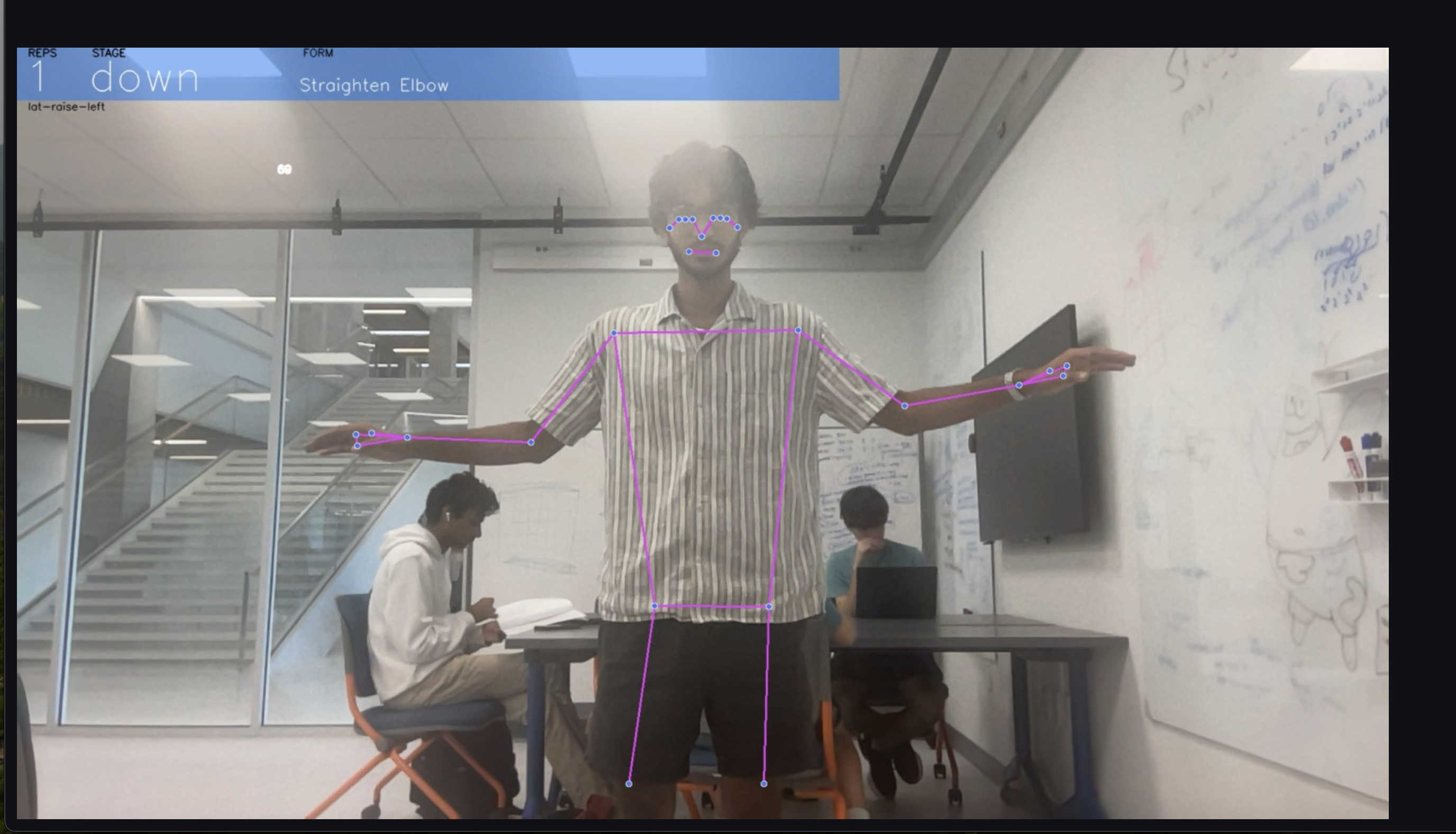
Incorrect Form for Lat Raises
Inspiration
We were inspired to create this project after personal experiences with the lengthy and time consuming process of physical therapy. Our goal with GatorAID is to make PT more accessible and effective in the long run. For our project, we aimed to incorporate computer vision into a website that could assist individuals in recovering from injury and pain. We envisioned creating a software that tracks patient movements during exercises and ensures they achieve the necessary range of motion for optimal recovery. This solution bridges the gap between technology and physical therapy, making recovery more accessible from the comfort of one’s home.
What we learned
Throughout the project, we gained valuable knowledge on multiple fronts. We learned how to use React for web development, as it was a new tool for our team (despite opting for Streamlit). Additionally, we deepened our understanding of computer vision, particularly how to track human movements using libraries like Mediapipe and OpenCV. We also learned how to make a cohesive application that integrates front-end and back-end technologies, working through compatibility challenges to bring our solution to life.
How we built it
We built GatorAid using a combination of front-end and back-end technologies. We began by developing the core algorithm on Jupyter Notebook using Mediapipe and OpenCV, coding it to track movements and landmark points on the body (i.e., left shoulder and right knee). To tailor the exercises dynamically, we created algorithms that interpreted the movement data and gave personalized feedback. For the front-end, we chose Streamlit and leveraged its Python-native capabilities to bridge the two spheres. Streamlit simplified the process of creating an intuitive UI for the website.
Challenges we ran into
Integrating the front and back ends proved to be the biggest challenge we encountered. Originally, we attempted to use Flask and React to connect our computer vision algorithms to the base website. While these tools are powerful for integration, they required a skill we were still building. As the integration grew more complex, we shifted to using Streamlit which allowed us to better leverage our Python experience. Another challenge we faced was tuning exercises while considering the pain levels for optimal recovery. Each exercise had a different implementation and we had to consider which angles and what measurements were necessary to monitor correct form and good suggestions for each exercise. Specific exercises, such as squats, required tracking the Z axis for depth perception to provide feedback on body alignment, which added further complexity.
What's next for GatorAid
Looking ahead, we plan to expand GatorAid by adding more exercises tailored to various muscle groups and injury types. We aim to improve our tracking algorithms for greater accuracy and to handle more complex movements for different mobility levels. After refining features and functionality, our goal is to move toward deployment, bringing GatorAID closer to real-world application. Eventually, we hope to collaborate with healthcare professionals to fine-tune exercises and further enhance our AI feedback.

Log in or sign up for Devpost to join the conversation.