-
-
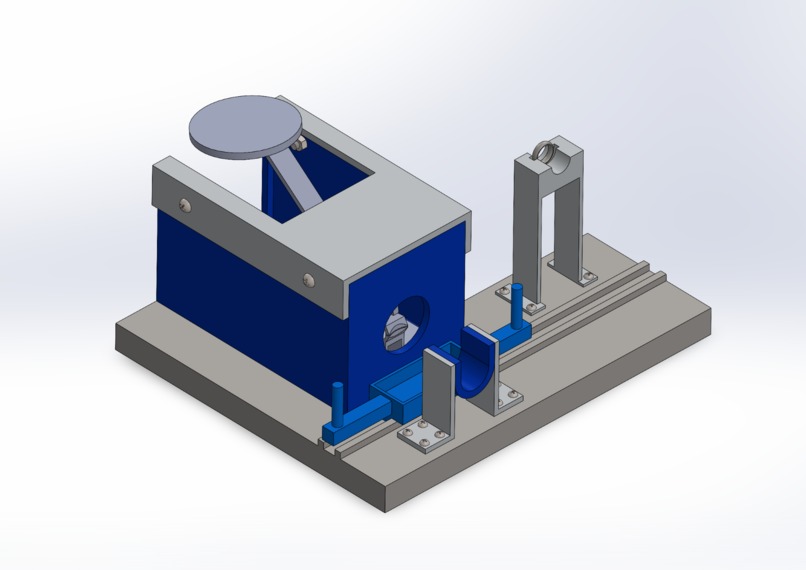
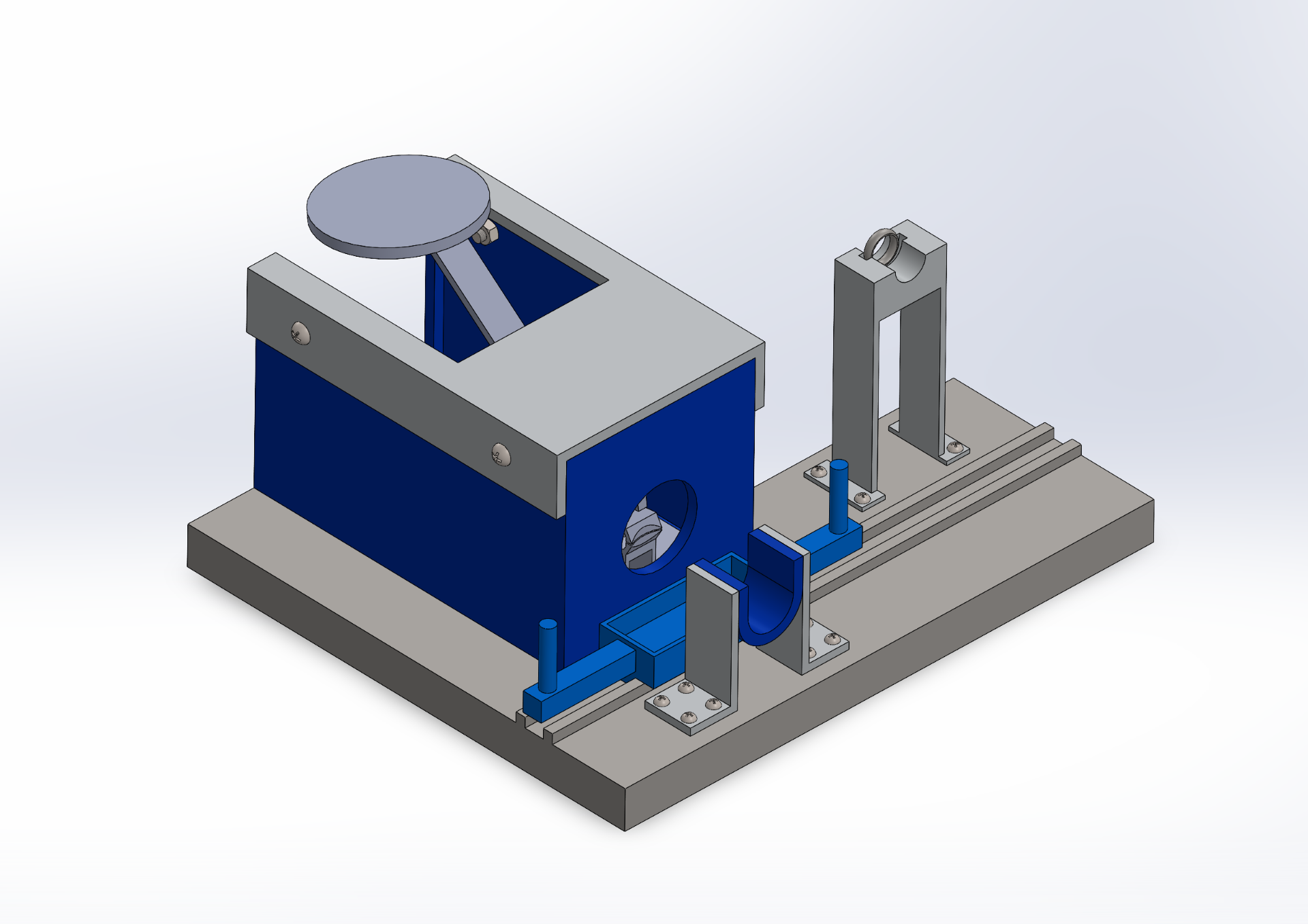
Image of our project: Assistive Clipper
Inspiration
Our team took inspiration from electronic versions of nail clippers we saw online, which we adapted into a purely mechanical solution for cost-effectiveness and ease of use for those with hand tremors.
What it does
The Assistive Clipper provides stability while trimming nails through a one-handed accessible magnetic ring system, targeted for individuals who suffer from hand tremors who are concerned with the safety and feasibility of using conventional nail clippers.
How we built it
We conducted research on market nail clippers currently for customers with cerebral palsy, incorporating certain aspects of the design with our unique ideas in fully defined CAD. Specifically, we took inspiration from the base of electronic nail clippers while fully modeling (from scratch) the cutting mechanism like a typical nail clipper with a guide aid for ease of use. Furthermore, we added a magnetic ring and a finger guide for peak stability, a mechanism housing for safety and aesthetics, a sliding tray for easy cleaning, and a steel base to guarantee security.
Challenges we ran into
Problems which we faced were contrasting opinions and feasibility based on the design of our stability method. Throughout the brainstorming process, we thought of Velcro straps along the finger guide and magnetic rings on each finger to assure the comfort and safety of our user. Finally, we decided on a single magnetic ring attached to the finger guide as the most feasible and accessible aid to reduce tremors, improve use for impaired fine motor ability, and improve manufacturability.
Accomplishments that we're proud of
Something we're proud of is our ability to account for future issues which might present themselves throughout the design process and throughout the use of the device. For example, we deduced that our original ring system would not be optimal due to the tremors on our user's fingers, making applying them difficult. A major breakthrough in our design process, which we were all proud of was the idea to use an external ring holder to easily apply and take off the ring. We also accounted for the stabilization of the device using a steel base for counteracting the moment caused by the clipping mechanism.
Additionally, the attention to detail of the design a major strong point. Usage of 1/4-20 UNF threads provides optimal fastening for our steel base. Additionally, the usage of proper clearance holes like #F drills in brackets for 1/4-20 threads and 11/64 clearance holes for #8-32 threads demonstrates a significant level of detail and consideration towards manufacturability and assembly of the design. Also, using nuts and screws ensures the device is stable and reliable, like a real production level product would be.
What we learned
We gained an increased appreciation for the gradual nature of the designing process behind assistive devices. As we began to prototype the device, we thought of more and more features to improve user experience. This kind of additive, collaborative design process was deeply satisfying for all of us on the team, and taught us that the final product looking vastly different from the initial vision is a natural part of the design process. Another thing we faced was balancing the user experience, manufacturability, and performance of the design. Through this we learned where certain tradeoffs that favor some factors help create a holistic yet performatively reliable design.
What's next for Assistive Clipper
Adapting the base design of the Assistive Clipper to meet the needs of other disabilities would be a major focus going forward. Disabilities such as Tourette's, cerebral palsy, and Parkinson's all affect the ability of self-sufficient nail cutting, and with our design, we feel confident that it could be easily adapted to meet their needs. Hopefully, the Assistive Clipper has a future of being manufactured by companies with the goal of providing a mobile, safe nail trimmer for the variety of individuals who need it most.
Built With
- cad
- solidworks

Log in or sign up for Devpost to join the conversation.