-
Cover
-
About
-
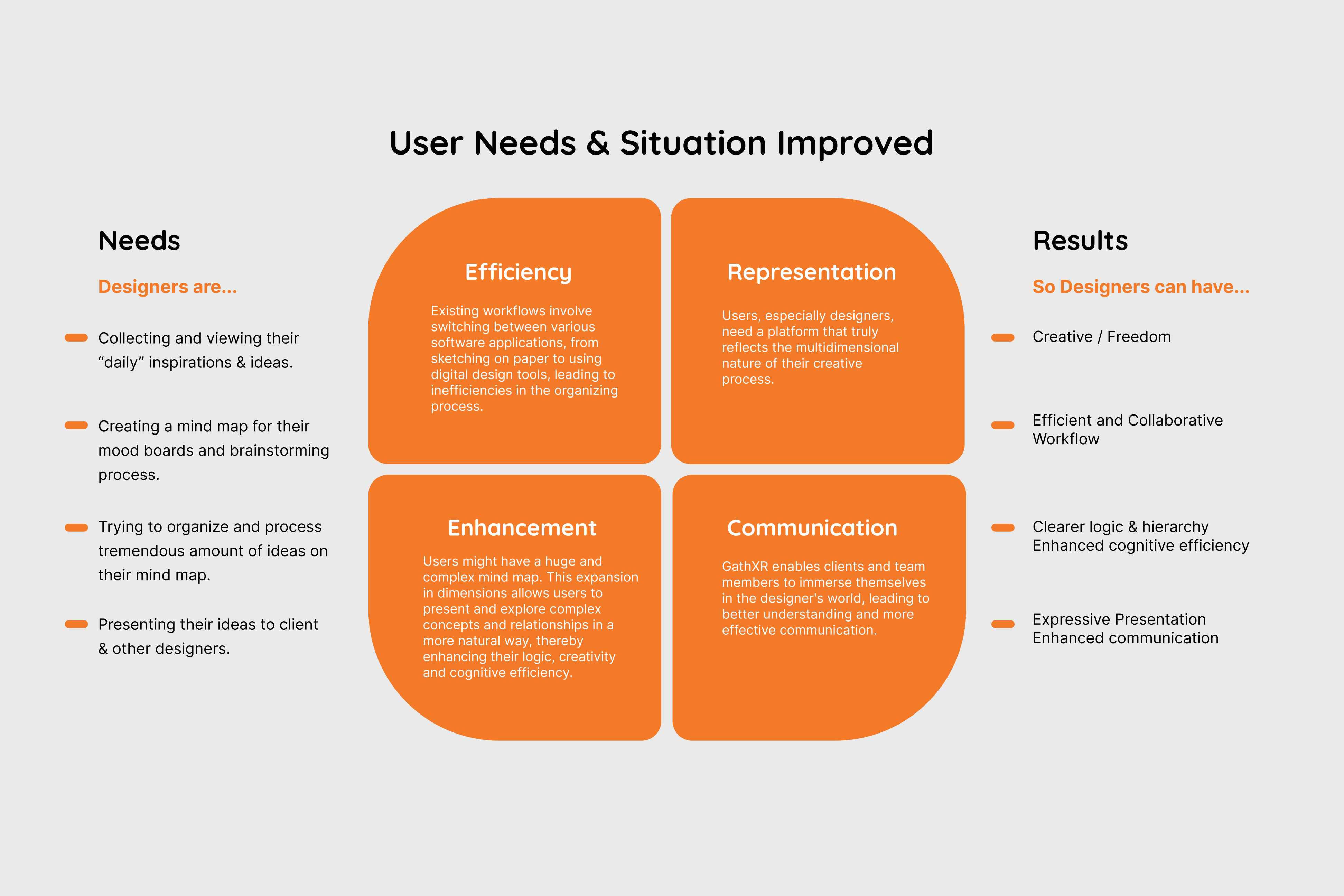
User needs & Situation Improved
-
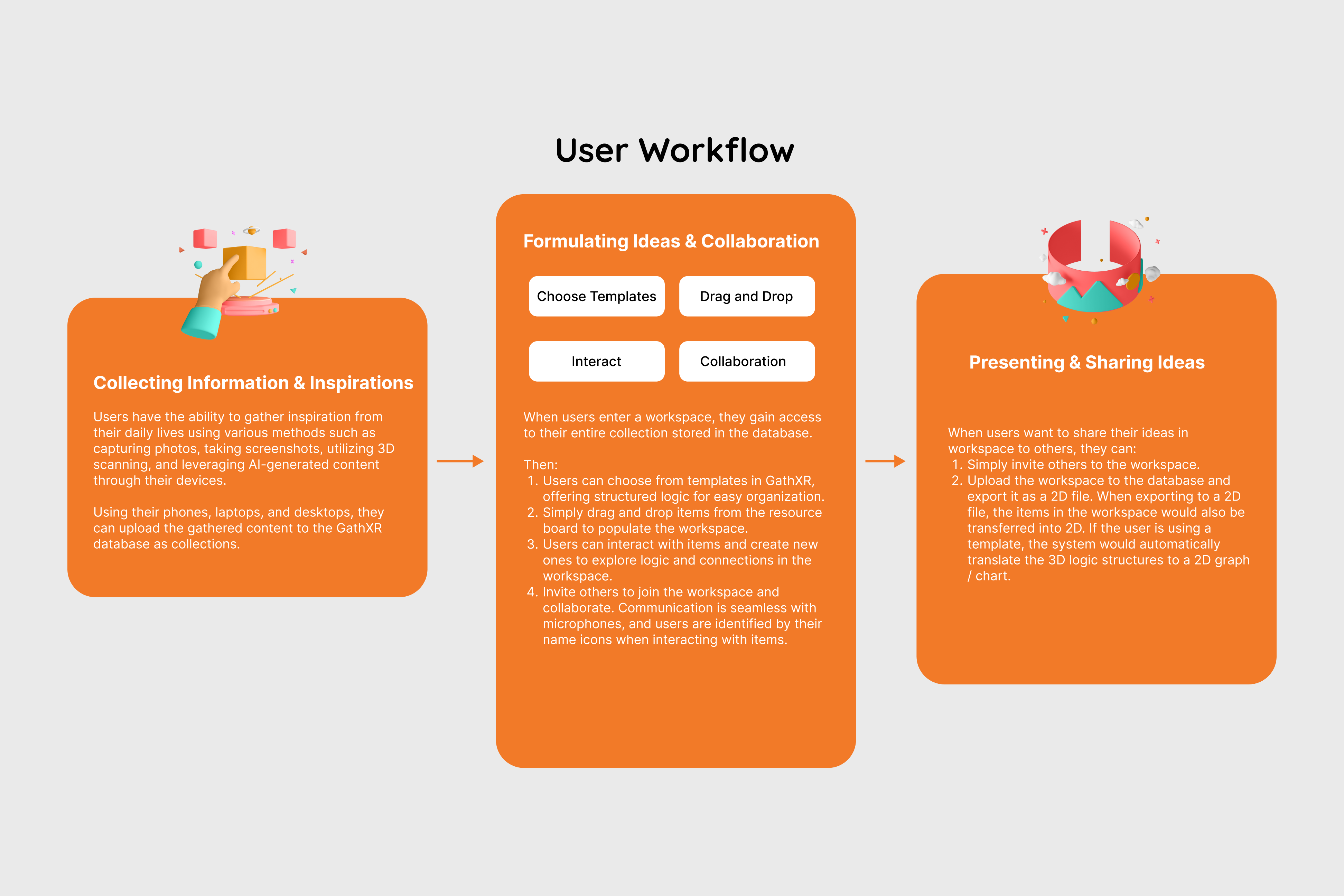
User Workflow
-
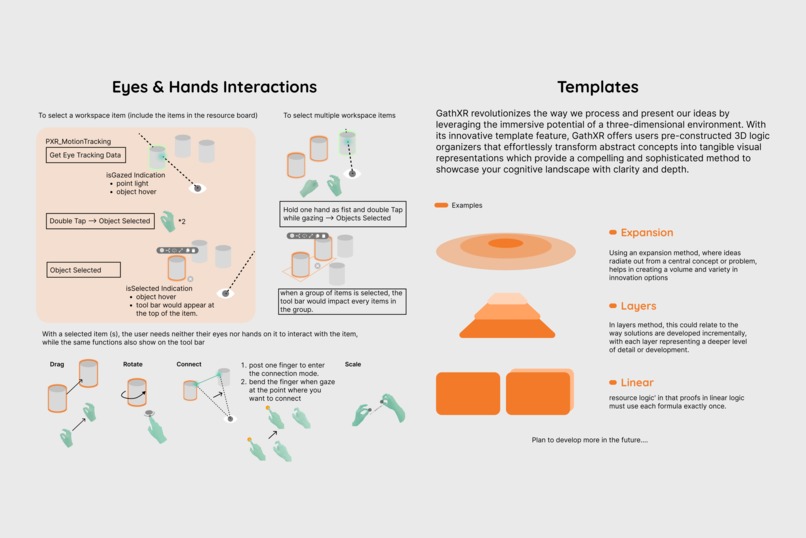
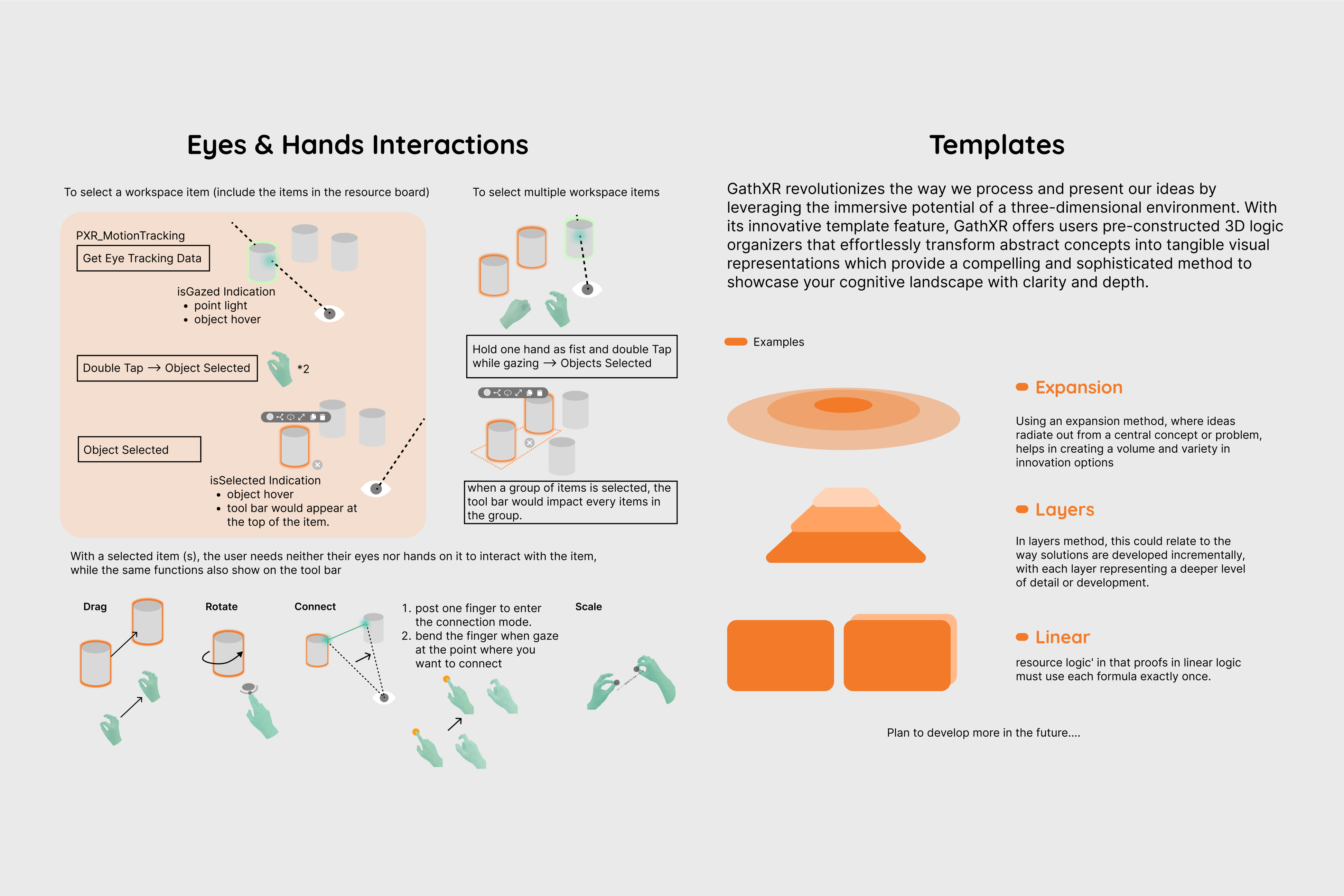
Techniques & Template feature
-
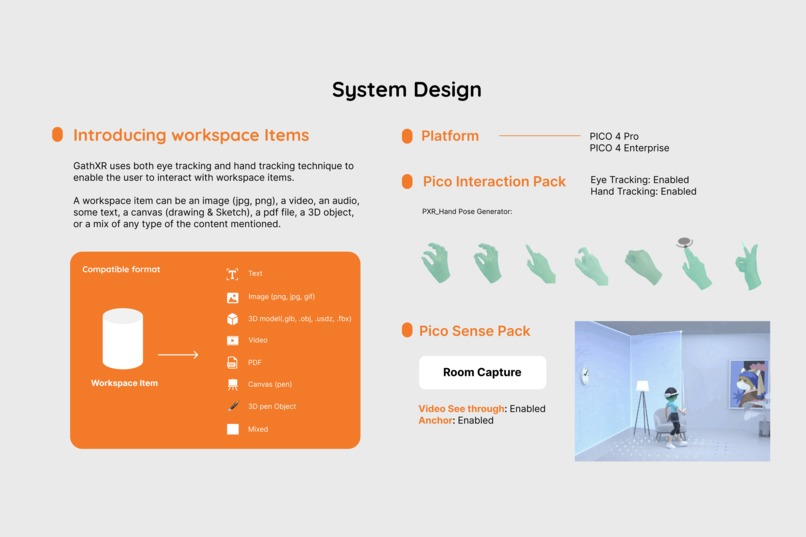
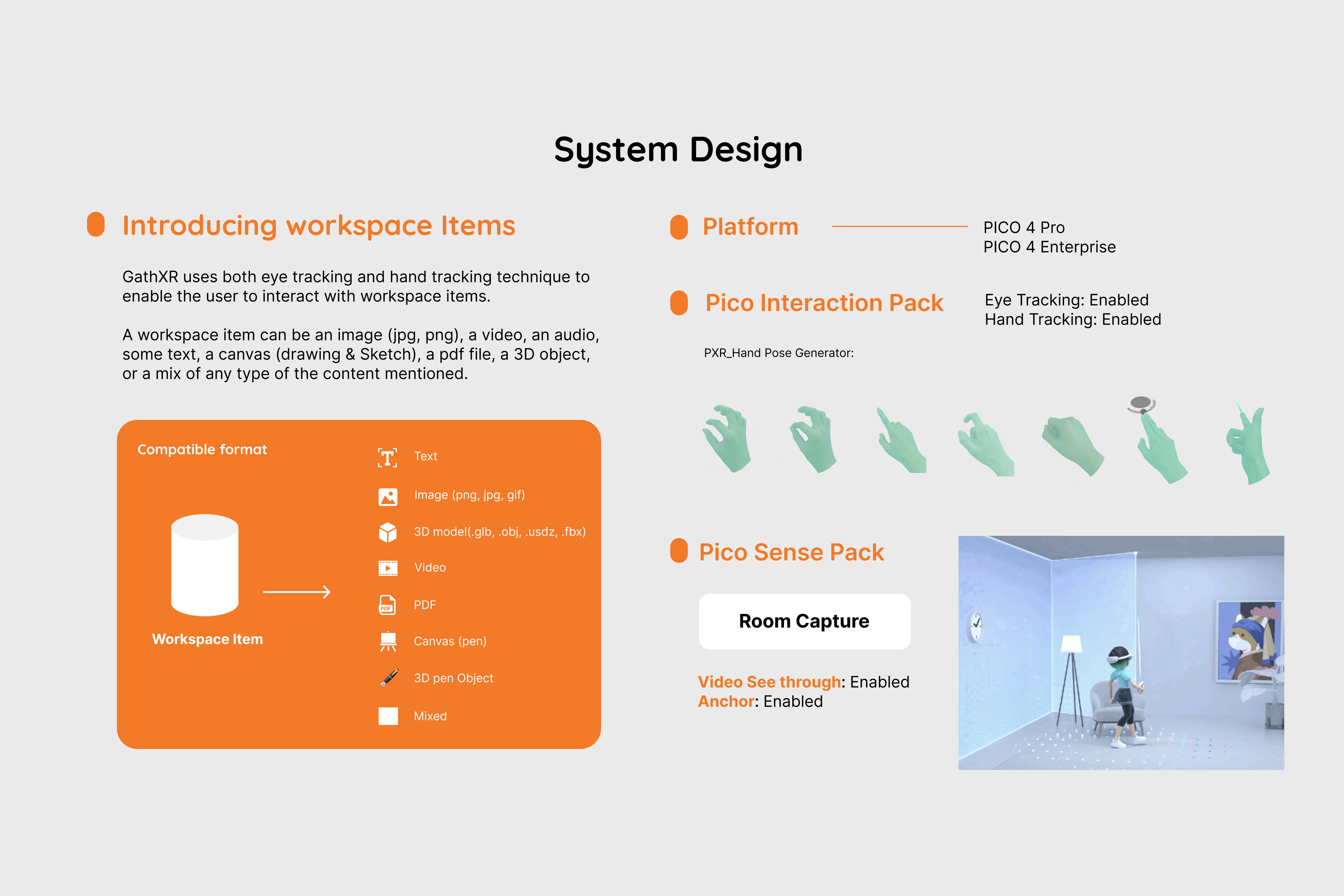
System Design
-
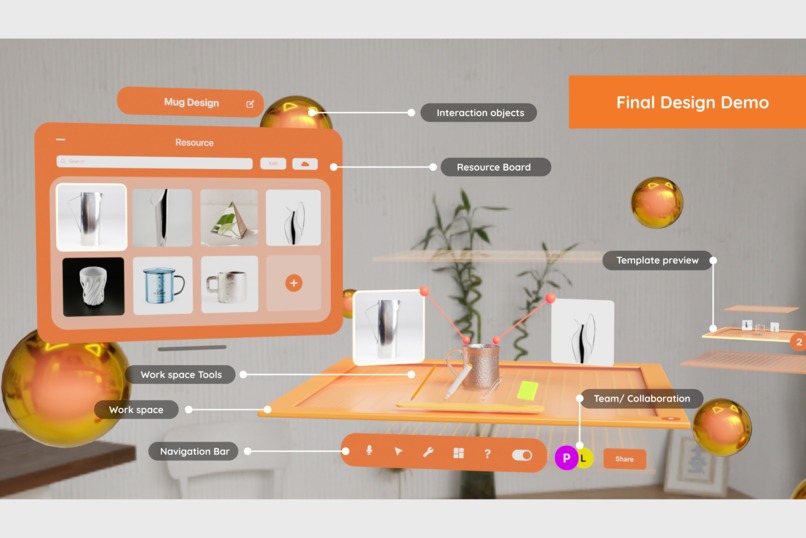
Final Design Demo
-
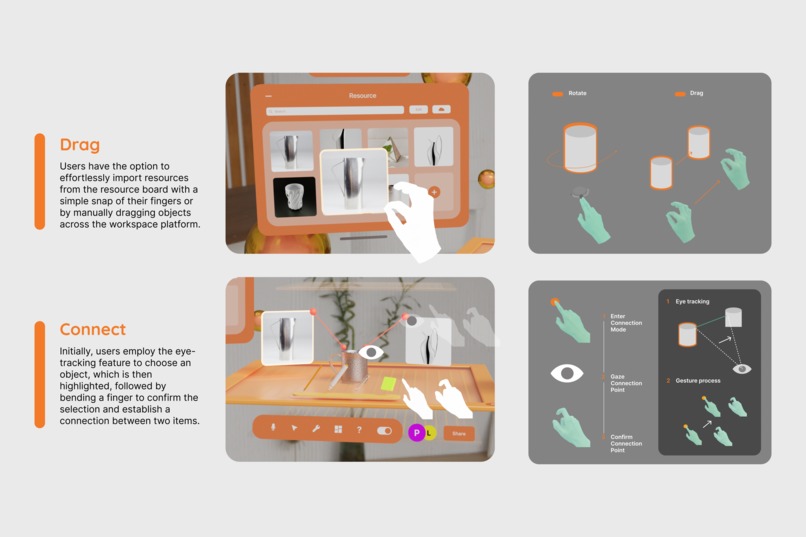
Interactions
-
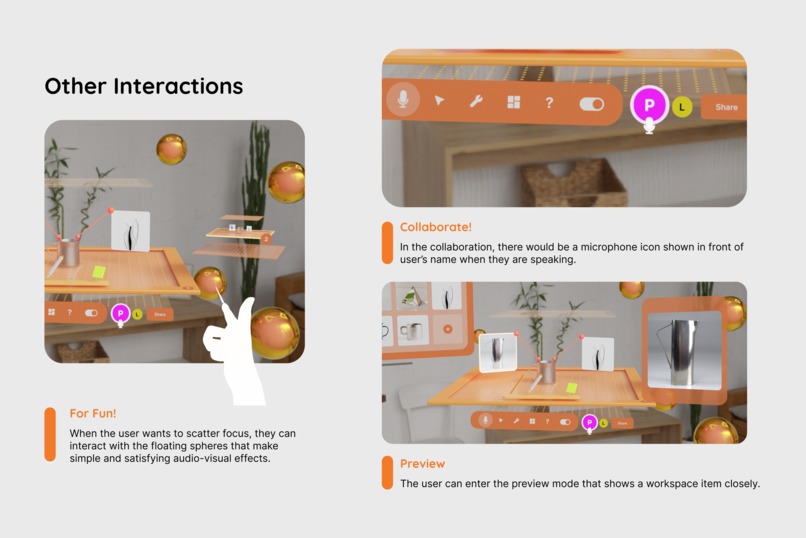
Additional interactions
-
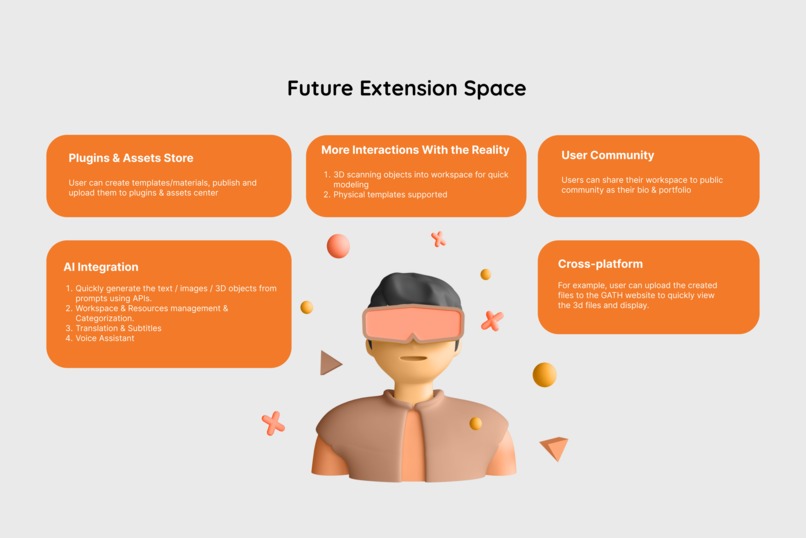
Future Expansion Space
Inspiration
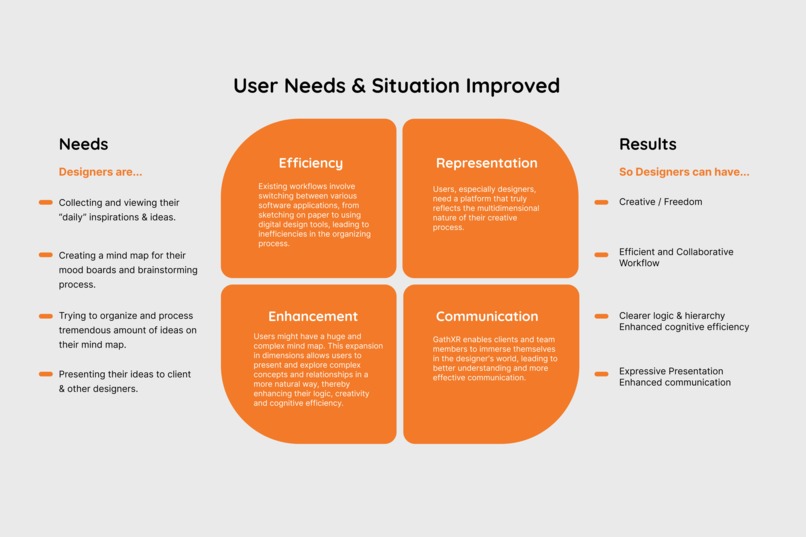
As we were designing another product, the moodboard and mindmap in Miro became so extensive that extracting inspiration from it became a challenge. Consequently, we decided to transfer it to a physical whiteboard, which improved the content's readability and comprehensibility. However, this approach had its drawbacks, including limited space and the increased effort required for manual writing.
Therefore, with the advent of mixed reality, we embarked on the development of GathXR. Our aim was to amalgamate the strengths of both physical and digital mind mapping methodologies.
What it does
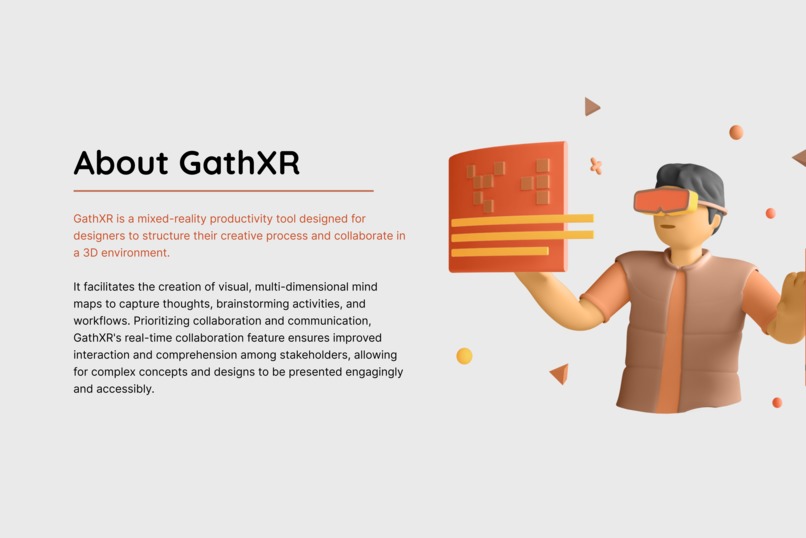
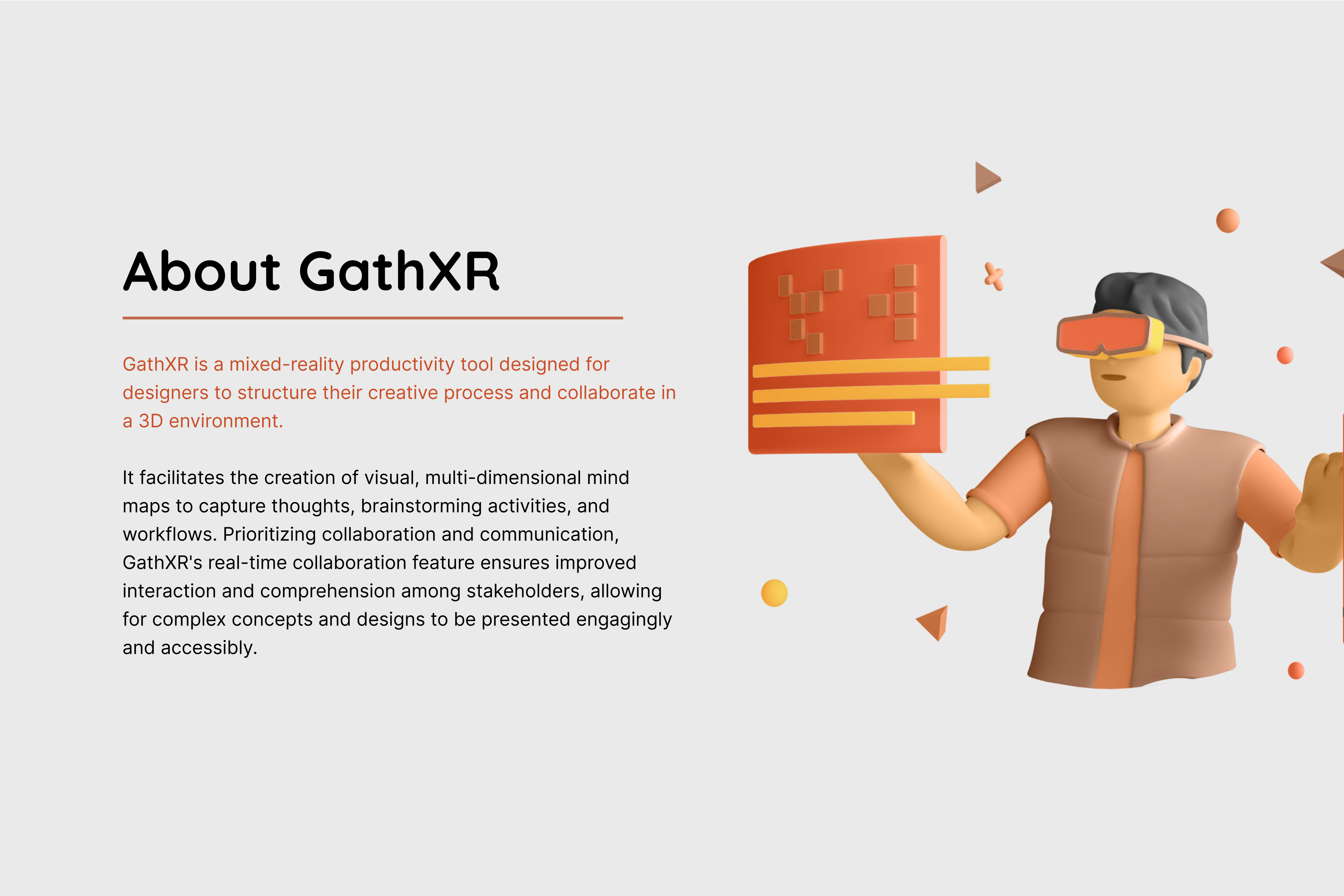
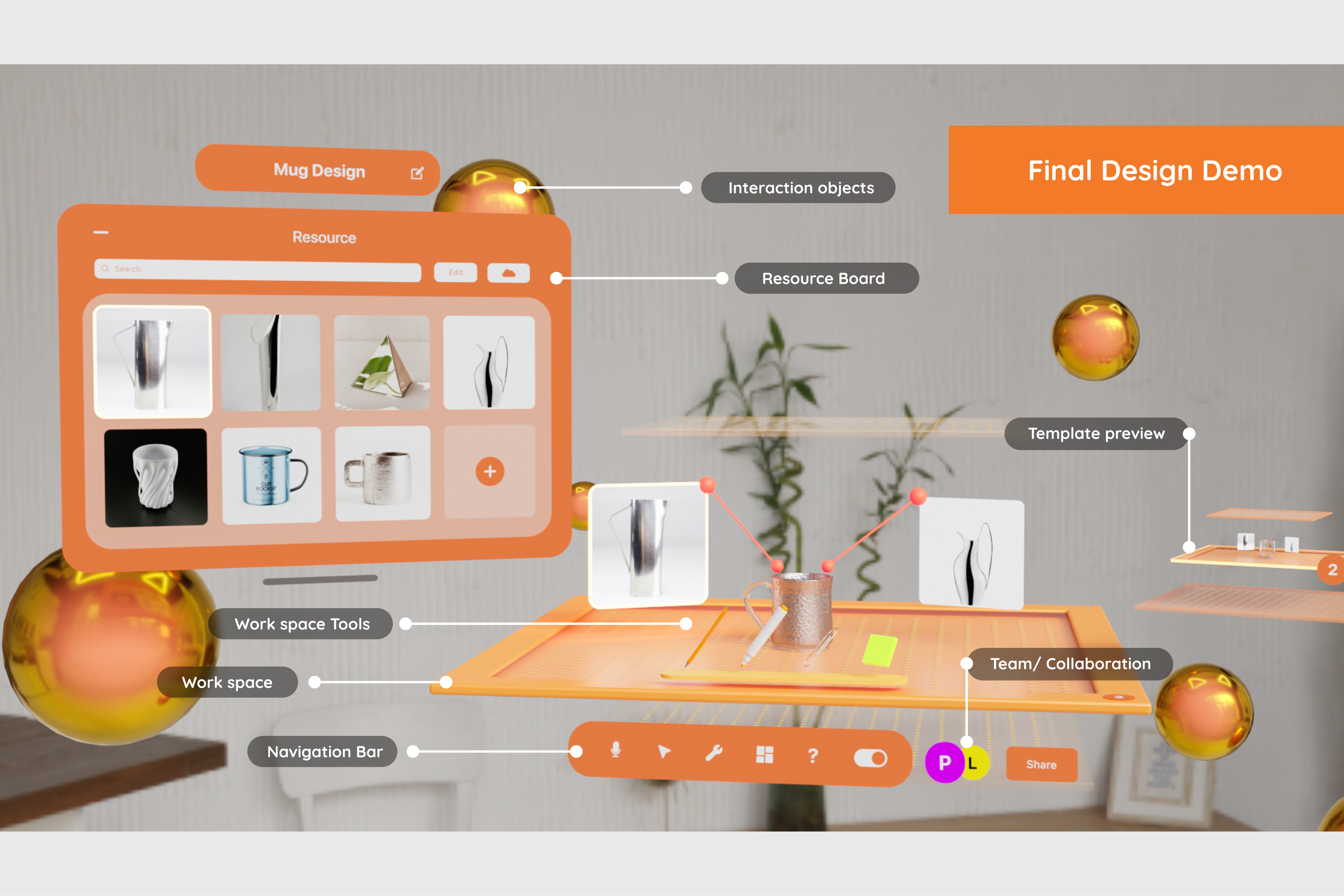
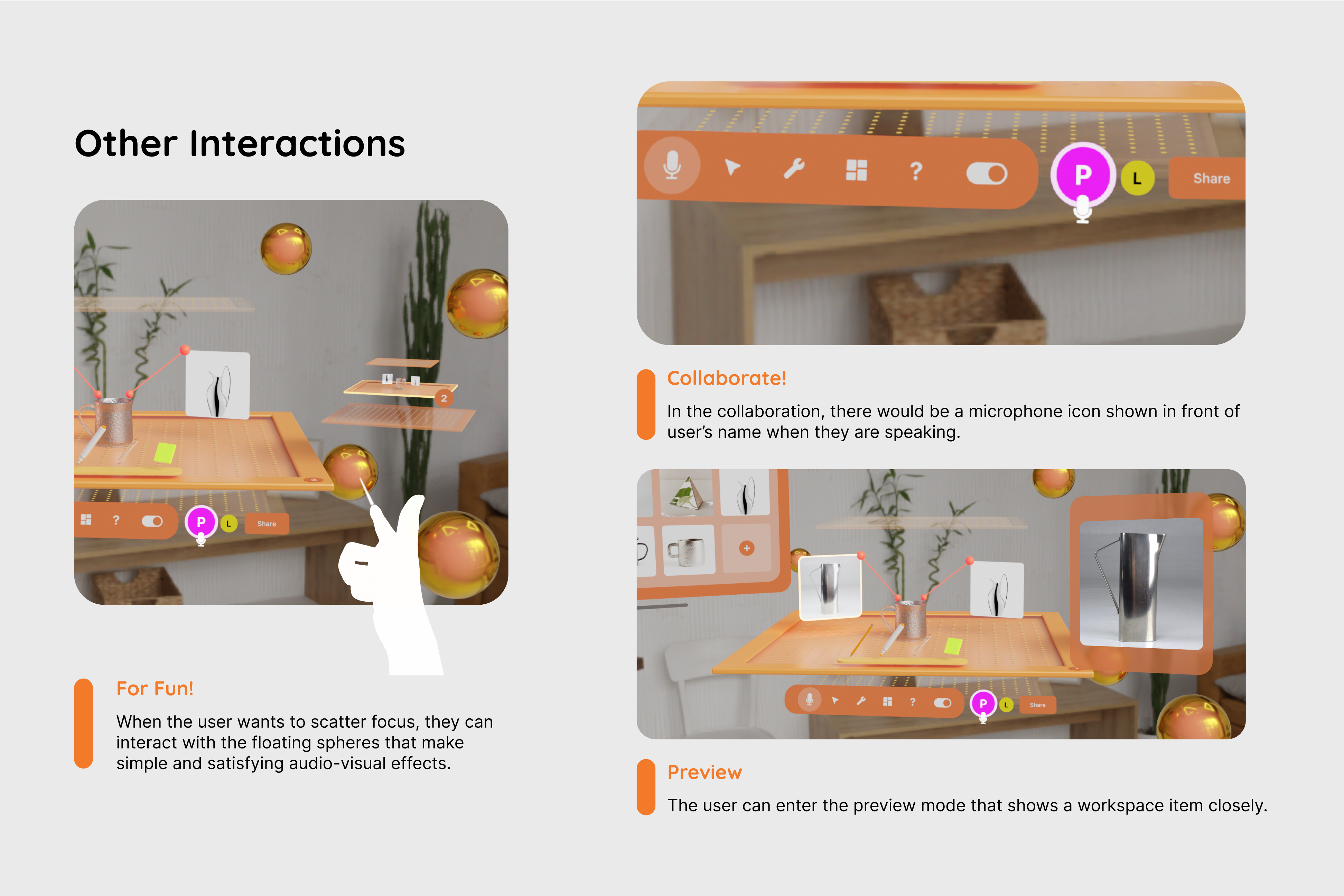
GathXR is a mixed-reality productivity tool designed for designers to structure their creative process and collaborate in a 3D environment. It facilitates the creation of visual, multi-dimensional mind maps to capture thoughts, brainstorming activities, and workflows. Prioritizing collaboration and communication, GathXR's real-time collaboration feature ensures improved interaction and comprehension among stakeholders, allowing for complex concepts and designs to be presented engagingly and accessibly.
How we built it
We conducted numerous interviews with designers from various fields and iterated on the idea multiple times. The final outcome has diverged significantly from our initial concept, but our core objective remains unchanged.
Challenges we ran into
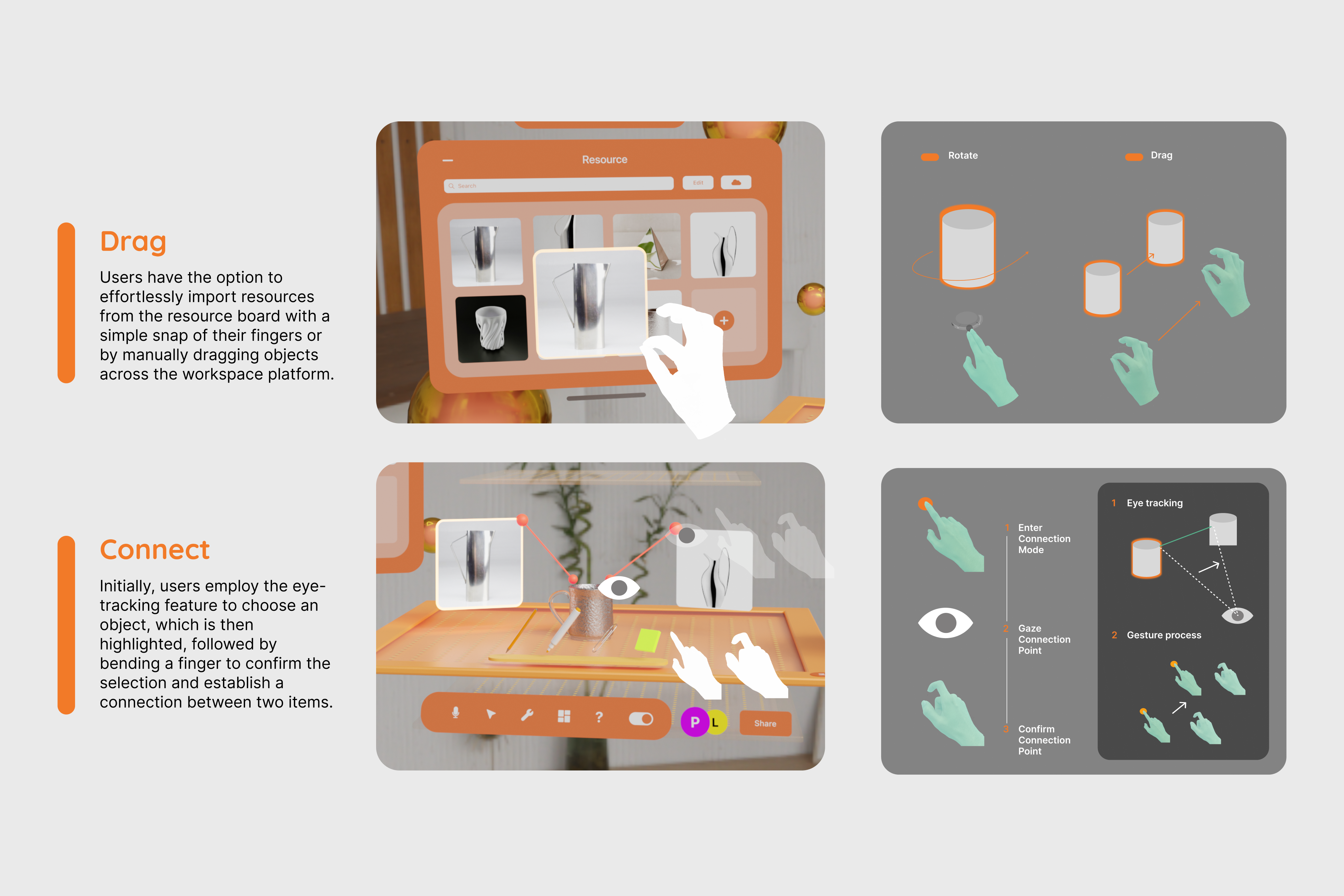
Creating gestures that felt natural and intuitive for users was a significant challenge. Making the gestures universally accessible and ensuring that users could interact with objects in the virtual space without a steep learning curve required careful consideration of gesture design.
Accomplishments that we're proud of
Our application was designed with a focus on user-friendliness and intuitiveness. As we gathered feedback from our interviews, we have successfully developed a diverse and comprehensive function libraries of 3D logical templates, covering various industries and applications.
What we learned
The process of designing GathXR has imparted a crucial lesson: we are not the same as our users. The most effective solutions arise from our intended user base, and engaging in conversations and understanding their perspectives is paramount when developing a product.
What's next for GathXR
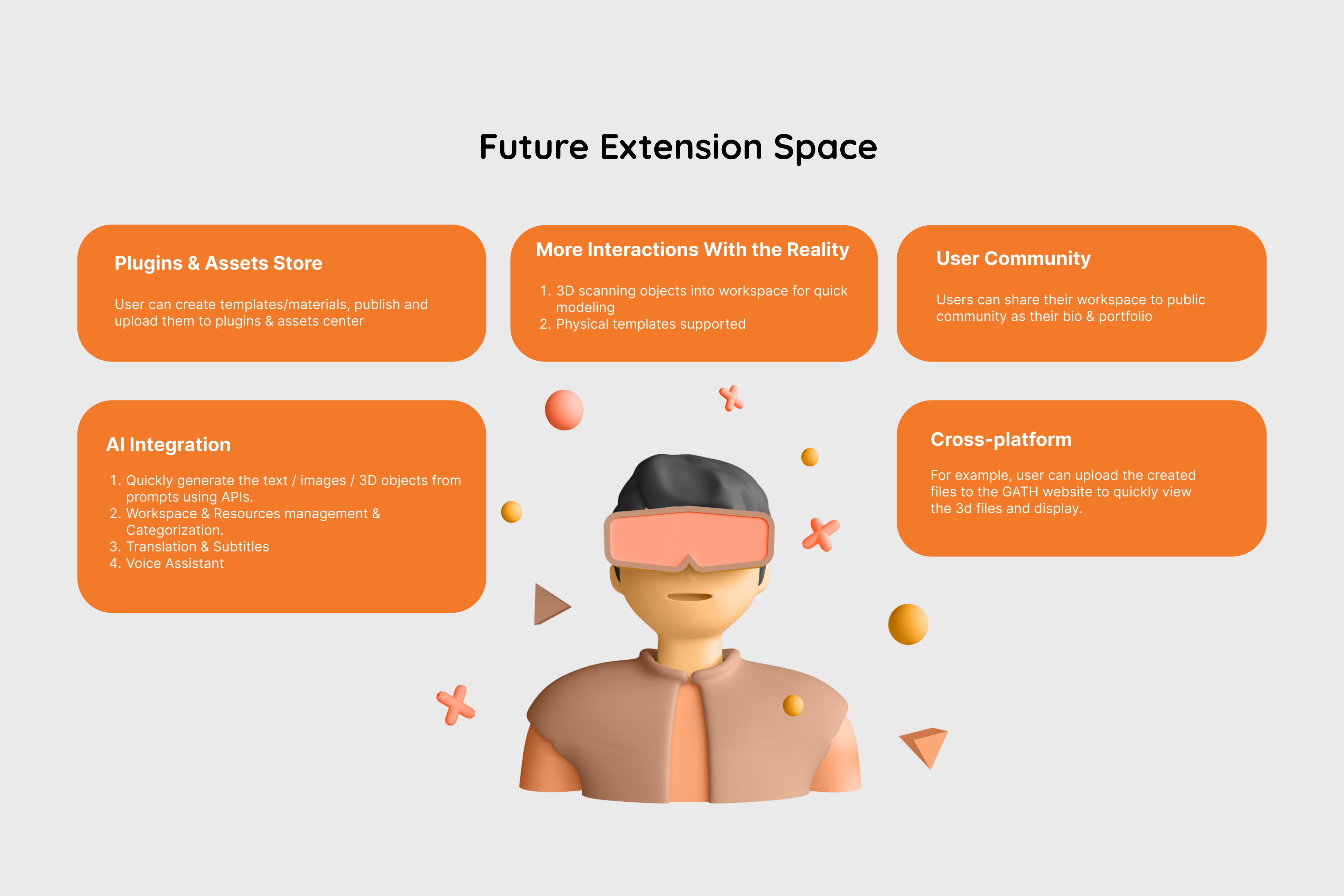
Prototyping and Testing: First, we'll develop a base prototype, which is a simplified version that contains the core functionality of the software. We test this prototype internally and with users to gather feedback on its usability and functionality.
Initial go-to-market with user feedback collection: Get this prototype or slightly developed version on the shelves, a public beta. During this phase, the focus is on collecting user feedback to understand the actual user experience and needs of the product.
Continuous development and iteration: Based on user feedback, the product is improved and developed. This includes fixing bugs, adding new features, or optimizing existing features. The continuous iterative process ensures that the product matures and better meets user needs.
Full Marketing: Once the product reaches a stable and mature stage, a full-scale marketing campaign can begin. Utilize social media, online advertising, and industry partnerships to increase product exposure.
Product optimization and new feature development: Based on the data and feedback collected, continue to optimize the product and develop new features. This may include improvements to the user interface, performance optimization, or the introduction of innovative features.
Long-term maintenance and updates: Even after the product has stabilized, ongoing maintenance and regular updates are required to keep it relevant and competitive. This includes fixing newly discovered bugs, adapting to new operating system updates and technical standards.


Log in or sign up for Devpost to join the conversation.