-
-
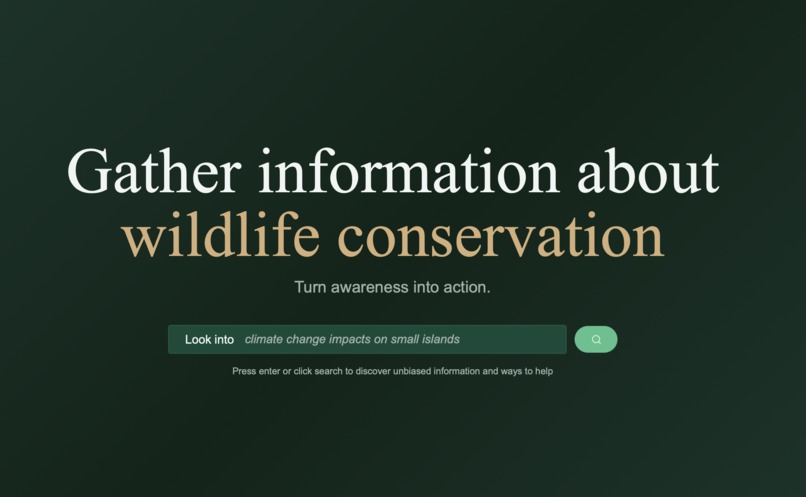
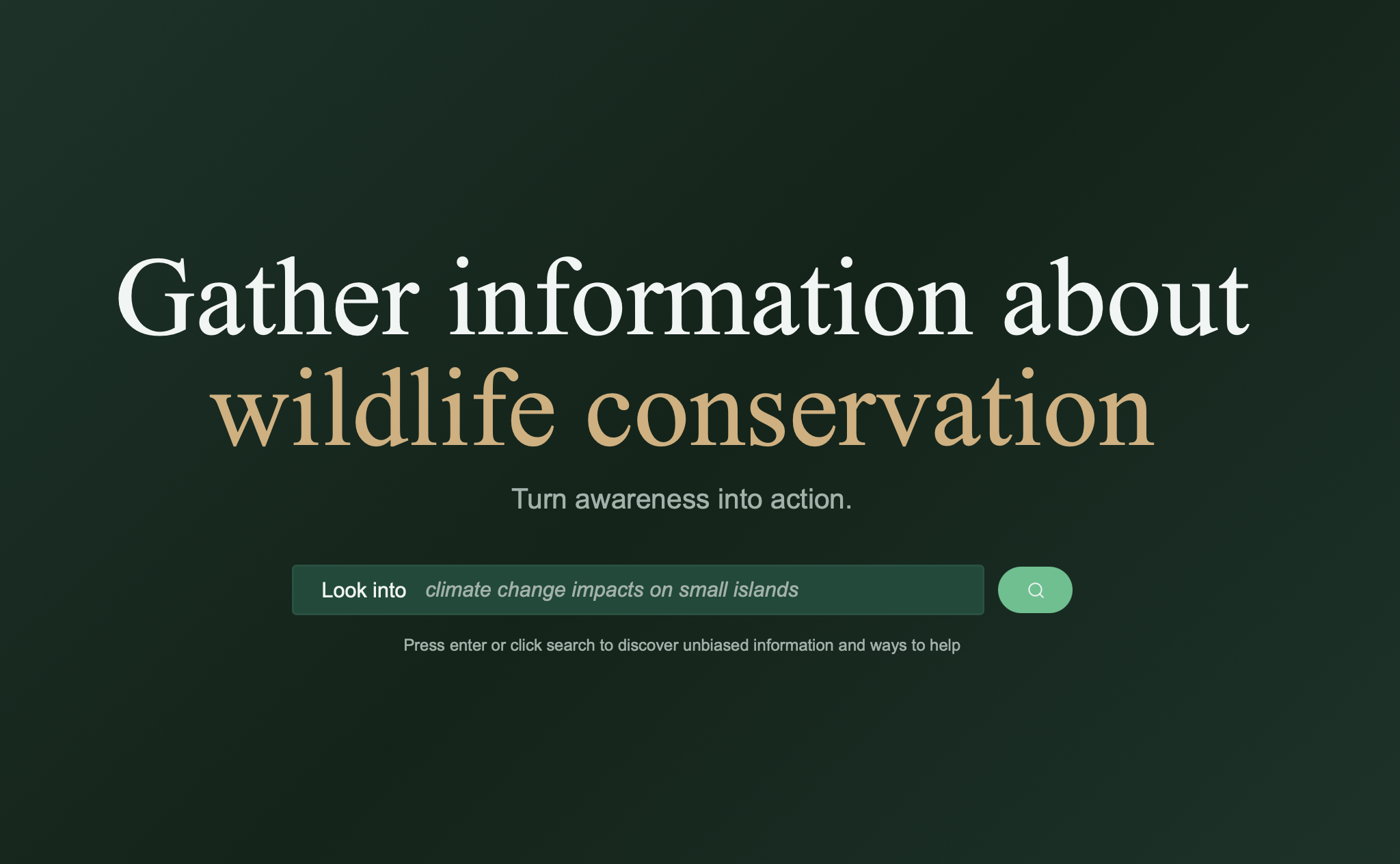
Landing Page
-
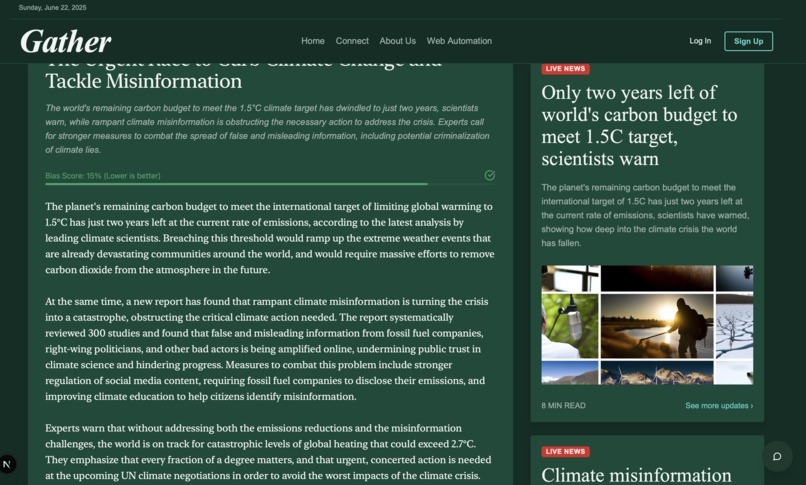
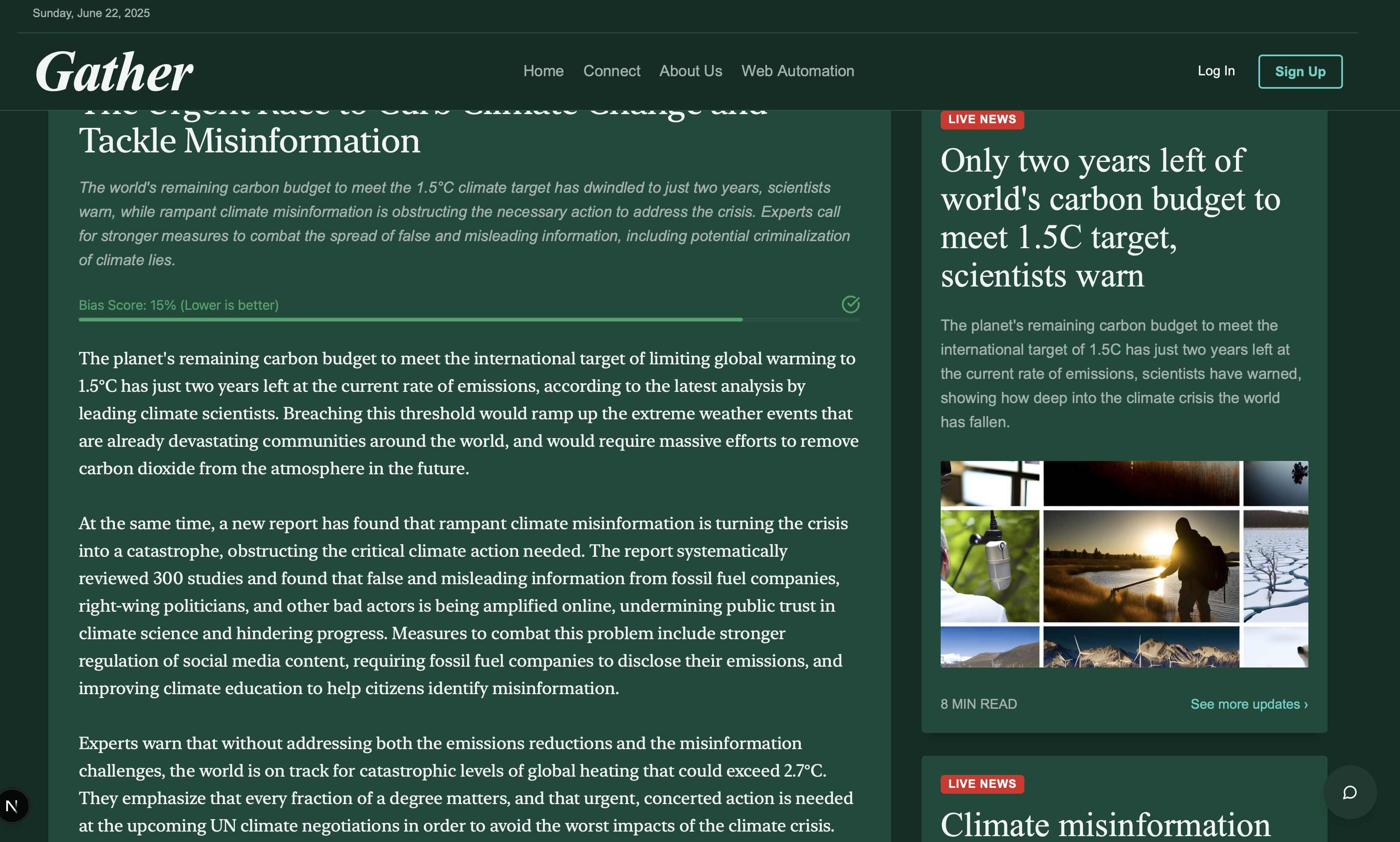
Generated Articles + Images
-
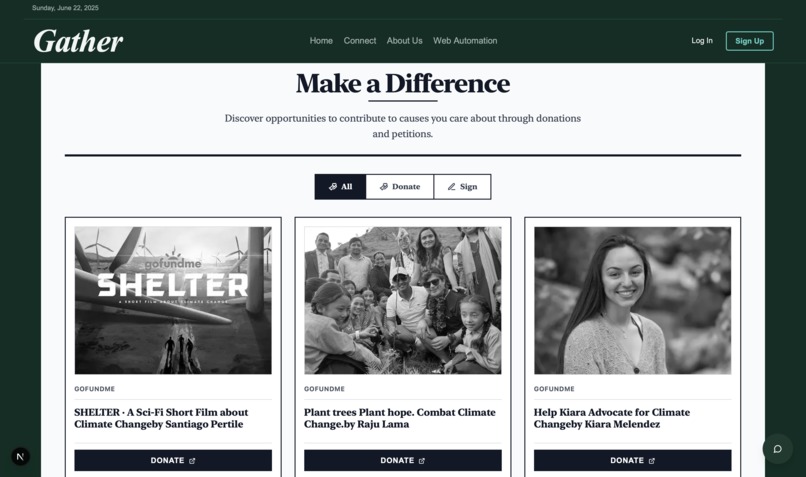
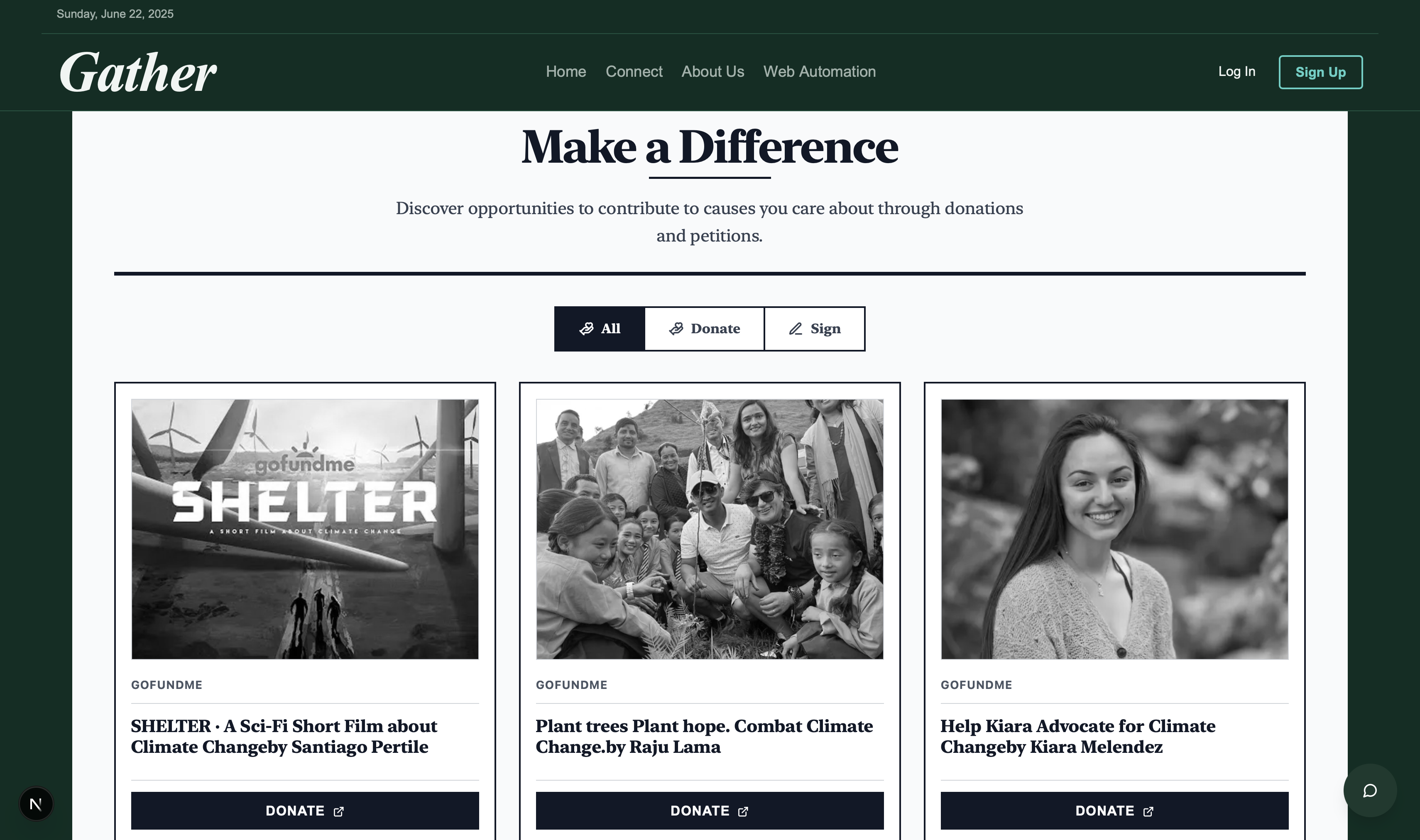
GoFundMe + change.org populated from query
-
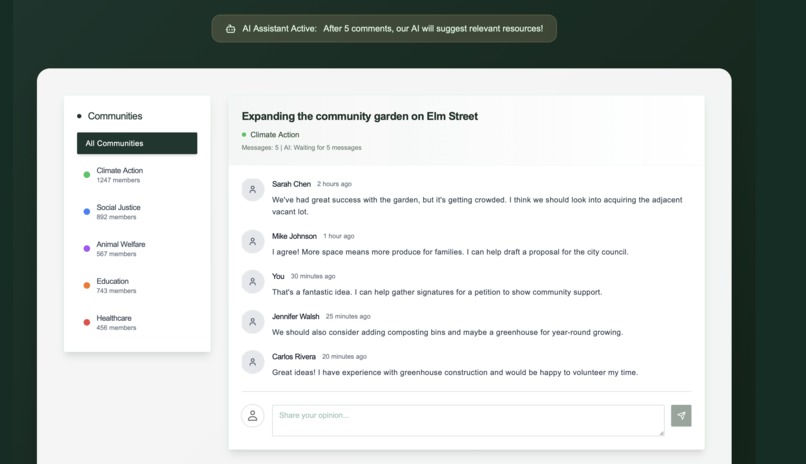
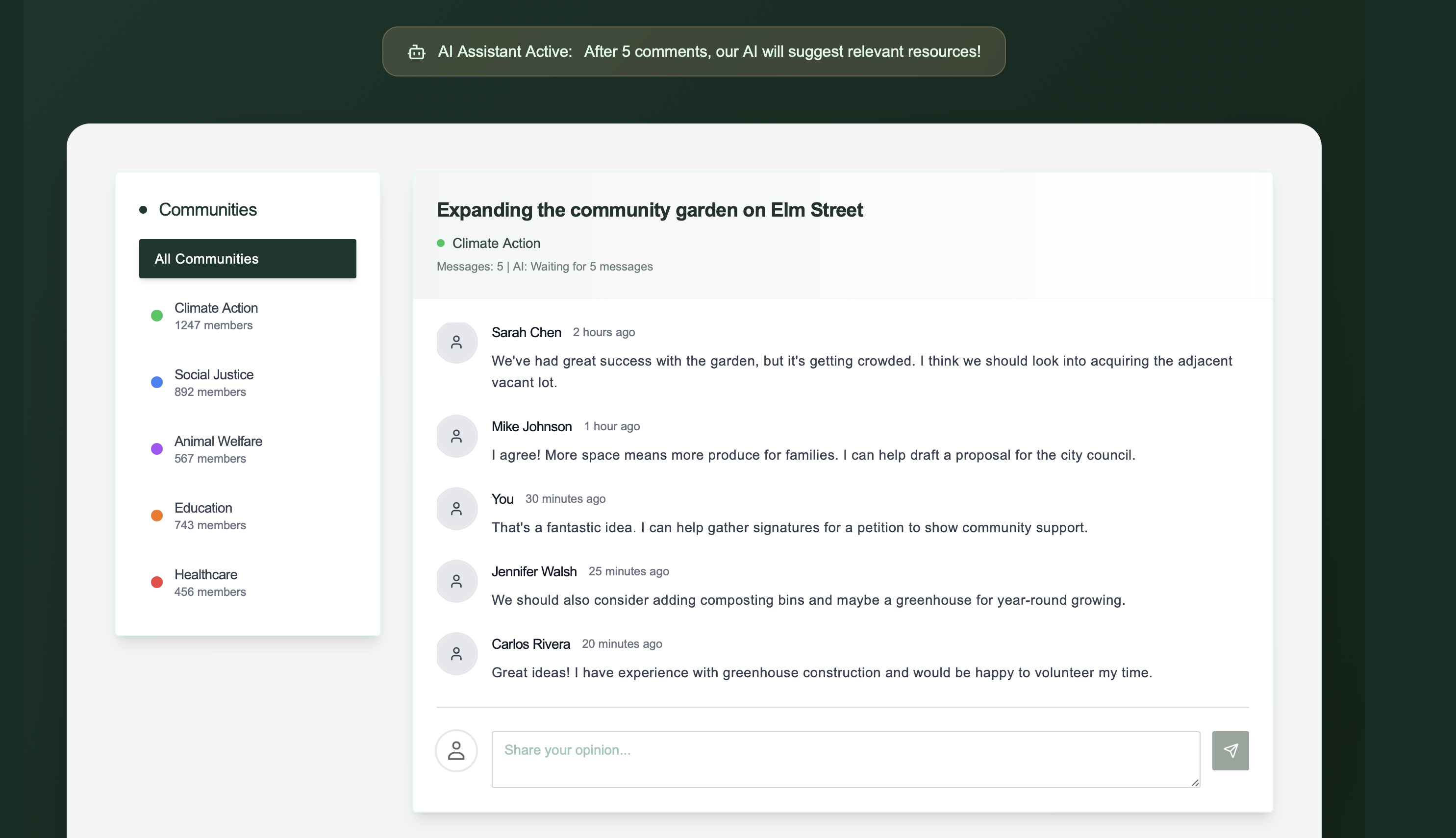
Community forum picture
Voices to Velocity: Fueling Grassroots Dialogue Like Never Before
🚀 Inspiration
Three days after the ICE raids began, our social media feeds overflowed with rage, sorrow, and helpless questions. Friends shared news articles, debated immigration policies, and asked, "What can we do?" Yet buried beneath this surge of posts were real pleas for help-families in urgent need of financial support, communities setting up safe spaces, and individuals fearing for their safety.
The disconnect was heartbreaking. Millions of people were eager to help, and yet those in need remained invisible behind the noise of the timeline. Social media platforms are built to amplify emotion, not mobilize action. That moment revealed the deeper crisis: when tragedy strikes, we have compassion and we have resources, but we lack connection.
This truth hit us even harder personally. Some of our closest friends, international students and immigrants who work harder than anyone we know, live in a state of constant anxiety about deportation. That fear doesn’t trend on Twitter. It rarely goes viral. But it is very real.
That’s why we built Gather: to transform social outrage into coordinated, tangible action. In moments of crisis, we don't just want to feel something but do something. Gather makes that possible.
🌟 What It Does
Gather bridges the gap between awareness and action. A user can:
- Search any topic they care about (climate change, eviction, asylum, or gun violence) and receive a clean, AI-generated news summary with sourced articles from verified outlets.
- Explore curated real-world actions: GoFundMe fundraisers, Change.org petitions, and verified volunteer opportunities, all scraped in real-time.
- Join community forums monitored by AI agents that analyze conversations in real-time and suggest:
- Donations to relevant causes
- Petitions to sign
- Local events or volunteer listings
The agent listens, understands, and recommends tailored steps based on the community's discussions.
Additionally, our multimodal voice agent, powered by Vapi, enables users to speak directly with the platform. It listens to their concerns, understands context, and offers spoken recommendations aligned with their intent and capacity to contribute.
🧠 How We Built It
Gather’s technical foundation is a fusion of modern frontend frameworks, AI orchestration, and custom voice infrastructure.
Frontend
- Next.js and React for SPA structure and routing
- Tailwind CSS + Shadcn/ui for clean, responsive design
- Framer Motion for animations and fluid transitions
Voice and AI Integration
- Vapi SDK powers our voice agent
useVapiVoiceReact hook manages audio lifecycle, transcription, and promptsVoiceAssistantModalwraps this into a sleek voice UI/api/voice/web-calldynamically creates Vapi agents with custom tools and prompts
Actionable Intelligence Engine
Web Scraping with Playwright
- Live fundraisers, petitions, and opportunities from:
- GoFundMe
- Change.org
- VolunteerMatch
- Live fundraisers, petitions, and opportunities from:
Content Summarization
- Letta AI performs real-time web research
- Summaries enhanced by Claude (Anthropic)
Action Matching in Forums
- Groq's LLaMA3 model understands discussion intent
- Suggests high-quality, context-aware action items
Execution Agent
- Performs searches for user based on interaction with role-prompted Vapi agent
- Can open links, redirect users to crowdfunding / signing sites, aid in payment advisory, etc.
Architecture & Scaling
- Scalable for full user accounts with PostgreSQL or Supabase
⚡ Challenges We Ran Into
Building an agent-rich, real-time system in Next.js meant juggling:
- WebSocket-based voice communication via Vapi
- Headless browser automation via Playwright
- State and lifecycle management in React
Example: Avoiding memory leaks during the Vapi modal lifecycle required several rewrites and architectural separation.
Prompt Engineering Challenges
- Understanding vague queries like “this housing stuff is crazy rn”
- Interpreting tone and intent (info-seeking vs. advocacy)
- Mapping those intents to structured actions (e.g., a fundraiser vs. a protest)
It took hundreds of iterations to get our agents to behave consistently across edge cases.
🏆 Accomplishments We’re Proud Of
We didn’t just build another AI chatbot. We:
- Delivered a responsive and elegant UI
- Scraped real-world fundraisers, petitions, and opportunities
- Orchestrated multiple AI agents across modalities
- Built a working voice browser agent with contextual awareness
Gather is real, impactful infrastructure for meaningful civic engagement. That’s priceless.
📖 What We Learned
- Prompt engineering is critical: Specificity, tone, and structure determine agent success.
- Multimodal orchestration is complex: We had to blend audio input, NLP summarization, and context-sensitive logic across several APIs.
- Design matters: Scrollable chat panes, responsive cards, loading indicators → all small things that made the platform intuitive and trustworthy.
🚀 What’s Next for Gather
- Implement real authentication and database-backed profiles
- Add contribution dashboards to track personal impact
- Use AI to:
- Cluster users by interest
- Summarize forum discussions
- Match causes and events to user intent
- Partner with nonprofits, NGOs, and local gov to verify and surface urgent actions
Gather is more than an app. It’s a civic infrastructure layer designed to convert empathy into impact and outrage into opportunity.
Built With
- claude
- groq
- javascript
- letta
- nextjs
- playwright
- python
- react
- tailwind
- typescript
- vapi


Log in or sign up for Devpost to join the conversation.