-
-
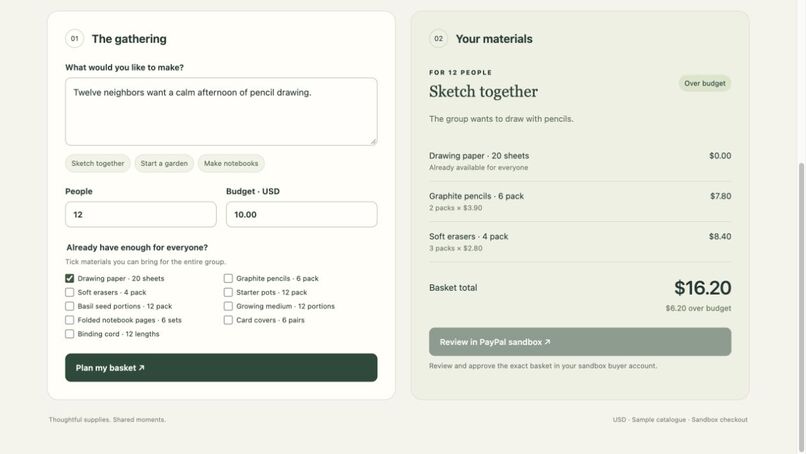
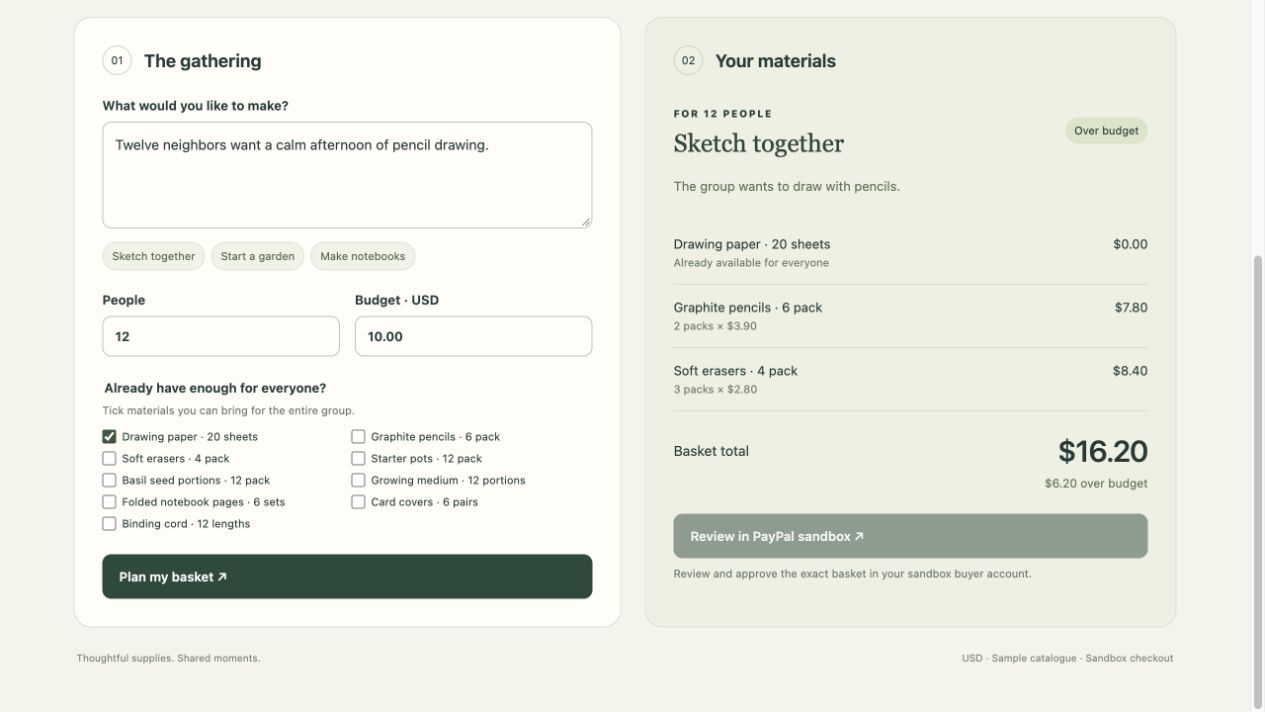
A basket above the budget cannot proceed to PayPal checkout.
-
-
Inspiration
A community workshop starts with a generous idea and a practical question: do we have enough materials for everyone? Gather Cart connects the idea, the quantities and the checkout in one small workflow.
What it does
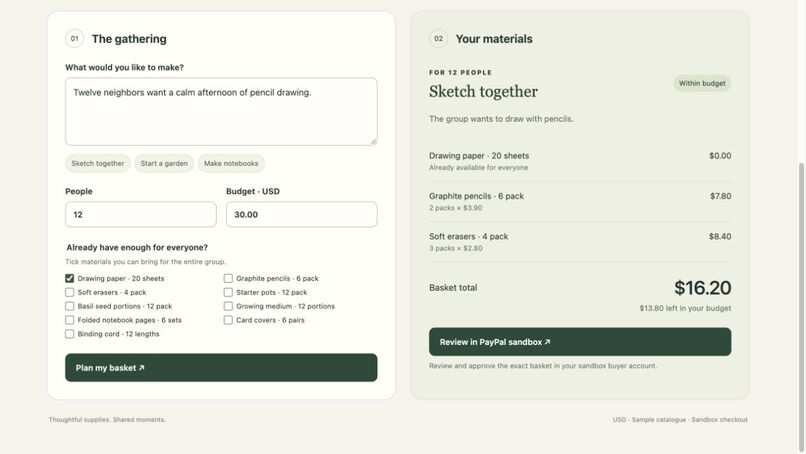
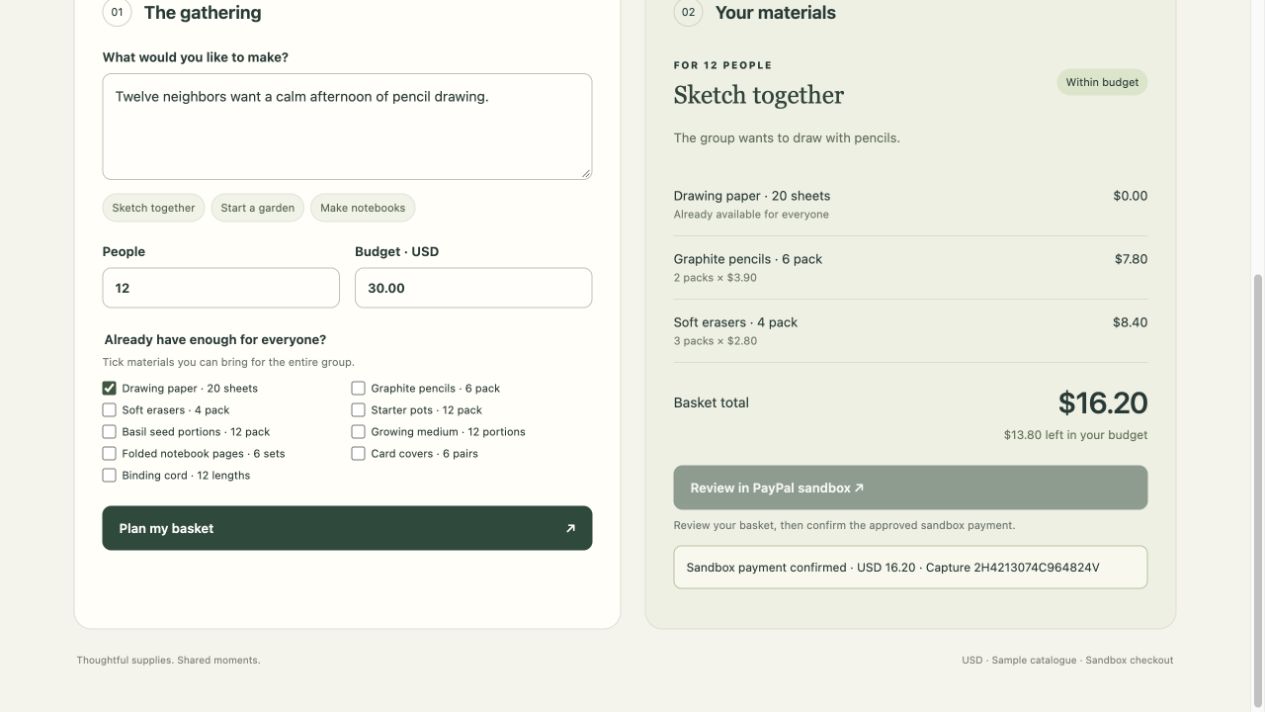
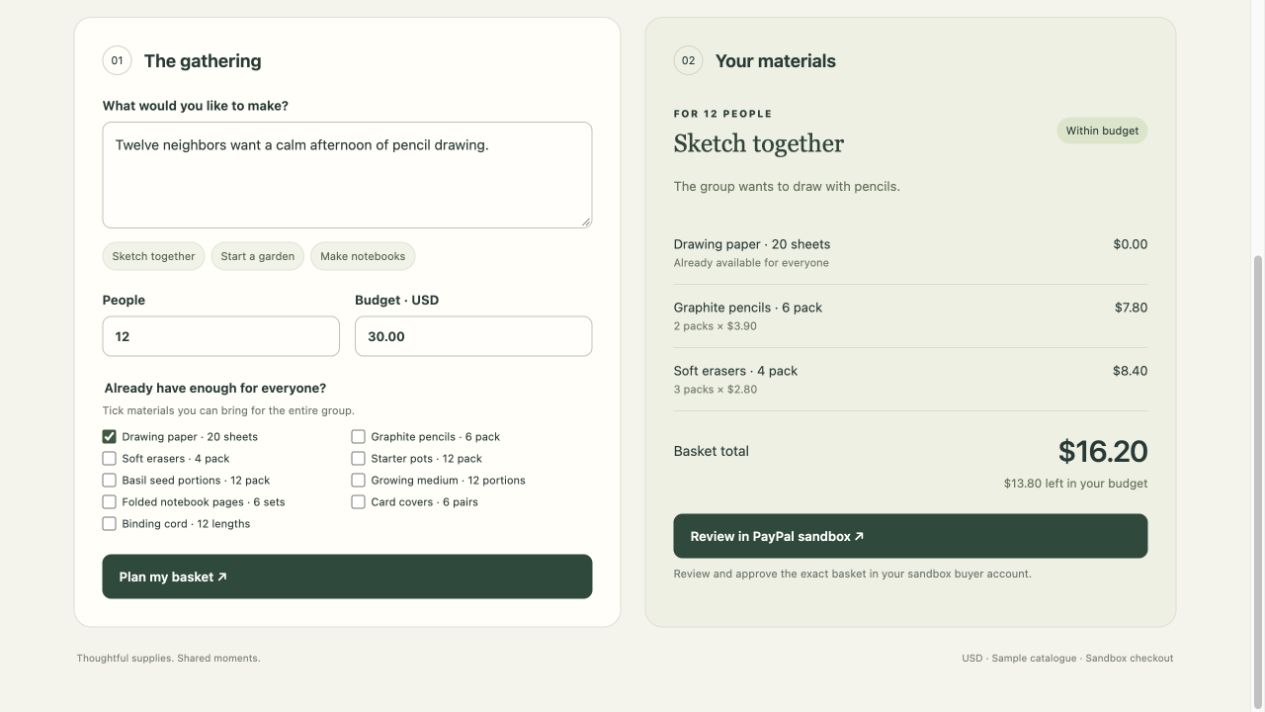
Describe a workshop, enter the group size and budget, and tick materials already available for the entire group. A local language model identifies the activity. Gather Cart calculates whole packs from its USD demonstration catalogue and shows exactly what is needed, what is already covered and how much budget remains. The catalogue supports sketching, seed starting and notebook binding.
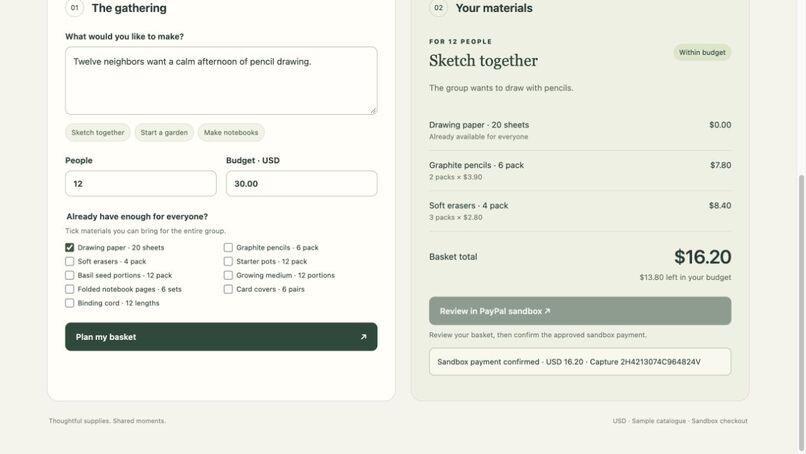
The organizer reviews the basket before opening PayPal sandbox. After buyer approval, a separate confirmation captures the same reviewed amount. A verified completed capture produces the receipt. An over-budget basket cannot reach checkout.
How it works
Qwen2.5-1.5B-Instruct runs locally through MLX. It selects a supported activity and supplies a short explanation. The Python server validates that result and calculates quantities and prices using decimal arithmetic. The model never sets the payable amount.
The PayPal integration uses the sandbox Orders v2 API to create, retrieve and capture orders. A saved quote binds the basket to the browser session, and stable request identifiers make retries idempotent. The server verifies the order reference, currency and amount before capture and verifies the completed capture before displaying a receipt.
The interface uses HTML, CSS and JavaScript. The repository includes an MIT license, complete setup instructions, a dependency-free sample rehearsal, pinned local model download instructions and automated tests.
Validation
All 18 automated tests pass. Real local inference passed 12 workshop-selection cases. The demonstrated sandbox checkout created and approved a USD 16.20 basket and returned a completed capture; a page reload preserved the confirmed receipt. The demo also shows an over-budget basket with checkout disabled.
Challenges and lessons
The central integration challenge was keeping a flexible language-model suggestion separate from a fixed payment amount. Restricting the model to activity selection and calculating the basket on the server makes that boundary testable. Buyer approval and completed payment are also distinct states: the app checks the returned capture before issuing its receipt.
What is next
Expand the materials catalogue with organizer feedback and add a persistent store for shared workshop plans.
Built With
- javascript
- mlx
- paypal
- python
- qwen
