-
-
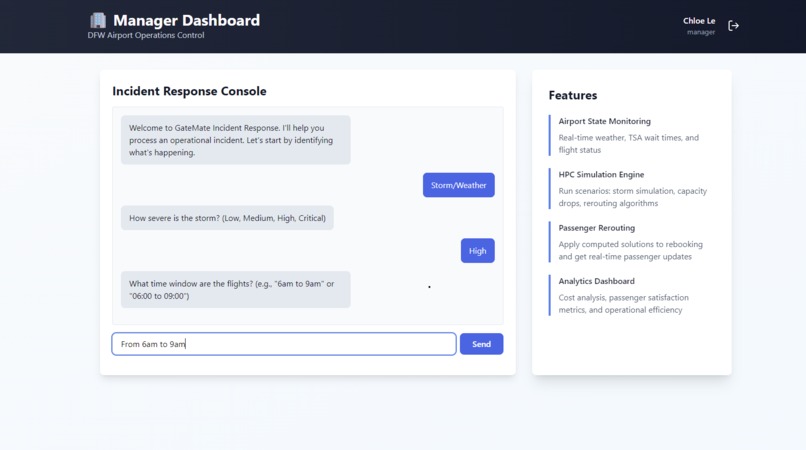
Manager Page
-
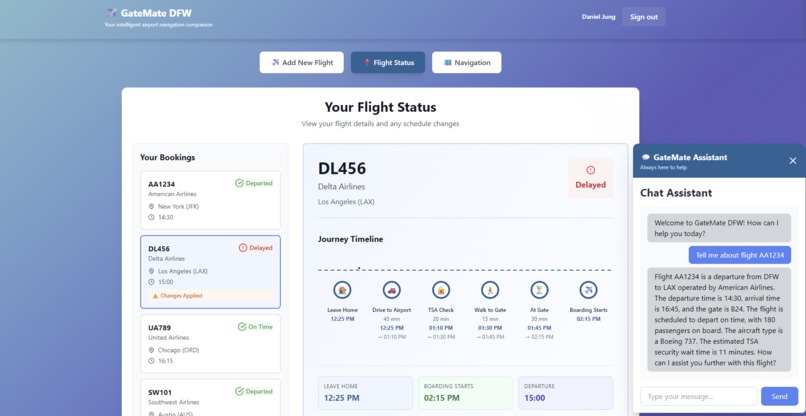
Passenger Page
-
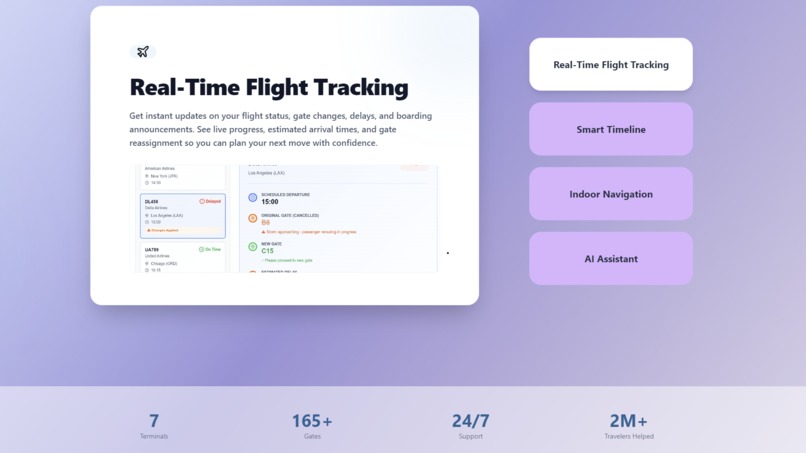
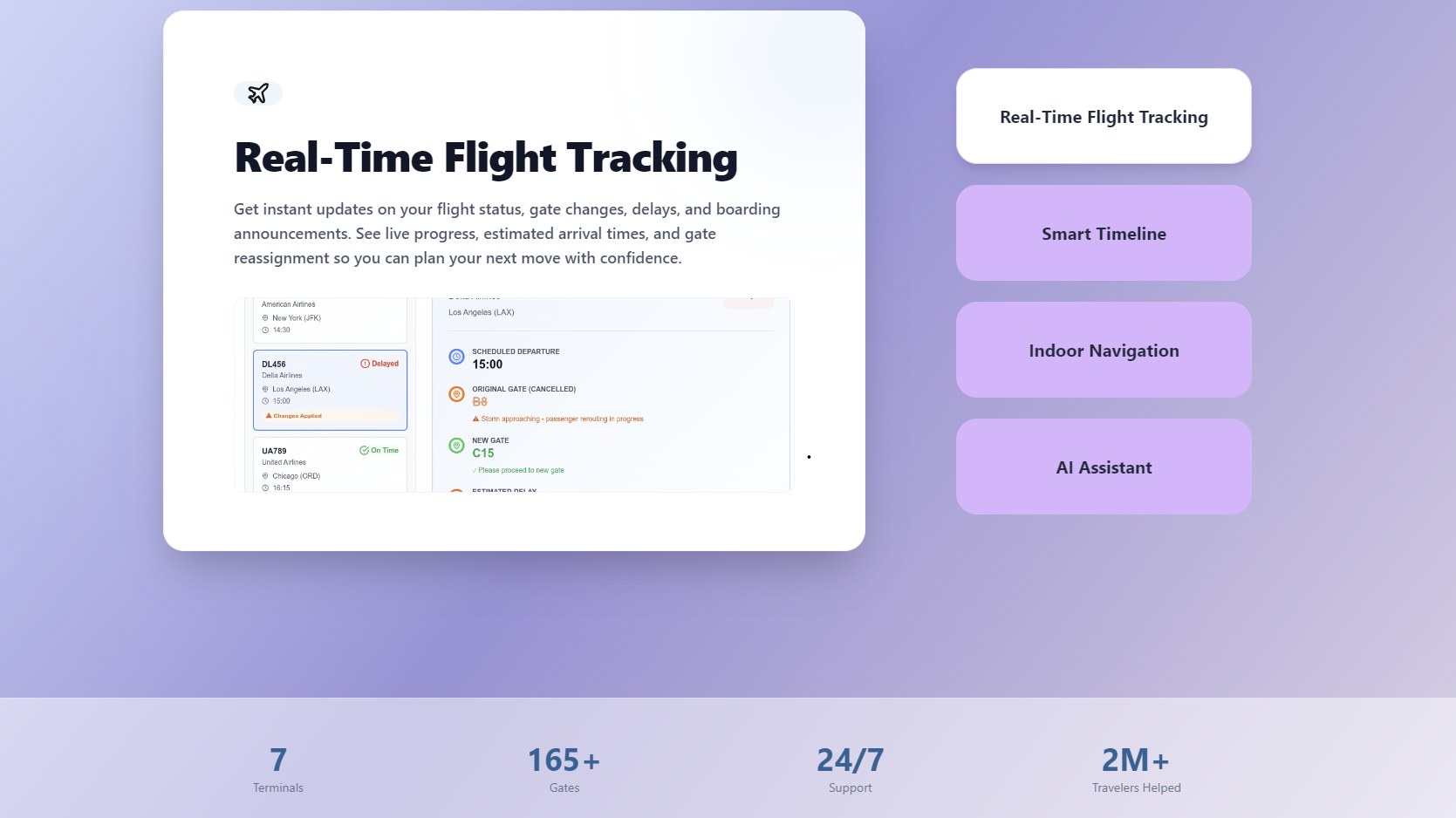
Key Features
-
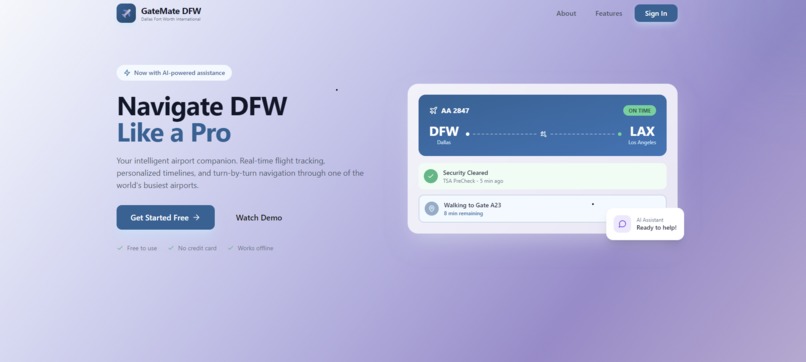
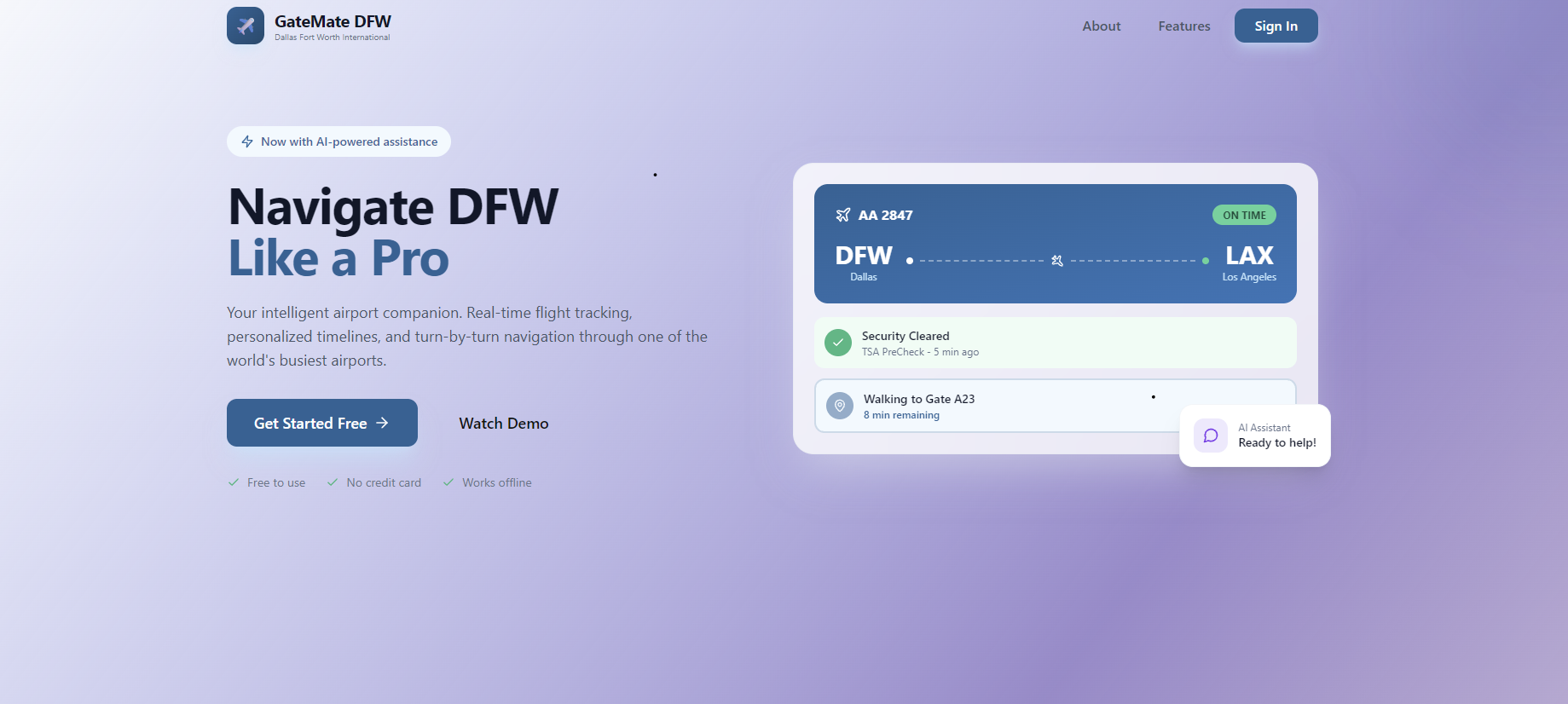
Landing Page

Inspiration
We were brainstorming hackathon ideas when someone said, "Imagine being a flight operations manager at DFW during a storm. You're getting calls, flights are being cancelled, 417 passengers need rerouting, and your boss is asking you to submit an HPC compute job."
Then it clicked, nobody actually knows how to do that. Operations managers aren't HPC experts. They're just trying to help stranded passengers while juggling a thousand variables. Meanwhile, those passengers are sitting at the airport with zero visibility into what's happening to their flight.
We realized we could build something that makes airport chaos manageable for both sides. So we did. In 24 hours.
What it does
GateMate is an intelligent incident response system for airports that:
For Managers: Replaces complex HPC workflows with a natural language chatbot. Describe what's happening ("Storm just hit, 6am flights affected") and GateMate automatically queries the flight database, identifies affected passengers, runs rerouting algorithms, and returns a complete breakdown of costs and passenger outcomes.
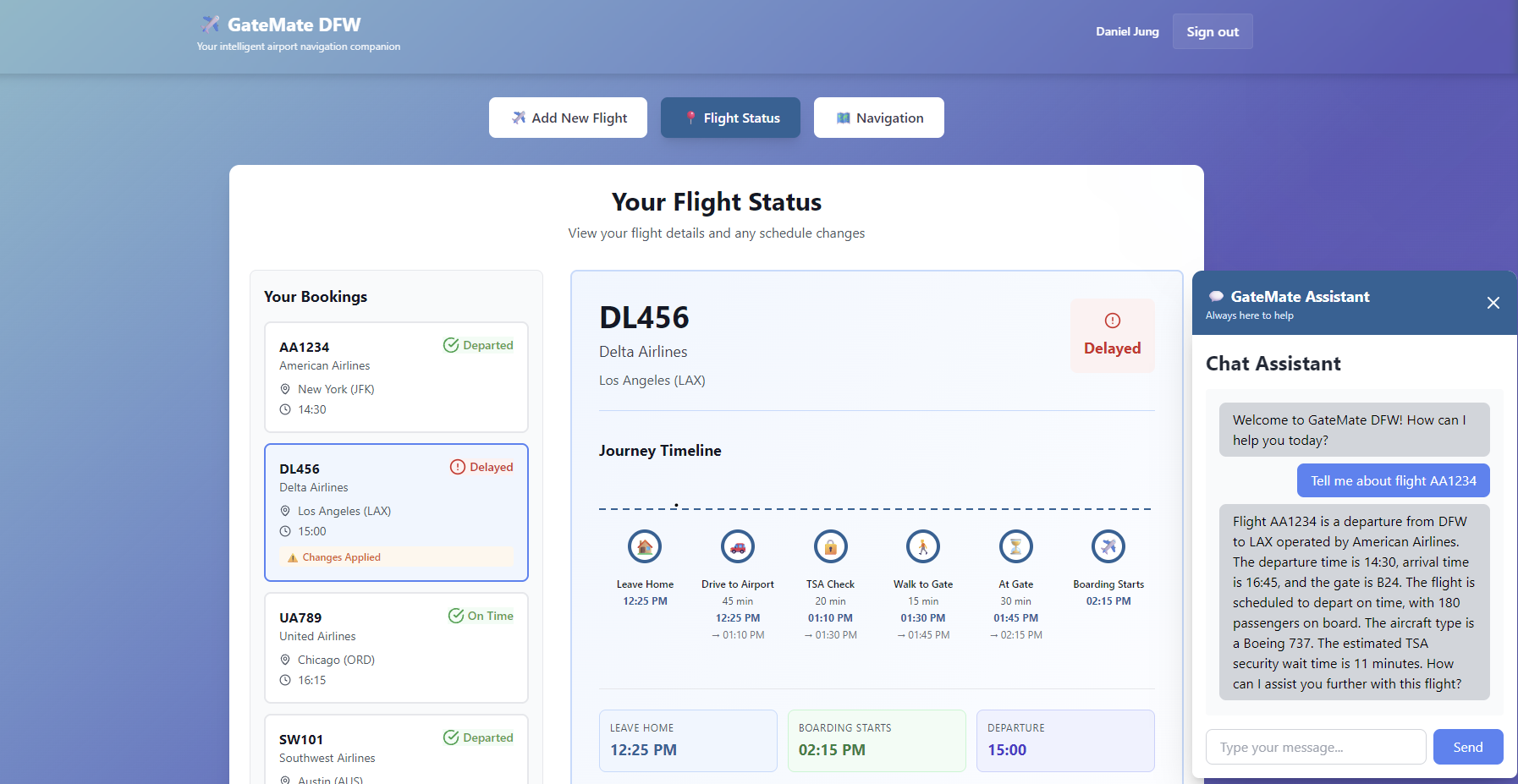
For Passengers: Provides complete transparency. You see exactly which gate you're going to, when to leave home based on your flight's departure time, and real-time notifications when changes happen.
How we built it
Frontend: React + Vite, Tailwind CSS, Lucide icons. We built two separate UIs, one conversational chatbot for managers, one timeline-based status dashboard for customers.
Backend: FastAPI with Python. We created a hardcoded but realistic DFW flight database with 6 affected flights (~417 passengers) and 7 alternative flights to ensure reproducible results. The greedy rerouting algorithm maximizes seat utilization while respecting destination preferences.
Architecture: Three layers:
Natural language chatbot that guides managers through incident details Real-time flight database queries HPC abstraction layer that translates manager intent into compute jobs We ran the server on localhost:8000 and the client on localhost:5173. Authentication with role-based routing (manager vs. customer).
Challenges we ran into
Passenger count discrepancies: The time-range query showed X passengers but the compute job processed Y. Root cause? We were generating different random flights each time.
Unrealistic 100% rerouting success: Alternative flights had too much capacity. We constrained the dataset so ~80% of passengers get rebooked and ~20% get compensation ($500/person).
State management in the chatbot: Nine different conversation states with complex branching logic. Getting the flow to feel natural while handling edge cases was tricky.
Accomplishments that we're proud of
Seamless UX: Managers can handle a full incident in under 2 minutes with zero technical knowledge. Passenger transparency: Timeline calculations that show exactly when to leave home based on flight departure time. Clean architecture: The chatbot state machine is extensible. Adding new incident types or decision trees is straightforward. Built in 24 hours: Full stack, two user interfaces, realistic flight data, HPC abstraction layer. We're proud of the scope.
What we learned
Non-technical users > fancy tech: The most powerful feature isn't the rerouting algorithm—it's that managers can trigger it by saying "reroute all passengers." Hiding complexity wins.
Data consistency matters: Random data generation breaks trust. A hardcoded dataset that's realistic is way better than random numbers that don't match between operations.
Passenger transparency reduces anxiety: A timeline showing "leave home at 12:20 PM" is worth more than a hundred emails. People want clarity, not just information.
Conversation UX is hard but rewarding: Building a chatbot with 9 states and multiple branching paths requires careful state management, but the payoff is an interface that anyone can use.
Time pressure breeds creativity: We built this in 24 hours. That constraint forced us to make ruthless tradeoffs and focus on what actually matters (UX, not perfection).
What's next for GateMate
Real database integration: Replace hardcoded flights with actual DFW flight data WebSocket broadcasts: Real-time passenger notifications instead of polling Advanced NLP: Better natural language understanding for more complex incident descriptions Multi-incident management: Let multiple managers handle concurrent incidents Historical analytics: Track incident outcomes to improve rerouting recommendations Mobile app: Passengers shouldn't need to be at a computer to see their flight status Airport customization: Adapt timeline calculations and rerouting preferences per airport


Log in or sign up for Devpost to join the conversation.