-
-
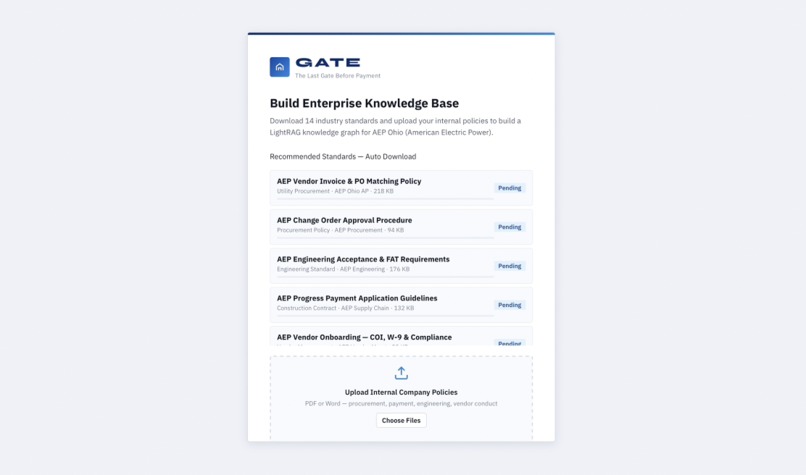
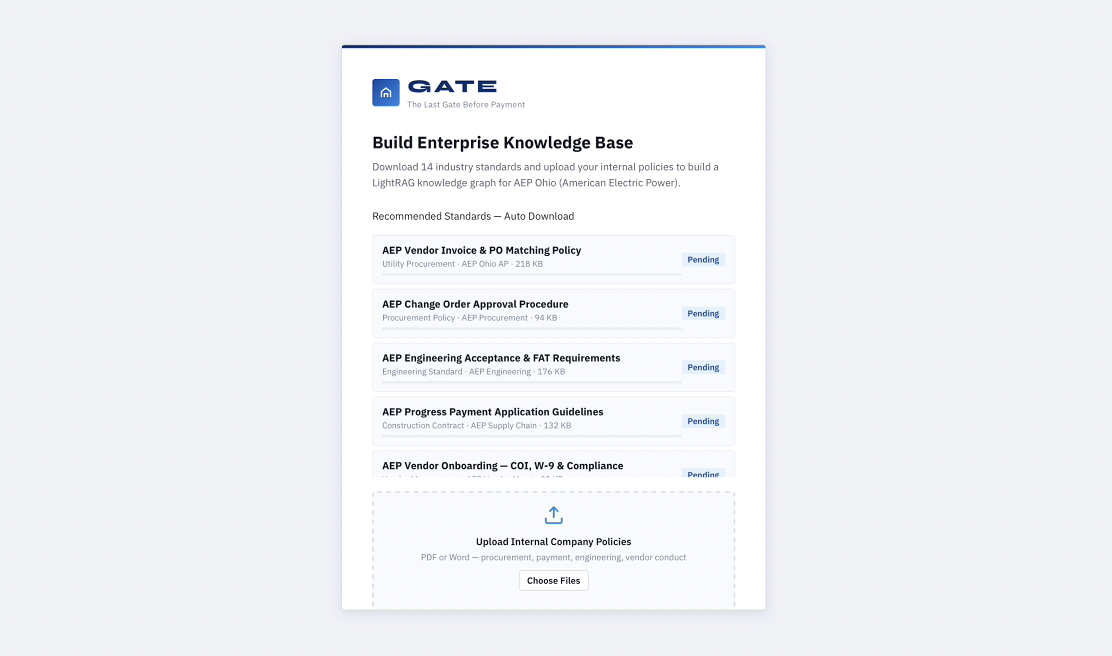
Upload internal policies & standards.
-
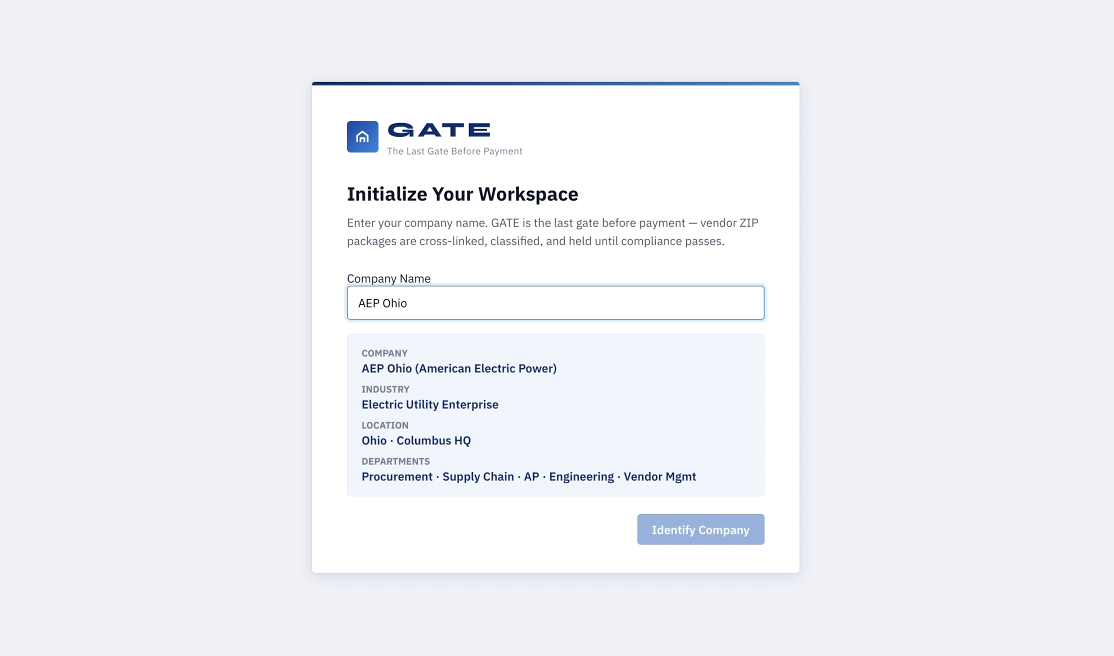
GATE logo: The Last Gate Before Payment.
-
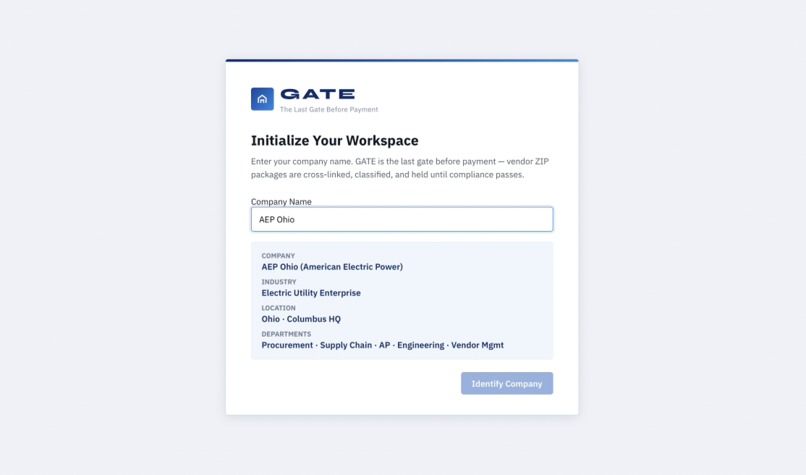
Fast workspace setup via company name.
-
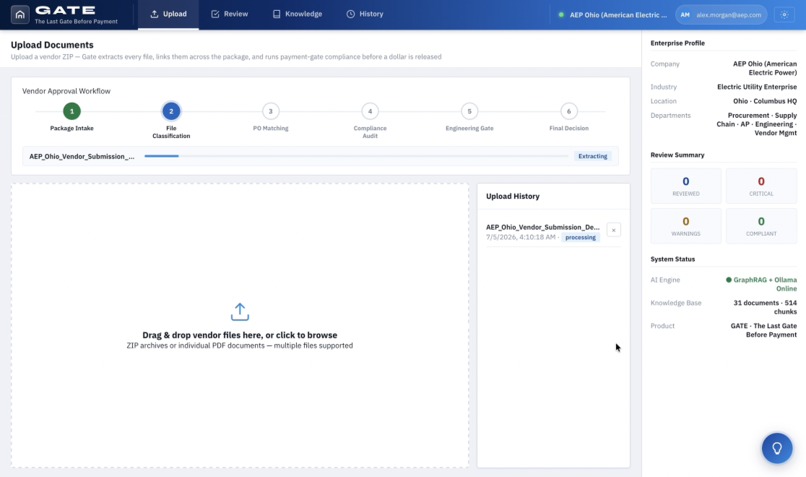
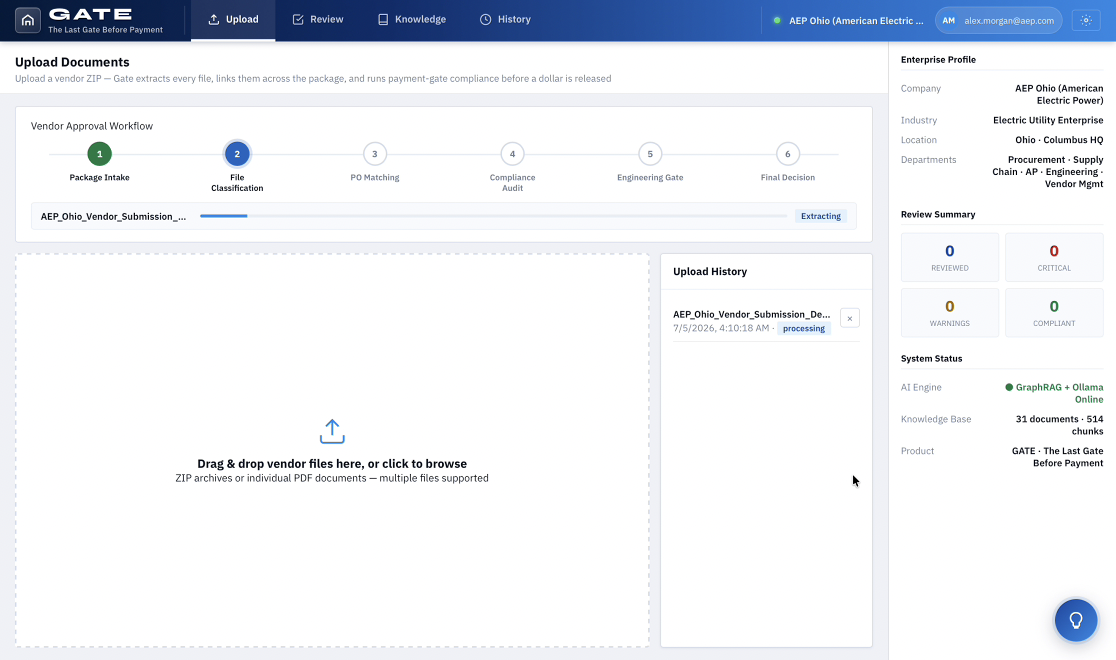
Drag-and-drop vendor package upload.
-
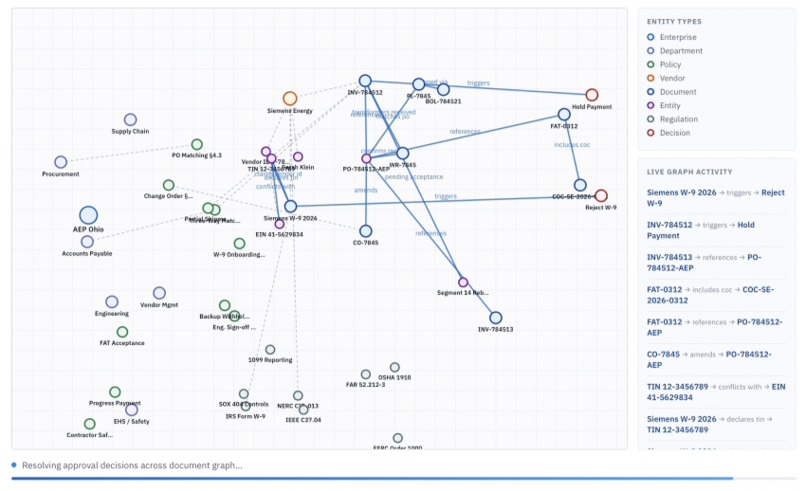
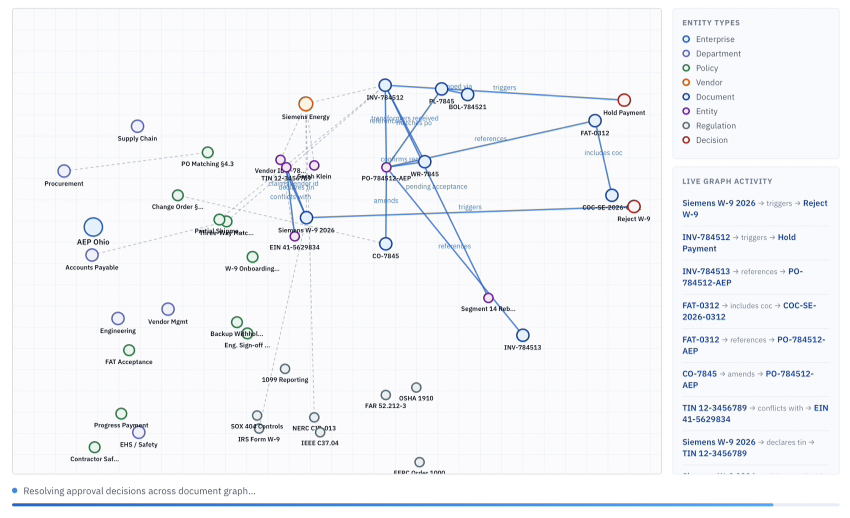
Local GraphRAG mapping policy logic.
-
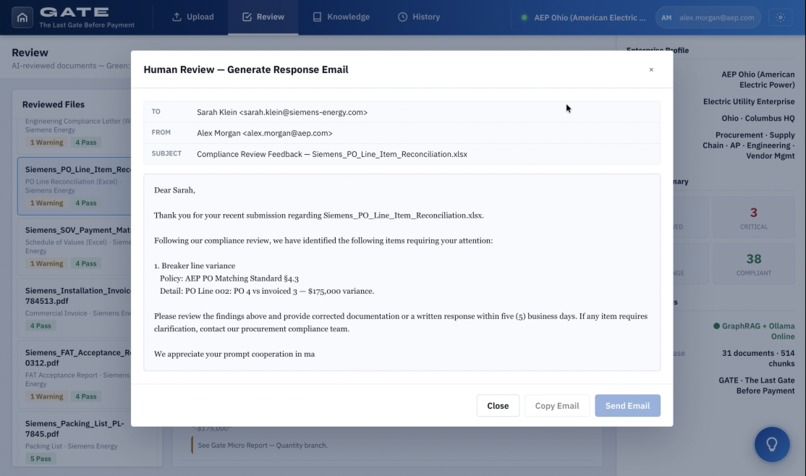
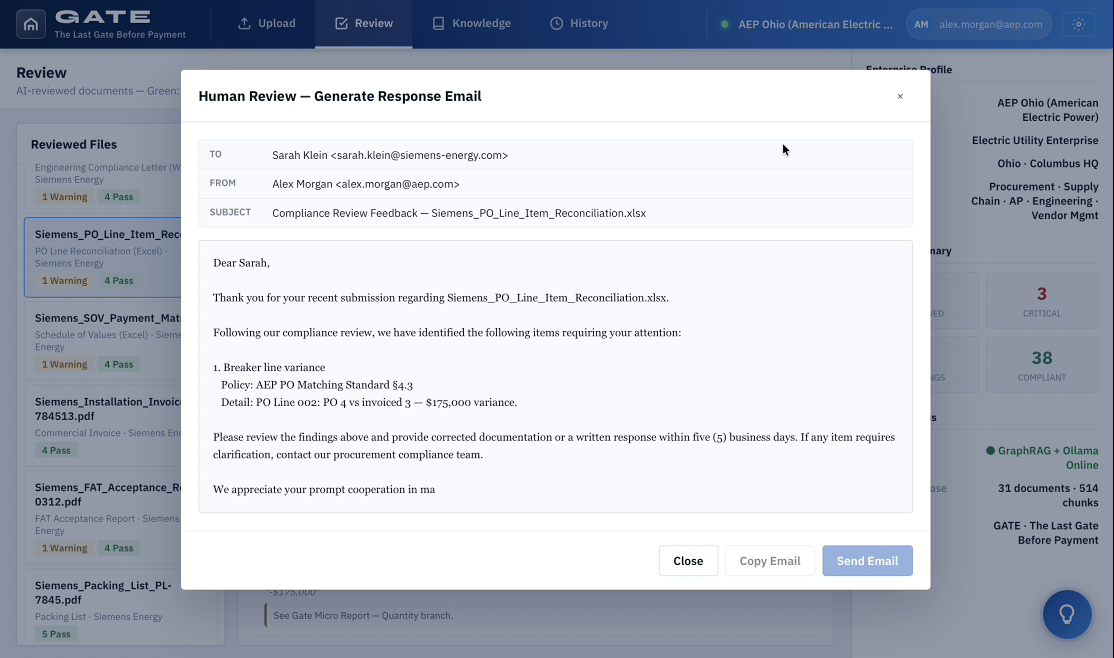
AI auto-drafts vendor response emails.
-
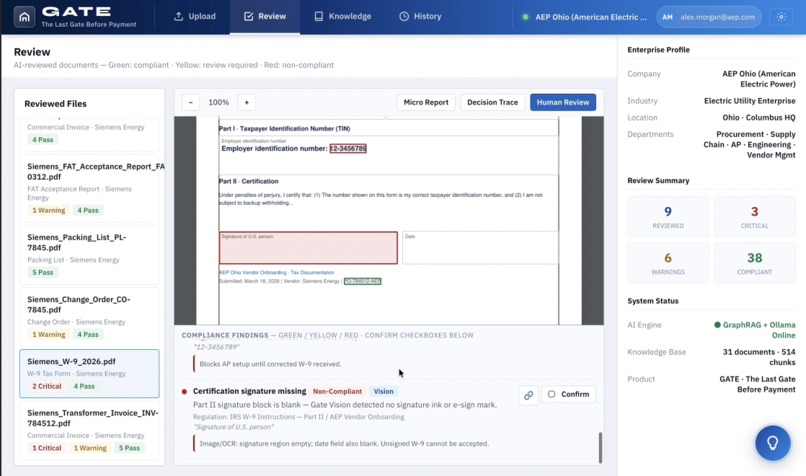
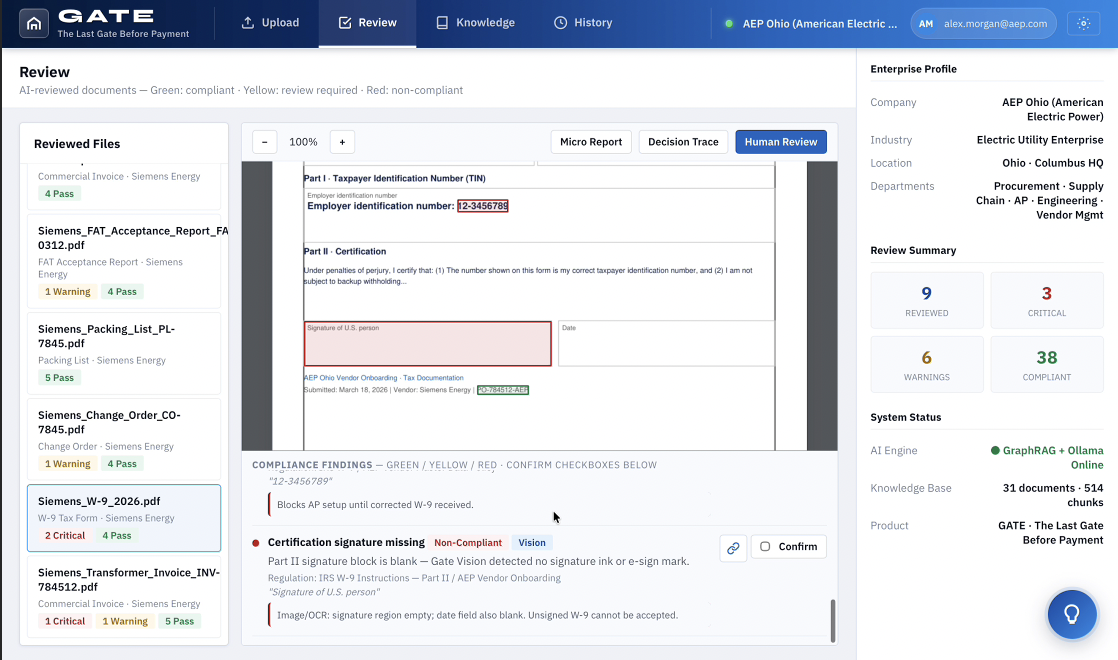
UI highlighting exact PDF compliance flaws.
-
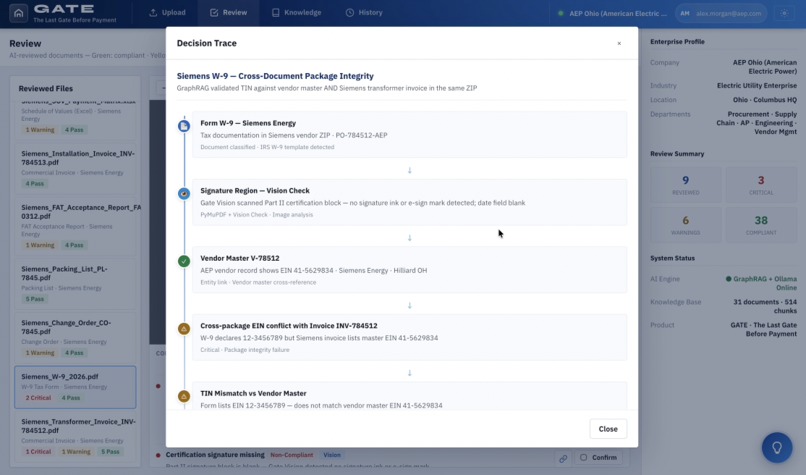
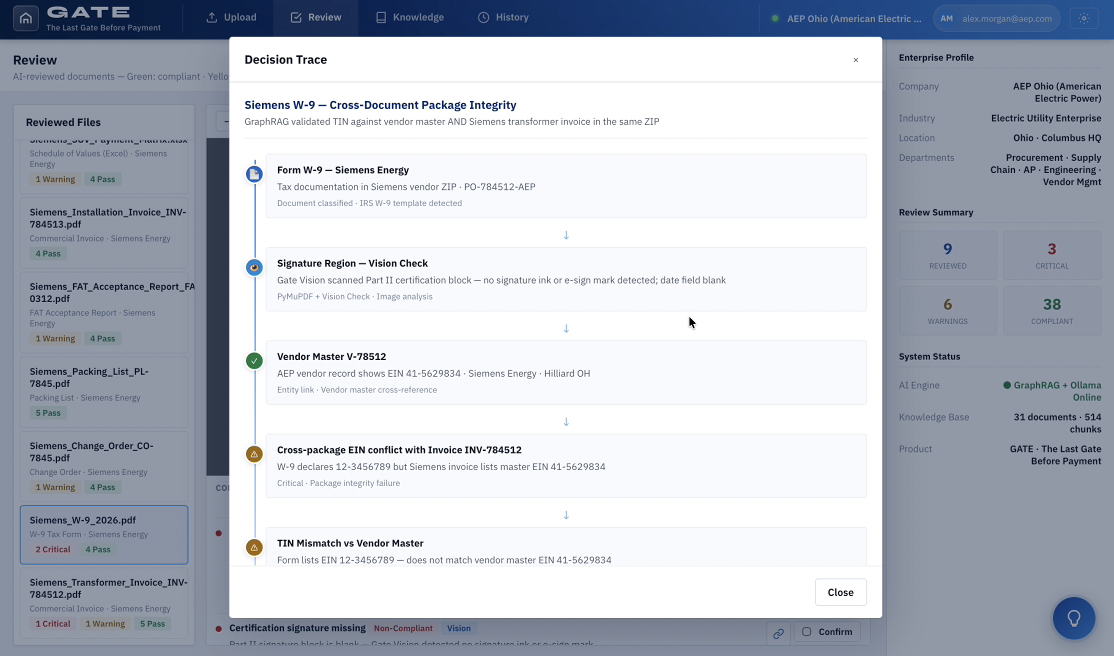
Auditable step-by-step AI logic trace.
-
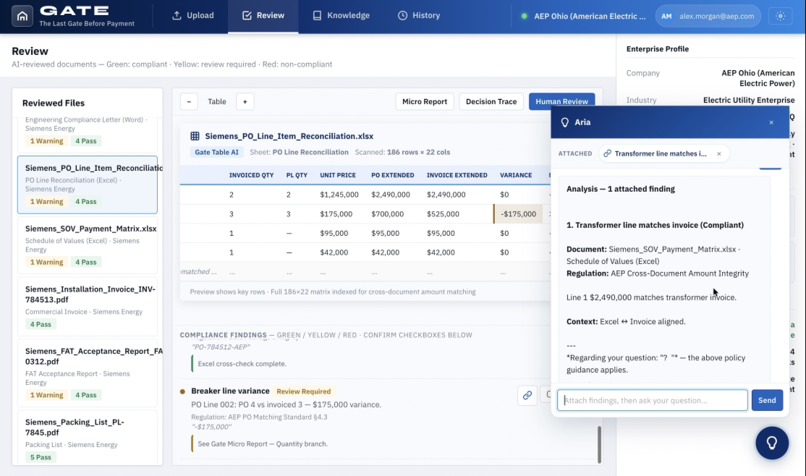
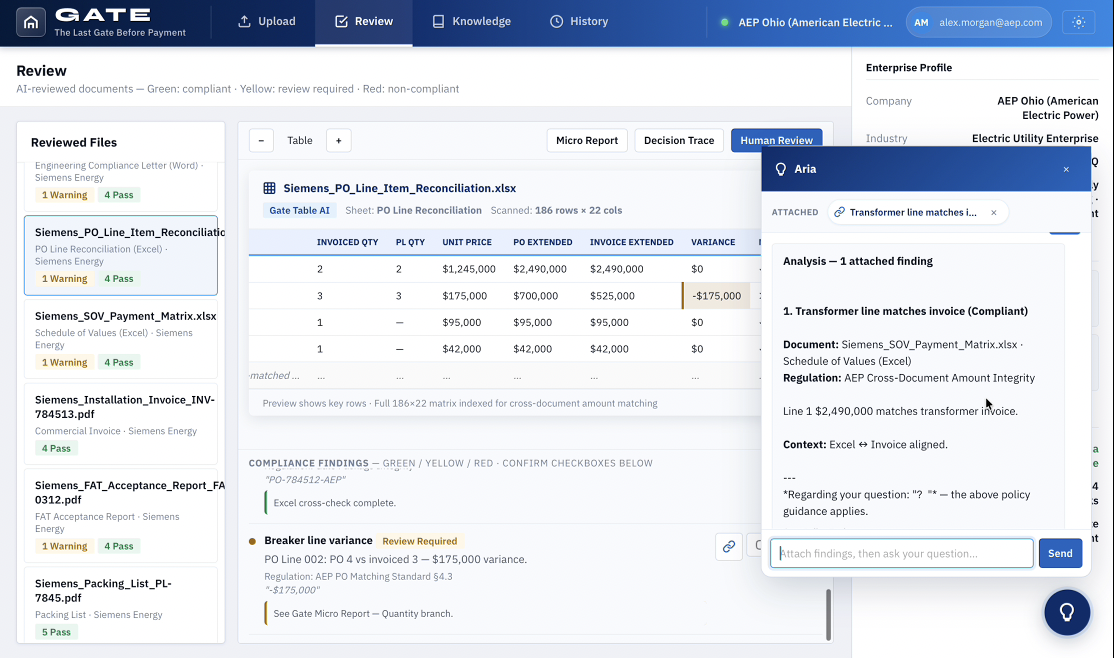
Aria AI Copilot answers context queries.
-
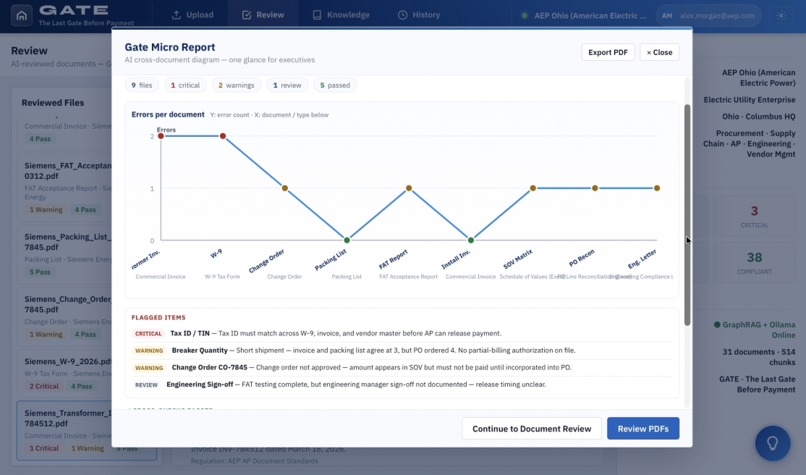
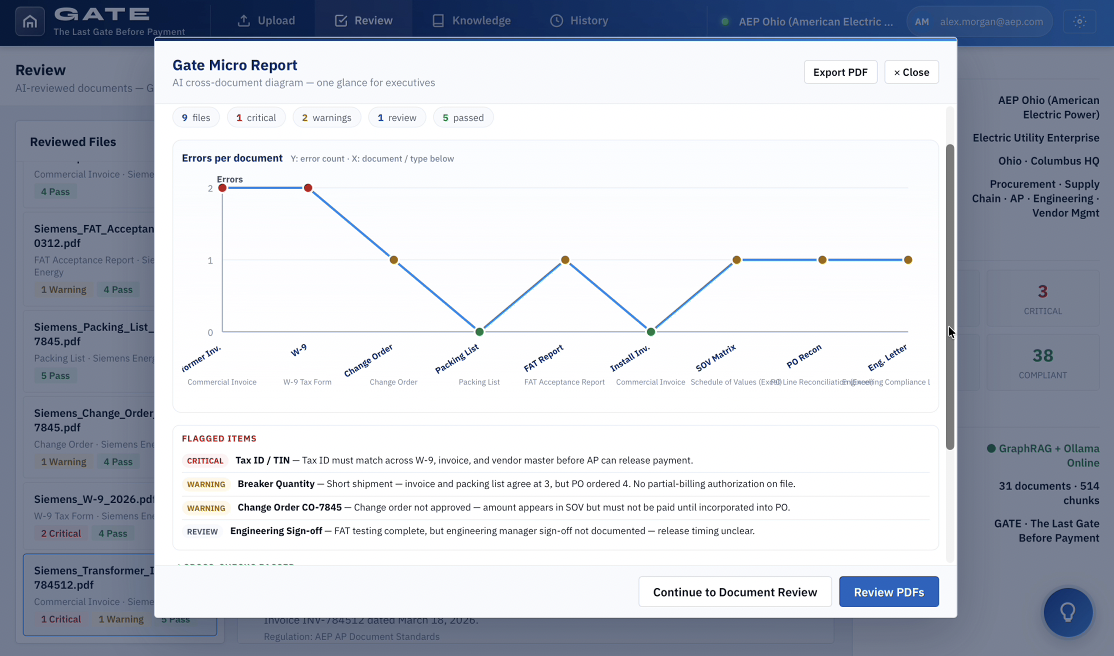
Visual dashboard tracking file errors.
Inspiration
During an internship at an engineering firm, I watched the Accounts Payable (AP) team spend hours manually cross-checking invoices, tax forms, and change orders.
Standard AI and flat RAG tools fail here because they act as search engines—they retrieve, but they don't reason. We realized this was an agentic workflow problem. We needed an autonomous system to mimic a human compliance officer: take in a mess of documents, plan an audit, reason through discrepancies, and take action.
What it does
GATE is an autonomous, air-gapped AI agent acting as the final gatekeeper for enterprise payments. When handed a multi-file vendor package, it executes four behaviors:
- Plan: Maps the incoming documents against the company's internal compliance policies.
- Reason: Cross-references data across the entire package (e.g., catching an unapproved change order that invalidates a specific invoice line).
- Act: Outputs a clear decision (HOLD, REVIEW, or APPROVE), charts errors in a Micro Report, and auto-drafts vendor response emails.
- Explain: Provides a "Decision Trace," showing a step-by-step logic chain of its verdict.
Crucially, it operates autonomously to do the heavy lifting but strictly enforces a Human-in-the-Loop (HITL) protocol. The agent flags the errors, but a human auditor must make the final approval click.
How we built it
- The Brain (Local GraphRAG): We used
LightRAGbacked by a localLlama 3.1model viaOllama. It ingests compliance manuals to build an entity graph, giving the agent deterministic rules to reason against. - The Eyes (Vision): We used
PyMuPDFto handle text extraction. When the agent flags a missing W-9 signature, it maps that finding to the exact X/Y coordinates on the PDF. - The Interface: A zero-dependency SPA (HTML/CSS/JS) powered by
FastAPIfor a dashboard-style UI.
Challenges we ran into
Building an agent that reasons requires strict engineering boundaries and comes with inherent limitations.
- The Ingestion Bottleneck: GraphRAG ingestion is a severe limitation compared to flat vector indexing. We made a deliberate trade-off: accepting slower, one-time
Built With
- css
- fastapi
- graphrag
- html
- javascript
- lightrag
- llama-3.1
- ollama
- pymupdf
- python

Log in or sign up for Devpost to join the conversation.