Inspiration
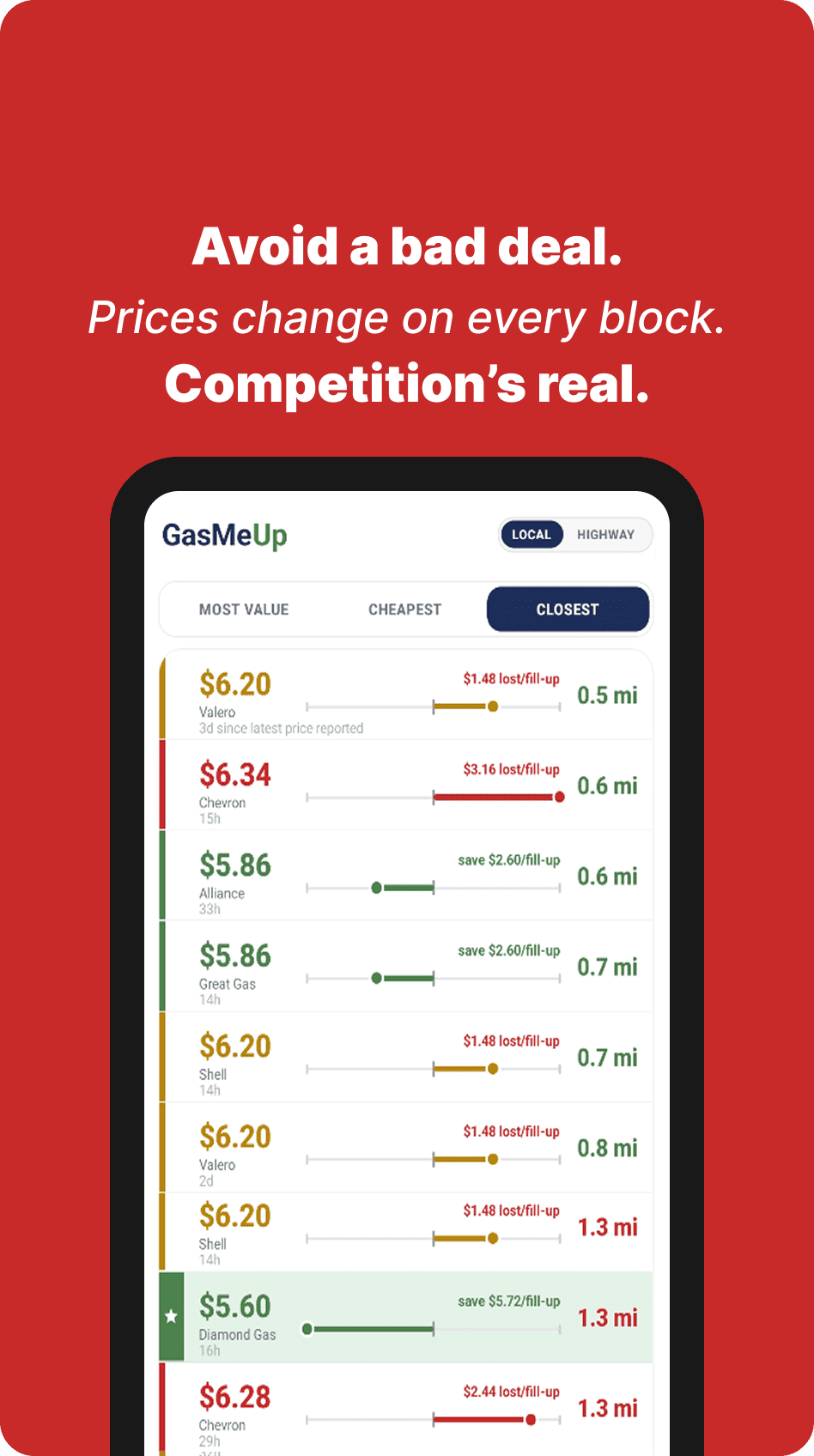
Most gas price apps leave drivers with an overwhelming map of price pins and expect them to do mental gymnastics. A station three cents cheaper per gallon sounds great until you realize it sits eight miles out of the way. Once you account for the gas burned during the detour, idling in traffic, and vehicle wear, that bargain fill-up actually costs you money.
The idea behind GasMeUp was simple: build a tool that does the math a real driver would do door-to-door, giving people clear answers instead of homework.
What it does
GasMeUp is a mobile utility app for iOS and Android that calculates the true net cost of filling up your tank.
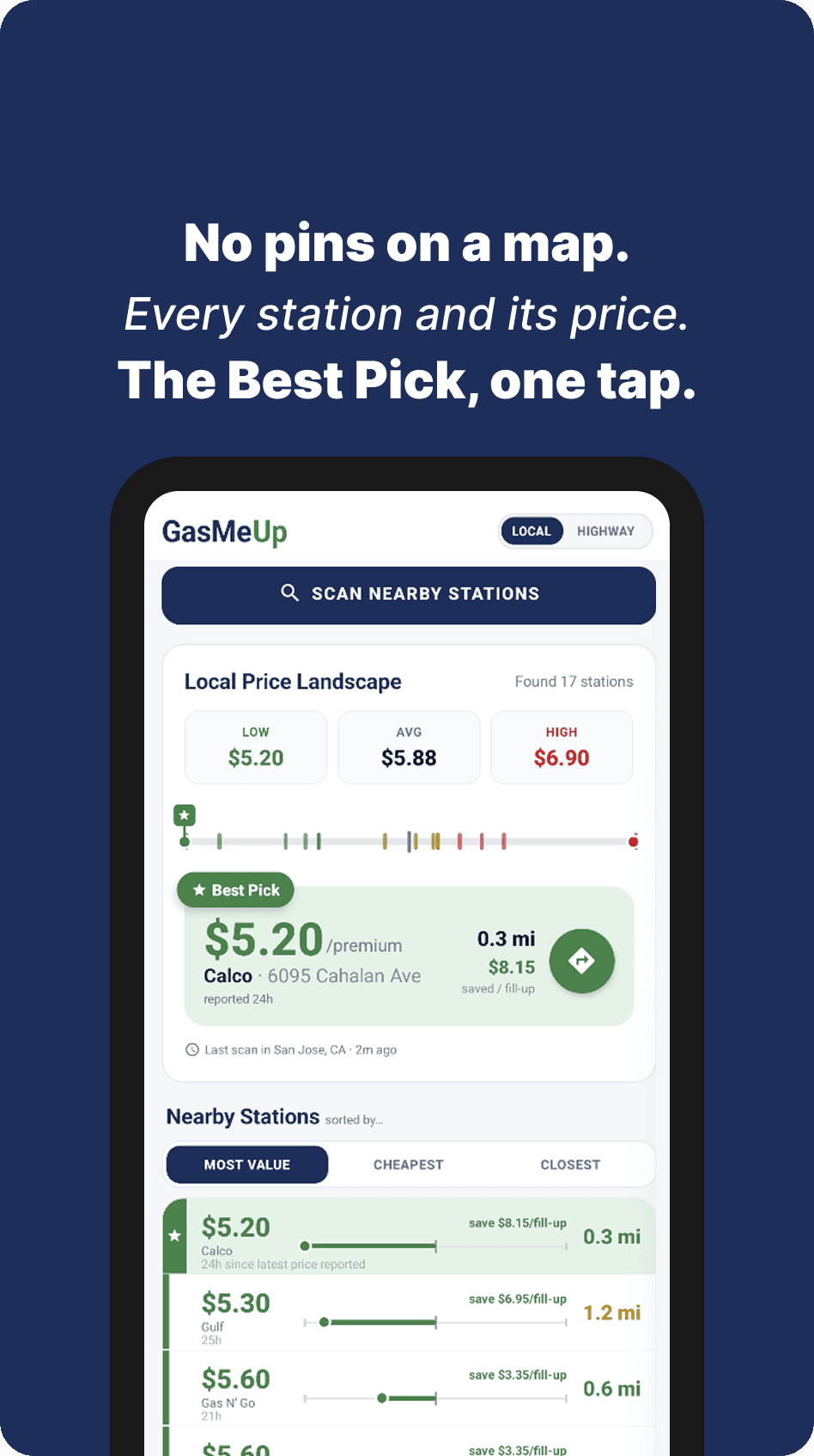
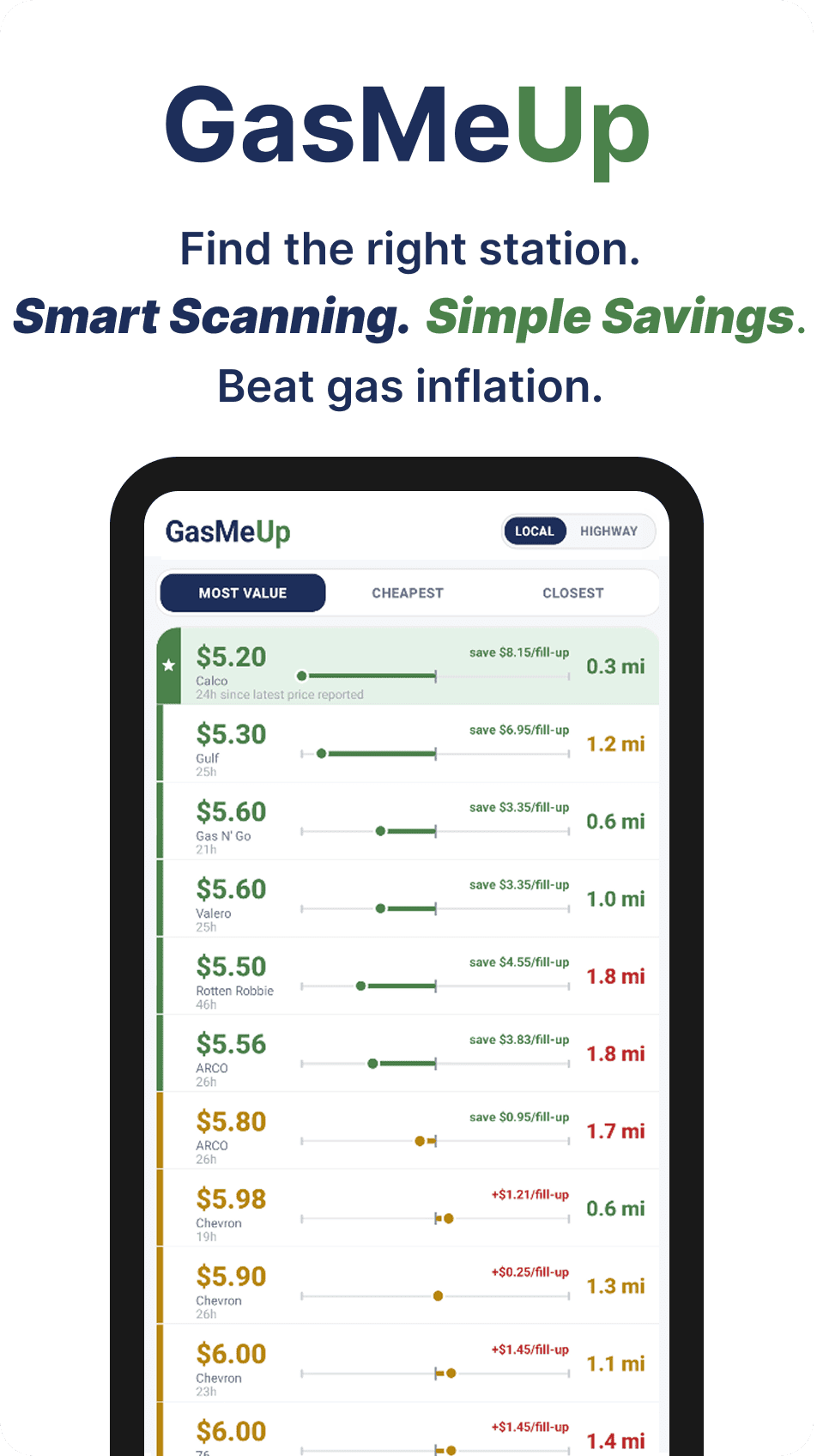
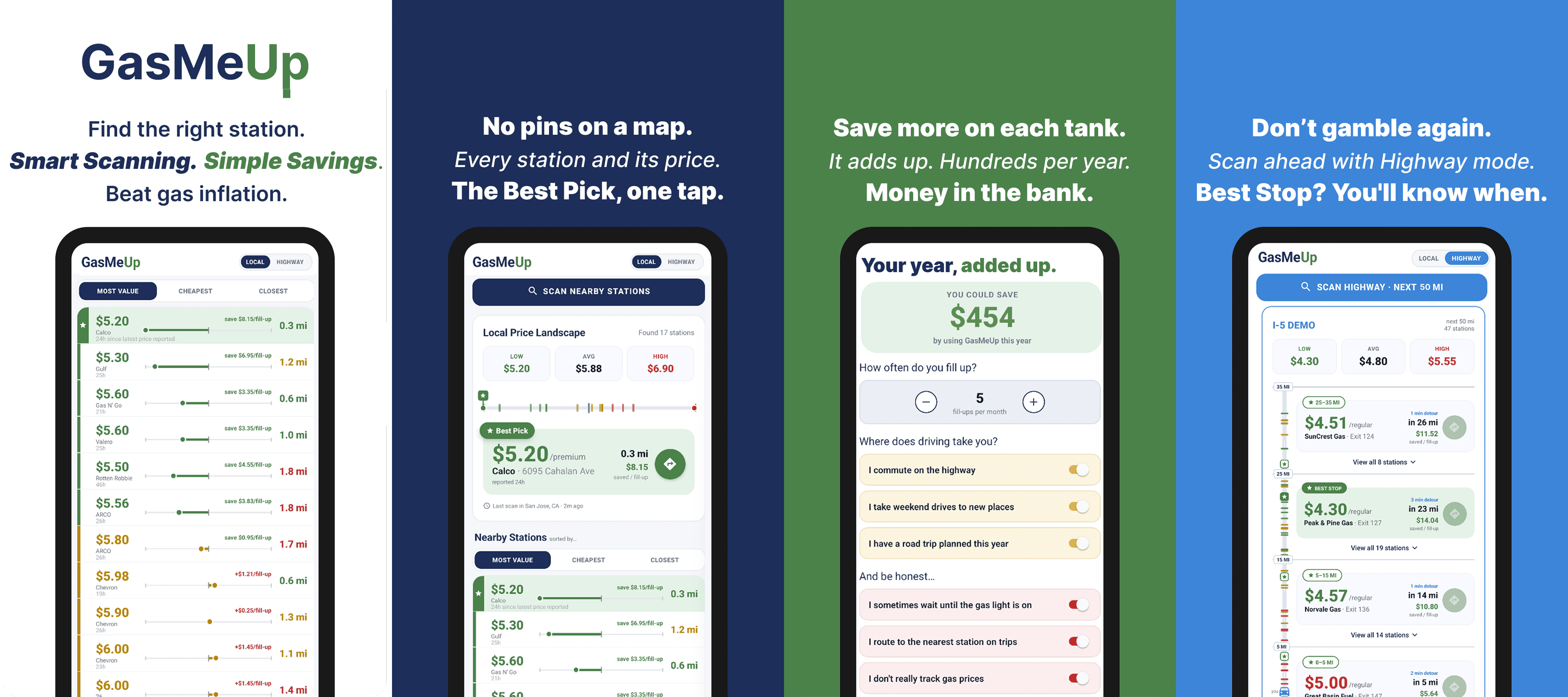
With one tap, the app scans live fuel prices in your surrounding area and evaluates each station against three key variables: driving distance, the detour time required, and your vehicle's fuel tank capacity. It ranks the options and crowns a single Best Pick so drivers know exactly where to go.
Key features include:
- Door-to-Door Ranking: Calculates true total trip expense instead of just displaying raw pump prices.
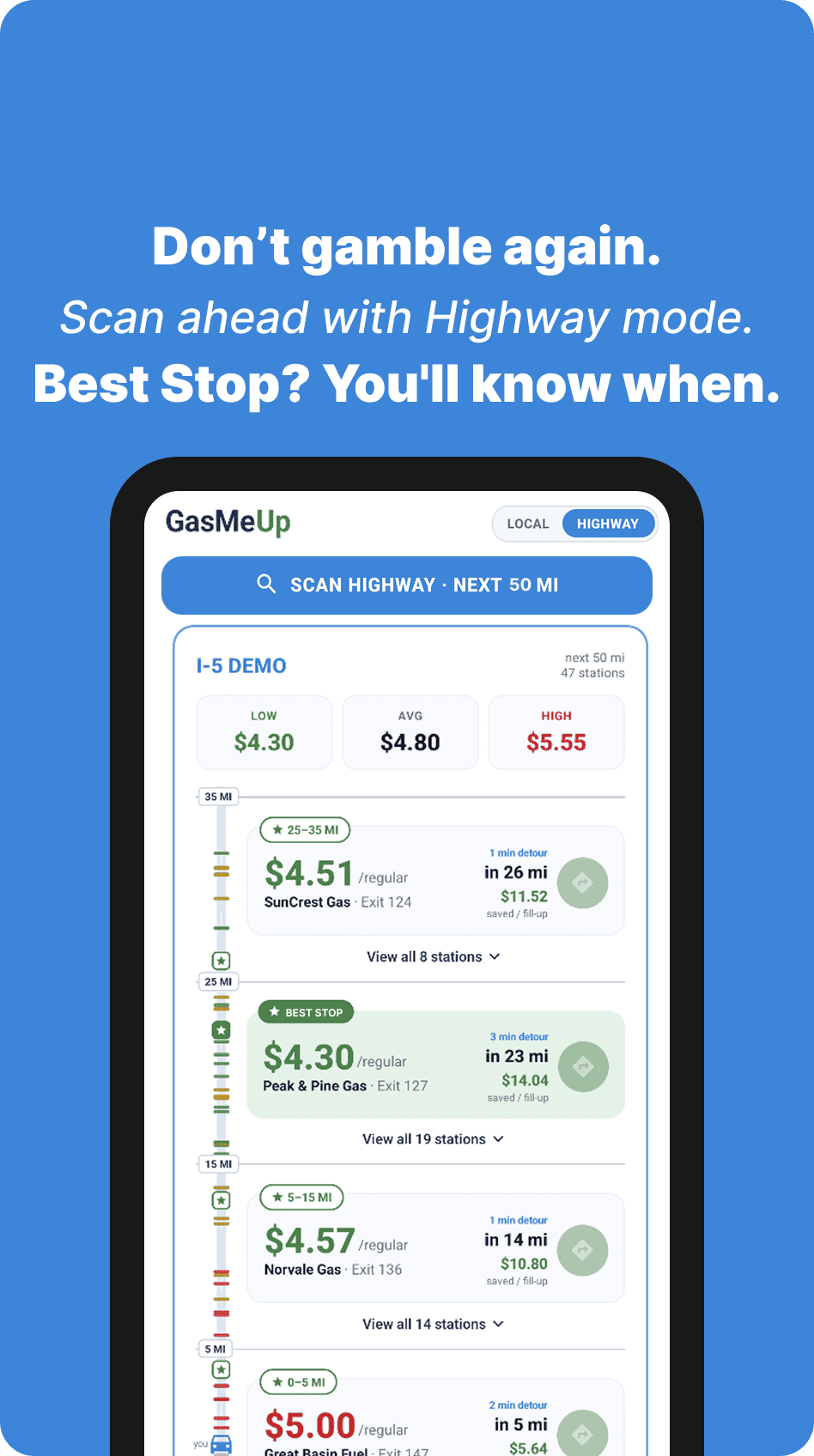
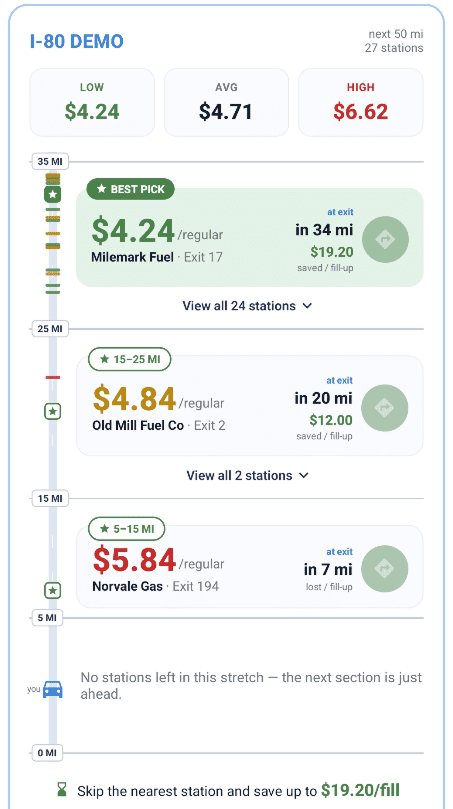
- Highway Mode: Scans upcoming freeway exits across all 50 US states, factoring in off-ramp distances to help road trippers avoid overpriced highway gas traps.
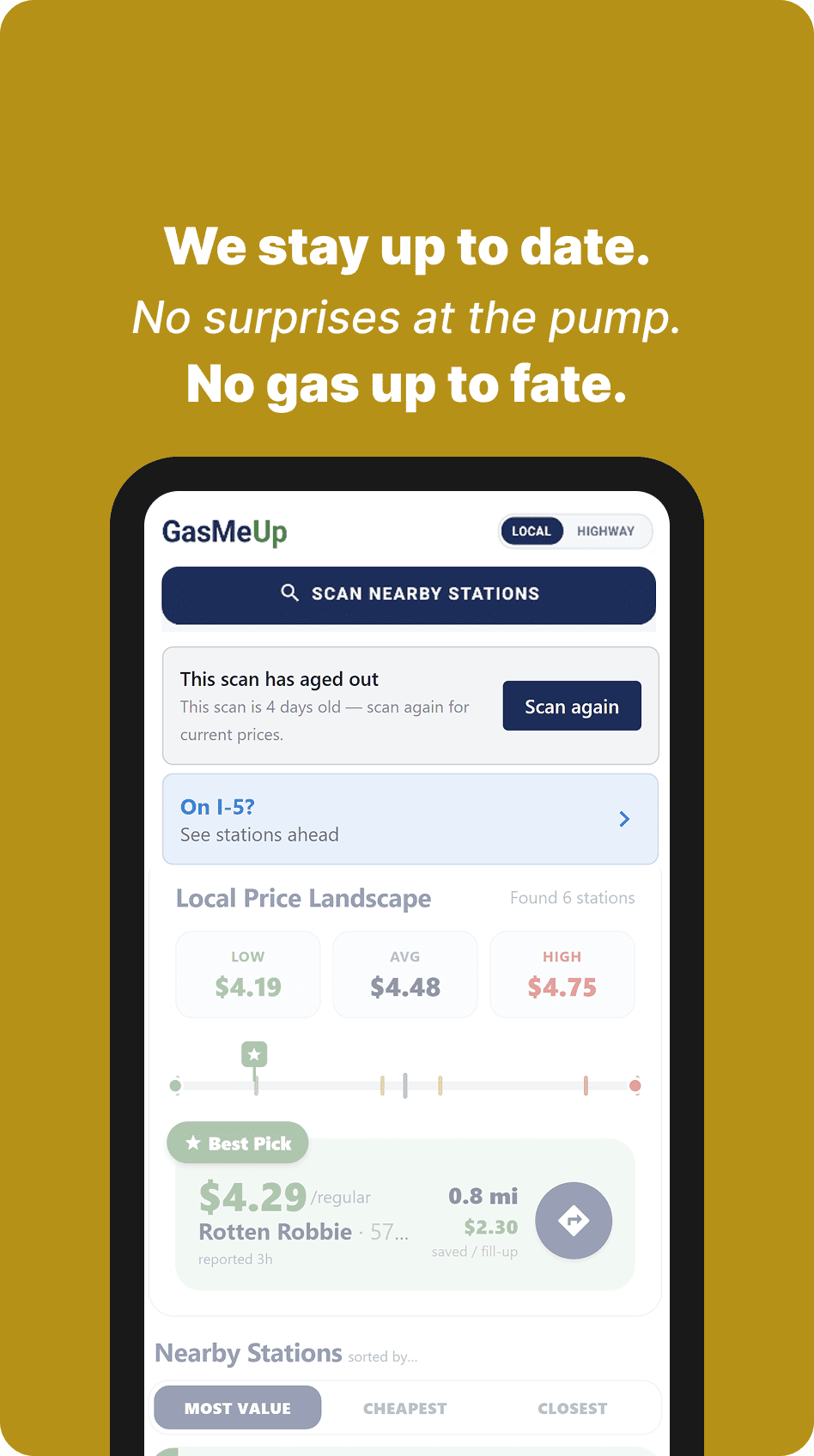
- Honest Savings Auditing: Measures savings against genuine local market averages rather than inflated numbers, and clearly flags stale price scans.
- Privacy-First Design: No user account requirements, no invasive tracking, and zero in-app ads.
How I built it
The core engine is built around a dynamic detour-cost evaluation algorithm running across native mobile clients on iOS and Android.
- Front-End Architecture: Built with a lightweight, minimalist mobile UI focused on quick one-tap interactions, clean receipt summaries, and clear navigation prompts.
- Live Data Pipeline: Integrated licensed live fuel pricing feeds to pull real-time rates at thousands of stations nationwide.
- Route & Distance Processing: Implemented geo-location handling that maps driving routes, computes off-ramp detours for freeway exits, and incorporates vehicle-specific parameters like tank capacity.
- Subscription Architecture: Set up an ad-free, direct utility pricing structure ($1.99/month or $17.99/year with a 7-day free trial) to support live licensed data without monetizing user privacy.
Challenges I ran into
- Highway Detour Modeling: Standard radius-based scans fail on freeways because a station 200 feet away might require a 4-mile turn around if you already passed the ramp. Building Highway Mode required mapping stations exit-by-exit along the active travel trajectory and measuring true off-ramp driving overhead.
- Data Freshness vs. Latency: Balancing rapid mobile responses with accurate, licensed live fuel pricing was tricky. Stale data can ruin trust, so the system had to be built to clearly label aged scans and prompt rescans when drivers relocate.
- Clean Math: Designing a formula that accurately weights time cost, fuel consumed during a detour, and tank capacity into a simple, trustworthy dollar figure took dozens of iterations.
Accomplishments that I'm proud of
- Solving the First-Exit Trap: Highway Mode genuinely changes how road trips work by giving drivers visibility into the best stops before they pull off the interstate.
- Zero Fluff and Ad-Free: Built a real utility product that launches straight into value with no accounts to sign up for, no feeds to scroll, and no ad clutter.
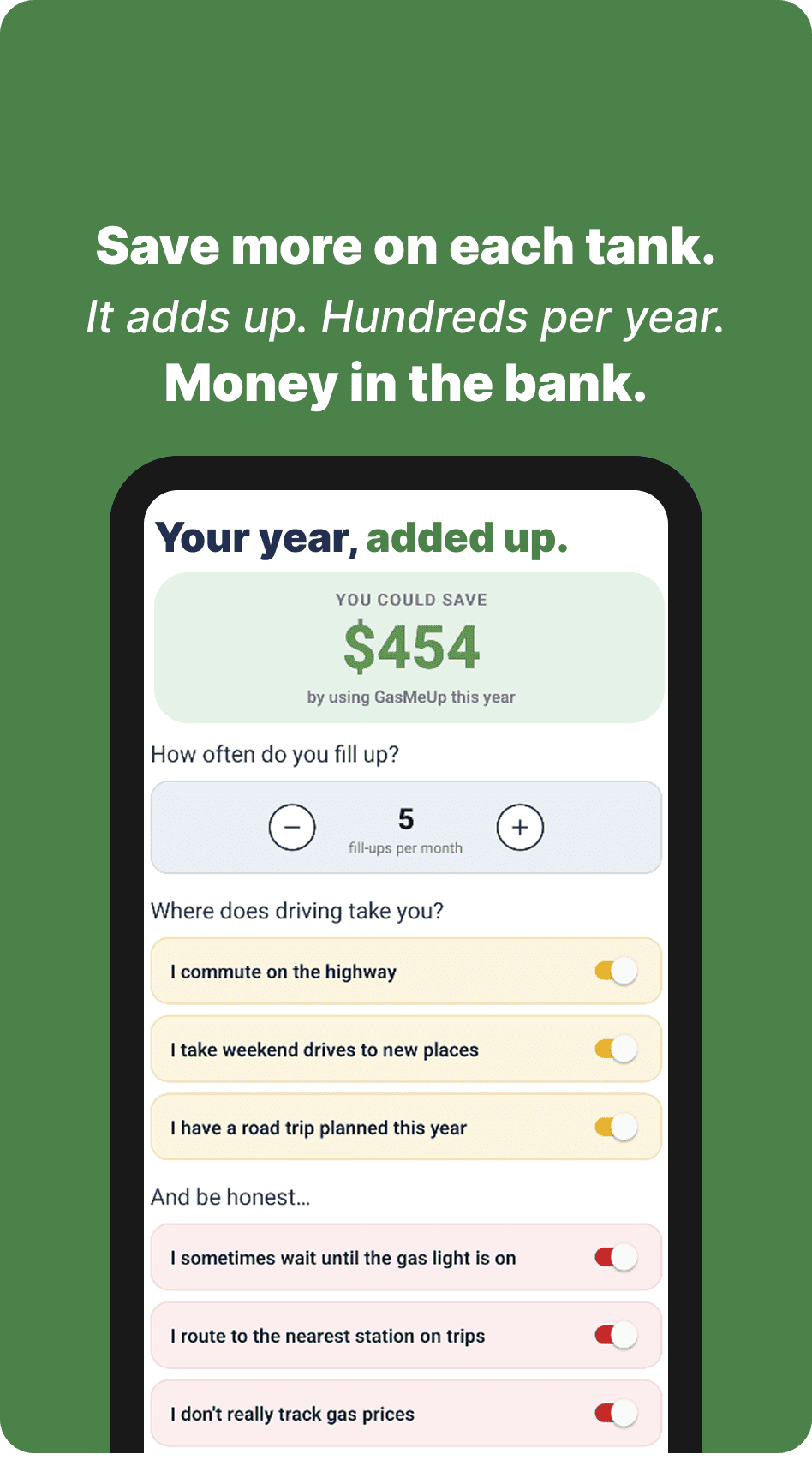
- Proven Savings: Based on federal driving data and live scans, the algorithm consistently proves that a typical US commuter can save nearly $300 a year by cutting out fake bargain detours.
What I learned
- Users value decisive answers over raw data dumps: Giving drivers one verified Best Pick is far more useful than showing thirty pins on a map.
- Detour costs scale dramatically with tank size: A four-cent price drop means very little to a compact car with an 11-gallon tank, but matters significantly to a truck with a 30-gallon tank. Factoring vehicle specs directly into the algorithm was a huge eye-opener.
- Privacy can be a competitive feature in the automotive utility space.
What's next for Gas Me Up
- Multi-Stop Trip Planning: Expanding Highway Mode into complete multi-waypoint road trip optimization, suggesting the best fuel stops along 500+ mile routes.
- Vehicle Profile Presets: Letting drivers save multiple vehicle profiles (commuter sedan, work truck, RV) to quickly tailor calculations without manual adjustment.
- Apple CarPlay and Android Auto Integration: Bringing the Best Pick recommendation directly to the vehicle dashboard display for safer, hands-free highway driving.
Built With
- ios
- nextjs
- postgresql
- swift

Log in or sign up for Devpost to join the conversation.