
Gas Leakage Detection & Alert for Homes and Industries
Inspiration
The inspiration behind this system stems from the increasing number of accidents caused by LPG gas leaks in both residential homes and industrial areas. Despite technological advancements in safety, many households and industries still lack real-time systems to prevent gas leaks, which can lead to catastrophic explosions or fires. To address this growing concern, we developed this solution to save lives, reduce property damage, and ensure rapid responses in the event of a gas leak. Our goal is to leverage IoT technology to offer instant notifications and trigger automatic safety mechanisms to avert potential hazards.
What It Does
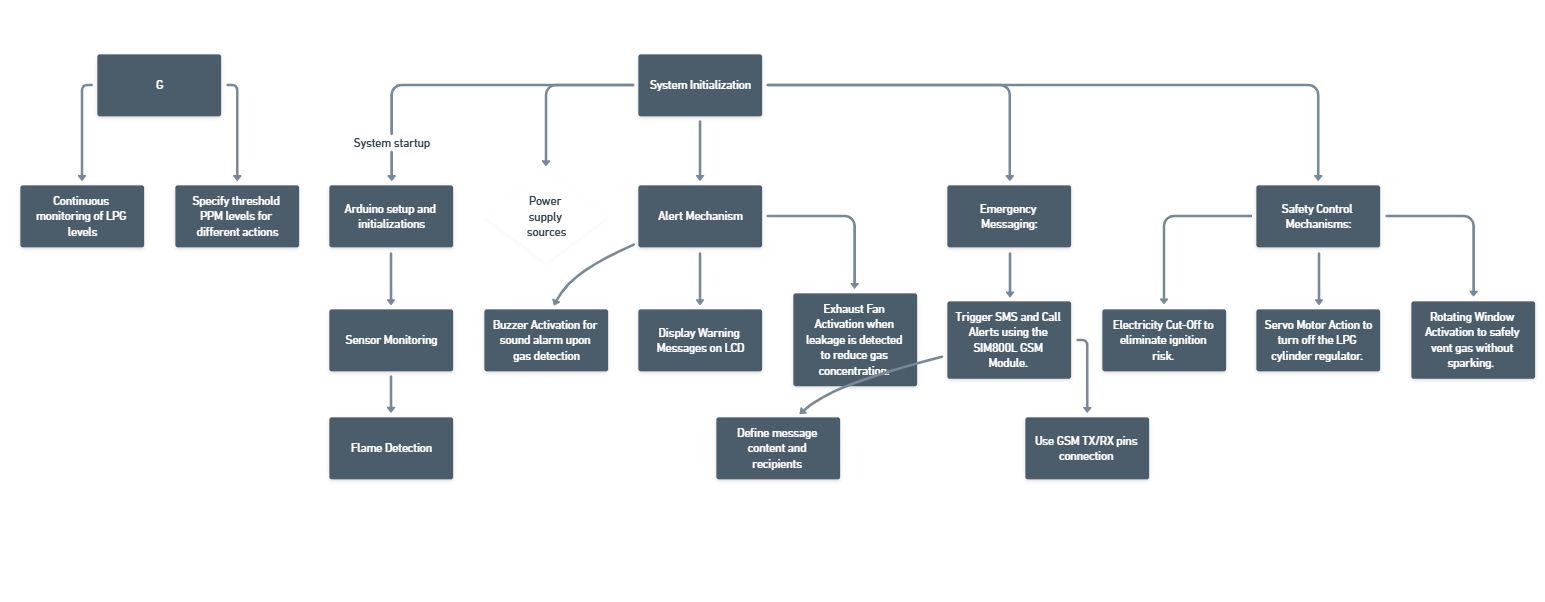
This smart gas leakage detection system provides a comprehensive solution by incorporating real-time monitoring, automated response actions, and emergency alert notifications. It detects any potential LPG gas leak in the vicinity using IoT-enabled sensors and takes prompt action by:
- Alerting users: The system immediately notifies users via SMS, calls, and app notifications through GSM modules.
- Triggering automatic safety mechanisms: Upon detecting a gas leak, the system activates safety actions such as:
- Shutting down the gas supply using an automatic servo-controlled valve.
- Rotating a glass window to prevent sparks and minimize fire hazards. -** Activating a CO2 or N2 extinguisher to neutralize the leak and reduce flammability.**
- Sending emergency alerts: The system sends the exact location of the leak to the nearest fire services and gas agencies, ensuring a swift and coordinated response.
Map Feature
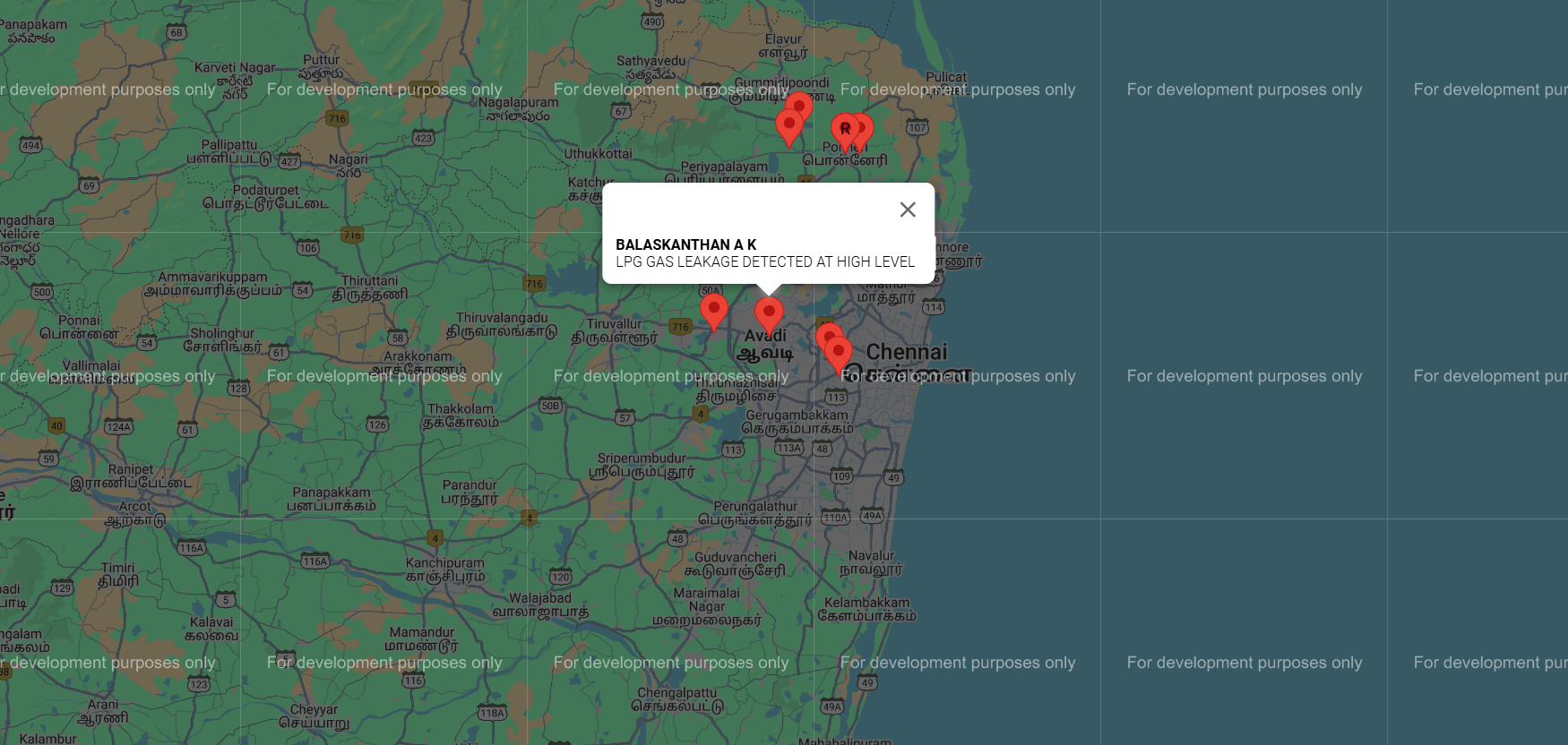
- Real-Time Location Mapping: One of the key features of the system is its integration with a map service that allows real-time tracking of the location of the gas leak. Using GPS data, the system maps the exact coordinates of the leak and sends these details to emergency services, fire stations, and gas agencies.
- User Interface Integration: The system provides a user interface that shows the live location of the gas leak on a map, allowing users to view the hazard's exact location in real-time.
- Location Accuracy: The system uses high-accuracy GPS modules to pinpoint the leak’s location, ensuring that emergency responders can reach the affected area quickly, even in large industrial complexes or residential areas with multiple buildings.
- Geofencing: The system can be equipped with geofencing capabilities, where it creates a virtual boundary around a designated area. If a gas leak occurs within that area, an immediate alert will be sent to pre-registered emergency contacts, optimizing response time.
How We Built It
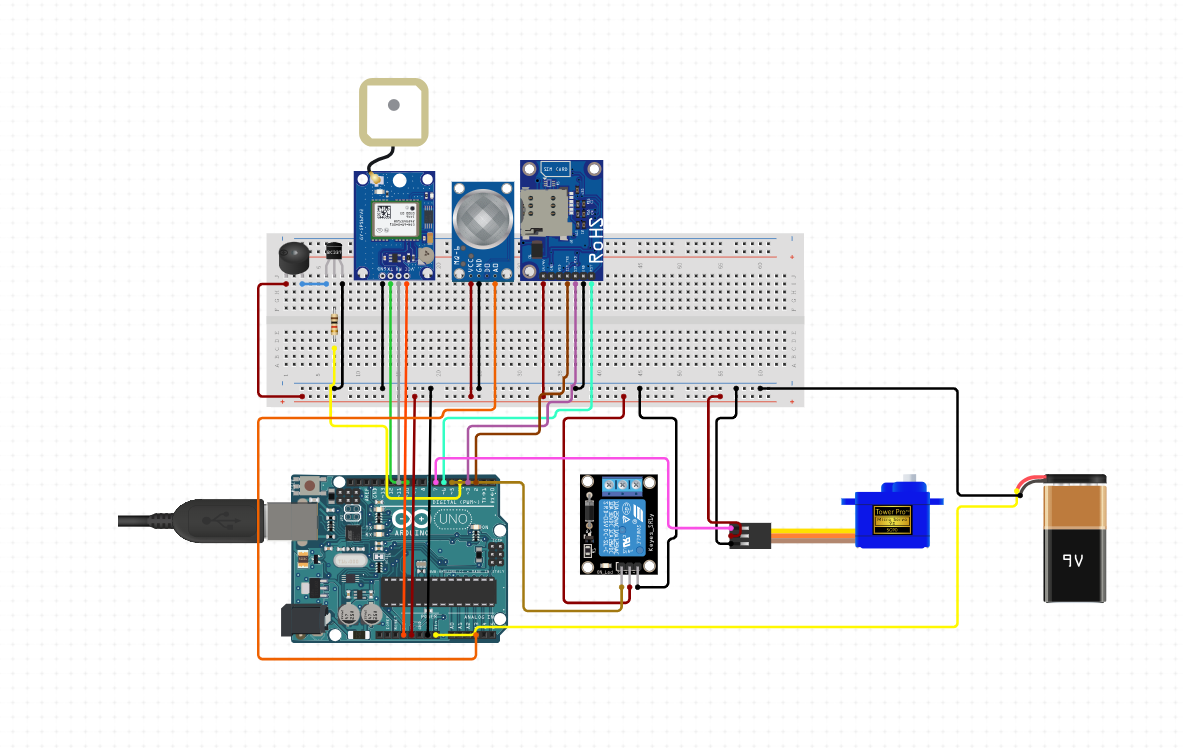
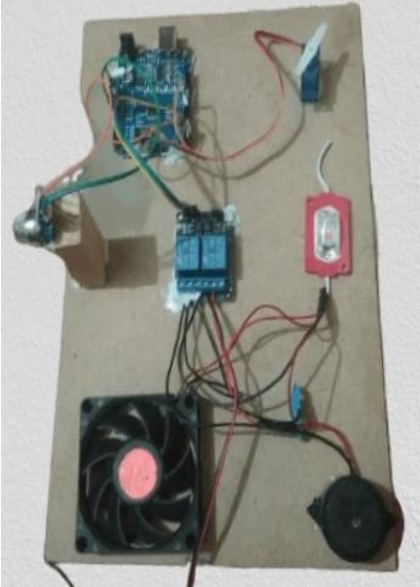
Hardware Components:
- Arduino UNO: The central controller that processes data from sensors and triggers actions.
- MQ-6 Gas Sensor: Detects the presence of LPG gas and sends data to the Arduino for analysis.
- SIM800L GSM Module: Facilitates communication with users by sending SMS alerts and making phone calls.
- Servo Motor: Controls the gas cylinder shutoff valve to automatically stop the gas supply during a leak.
- Buzzer: Alerts users with an audible sound when a gas leak is detected.
- GPS Module: Captures the location of the leak, which is sent to emergency services and displayed on a map.
Software:
The system uses an algorithm that analyzes the data from the gas sensor. When the gas concentration crosses a predetermined threshold, the system triggers safety responses. The Arduino processes these sensor inputs and activates the appropriate responses (like shutting off the gas, triggering alarms, etc.).
- Map Integration: The GPS coordinates of the detected gas leak are integrated into a map interface. This allows users and emergency responders to visualize the exact location of the hazard in real-time, enhancing the effectiveness of the system.
Emergency Response System:
The system integrates APIs that send the location and details of the gas leak to nearby fire stations and gas agencies, ensuring immediate action can be taken by emergency personnel. The location is sent via GPS, allowing responders to pinpoint the exact location of the leak. Additionally, emergency responders receive a map link with GPS coordinates, ensuring quick navigation.
Advanced LPG Gas Leakage Detection and Response System
In everyday use, it's common to detect a faint gas smell when an LPG cylinder is nearing exhaustion. This often happens when the burner is lit, allowing a small amount of gas to escape. However, even these minor leaks can escalate into dangerous situations if not properly managed.
Our system is designed to respond dynamically based on the concentration of leaked gas, measured in parts per million (PPM) by the MQ6 sensor:
Initial Alert - 1000 PPM:
At this level, a small amount of gas is detected. The system triggers a buzzer to alert the user of the potential hazard, providing an early warning to take precautionary measures.
Intermediate Response - 2000 PPM:
When the gas concentration reaches 2000 PPM, the system takes proactive steps:
Automatically shuts off the LPG cylinder to prevent further leakage. Activates a rotating window to safely ventilate the area. Sends an alert to the user via call and automatically cuts off the home's power supply to reduce risks.
Critical Intervention - 5000 PPM:
At this critical level, the situation demands immediate action. The system: Triggers an automatic fire extinguisher to neutralize the leaked gas. Sends emergency calls to the nearest fire services and gas agencies, providing them with the exact GPS location to ensure a swift response. This tiered response system ensures early warnings, effective intervention, and critical safety measures, minimizing risks and enhancing safety in homes and industrial areas
Challenges We Ran Into
Sensor Calibration: One of the key challenges was ensuring that the MQ-6 gas sensor provided accurate readings under varying environmental conditions such as humidity, temperature, and air pressure. We had to manually calibrate the sensor to make it more reliable and ensure correct gas concentration detection.
Connectivity Issues: While using the SIM800L GSM module, we encountered occasional connectivity issues, which delayed SMS and call notifications. To mitigate this, we experimented with improving the signal range and positioning of the GSM module, ensuring better network reception for timely alerts.
System Integration: Integrating multiple components, such as the servo motors, gas shutoff valve, the glass window rotation mechanism, and the extinguisher, into a cohesive and reliable system proved challenging. It required extensive testing to make sure all parts functioned seamlessly when a leak was detected.
Map Feature Integration: Integrating the map feature to display accurate and real-time location data involved ensuring that the GPS module provided highly accurate coordinates even in challenging environments like industrial areas or multi-floor buildings. Developing the interface for map visualization also presented challenges in terms of user-friendliness and real-time updates.
Accomplishments That We're Proud Of
Real-Time Alerts: The system reliably sends real-time notifications, keeping users informed about the severity of the gas leak and the necessary actions to be taken. It ensures that both users and emergency services are aware of the situation promptly.
Automated Safety Responses: We successfully automated multiple safety mechanisms, such as shutting off the gas cylinder, activating a fire-suppressant system, and rotating the window to reduce the risk of fire, significantly improving the safety of the premises.
User Feedback: The initial testing phase has provided positive feedback from users, who have praised the system's effectiveness in detecting gas leaks early and preventing potential accidents. The user-friendly interface and reliable performance have been key selling points.
Effective Map Integration: The real-time map integration has proven to be invaluable, ensuring that the exact location of the gas leak is visualized clearly by users and emergency responders. This has significantly improved the system's reliability in large-scale environments and emergency coordination.
What We Learned
IoT Integration: This project taught us how to effectively connect and integrate various IoT devices like sensors, motors, and communication modules. Understanding how to combine these devices in a coherent system was crucial for building a functional safety solution.
Critical System Design: We gained valuable insights into the importance of designing critical systems that need to operate reliably under pressure. Ensuring redundancy, fail-safes, and backup mechanisms to avoid system failures in an emergency was a key takeaway from the project.
Emergency Protocols: Working on a system that directly impacts public safety gave us a deeper understanding of emergency response operations. It highlighted the importance of rapid communication and coordination between different emergency entities (fire services, gas agencies, etc.).
Real-Time Location Services: The integration of GPS tracking and real-time location mapping highlighted the importance of precision and accuracy in safety systems. Ensuring the exact location is pinpointed during emergencies is essential for a quick response.
What's Next for Gas Leakage Detection & Alert for Homes and Industries
Scalability: We plan to scale the system to accommodate larger industrial environments, incorporating more advanced sensors (e.g., methane, carbon monoxide) for broader hazard detection.
Mobile Application: We are in the process of developing a mobile app to allow users to track sensor data, receive real-time alerts, and control the system remotely from their smartphones. This will provide greater flexibility and ease of use.
Smart Home Integration: We aim to integrate this system with existing smart home technology to further enhance safety features. This includes linking the gas leakage system with smart home devices, such as thermostats, lights, and door locks, to provide a more automated and secure environment.
Enhanced Mapping Features: Future versions will include more advanced mapping features like integration with real-time traffic data for emergency responders, ensuring the quickest possible response time. We also plan to implement historical data tracking for past gas leak events and map these occurrences for better monitoring.
Footnote: This system is designed to enhance safety in homes and industries by providing immediate and effective responses to hazardous LPG gas leaks, saving lives and minimizing damage to property. [^1]
[^1]: This is the footnote.


Log in or sign up for Devpost to join the conversation.