Inspiration
I wanted a personal productivity system that actually plans my day instead of just listing tasks - and I wanted to find out how far a solo founder can go by directing a team of AI agents rather than writing every line by hand. GARSON became both: a real product I use daily, and a live experiment in AI-orchestrated engineering.
The name comes from the French "garçon" - the attendant who anticipates what you need. That's the idea: an assistant that plans, remembers, and quietly keeps your day organized.
What it does
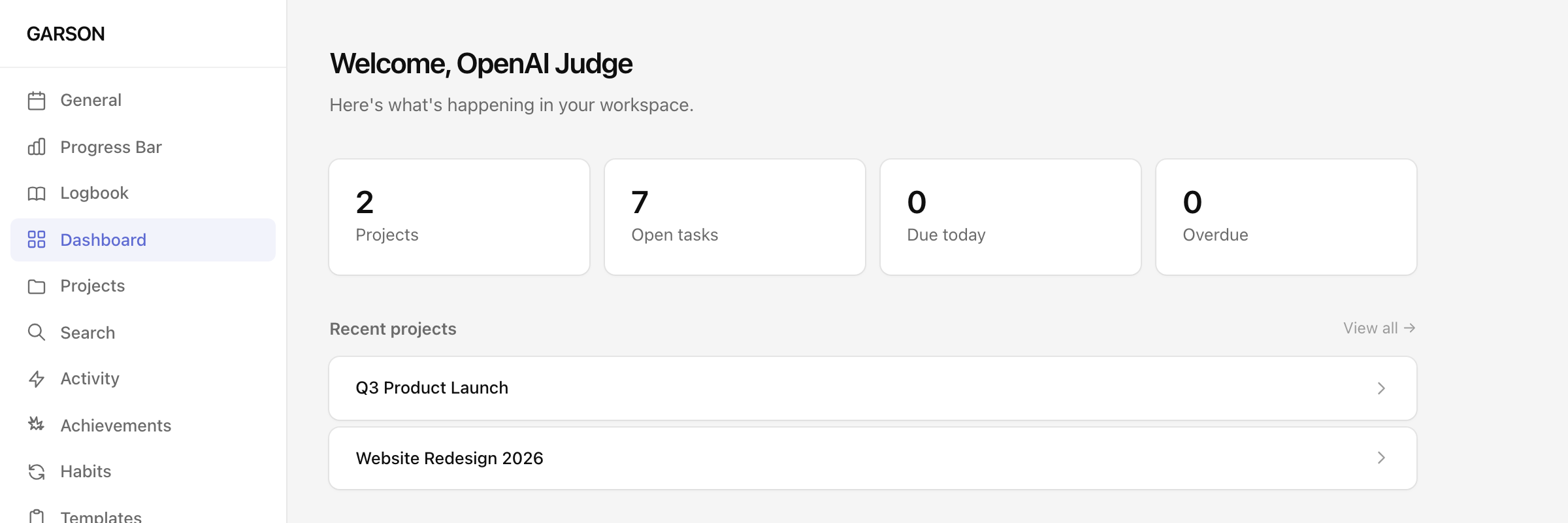
GARSON is a personal productivity OS:
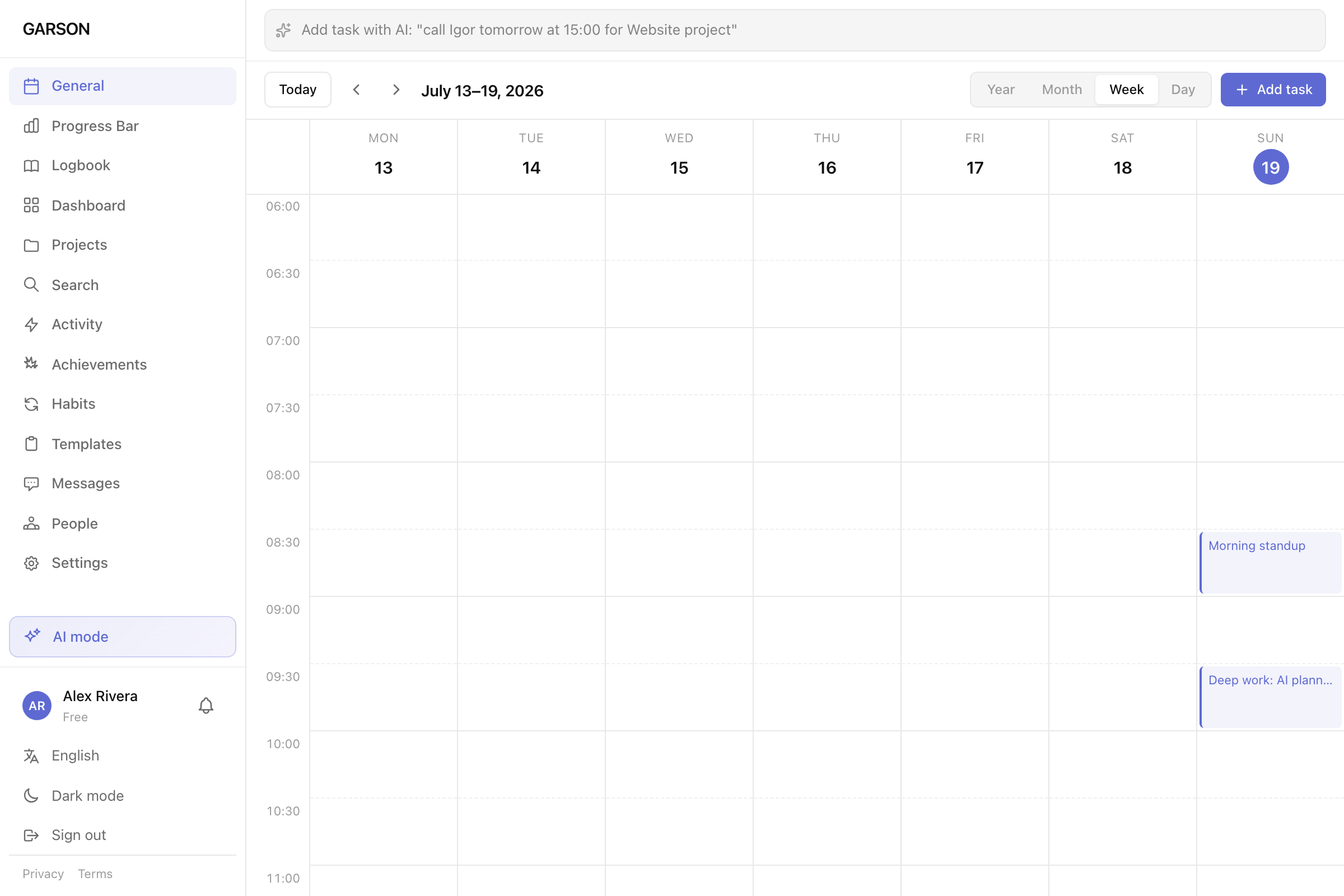
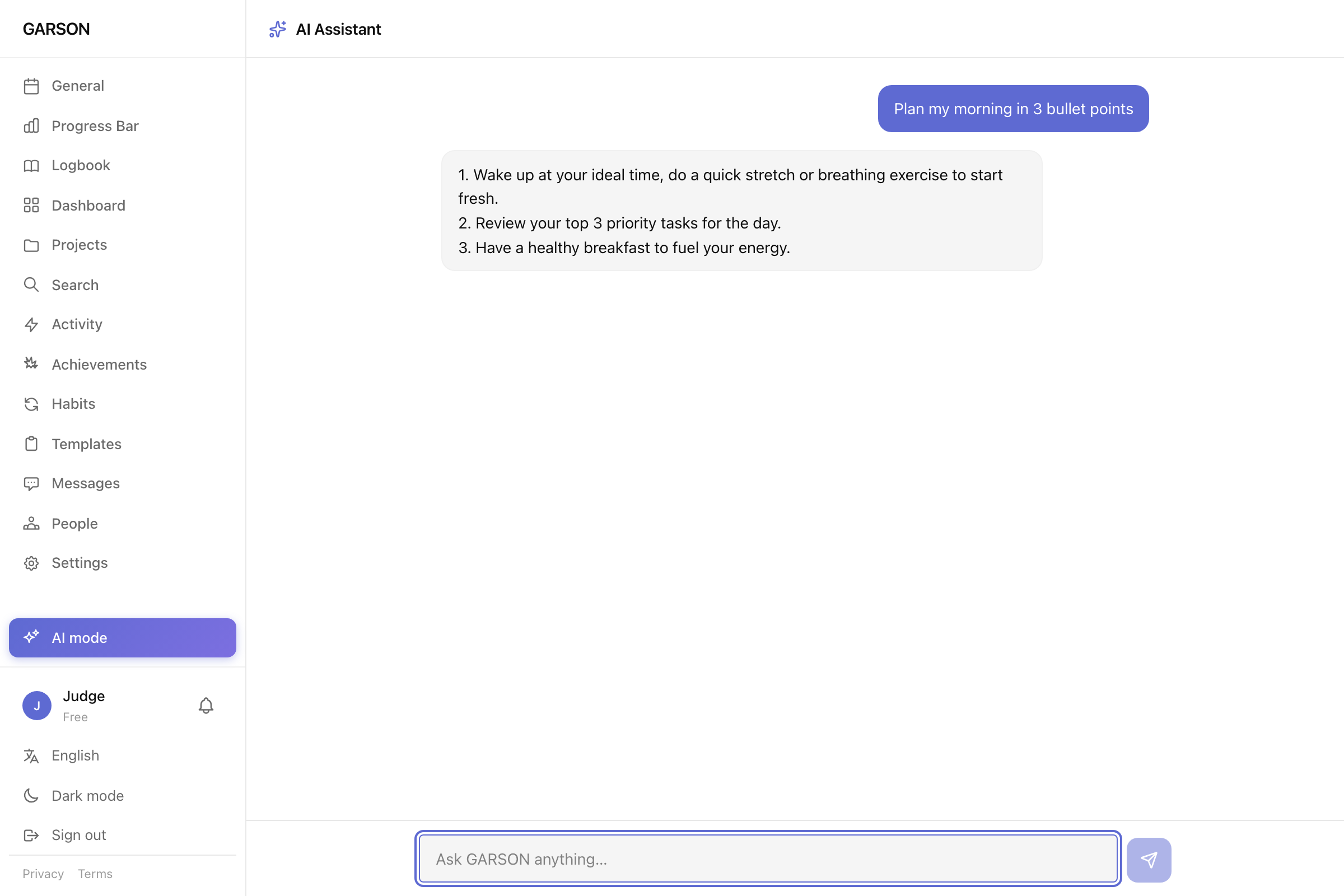
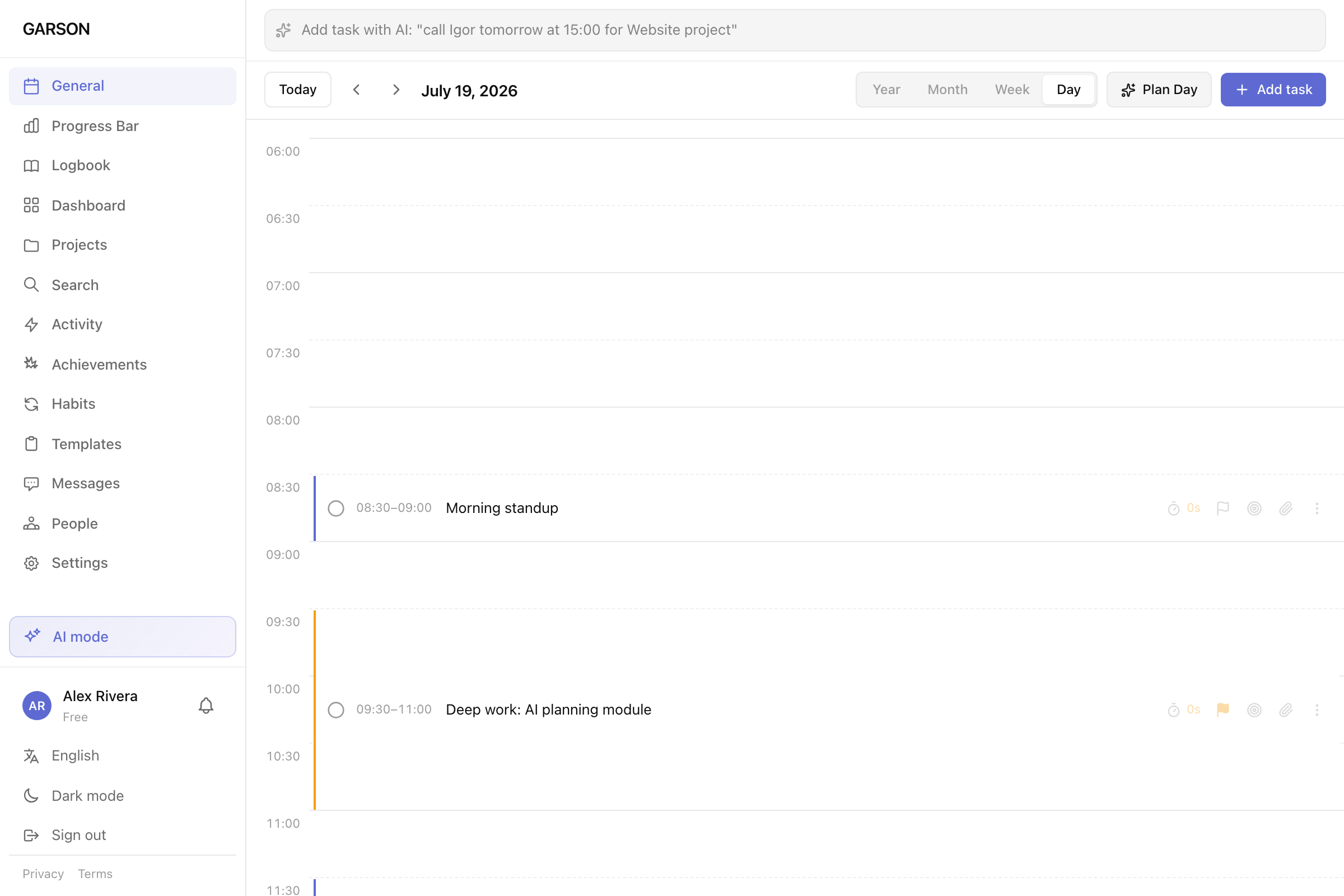
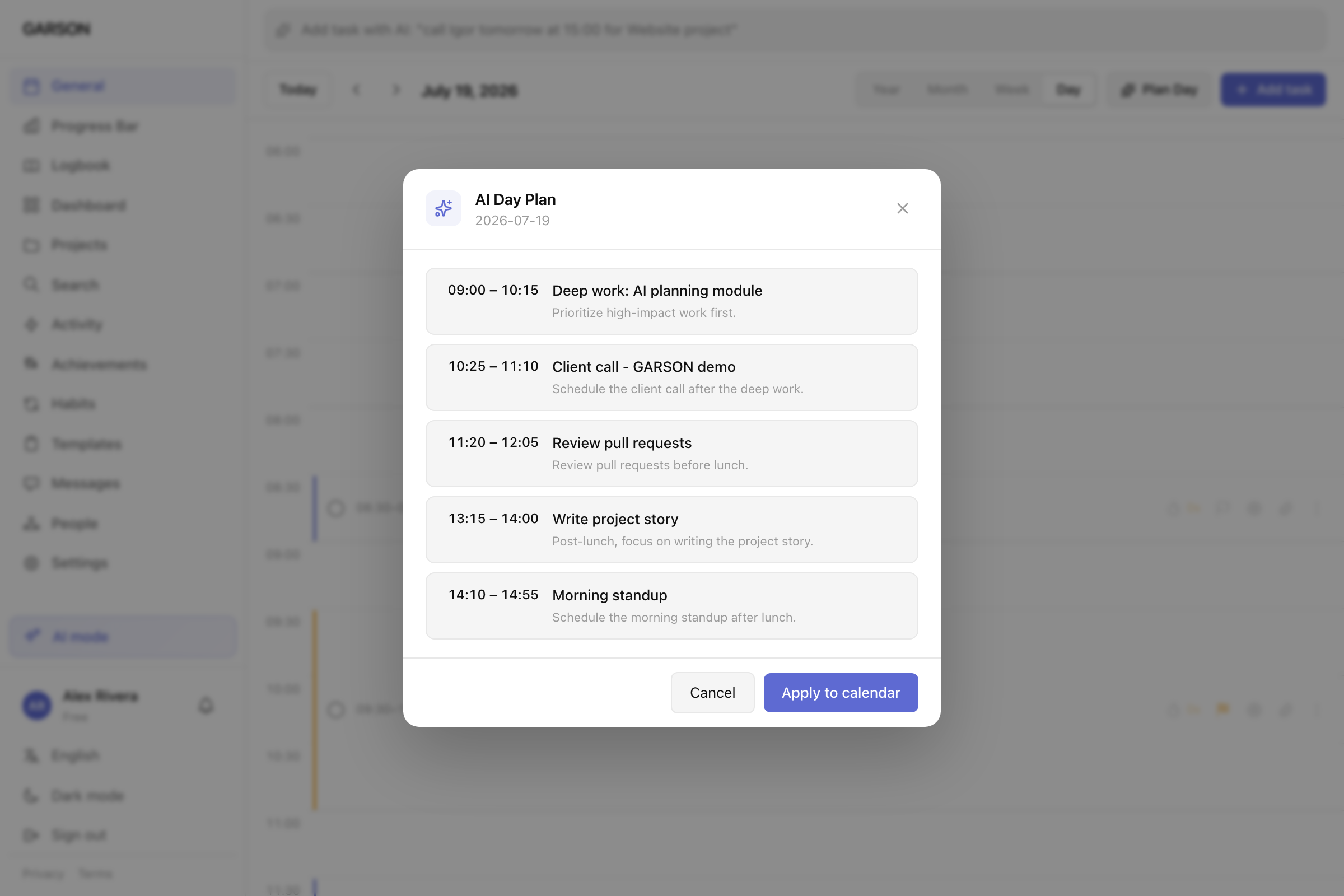
- AI day-planning - describe your day in natural language ("call Nikki tomorrow at 15:00 for the Website project") and GARSON schedules it.
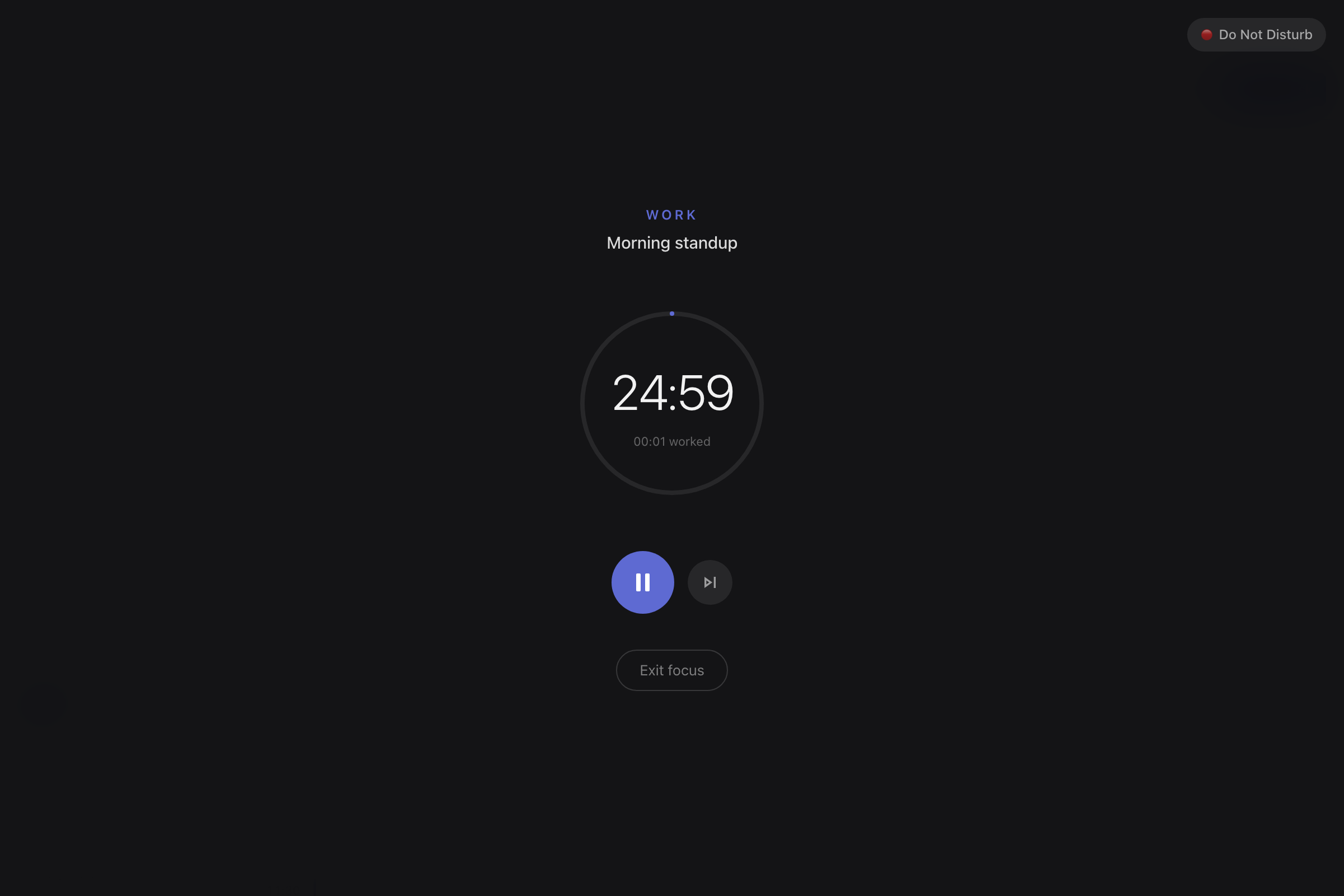
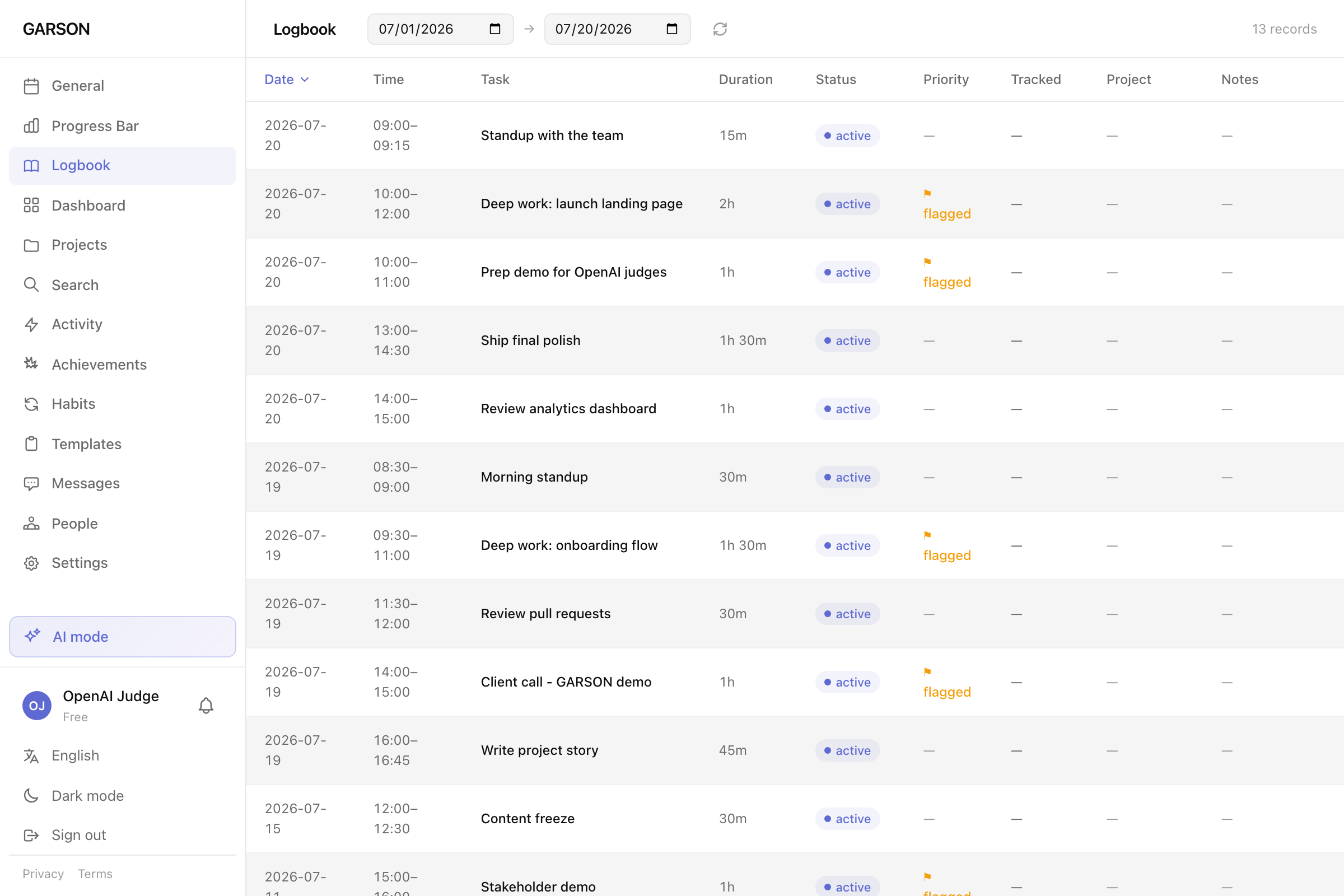
- Calendar - day / week / month / year views, recurring tasks, focus-mode timer tied to the actual task duration.
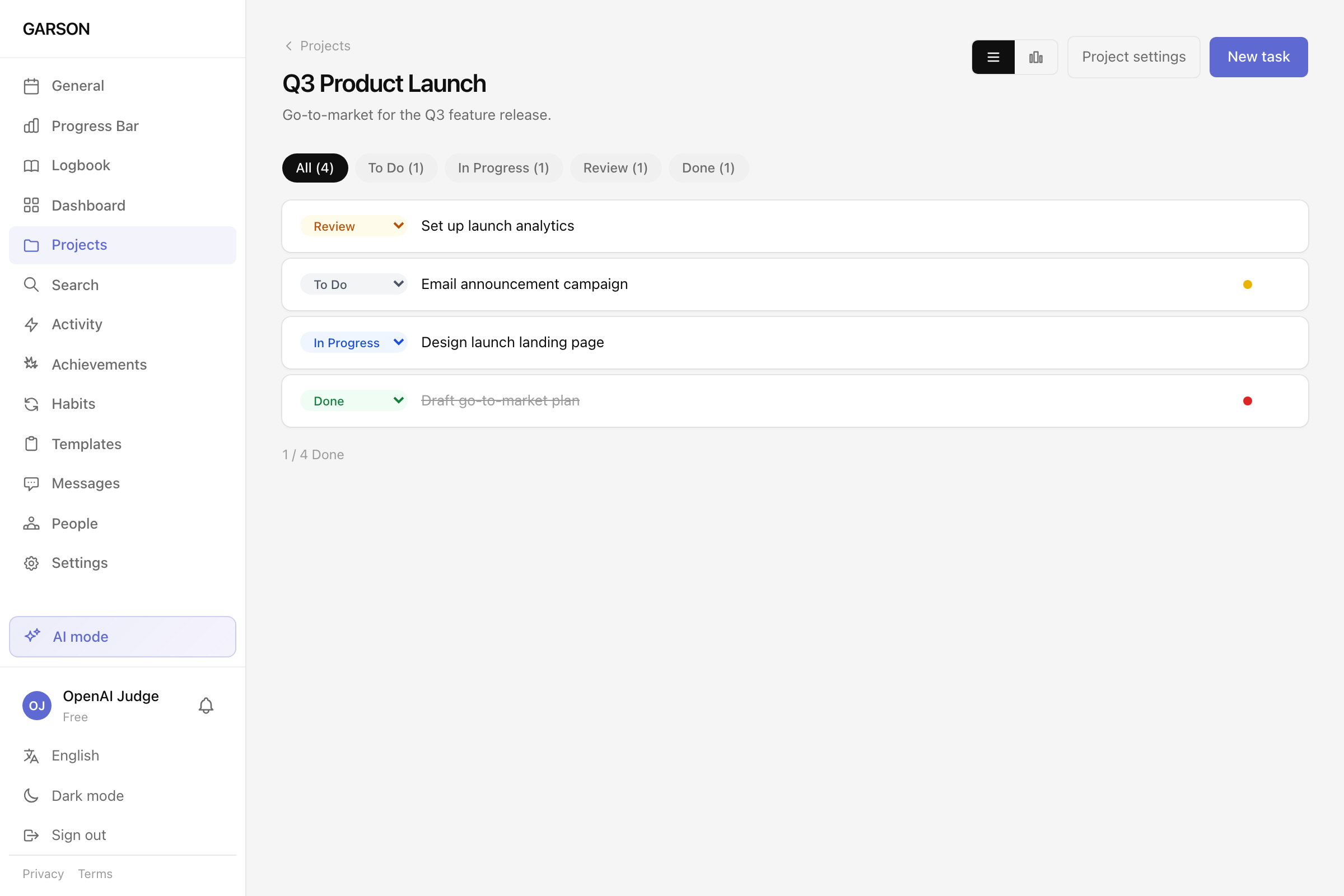
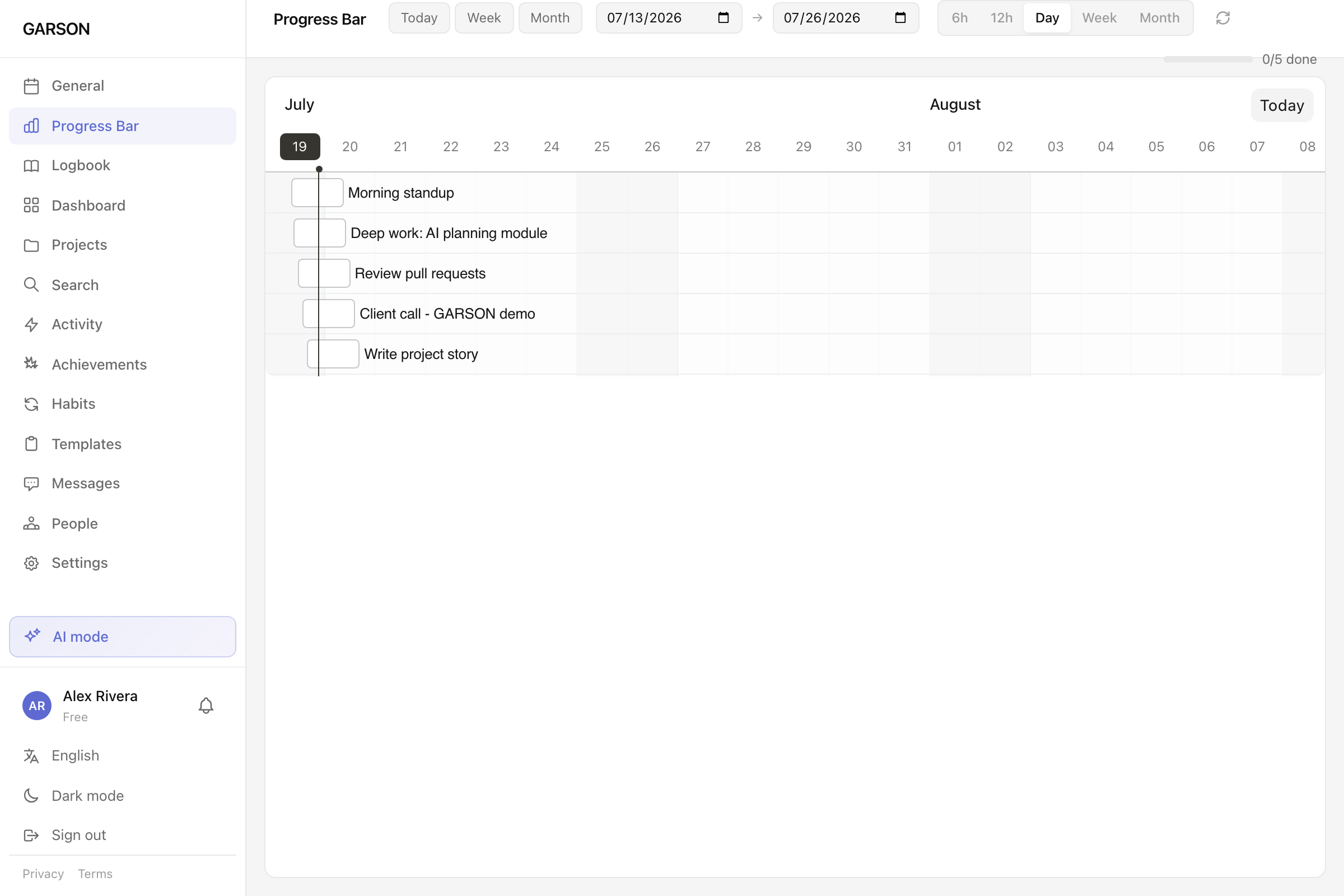
- Projects and tasks - Kanban boards, Gantt-style progress bars, attachments, comments.
- Any AI model, your choice - a multi-provider architecture (OpenAI, Anthropic and others) with bring-your-own-key support, so the AI layer isn't locked to one vendor.
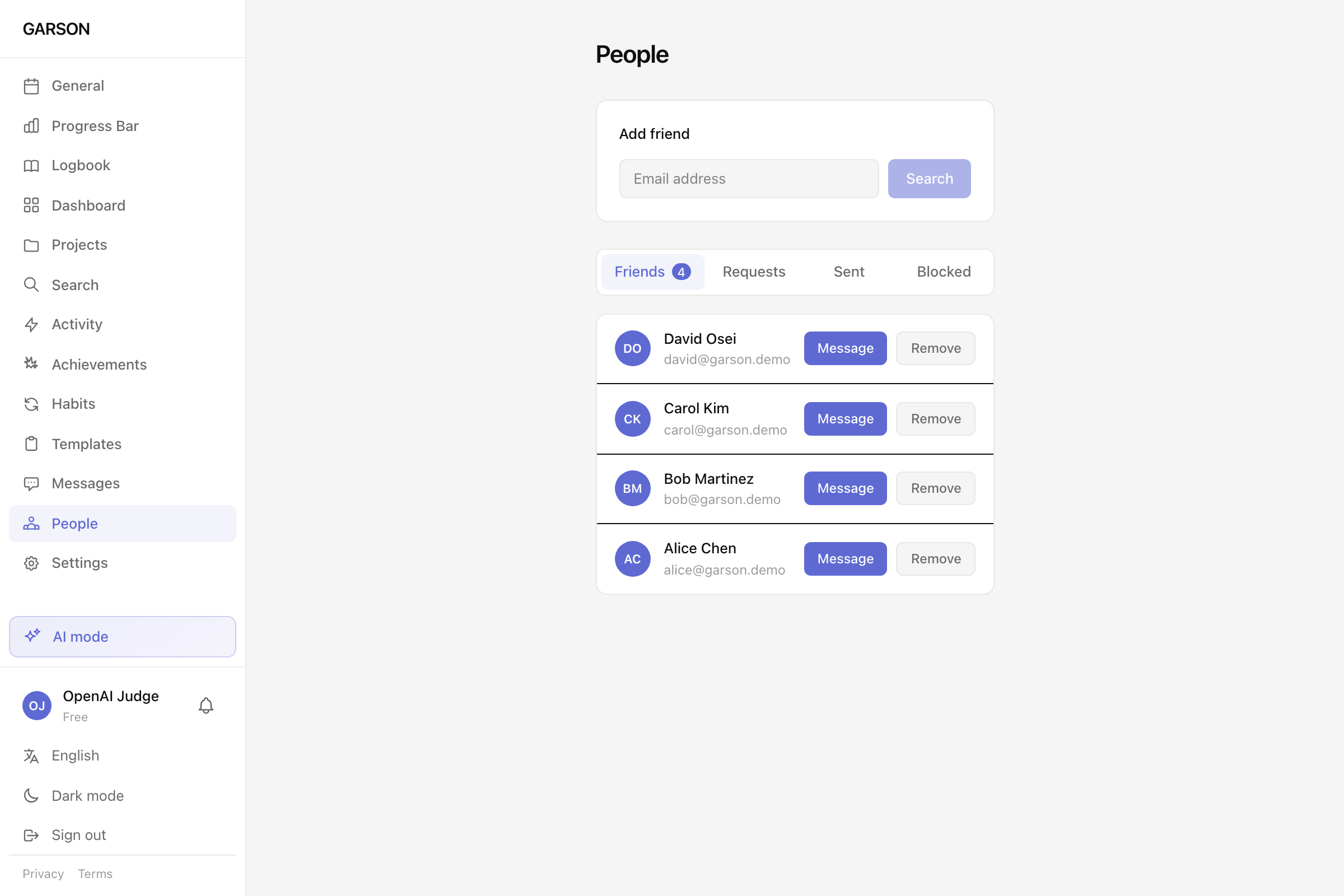
- Real infrastructure for real users - 5 languages, Telegram bot integration, social/friends, in-app messenger.
It's live in production at app.garson.su - not a demo environment spun up for this hackathon.
How we built it
GARSON is 11 Go microservices (auth, core, realtime, files, audit, notify, ai, social, messenger, worker, tgbot), a Next.js web app, and a Flutter mobile app, backed by PostgreSQL, Redis, RabbitMQ and MinIO, deployed via Docker Compose behind Nginx with Prometheus/Grafana/Loki observability.
What makes the "process" unusual: development was directed by a solo founder coordinating a small team of AI agents with distinct roles -
- an "architect/reviewer" agent that designs, accepts work only after observing it live in production, and maintains a running non-conformance register of every defect and its root cause,
- a "builder" agent that implements features,
- Codex, reviewing changes before they ship,
- an independent "auditor" agent that red-teams the product for security and UX gaps a builder would miss.
For this hackathon, we extended GARSON's existing multi-provider AI layer to run its day-planning on Codex throughout the sprint to review the changes.
Challenges we ran into
- "It compiles" is not "it works." Several regressions only became visible when tested against a live database or the real production endpoint - a hardcoded schema in a test file quietly drifted from the real migration, and a one-line bug (an empty string being converted to
NULLagainst aNOT NULLcolumn) resurfaced three times across different code paths before we grepped every occurrence instead of just the one in the bug report. - Deploy pipeline correctness. A version-mismatch in our diff-based deploy pipeline once caused a partial rollout - fixed with a version-aware deploy gate that now blocks any release where the live service version doesn't match the deployed commit.
- Multi-tenant safety. Adding new resource types (task attachments, comments) meant re-verifying cross-tenant access on every new endpoint by hand — automated scanners don't catch IDOR-class bugs.
- i18n at scale. Adding a translation key to the dictionary isn't the same as actually using it in the UI — we caught several places where strings were "translated" in the JSON file but still hardcoded in English on screen.
Accomplishments that we're proud of
- A genuinely production system, not a hackathon prototype: real users, real deploys, a real incident-and-lessons-learned register instead of "it worked on my machine."
- A model-agnostic AI layer that can run on GPT-5.6 today and something else tomorrow without a rewrite.
- A development process where every acceptance is proven by observing production, not by trusting a status report - which caught real bugs before they reached users.
What we learned
That the hardest part of building with AI agents isn't getting code written - it's building the discipline to verify a claim of "done" against reality every single time. The same lesson that makes for good engineering makes for good AI-agent management.
What's next
Multi-day/multi-week task support, richer collaboration (shared tasks, real-time presence), and deeper natural-language planning as the AI layer matures.
Built With
- anthropic-claude
- codex
- dart
- deepseek-api
- docker
- flutter
- github-actions
- go
- grafana
- jwt
- loki
- minio
- next-intl
- next.js
- nginx
- openai-api
- postgresql
- prometheus
- rabbitmq
- react
- redis
- telegram-bot-api
- typescript
- websocket


Log in or sign up for Devpost to join the conversation.