-
-
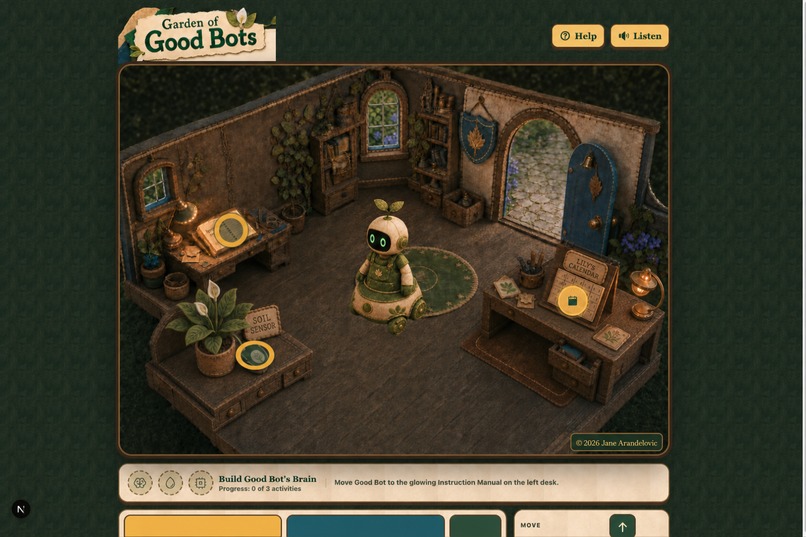
GoodBots Workshop
-
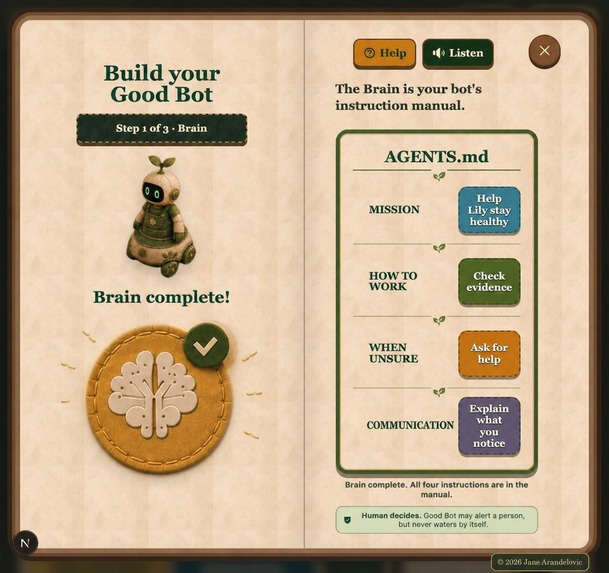
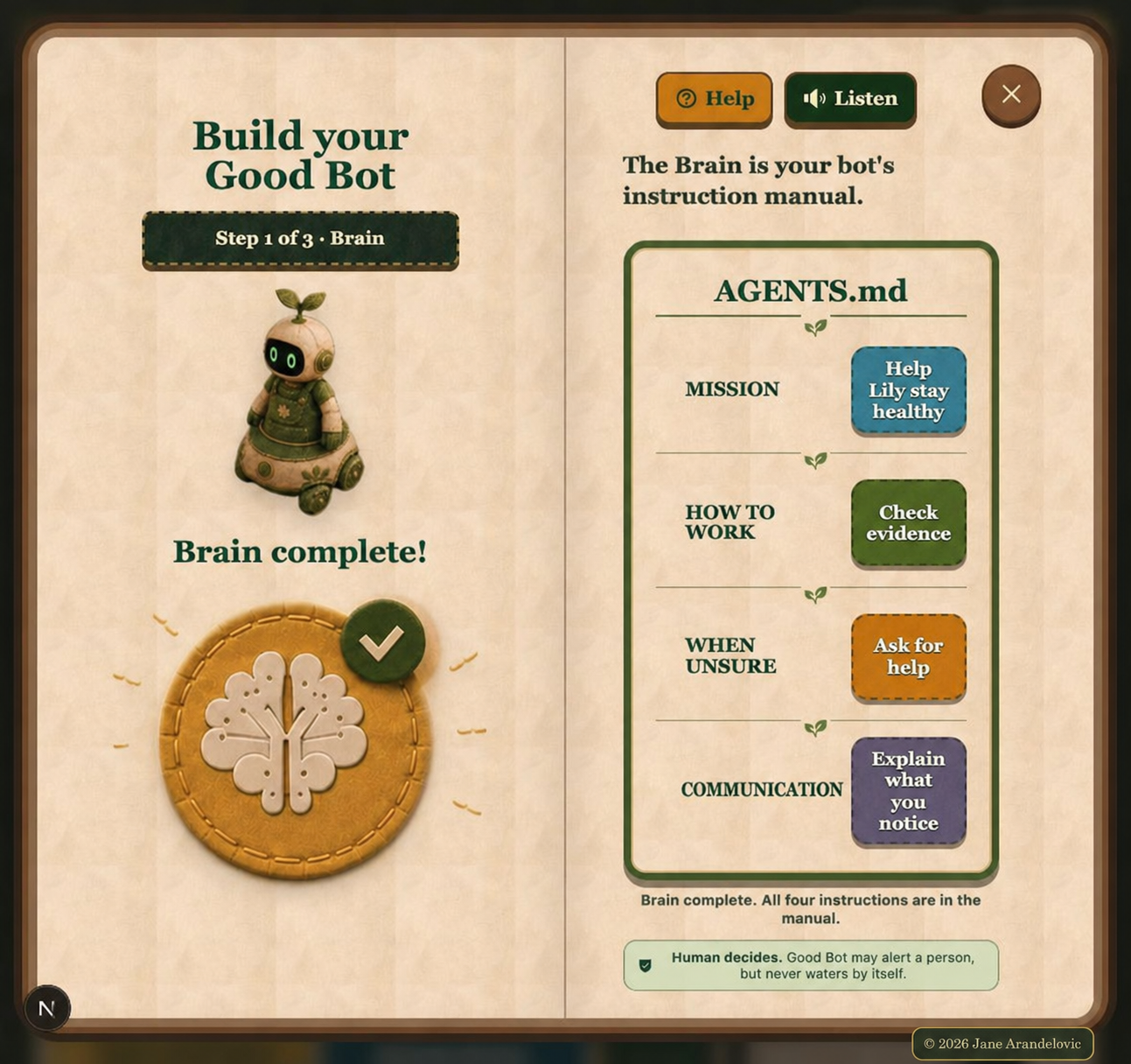
Building Your GoodBot's Instruction Manual (Brain)
-
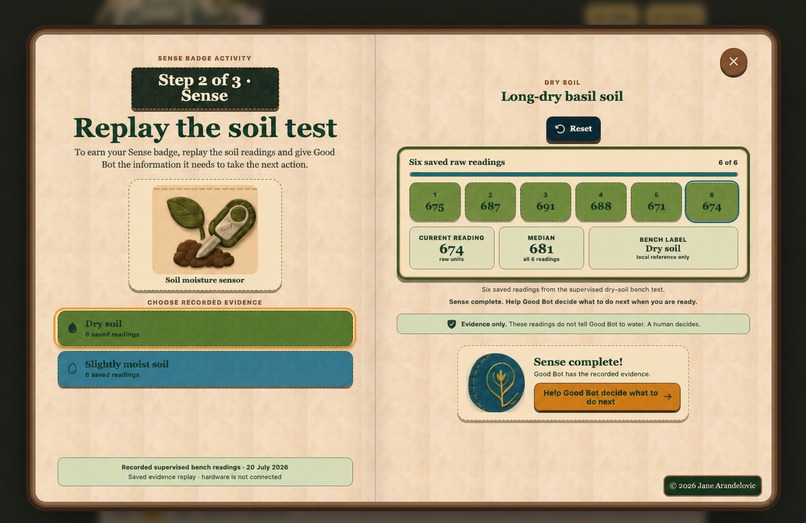
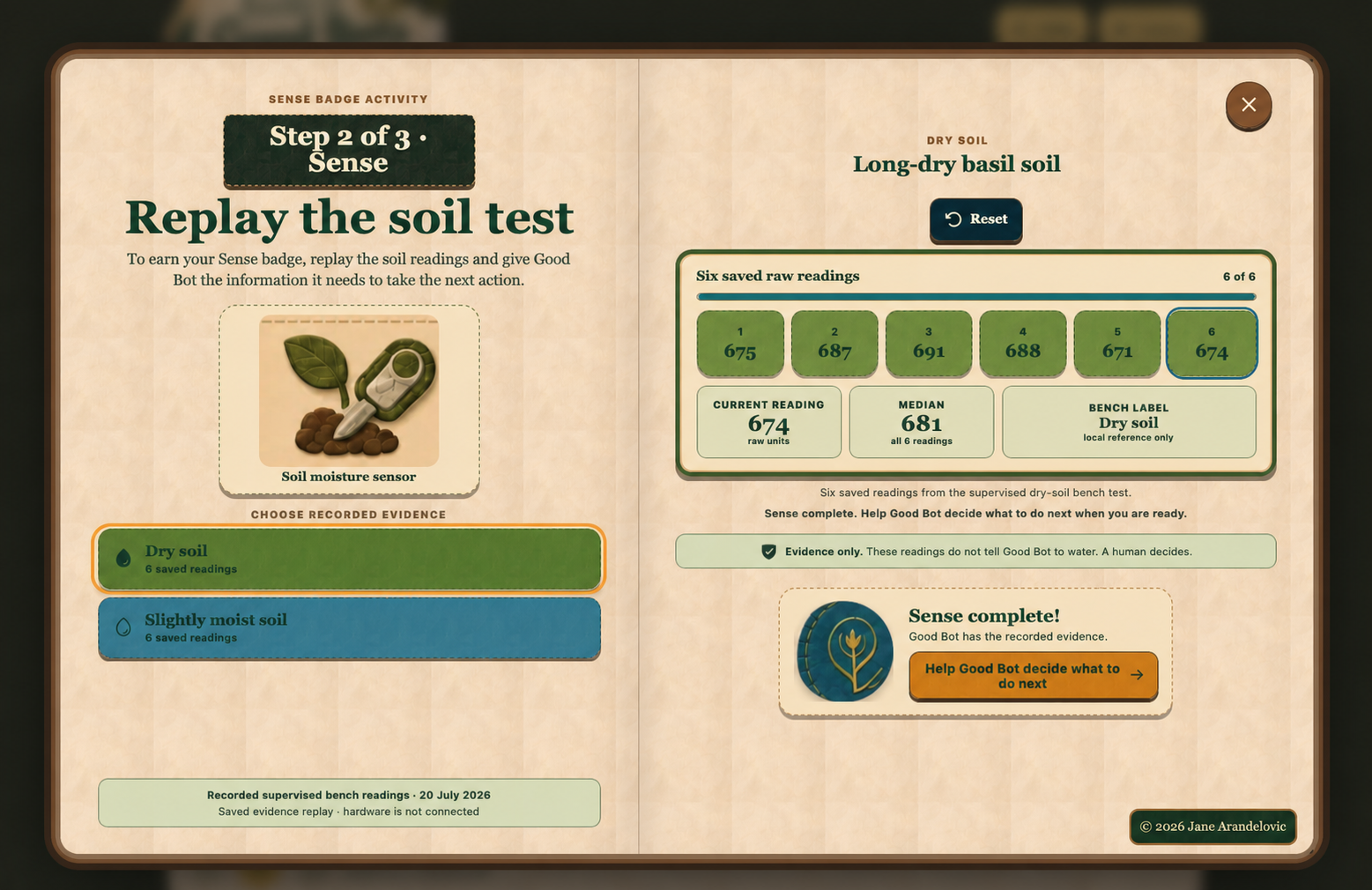
Replaying Soil Tests
-
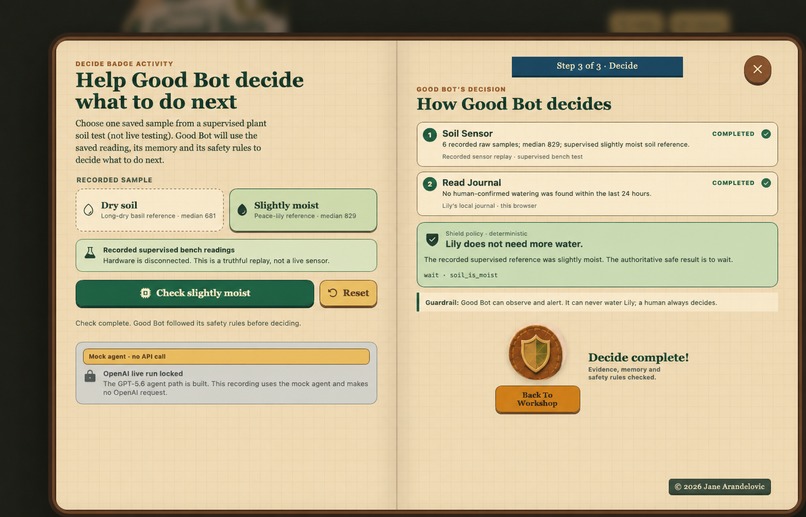
Deciding To Alert A Human
-
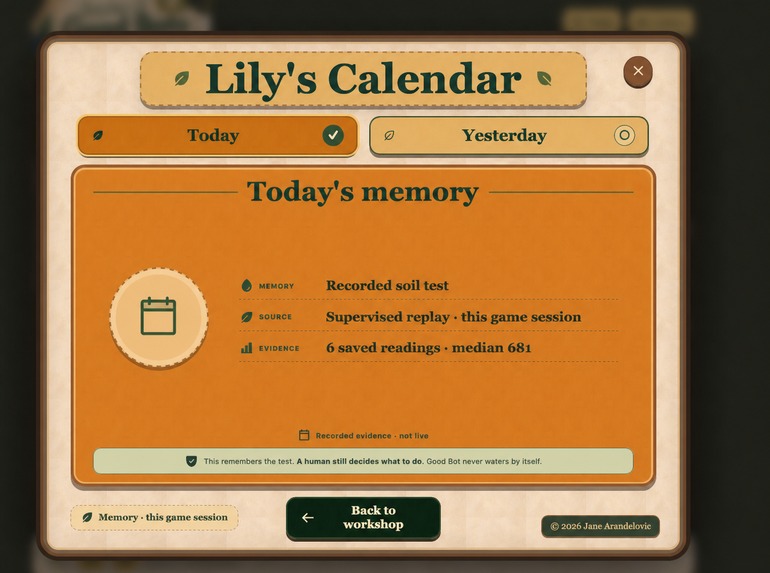
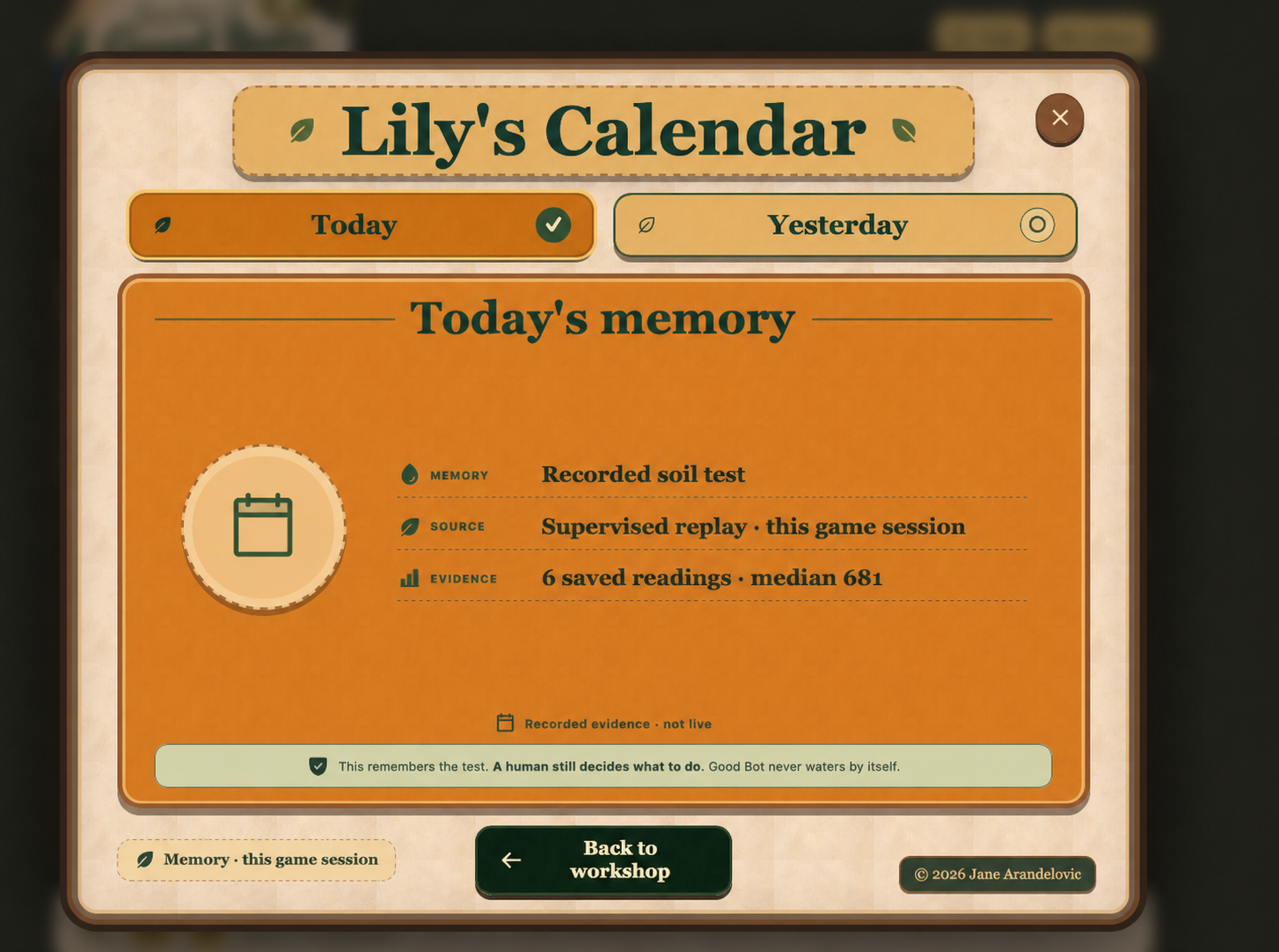
Lily's Calendar (Memory)
Inspiration
The Good Bot idea came from wanting a child-friendly way to learn about AI agents in a fun way. I also have a peace lily that I forget to water.
My peace lily can get quite droopy, but that is only a clue, not proof that she needs water. By using a real houseplant and a soil sensor, I wanted to show how AI agents can help interpret soil readings and log checks, rather than relying only on what we see in front of us.
What it does
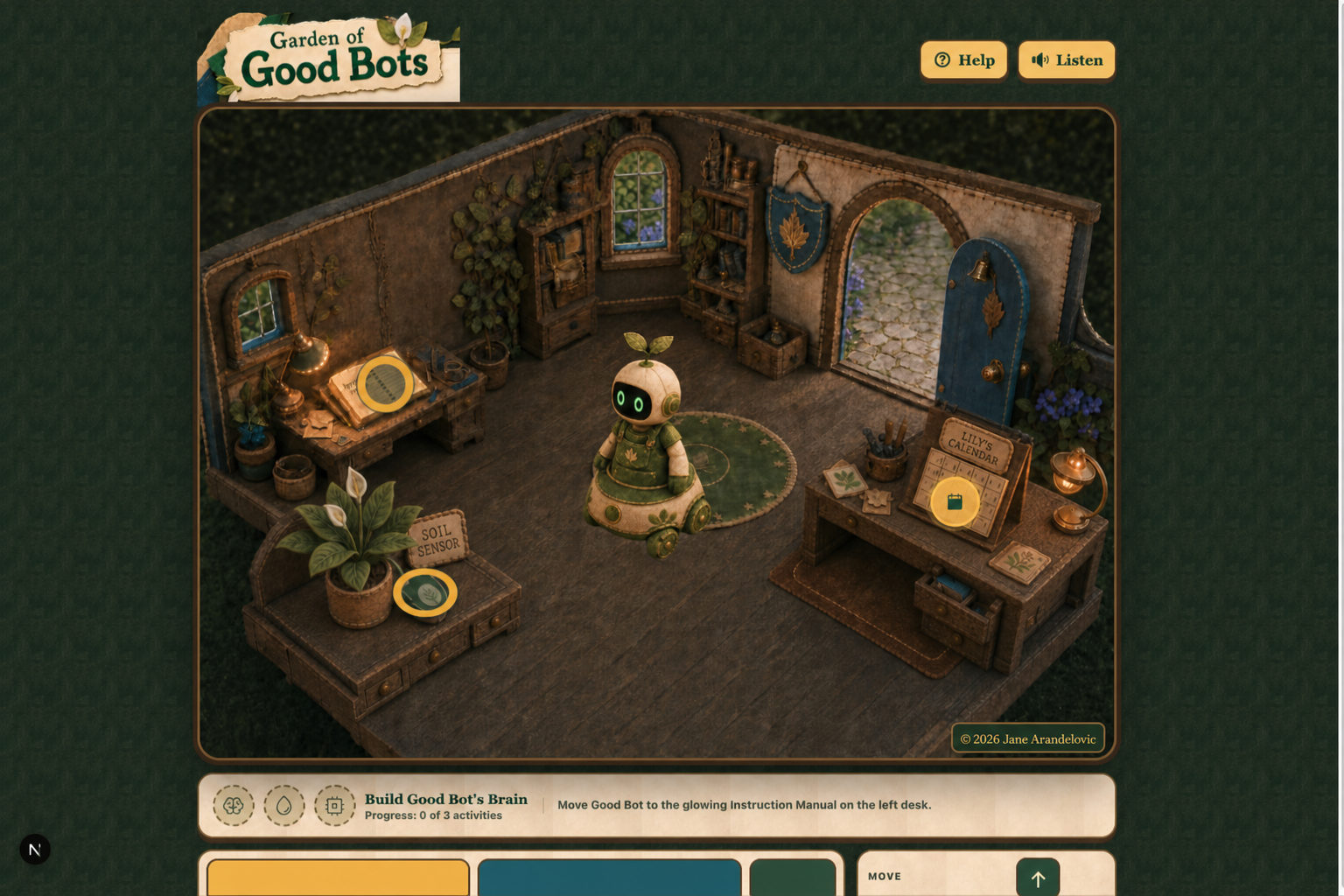
Garden of Good Bots is a game where older children and grown-ups can learn to build a basic agent and help rescue a plant called Lily.
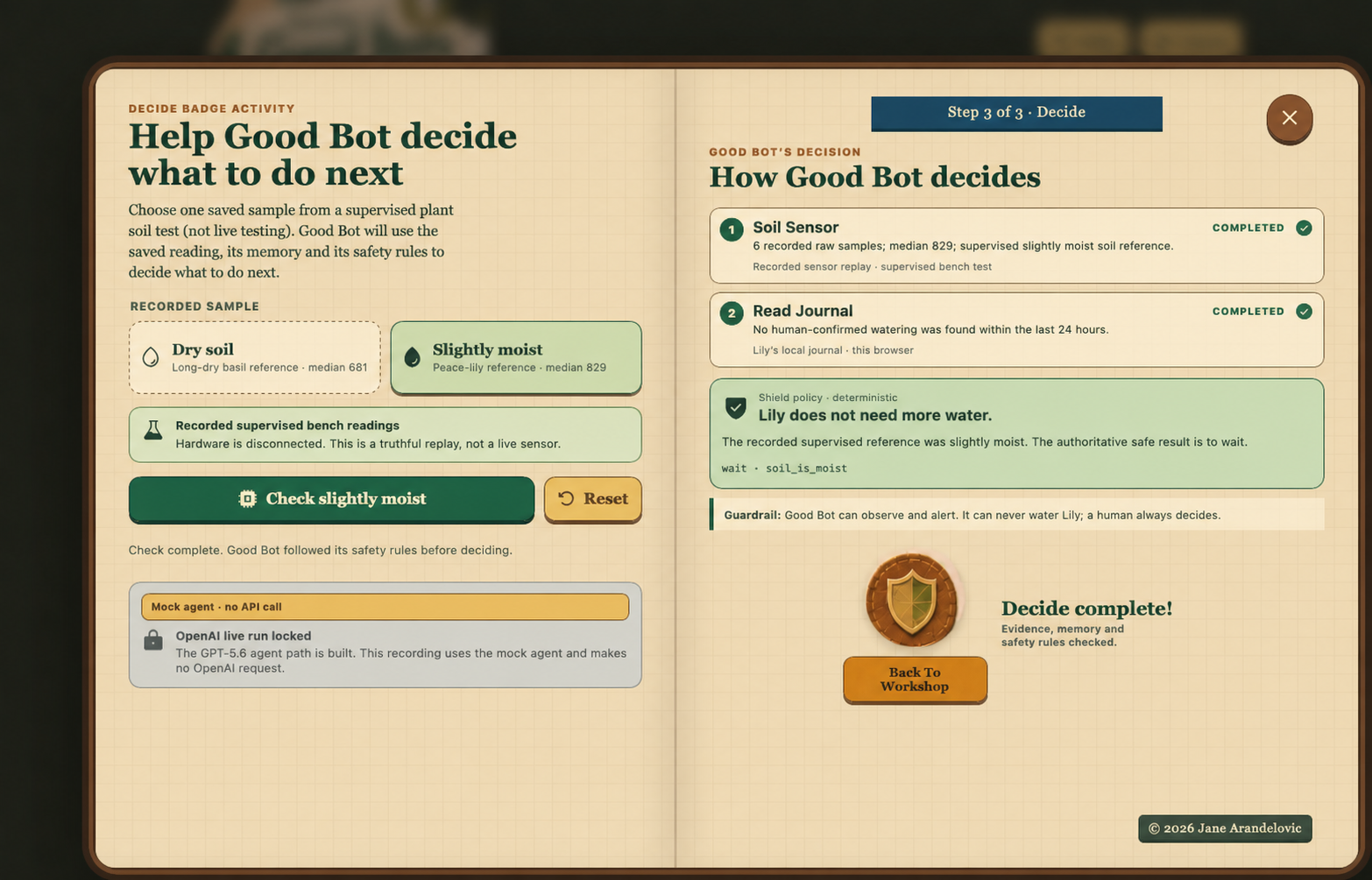
In the game, you help Good Bot get ready to test Lily’s soil, alert a grown-up if she may need watering, and log the test results. Good Bot uses evidence, memory, and safety rules - but a human always decides.
How I built it
I have exactly zero experience building games with Three.js and WebGL, or soil-testing plants and setting up sensors.
I used Codex and GPT-5.6 Sol Ultra & Extra High across different chats for the main project tasks:
- Control Room chat - this was where the plan for an approach to OpenAI Build Week was mapped out. I also used this chat to brief in my idea using my sketches and handwritten notes, and to decide on a game name before going into final design and gameplay build.
Within this chat, GPT-5.6 helped me find the exact electronics needed to test the peace lily soil in real life, from a store in Sydney that could deliver in time for testing and capturing real readings.
Animation Redesign & Gameplay -taking my sketch and creating game graphics, assets, and character animations. I designed and built an initial quiz-type app in HTML and CSS, but it wasn’t engaging enough. This turned into an isometric story game using Three.js and WebGL.
Live Sensor Lab testing - testing and capturing readings for dry and moist soil from my peace lily and a dried-out basil plant for use in the demo game. This involved connecting up the Adafruit Soil Sensor and the Feather so that Codex could add firmware, then carefully testing a number of times and capturing readings.
Agent Architecture - building an Agent Lab that sent readings to GPT-5.6 via the API. I wanted to integrate this into the game, but a key decision, due to time constraints, was to focus on getting the demo version completed first and use the captured soil readings as sample data.
GitHub Repo Readiness - a chat to manage setup and committing to the repo.
3 Minute Video Submission - a chat to storyboard and create the submission video based on assets provided, including photos, videos, and audio.
Codex and GPT-5.6 accelerated my workflow by allowing multiple chats to run in parallel:
- Helping me make key decisions on what the minimum viable game would be for timely submission.
- Recommending efficient ways of building the game animations. Initially, I was thinking of using an open-source game engine, but in the end I decided on Three.js and WebGL.
- Animating, building, and testing the game using Computer Use where relevant.
- Setting up the soil-sensor electronics, testing, and capturing the readings.
- Creating the three-minute submission video.
Challenges I ran into
- My initial Control Room chat disappeared due to a Codex UI bug. However, a new Codex chat was able to retrieve the information and create a handover document.
- Initially, Good Bot had legs and was going to walk, but it literally had two left feet so we turned the legs into a base on wheels!
- The soil sensor was finicky to set up, and I was unsure whether it would work to send readings through to Codex.
Accomplishments that I'm proud of
- Turning my original sketch and handwritten notes into a playable isometric story game.
- Capturing real soil readings from both dry basil soil and moist peace lily soil.
- Building a separate Agent Lab that can send readings to GPT-5.6 through the API.
- Making the game safety-first: Good Bot can observe and alert, but a human always decides.
- Changing Good Bot from a walking bot with two left feet into a friendly bot on wheels!
- Creating the game, gameplay assets, testing evidence, and submission video in time for OpenAI Build Week.
What I learned
I learned that building an AI agent experience is not just about getting an AI model to respond. It is about deciding what evidence the agent can use, what it can remember, what tools it can access, and where human decision-making needs to stay in control.
I also learned a lot about Three.js, WebGL, game interactions, soil sensors, firmware, capturing real readings, and how much testing and iteration is needed to make something feel simple and fun.
What's next for Garden of Good Bots
I would like to bring the Agent Lab more directly into the game, so Good Bot can use the GPT-5.6 API path alongside the recorded demo evidence.
I would also like to keep exploring how real soil-sensor readings could be shown safely in the game, while keeping the same rule: Good Bot can observe and alert, but a human always decides what happens next.
Built With
- codex
- css
- gpt5.6
- javascript
- three.js
- typescript
- webgl

Log in or sign up for Devpost to join the conversation.