
Inspiration
GarageGuard AI was inspired by the everyday maintenance issues in parking garages, such as trash and spills, that often go unnoticed. We wanted to use AI to help maintenance teams identify problems and prioritize tasks more efficiently. In addition, garage cleaners are often unnoticed and underappreciated in addition to having to perform a lot of work and manage a huge deck. Thus GarageGuard was created to ease their burden and make their work more efficient.
What it does
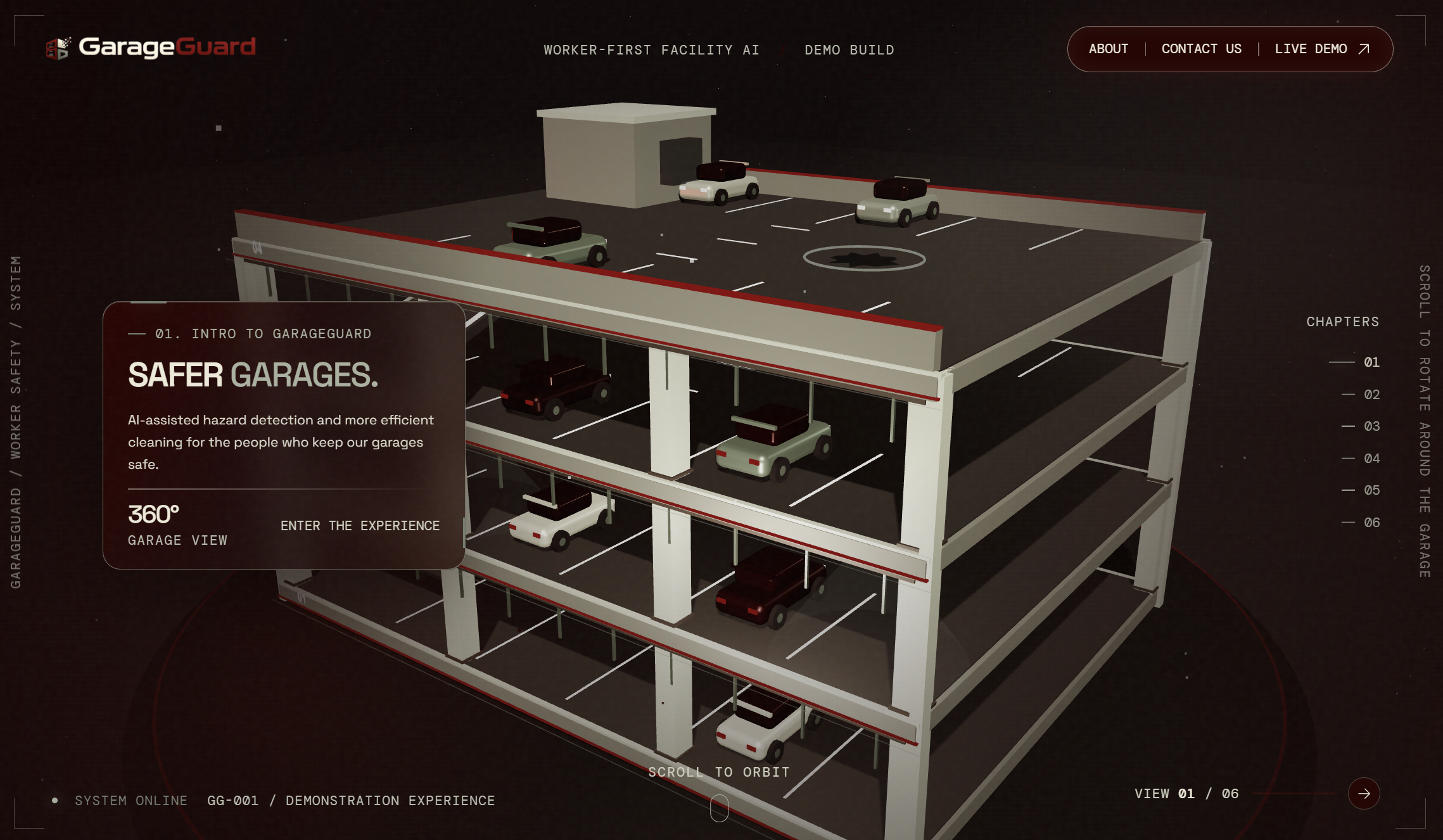
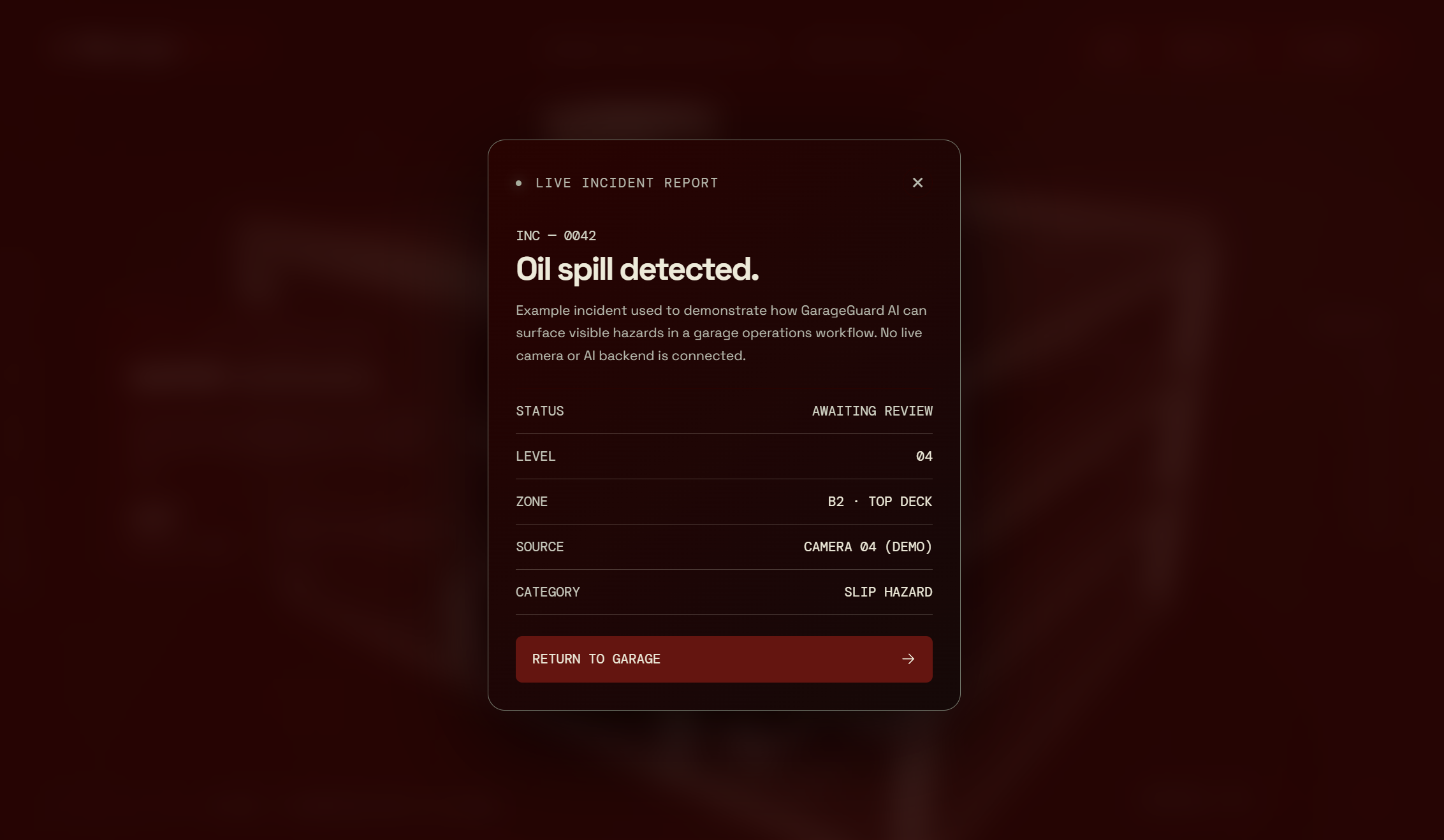
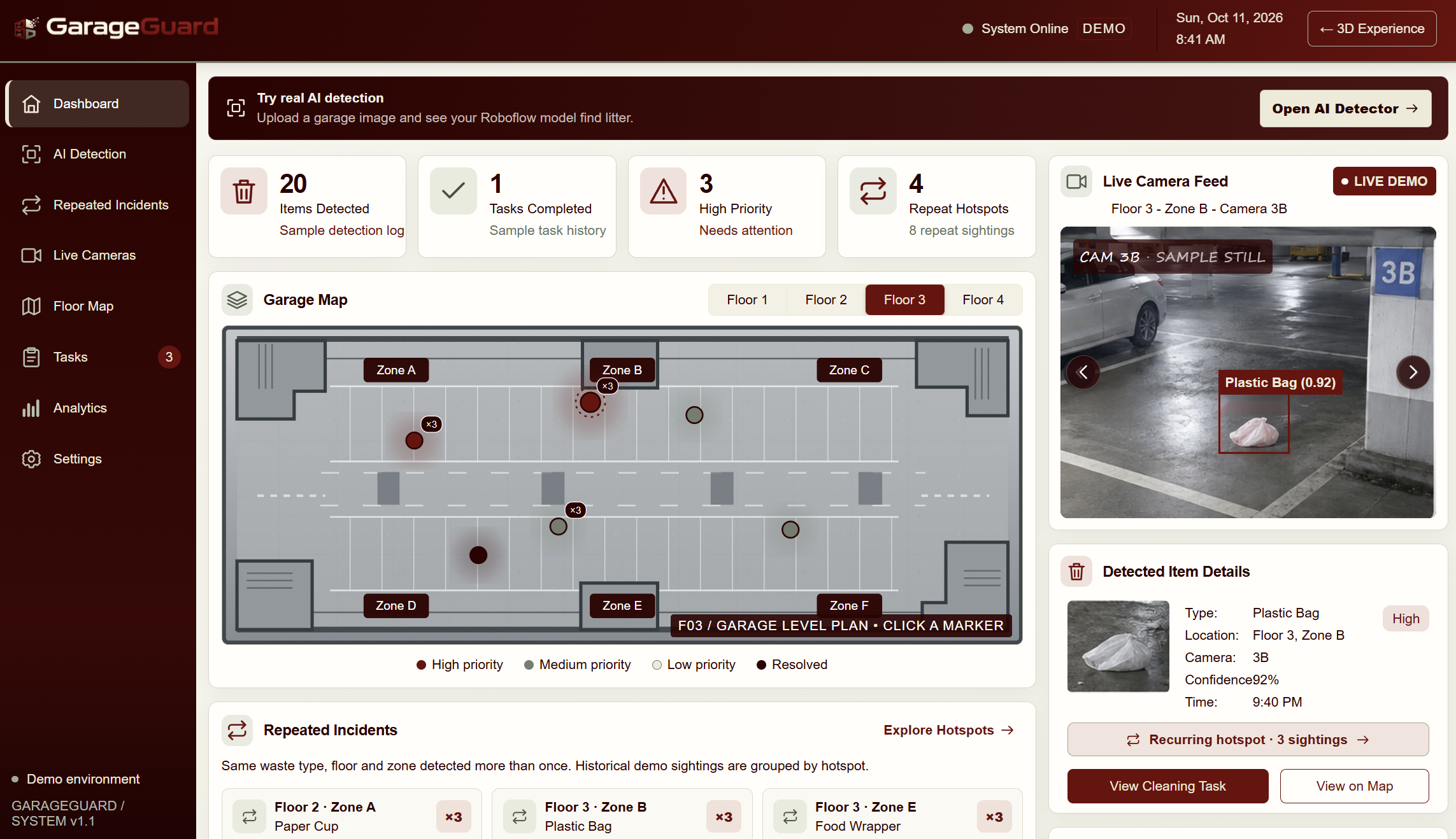
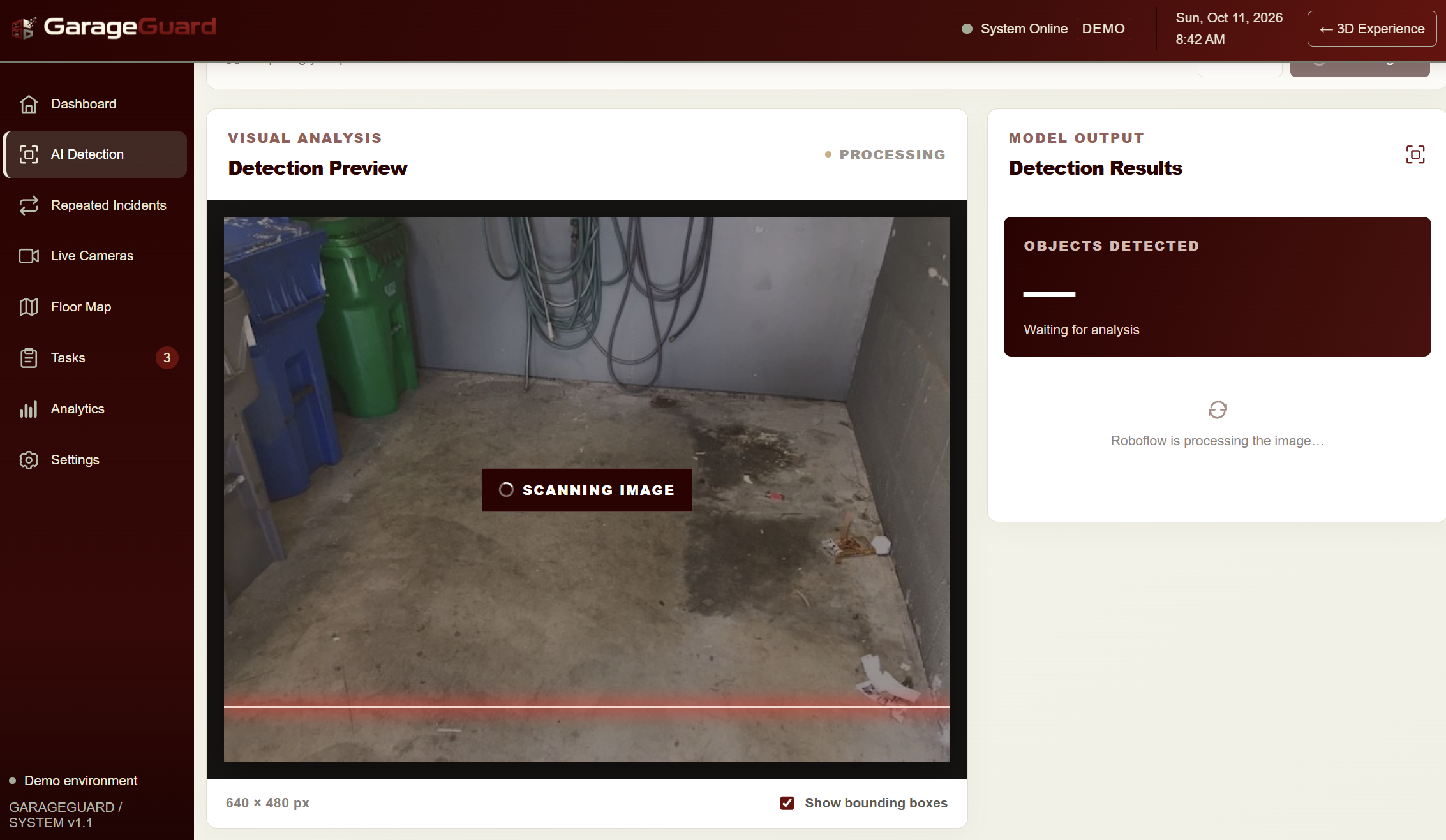
GarageGuard pairs a web frontend with an AI monitoring system. Using sample camera captures of maintenance hazards like spills and litter, we set up a detection model that categorizes incidents and assigns priority levels based on severity. We built a dashboard where facility teams can track real-time issue status, view visual evidence, and coordinate cleanup tasks efficiently. We built Garage Guard using React 19 and Vite, rendering an interactive 3D parking deck with Three.js that highlights physical hazard locations. Our dashboard uses a Roboflow Cloud Workflow that identifies oil spills and litter. Finally, the operations dashboard maps these detections onto an interactive 2D floor blueprint with a cleaning task queue, recurrence tracking, and CSV reporting.
Challenges we ran into
One of our biggest challenges was turning our idea into a working demo within a limited hackathon time frame while balancing functionality, design, and usability. We tried to use Vultr initially but we abandoned that since we couldn't run the GPU as our initial idea required it. In addition, our model training took a while and we had problems merging different datasets together without one overwriting the other.
Accomplishments that we're proud of
We are proud of creating a 3D experience that explains our problem statement and the background behind our project. In addition, we are proud of integrating a computer vision AI model into a sleek dashboard that seamlessly integrates task functionality.
What we learned
Throughout this project, we learned how to apply AI to real-world challenges while creating a practical, user-friendly experience. We also learned how to host local websites online with custom domain names using Vercel and GoDaddy.
What's next for GarageGuard
Moving forward, we hope to integrate real-time camera feeds and more advanced AI detection into GarageGuard to help teams respond faster and maintain cleaner, safer parking garages. In addition, we hope to train the AI even more and eventually scale this project to larger parking decks, or to be used in other situations where there is a lot of space and not enough people to scan everything, like warehouses.


Log in or sign up for Devpost to join the conversation.