Inspiration
GapMap’s idea was inspired by a somewhat universal experience: being confident that you know everything there is to know about a topic, then hitting a brick wall when trying to apply it. A well-known studying technique is the Feynman Technique, arguing that you don’t truly know if you can’t explain it well enough. Young children ask curious questions all the time, yet the norm has now become just prompting AI to give you an answer and interrogating it until you’re satisfied, which is what GapMap wants to change.
What it does
GapMap is an AI learning companion that helps users cover the gap between recognizing a concept and truly understanding it by reversing the roles of the student and AI.
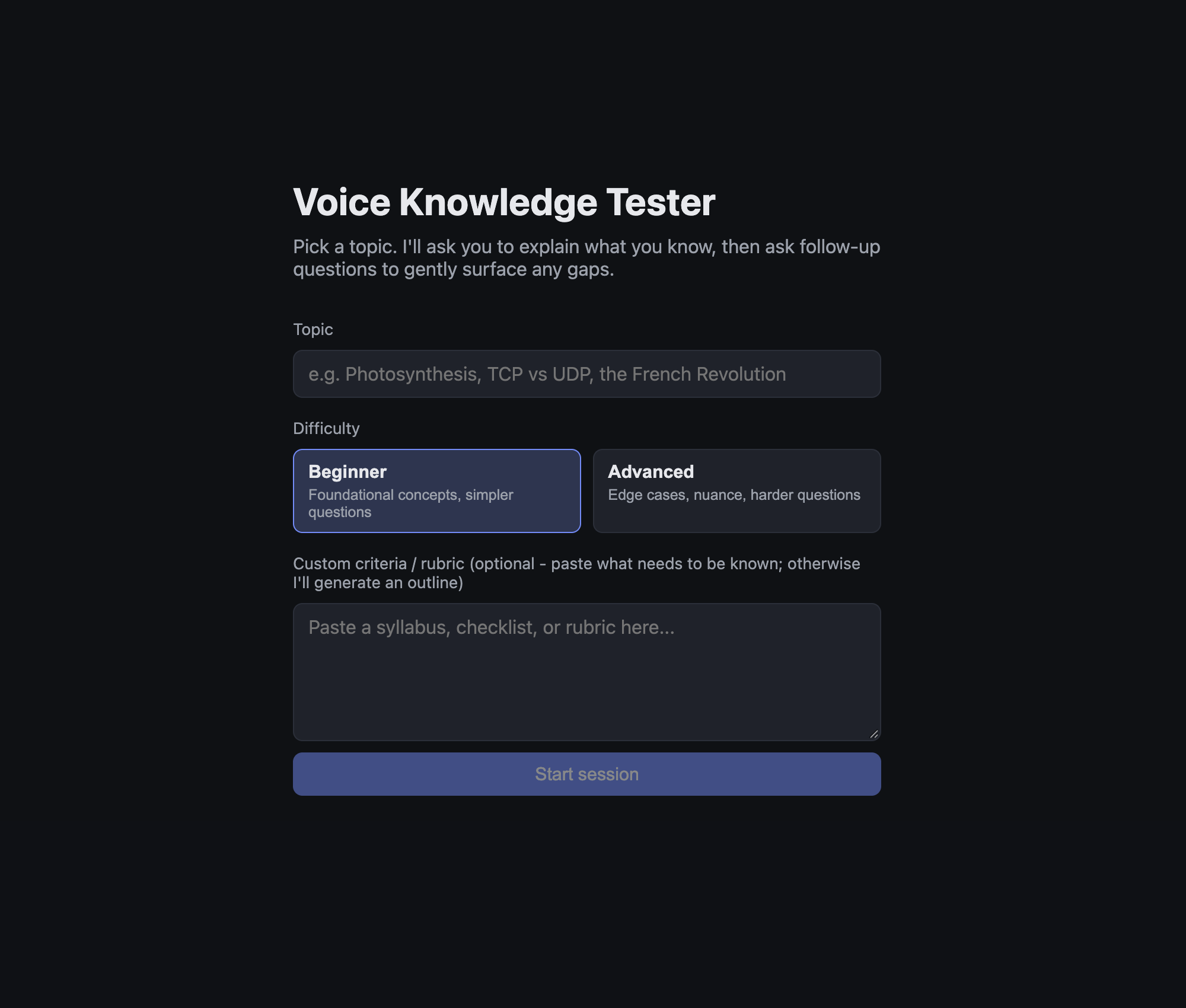
Users enter a topic and optionally provide learning objectives or criteria they need to know. GapMap then asks adaptive questions that test the user’s explanation and real-world application. It can also use an “Explain it back to me” approach, asking users to teach a concept in their own words.

Rather than bluntly telling a user they are wrong, GapMap responds with supportive questions:
- First, it asks an open clarification question, such as: “Can you walk me through how that part works?”
- If needed, it asks for a narrower follow-up that guides the user toward the missing connection.
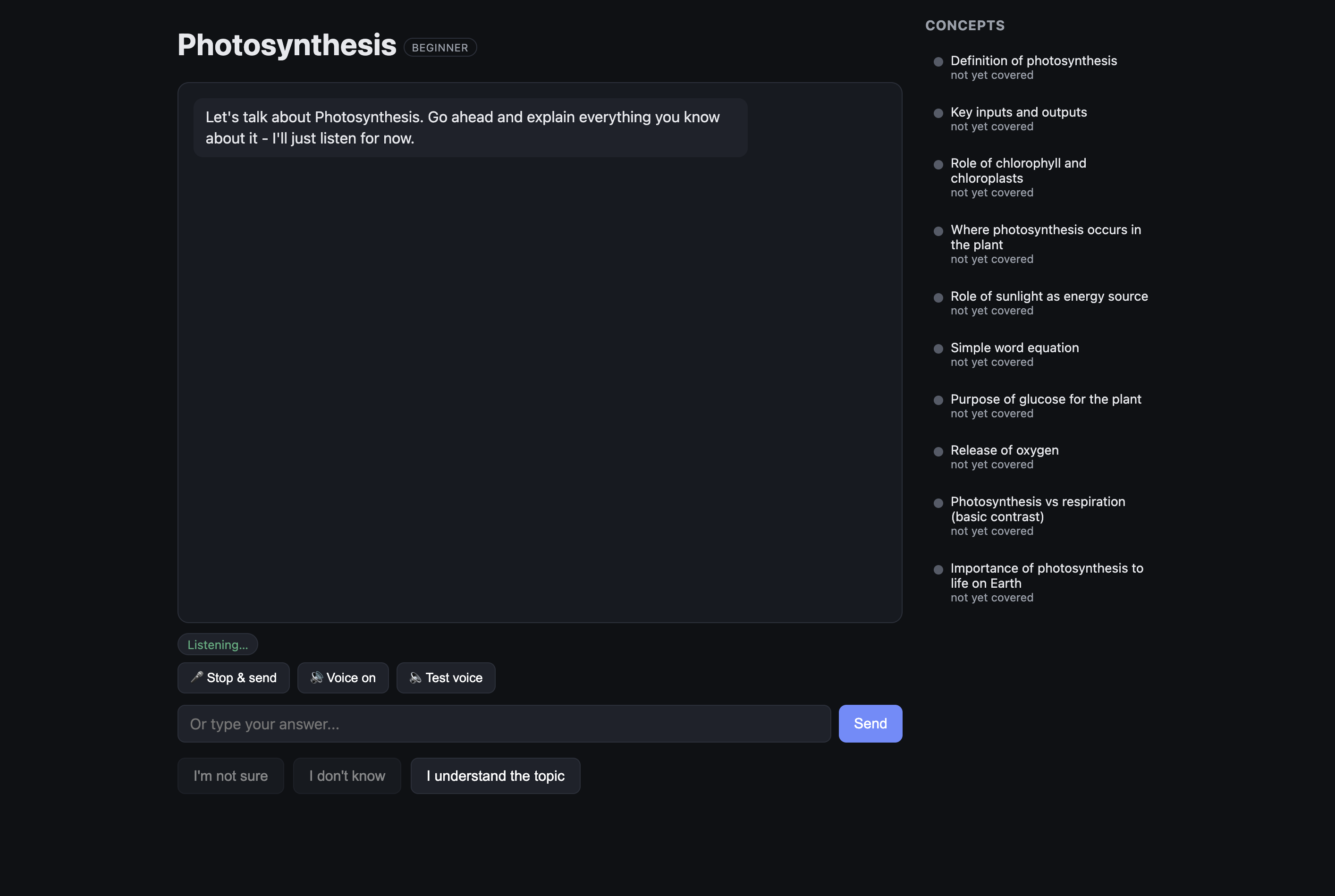
- If the user selects “I’m not sure,” GapMap provides up to three progressively more specific hints.
- If the user selects “I don’t know,” GapMap stops probing and records that concept for the final study summary.

At the end of a session, GapMap creates a personalized study map that identifies concepts the learner understands well, concepts that need clarification, and topics they should revisit. It also explains the user’s misconception, so they know why they should review a topic rather than simply being told that an answer was incorrect.
How we built it
We designed GapMap around common challenges university students face, like feeling prepared after reading notes, then realizing they cannot explain or apply the material during an exam, assignment, or interview.

We built a full-stack web application with a conversational learning interface. The app sends the user’s topic, learning objectives, and answers to an AI model, which generates supportive follow-up questions, hints, and a final study summary. AI coding assistants were used to help our team move quickly from the product idea to a working prototype.

Our team divided the work across the AI/API integration, chat interface, learning-progress logic, and overall user experience. This let us build separate pieces in parallel and combine them into one end-to-end learning flow.
Challenges we ran into
One challenge was deployment. Because GapMap is a full-stack application with a backend API, we could not deploy it through GitHub Pages as originally planned. We spent time learning the difference between a static website and an app that needs a server to securely call an AI model.

We also faced API limitations. Our initial Gemini API setup could not reliably handle all of our demo usage, so we switched to Anthropic to keep the experience stable during testing.

Finally, we originally wanted GapMap to speak responses aloud, making the experience feel more like a real tutor. However, voice capabilities required services and usage limits beyond our setup, so we focused on making the text-based experience strong and clear first.
Accomplishments that we're proud of
We are proud that GapMap does more than generate quiz questions. It is designed to identify how a learner understands a concept: whether they can recall it, explain it in their own words, and apply it to a new situation.

We are especially proud of the supportive feedback style. Instead of making users feel like they failed, GapMap treats uncertainty as part of learning and guides them through it with clarification questions and progressive hints. We also turned a broad educational problem into a working prototype in a short time, while learning how to coordinate a full-stack project as a team.

GapMap encourages the students to think deeply and critically when approaching a topic instead of jumping straight to the answer.
What we learned
We learned that building with AI is not only about sending a prompt and displaying a response. The most important work was designing the interaction: deciding when the AI should ask another question, when it should give a hint, when it should stop, and how it should summarize a learner’s gaps fairly. Most importantly, we learned that thoughtful product design matters just as much as the model behind it.
What's next for GapMap
In GapMap's current iteration, latency is one of the main aspects that can be improved, as the delay does eventually impact the user experience. Additionally, another future step is to implement a voice model to read the text back to the user, further adding to the authenticity of the user experience.

Log in or sign up for Devpost to join the conversation.