-
-
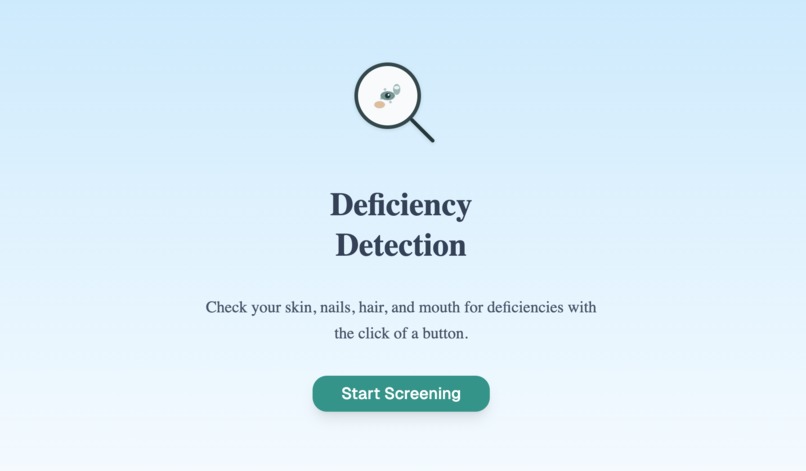
HOME PAGE
-
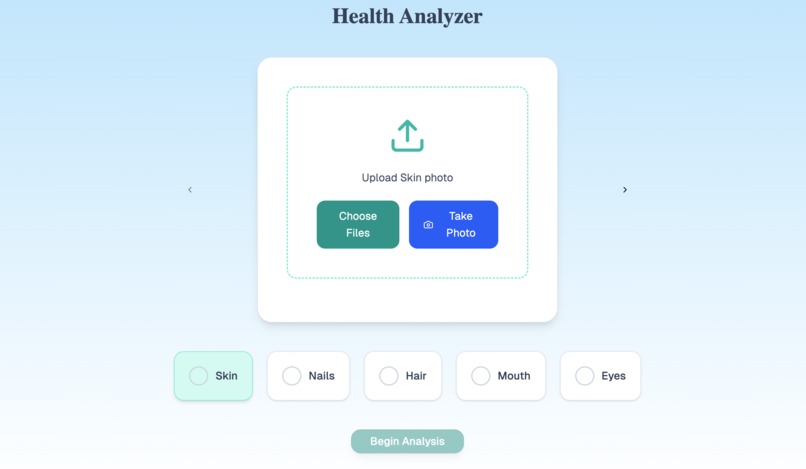
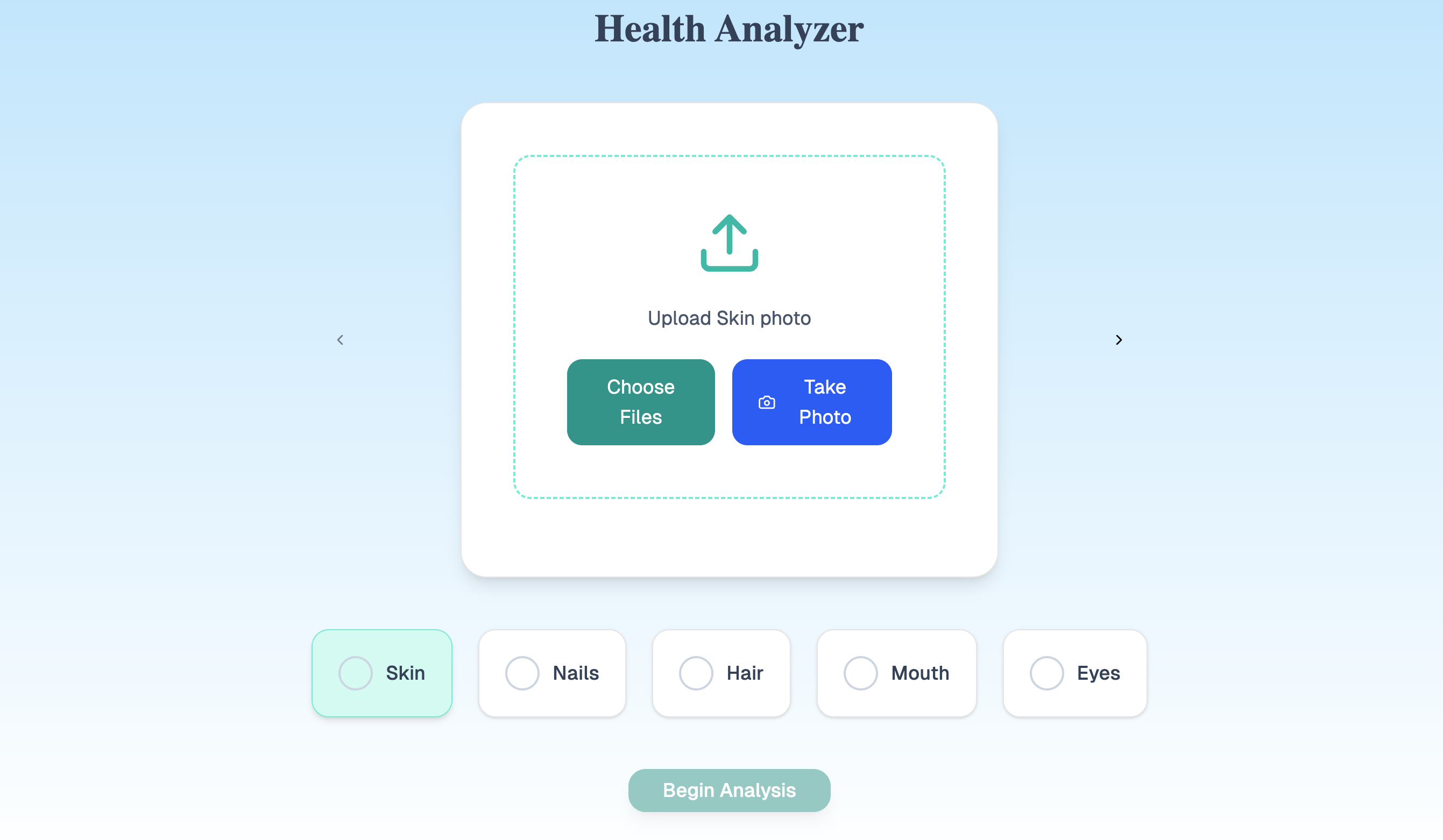
SCANNER
Inspiration
One of the most common ailments that people suffer today are deficiencies from various minerals and vitamins. In fact, it is estimated that over 5 billion people suffer from a variety of deficiencies. We aim to create a website/app that is accessible to masses that can provide a reliable way to diagnose deficiencies.
What it does
We use pre-existing photos of common and uncommon symptoms of various deficiencies to identify and diagnose any deficiencies that might be presented in the photos.
How we built it
To build this, we gathered thousands of images of deficiency-related symptoms and trained a machine learning model to recognize them. Using computer vision techniques, the model detects subtle patterns, textures, and color changes linked to specific deficiencies. We then integrated the model into a user-friendly website and app, ensuring accessibility and ease of use for a wide audience.
Challenges we ran into
Some of the challenges that we ran into main revolved around finding the datasets and training the model. The datasets were increasingly hard to find, with many of them being locked behind paywalls or unaccessible. We were eventually able to find various collections databases that provided us with what we needed to starting training the model. Starting off, we collectively didn't have much experience in training an AI model, but if we wanted quantifiable results we needed to learn how to train a model. Ultimately it was a race against time that we were able to beat.
Accomplishments that we're proud of
Over the course of the project we were able to gather thousands of credible images of various symptoms, code an interactive UI, and finally train an AI model to semi-reliably identify ailments through their symptoms.
What we learned
Through this project, we learned the importance of high-quality, unbiased datasets when training AI for medical applications. We also gained experience integrating computer vision with web development tools to create a seamless application. Beyond the technical lessons, we recognized the ethical considerations of handling medical data, particularly in maintaining user trust, privacy, and safety.
What's next for DeficiDetect
Looking forward, our next steps include expanding the dataset with more diverse and medically verified images to improve accuracy. We also hope to scale this into a full mobile app with multilingual support, making the tool accessible to underserved populations around the world.

Log in or sign up for Devpost to join the conversation.