Inspiration
As a lifelong tabletop and video game enthusiast, I’d grown frustrated with the disjointed tools we used to plan gaming nights—spreadsheets for schedules, random notes for game rules, and group chats scattered across apps. I wanted a single space that solved every pain point: scheduling, attendance tracking, game management, and remembering what we loved (or hated) about past sessions. The goal was to make organizing gaming nights as fun as the games themselves.
What it does
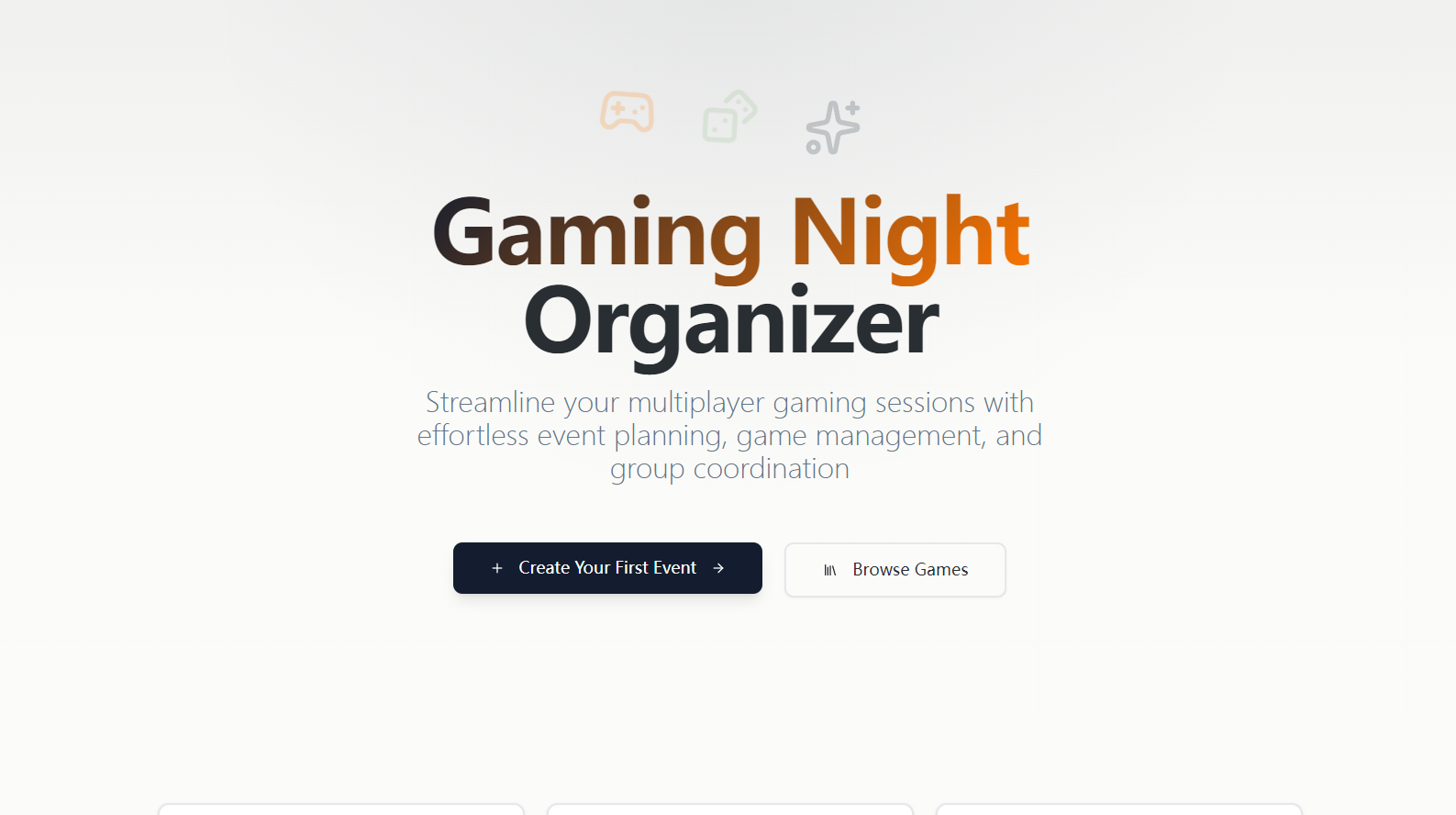
Gaming Night Organizer is a free web app for gamers to plan in-person/online events (with shareable links), curate personal game libraries (filterable by player count/playtime), access simplified game rules, and review past sessions with ratings and feedback—all in an intuitive, easy-to-navigate interface.
How we built it
I started by mapping user flows for core features (event creation, game library filtering) in Figma, then built the frontend with React and Bootstrap for responsive design. The backend uses Node.js and PostgreSQL to store event/game data, with Firebase for lightweight chat functionality. I prioritized minimalism in UI design (flat icons, rounded corners) to keep the focus on usability.
Challenges we ran into
The biggest hurdle was designing the schedule poll for event details—balancing simplicity with enough flexibility for different gaming formats (online vs. offline). I also struggled with filter logic for the game library (ensuring AND logic worked across multiple criteria) and optimizing the rule guide layout for group viewing on tablets/desktops.
Accomplishments that we're proud of
Creating a seamless 1-2 click flow from the home dashboard to all core features—no endless navigation! The empty state handling (e.g., prompting first event creation) also makes the app feel welcoming, even for new users. Most importantly, beta testers (my gaming group!) said it cut their planning time in half.
What we learned
I deepened my understanding of responsive design for multi-device use (critical for gamers on desktops/tablets) and learned to prioritize user-centric edge case handling (e.g., invalid filter combinations). I also realized how powerful simplified, text-only rule guides are—complex game rules don’t need fancy visuals to be useful.
What's next for this project
First, I want to add lightweight calendar sync (for offline events) and push notifications for attendance updates. Long-term, I’ll expand the game library with community-submitted rule snippets and add a “game recommendation” feature based on past session ratings. I also plan to test mobile optimization (beyond tablet support) for on-the-go planning.
Built With
- figma
- github
- postgresql
- vercel

Log in or sign up for Devpost to join the conversation.