-
-
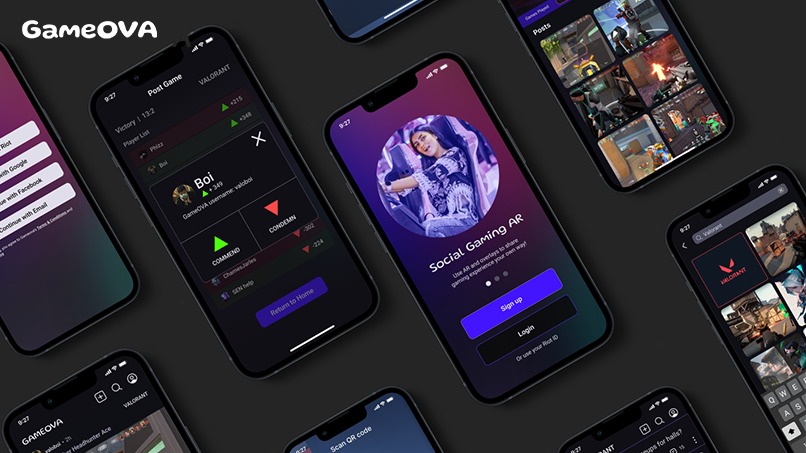
OVA Screens
-
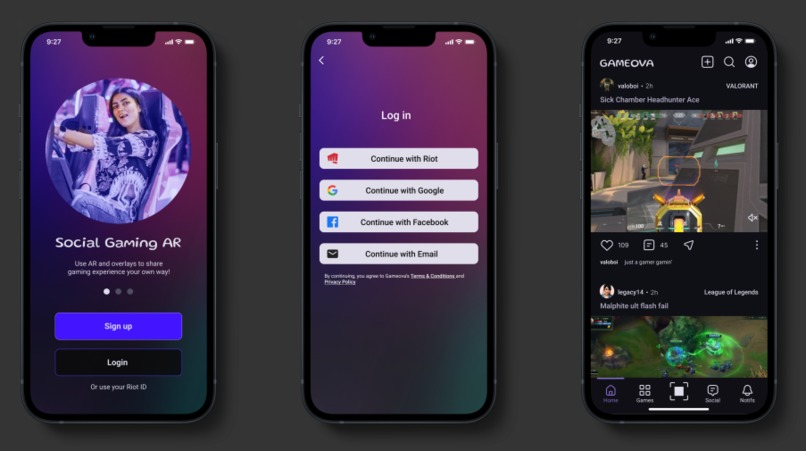
Screens 1
-
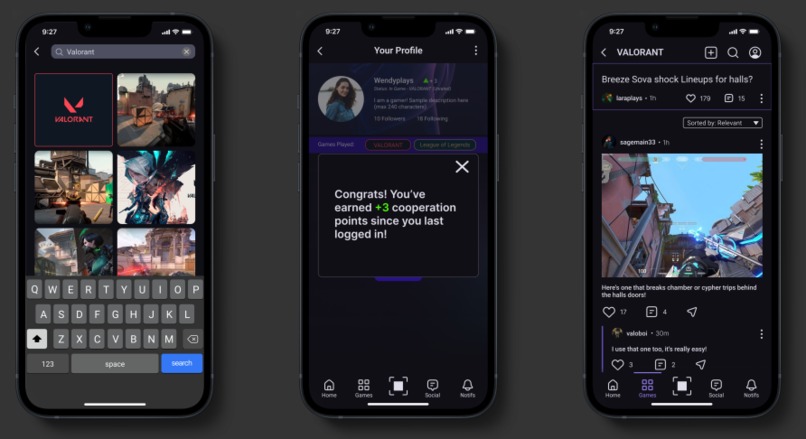
Screens 2
-
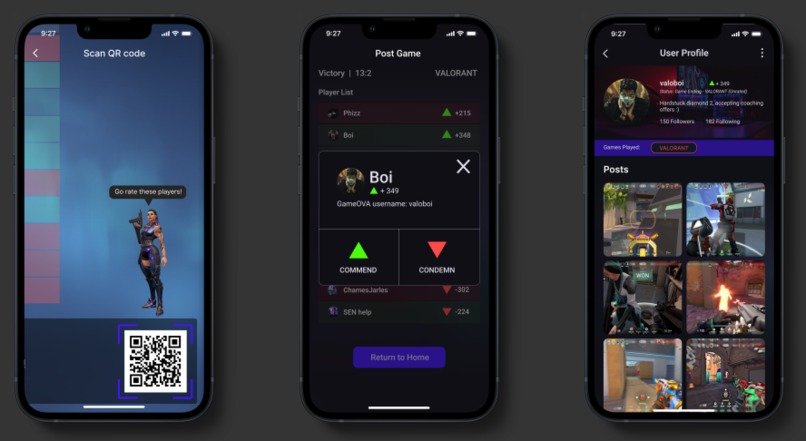
Screens 3
-
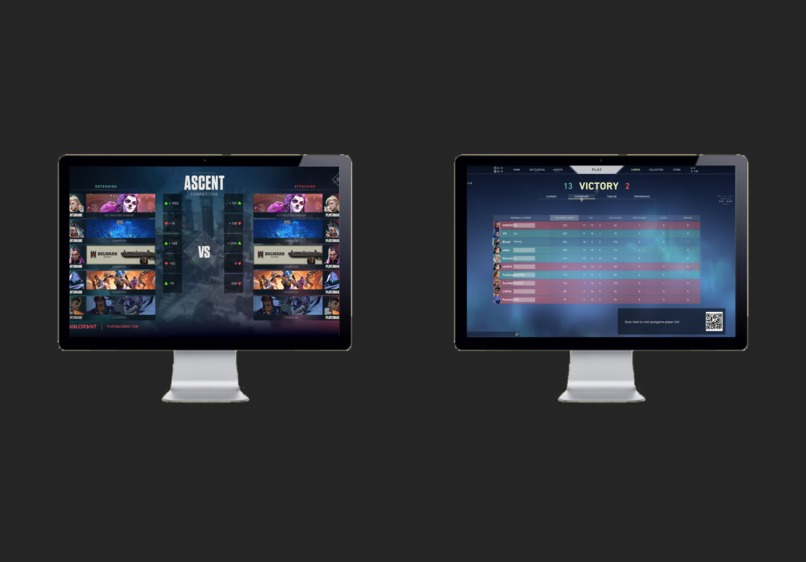
PC Overlays
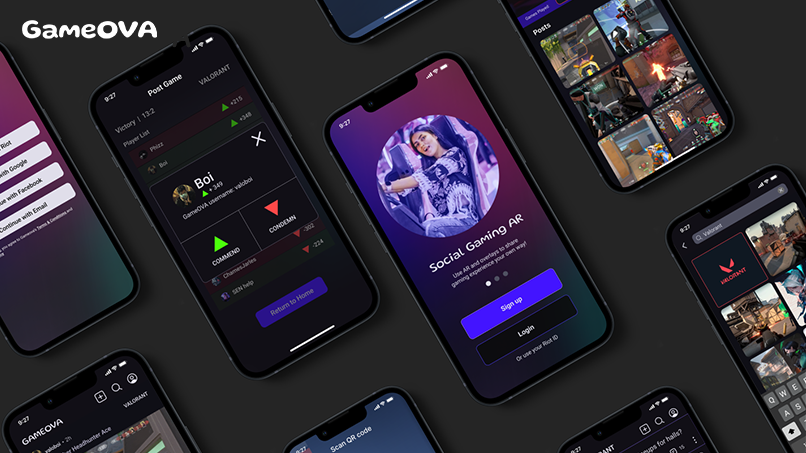
GameOVA
by Brandon Belliard, Lauren Hyun, Sana Parija, Justin Yeh
Inspiration
As a few of us were gamers, we recognized that the gaming industry and community were inherently misogynistic and very hostile to minorities and POC. We wanted to address some of these issues and help create a community that fosters inclusivity and accessibility.
What it does
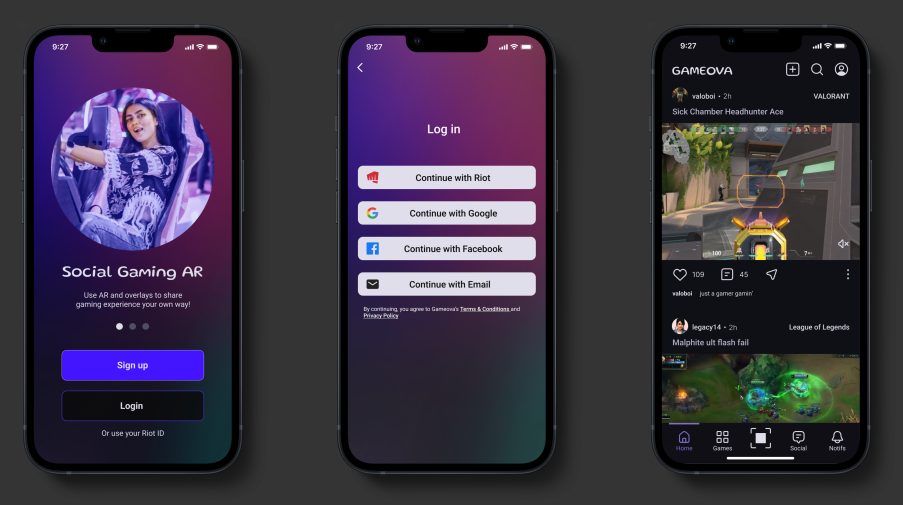
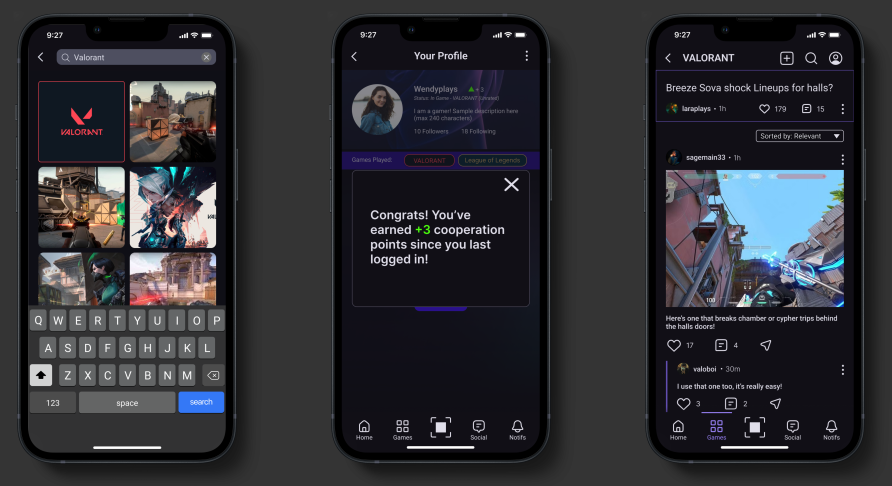
Our product - GameOVA - is a social media app that connects with all sorts of multiplayer online games (in this context, we connected the user's gaming accounts to Valorant).
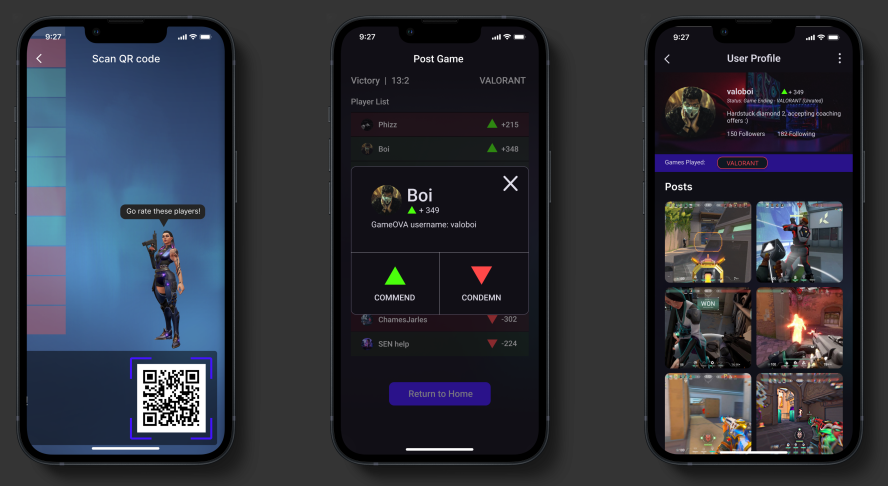
Through this system, GameOVA allows players to commend or condemn players who they recently played with by rewarding or docking a point off their cooperation score. With our idea, negative or low cooperation scores would have limited access to certain features of the app, as well as be potentially locked into an in-game low-priority queue of similar offenders or banned across multiple games. Higher scores would feature badges, achievements, more likelihood to feature the users' content, and potentially cosmetic or financial rewards for future in-game purchases. While we recognize that the issues we aim to tackle are part of a much larger problem ingrained in the gaming industry and culture, this app would provide extra incentive to be kinder in game.
How we built it
Our design process was as follows: we discovered our problem space, defined an intervention point, developed our product through ideation, and created our final deliverable through iterations and user testing.
We split the research into two sections: secondary research with various articles and primary research with surveys. Our research results from both sections offered similar findings - a vast majority of women and minorities undergo harassment and attacks in the gaming industry, ranging from everyday players to high-up positions in entertainment companies, event organizers, critics, and more. We found that a majority of girls refuse to use in-game voice chat due to previous negative experiences, and after harassment occurrences, they often talk less in-game, play the game less with strangers, or drop the game altogether.
After understanding the problem space, we employed synthesis methods such as affinity mapping and customer journey mapping to better understand the main pain points that female and minority gamers encounter and empathize better with their experiences. With these methods, we found that women generally feel that existing punishments and reporting systems were not sufficient for deterring players from harassing them in-game.
With that, we arrived at our two main How Might We questions:
- HMW help females/minorities feel that they don’t have to hide their identity or feel comfortable using voice chat?
- HMW better enforce consequences for toxicity or harassment in games?
Our How Might We questions allowed us to better focus on coming up with potential ideas for dealing with the problem. An idea that was quickly trashed was a voice changer or automatic voice muter for toxic players - we felt that it was a band-aid solution that didn't directly deal with the problem. Another solution we thought of was an entirely new reporting/moderation platform that would feature a tribunal system of sorts that would allow the platform to crowdsource women and minority gamers to help moderate player behavior. However, we felt that this would be too complex of an idea for a 48-hour designation. Keeping in mind our contextual limitations, we felt like a social media platform focusing on gaming was an appropriate level of complexity and would still allow us to address the issue directly.
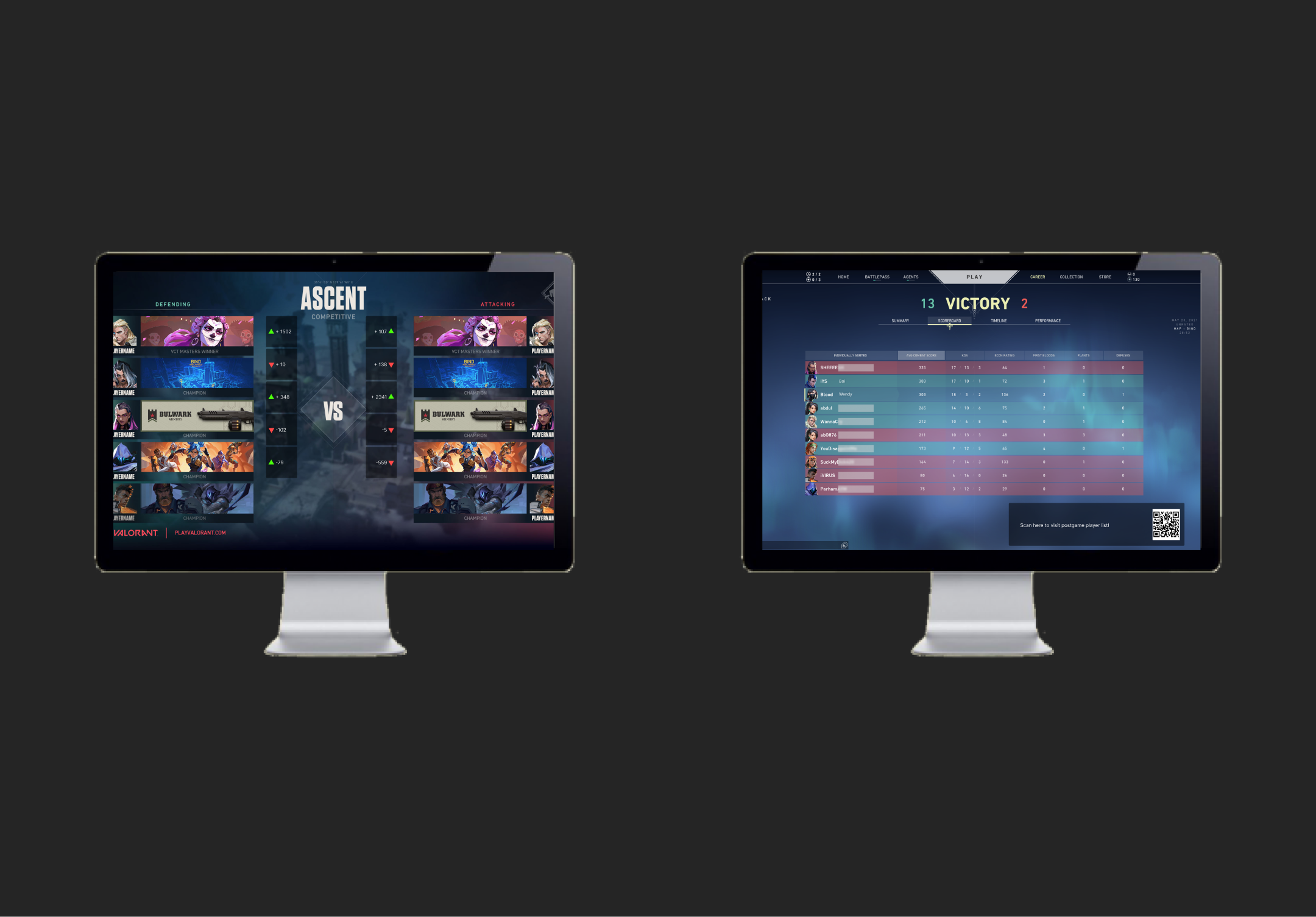
Like most social media apps, GameOVA would allow users to post and share content such as videos, pictures, posts, questions, and more. We drew inspiration mainly from Reddit, TikTok, and Instagram, all of which have wide audiences and robust content-sharing features. However, what's unique about GameOVA would be the ability to grant or take away cooperation points from users after they played a game with them using a QR code overlay that they would scan through the app.
After every match or game the user plays, they would have the ability to scan the QR code and pull up a player list of everyone they just played with. They would then be able to select a player they enjoyed or detested playing with and add or subtract a single cooperation point from them. Through a large enough sample size, players would fall into positive and negative score categories, featuring normal, civilized human beings and toxic degenerates respectively.
Those with negative scores would have access restrictions and in-game punishments invoked upon them, such as not being able to post new videos or access certain parts of the app, as well as a low-priority queue and reduced game rewards. High cooperation score players, however, would enjoy benefits such as badges, achievements, the ability to boost their content viewership, and even cosmetic rewards or discounts on in-game purchases.
After determining the features that we wanted in our MVP through a Moscow Map, we then proceeded with ideations through sketching, which we translated to medium-fidelity wireframes and prototypes for usability testing. Using Maze, a user testing platform, we tested our app with some users by prompting them to complete a few tasks in GameOVA. Through their journeys through our app as well as their answers to some follow-up questions, we identified a few usability issues that we addressed instantly, such as unclear buttons and confusing icons. We then developed a color palette (featuring a blueish purple, which we felt was appropriate for gamers) and implemented them into our high-fidelity (and final) designs.
Challenges
Some problems we ran into related to time management. We had trouble allotting time for each section of the design process, especially for research, and experienced difficulties in finding usability testing subjects. We also definitely struggled to coordinate our availabilities and timetables throughout the 48 hours.
We also encountered a few emergency issues, such as a member dropping out due to COVID and another member being locked out of commission for several hours of the project. However, we persisted through the issues and learned how to effectively split up tasks among the available group members.
Accomplishments
We're proud of creating a cohesive product in under 48 hours, especially after going through the previously mentioned emergency issues. Not only did we manage to test our product and acquire user insights, but we also developed a basic design system with a color palette, typefaces, and iconography that we implemented into our final designs. We came out of the project more experienced and hopefully as better designers.
What we learned
Apart from more effective time management and task delegation, we learned to prioritize creating a sufficient MVP that would allow us to user test for fast feedback and iteration. User insights provided feedback that we designers weren't able to identify as quickly.
We also enhanced our ability to use components to save time and allow for global changes across our files.
What's next for GameOVA
The next steps for GameOVA, if slated for continued development, would be the fleshing out of the other features in the app. Features that would need developing include the social tab for friends, clubs, and chatting, as well as the notifications tab. We'd also need to prototype the ability to post, share, like, and comment on content. More progress in the profile section would be needed as well, allowing users to follow, block, and report other players. Another element we want to implement is customizable AR characters.
Assuming a GameOVA company exists with sufficient staffing and funding, we'd then hopefully hand off the product to our software development team.
Built With
- figma
- miro


Log in or sign up for Devpost to join the conversation.