-
-
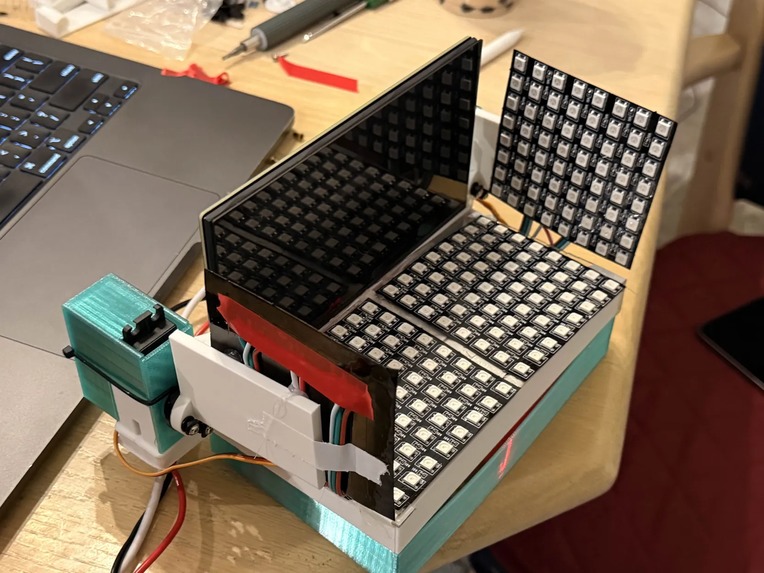
Finished product
-
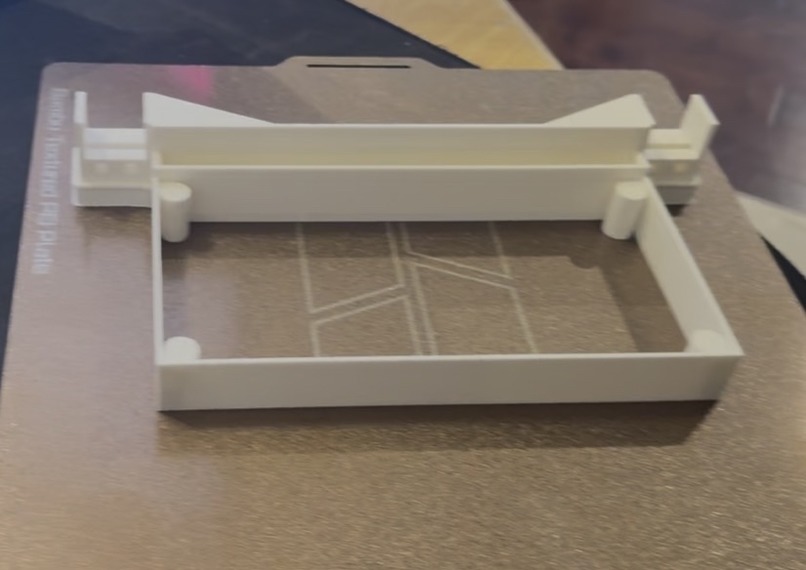
Body 3D Print
-
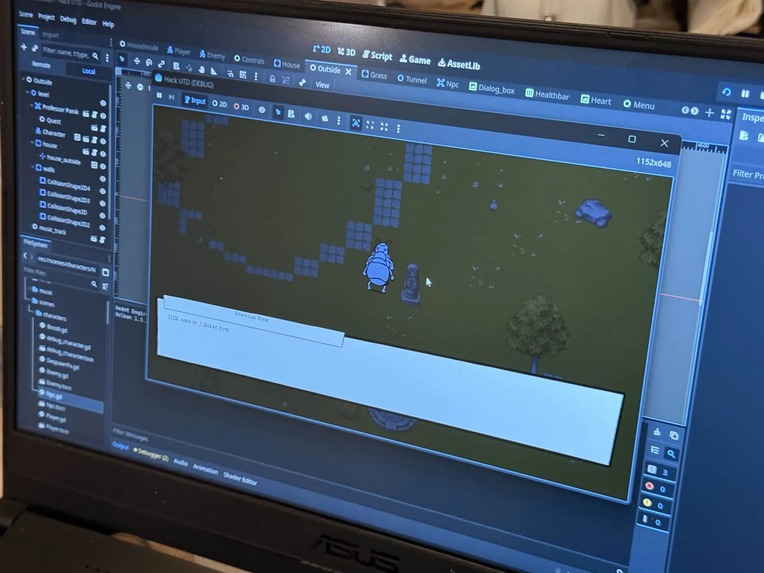
Game in development
-
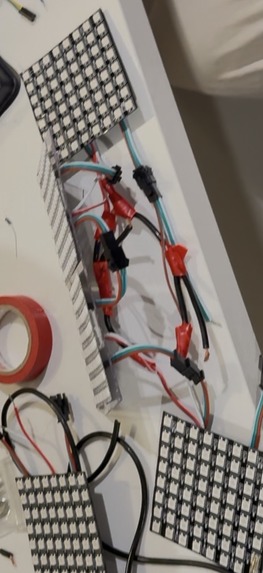
LEDs
-
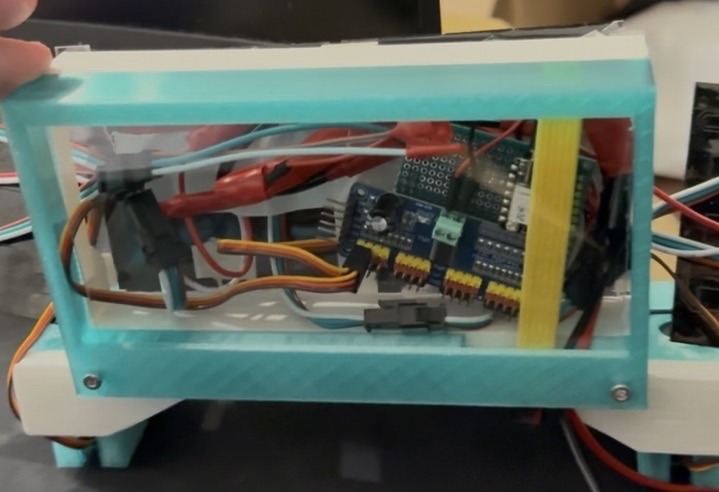
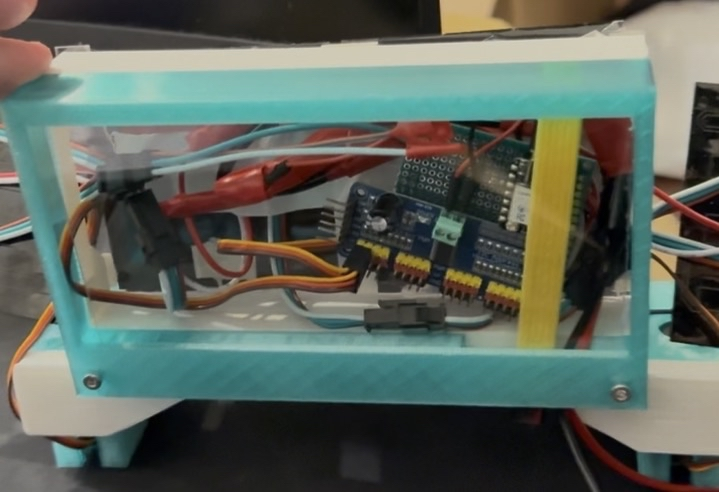
Bottom of console


Inspiration
We wanted to bridge the gap between digital and physical gaming experiences by creating something that goes beyond a screen. The idea of a gaming console that literally moves and reshapes itself based on in-game events felt like the future of interactive entertainment.
What it does
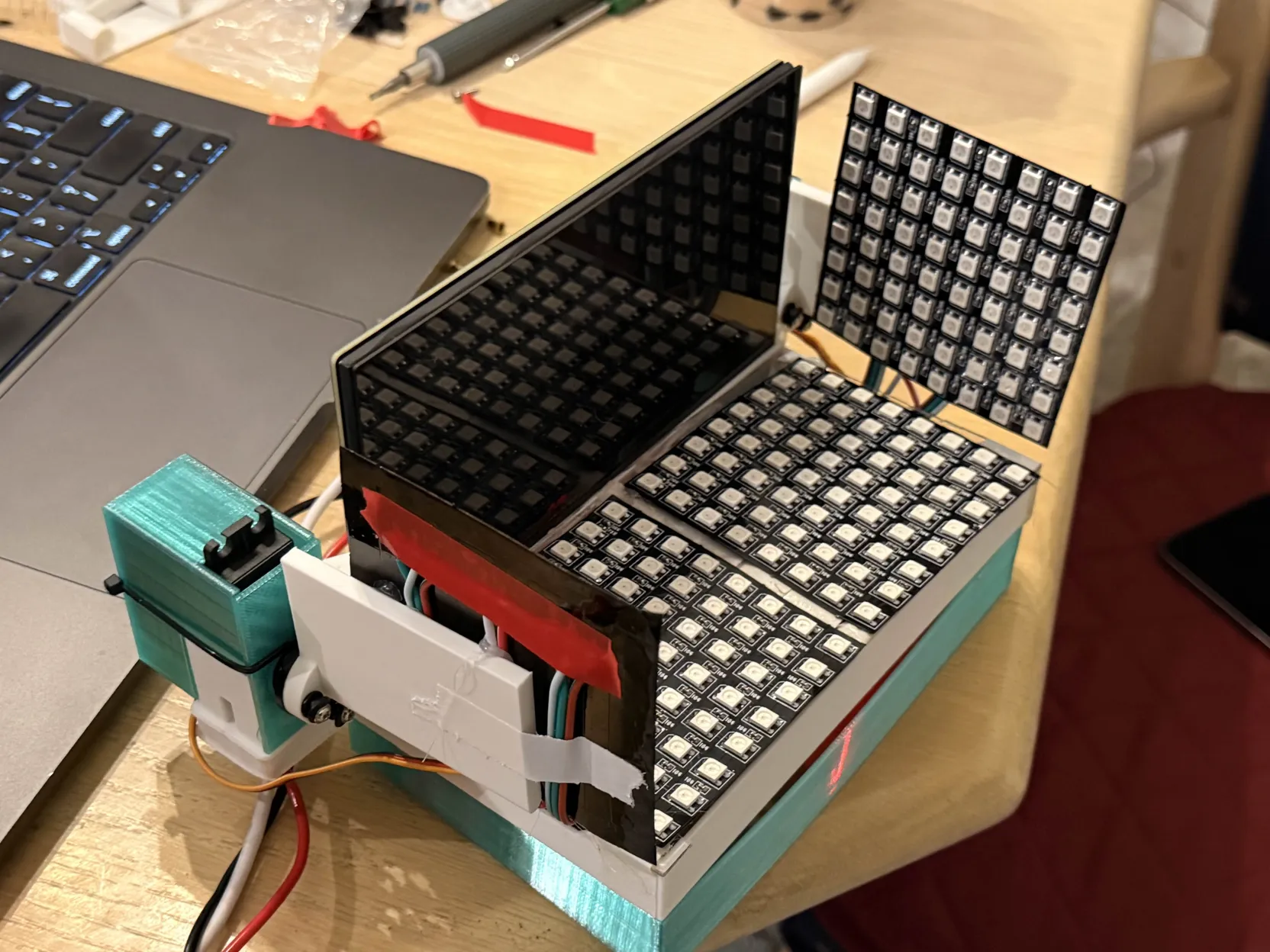
Our interactive miniature gaming console combines an LCD panel with dynamically-controlled LED matrices to create a fully immersive gaming experience. Two servo motors—one on each side—control the movement and positioning of LED arrays, allowing them to reconfigure into different shapes and patterns in real-time. Paired with a custom game designed in Godot Engine, the physical LEDs respond to in-game actions and events, displaying information, creating ambient effects, and reacting to gameplay. This creates endless possibilities for how games can physically interact with players beyond traditional screens.
How we built it
We designed the entire enclosure in SolidWorks and 3D printed all custom parts to house the LCD panel, LED matrices, and servo motors. The servos control the physical movement of the LED arrays, while our React Native game communicates with the hardware to trigger specific LED configurations based on gameplay events. The integration of software and mechanical design allows seamless synchronization between what happens on screen and the physical LED responses.
CAD and Hardware Design
To enable rapid iteration and testing, we designed the entire console in SolidWorks before any physical fabrication. Our workflow involved CADing individual parts first, then bringing everything into assemblies to test fitment, check clearances, and identify potential mechanical conflicts early in the design process.
Main Body Luke designed the primary body structure, which serves as the foundation of the console. This piece features:
*A precision slot for the main LCD screen to slide into securely *Two mounting brackets for the MG995 servo motors *4mm extruded cut holes in the brackets for robust motor mounting *Integrated cable routing channels
Bottom Plate The bottom piece complements the main body and screws directly onto it, enclosing the electronics and providing structural rigidity while allowing access for maintenance and wiring.
Servo Connector Assembly One of the most critical components was the servo connector piece, which bridges the MG995 servo motors to the LED matrices. This custom-designed linkage translates rotational servo motion into precise LED array positioning, enabling the dynamic reshaping that makes our console unique.
Supporting Components Additional CAD pieces included: *Motor holder brackets for secure servo positioning *Front plate for the motors, providing both aesthetic finish and structural support *Top and bottom plexiglass sheets to reduce 3D print time, minimize weight, and showcase the internal mechanics
Design Philosophy
By using transparent plexiglass panels instead of fully 3D-printed enclosures, we reduced print time significantly while creating a visually striking design that lets users see the servo mechanisms and LED arrays in action. Every component was designed with tight tolerances to ensure smooth mechanical operation while maintaining ease of assembly. Here's a polished Game Development section:
Game Development
We built our game using Godot Engine, leveraging its flexible scene system and scripting capabilities to create an immersive top-down RPG that seamlessly integrates with our custom hardware. Using C#, we programmed bidirectional communication between Godot and our microcontroller, allowing real-time synchronization between in-game events and physical LED responses.
Hardware-Game Integration When the in-game environment changes—such as entering a new room, cut scene, or initiating combat—our code sends signals to the microcontroller, which instantly updates the LED matrices to reflect the new state. For example, entering a forest might bathe the LEDs in green ambient light, while a fire encounter triggers dynamic orange and red flickering patterns.
World Design Creating the RPG world involved: *Multiple interconnected rooms with unique themes and atmospheres *Custom sprites and tile sets designed to match our aesthetic *Environmental storytelling that encourages exploration *Dynamic lighting and particle effects synchronized with LED states
Custom Battle Mechanics Rather than traditional turn-based combat, we designed an interactive battle system that makes full use of our LED matrices to create a tactile, engaging experience:
Challenges we ran into
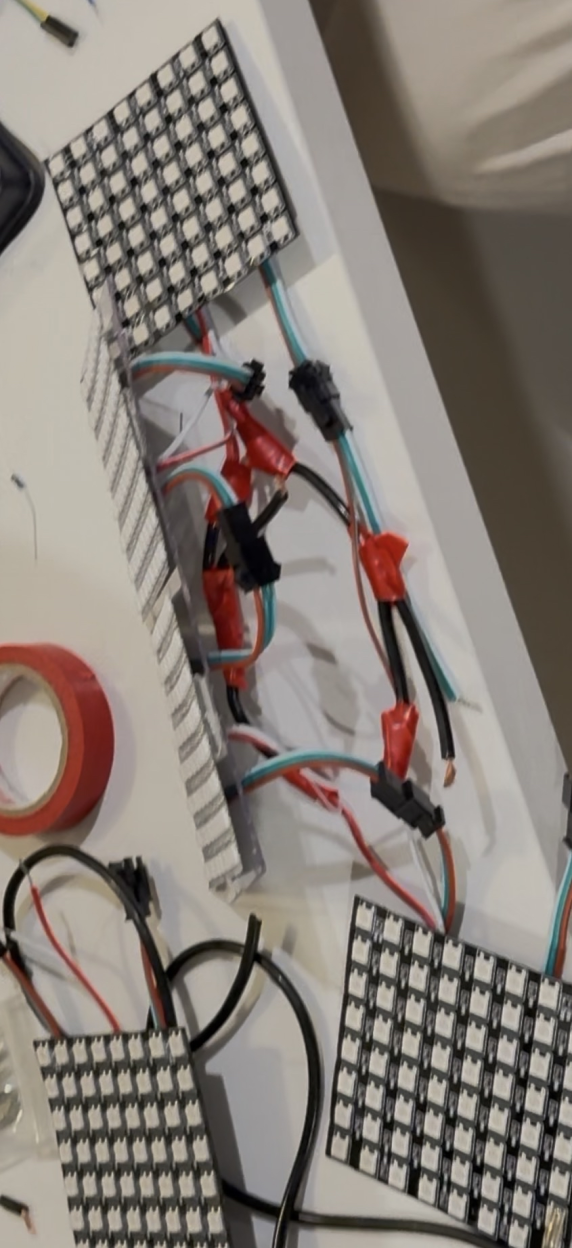
Version control with multiple people working simultaneously, learning Godot Engine from scratch with zero prior game dev experience, creating dozens of custom sprites, and establishing reliable ESP32 communication. On the hardware side, the electronics and wiring were extremely complex—powering and controlling servos, LEDs, and LCDs simultaneously required careful electrical design to prevent interference and voltage drops.
Accomplishments that we're proud of
Built a fully functional RPG with custom battle mechanics despite having no prior game development experience. Created a polished hardware build with a cohesive color theme and see-through panels that showcase the internal mechanics beautifully.
What we learned
Learned Godot Engine and C# scripting from the ground up, including real-time serial communication with hardware. Discovered how to design power distribution for multiple electrical components running simultaneously and manage voltage regulation. Improved our CAD skills by designing for 3D printing tolerances and testing assemblies before fabrication. Most importantly, we learned how to integrate completely different technologies—game engines, microcontrollers, motors, and displays—into one cohesive system where every component reliably communicates with the others.
What's next for Poyo's Journey:
We envision expanding the LED matrix system to support even more complex configurations, adding haptic feedback, and developing a library of games specifically designed to take advantage of the physical LED interactions. We'd also like to refine the form factor and explore ways to make it modular so users can customize their own LED configurations.
Built With
- godot
- solidworks


Log in or sign up for Devpost to join the conversation.