-
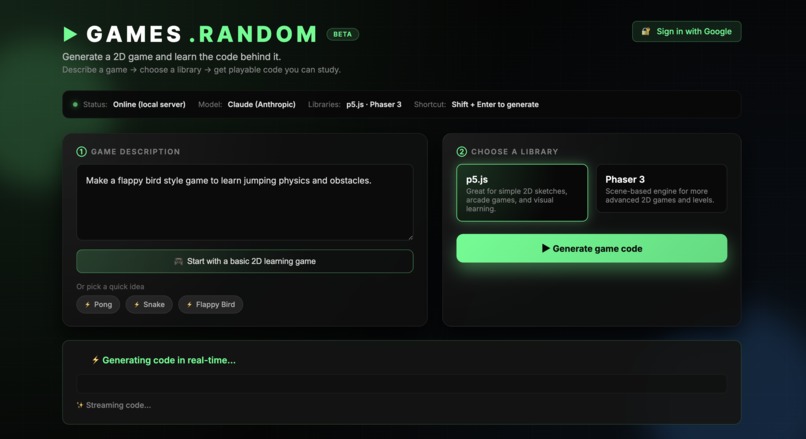
(User Home-page
-
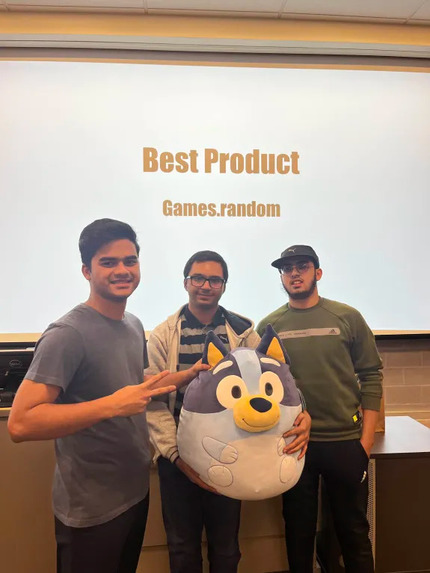
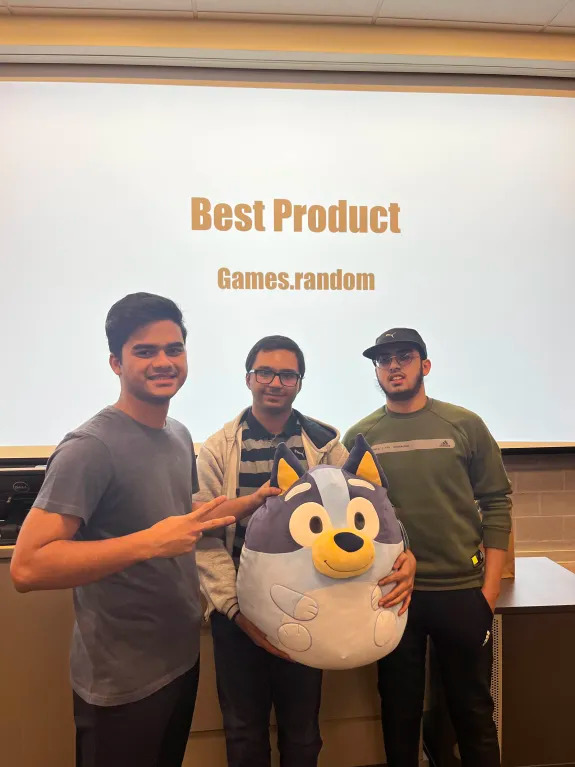
Won Best Product
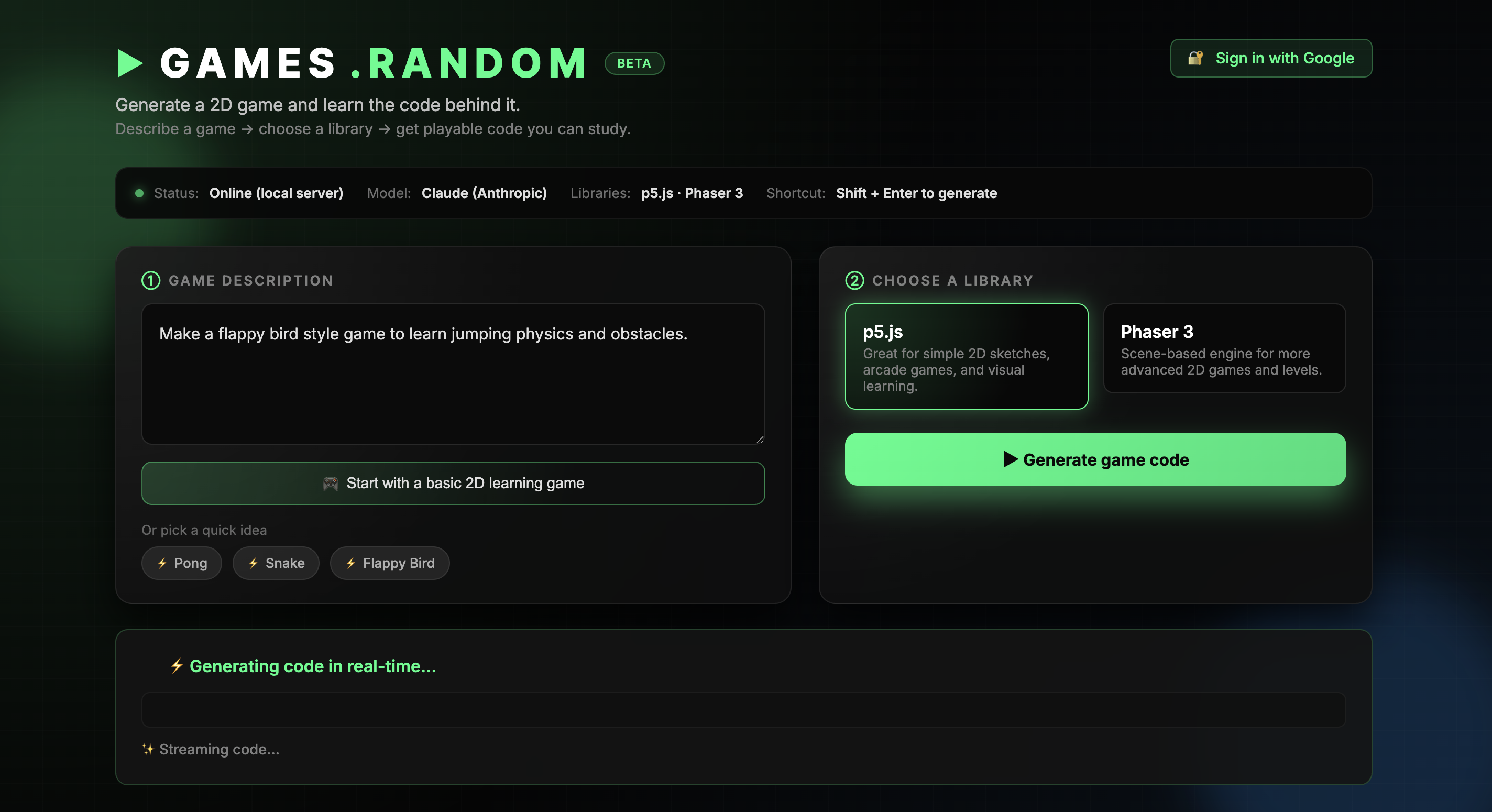
Game.Random
A browser-based 2D game sandbox where you learn coding by editing real games and seeing changes instantly.
Inspiration
Learning to code is usually “blank file + blinking cursor,” which is intimidating and boring. We wanted something that feels like play: start with a real game, tweak the code, and instantly see what changes. Game.Random was inspired by that gap—making coding feel more like experimenting than memorizing.
What it does
Game.Random is a browser-based 2D game sandbox where learners can:
- Pick a starter game template and play immediately
- Edit the game’s code in the browser
- See changes live in the game preview (fast feedback loop)
- Get clear error overlays and safe fallbacks so one bug doesn’t kill the session
It’s designed for beginners, hobby coders, and educators who want a more interactive way to teach coding concepts.
How I built it
- Built a web app that pairs a code editor with a live game preview (side-by-side).
- Created a template system (starter games) so users don’t start from scratch.
- Implemented a run/update pipeline to apply code changes quickly and keep gameplay responsive.
- Added reliability features: error handling, crash prevention, and a recovery flow so the game stays playable even when code breaks.
Challenges I ran into
- Sandboxing + safety: letting users run code while preventing the whole app from breaking.
- Live updates without lag: keeping the preview smooth while updating code frequently.
- Debugging experience: making errors readable for beginners (not scary stack traces).
- Template design: balancing “fun game” with “teaches real concepts.”
Accomplishments that I'm proud of
- A working MVP where you can go from “open the site” to “playing and editing a game” in minutes.
- A stable live-preview workflow with error overlays and fallbacks (so sessions don’t hard crash).
- A clear, beginner-friendly learning loop: learn → change code → instantly see results.
- Demoing it successfully and validating that the idea is genuinely useful for new learners.
What I learned
- Building interactive education tools is as much UX as it is engineering.
- Real-time systems require careful handling of performance, state, and failure modes.
- Good developer tools (even for beginners) depend on strong error messages and recovery paths.
- Shipping a hackathon MVP is about prioritizing the loop that creates the most “wow” the fastest.
What's next for Game.Random
- More templates and “missions” that teach specific concepts (movement, collisions, scoring, AI).
- A guided mode with hints, goals, and progressive difficulty.
- Save/share projects (links) so learners and teachers can reuse and remix games.
- Classroom-friendly features: curated lesson sets, instructor dashboards, and analytics.
- A community gallery where users publish games and remix each other’s work.
Running locally
# clone the repo
git cline gh repo clone msamin-25/games.random

# install dependencies
npm install

# start dev server
npm run dev
Built With
- anthropic
- claude
- css
- figma
- html
- html/css
- javascript
- p5.js
- phaser-3
- phaser.js
- react.js


Log in or sign up for Devpost to join the conversation.