-
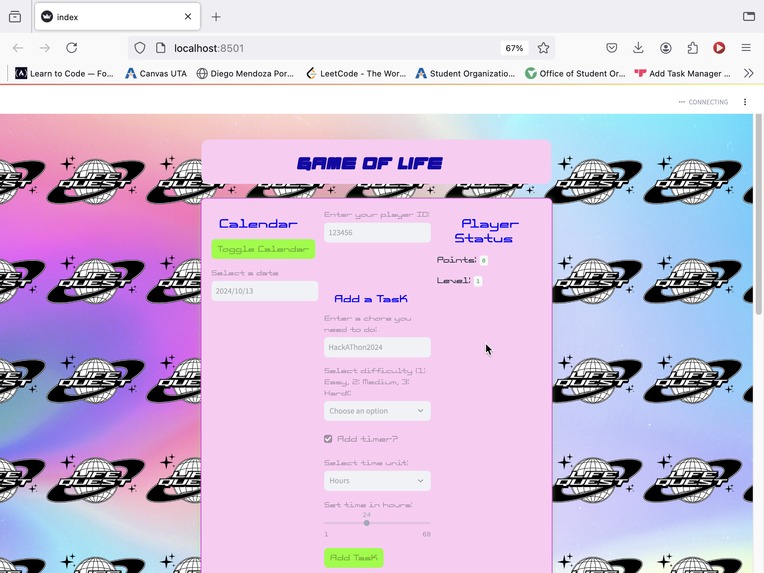
Basic Home Landing Page
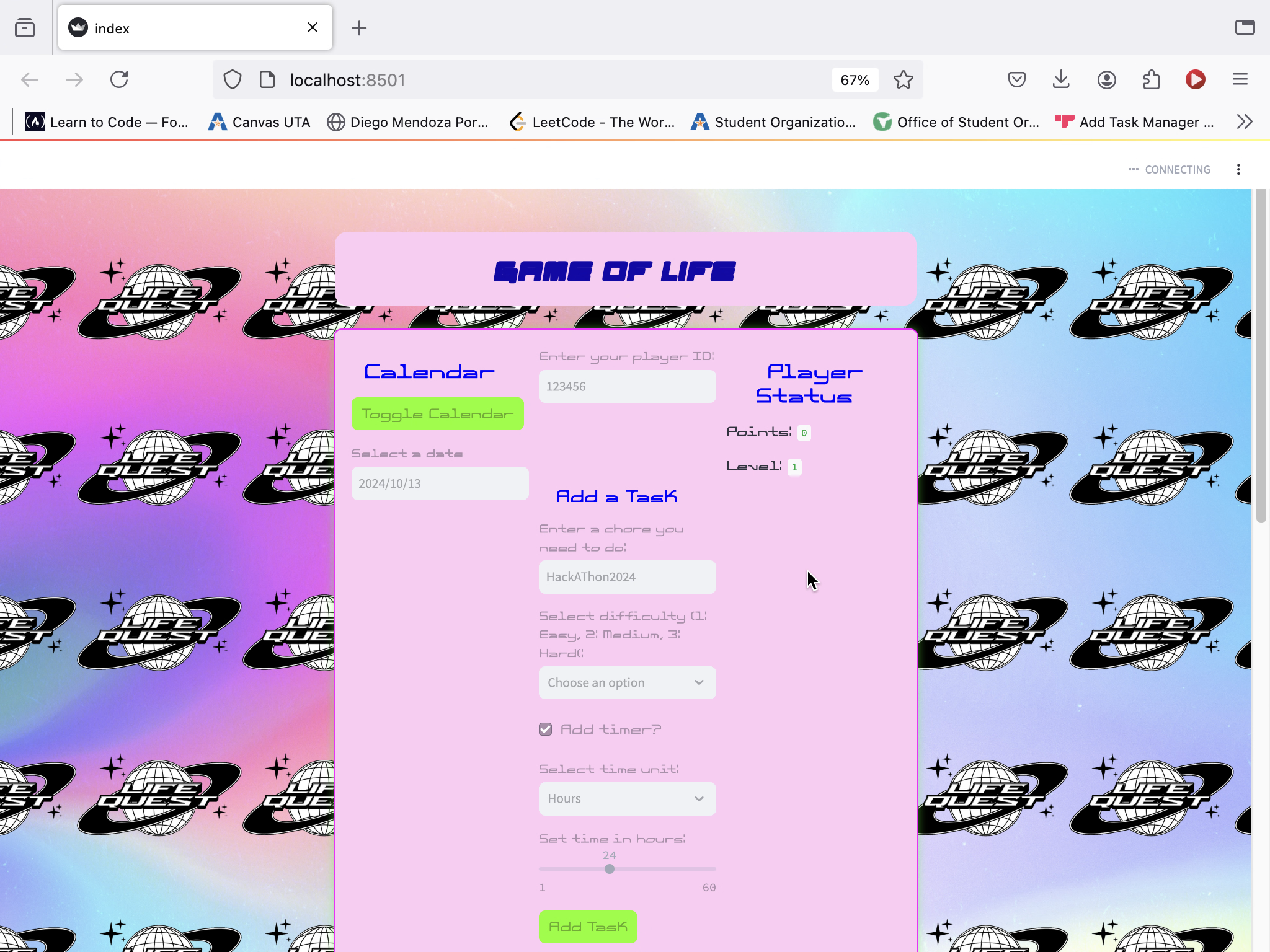
About the Project "Game of Life"
Inspiration
Our UTA Hackathon project was inspired by the common struggle to stay motivated when faced with a long to-do list and the fiery passion of nerds. We wanted to create a way for users to turn their daily tasks into a fun and engaging game, making productivity feel less like a chore and more like an adventure that grows alongside them in their pursuits.
What We Learned
Throughout this project, our team gained valuable skills in Full-stack Design, particularly in HTML, CSS, Python, Streamlit, MongoDB, Data Structures and Algorithms, and UX/UI. By designing simple, yet graphically appealing elements, our objective was to stimulate a person's visual processing while evoking their emotional responses, thereby creating a captivating digital environment to keep the user drawn and coming back while also enhancing their cognitive development and involvement.
How We Built the Project
As a team, we meticulously crafted the project using a full-stack design approach, leveraging a variety of technologies to create a seamless and engaging user experience:
- HTML: We utilized HTML to establish the foundational structure of our web application, ensuring it was robust and accessible to our userbase.
- CSS: To enhance the aesthetic appeal and improve user interaction, we applied CSS techniques for styling. This included responsive design principles to ensure our interface looks great across devices.
- Streamlit/Python: We chose Streamlit in conjunction with Python to effectively handle user interactions and task management and to satisfy UTA Hackathon criteria. This allowed us to create a dynamic point system that updates in real time, providing immediate feedback to users and enhancing engagement.
- MongoDB: For our database capabilities, we implemented MongoDB to efficiently manage and store user data. This NoSQL database enabled us to structure and query data in a way that aligns with our application's needs while also satisfying UTA's prize category criteria.
- Data Structures and Algorithms: Throughout the development process, we carefully considered data structures and algorithms to optimize performance and ensure efficient data handling, which is crucial for maintaining a smooth user experience.
- UX/UI: We invested significant effort into user experience (UX) and user interface (UI) design. By employing user-centered design principles, we conducted user testing to refine our interface, ensuring it is intuitive and visually engaging.
Challenges Faced
One of the primary challenges we faced was learning the libraries and software listed in the prize categories for the UTA Hackathon to satisfy their criteria. However, fueled by caffeine, determination, and friendship, we embraced the learning process wholeheartedly as a team. Together, we navigated the complexities of these tools and built the entire application from scratch, all while continuing to expand our skills and knowledge along the way.

Log in or sign up for Devpost to join the conversation.