-
-
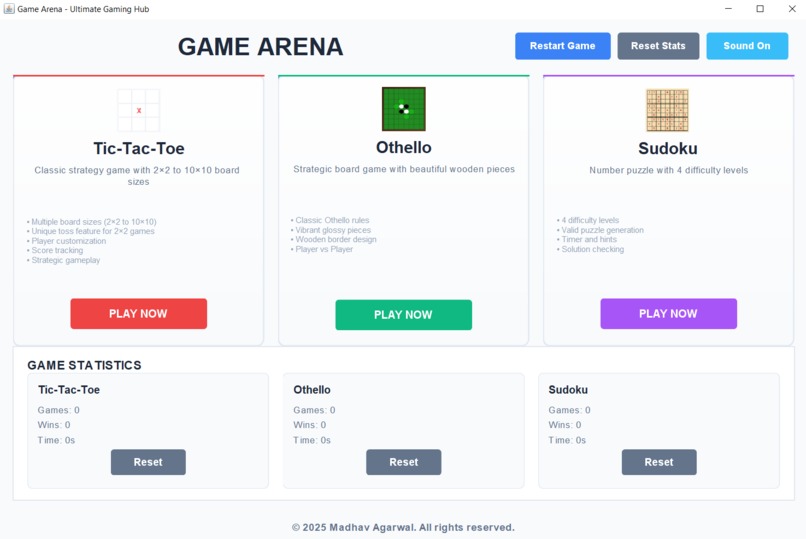
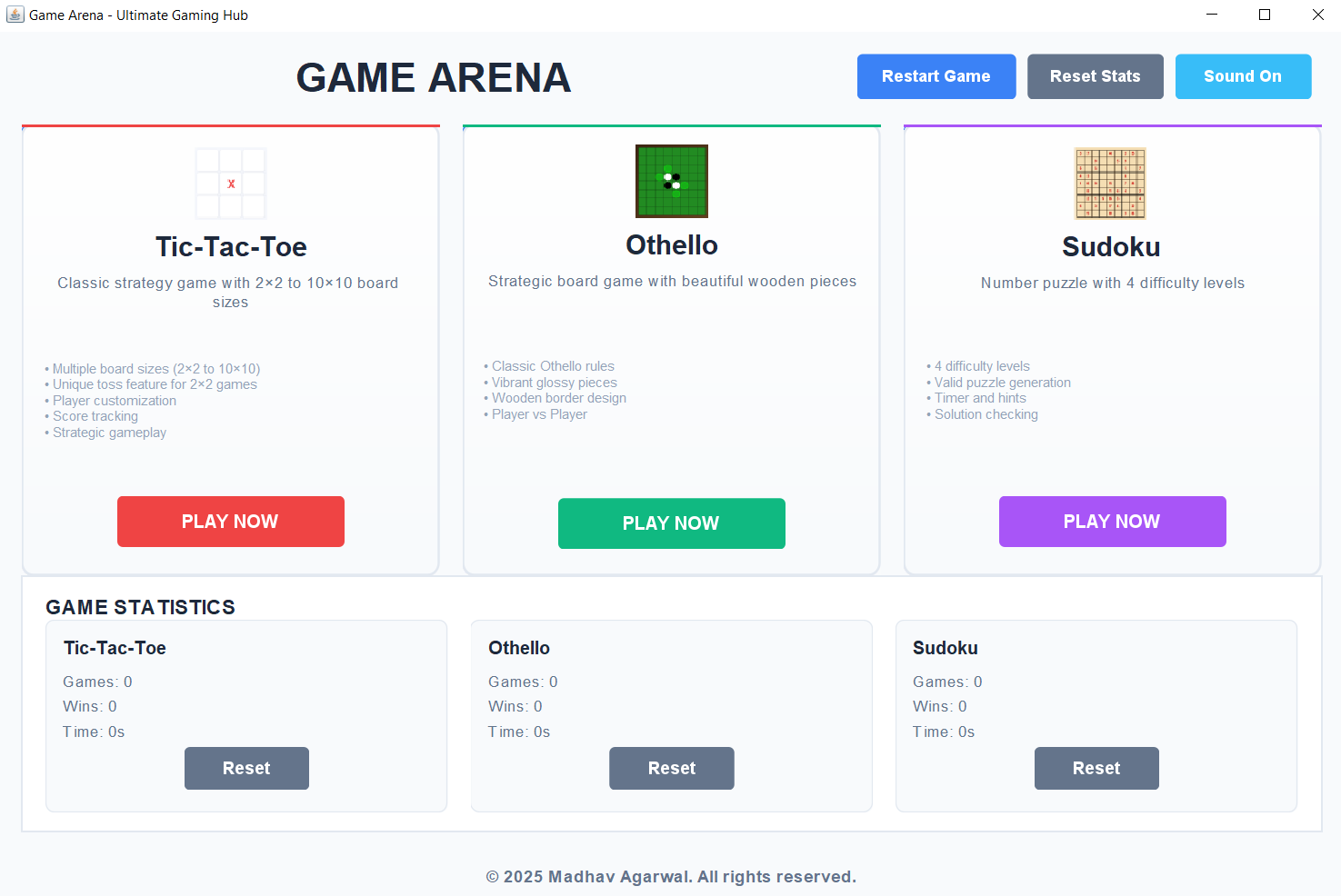
Main Menu
-
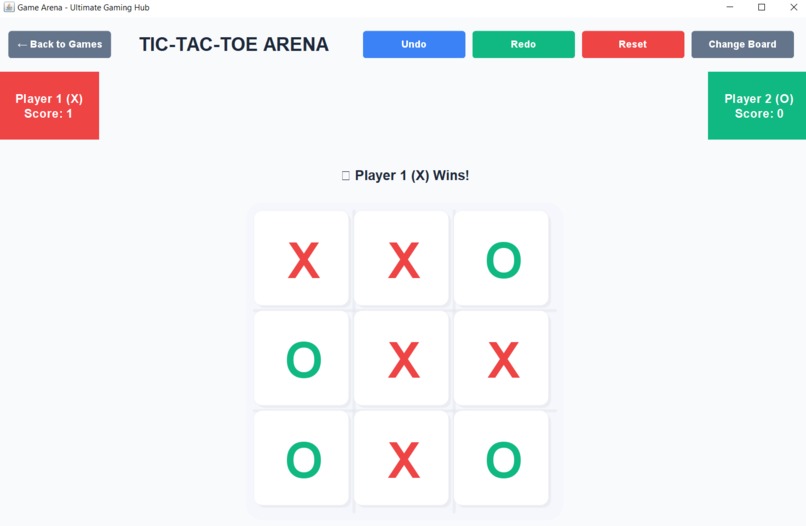
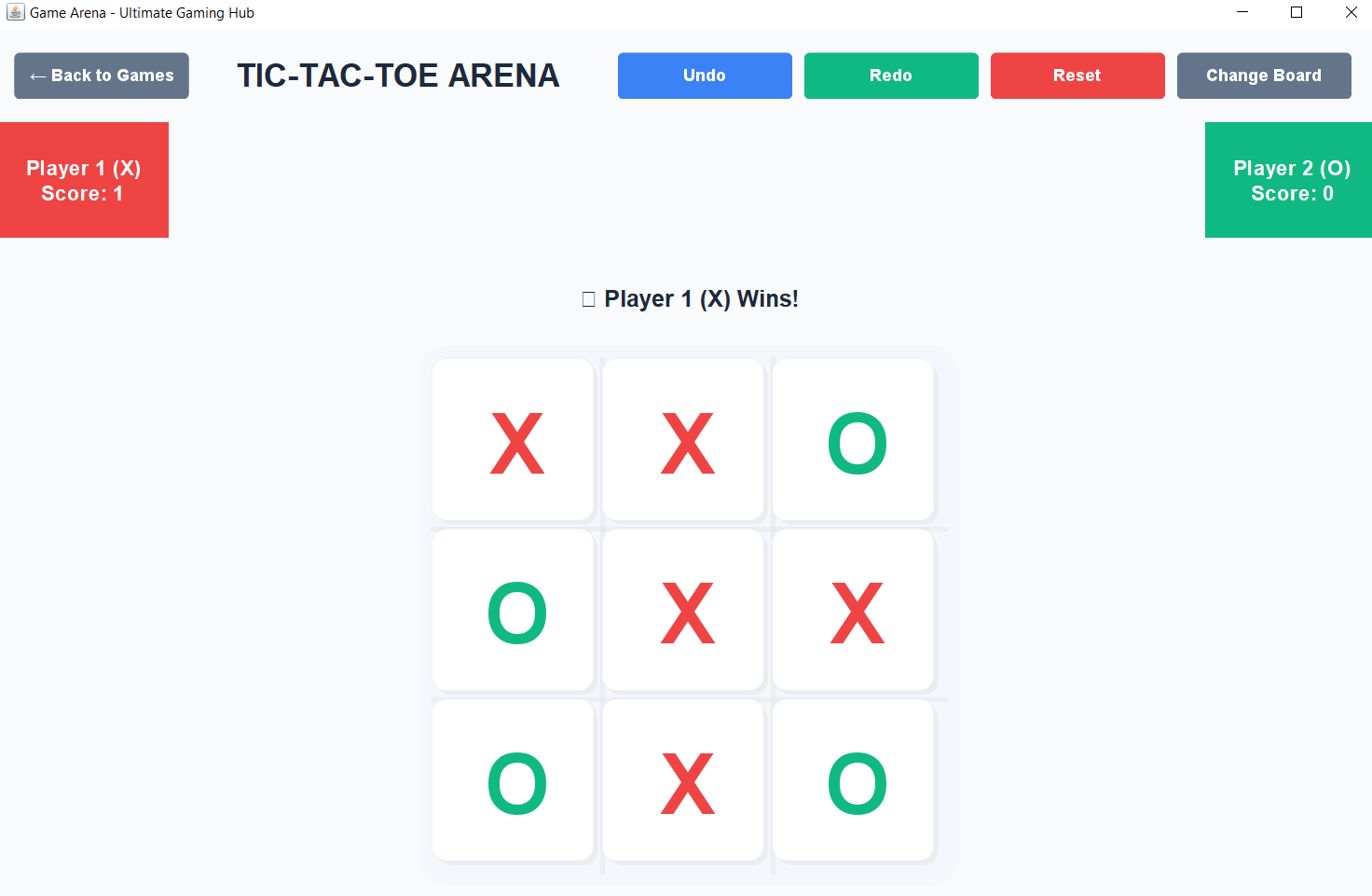
Tic Tac Toe (Game - 1) With Board Customisation (2x2) - (10x10)
-
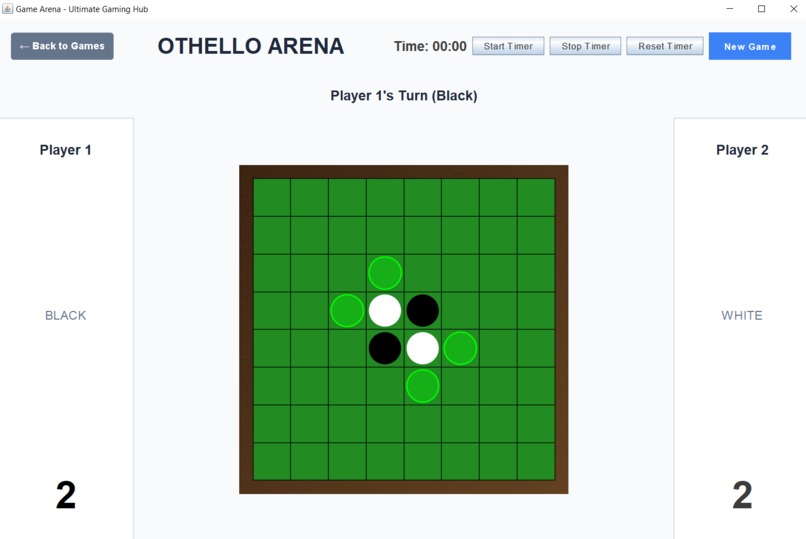
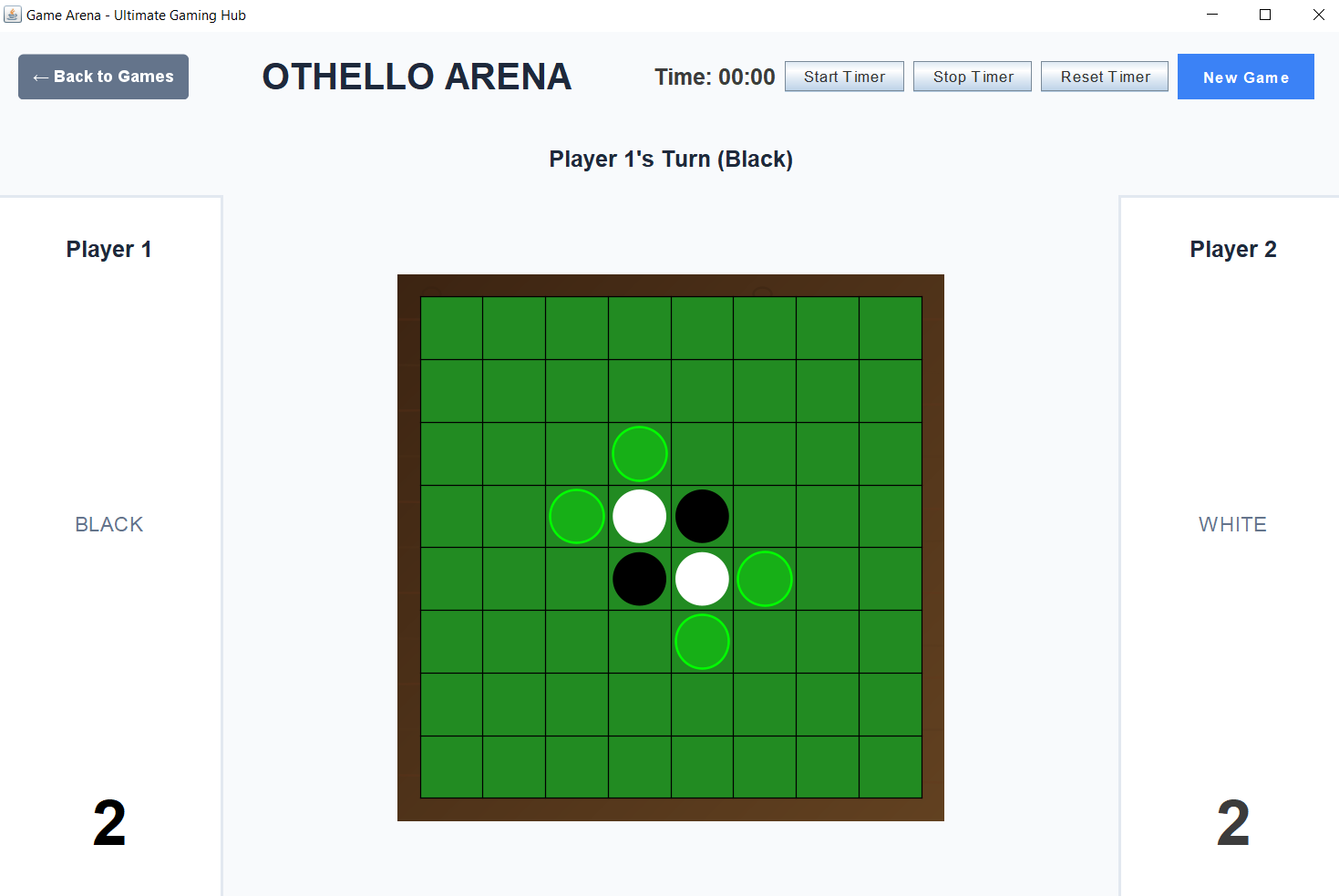
Othello (Game - 2)
-
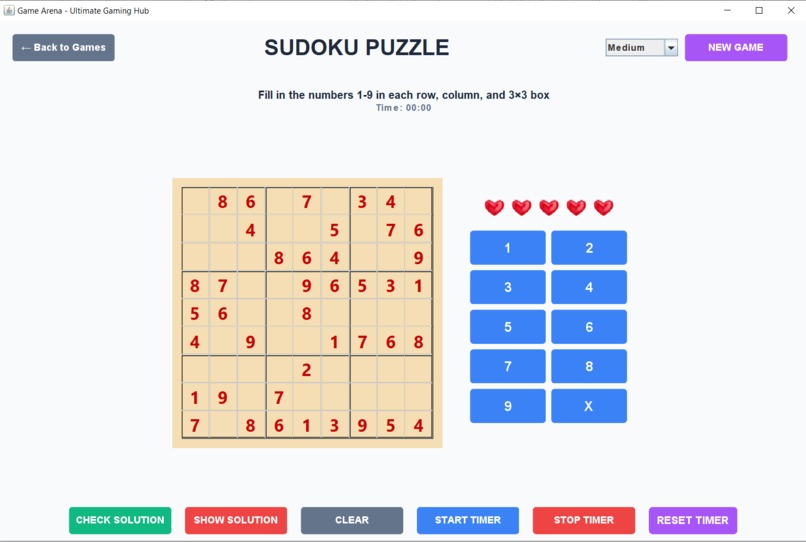
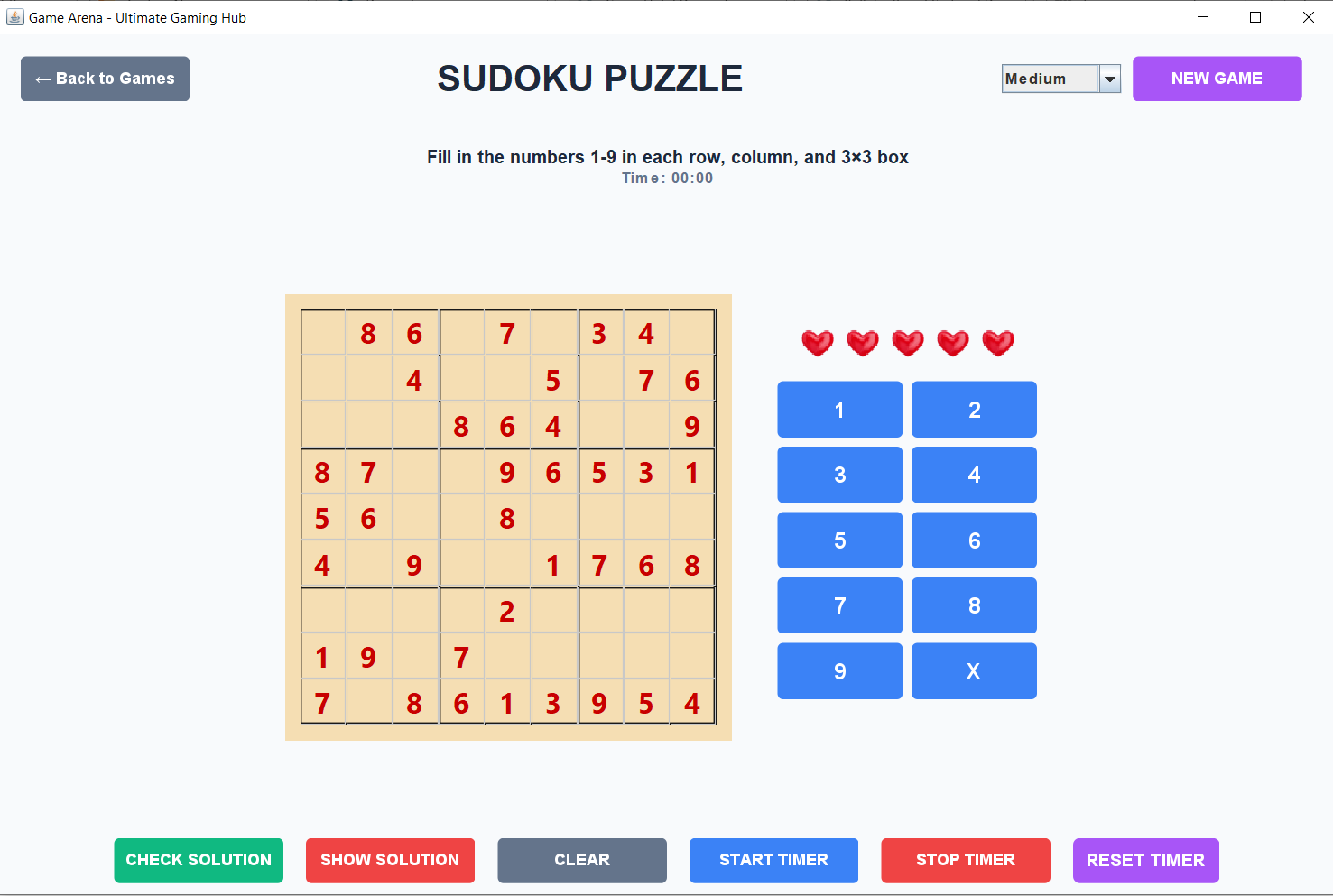
Sudoku (Game - 3) With Lifeline Deduction For Every Wrong Move
Inspiration
The inspiration for Game Arena came from a desire to blend the nostalgia of classic board games with the polish and convenience of a modern desktop application. I wanted to create a single, beautiful platform where friends and family could enjoy timeless games like Tic-Tac-Toe, Othello, and Sudoku—each reimagined with advanced features, statistics, and a soothing user experience. The project was also a personal challenge to push my skills in Java Swing UI design, game logic, and user-centric software development.
What it does
Game Arena is a desktop application that brings together three classic games:
- Tic-Tac-Toe: Play on boards from 2×2 up to 10×10, with toss mechanics, undo/redo, and player customization.
- Othello: Enjoy a visually rich, strategic game with wooden board aesthetics, valid move highlighting, and real-time scoring.
- Sudoku: Solve puzzles at four difficulty levels, with lifelines, hints, and a timer.
The platform tracks detailed statistics for each game, offers sound effects, and provides a seamless, modern interface for all ages.
👉 Download GameHubApp.jar (latest release)
How I built it
- Tech Stack: The project is built entirely in Java using the Swing framework for the GUI. All game logic, UI, and state management are handled in a modular, object-oriented fashion.
- Design: I focused on a clean, modern look using custom-painted components, gradients, and responsive layouts. Each game panel is carefully crafted for clarity and ease of use.
- Features:
- Custom sound effects using Java’s audio APIs.
- Persistent statistics tracking for games played, wins, and playtime.
- Undo/redo for Tic-Tac-Toe, lifelines for Sudoku, and valid move hints for Othello.
- Modular code structure for easy expansion and maintenance.
Challenges I ran into
- UI Complexity: Achieving a modern, polished look in Java Swing required extensive custom painting and layout management, especially for responsive design and smooth animations.
- Game Logic: Implementing robust, bug-free logic for Othello’s move validation and piece flipping, as well as Sudoku’s puzzle generation and unique solution checking, was non-trivial.
- Resource Management: Handling image and sound resources in a cross-platform, JAR-friendly way took careful attention.
- Performance: Ensuring the app remained responsive, especially during Sudoku puzzle generation at higher difficulties, required algorithmic optimizations.
Accomplishments that I'm proud of
- Unified Experience: Delivering three fully-featured games in a single, cohesive application.
- Modern UI: Creating a visually appealing, intuitive interface that feels fresh and inviting.
- Advanced Features: Implementing undo/redo, lifelines, statistics, and sound in a way that enhances gameplay.
- Code Quality: Maintaining clean, modular, and extensible code throughout the project.
What I learned
- Java Swing Mastery: Deepened my understanding of custom painting, event handling, and advanced layout techniques in Swing.
- Game Design: Gained insight into balancing usability, challenge, and fun in digital board games.
- Algorithmic Thinking: Improved my skills in puzzle generation, move validation, and efficient state management.
- User Experience: Learned the importance of small touches—like sound, animation, and feedback—in making software delightful.
What's next for Game Hub
- Multiplayer Support: Add online or LAN multiplayer for all games.
- More Games: Expand the hub with additional classics like Chess, Checkers, or Minesweeper and other vintage and cool board games.
- Save/Load: Implement persistent save/load for ongoing games and statistics.
- Accessibility: Improve keyboard navigation and colorblind support.
- Cross-Platform Packaging: Distribute as a native app for Windows, macOS, and Linux.\
Built With
- java
- java-awt
- java-sound
- java-swing-gui


Log in or sign up for Devpost to join the conversation.