-
-
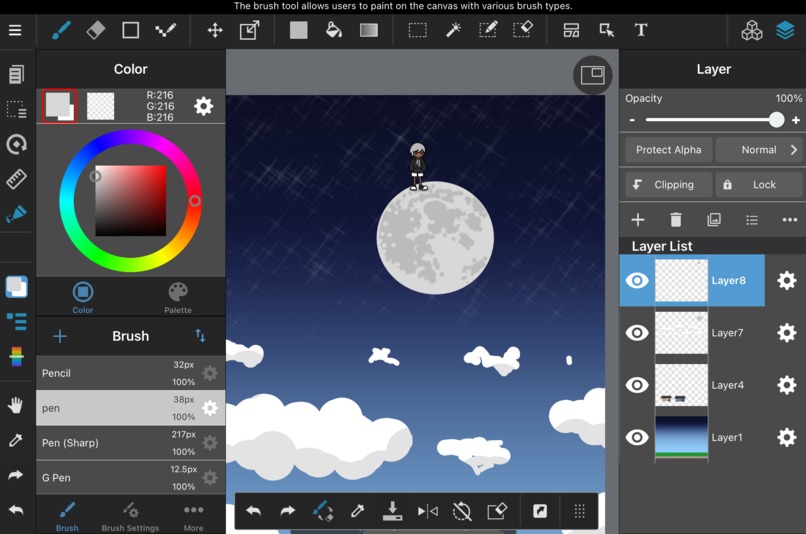
How cool would it be to be able to fly to the moon with a chi-rocket?
-

MC standing and uh... staring at grass?!
-

MC doing some exercice. Stay healthy!
-

NPC 1 touching grass with his back
-

NPC 3 going through an existential crisis
-

NPC 2 finding inner peace UwU
-
OuterMind's logo. Beautiful, isn't it?





Inspiration
"What problems could be solved with our code?". The first thing that popped to into our first-year collegian minds was socializing. The pandemic was simply three months of pure isolation. Half of our secondary five year and the entirety of our summer was solely spent on solo activities. Nobody really wanted to talk to anybody anymore, and our opening ceremony was so quiet that even the principal commented on how our cohort was so "calm" compared to the previous ones. Luckily, as pre-adults, we had a pretty solid social interaction base. But what about all the kids who were younger than us, and who happened to be at their most important phase of learning in emotional intelligence? Something had to be done!
When it came to the format of our idea, we chose the good old video game. We played a lot of those this summer, and it just seemed so fitting, in our case, to combine these two unconventional concepts together. Thus was created OuterMind!
What it does
OuterMind is a video game whose level designs are based on improving emotional intelligence. In other word's, it's just like any other games, but the way you win is by increasing your own social, emotional and spiritual skills, in other words, being sensible, instead of slaying demons or choosing the right answers to seduce a lovely NPC.
Currently, the game features three levels: 1. basic conversation. 2. meditation. 3. deep conversation. Lv1 is to be unlocked by taking an active role in the conversation with the NPC 1 and showing an interest in their preferences instead of simply answering about our interests. Lv2 is to be unlocked by engaging in a meditation session with the NPC 2. Lv3 is to be unlocked by asking an existential question to the NPC 3. Your basic everyday stuff to stay emotionally healthy, in other words. Achievements let you unlock new moving skills, which enables you to meet new NPCs. However, OuterMind is currently a very limited demo because of the small 48 hours time we spent on it. We spent most of our time on the meditation level of our demo, so the NPCs don't have as much dialogue, let alone artificial intelligence, as we wanted them to.
How we built OuterMind
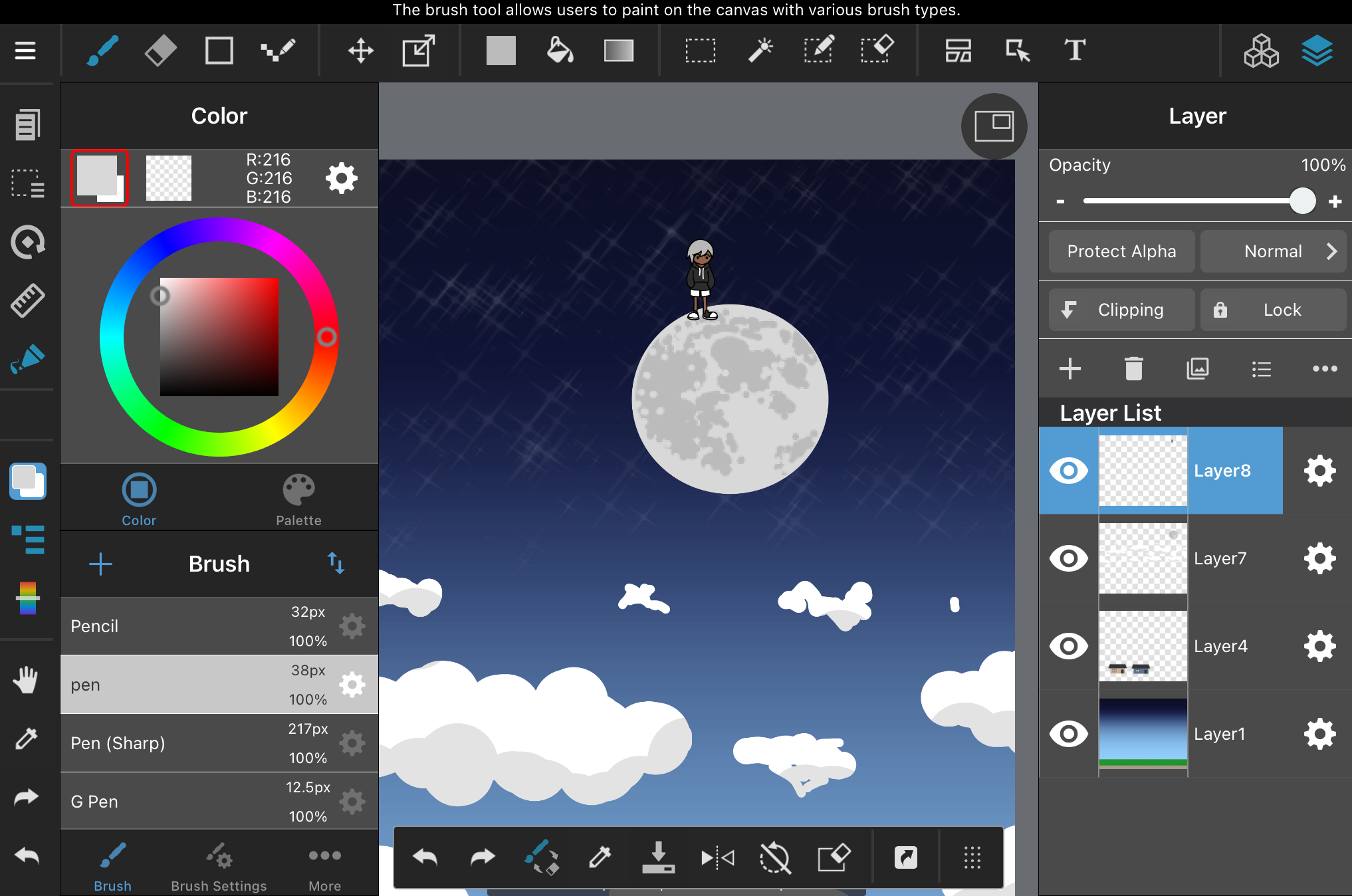
The code was built by Marthe-Sarah with #c language and the program Ubisoft. The characters, backgrounds and animations were designed and hand-drawn by Jacquelina with the Medibang app on an iPad. Jacquelina sent each frame to Marthe-Sarah, who integrated the visuals to the game.
Challenges we ran into
Our idea of integrating AI to the NPC's was a fabulous one, but unachievable for us at our current coding skills. The programming language we used was #c, which is pretty useful for coding AI, but it's the first time Marthe-Sarah codes with that language, so it was impossible for her to make a whole AI chart in just 48 hours with it. It is a challenge that we ran into, and it remains a challenge.
Accomplishments that we're proud of
Our first accomplishment, although minor, was our good coordination. We managed to brainstorm, communicate, create and wrap up everything by distance thanks to Discord and Gmail. Yay teamwork.
Our second accomplishment was creating for the first time a game as complete as OuterMind. Until now, the only game we managed to function together was a 2D tile-based movement game with pixel art. And it turned out to be a demo... With really bad visual scaling. This time, we made 2D "platforming" game with many characters and much better visual scaling. We even went out of our comfort zone to make it non-pixel art. No offence to pixel-art intended. Pixel art is amazing.
Our third accomplishment is to have brainstormed such an innovative idea. Integrating AI to a game is, as we later found out, not an original one. Indeed, there are a lot more famous game out there like Last of us, F.E.A.R., and XCOM Enemy Unknown who had this idea and who managed to make a pretty cool game out of it. Luckily, our idea differentiates itself because of the purpose we gave to it: raising emotional intelligence.
What we learned
We learned how to code a game with #c programming language, which was a completely new language to us.
We also learned, visual-wise, how to improve character designs. Not much time was spent on them because we also had college work to do, but we found out that their simpleness is what makes them so unique. By being stressed in time, we worked smarter on the shape and line language of our characters, which couldn't have been so well done if the game was in very pixel-y pixel art. Although the colour schemes could be improved... Except for the MC. The MC is perfect.
What's next for OuterMind
There are a lot of improvements to be made on OuterMind in the future.
Firstly, if we manage to do it, the game would have AI integrated into it. The NPCs, thanks to the intelligence, would be much more complete. Through AI training, we could calibrate each of their personalities, responses and facial expressions. The meditation sessions could be even more diverse. This would, however, need a lot of data, time and space, which are major issues. But it already sounds promising in our heads, so...
Secondly, we would, of course, add more levels to the game. The social, emotional and spiritual possibilities are endless, and therefore, so are their challenges. There could be many levels based on conflict-management, empathy, honesty or even rhetoric! We could even create a whole metroidvania if we manage to invent enough NPCs. However, we hope OuterMind doesn't somehow become a device for propaganda in the future. That would be terrifying and we, the creators, would be sad.
As a third improvement, it would be fun if the MC could be personalized by the player. There's never anything wrong with trying out new looks, right?


Log in or sign up for Devpost to join the conversation.