-
-
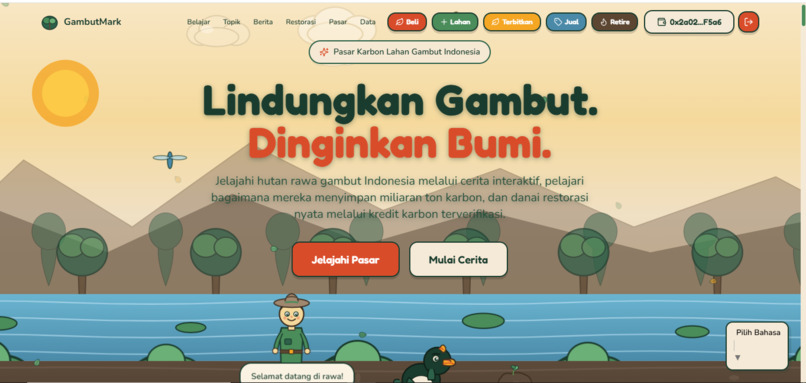
Dashboard Gambutmark
-
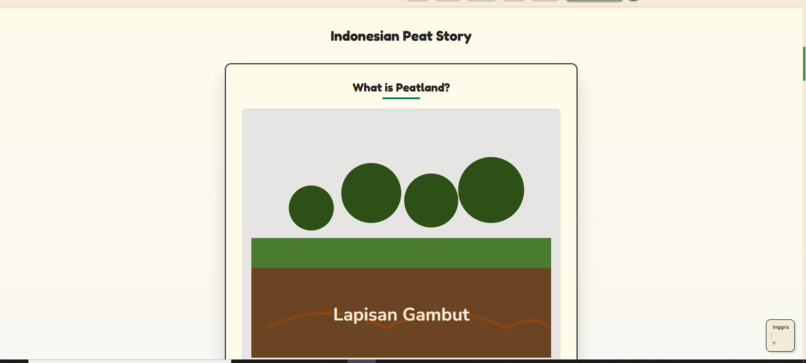
Peat Story
-
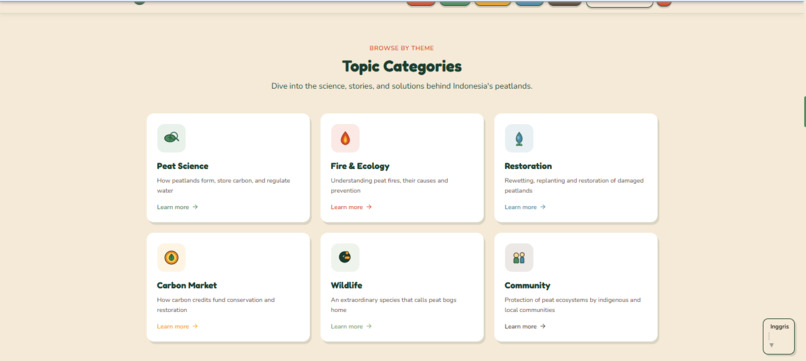
Topic Categories
-
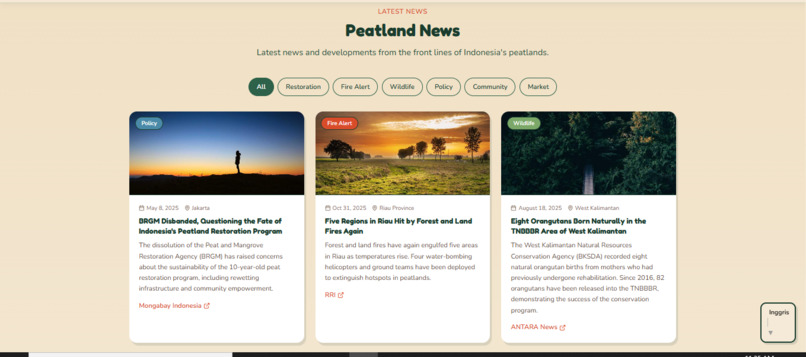
Peatland News
-
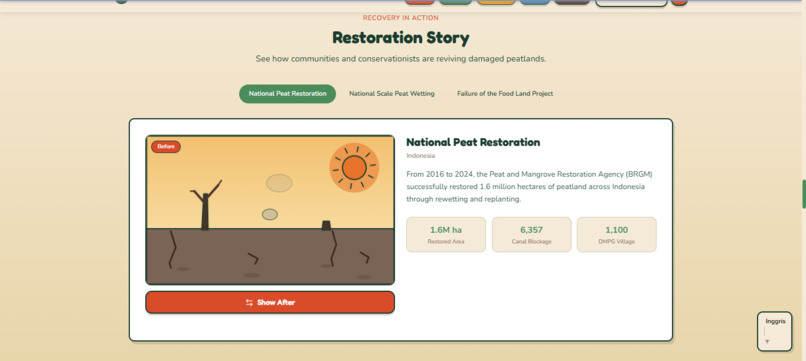
Restoration Story
-
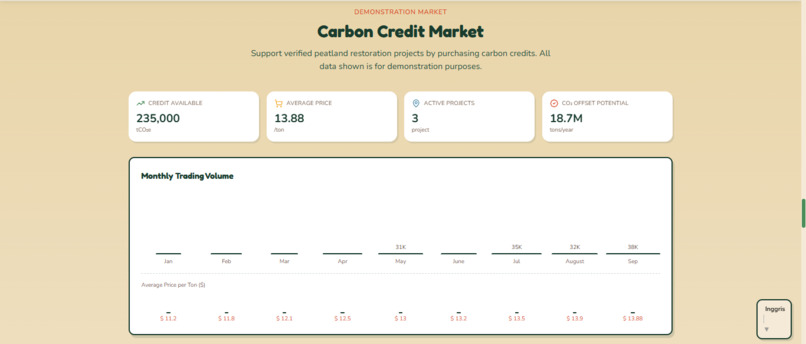
Carbon Credit Market
-
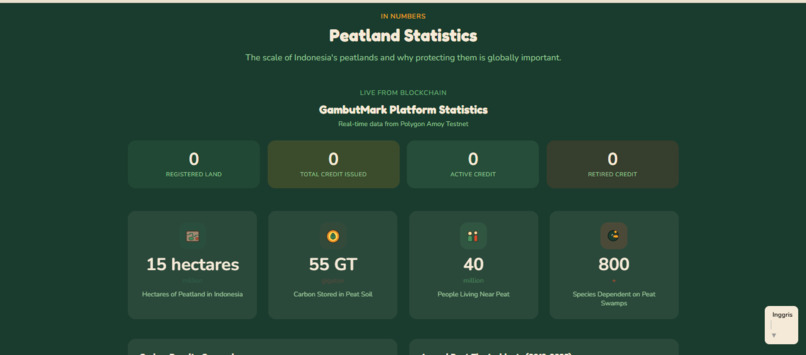
Peatland Statistics
Inspiration
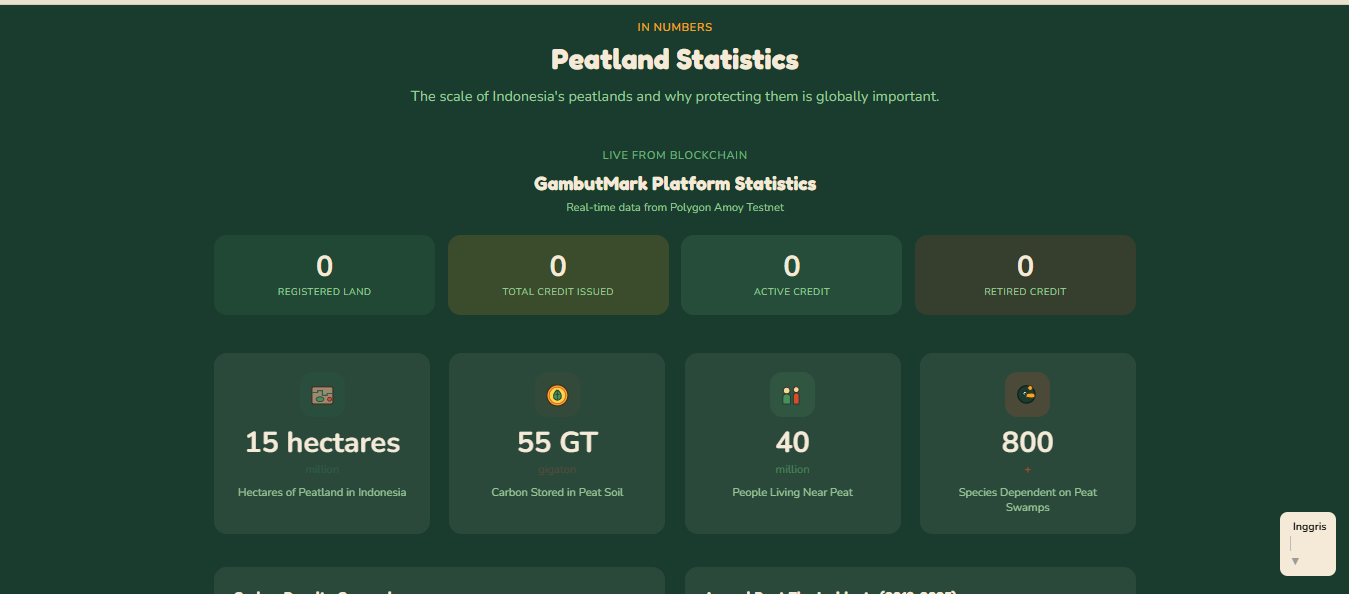
Indonesia holds around 20 million hectares of tropical peatlands — one of the world’s largest carbon stores. When these peatlands are drained or burned (especially during annual forest and land fires / karhutla), they release massive amounts of CO₂ into the atmosphere.Despite their critical role in climate regulation, peatland carbon credits often suffer from low trust, lack of transparency, and the risk of double counting. We were inspired to build a solution that makes peatland carbon markets more transparent, trustworthy, and accessible — so that real restoration projects in Indonesia can receive proper funding.
What it does
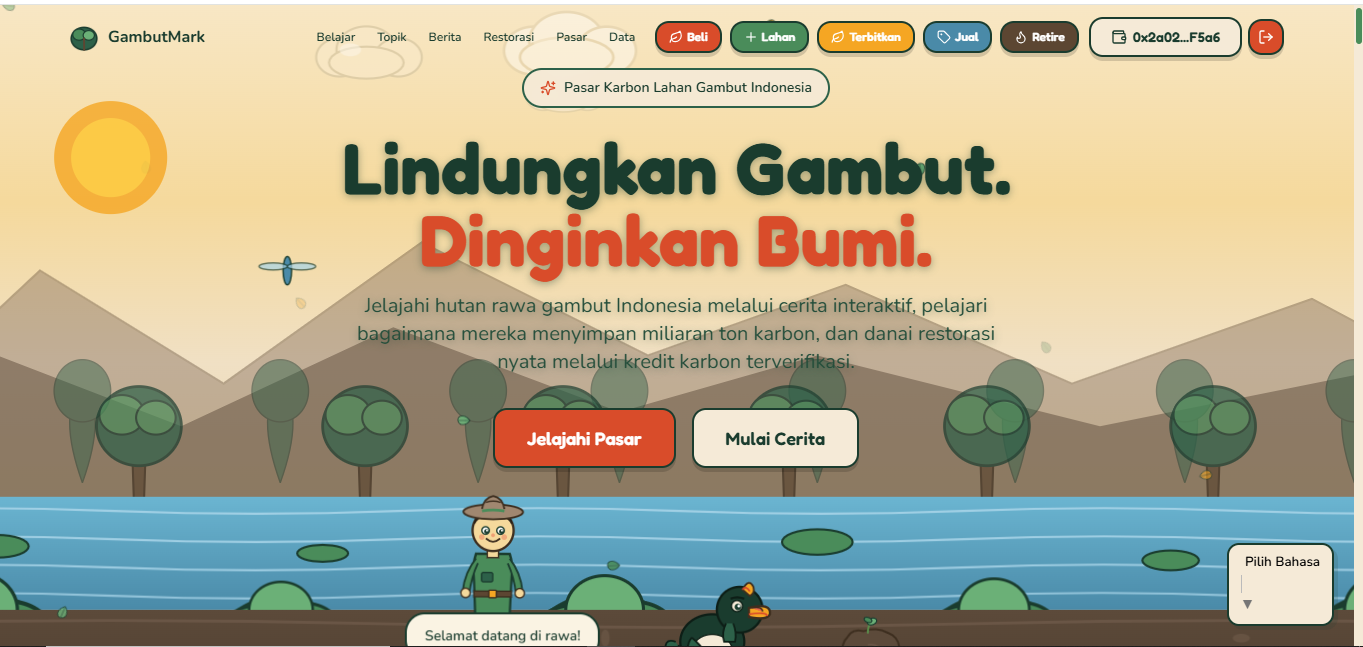
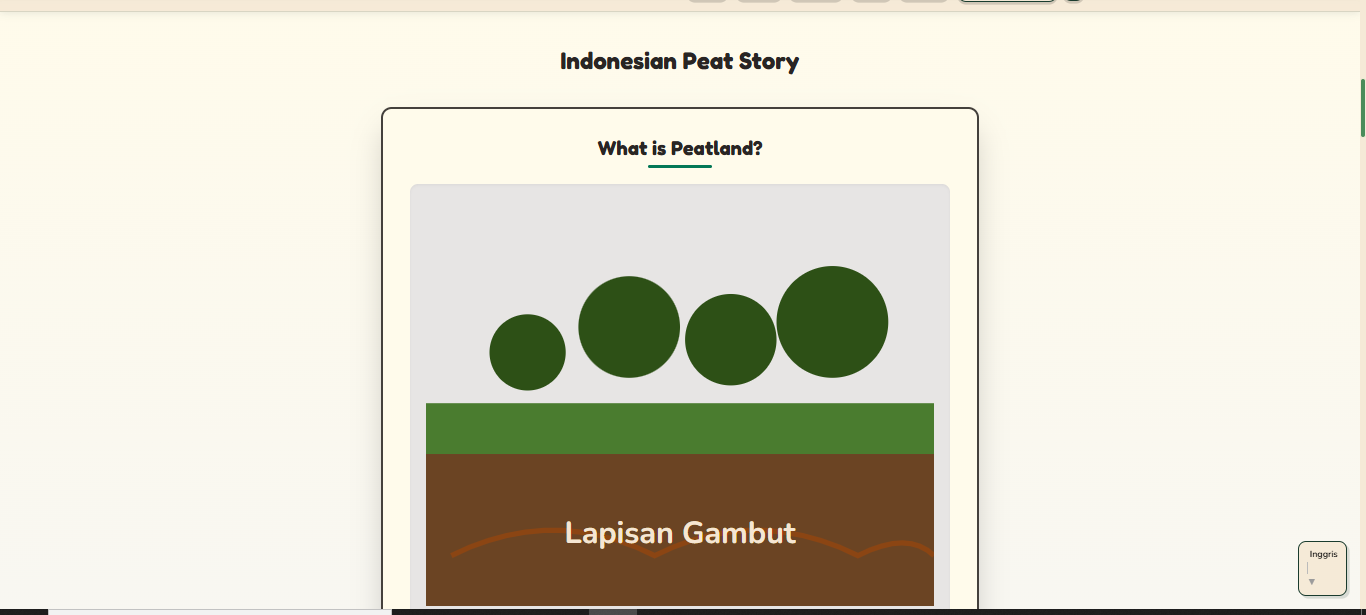
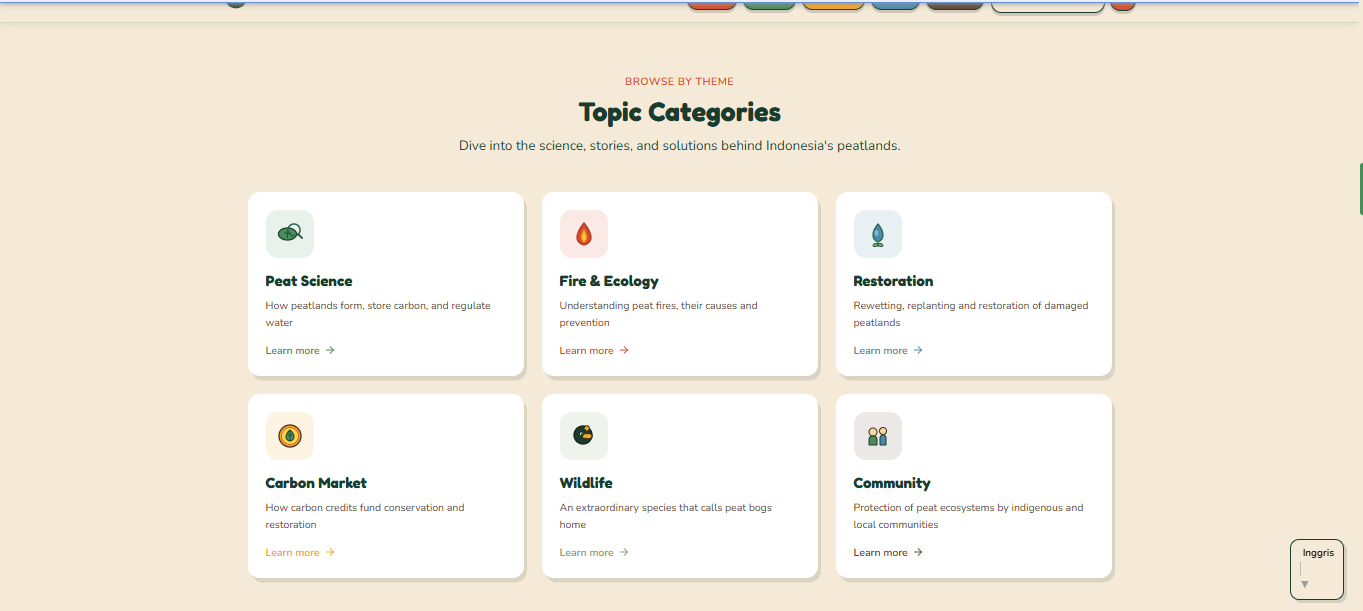
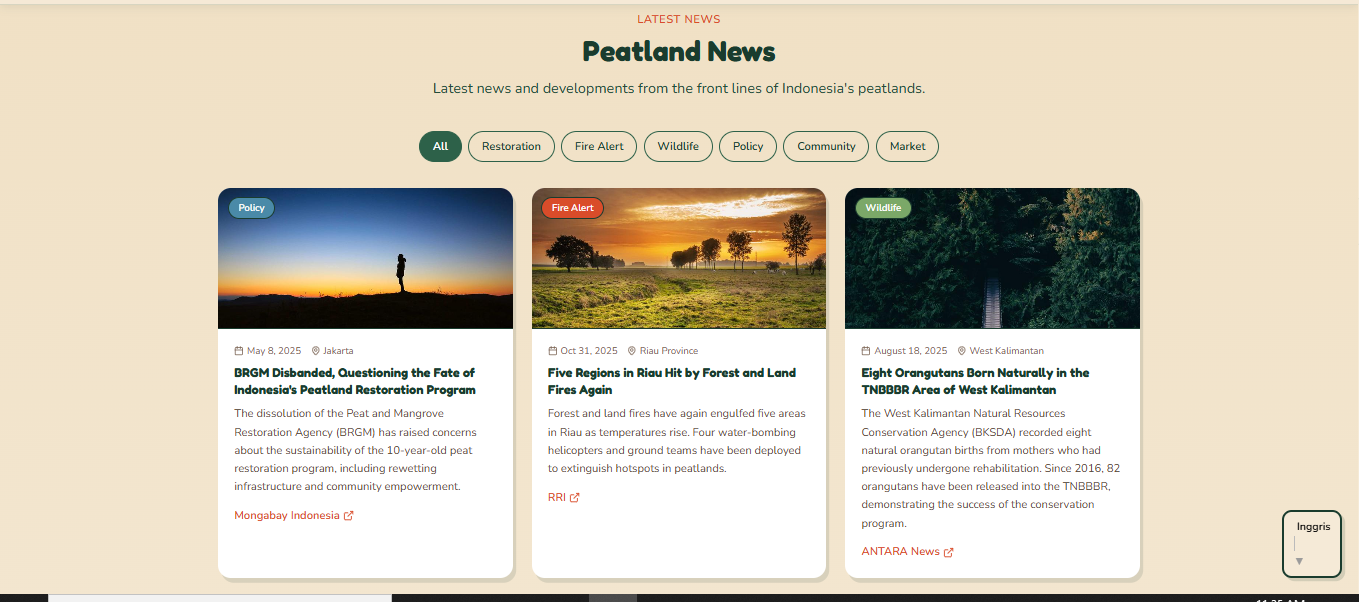
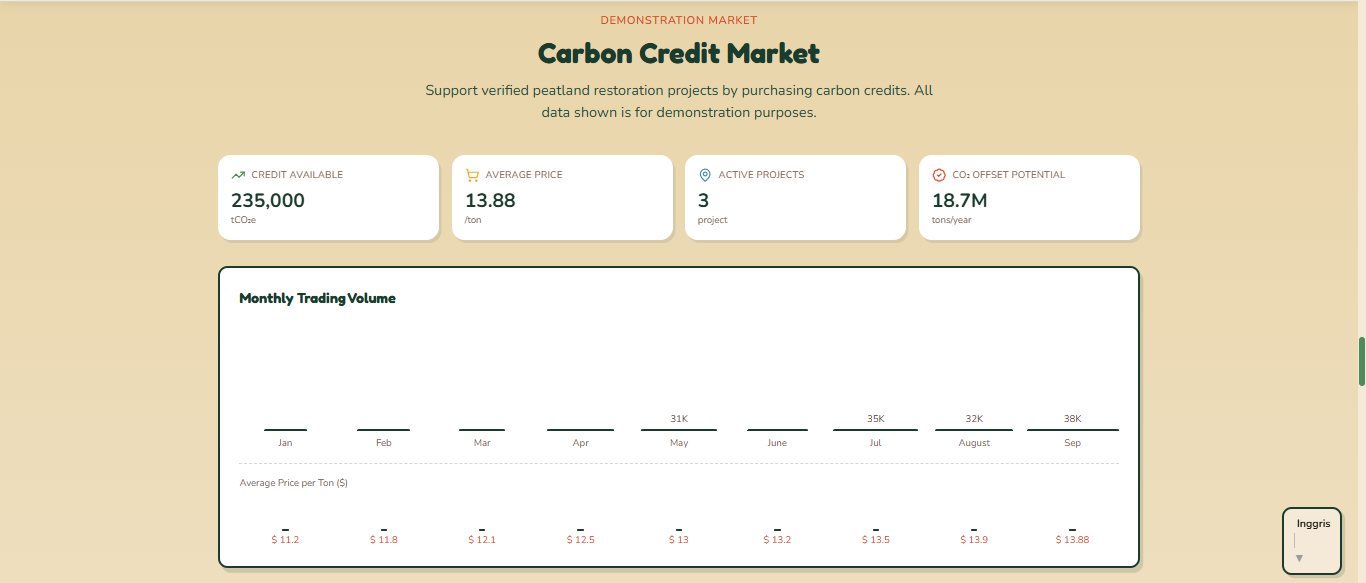
GambutMark is a blockchain-based carbon credit marketplace built on Polygon, specifically designed for Indonesian peatland restoration and conservation projects.It allows project developers to register peatland areas, issue carbon credits, list them for sale, and enables buyers to purchase and retire credits with full transparency. Every credit is tied to a unique Digital Land ID on the blockchain to help prevent double counting. The platform also includes interactive educational content to help users understand the importance of healthy peatlands, the dangers of drainage and fire, and how carbon markets can support restoration.
How we built it
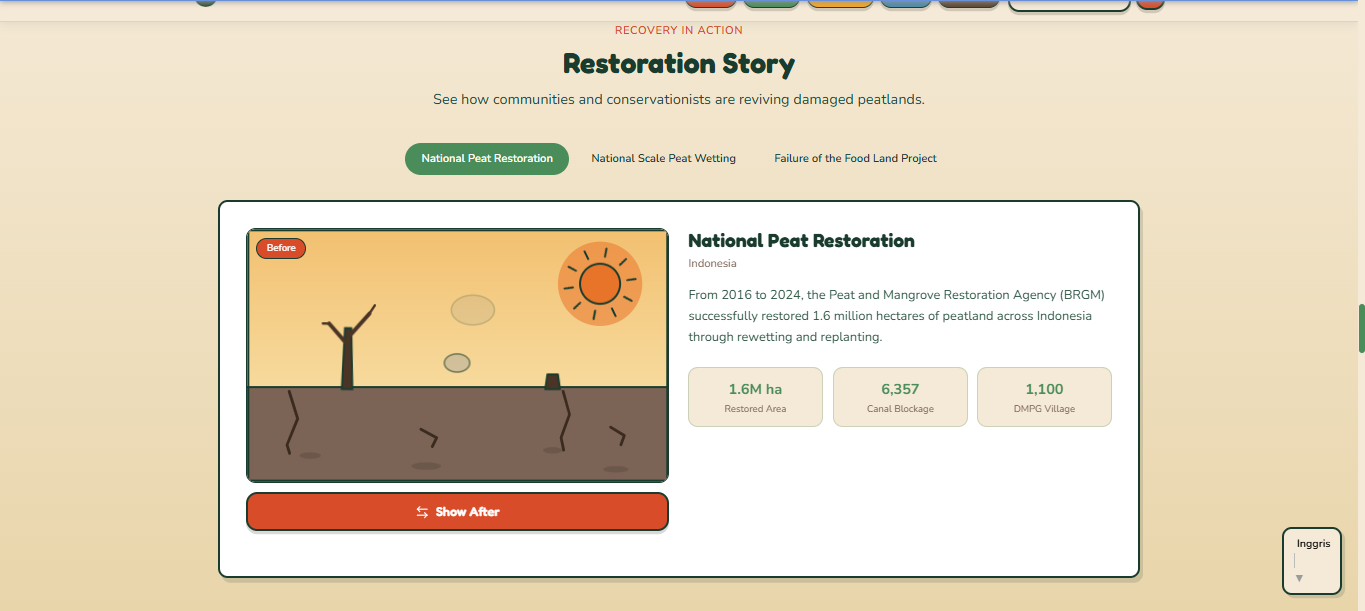
We built GambutMark as a modern web application with a strong focus on user experience and education. The frontend features interactive visualizations of peatland conditions (healthy, drained, and burning states), a marketplace interface for browsing and buying credits, and wallet connection functionality.On the blockchain side, we use Polygon for its low transaction fees and fast confirmation times, making it practical for carbon credit issuance, trading, and retirement. The system is structured around core marketplace flows: land registration, credit issuance, listing, purchasing, and retirement — all designed with on-chain transparency and anti-double-counting mechanisms in mind.
Challenges we ran into
Designing a simple yet trustworthy system without relying on IoT sensors Balancing educational content with a functional marketplace Creating a clear mechanism to represent land ownership and prevent double counting Integrating wallet connection and preparing the system for Polygon-based smart contracts.
Accomplishments that we're proud of
Successfully created a complete and visually engaging platform focused on Indonesian peatlands Integrated educational storytelling with a functional carbon marketplace concept. Designed the system to run on Polygon for scalable and low-cost carbon credit transactions. Built a solution that directly addresses transparency and double-counting issues in peatland carbon markets.
What we learned
We learned how critical transparency and trust are in carbon markets, especially for nature-based solutions like peatland restoration. We also gained deeper understanding of how blockchain (particularly Polygon) can be applied not just for trading, but for creating verifiable links between land, credits, and climate impact. Additionally, we realized the importance of education — many people still don’t fully understand why peatlands matter so much for the climate.
What's next for GambutMark
Fully deploy smart contracts on Polygon to enable real on-chain credit issuance, trading, and retirement. Integrate satellite data or verification partners for stronger credit credibility. Partner with real peatland restoration projects in Indonesia. Expand the platform to support more transparent reporting and impact tracking for buyers and project developers.
Built With
- hardhat
- polygon-amoy
- react
- solidity
- tailwind-css
- typescript
- vercel
- viem
- vite
- wagmi


Log in or sign up for Devpost to join the conversation.