-
-
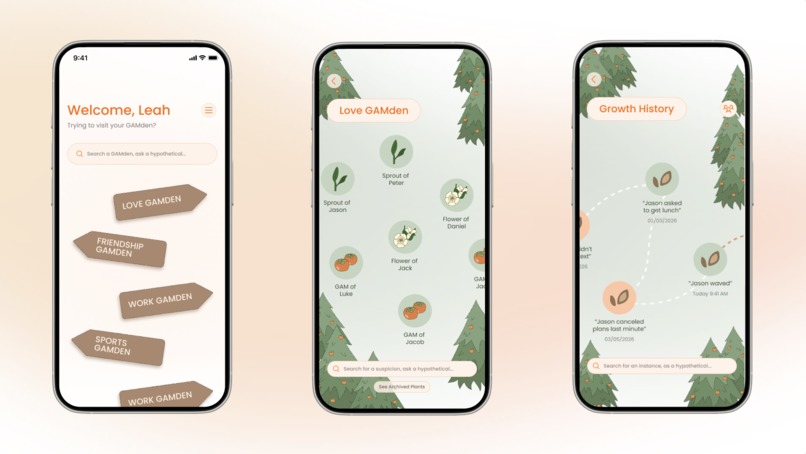
Homescreen to GAMden Flow
-
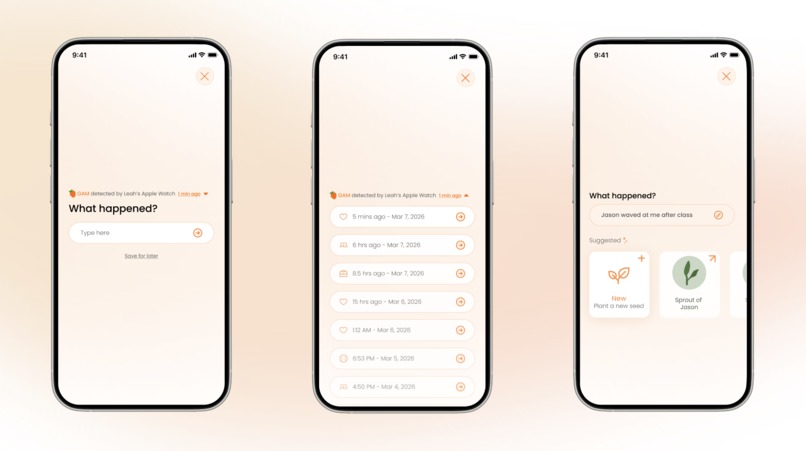
Gam Detected Flow
Inspiration
We were inspired by the Korean concept of 감 (gam) – which is defined as the natural intuition, hunch, and feeling that people experience in their everyday lives. When going through daily activities, tasks, and interactions, everyone tries to predict the future based on every individual's past (a.k.a. big data). However, these assumptions are not always true. Imagining a world where an occurrence of 감 or intuition is detectable by technology, we wanted to explore how we could keep track of and make use of it through this project.
What it does
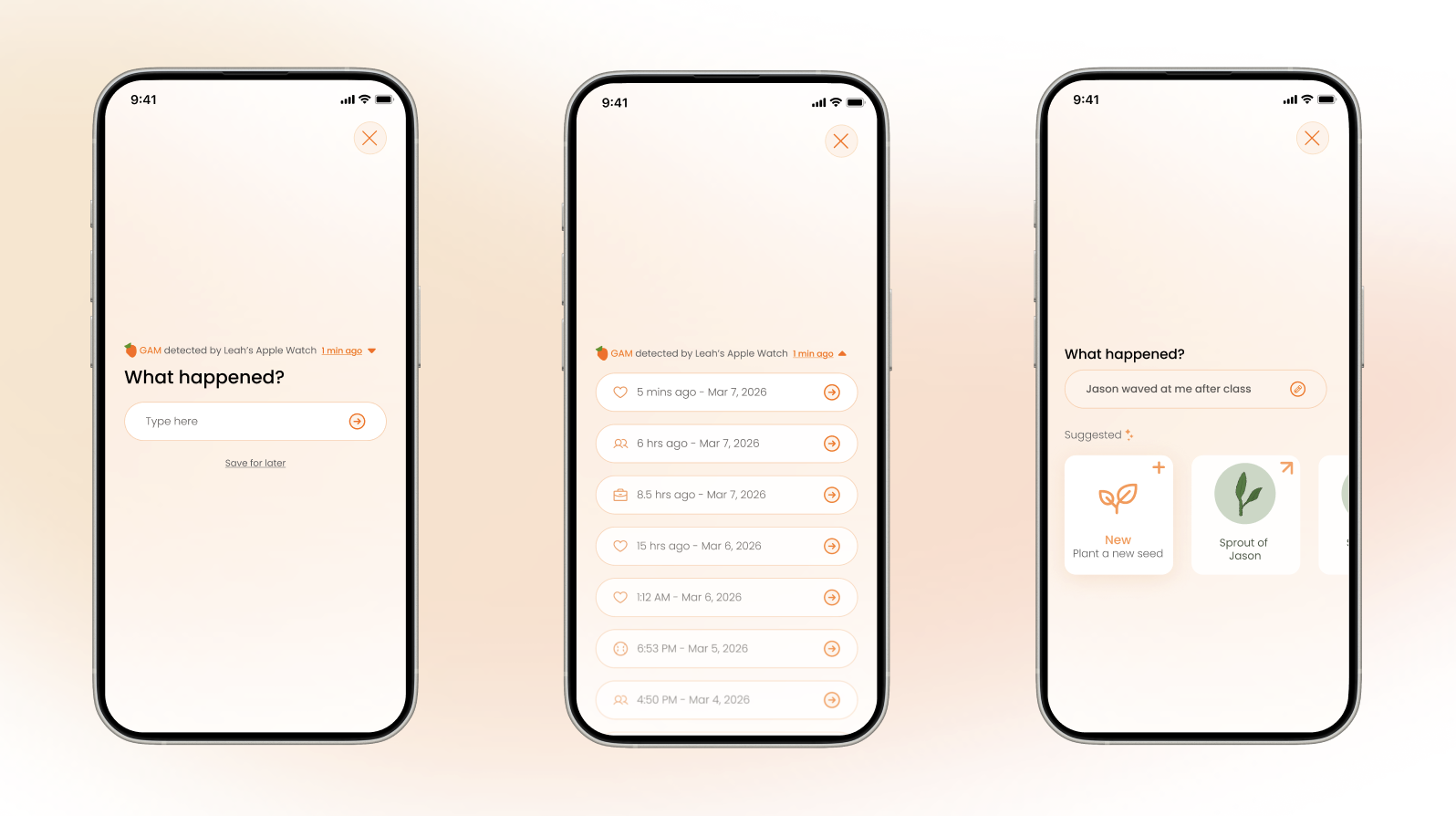
Through a digital watch device, GAM detects whether or not you had a random buzz of feeling, assuming something or a certain idea was going to happen. Through the digital watch, the user can quickly sort the intuition into a category and also register the moment through their mobile phone. The app analyzes the moment and rates how impactful it is to your total "gut feeling." For example, if you have a crush on someone, you might have an intuition that they like you back. Through personal interactions with the crush, you and your app collect data from the interaction. From here, GAM helps measure whether your intuition that you crush must like you back is true. Through GAM, users can collect all of their hunches on different topics and sort them into different categories. Users easily track and measure the accuracy of past experiences, then tie it all together to one conclusion. This helps users make healthy and informed decisions, making ways to reduce overthinking and rather use the collected data and statistics to be more confident in their choices. Using GAM, users can reduce embarrassing or regretful moments caused by misunderstandings and self-doubt.
How we built it
Our team first brainstormed ideas right as we learned the topic, thinking of what was intangible, valuable, and fun to explore. We started off with many Korean concepts that have to do with the human connection, and landed on the idea of 감 (gam). After deciding on our main topic, our team interviewed other students to find out what their experiences were like with intuitive assumptions, and what assistive technology they could have used to create better decisions. After collecting insightful data, we jumped straight into feature ideation and then experimented with different layouts of the screen by iteration. We prioritized consistency throughout the design process, as well as clarity and usability of the app. We wanted GAM to be fun, interesting, but easy and simple to use. In the main screens, we gamified the experience of collecting data of GAM detections to make the interface more interactive and enjoyable. After developing high-fidelity screens, we prototyped through Figma, experimented with Figma Make, and built the presentation with the final product.
Challenges we ran into
At the beginning of the project, we initially wanted to develop a different idea. But while conducting user research and moving into feature ideation, we realized that the initial idea didn't feel creative but mundane. We also went through many conversations trying to align ourselves, as we didn't fully understand each other's visions for the product. Recognizing this problem early on, and because we wanted to have more fun with this project, we pivoted to an idea we thought was a little more lighthearted but could be helpful to users who want to create better-informed choices (including us!). Throughout the entire project, with proper communication and by exploring and enjoying the creative process, we were able to overcome barriers and complete our project.
Accomplishments that we're proud of
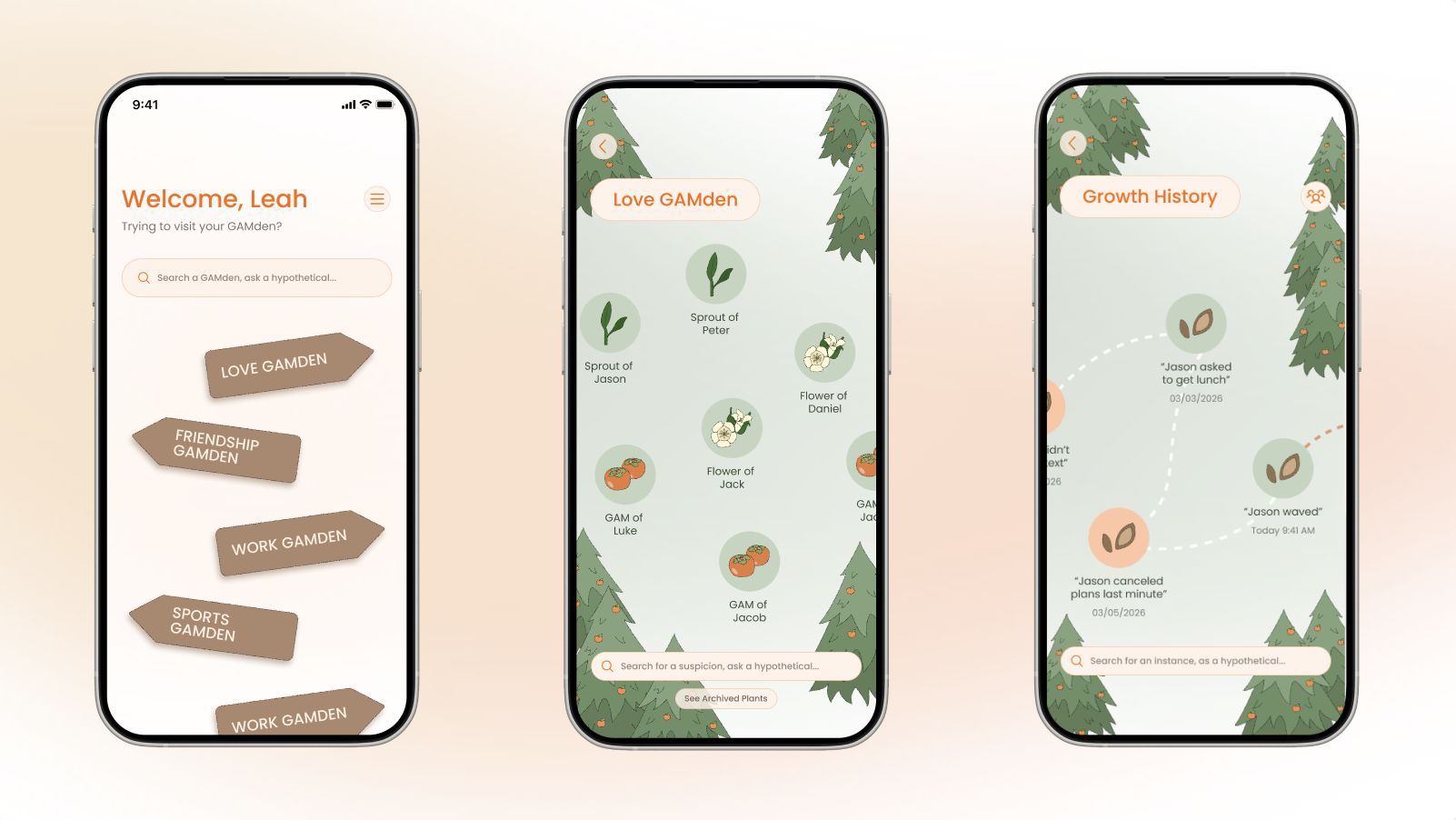
We are most proud of the garden screens, as it brings a more playful mood to the app. The garden scenes add a gamified experience to categorization and looking through data. We didn't want the users to feel burdened or annoyed when going through abundant quantities of data at once. We are also proud to have made the app still feel consistent despite differences in UI across features.
What we learned
During this event, we were able to learn how to use Figma Make for the first time. Our team had never used Figma Make before FigBuild, so it was a new experience for us to explore and learn how to use the program. We realized the potential it had and how it could become a great assistance to the building process in the future. Though we did not end up using it in the final prototype, through this learning experience, we are eager to experiment with the program even more.
What's next for GAM
In reflection, we think that GAM has the potential to really help people make informed decisions and help reduce the "delulu" mindset. If we were to continue working on this project and implement it in the future, we would want to add more ways for people to make use of their collected information, as well as look into detailed analytics of their experiment, giving them the ability to look at a situation objectively, without subjective emotions.
Built With
- figma

Log in or sign up for Devpost to join the conversation.