-
-
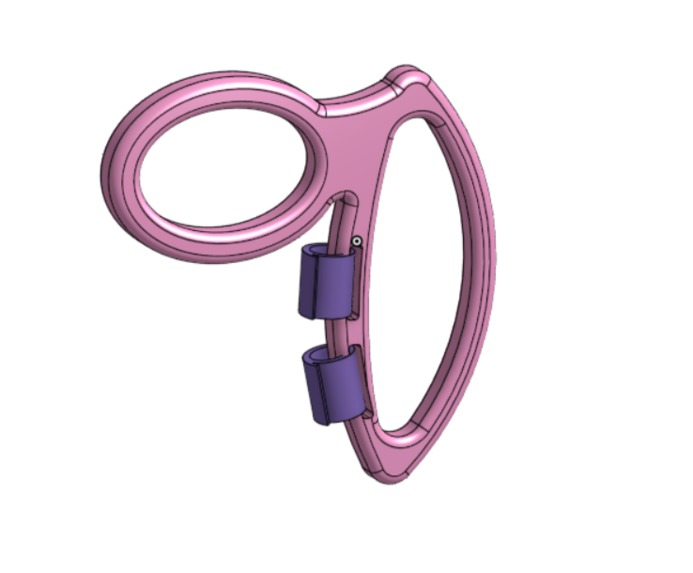
CAD model of the assistive paintbrush device assembly featuring rubberized velcro straps.
What it does
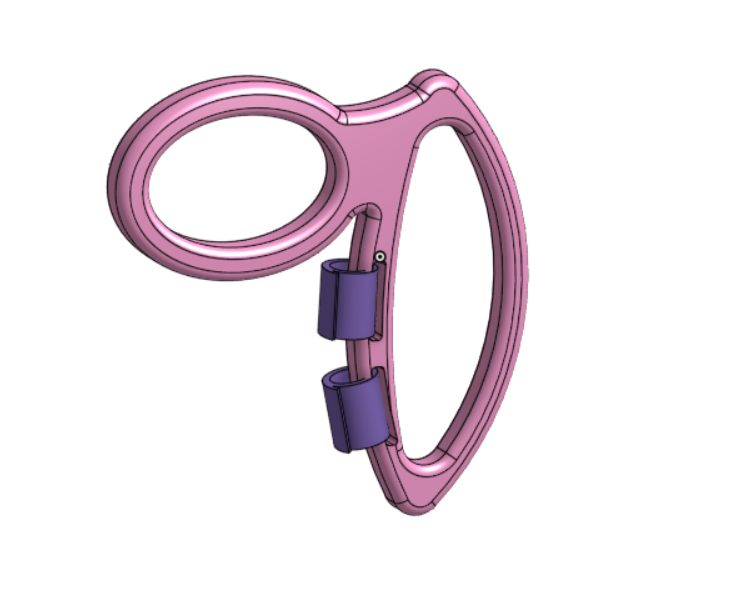
Our device allows our recipient to operate the paintbrush on their own by inserting their hand and thumb into the allocated slots. The rubberized Velcro straps attach the paintbrush, or any drawing tool, to the device. This eliminates any need for grip strength allowing the client to be independent with the support from this device. Through this realistic and simple to use design, we addressed our client’s need for an intuitive, assistive device that grants them the ability to function independently.
How we built it
This model was developed by first researching basic adaptive devices for painting. However, the adaptive devices found weren’t adjustable for different paint brush sizes. We then began brainstorming and creating sketches to create a model that was both adjustable and eliminates the need for grip strength. Through our drawings on Goodnotes we came up with a prototype through hair ties and a marker to demonstrate how our product would work with our recipient. We then researched different materials to determine which would be the most suitable. We found TPU and silicone to be the most effective with TPU being the best for a smaller scale and silicone for a larger scale. After this we utilized ImageJ to determine the measurements required to fit both their hand and thumb. We then began developing a model on OnShape using the measurements to ensure the design was both adaptive and specific to their constraints. Originally we made the thumb insert a circle, but realized for increased mobility an ellipse would be better. We then made the top of the thumb insert horizontal to the top of the hand insert. After developing the paintbrush holder we created the slots on the side of the device to insert the velcro. We ensured that the slots fit the size of rubberized velcro researching the thickness and length of the material. We placed the slots parallel to the thumb to ensure that the velcro would not interfere with the comfortability, and simplify the 3D printing process. We then fileted the edges to create a seamless design that guarantees safety for the client. To further explain our device we modeled the velcro to create a visual of how the final product would look.
Challenges and Triumphs
One of the main challenges we faced was the lack of measurements for the hand of our recipient. We had to use the images and videos given to us to find the correct dimensions for our adaptive device. We found the pegs in the video and compared their dimensions to our recipient’s hand size on ImageJ, allowing us to determine the width, length, and height of her hand. Another issue we ran into was the original prototype where our placement for the thumb was too close to the hand and was unrealistic for a comfortable fit. We ultimately decided that a thumb placement that is farther from the hand will create maximum comfortability for our user. Finally, we ensured that we created a design that would be able to print with TPU filament without the need for extra supports that would damage the final print. We are most proud of designing a device that allows our recipient to paint without the need to utilize the grip of her own hand, thus allowing them to rely solely on the device for support. This was a key component that was very important to our recipient and we are ecstatic that we were able to turn what was once a desire into a reality.
What we learned
We learned that organic and ergonomic designs are most ideal when addressing problems within the realm of adaptable devices for those in need. Oftentimes, it is the simpler designs that create the best solutions. Our team had determined that using a level plane model is essential for 3D printing, as this eliminates the need for structural supports as the device is printing. Overall, it is comfortability that is essential for creating the foundation of a design that will be used in real life applications.
What's next for Gals for Prosthetics - Paintbrush Holder Project
In the future, we plan to have mass produced silicone models that can fit many sized hands and can support objects of many different sizes. The assistive device will be made using silicone injection molding technology and will be made to fit many different sized hands due to silicone’s stretchy nature. Ideally, there will be a device for the average child and adult hand, therefore stretching and molding to fit every hand in between.
Built With
- canva
- goodnotes
- imagej
- onshape


Log in or sign up for Devpost to join the conversation.