-
Mindmap
Inspiration
What problem or gap in education inspired you to create Galileo? Learning is often filled with complex information, and traditional methods like textbooks can be inefficient. We saw a need for a tool that simplifies the learning process, making it easier for students to absorb and organize knowledge.
How did your own learning experiences influence the idea for Galileo? Throughout my academic journey, we tried different study methods such as creating mind maps, writing study notes, and using flashcards. These experiences inspired me to build a tool that could combine all these techniques into one platform, making studying more structured and efficient.
What makes this tool unique compared to other learning apps? Galileo stands out because it integrates all the tools students typically need—mind maps, flashcards, quizzes, and progress tracking—into a single, easy-to-use interface. This allows users to streamline their learning process without having to switch between different apps.
What role did generative AI play in your vision for the app? Generative AI is at the heart of Galileo. We used it to automate tasks like creating quizzes and flashcards, which are often repetitive and time-consuming. This allows students to focus more on learning rather than creating study materials.
What it does
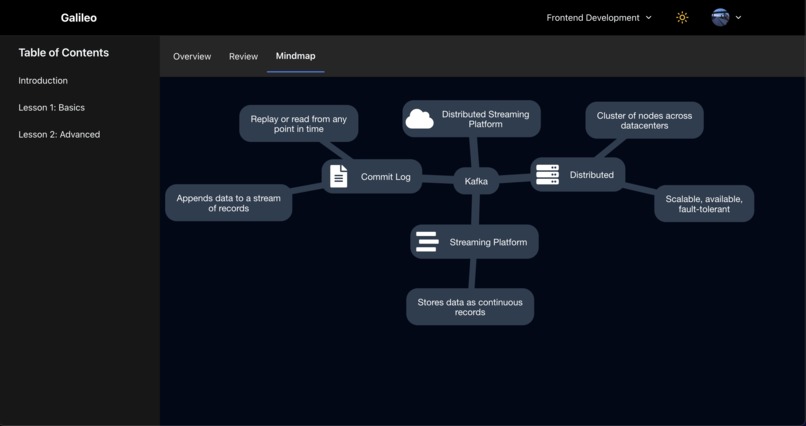
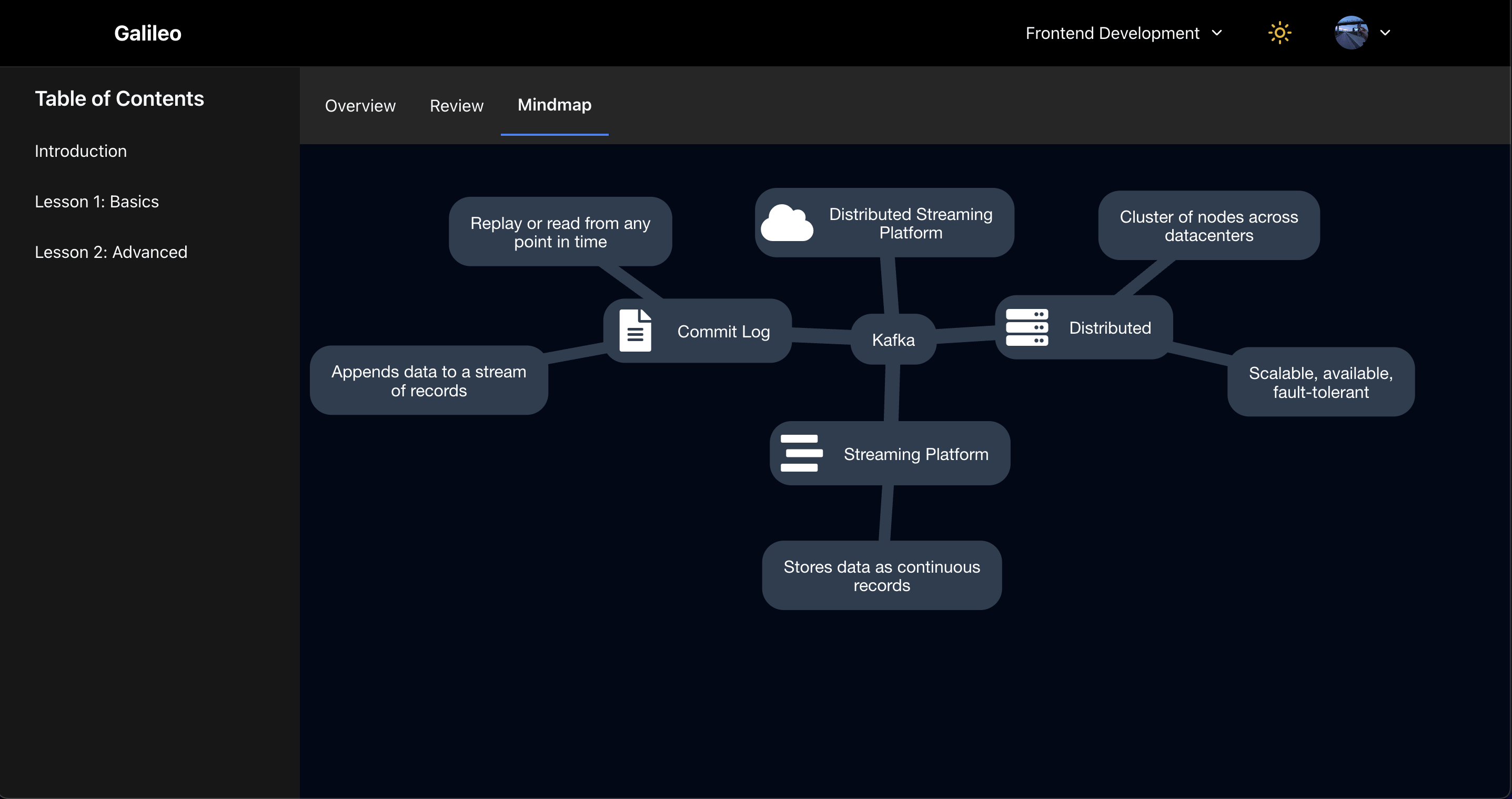
Galileo is an AI-powered learning platform that helps students of all ages by breaking down complex courses into easily digestible topics. With just one syllabus upload, the app generates mind maps, personalized flashcards, and quizzes, providing students with tools to review and reinforce their understanding of the material. The app organizes learning materials and progress within a user-friendly workspace, making it easy for students to stay on track.
How we built it
We built Galileo using a combination of powerful technologies. We used Amazon S3 for storage, FastAPI as the backend framework, OpenAI and LangChain for the AI capabilities, and deployed everything on Digital Ocean. MongoDB serves as the database for storing user information and progress. Generative AI plays a key role in parsing PDF syllabi, extracting relevant details, and generating lessons, quizzes, flashcards, and mind maps. We also experimented with different user interface designs to ensure the app remains simple and intuitive for all users.
Challenges we ran into
One of the biggest challenges we ran into was the lack of time. We only had two people on the team so each team member had signficant responsibilities.
Accomplishments that we're proud of
We’re proud of successfully integrating AI to automate the creation of study materials like quizzes and flashcards, saving students a lot of time. One of our key milestones was getting the app to accurately transform a syllabus into a structured course with visual mind maps, making the material easier to understand.
What's next for Galileo
Moving forward, we plan to expand Galileo’s capabilities by incorporating more advanced AI features for personalized learning paths and adapting the app for more complex subjects and education levels. We’re also looking to gather user feedback to refine the app and potentially integrate features like collaborative study sessions and advanced analytics for student performance.

Log in or sign up for Devpost to join the conversation.