Inspiration
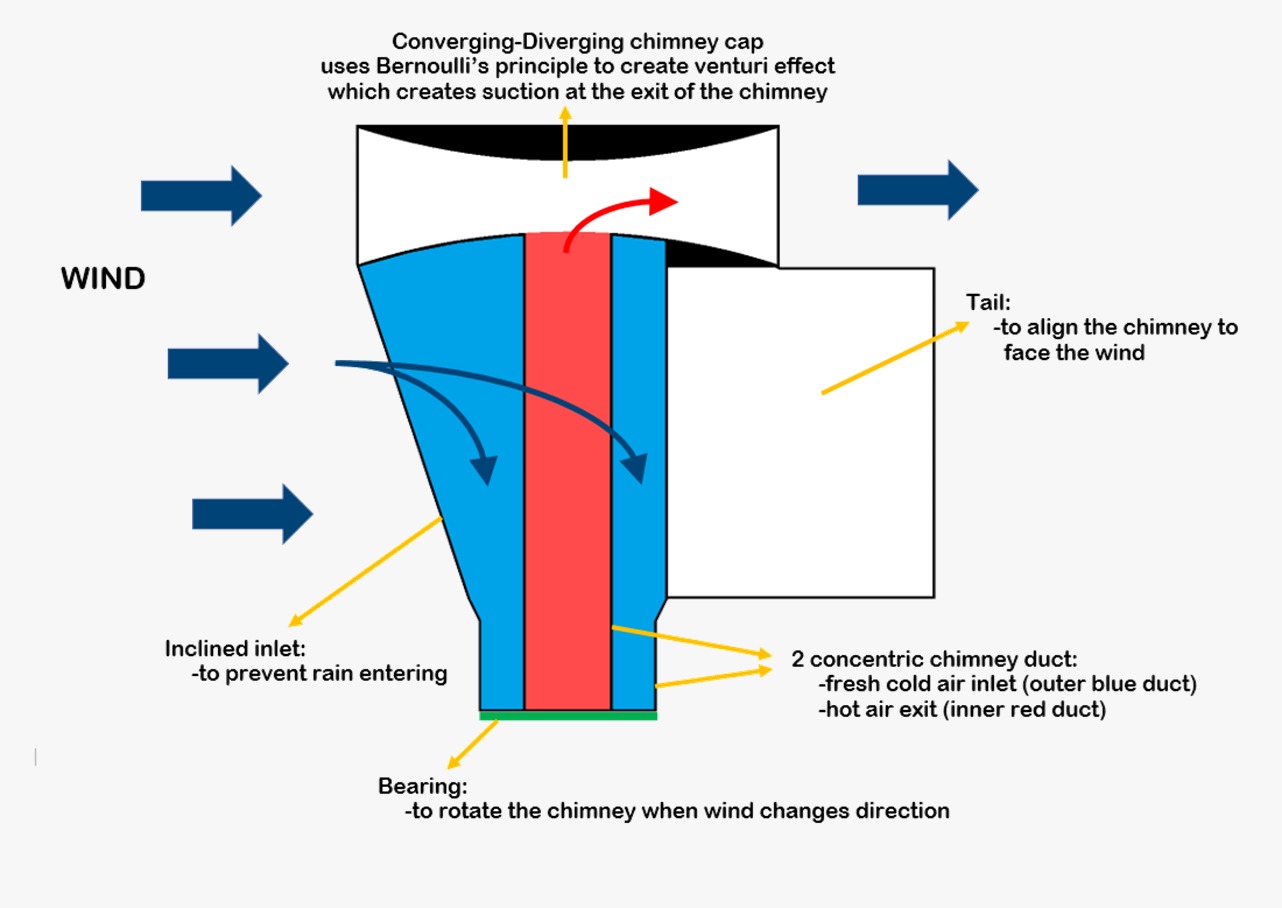
The inspiration for GaleForge came from the pressing need to address the Urban Heat Island (UHI) effect, which significantly impacts urban environments by increasing temperatures and energy consumption. We were inspired by the ancient Persian wind catchers (Badgirs) — a proven passive cooling technology — and realized its potential to be adapted for modern cities. Combining this ancient wisdom with modern principles like the Bernoulli effect and solar chimneys, we envisioned a solution that is energy-efficient, sustainable, and scalable.
What it does
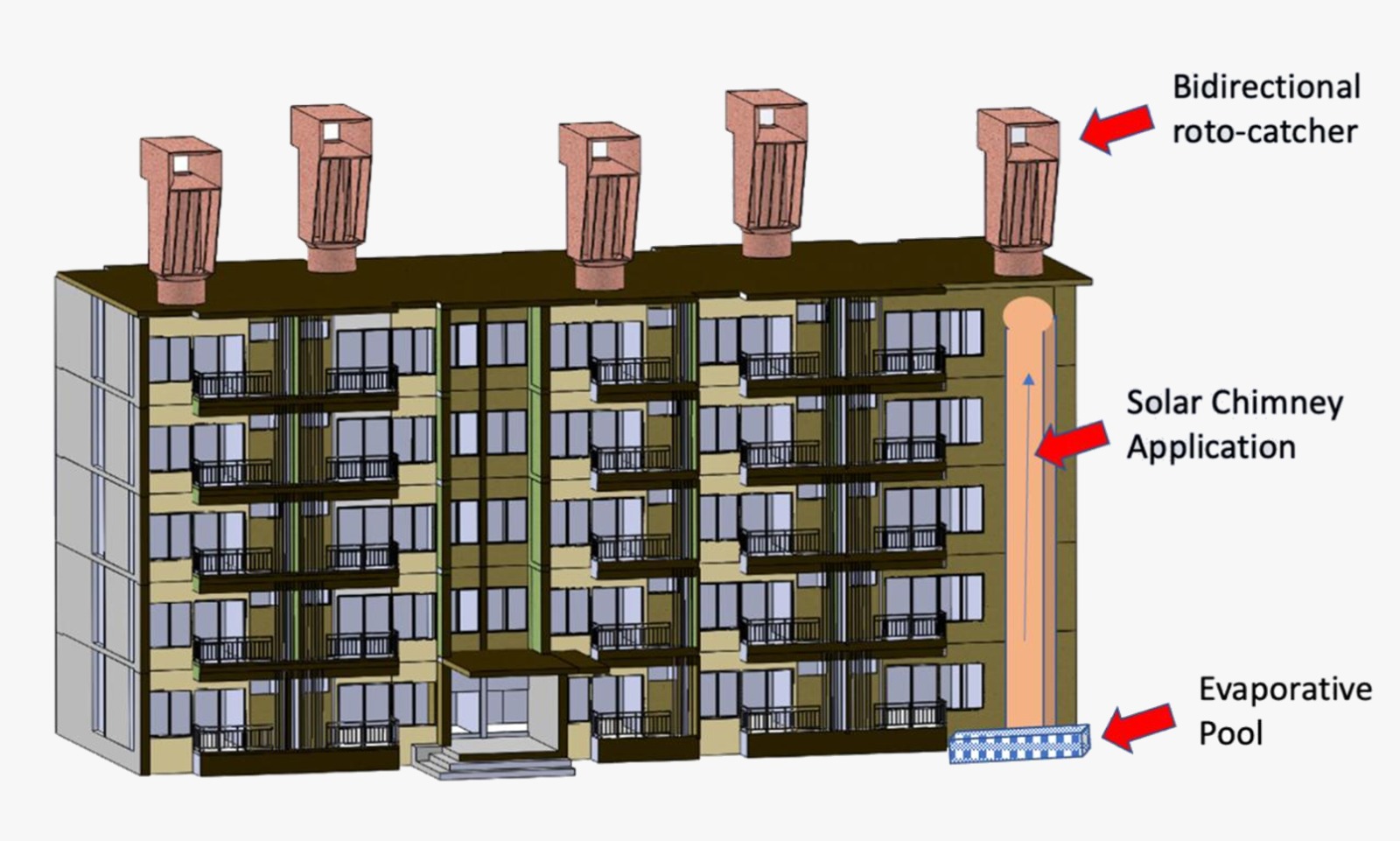
GaleForge introduces a bidirectional wind-catcher system combined with a solar chimney and evaporative cooling pools. These technologies work together to:
Capture and funnel wind to ventilate buildings. Passively cool the air, reducing AC reliance. Improve urban air quality and comfort. This system decreases urban temperatures while remaining maintenance-free, energy-free, and silent.
How we built it
We began by researching ancient wind catcher systems and understanding their mechanics. Then, we integrated Bernoulli’s principle to enhance airflow efficiency and designed a solar chimney to amplify ventilation. Key components:
3D models: Developed using CAD software for visualization. Simulations: Conducted airflow and thermal analyses through computational tools. Evaporative pool design: Added to cool air temperatures further. We iterated through designs, ensuring each element was optimized for real-world application.
Challenges we ran into
Balancing ancient designs with modern engineering: Adapting the traditional wind catcher for contemporary urban infrastructure was challenging. Efficiency optimization: Ensuring smooth airflow while maintaining cost-effectiveness required multiple iterations and computational testing. Environmental constraints: Addressing different climatic and geographical variations posed difficulties. Accomplishments that we're proud of Successfully creating a system that merges ancient technology with modern solutions. Developing a model that is energy-efficient and scalable. Raising awareness about passive cooling techniques and their potential to combat urban heat islands.
What we learned
Throughout this project, we learned:
The importance of interdisciplinary approaches, combining history, engineering, and environmental science. How to analyze and optimize airflow using advanced simulations. The power of sustainable design in solving modern climate challenges.
What's next for GaleForge?
Our next steps include:
Real-world implementation: Deploying prototypes in urban environments for testing and refinement. Collaboration with stakeholders: Partnering with city planners, real estate developers, and governments to scale GaleForge. Expansion: Adapting the design to suit different climates and urban needs globally. Further innovations: Exploring additional features like automated airflow alignment systems for dynamic wind directions. By reducing urban heat naturally, GaleForge envisions cooler, greener, and more livable cities for future generations.
Built With
- blender
- cad
- figma
- openfoam


Log in or sign up for Devpost to join the conversation.