-
-
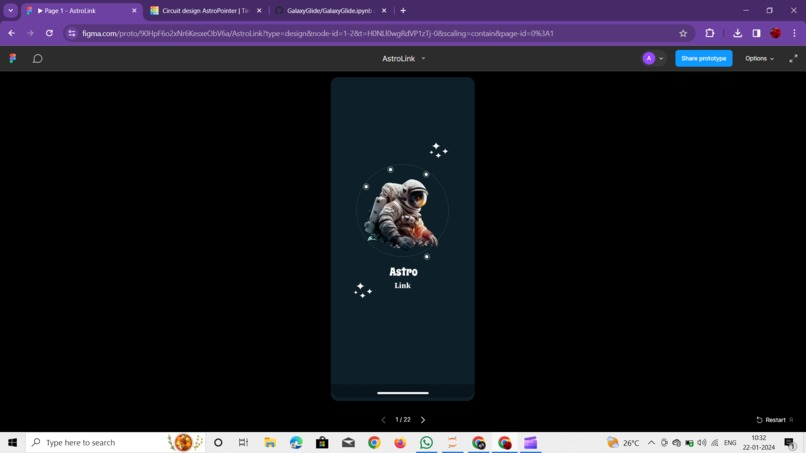
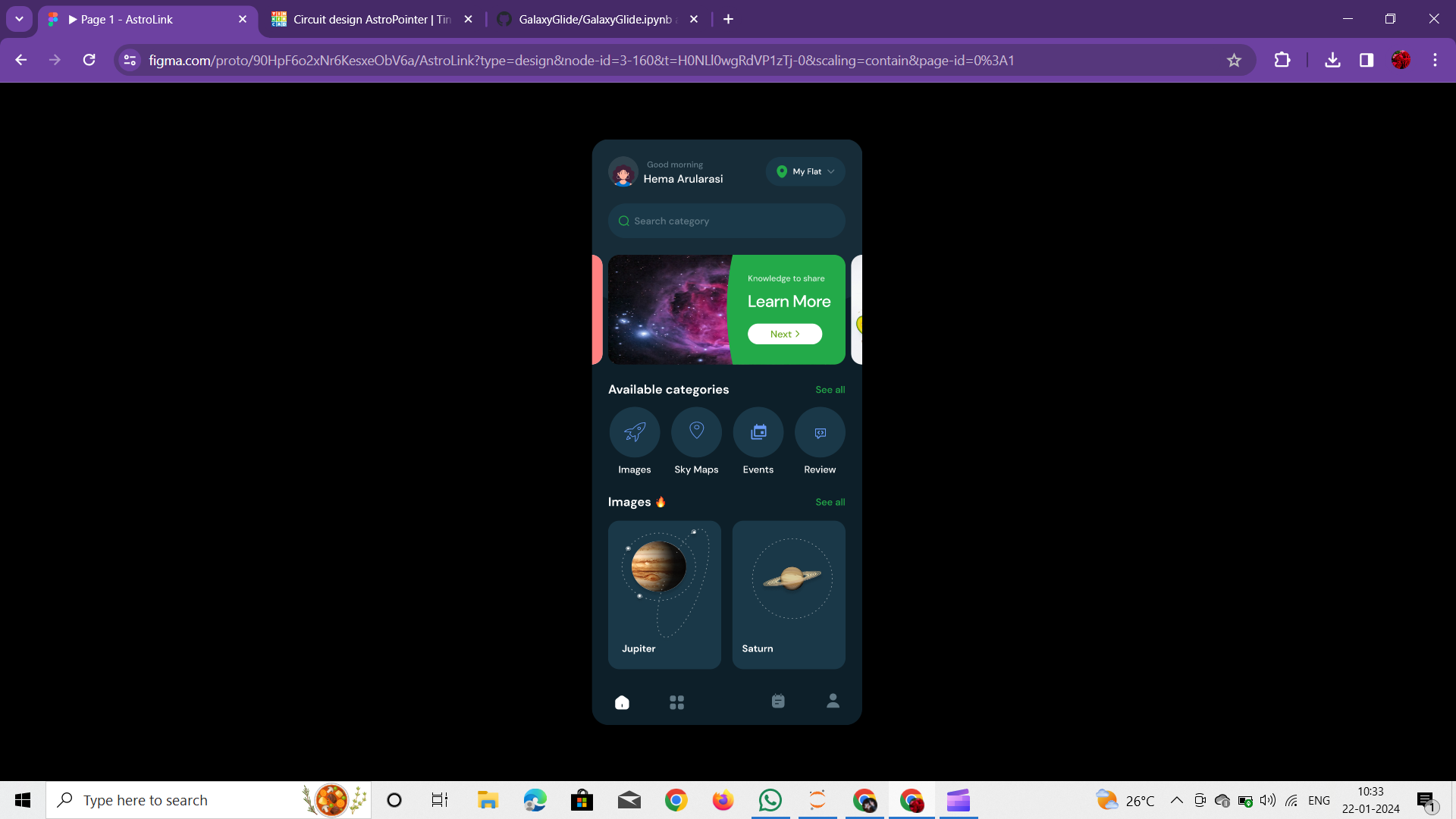
AstroLinks
-
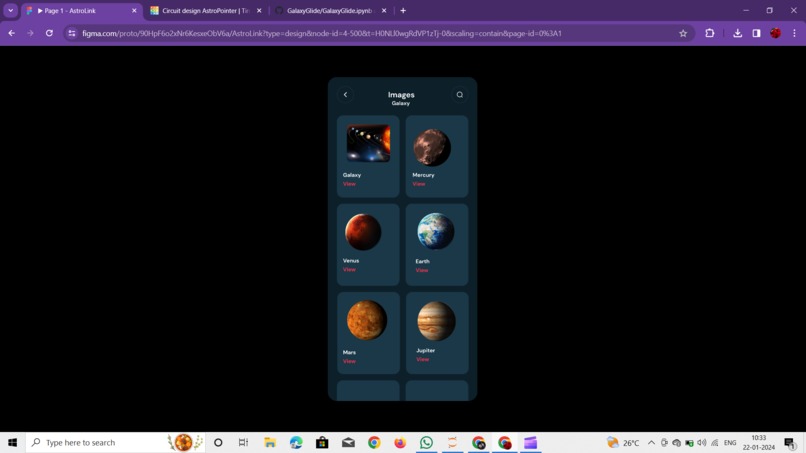
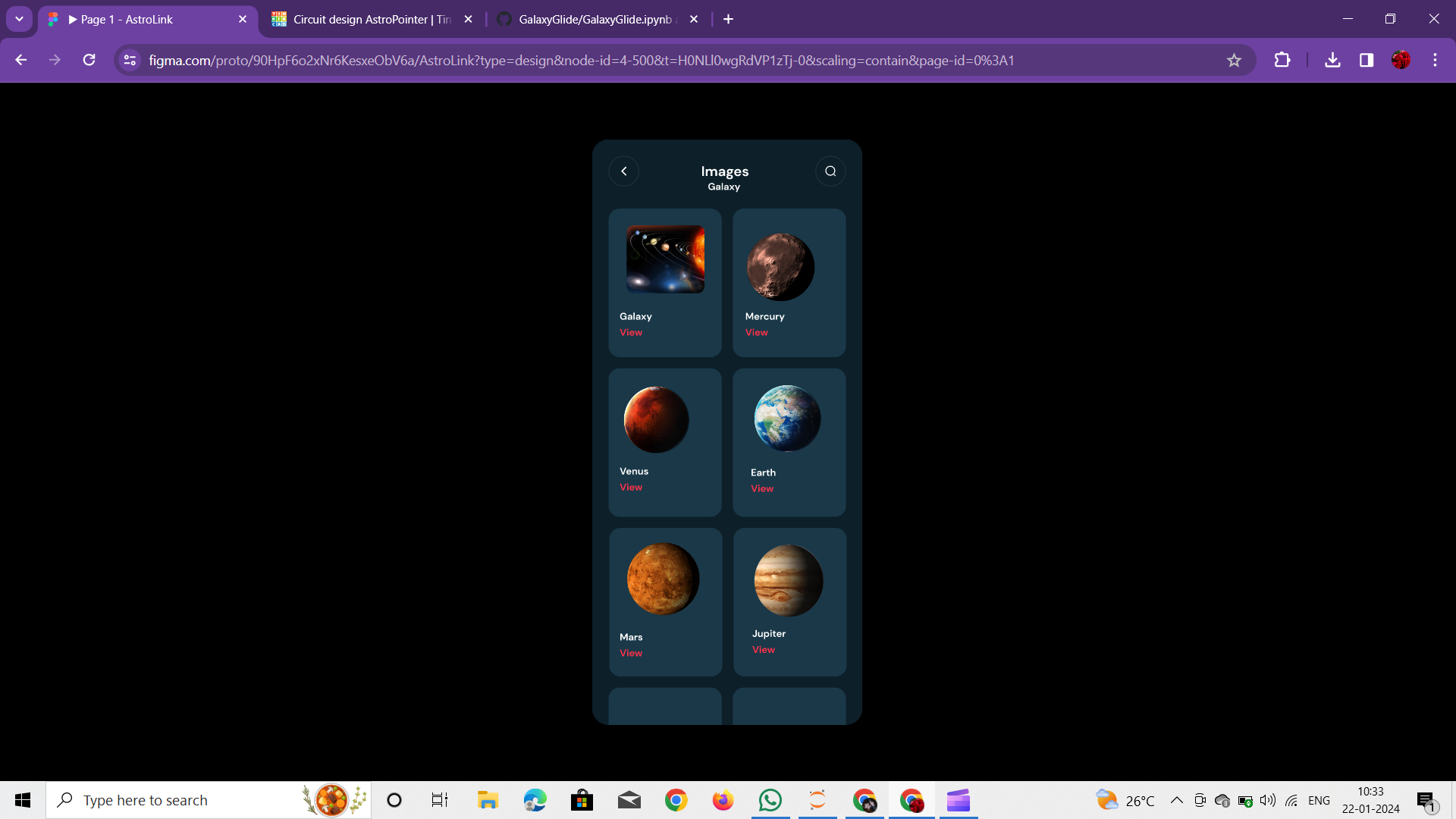
Images
-
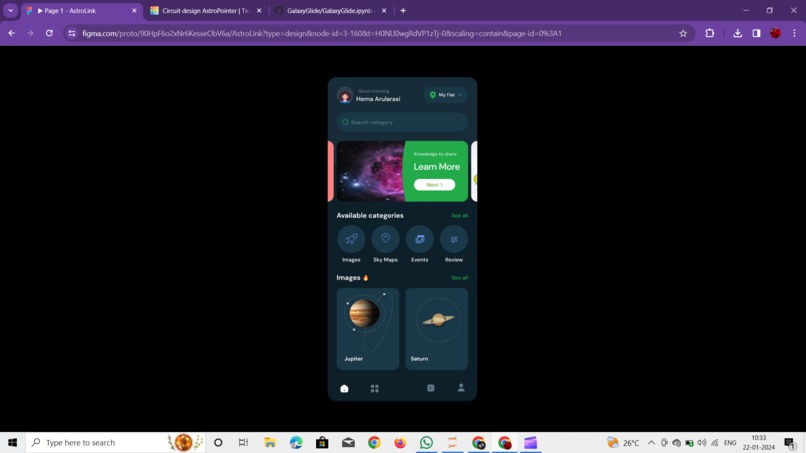
Home page
-
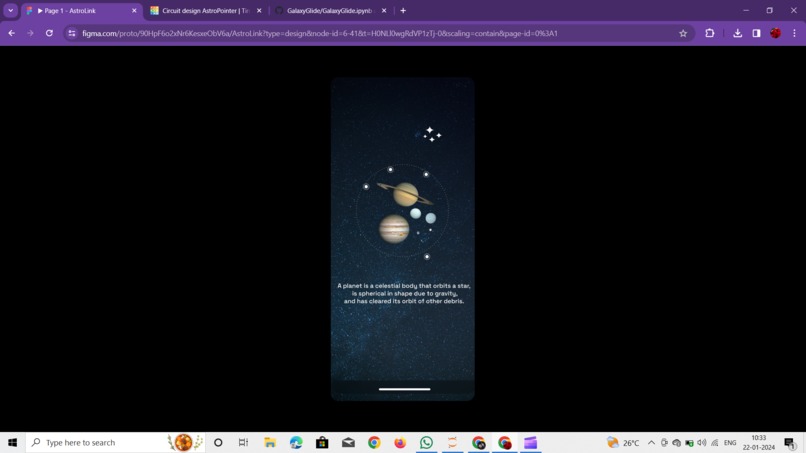
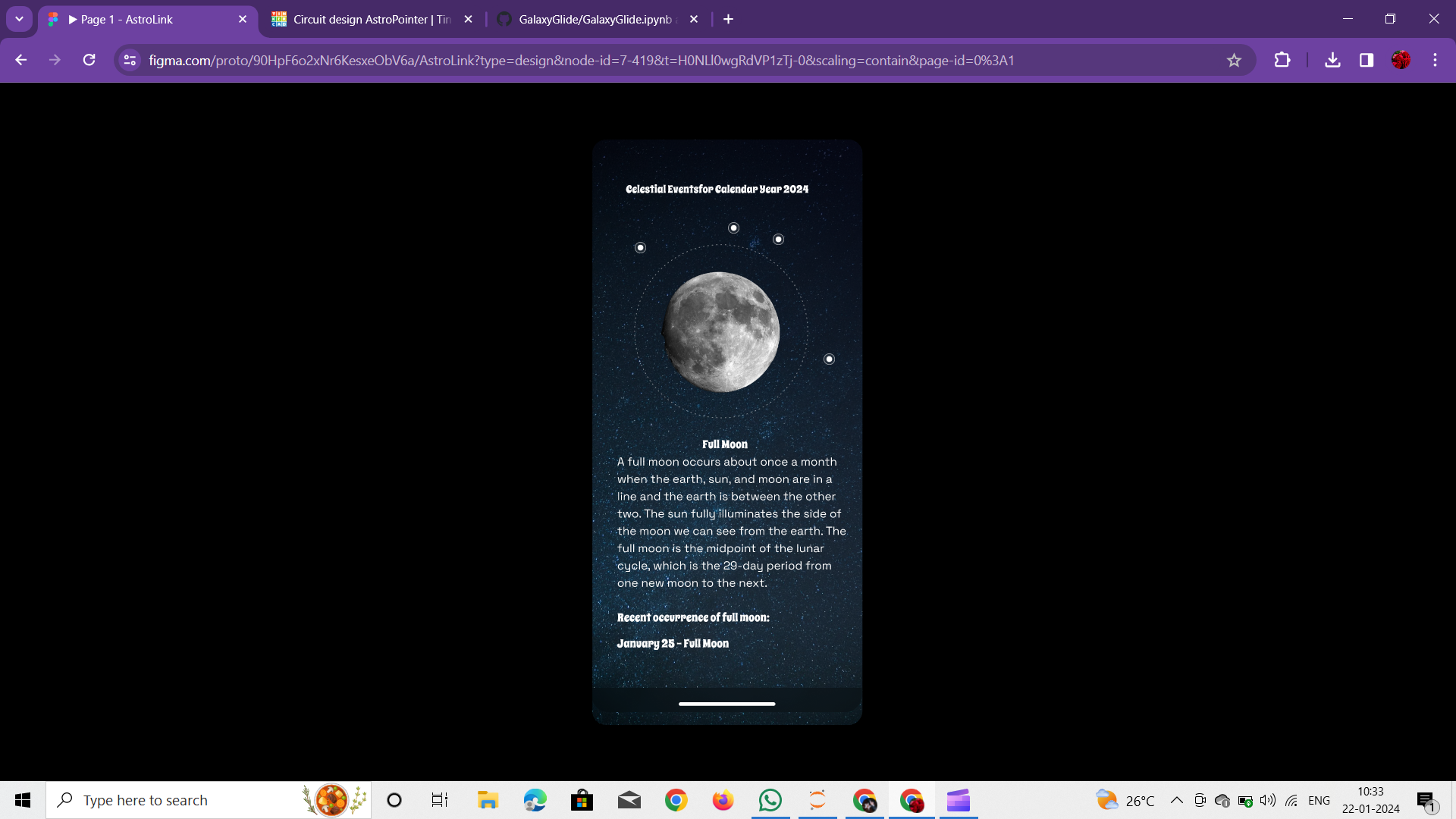
Celestial Events
-
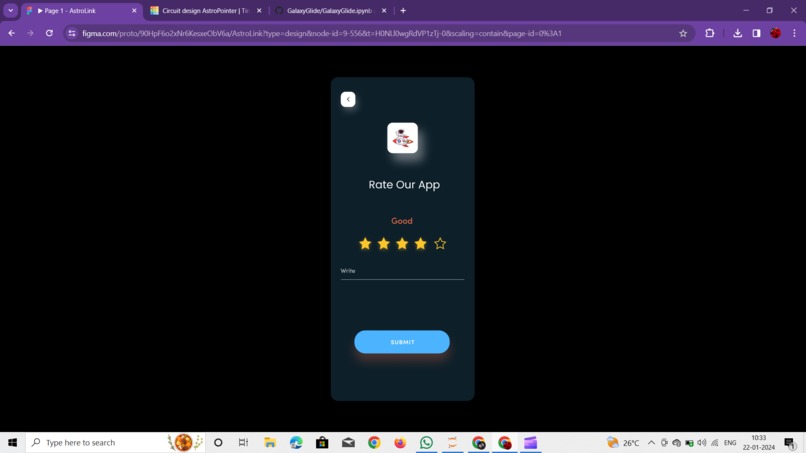
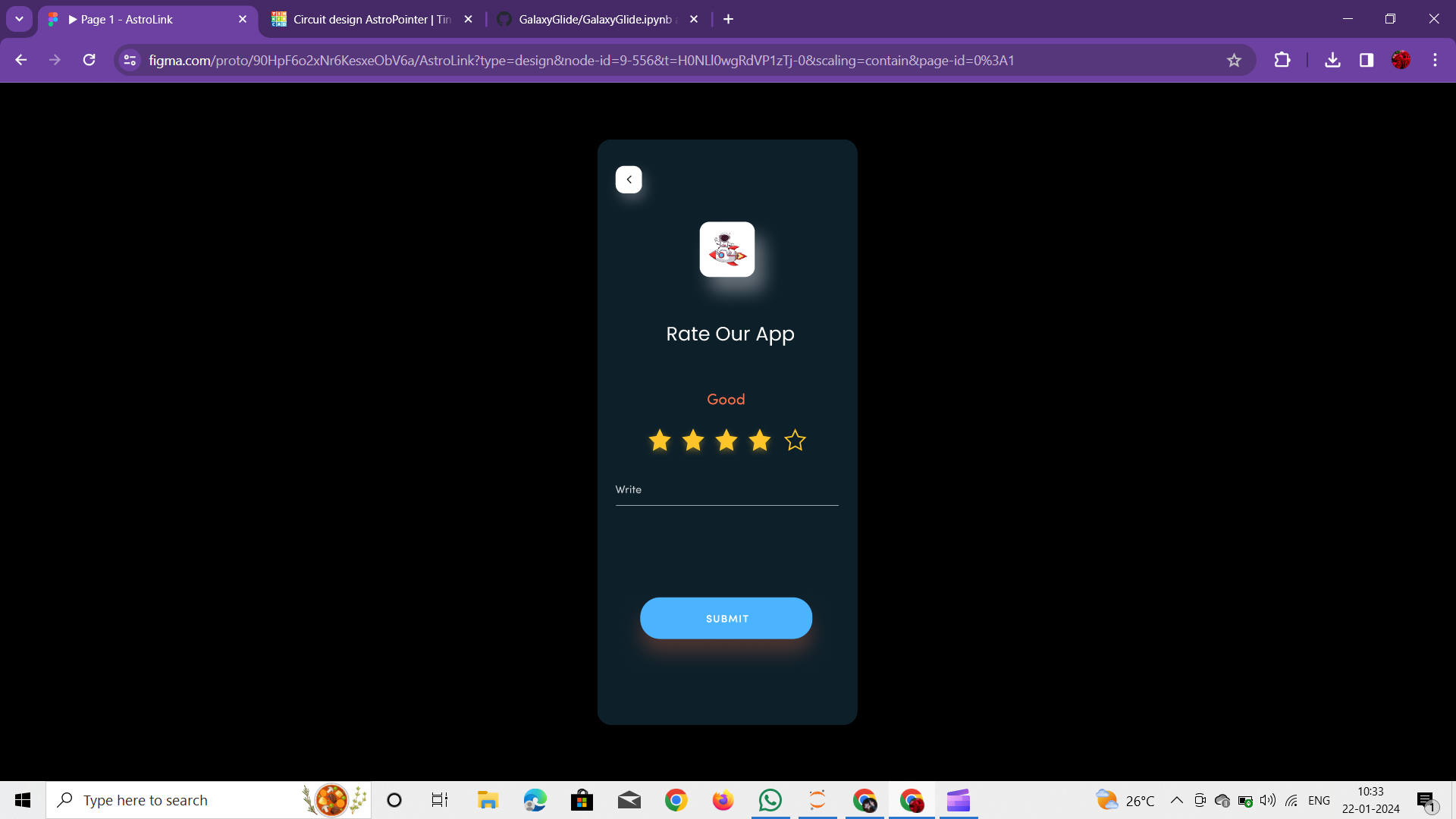
Rate us and feedback
-
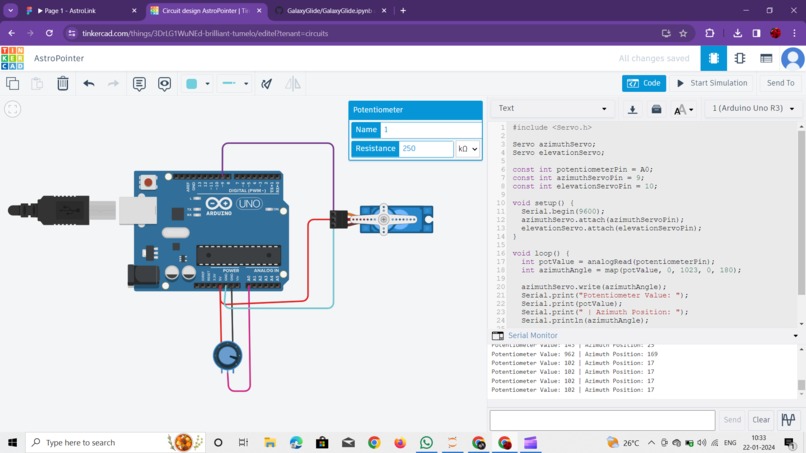
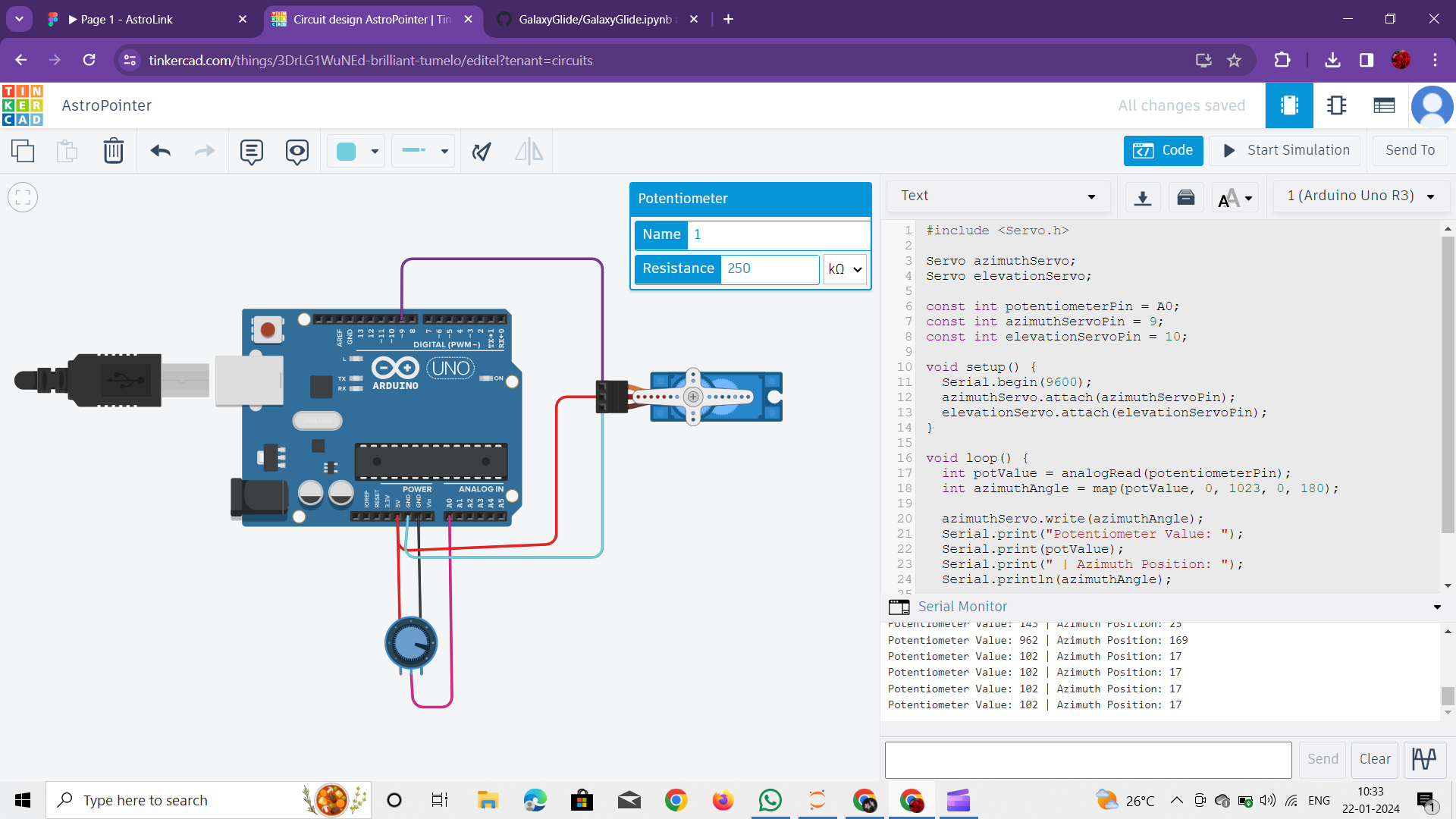
AstroPointer
-
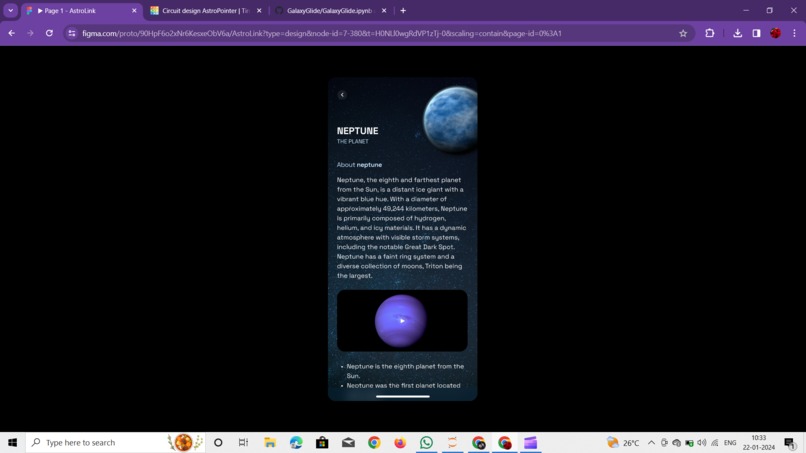
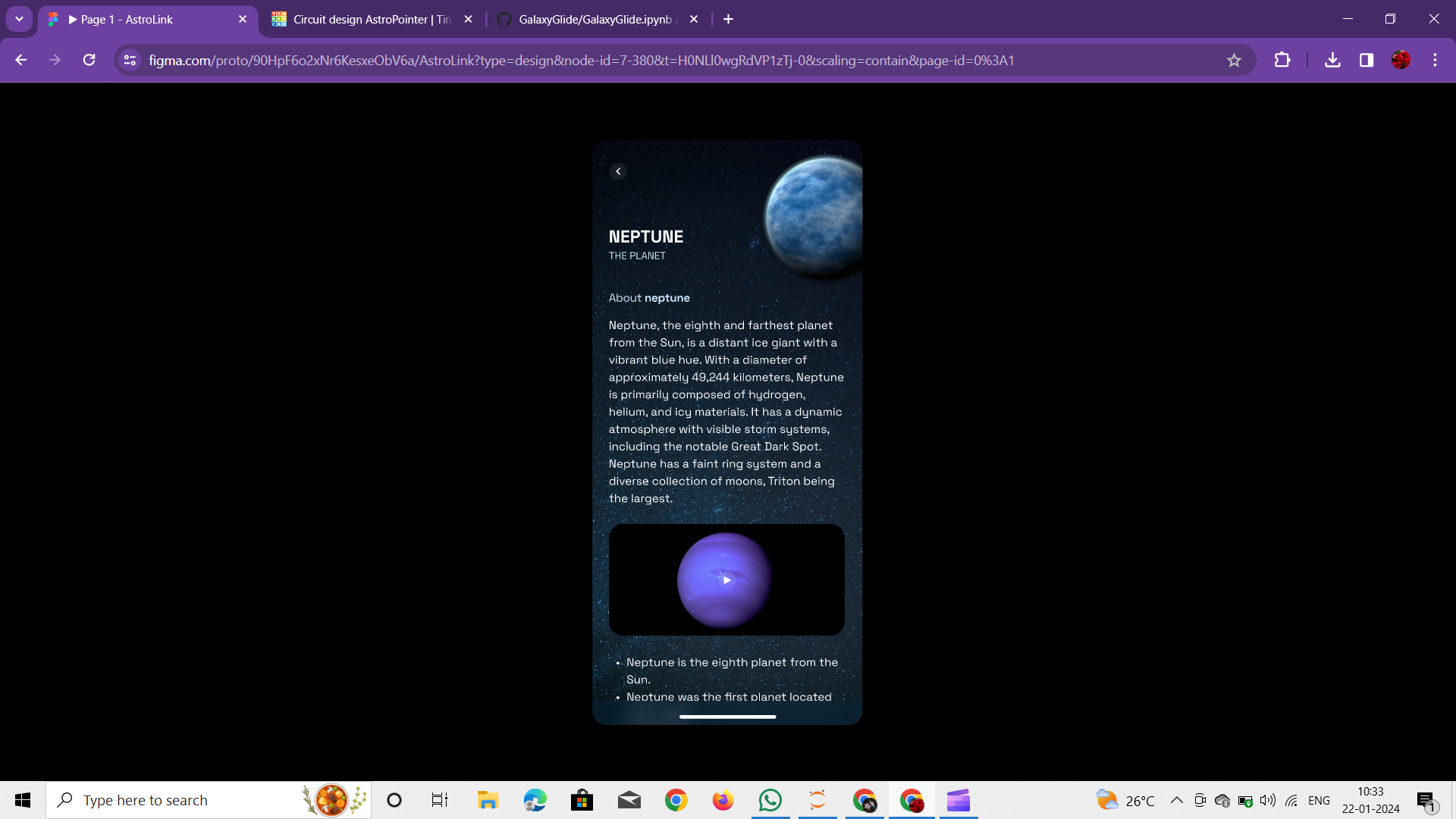
Neptune
-
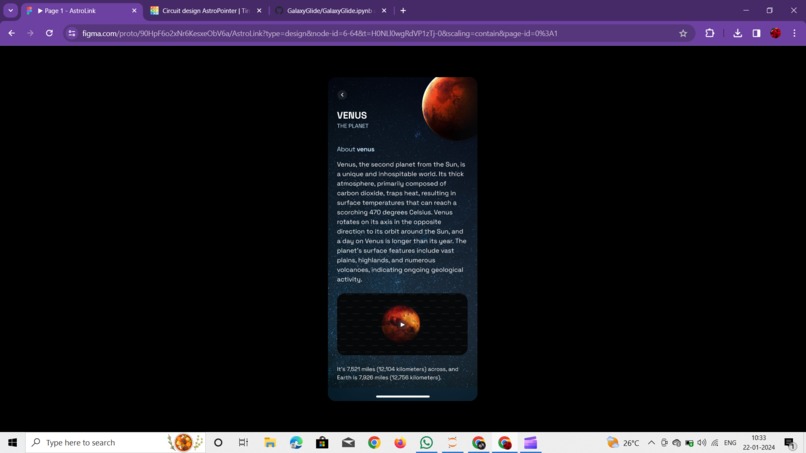
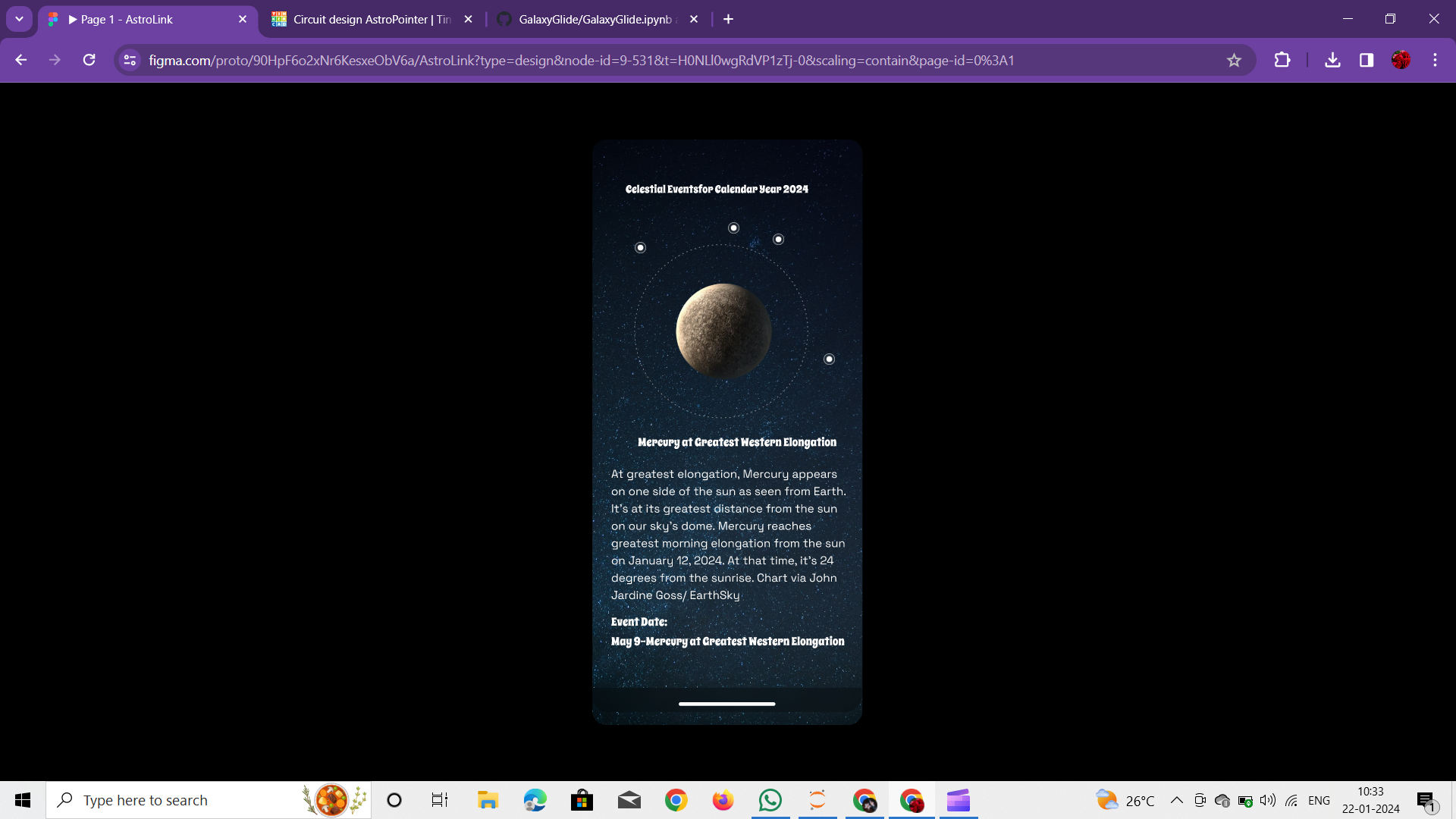
Mercury
-
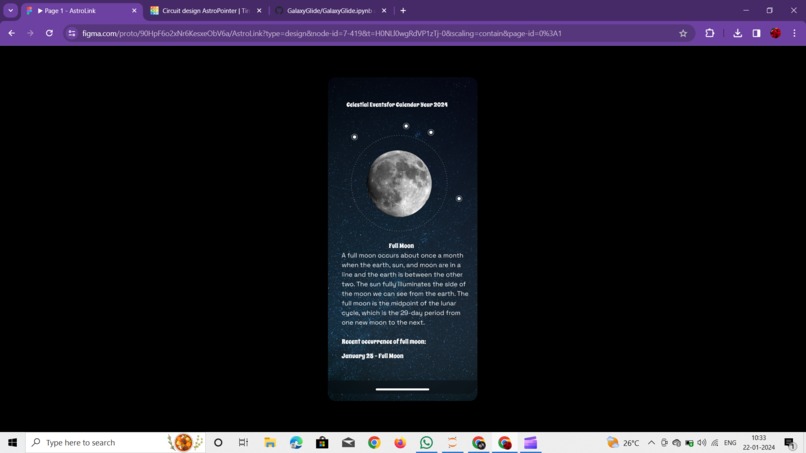
Full Moon event
-
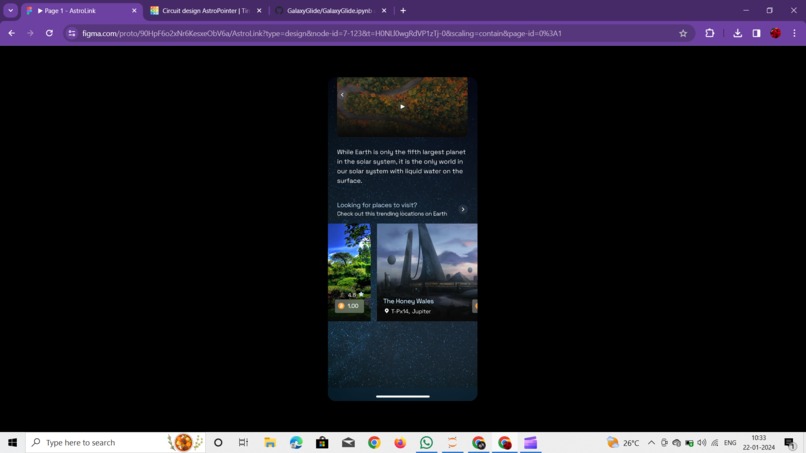
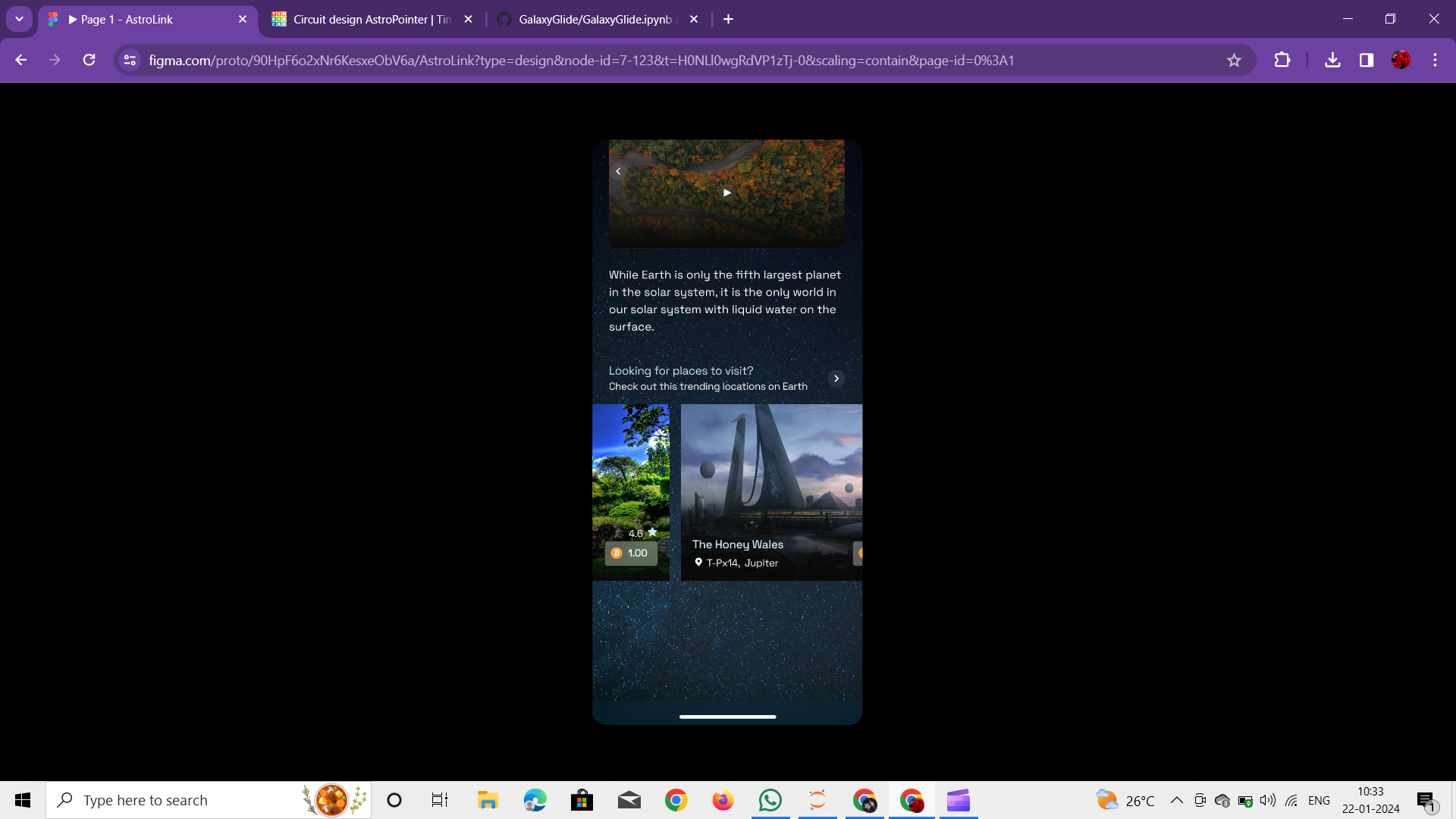
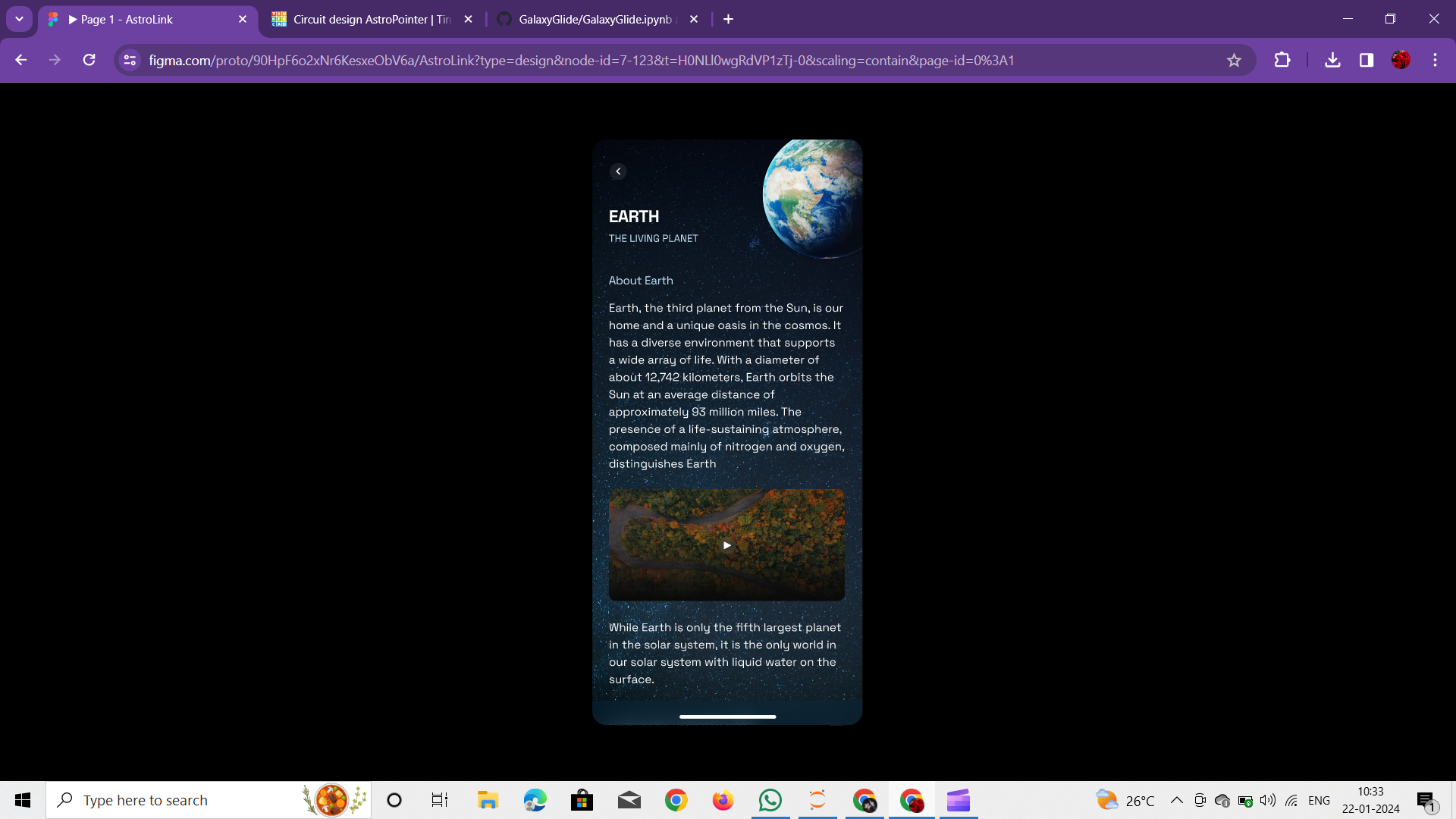
Our Home
-
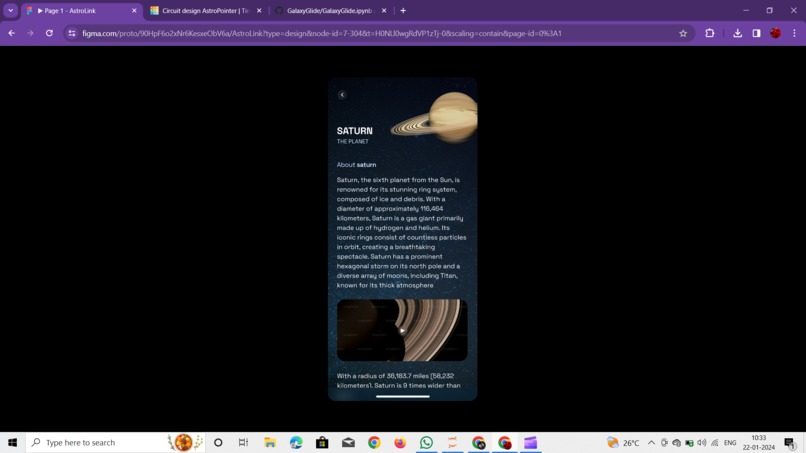
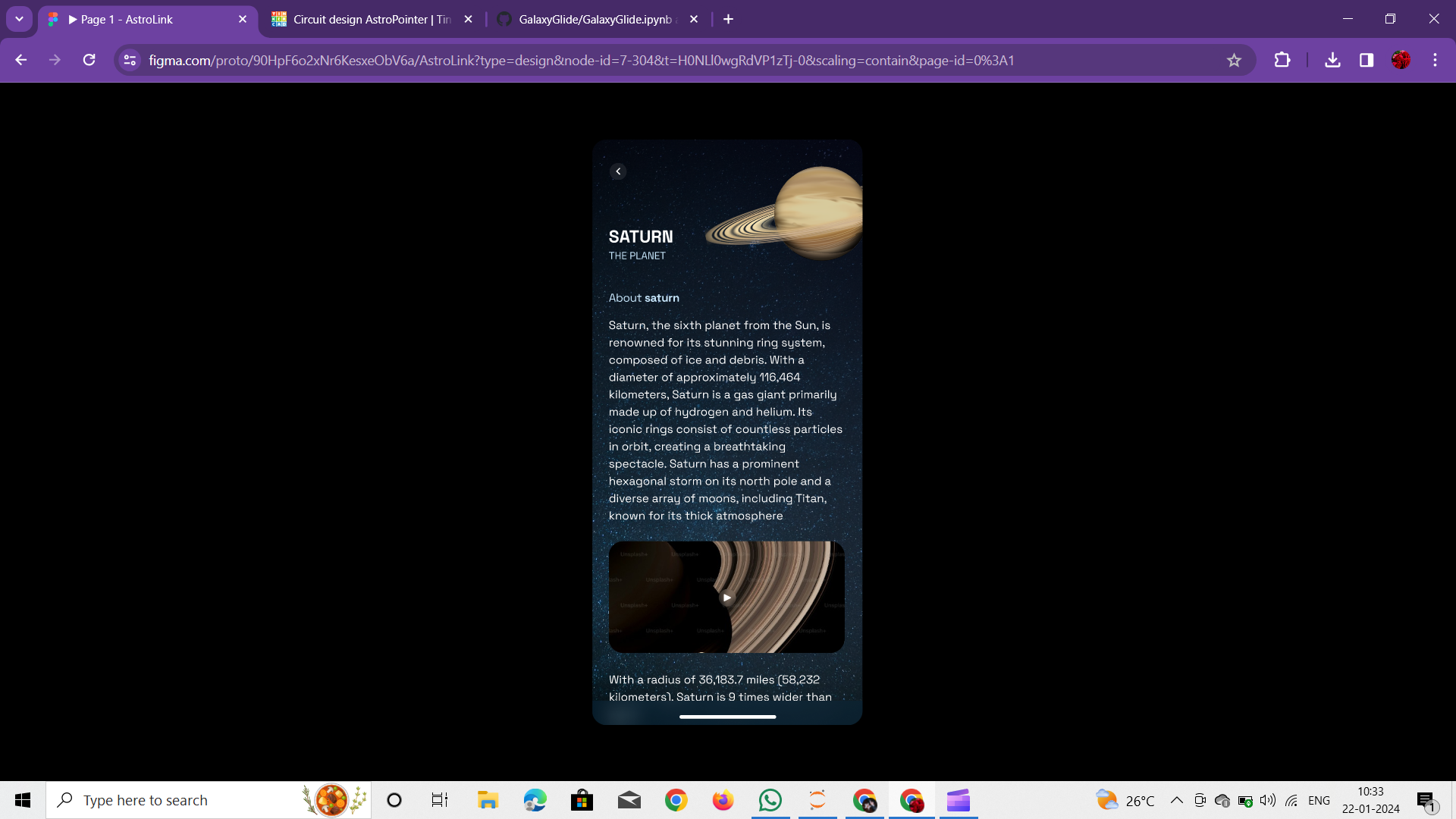
Saturn
-
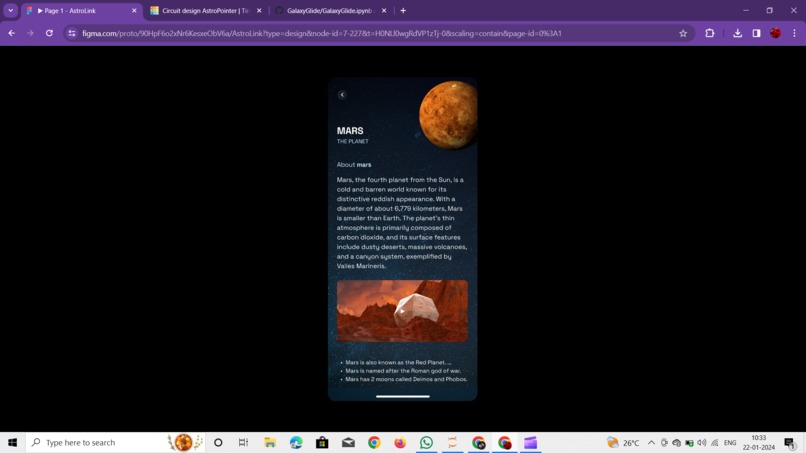
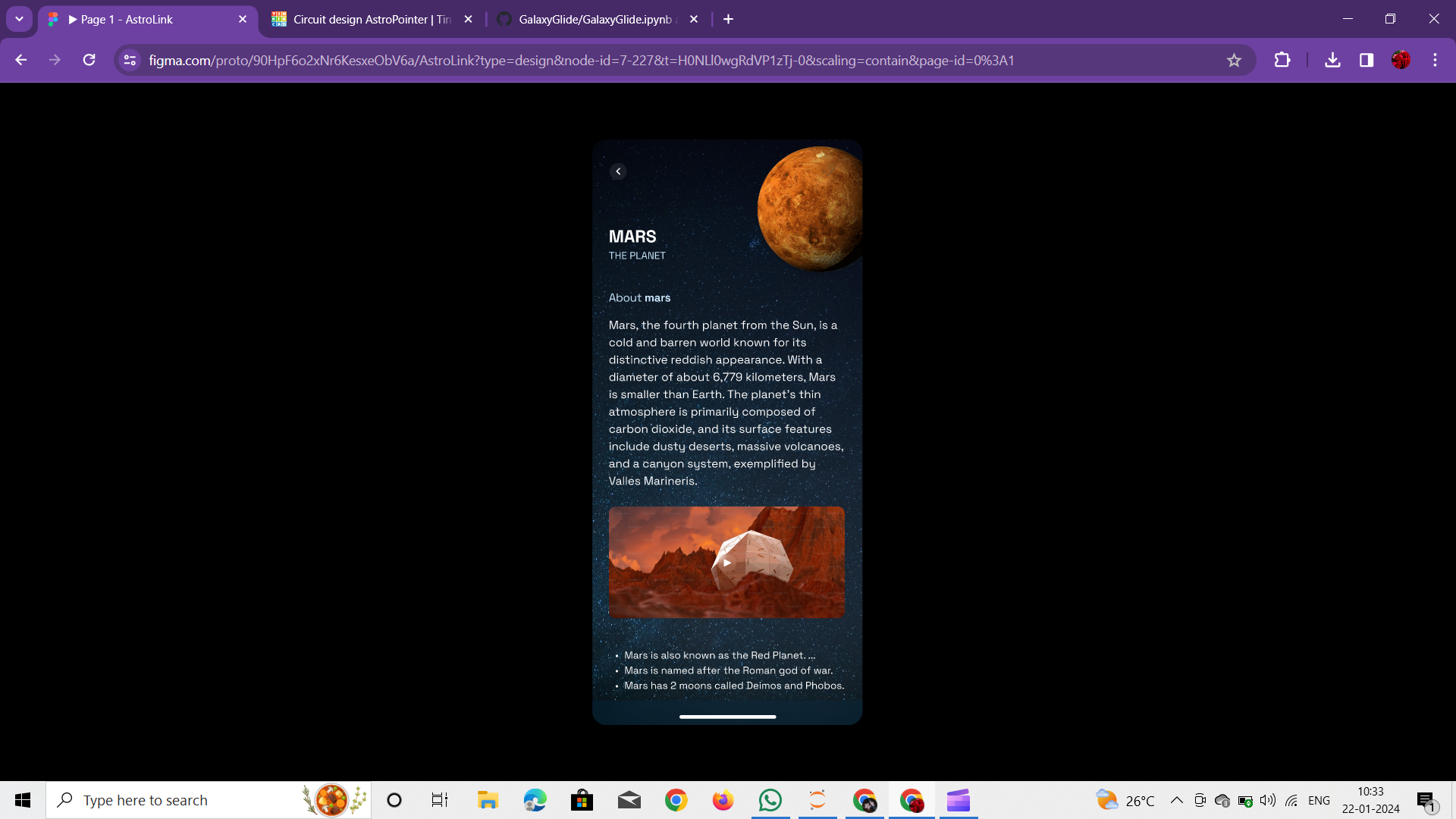
Mars
-
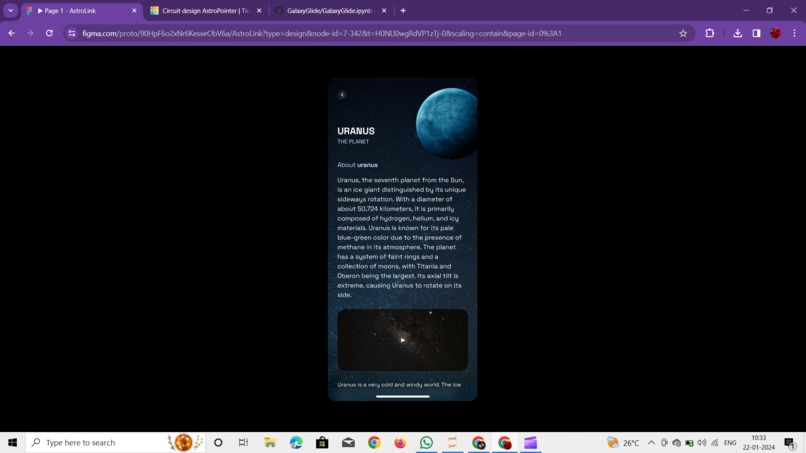
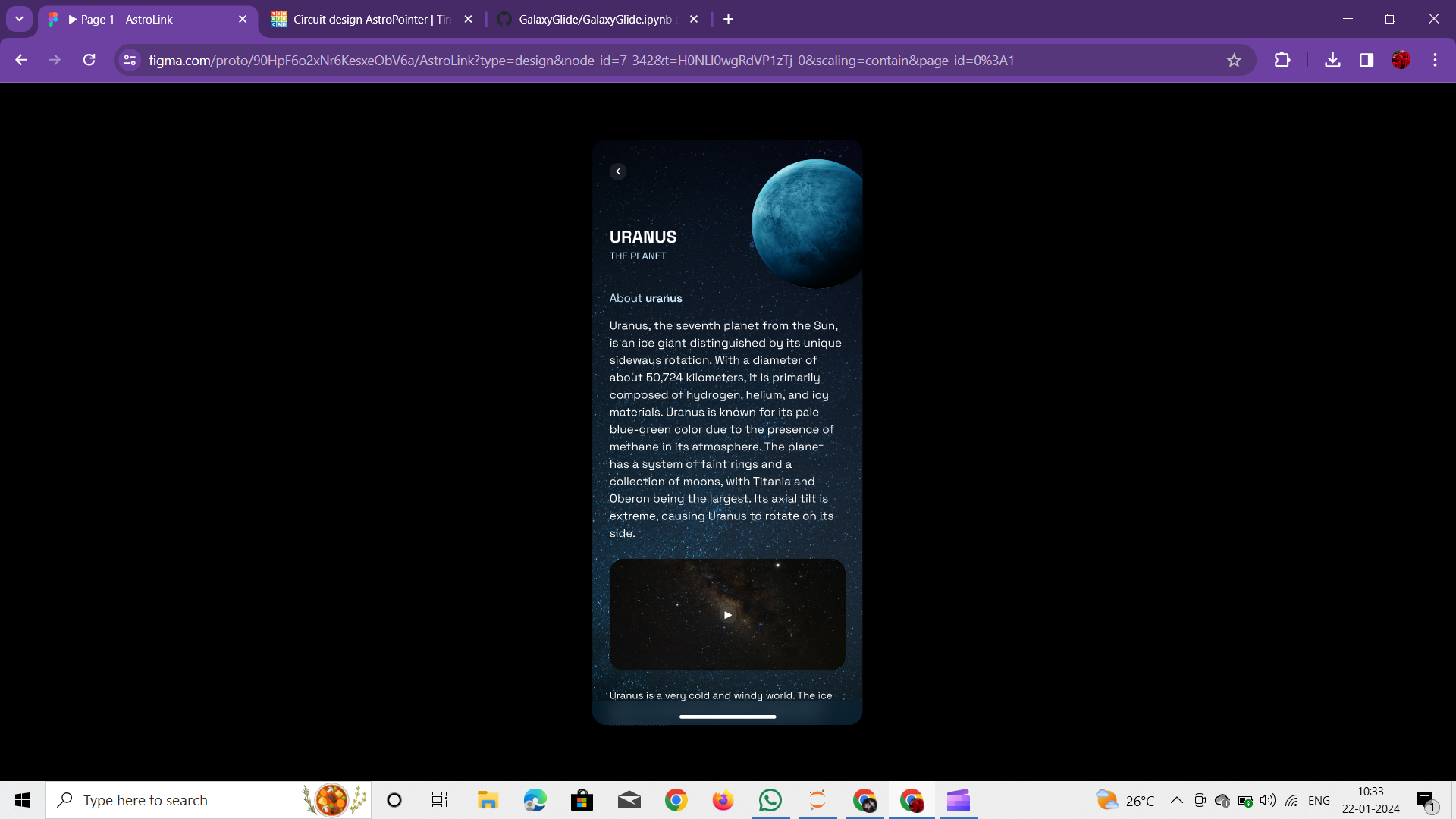
Uranus
-
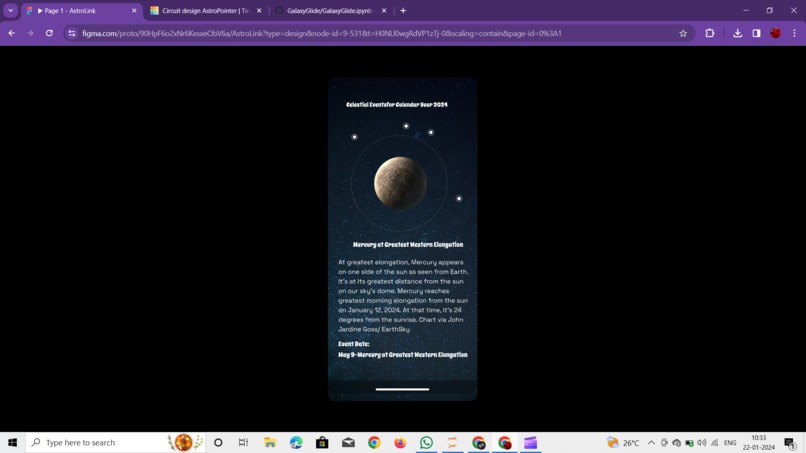
Mercury at greatest space elongation
-
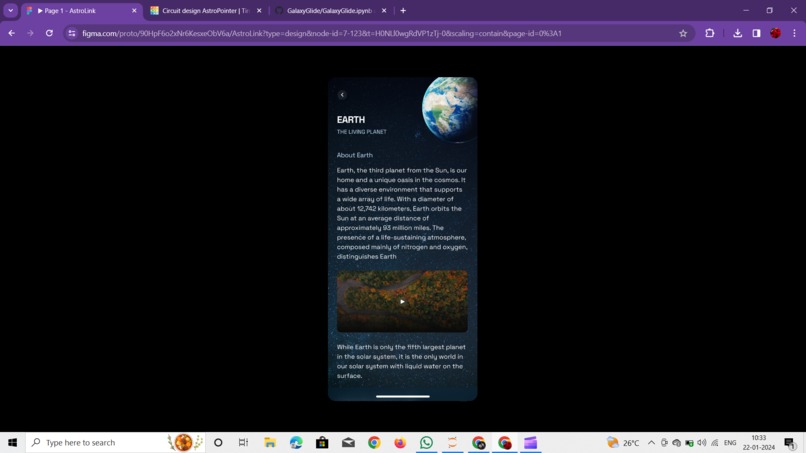
Earth
-
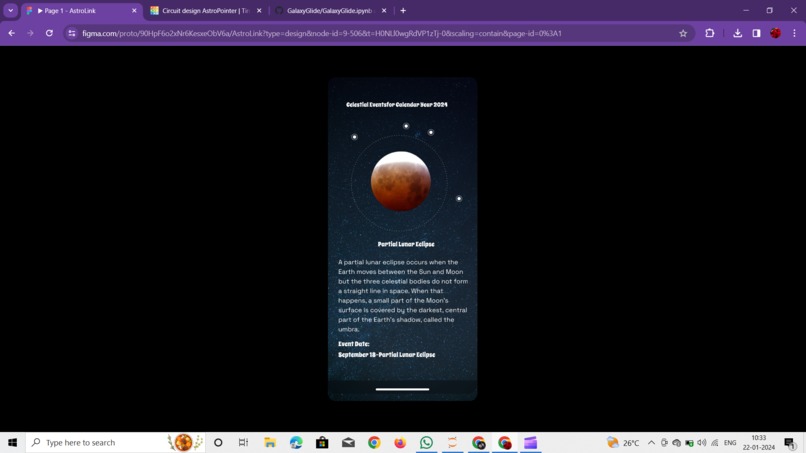
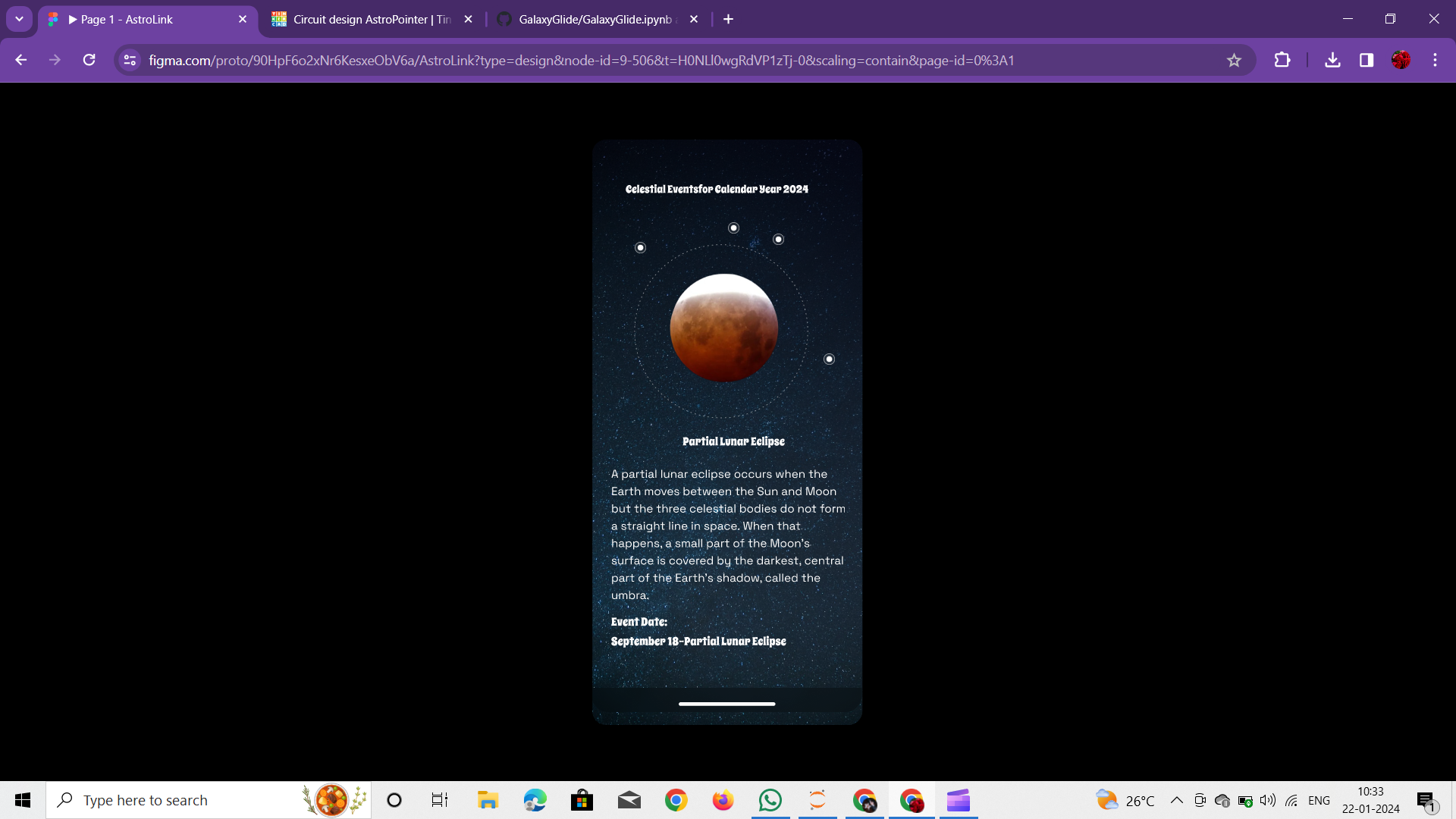
Partial Lunar Eclipse
-
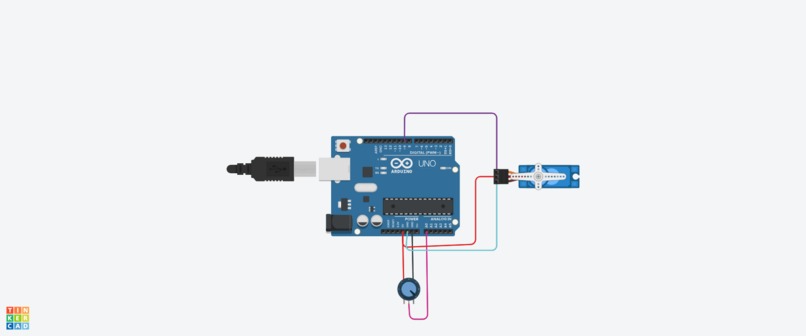
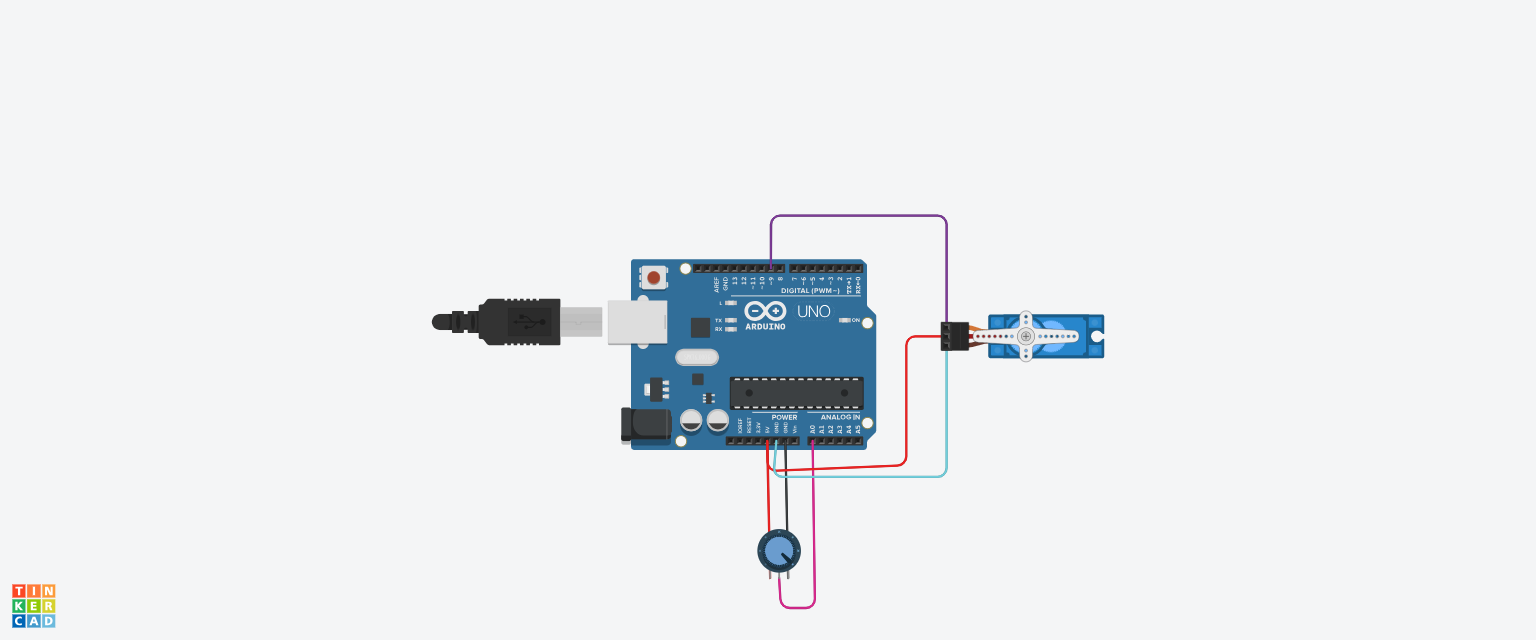
Using Arduino UNO with Potentiometer and Servo motor

Inspiration
The inspiration behind GalaxyGlide stemmed from a shared passion for astronomy and the desire to create a multifaceted platform that seamlessly integrates various aspects of space exploration. We were motivated by the idea of providing an immersive experience for astronomy enthusiasts, blending virtual observatories, real-time satellite tracking, and educational quizzes into a cohesive project.
What it does
GalaxyGlide is a comprehensive project that combines a Figma prototype named AstroLinks, an Arduino-based Satellite Tracker named AstroPointer, and a Python implementation for a space quiz known as AstroQuiz.
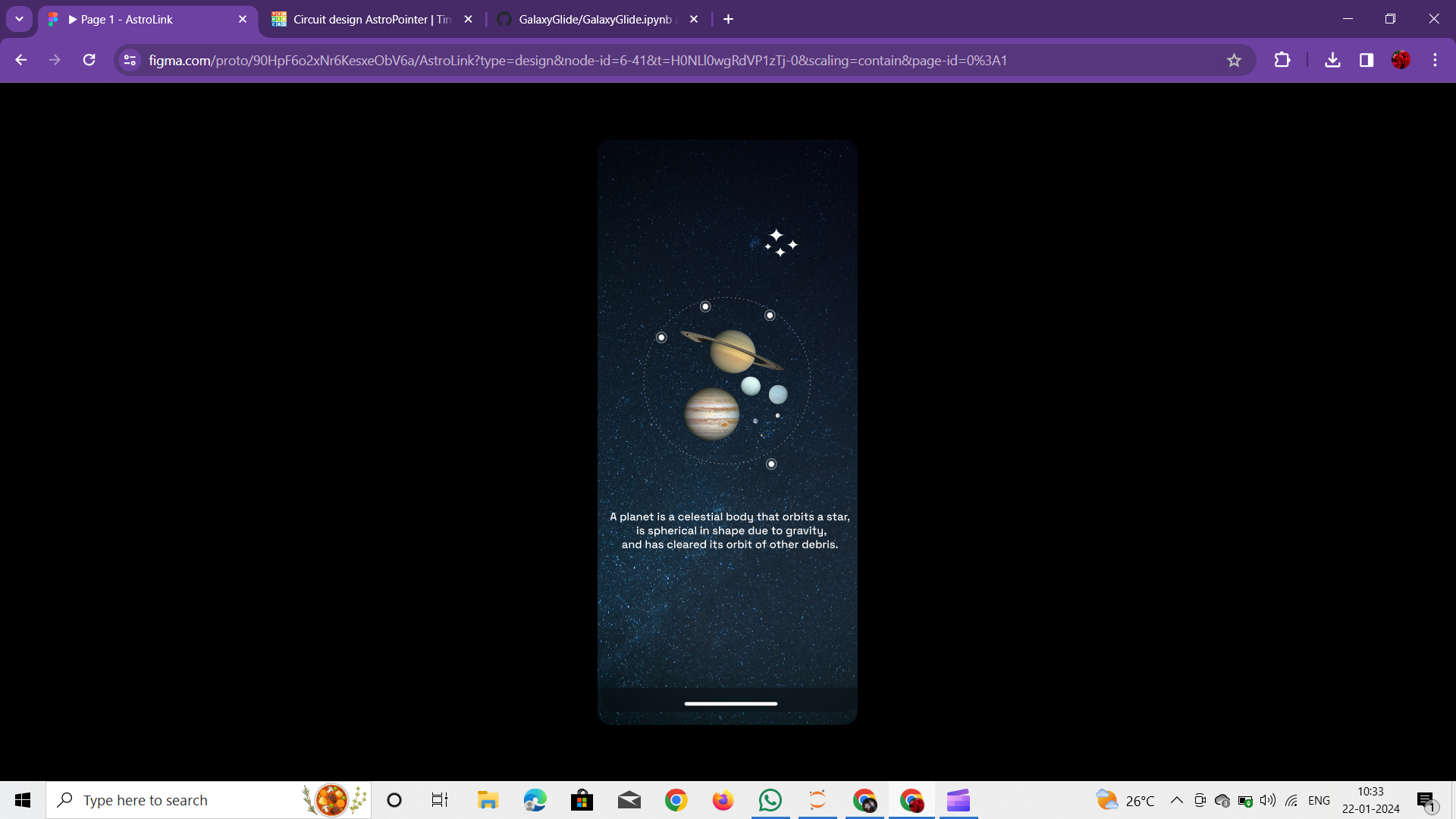
AstroLinks - Figma Prototype: It offers an interactive virtual observatory interface. Users can customize sky maps, track real-time celestial events, explore constellations, simulate telescope controls, and access additional data layers.
AstroPointer - Arduino Satellite Tracker: This component enables real-time tracking of satellites using an Arduino board, GPS module, servo motors, and other sensors. The tracker calculates satellite positions and adjusts the antenna's azimuth and elevation angles for accurate tracking.
AstroQuiz - Python Implementation: An educational space quiz implemented in Python, designed to enhance users' knowledge about various astronomical topics through a set of 10 thought-provoking questions.
How we built it
AstroLinks - Figma Prototype: Designed the Figma prototype by collaborating on user interface elements, ensuring a clean and intuitive design. Integrated customizable features, real-time event tracking, and educational content.
AstroPointer - Arduino Satellite Tracker: Assembled hardware components including Arduino Uno, GPS module, servo motors, and a magnetometer. Developed the software to read GPS data, calculate satellite positions, and control servo motors. Obtained satellite data from NORAD and implemented algorithms for accurate tracking.
AstroQuiz - Python Implementation: Created a Python script for the space quiz, incorporating questions covering a broad range of astronomical topics. Ensured an engaging and educational experience for users.
Challenges we ran into
Integration Complexity: Combining three diverse components—Figma design, Arduino hardware, and Python code—posed challenges in terms of seamless integration. Coordinating the functionalities and ensuring a smooth user experience required meticulous planning.
Real-Time Tracking Precision: Achieving precise real-time satellite tracking with the Arduino-based Satellite Tracker demanded continuous refinement of algorithms and calibration to overcome environmental variables.
Educational Content Balancing: Striking a balance between challenging and accessible questions in the space quiz was a creative challenge, aiming to cater to users with varying levels of astronomical knowledge.
Accomplishments that we're proud of
Holistic Platform: Successfully creating a holistic platform that caters to diverse interests within astronomy, from virtual observatories to real-time tracking and educational quizzes.
User-Centric Design: Developing an interface that prioritizes user experience, making astronomy accessible and enjoyable for both beginners and seasoned enthusiasts.
Functional Hardware: Achieving accurate satellite tracking through the Arduino-based Satellite Tracker, providing a tangible and interactive element to the project.
What we learned
Interdisciplinary Collaboration: Collaborating across design, hardware, and software disciplines enhanced our understanding of each other's domains, fostering a more cohesive project development process.
Real-Time Systems: Developing a real-time satellite tracking system with Arduino provided insights into the challenges and nuances of creating responsive and dynamic applications.
User Engagement: Crafting engaging and educational content for the space quiz improved our ability to create user-centric experiences that cater to different knowledge levels.
What's next for GalaxyGlide
Enhanced Features: Implementing additional features such as automatic satellite database updates, remote control capabilities, and more advanced tracking functions for the Arduino-based Satellite Tracker.
Community Interaction: Expanding the community features within the virtual observatory to encourage users to share their experiences, discoveries, and images.
Extended Educational Content: Growing the space quiz with periodic updates, more questions, and incorporating user-generated quiz content to foster continuous learning.
GalaxyGlide is not just a project; it's an ongoing exploration into the vast realm of possibilities within astronomy and space exploration, driven by the passion to inspire and educate.


Log in or sign up for Devpost to join the conversation.