Inspiration
Ever since we were young, we look up at the night sky and wonder what's out there, what more there is that we've yet to explore. We wanted to enable people to reach the stars no matter where they come from — even if they'll never become an astronaut in their lives, or even see or hear. While we haven't built a rocketship, VR and accessible web technologies get about as close as you can from the ground.
What it does
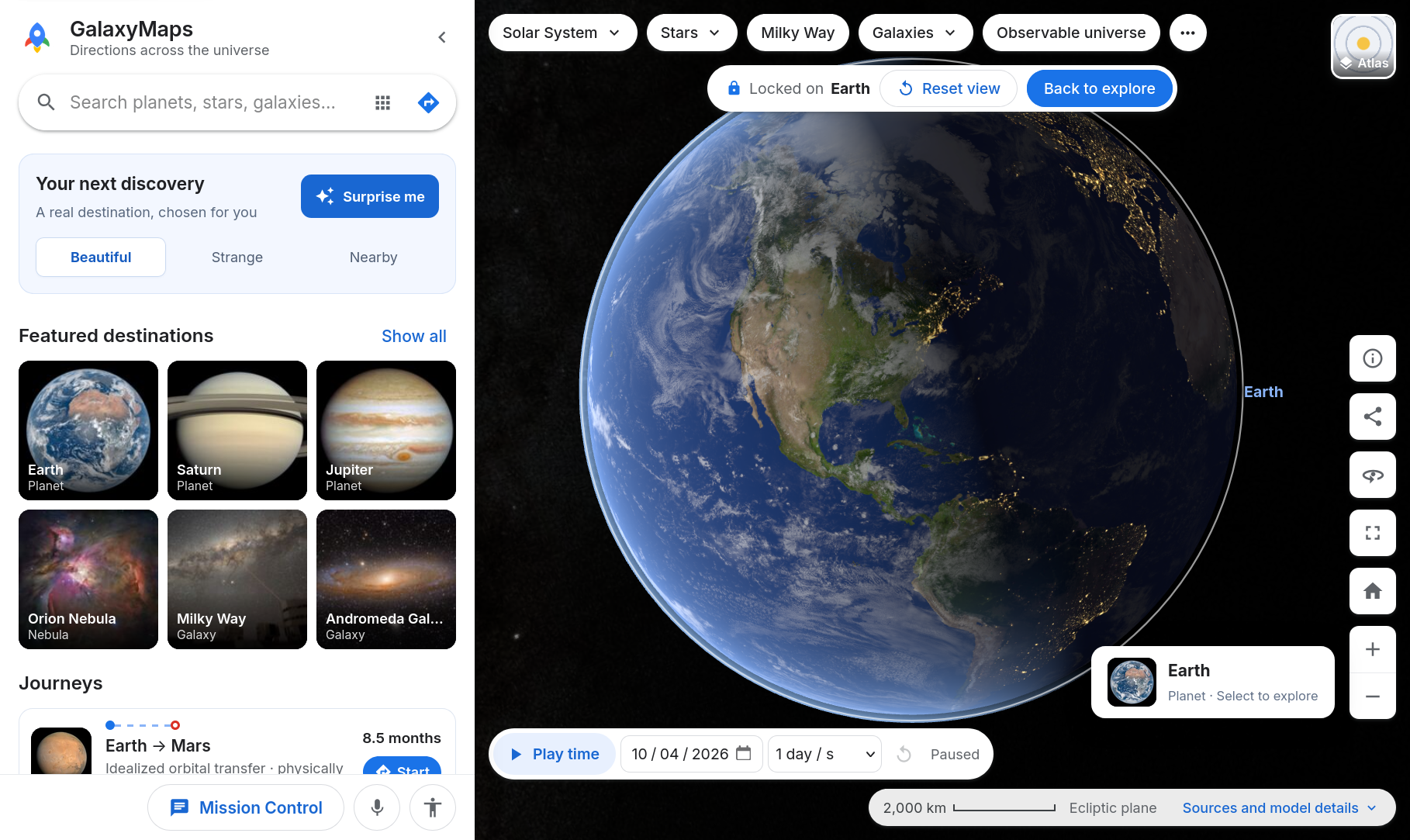
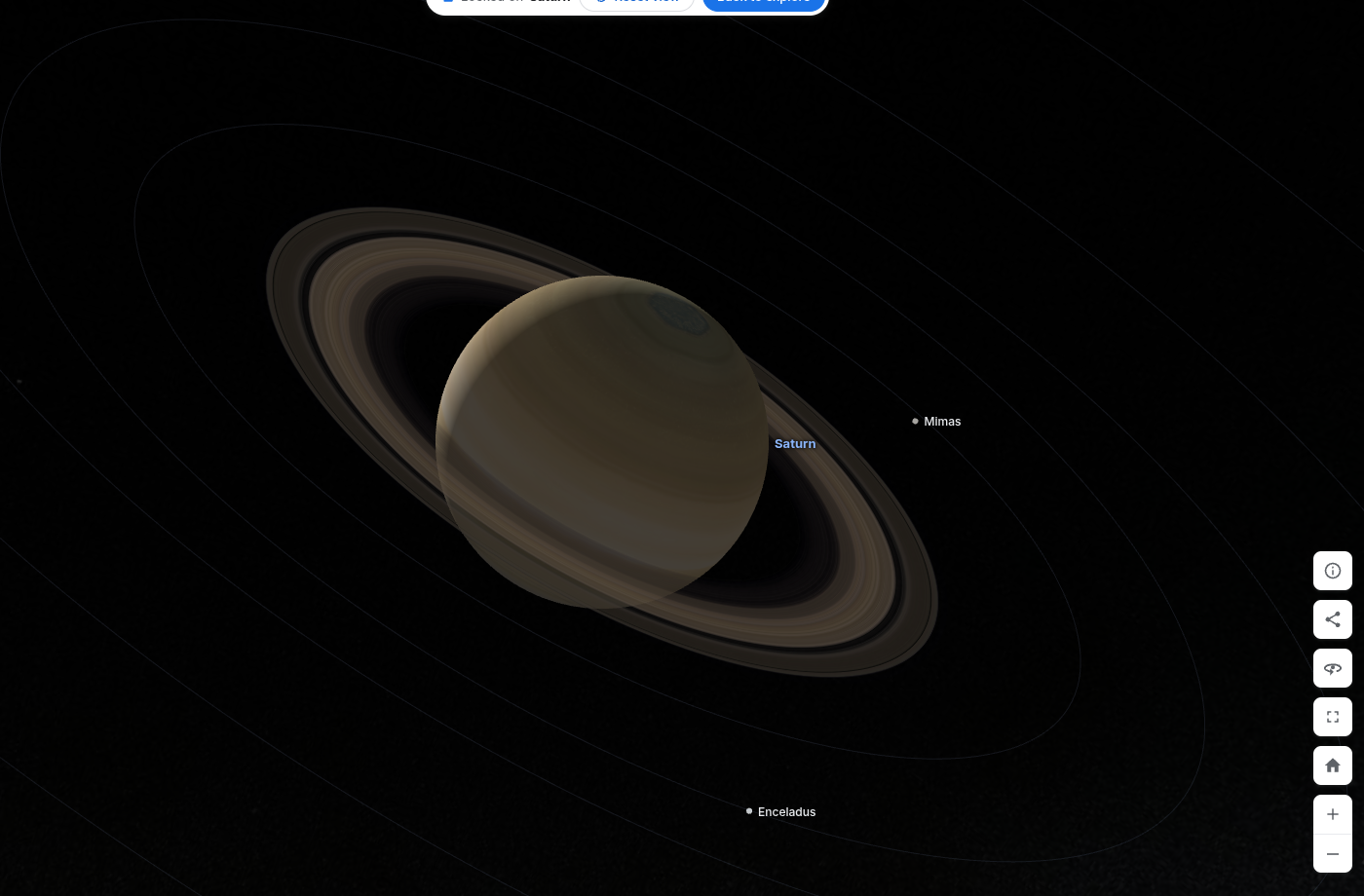
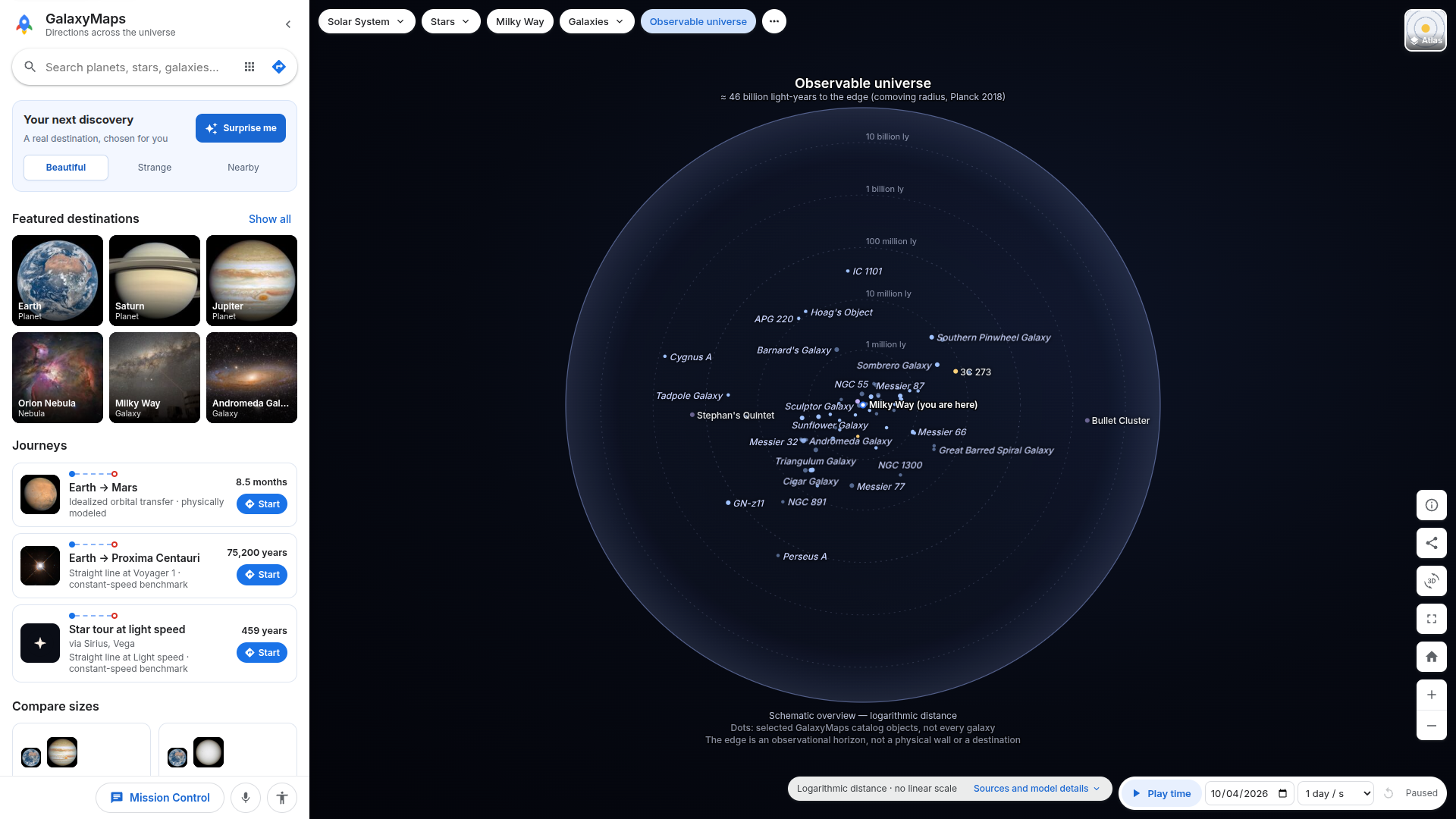
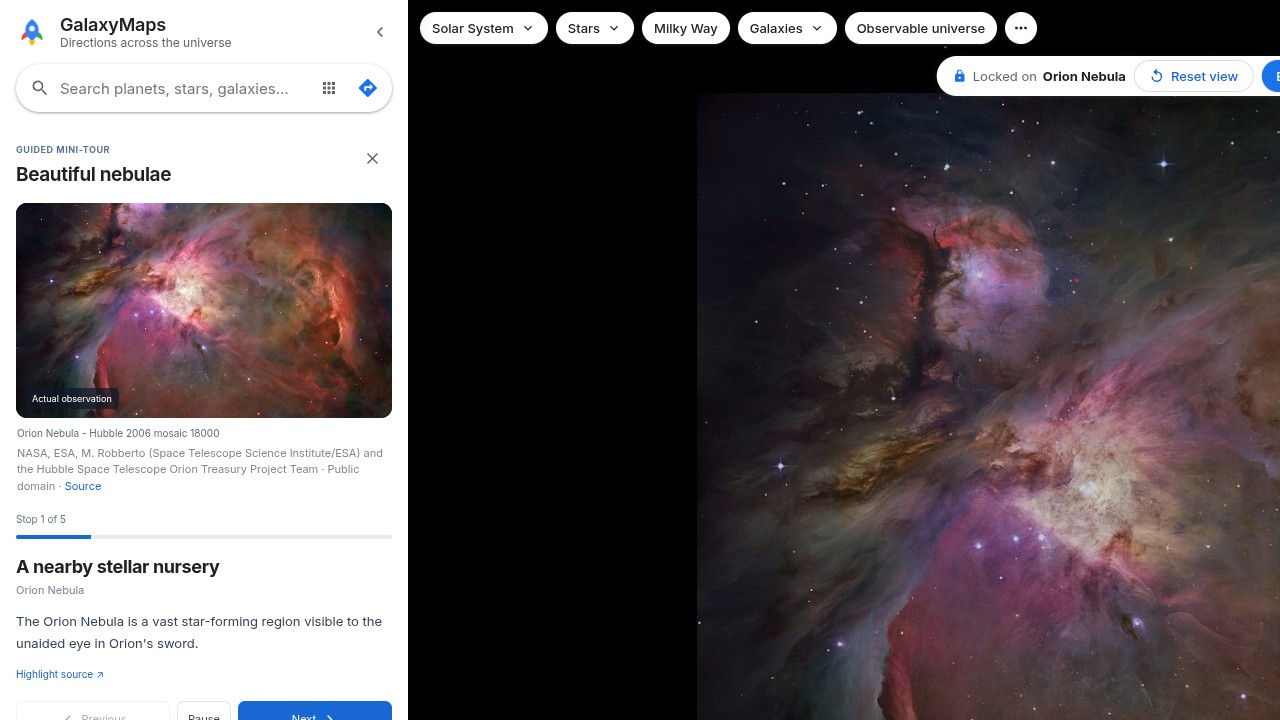
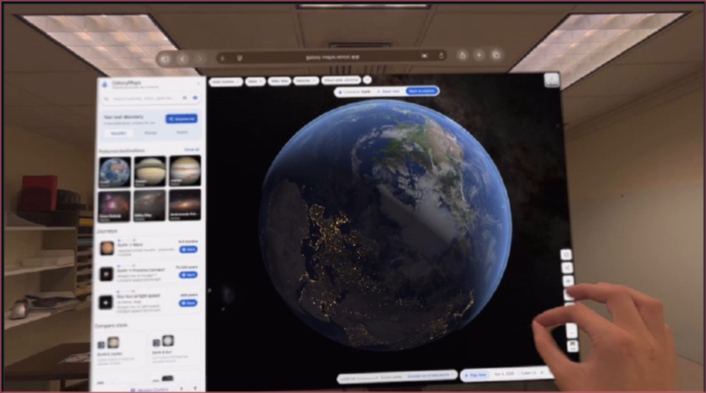
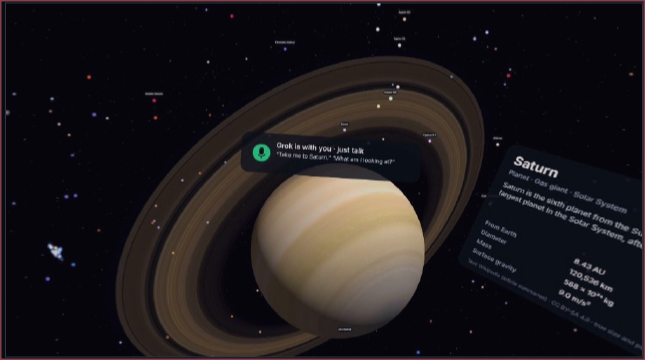
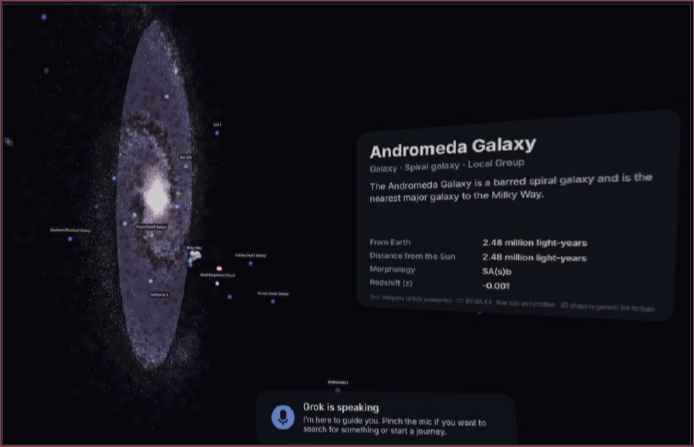
Galaxy Maps is a continuously zoomable 3D space atlas with a map-app interface. Search for a planet, star, nebula or galaxy, open an image-led destination card, lock the camera onto it and orbit it, and even ask for directions. Plus, thanks to Grok, the educational benefits of Galaxy Maps never end. You can ask unlimited questions about the contents of the universe, like history and science. With the rich pedagogical capabilities of AI and our distinctive journey feature, a trip to space is not time wasted.
Galaxy Maps is accessible in both 2D, via galaxies.wiki, and VR, with any WebXR-capable headset.
How we built it
Galaxy Maps is React and TypeScript, with Zustand for state, a custom Three.js map, and a small Express server that keeps the xAI key off the client. Catalog positions, JPL Horizons ephemerides, and a 109k-star HYG field ship with the app, so search, directions, and playback work without a network. The interesting part is the coordinate system: every object is float64 kilometres in the Sun-centered ICRF frame, then projected relative to the camera each frame, so one view can span Earth to the observable universe without float32 collapse. Route math lives in unit-tested TypeScript, separate from the renderer — planet pairs get a labeled Hohmann transfer, everything else a straight-line cruise at light speed or Voyager 1. Grok can explain with outside knowledge, but it can only move the map through validated tools that return the app’s own distances and IDs. The same catalog and renderer drop into WebXR, so the browser and an Apple Vision Pro session are one engine, not two apps.
Throughout the entire development process, our workflow was supplemented by Cursor and Grok. We carefully steered it towards the infrastructure and implementation we were looking for while saving lots of time with a team of agents.
Challenges we ran into
Most of the useful debugging happened after we put the headset on. A desktop inspector can’t see an immersive session, so bugs that looked fine in the browser only showed up as a stuck view, a missed gesture, or the mic doing the wrong thing. We spent a lot of time on enter and exit: if startup failed partway through, the headset could stay in a dead session until we learned to tear that down and hand the flat map back cleanly. Voice and hands fought each other at first — the same motion that flew you somewhere also tried to talk to Grok, and a mic attached to the world drifted out of sight when you turned. Always-listening with a wake word and a small status pill that stays in front of you fixed that. Performance was the same kind of problem: work that was invisible on a monitor became stutter in stereo, so we moved the heavy lifting off the frame and learned to debug from what we could see in the headset, not from a console. Having hundreds of unit tests was also a big help in making sure our changes worked towards a more reliable product.
Accomplishments that we're proud of
We are especially proud of the scale of the experience. Within the headset or via the website, it feels like the entire universe is at your fingertips. This is in large part due to the deep technical work we did with the coordinate system that enabled such precise positioning.
We're also very proud of how Grok enables such intuitive navigation of the immersive view. It feels like you're in a live conversation with a true space expert that can also guide you through the cosmos with tool calls that actually change the environment.
What we learned
We learned a lot about how to strike the right balance between deep engineering consideration in the weeds of a project with agentic AI integration. Through strong guardrails like our extensive unit tests and extremely detailed, human-verified and developed prompts, we ensured that we understood what the AI was working on and that it was making good design choices from the start.
We also learned a lot about VR APIs and all that is possible within the third dimensions.
What's next for Galaxy Maps
We hope to expand the datasets and deploy this into classrooms with controls and frameworks designed for teachers. For example, we can imagine science teachers working alongside Grok Mission Control to design a journey through the Andromeda Galaxy, highlighting its unique double nucleus core in VR. In this case, we want to provide strong features for all students to access and engage with this material, like Canvas integration and student progress tracking.
Built With
- accessibility
- cursor
- express.js
- grok
- grok-voice
- hohmann-transfer
- hyg
- icrf
- jpl-horizons
- nasa
- node.js
- react
- spacex
- three.js
- typescript
- vite
- vitest
- web-audio
- web-workers
- webgl
- webxr
- wikimedia
- xai
- zustand


Log in or sign up for Devpost to join the conversation.