Inspiration
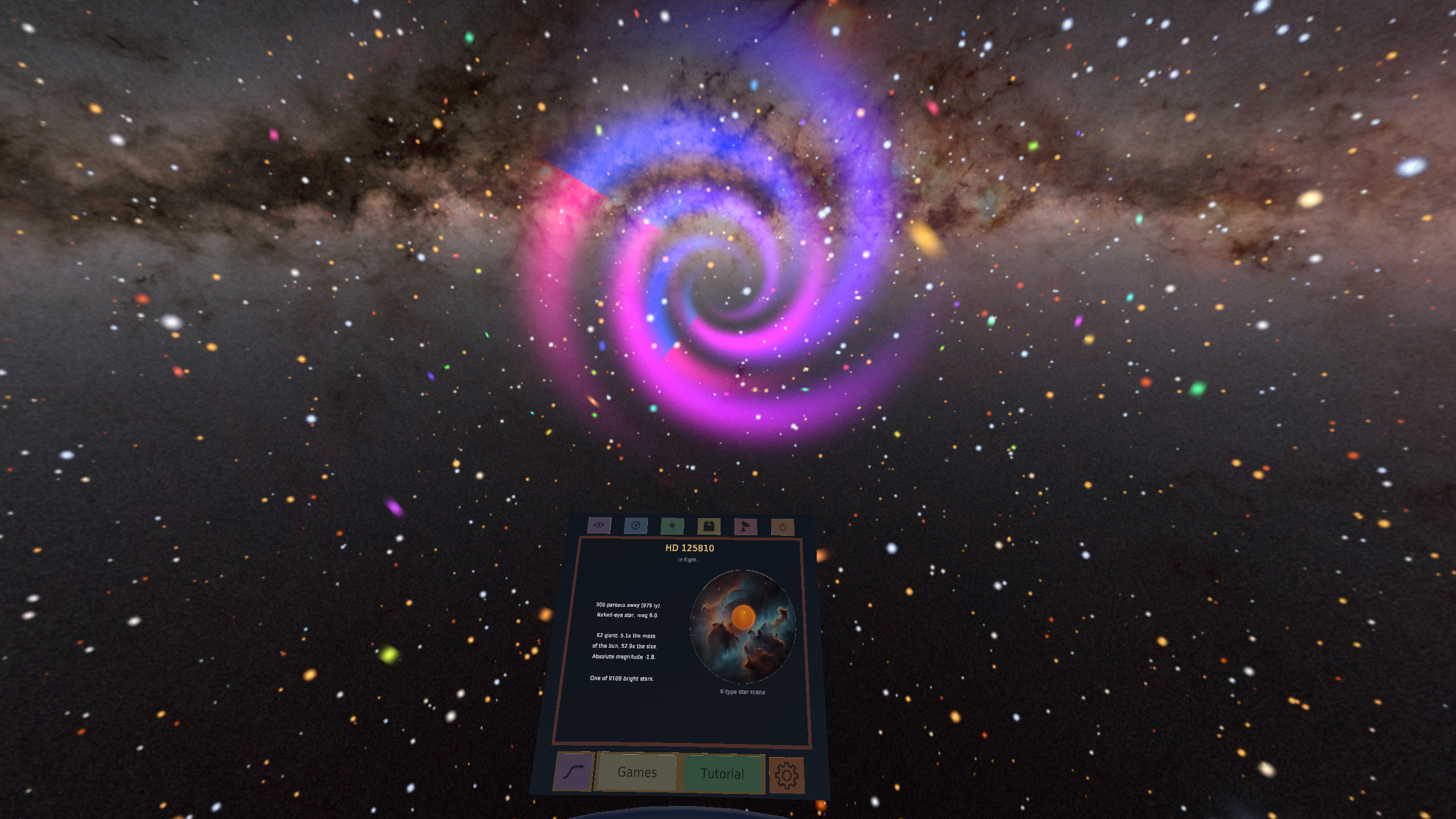
I've loved and wondered about the night sky since I was a kid with a small reflector telescope. After the European Space Agency's Gaia Mission released vast amounts of information about 2 billion stars, dust, clusters and other objects out to almost 20 thousand light years (6 thousand parsecs), I decided to create a VR app with several casual games and other experiences as an entertaining way to learn about our home galaxy.
What it does
The app is based around a control panel with two prominent Games and Tutorial buttons.
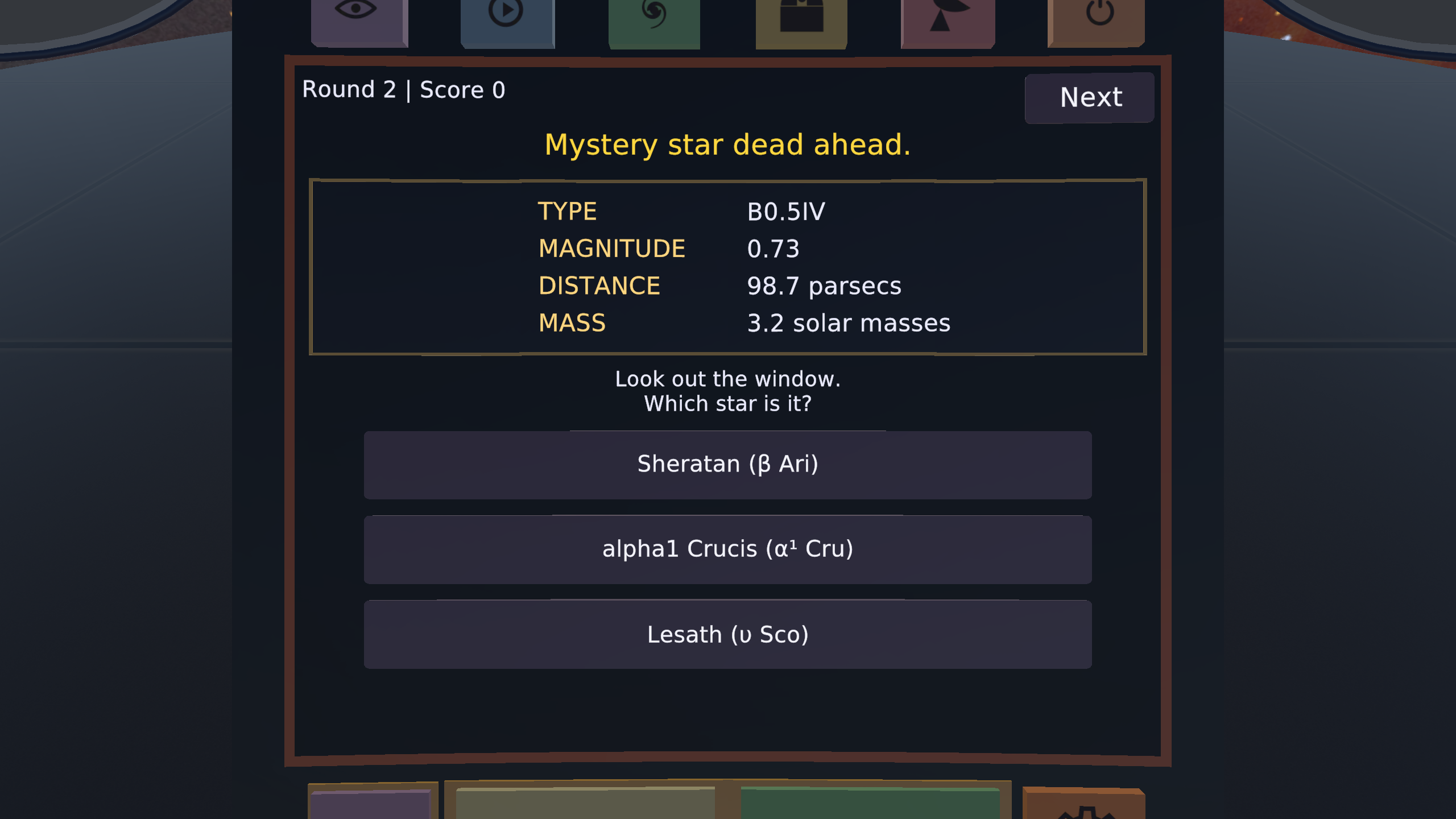
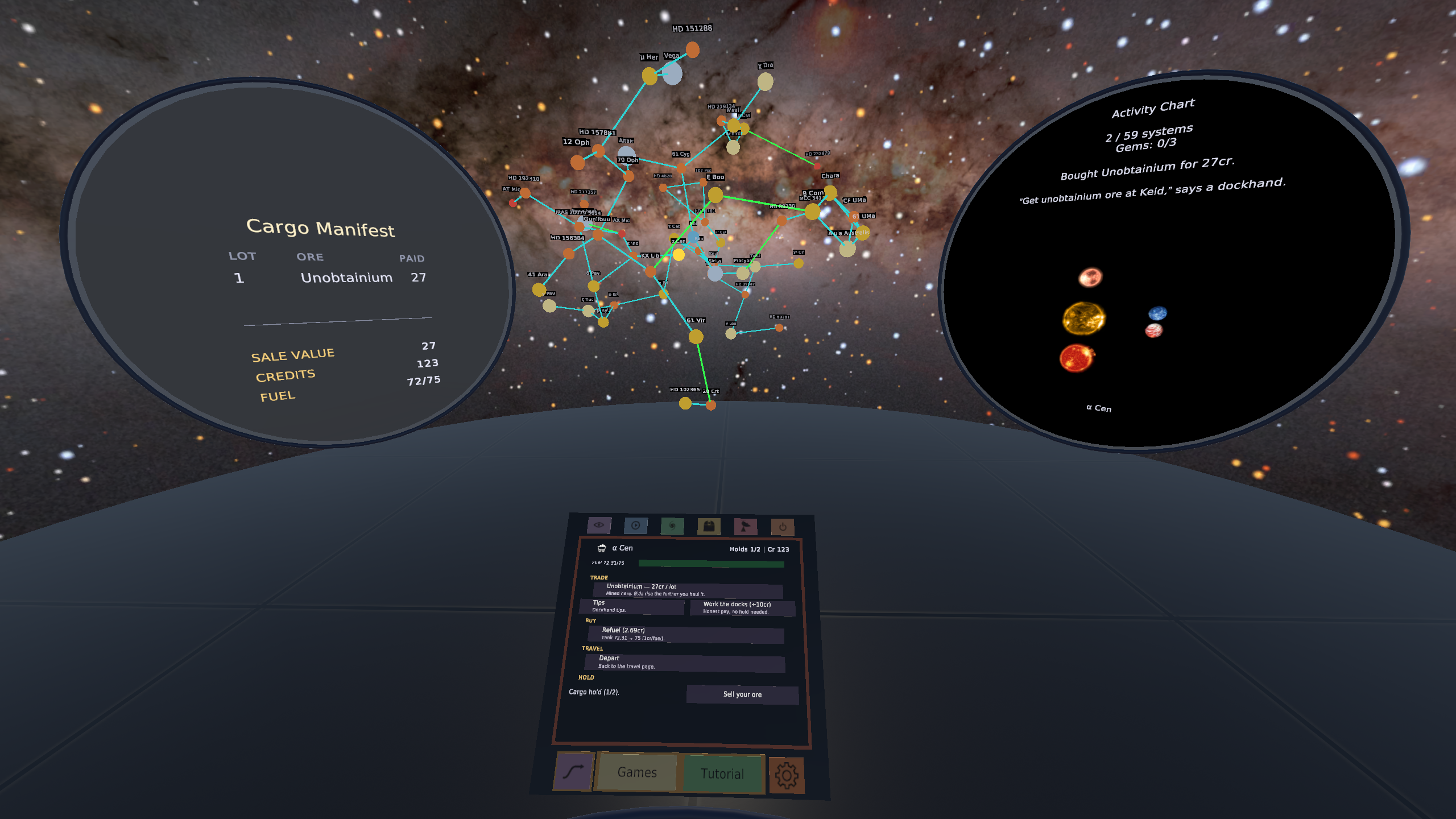
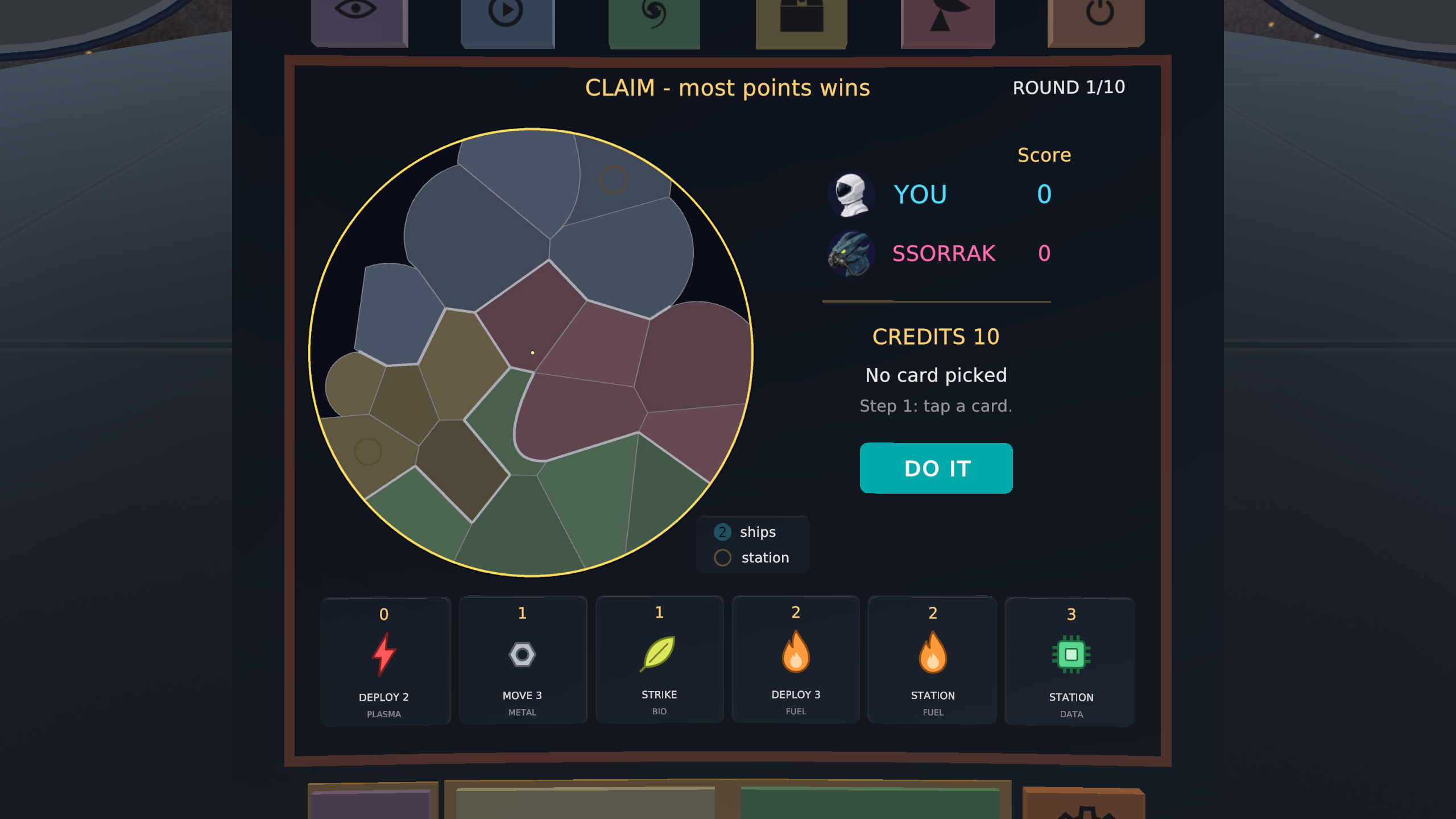
The Games page allows the user to play four different games (with narrated guides) that have scales that range from a quiz on the local night sky, trading ore within nearby stars on a 3D map, or battling the alien Ssorrack to control far flung (and real) galactic sectors. The fourth game allows the player to randomly visit one of almost 10 thousand star systems to collect amusing galactic artifacts that go into a persistent storage locker.
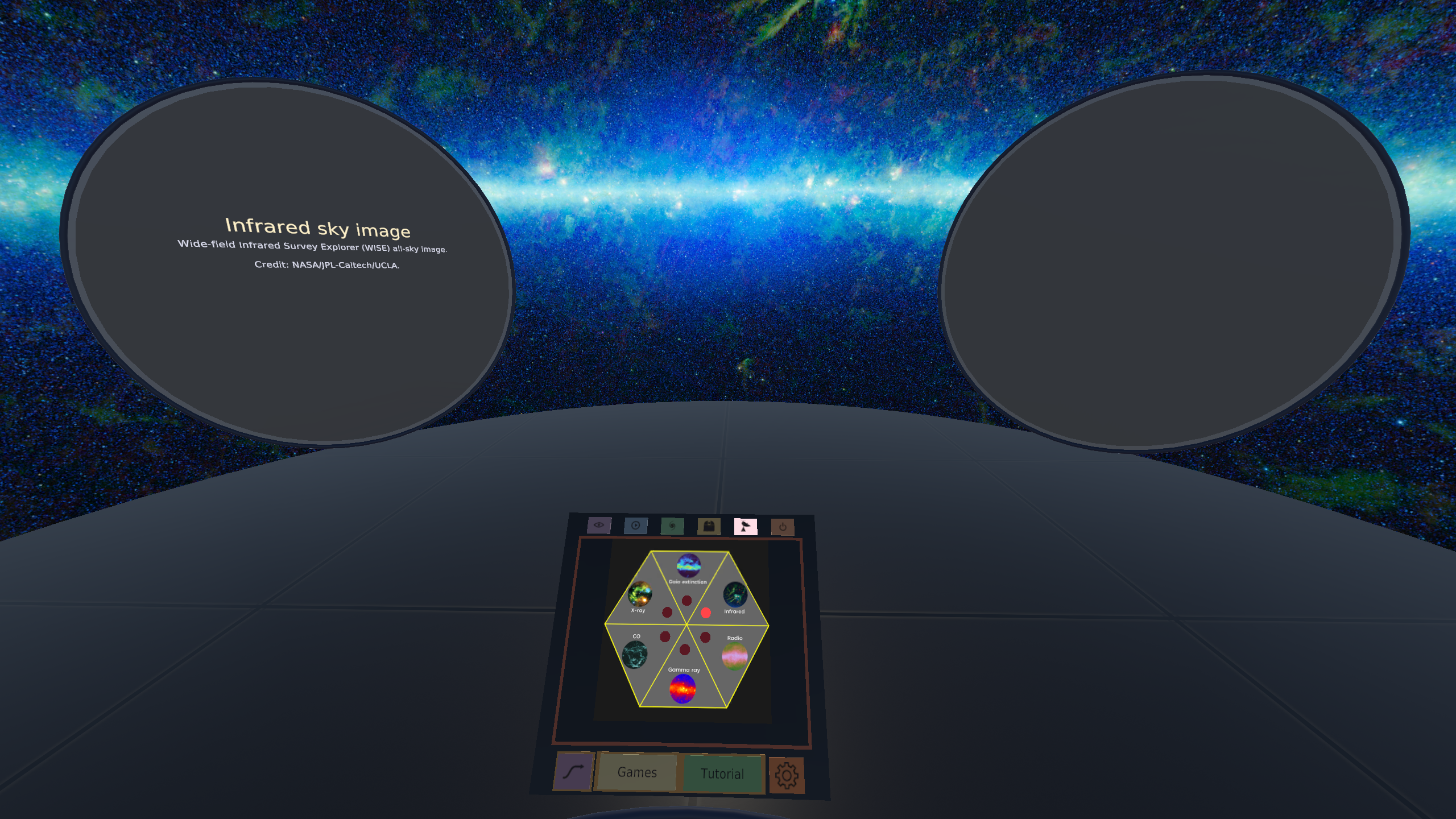
The Tutorial is a narrated presentation that introduces the player to other parts of the starship that allow viewing 12 different local sky images including constellation outlines and infrared imagery, or jumping to 45 galactic locations with sky maps based on real Gaia Mission data, or watching planetarium style sky presentations.
How we built it
The Galactic Explorer reuses Gaia Mission sky maps from my older Virtual Starship app (in the Quest store) but otherwise is a completely new application. It is built using Meta Muse Code to allow 6 months of development in one month. It emphasizes gamification to provide fun ways to learn about the galaxy and has a control panel specifically designed for the upcoming Meta VR Glasses including gaze interaction and ensuring that all the buttons fit well into the narrower field of view.
Challenges we ran into
Meta Muse Code is a fantastic resource but it is not a human developer. Learning what it can do well (a lot) and its weaknesses (some memory issues and a lack of human senses) took some time. But I think we interact well.
Accomplishments that we're proud of
The Galactic Explorer is the outcome of years of reflection on what I would have liked the Virtual Starship to be if I only had the time to do it properly. It has fun games, a slicker UI and a computer voice called Amy. I think it takes good advantage of the immersive experiences offered by VR and is a great showcase for the amazing data collected by the Gaia Mission scientists.
What we learned
I'm getting pretty good at interacting with Meta Muse Code and tapping into its extensive knowledge of game development. I'm looking forward to our next project together.
What's next for Galactic Explorer
If I win a prize I would have the time to add to the available sky presentations. The sky is not the limit.
