-
-
GAIA TERRA was created to explore recovery paths for unused and unproductive land.
-
Every piece of land deserves a second chance.
-
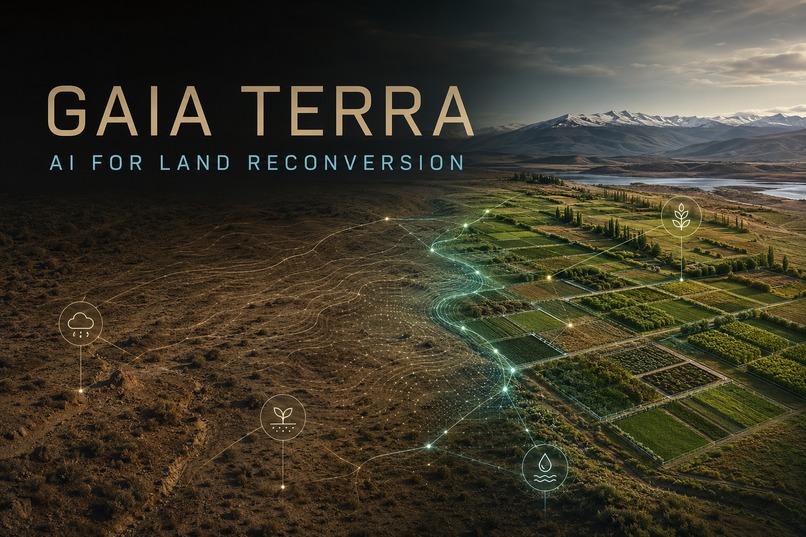
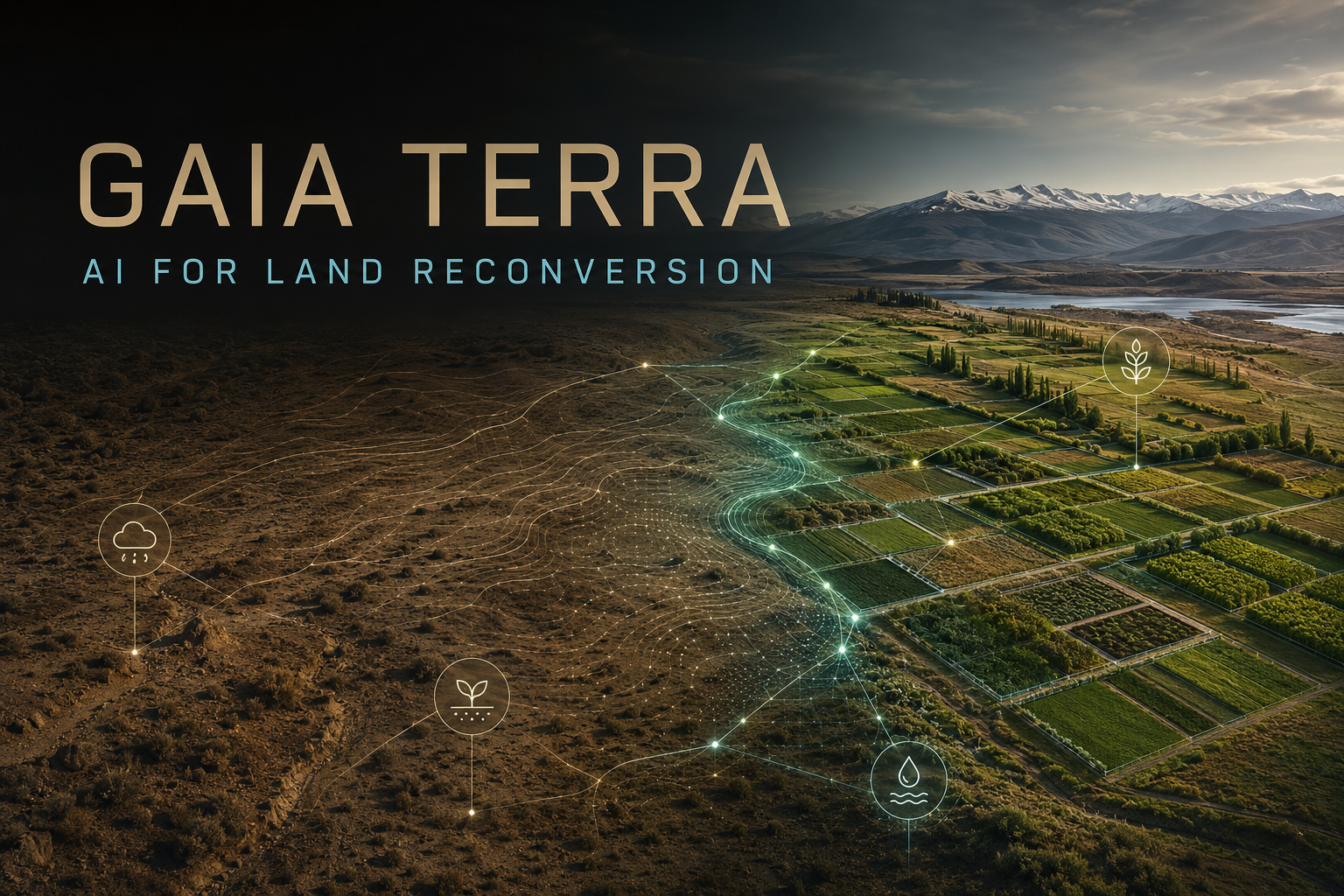
GAIA analyzes land conditions and proposes possible productive opportunities.
Inspiration
Around the world, many hectares of land remain dry, degraded, abandoned, or unused. Some are considered unproductive because their soil has lost fertility, water is limited, or the terrain is difficult to access.
GAIA TERRA was inspired by a simple question:
What if unused land could live again?
Instead of judging land only by what it produces today, GAIA explores what it could become after understanding its real conditions and limitations.
What GAIA does
GAIA is an intelligent decision-support concept designed to study unproductive land and explore possible paths toward recovery.
The user enters information about the location, surface, climate, soil, slope, water availability, access, restrictions, investment, and desired time horizon.
The system analyzes these elements and identifies possible agricultural opportunities adapted to the terrain.
It then compares different alternatives according to their potential, cost, risk, and estimated development time.
The result is not a promise of instant success. It is a structured starting point for understanding the land and planning its possible recovery.
How it works
GAIA guides the user through four main stages:
- Land profile: defining the location and physical characteristics of the terrain.
- Data passport: organizing the environmental, geographic, and productive information.
- Intelligent analysis: evaluating possible uses and recovery opportunities.
- Pilot plan: proposing initial steps to improve the soil, manage resources, begin production, and monitor the results on a smaller scale.
The pilot approach allows the idea to be tested before expanding the project.
What I built
I created a functional demonstration of GAIA TERRA with an interactive flow that guides the user from the initial land assessment to possible productive alternatives and a recovery plan.
The prototype presents the information in a clear and accessible way, so that a person can understand the potential of a terrain before making an important investment.
Challenges
One of the main challenges was transforming a broad environmental and agricultural problem into a simple experience that could be understood by anyone.
Another challenge was representing the complexity of soil recovery, water management, investment, risk, and time without overwhelming the user.
The project is presented as a concept and demonstration. Its future development would require validated data sources, agronomic models, field measurements, and collaboration with agricultural and environmental specialists.
What I learned
This project showed me that artificial intelligence can be used not only to automate tasks, but also to help people ask better questions about the world around them.
GAIA does not simply ask what can be produced immediately.
It asks what is still possible.
Final vision
GAIA TERRA was created for land that was left behind.
Because restoring soil is not only about producing more. It is about understanding what was lost, discovering what is still possible, and giving life another opportunity.

Log in or sign up for Devpost to join the conversation.