-
-
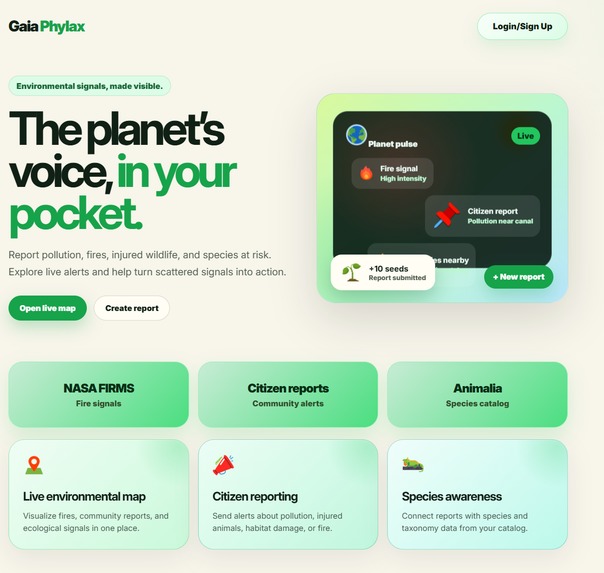
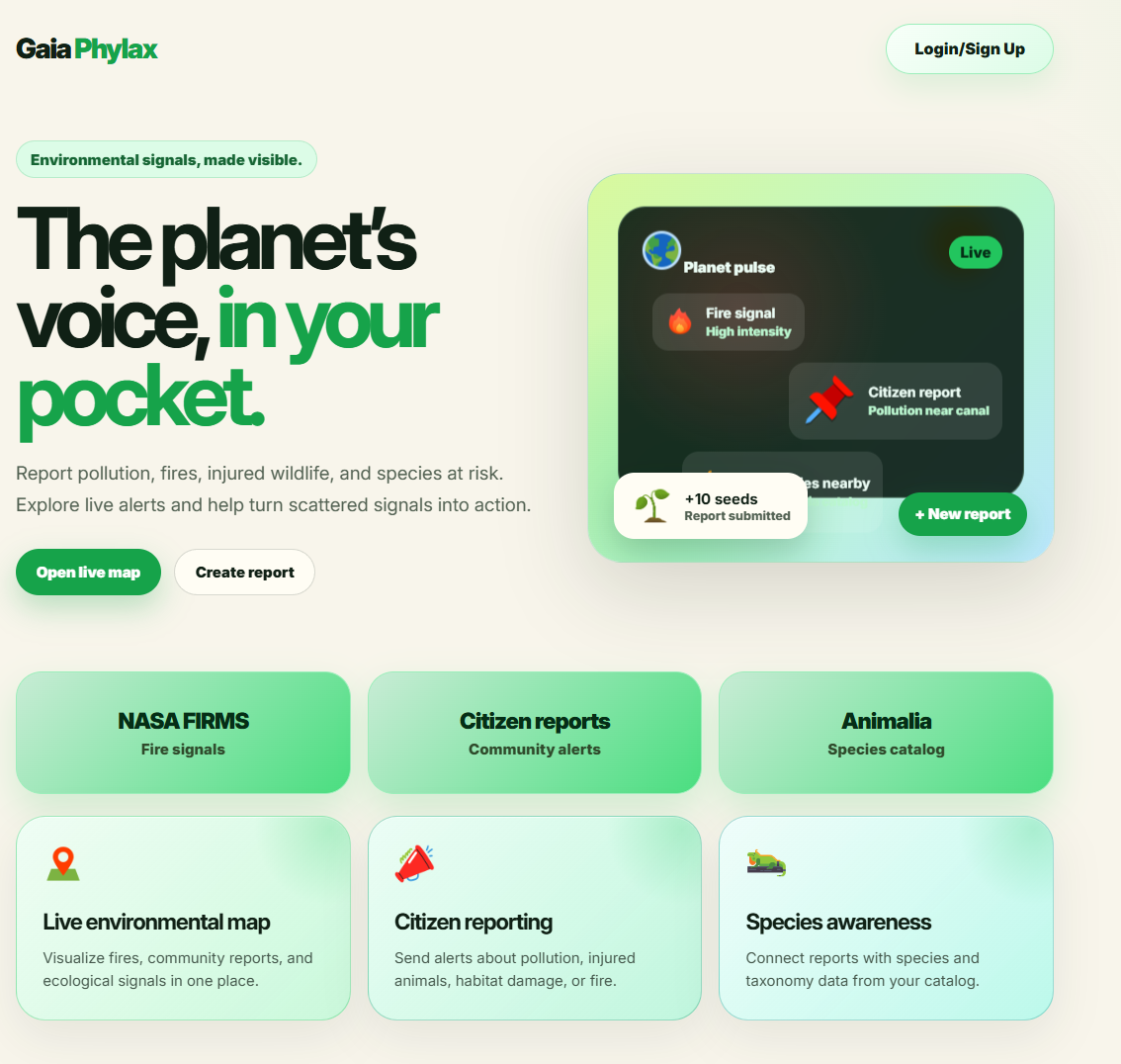
HomePage
-
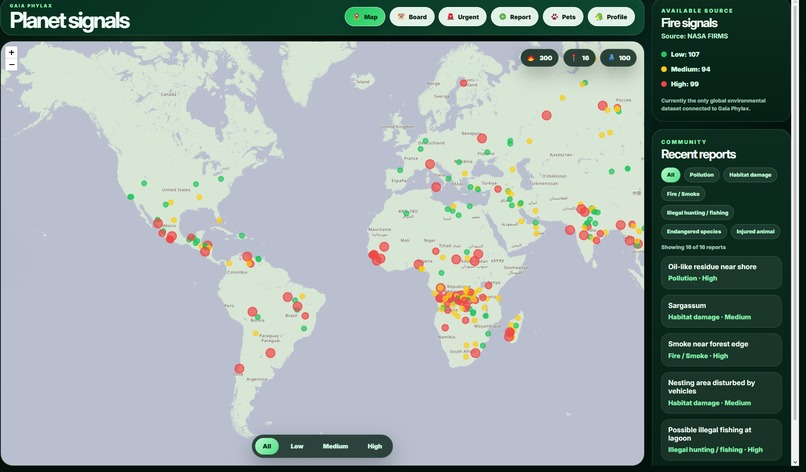
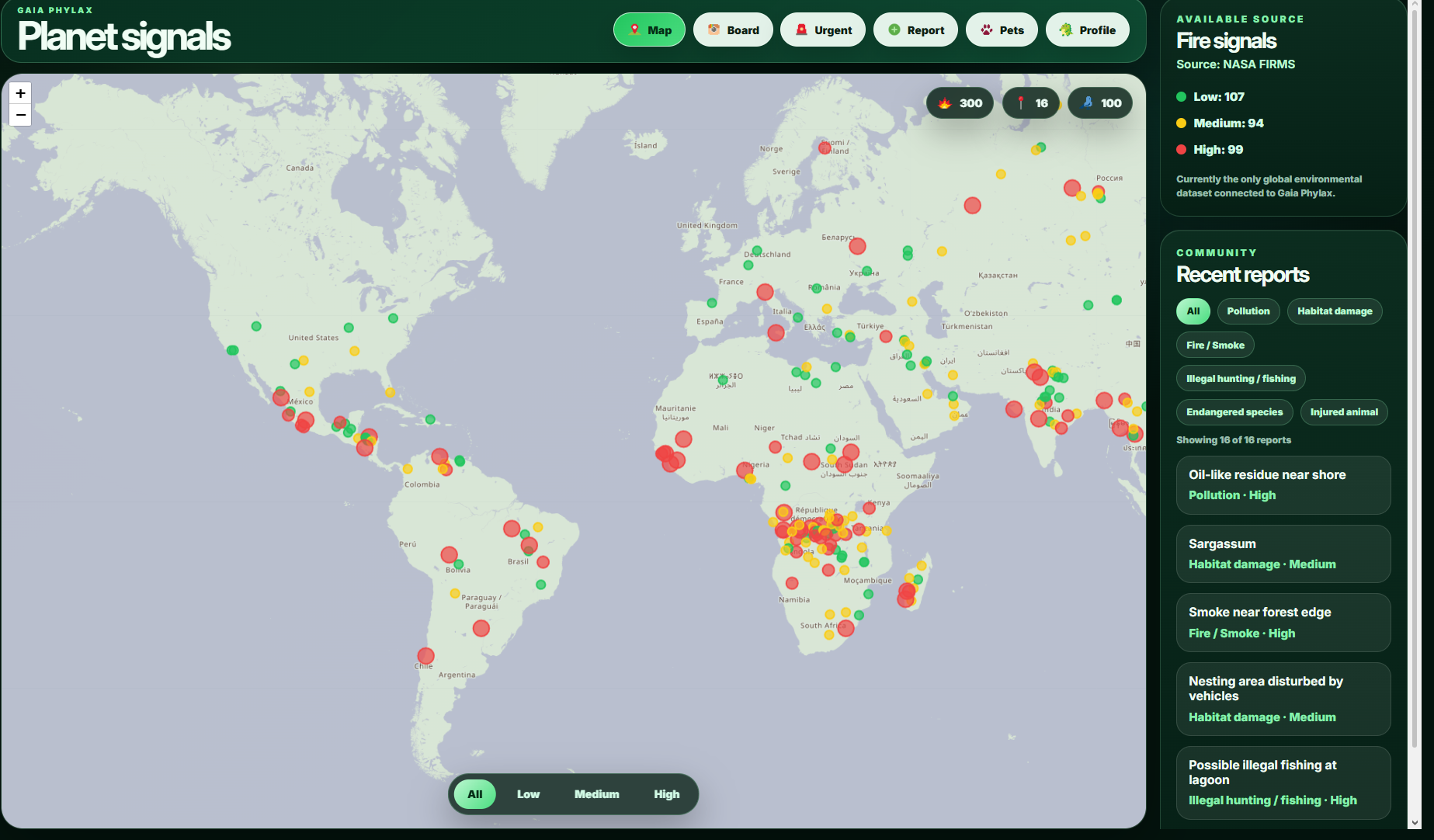
MapPage
-
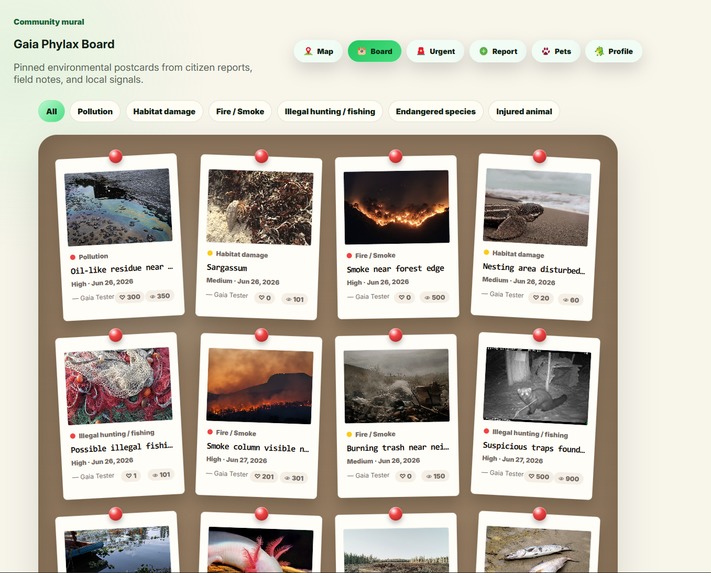
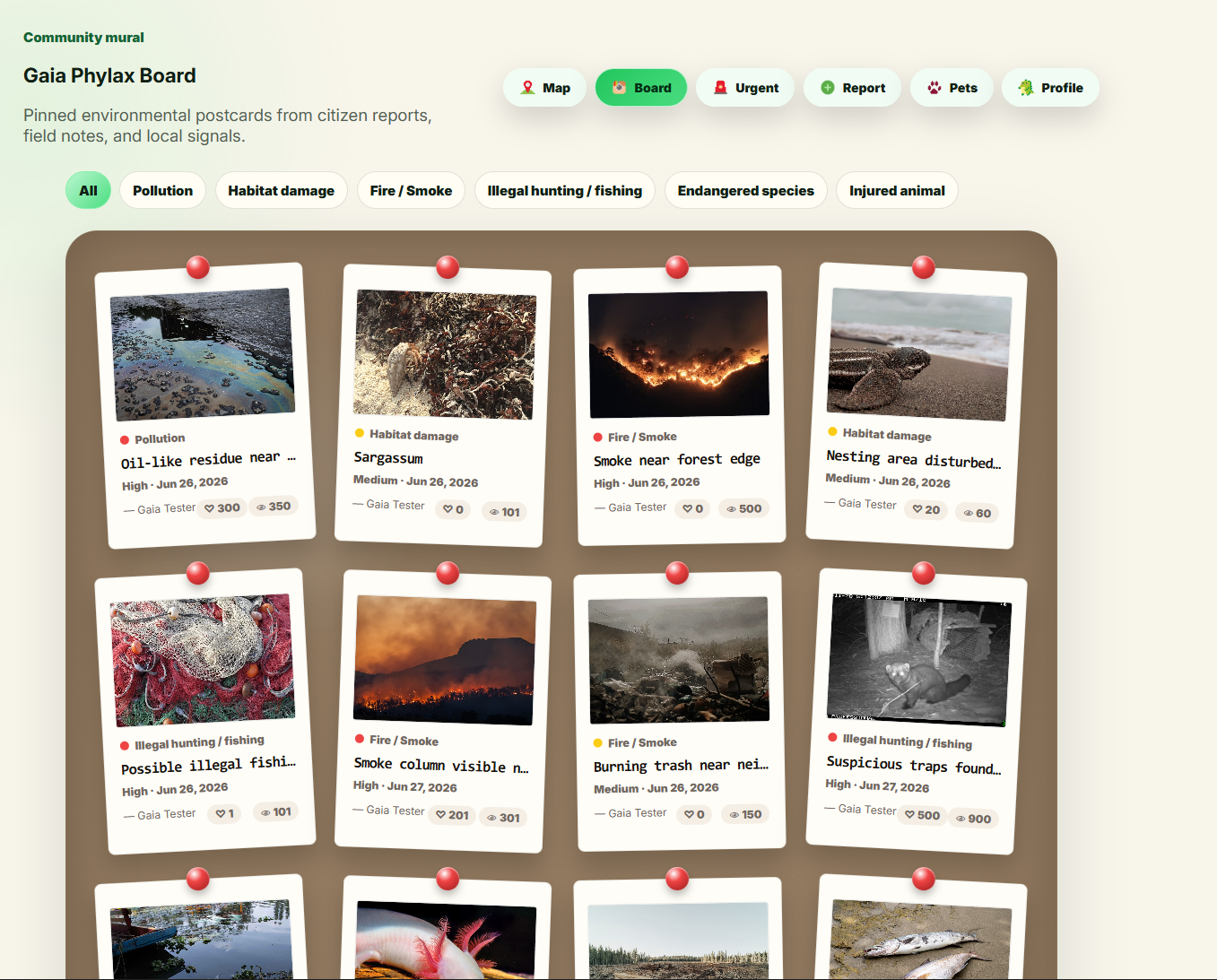
BoardPage
-
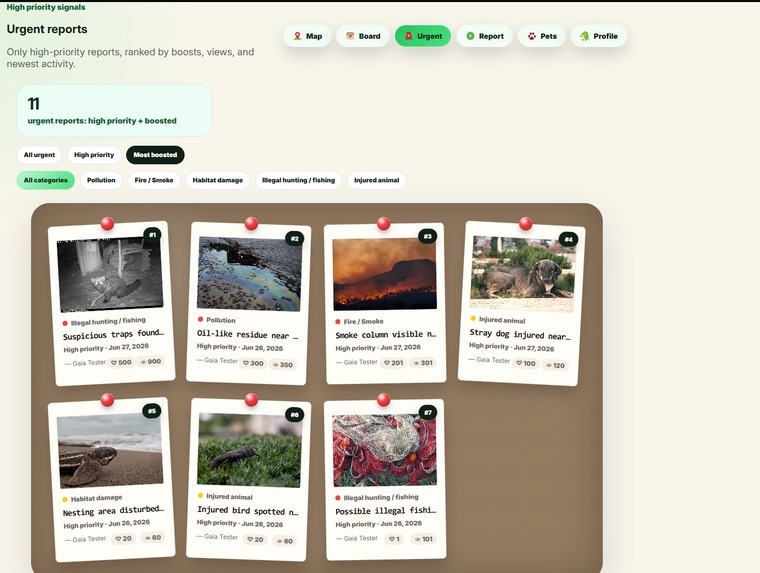
UrgentPage
-
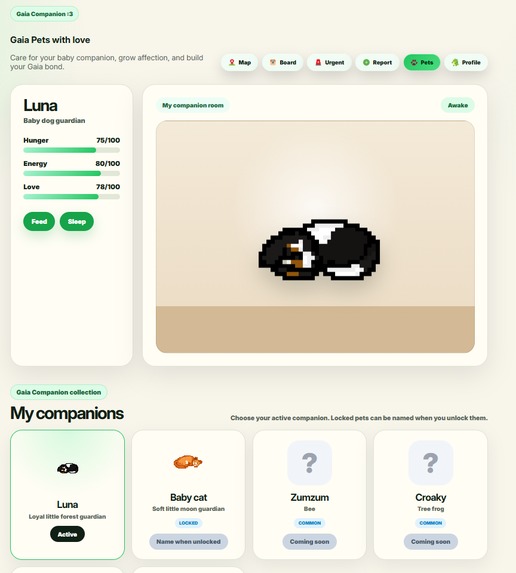
PetPage
TRACK 5
Inspiration
Climate change is one of the most critical issues of our time, but it's hard to stay informed when algorithms control what we see and what gets silenced. One of the greatest strengths of younger generations today is their access to the internet, and we've all seen how a single viral moment can shift public opinion and spark real change. Gaia Phylax is built on that idea: what if we had a platform dedicated entirely to amplifying the voices of citizens who witness environmental damage firsthand? Not filtered by an algorithm. Not buried under other content. Just people raising their voices for the planet.
What it does
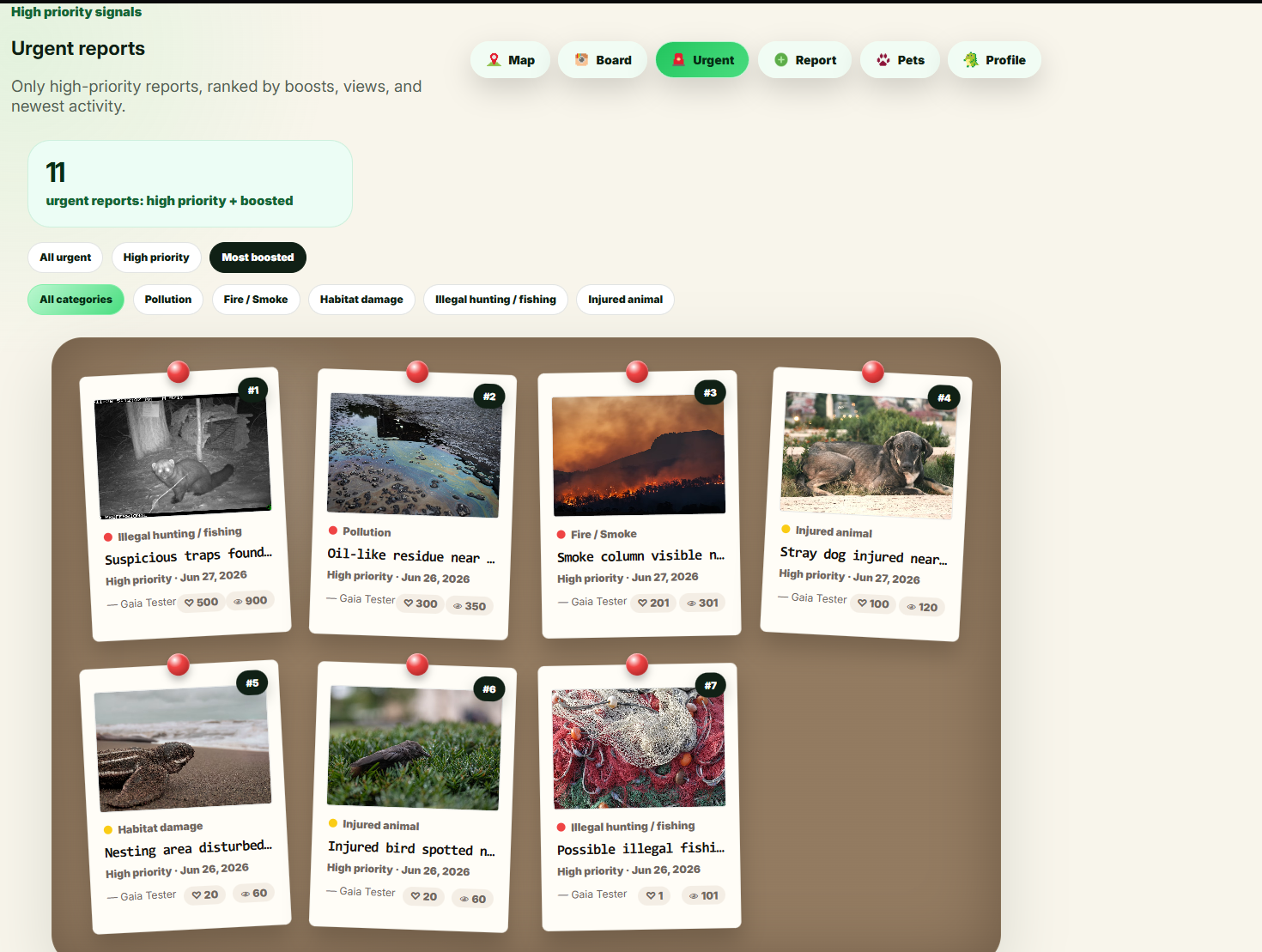
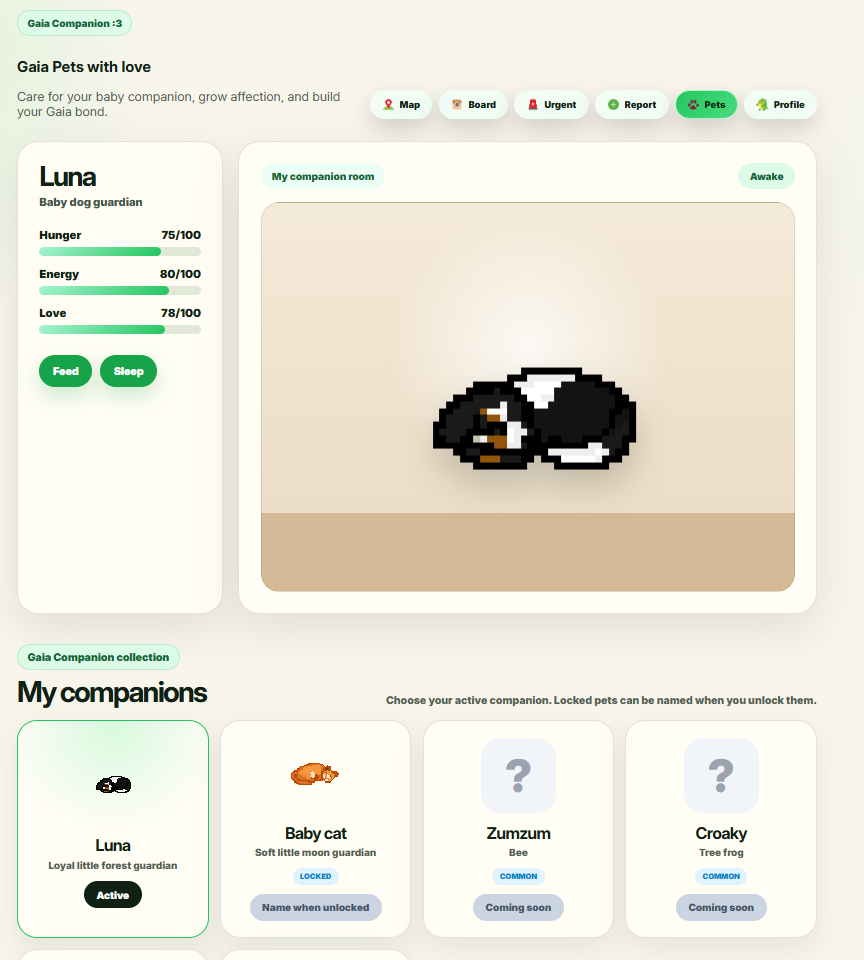
Gaia Phylax is a web application designed to amplify the voice of the environment. The platform turns citizen observations into visible environmental alerts through an interactive map and a community bulletin board. Users can report damaged habitats, pollution, fires, injured animals, threats to endangered species, illegal hunting or fishing, and other environmental issues happening near them or around the world.
How we built it
Frontend: React + TypeScript, Vite, React Leaflet for interactive mapping Backend: Python, FastAPI, Supabase (PostgreSQL, Auth, Storage) Data sources: NASA FIRMS (fire signals), GBIF Backbone Taxonomy and Occurrence Data (biodiversity) AI assistance: ChatGPT, Emergent, and Lovable supported ideation, code generation, and prototyping throughout the process
Challenges we ran into
One of the biggest challenges was that I had never worked with backend development before so diving into how servers, APIs, and databases communicate was a steep but fascinating learning curve. Understanding what really happens behind the scenes completely changed how I think about software.
Another major challenge was the sheer ambition of my original idea. My vision was much larger than what was feasible in the available time. Finding the right datasets was especially difficult — not just technically, but legally. Licensing restrictions meant I couldn't use every data source I wanted, and finding a biodiversity database that matched exactly what I needed simply didn't exist in the form I envisioned. The most thought-provoking challenge, though, was ethical. When dealing with endangered and wild animals, I realized that publishing exact locations could put those very animals at risk poachers and bad actors could exploit that data. That forced me to think carefully about responsible design: how do you build a platform meant to protect wildlife without accidentally endangering it? Designing around that tension with ideas like blurred coordinates and delayed publication for sensitive reports was one of the most meaningful parts of the process. Outside of all that, finding the solutions to these problems was genuinely fun.
Accomplishments that we're proud of
I'm genuinely proud of how something as simple as a citizen reporting app can have real potential to make a difference for the climate. Gaia Phylax is exclusively dedicated to protecting nature and that focus matters. So many platforms silence environmental causes or bury them beneath unrelated content, leaving most people with no clear, accessible place to find detailed, ground-level environmental information. The idea that everyday people can now document what they see, boost what matters, and make it visible on a map, that's what I'm most proud of. The app is proof that amplifying citizen voices is a viable path toward environmental change.
What we learned
I learned an enormous amount technically and personally. On the technical side, I finally understood how backend and frontend systems connect: how data flows from a database through an API and into what a user actually sees on screen. Debugging my prototype taught me more about code than any tutorial could. On a personal level, the frontend humbled me a little the vision in my head didn't fully match what I was able to execute without more experience, and honestly that gap motivates me more than anything. It's not frustrating, it's fuel. I want to keep learning and sharpening my skills until what I build matches what I imagine.
What's next for Gaia Phylax
The long-term vision for Gaia Phylax is big and I mean that seriously. In the near term, I'd love to add AI-powered automatic classification, species search integrated with the taxonomy database, and full mobile responsiveness. But the real dream? Making Gaia Phylax a certified, institution-backed platform, one where a citizen report of a wild animal in distress automatically routes to the nearest wildlife rescue organization, veterinarian, or specialist. Real alerts. Real responses.
Beyond that: Monetization for conservation: In-app engagement and community features that generate revenue directed entirely toward rescue financing, animal care, and habitat restoration — because caring for rescued wildlife is expensive, and that funding has to come from somewhere. NGO and ecological solution provider partnerships: Connecting Gaia Phylax to organizations actively working on environmental solutions, turning the platform into a hub for collaborative conservation. Satellite integration: Long-term, I'd love to explore satellite-based location verification to cross-reference citizen reports with real geographic data. A global biodiversity research database: The data collected through citizen reports could become a genuinely valuable scientific resource — aggregated, anonymized, and made available to researchers studying environmental patterns and wildlife behavior.
Built With
- fastapi
- leaflet.js
- postgresql
- python
- react
- rls
- supabase
- typescript
- uvicorn
- vite

Log in or sign up for Devpost to join the conversation.