Inspiration
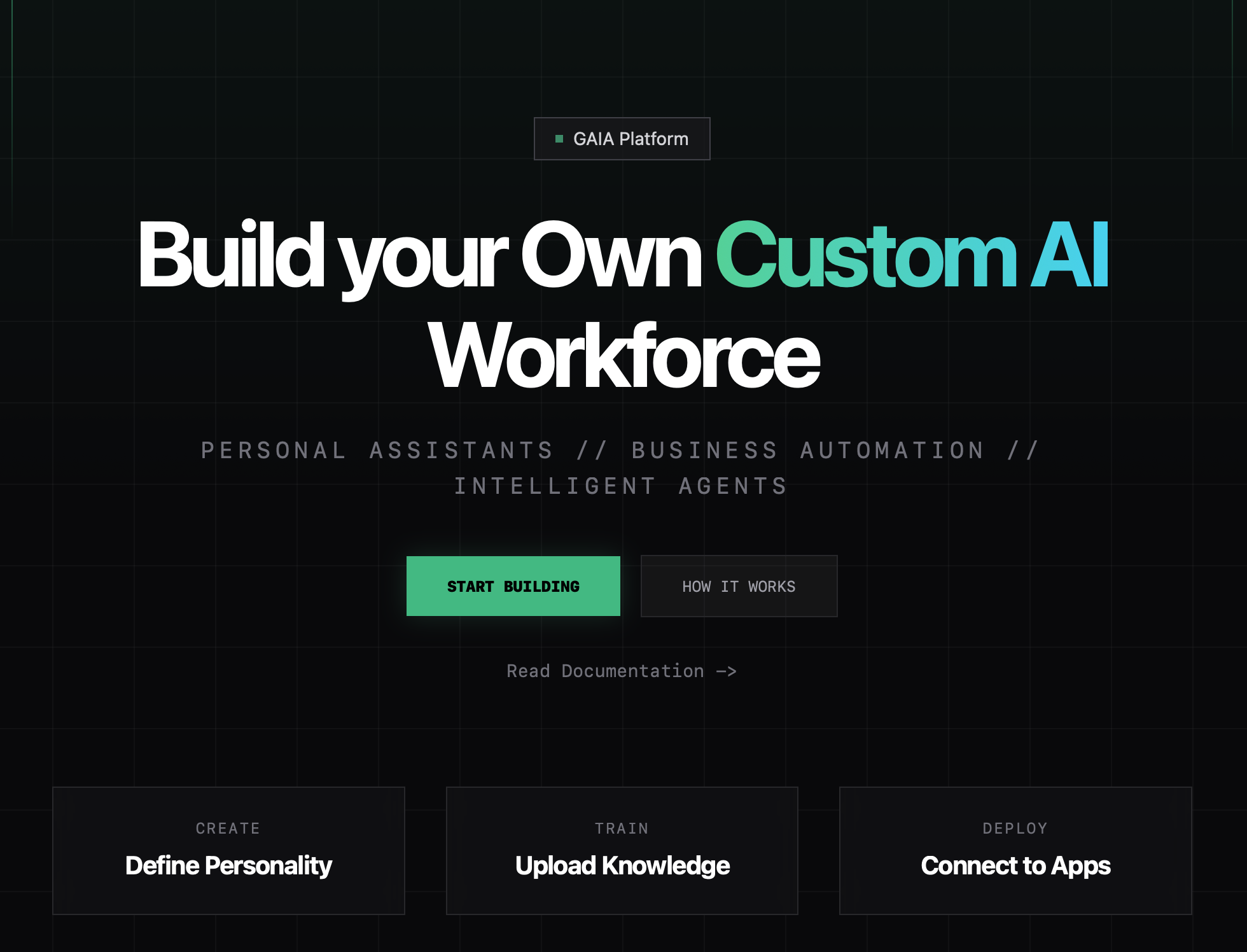
The inspiration for GAIA came from a simple observation: while AI is everywhere, "Agents" are often just glorified chatbots trapped inside single browser tabs. We wanted to build a unified neural kernel—a central brain that could live anywhere. Whether it's a customer support representative on WhatsApp, a technical assistant on Telegram, or a custom tool in a web app, GAIA orchestrates them all through a single, secure architecture.
What it does
GAIA is a unified operating system for autonomous agents. It provides a centralized "brain" where developers can:
- Create & Train: Build neural agents and train them on custom documentation using high-fidelity RAG.
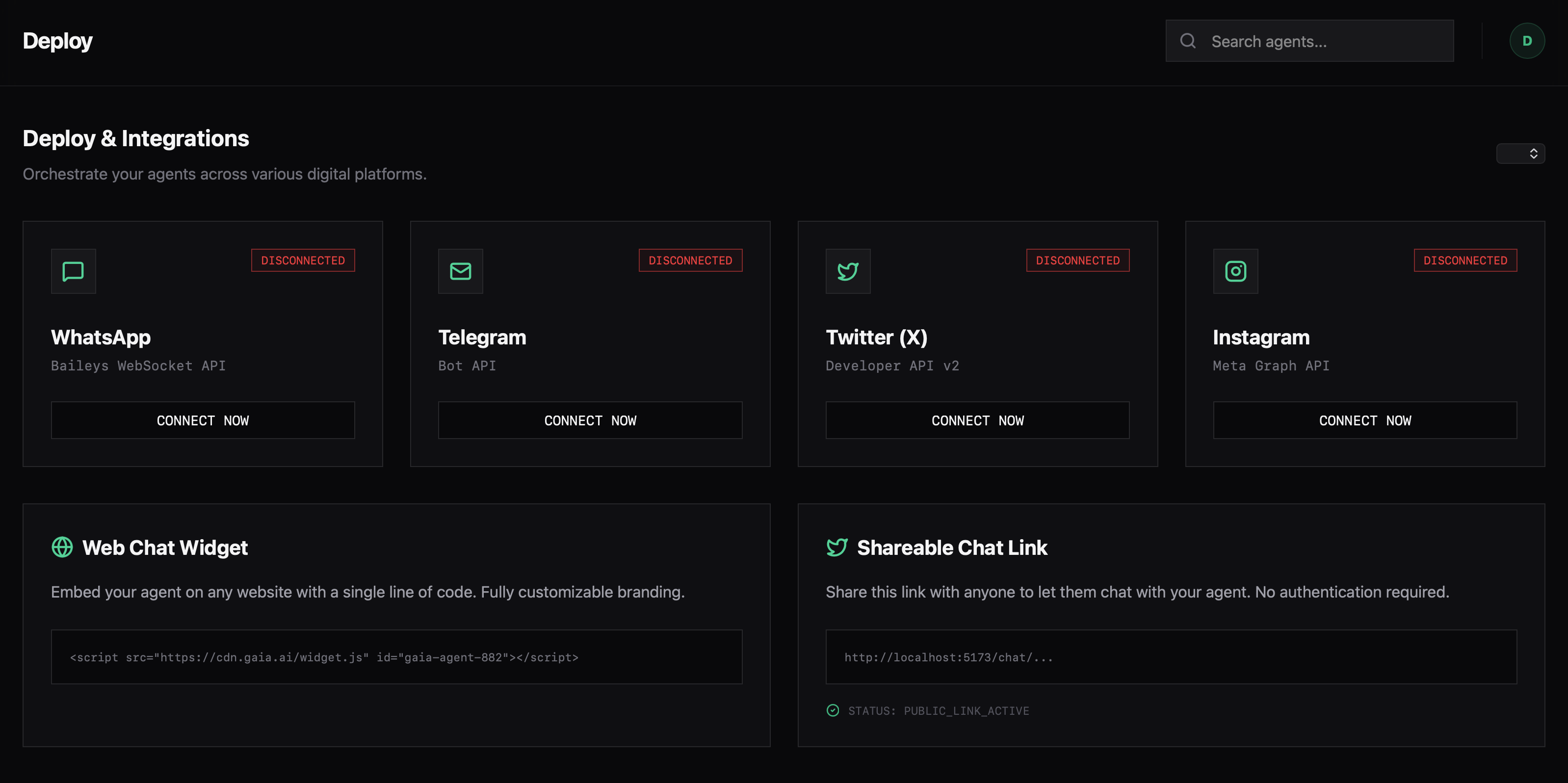
- Multi-Protocol Deploy: Simultaneously deploy a single agent to WhatsApp, Telegram, and the Web.
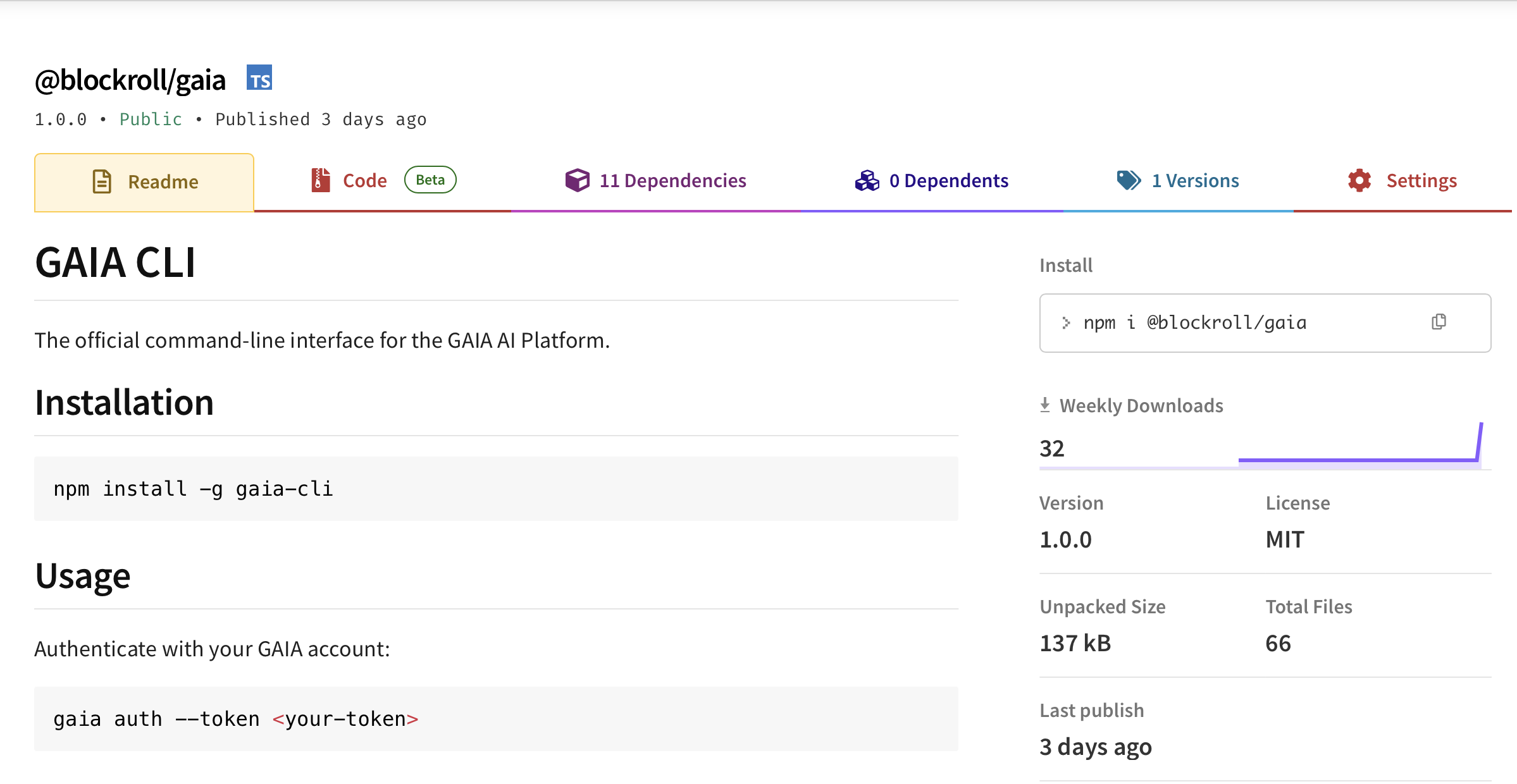
- Orchestrate: Manage agent lifecycles, system instructions, and parameters through a professional Studio UI or a custom CLI.
- Monitor: Track platform-wide health, agent utilization, and token usage through a dedicated Admin Dashboard.
How we built it
- Neural Engine: Powered by Google Gemini 1.5 & 2.0 Flash, optimized for sub-second reasoning.
- Long-term Memory: PostgreSQL with
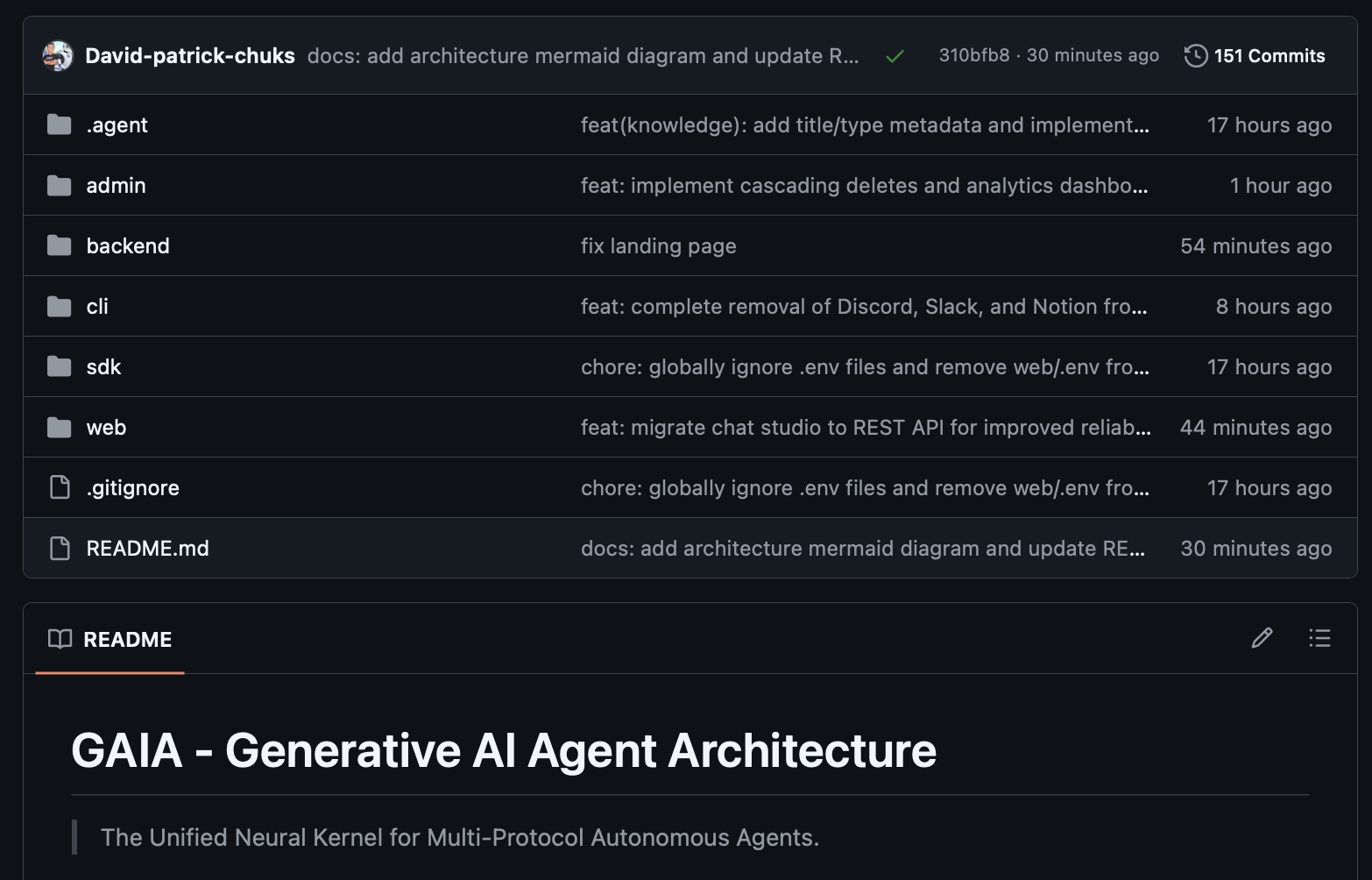
pgvectorfor Hybrid Search (Keyword + Vector) Retrieval-Augmented Generation. - Backend Architecture: A modular Node.js kernel that bridges the AI engine to external messaging protocols (Baileys for WhatsApp, Telegraf for Telegram).
- Frontend Stack: React and TailwindCSS powering two distinct interfaces: a Developer Studio and an Operator Admin Dashboard.
- Terminal Interface: A custom CLI tool built with Commander.js for "Agentic DevOps".
Challenges we ran into
- Cross-protocol Consistency: Ensuring an agent maintains its persona and context while switching between a Web UI and mobile messaging apps.
- Socket Stability: We encountered connection issues with real-time streaming in the Studio, which led us to engineer a high-reliability REST-based fallback that ensures 100% message delivery.
- Data Sovereignty: Building a cascading delete system that ensures a user's entire digital footprint (agents, docs, credentials) is purged completely across multiple database tables.
Accomplishments that we're proud of
- True 1-to-N Deployment: The ability for a single agent to handle multi-protocol interactions without losing its core identity.
- Hybrid Source Citation: Implementing a RAG engine that not only answers questions but correctly cites sources from the user's uploaded knowledge base.
- Identity Isolation: Designing a secure auth architecture that keeps million-token context windows siloed between different users and agents.
What we learned
- The immense power and speed of the Gemini 1.5 Flash model for real-time agentic tasks.
- How to structure vector databases for multi-tenant isolation and fast retrieval.
- The importance of building for failure—specifically how migrating critical UI paths from streaming to REST can dramatically improve the developer experience.
What's next for GAIA (Generative AI Agent Architecture)
- Autonomous Function Calling: Enabling agents to interact with external APIs to perform real-world actions.
- Voice-Native Support: Bringing GAIA agents to voice-driven protocols and phone systems.
- Agent Marketplace: A decentralized ecosystem where developers can share, fork, and deploy pre-trained agent heuristics.
Built With
- express.js
- gemini
- supabase
- vectordb


Log in or sign up for Devpost to join the conversation.