Inspiration
Gadget Master is the sequel to Gadget Blaster, which also started at a hackathon. In Gadget Blaster you shoot gadgets from a distance. For Gadget Master, we rebuilt that idea from scratch around your hands. You reach into a small diorama and work each gadget yourself. Our main design rule was "the gesture is the gadget": every control copies what the gadget physically does, so learning the controls and learning the gadget happen together.
What it does
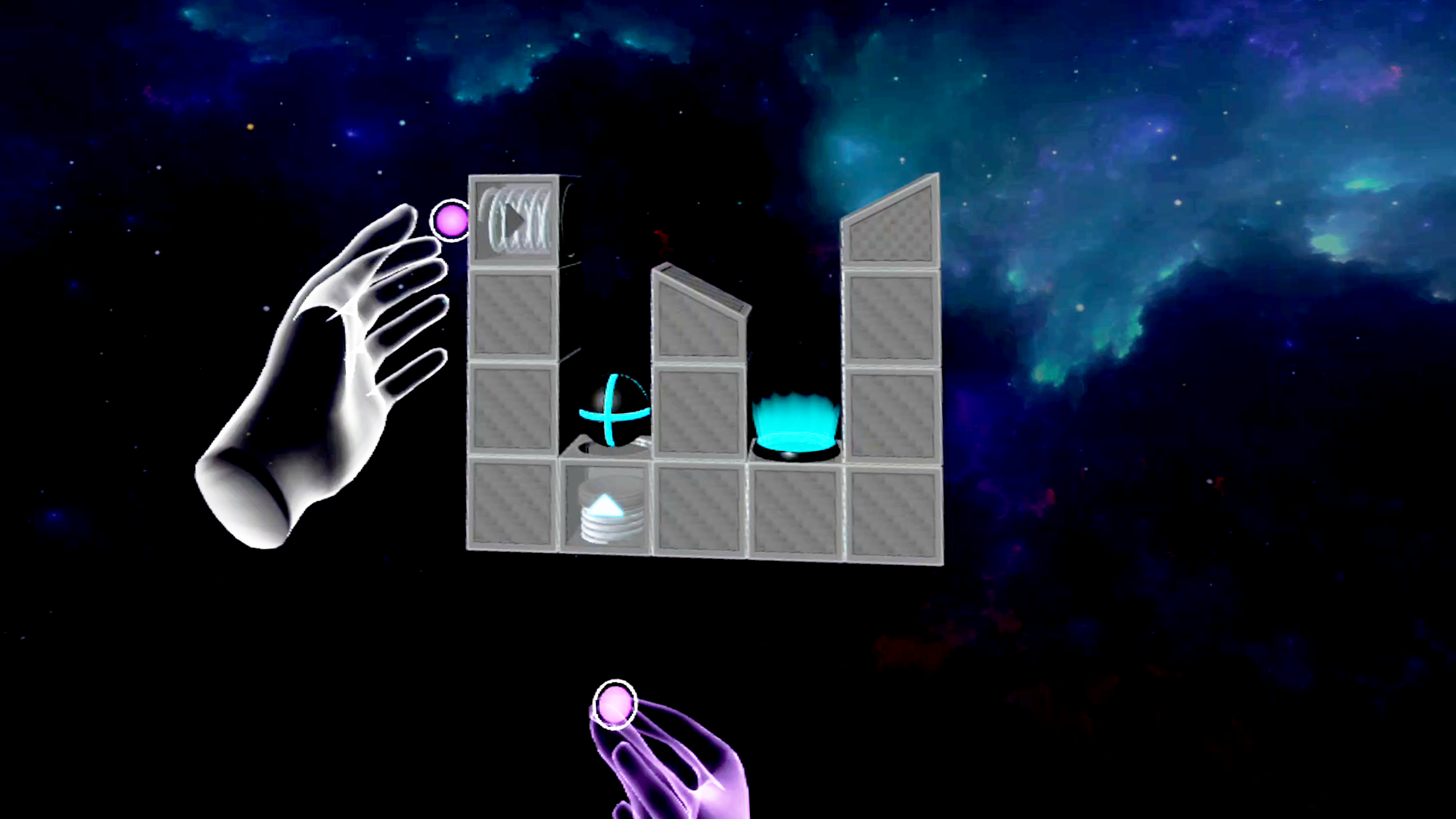
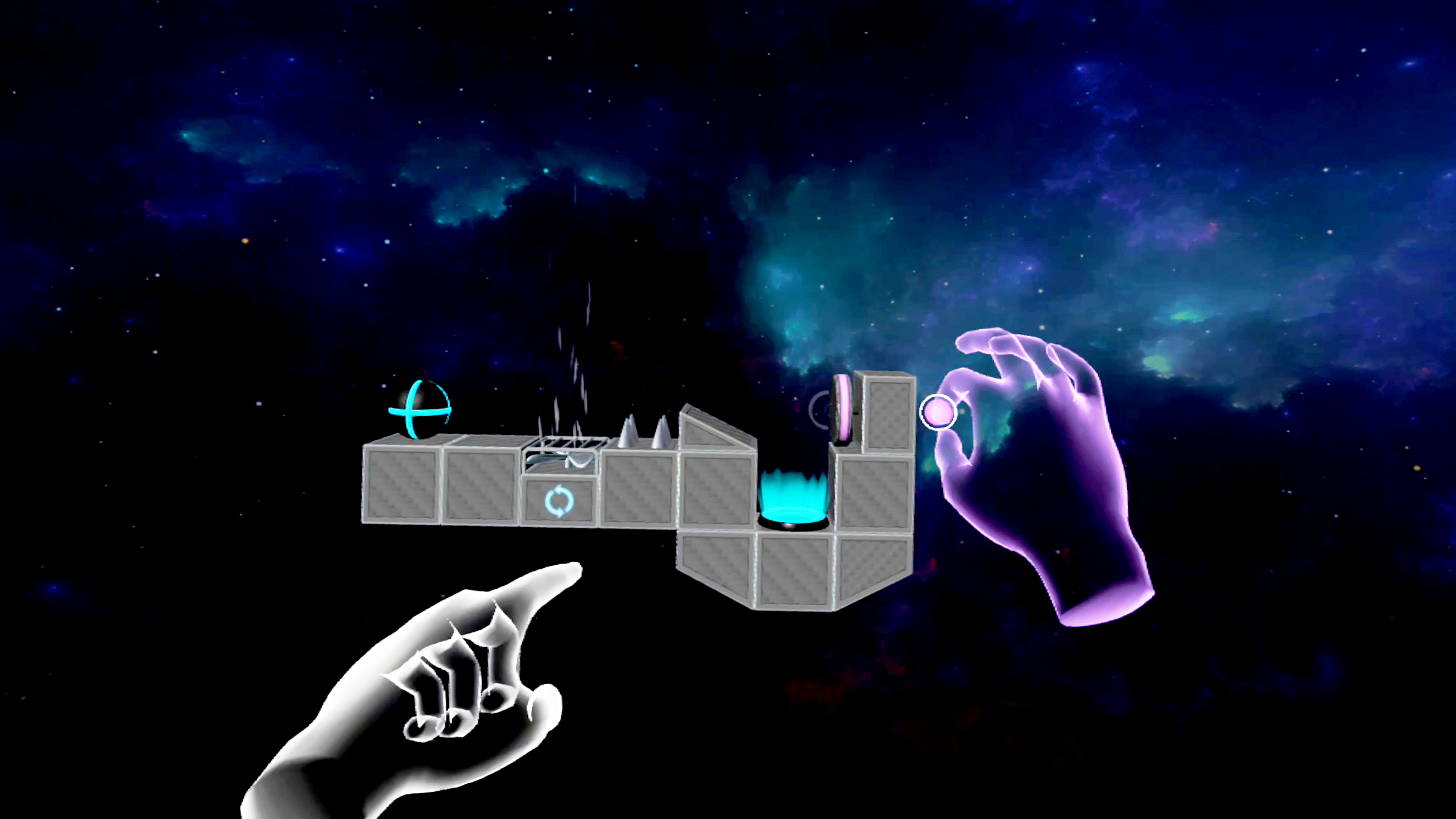
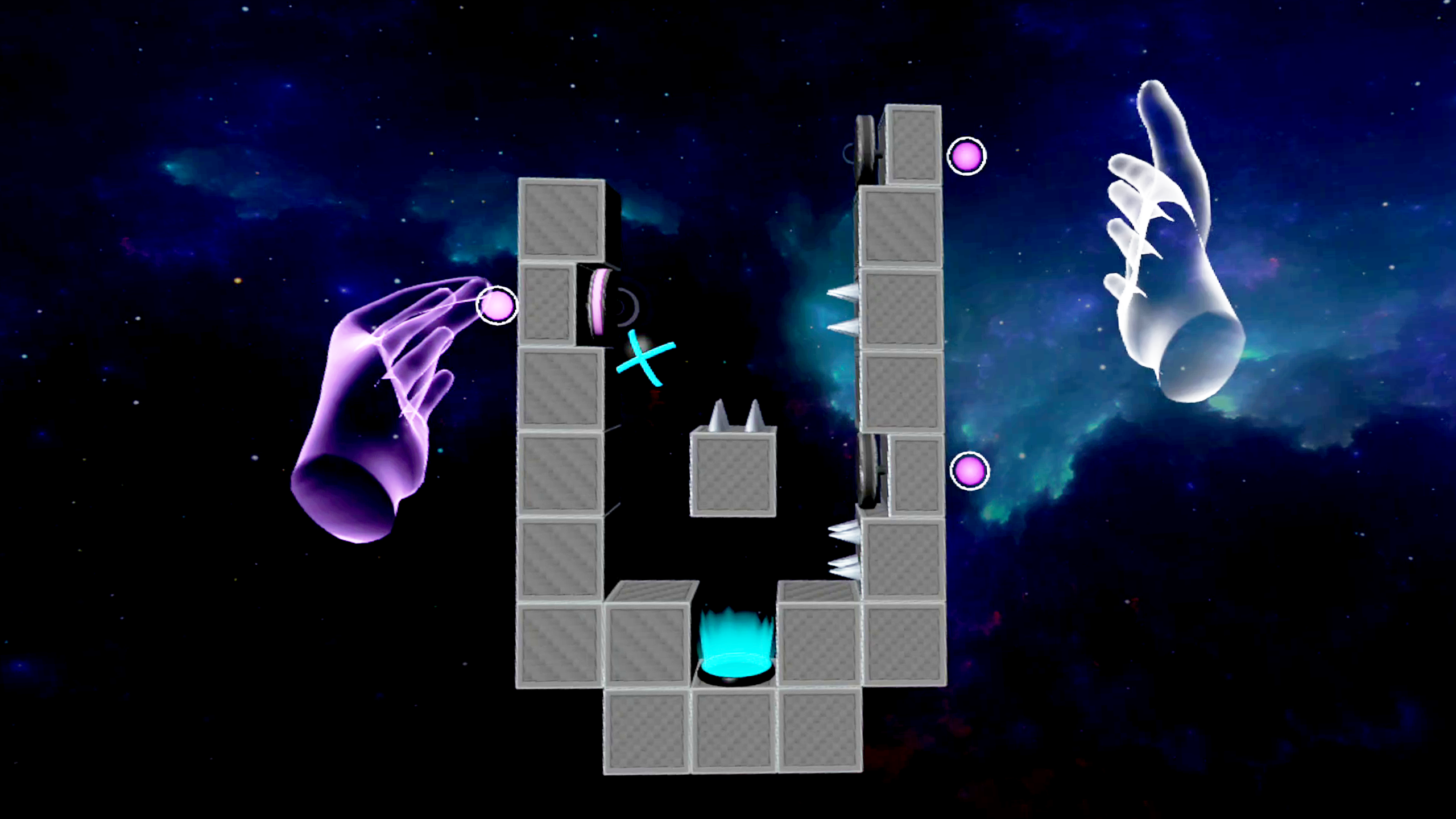
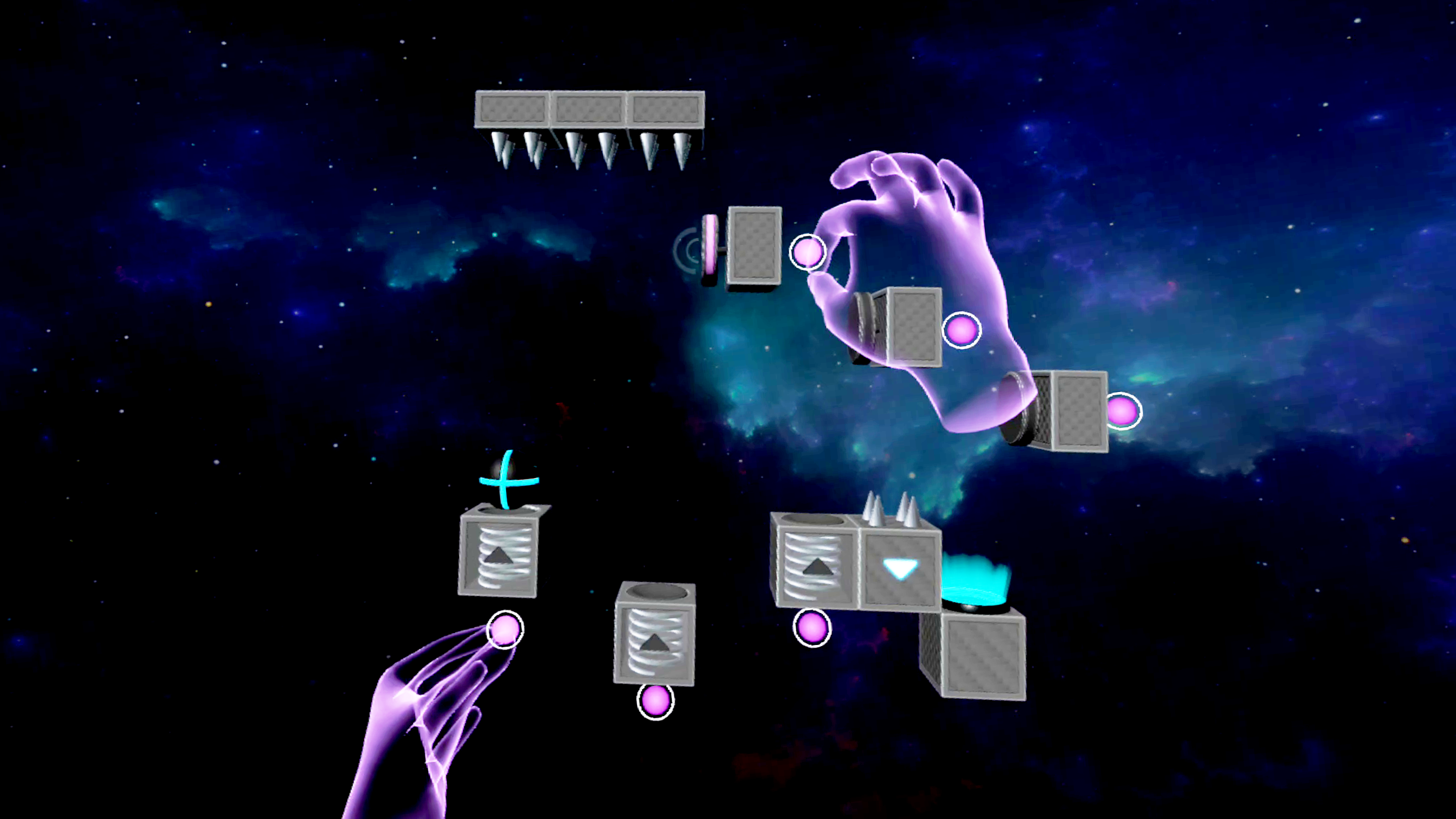
You guide a tough little orb to the goal by working gadgets with your bare hands. There are no controllers and no pointer rays. Each puzzle is an upright diorama, within reach of a seated player.
- Spring: pinch, pull back and let go. How far you pull sets the power.
- Magnet: pinch and hold. It pulls the orb only while you hold on.
- Fan: circle your fingertip in front of it. The faster you spin, the harder it blows.
- Spike Blocks: push the spikes down, then get your finger out of the way before the orb rolls through.
- Hunter Drones: flick them away before they reach the orb.
One rule adds tension: a free index fingertip pops the orb. The rest of your hand passes through it safely. So flicking a drone or holding spikes down next to the orb is a real risk.
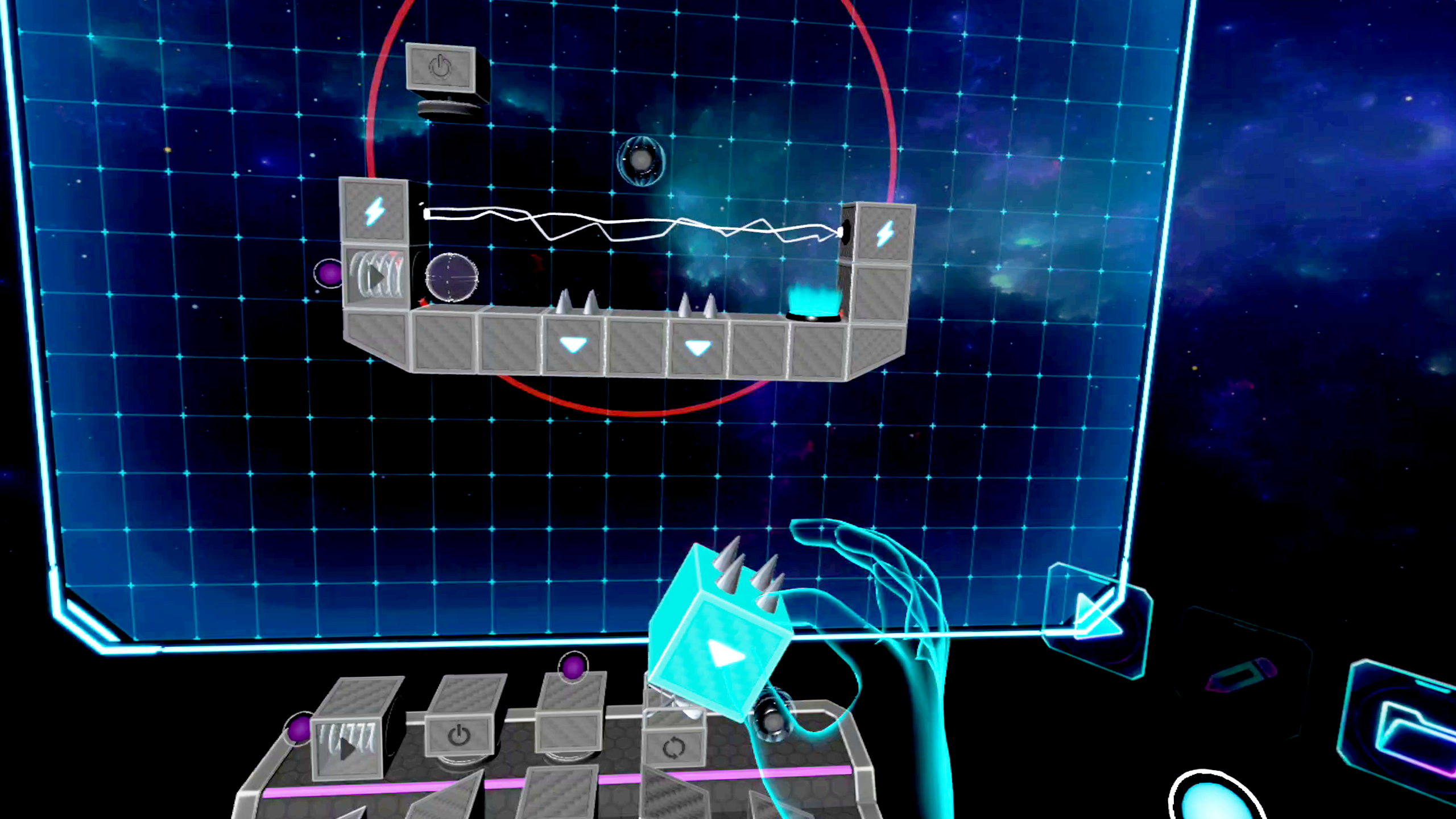
Gadget Master has 20 campaign puzzles and a short tutorial that introduces each gadget one at a time. It also has the Puzzle Workshop, where you build puzzles with the same hands you solve them with. You pick parts from a tray, snap them to a grid and switch instantly between Edit and Play. When you've built a puzzle, you can share it with a short code so other players can download and play it.
How we built it
We built Gadget Master in Unreal Engine 5.8 (Oculus branch) for Quest 3, using Blueprints and C++. We built our own hand interactions on top of Meta XR hand tracking (pinch, poke, fingertip spin, flick and touch), tuned specifically for these gadgets. Puzzles are JSON documents spawned into one shared level, not hand-built maps. That meant every campaign puzzle could be built in-game with the Workshop, the same tool players get. Sharing runs on Firebase Cloud Functions and Firestore. Uploads are verified with Meta user entitlement, and share codes start at two digits and only get longer as they run out. Nearly all 3D models and materials were recreated for close-up, hands-on play.
Challenges we ran into
- Gestures that fit the gadget. The Fan started as a pinch crank. It felt like operating a tool, not powering a fan, so we replaced it with a free fingertip spin.
- Tracking noise. Pinches use hold times, hysteresis and a grace period when tracking drops, so a held Magnet doesn't cut out and a Spring doesn't fire early.
- Physics at 1/20 scale. At diorama size the orb moves so slowly that the physics engine kept putting it to sleep in the middle of a push. Tuning its sleep settings fixed it.
- Touching UI with no haptics. We added a poke limit that stops the virtual fingertip at the surface, without relying on physics interactions to keep it performant.
- Flicks. Reading a fast flick reliably took several versions, and differentiating between pinches and flicks was challenging as well.
Accomplishments that we're proud of
- The entire campaign was built in our own in-game editor.
- Puzzle sharing works end-to-end on Quest, from upload with a real Meta account to download with a code.
- The game is fully playable with hands, from launch to the final puzzle, by a seated player.
What we learned
Hands reward small, clear vocabularies. A pinch and a fingertip, reused in different contexts, beat a large set of poses the tracker can't tell apart. Without controller haptics, every gesture needs an instant answer through sound, light and motion. And building our tools first, then the content in those tools, paid for itself many times over.
What's next for Gadget Master
We're aiming for a full release in Q2 2027. That means bringing over more gadgets from Gadget Blaster (movers, Gravity Wall, Booster, gates), adding tray categories and per-piece settings in the Workshop, and a browsable library of shared puzzles. We're also exploring full 3D layouts, new gadgets and support for eye tracking.


