-
-
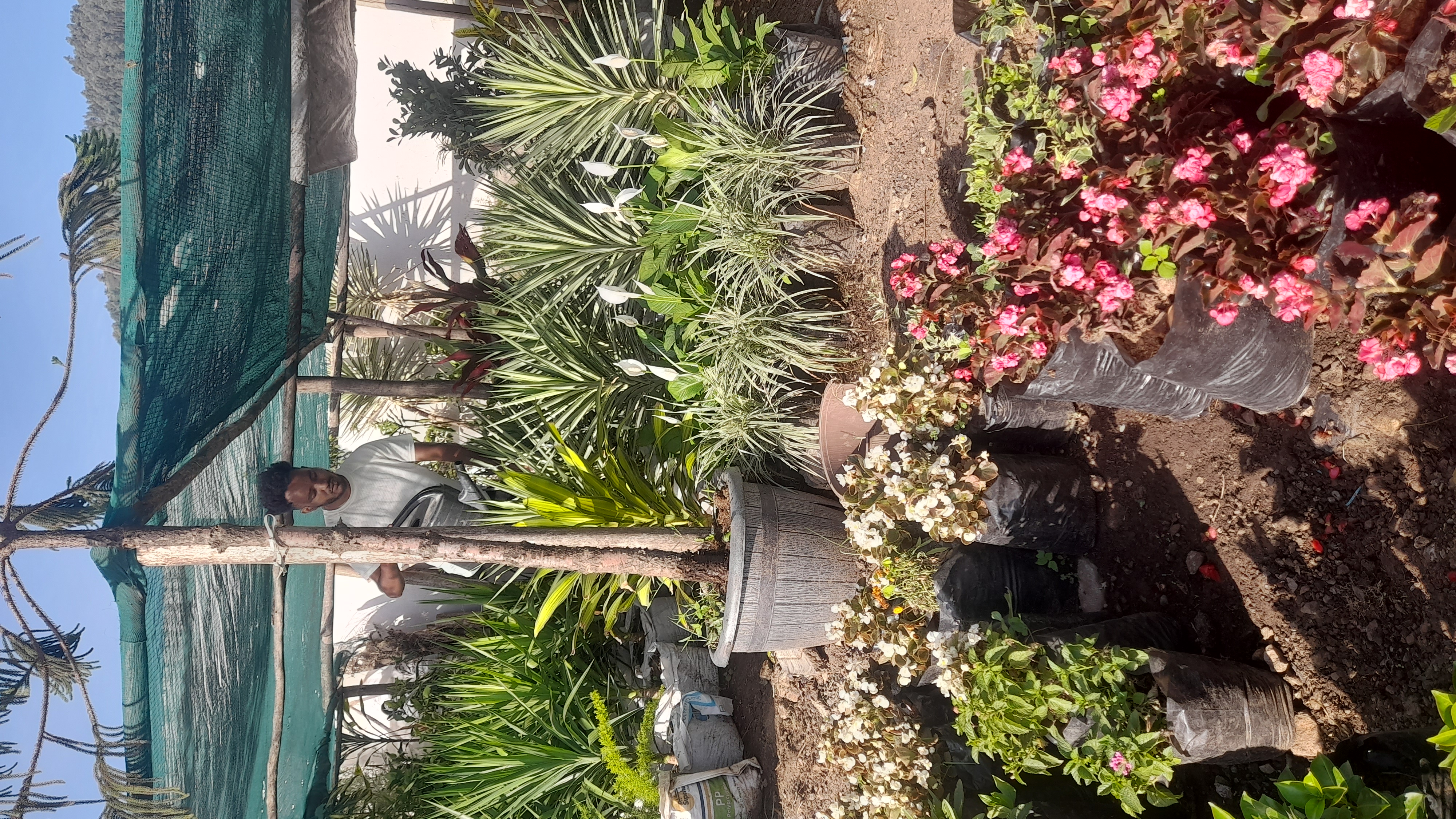
Image_of_site_watering
-
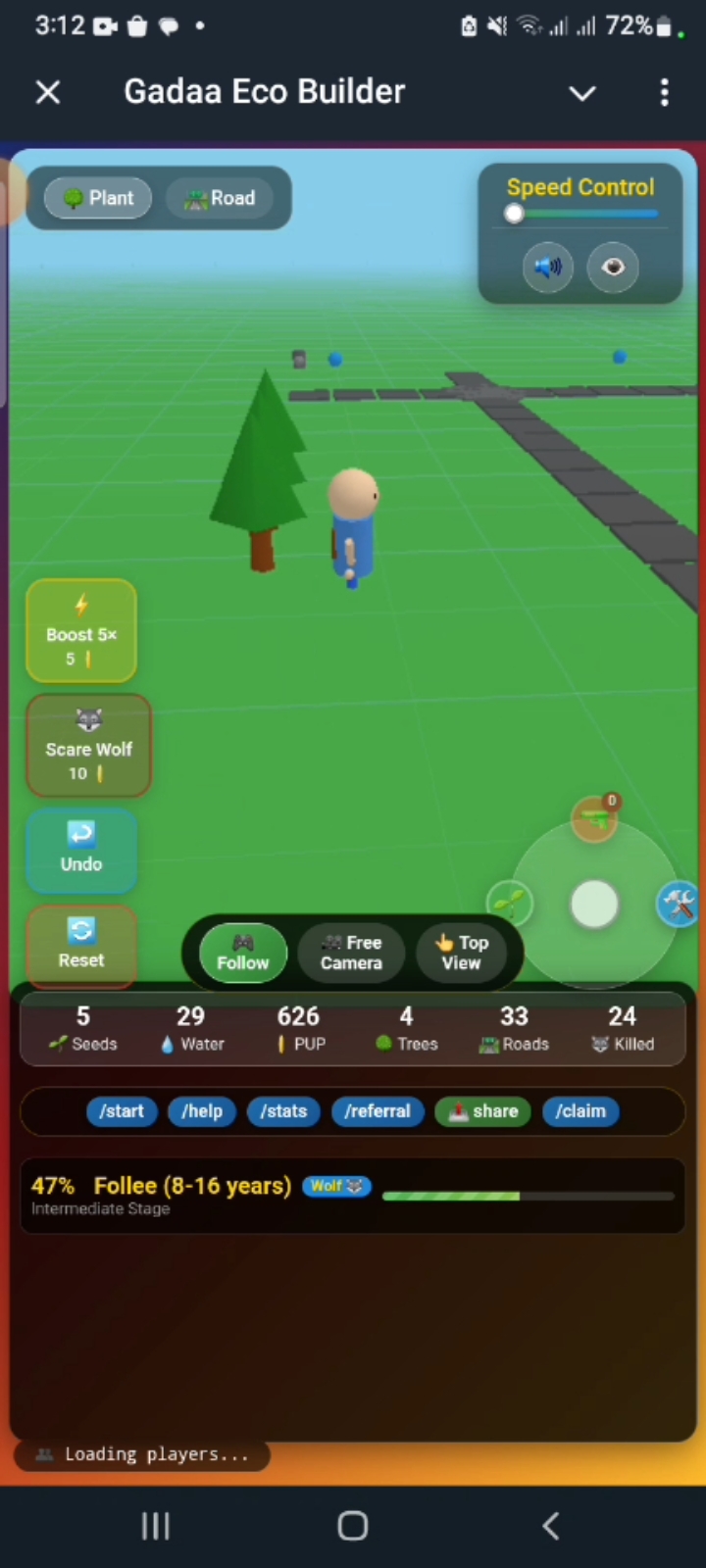
Screenshot_of_gadaa_eco_builder_bot
-
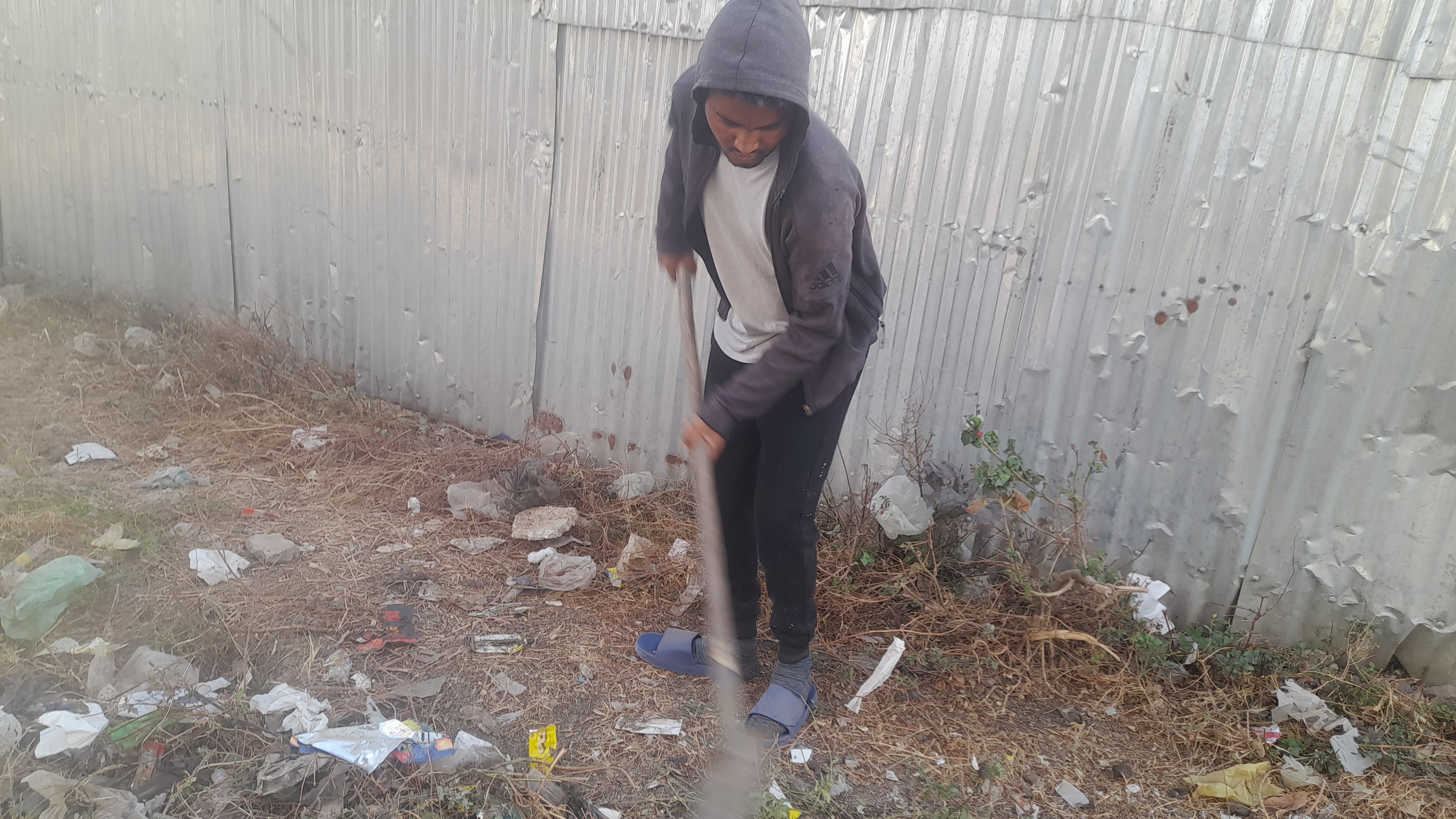
Clearing_roadside
-
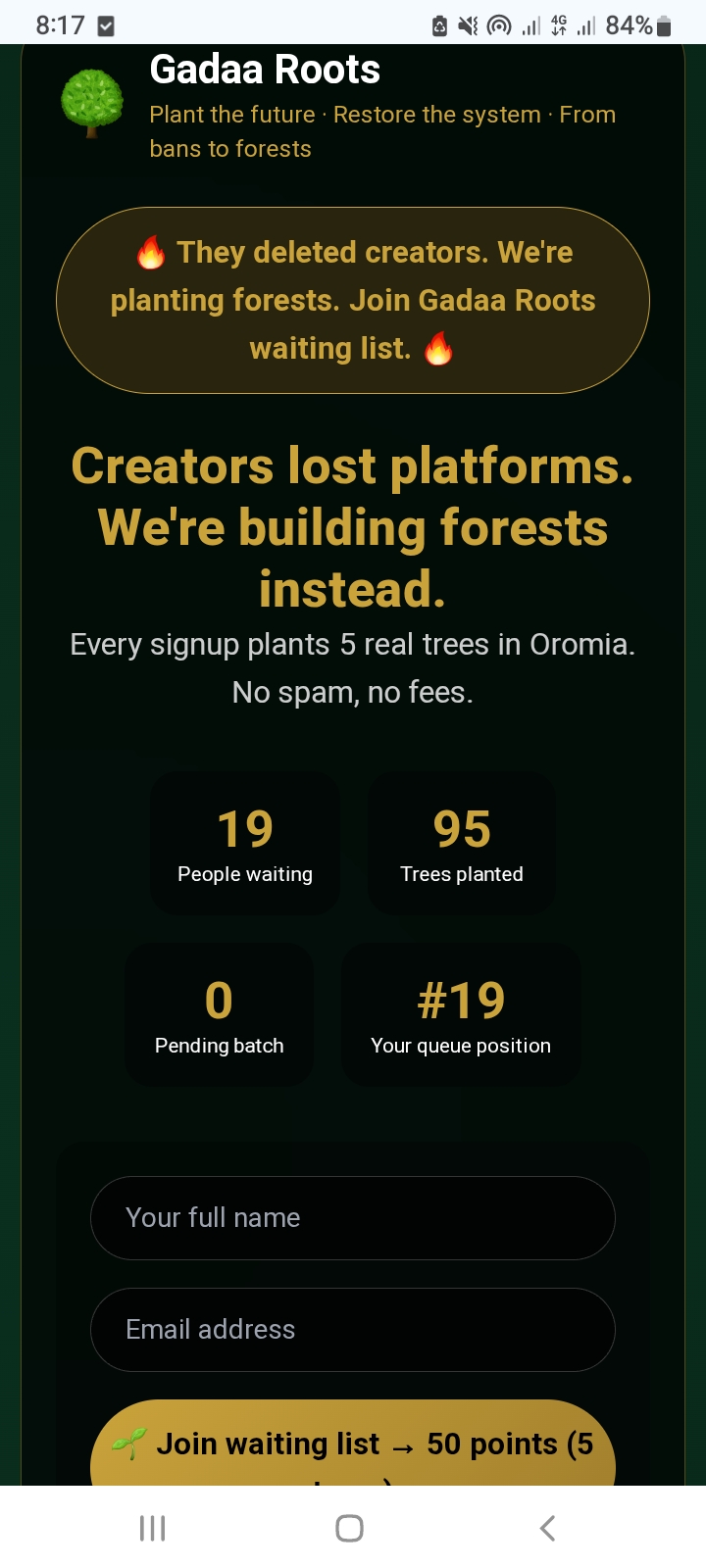
Screenshot_of_waiting_list
Inspiration
Inspiration
My brother was killed, leaving his children orphaned. That loss became part of the foundation of my mission. I am building Gadaa Eco Builder to create a more secure future for them and for other vulnerable children in Ethiopia.
The Oromo Gadaa system is inscribed by UNESCO on the Representative List of the Intangible Cultural Heritage of Humanity. It is a living indigenous governance system associated with justice, conflict resolution, social cohesion, protection of women's rights, and knowledge transmission across generations.
At the same time, communities in Oromia face land degradation, environmental pressure and climate-related risks. I saw an opportunity to connect cultural knowledge with practical environmental action.
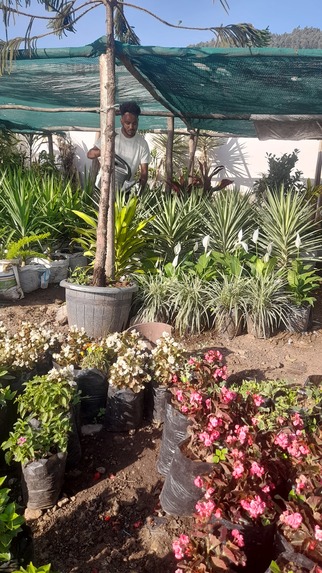
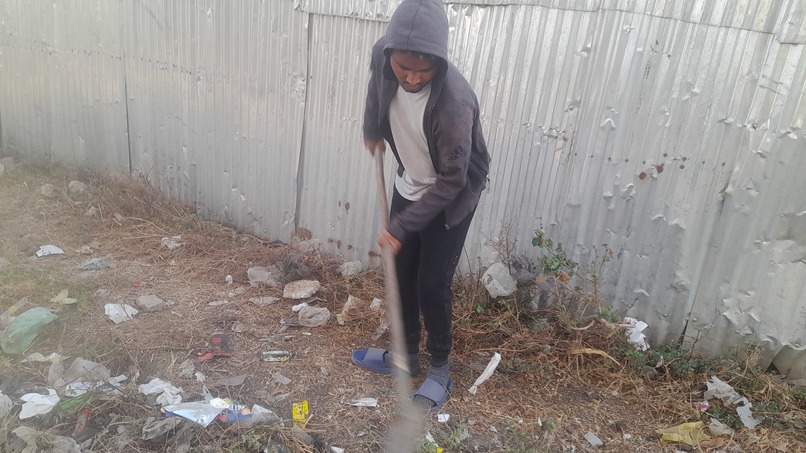
I have already cleared approximately 1.5 km of roadside by hand and planted more than 1,500 native trees in the Amerti-Nashe valley. This physical work is the foundation behind the digital idea.
Gadaa Eco Builder connects these two challenges: using gamification to make Gadaa knowledge accessible to younger generations while creating pathways toward real-world restoration.
How I Built This
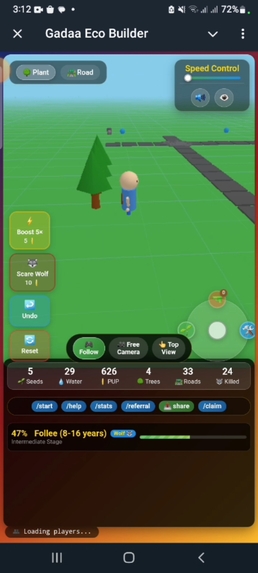
I built Gadaa Eco Builder as a Telegram-based game where players learn about Gadaa, respond to environmental challenges, plant virtual trees and progress through Gadaa stages.
For this hackathon, I used WebMCP to build an AI-powered assistant that:
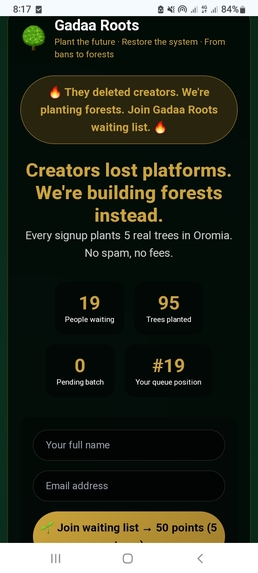
- retrieves information from the Gadaa Eco Builder waiting-list website;
- helps users explore their Gadaa stage based on age;
- answers questions about Gadaa and tree planting; and
- connects users with information about restoration activities in the Amerti-Nashe valley.
The project has also gained international visibility. My work on Gadaa Eco Builder has been published through UNDRR's PreventionWeb community platform, where the project is presented as an example connecting indigenous knowledge, disaster-risk reduction and ecosystem restoration.
What I Learned
I learned how WebMCP can allow an AI agent to interact with web-based information rather than simply provide generic answers. For Gadaa Eco Builder, this creates a way to make indigenous knowledge more accessible through an interactive digital experience.
I also learned that technology is most meaningful when it remains connected to the physical reality it is trying to improve. The game is therefore not an end in itself; it is a tool for connecting cultural learning, participation and restoration.
Challenges I Faced
Building with limited internet access and without project funding has been one of my biggest challenges. I have relied on borrowed phones, free tools and self-taught technical skills.
The WebMCP documentation was also new to me. I worked through it step by step, learning by building rather than waiting until I had ideal resources.
The Impact
Gadaa Eco Builder is designed as more than a game: it is an emerging restoration model.
The project connects three things that are often treated separately:
culture → technology → physical restoration.
A player can learn about Gadaa, interact with an indigenous knowledge system, and then be connected to a real environmental challenge. My goal is to make participation in restoration understandable and accessible to young people and diaspora communities while keeping physical restoration at the centre.
The project is still being built. I do not have the resources of a large organization, but I have demonstrated that I can move from an idea to a working digital platform and from a digital concept to physical tree planting.
My aim now is to strengthen the technology, document restoration more systematically, work with cultural and environmental partners, and build the evidence and infrastructure needed to scale the model.
I am building this for the children my family has lost, for communities facing environmental pressure, and for a generation that deserves to see indigenous knowledge as something living, useful and capable of shaping the future.
What it does
How we built it
I built Gadaa Eco Builder as a Telegram-based game where players learn about Gadaa, respond to environmental challenges, plant virtual trees and progress through Gadaa stages.
For this hackathon, I used WebMCP to build an AI-powered assistant that:
retrieves information from the Gadaa Eco Builder waiting-list website; helps users explore their Gadaa stage based on age; answers questions about Gadaa and tree planting; and connects users with information about restoration activities in the Amerti-Nashe valley.
The project has also gained international visibility. My work on Gadaa Eco Builder has been published through UNDRR's PreventionWeb community platform, where the project is presented as an example connecting indigenous knowledge, disaster-risk reduction and ecosystem restoration.
Challenges we ran into
I learned how WebMCP can allow an AI agent to interact with web-based information rather than simply provide generic answers. For Gadaa Eco Builder, this creates a way to make indigenous knowledge more accessible through an interactive digital experience.
I also learned that technology is most meaningful when it remains connected to the physical reality it is trying to improve. The game is therefore not an end in itself; it is a tool for connecting cultural learning, participation and restoration.
Accomplishments that we're proud of
Building with limited internet access and without project funding has been one of my biggest challenges. I have relied on borrowed phones, free tools and self-taught technical skills.
The WebMCP documentation was also new to me. I worked through it step by step, learning by building rather than waiting until I had ideal resources.
What we learned
We learned how WebMCP can allow an AI agent to interact with web-based information rather than simply provide generic answers. For Gadaa Eco Builder, this creates a way to make indigenous knowledge more accessible through an interactive digital experience.
We also learned that technology is most meaningful when it remains connected to the physical reality it is trying to improve. The game is therefore not an end in itself; it is a tool for connecting cultural learning, participation and restoration.
What's next for Gadaa Eco Builder – AI Powered
The next step is to turn the prototype into a more useful AI-powered layer of Gadaa Eco Builder.
I want the AI assistant to become a bridge between indigenous knowledge, the Gadaa Eco Builder platform, and real-world restoration. Instead of simply answering questions, it should help users explore the Gadaa system, understand their connection to different Gadaa stages, learn about environmental stewardship, and discover how their digital participation connects with restoration work.
The next development stage will focus on improving the assistant's ability to retrieve and organize information from the Gadaa Eco Builder website and project records, while making the experience easier for young people and diaspora users. I also want to improve how restoration information from the Amerti-Nashe valley is documented and presented so that digital users can see the physical work behind the platform.
As the project develops, I want to connect the AI layer with more structured restoration data, cultural knowledge, community participation and eventually verified tree-planting records. This would allow the platform to move beyond a game and become a digital gateway into an indigenous-led restoration initiative.
I am still building this with very limited resources. My immediate goal is therefore not to promise a finished AI system, but to continue proving what is possible, document what works, learn from technical and environmental experts, and build partnerships that can help me take the prototype to the next level.
The long-term vision is an AI-powered Gadaa Eco Builder that helps people learn, participate and contribute to restoration while keeping Oromo knowledge and community leadership at its centre.


Log in or sign up for Devpost to join the conversation.