-
-
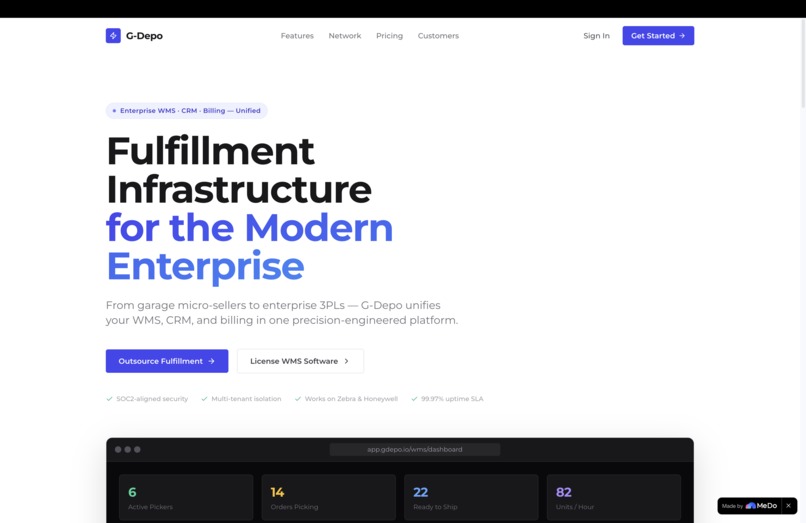
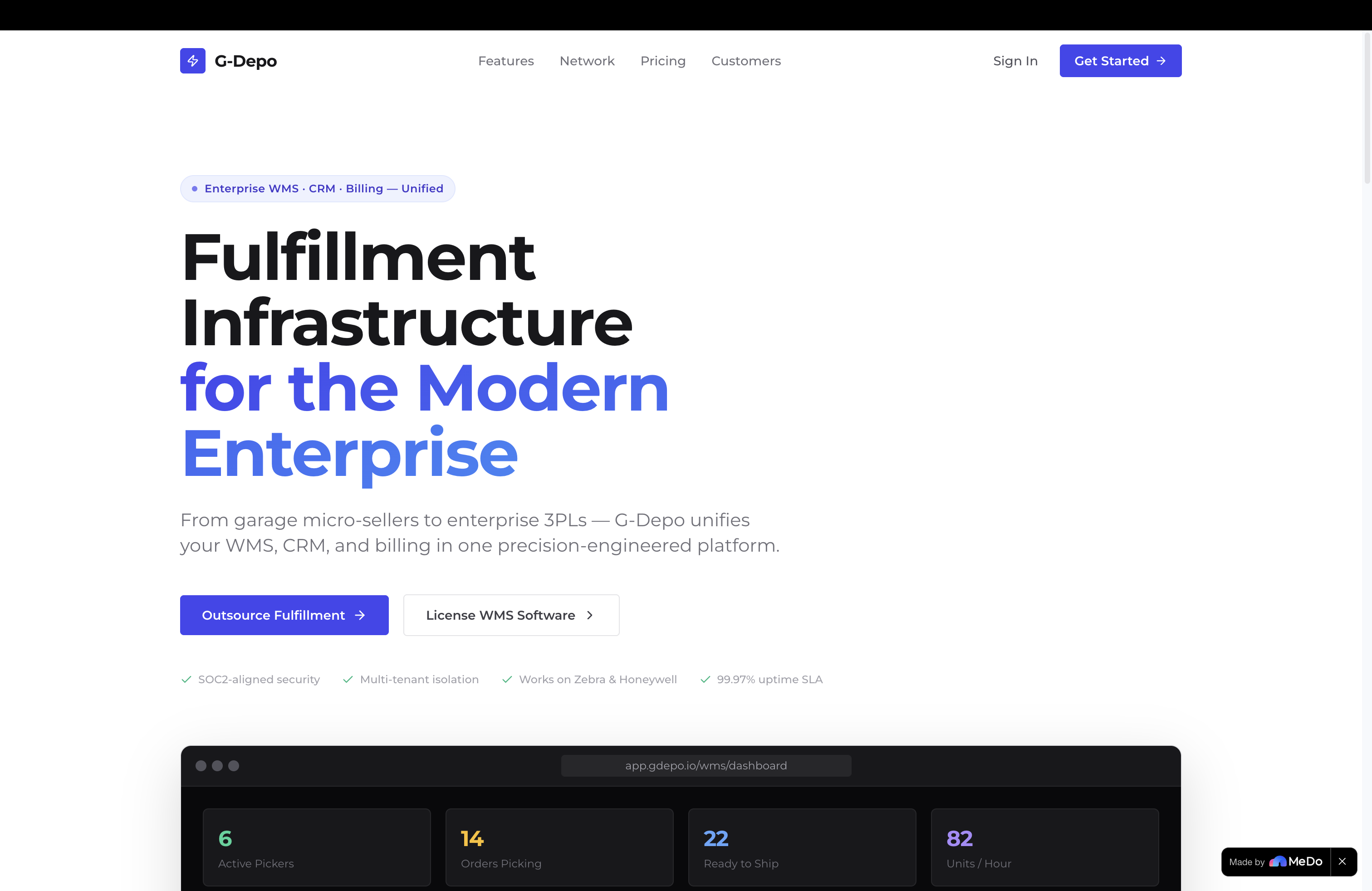
G-Depo Landing Page - High-Performance Fulfillment Infrastructure Overview
-
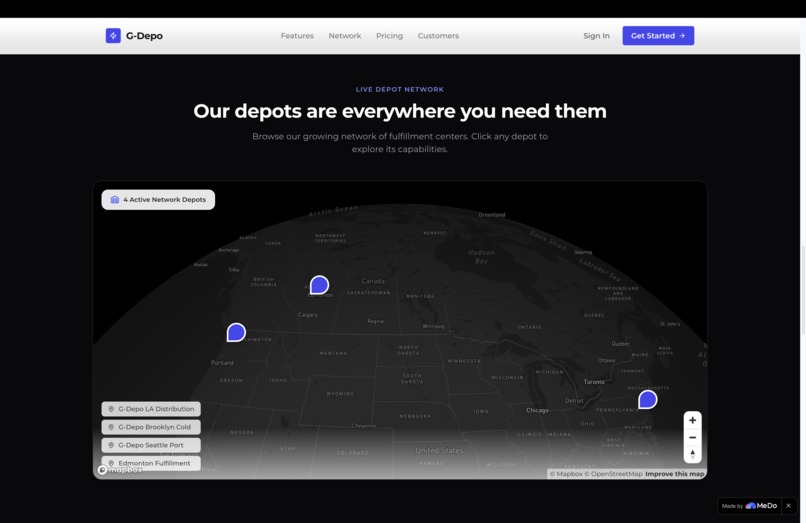
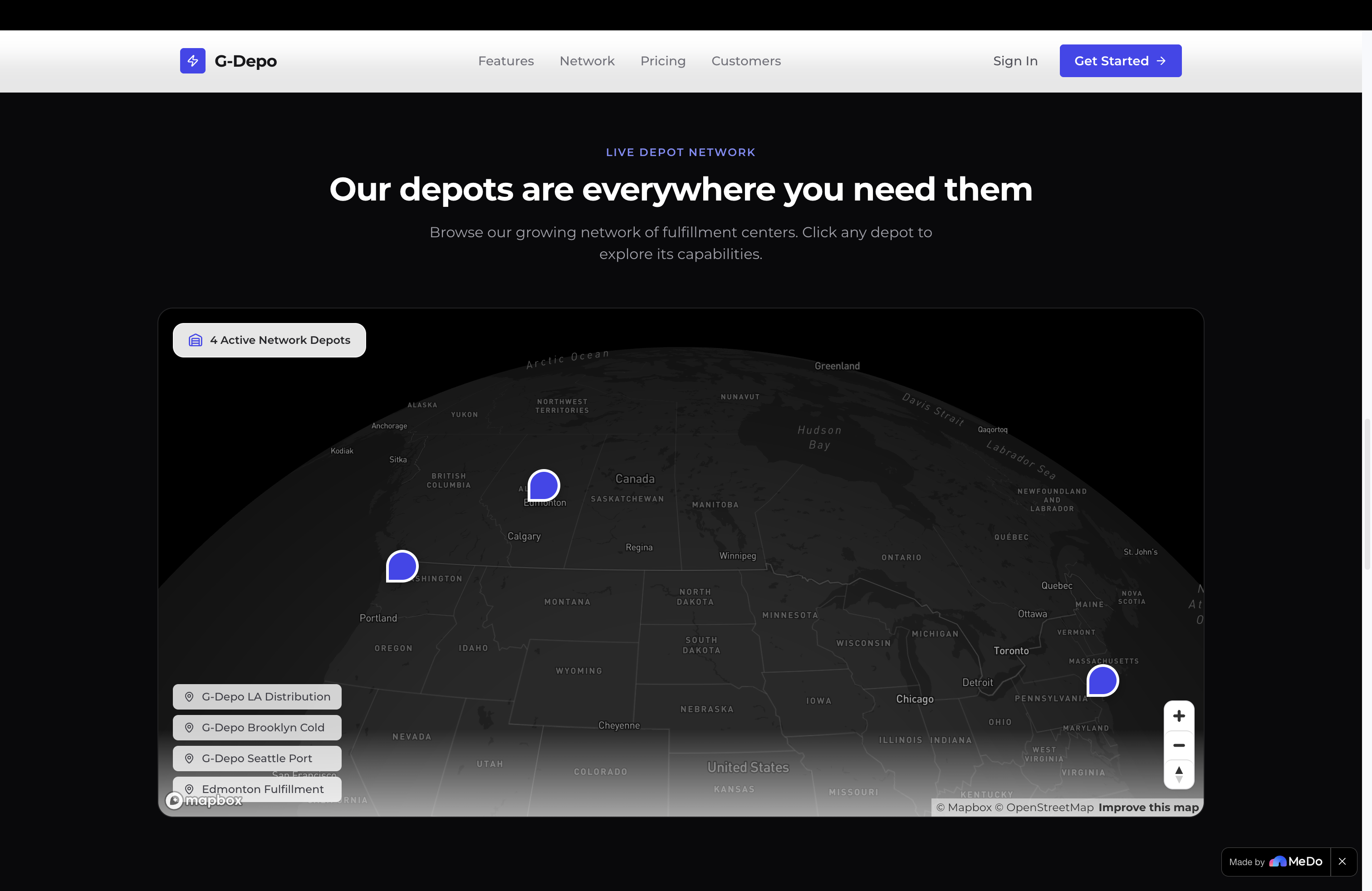
Global Network Map - Interactive Live Hub Capacity & Location Tracker
-
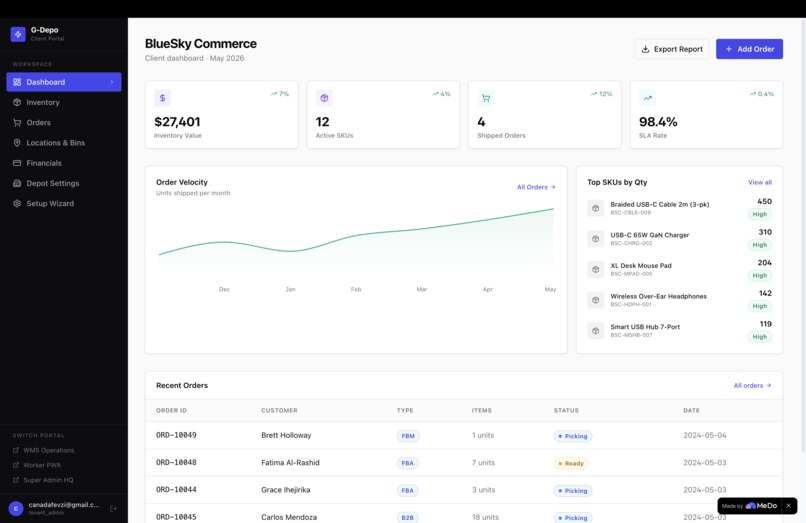
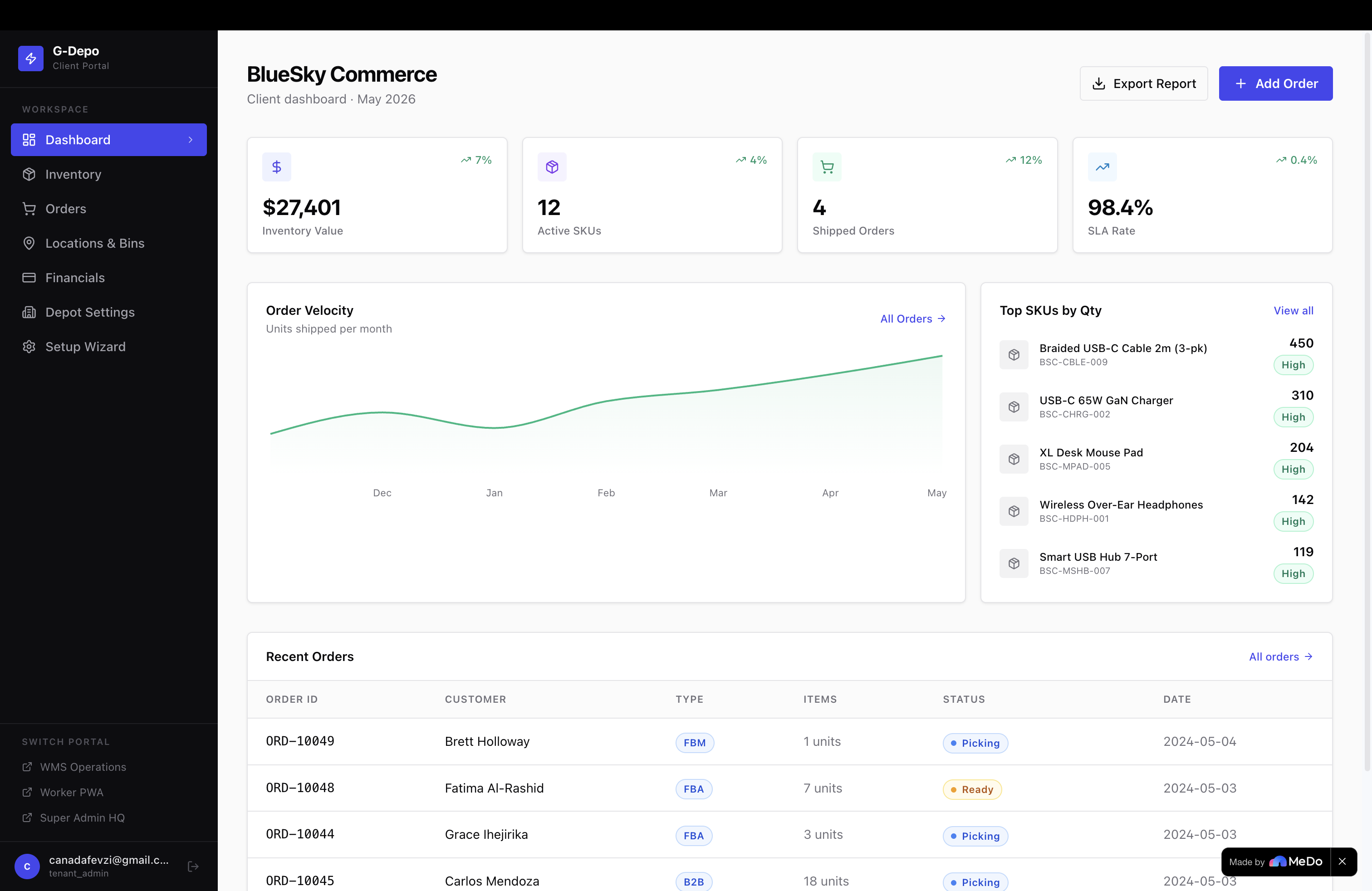
Client Portal - Self-Service Merchant Dashboard for Amazon/Shopify Sync & SLAs
-
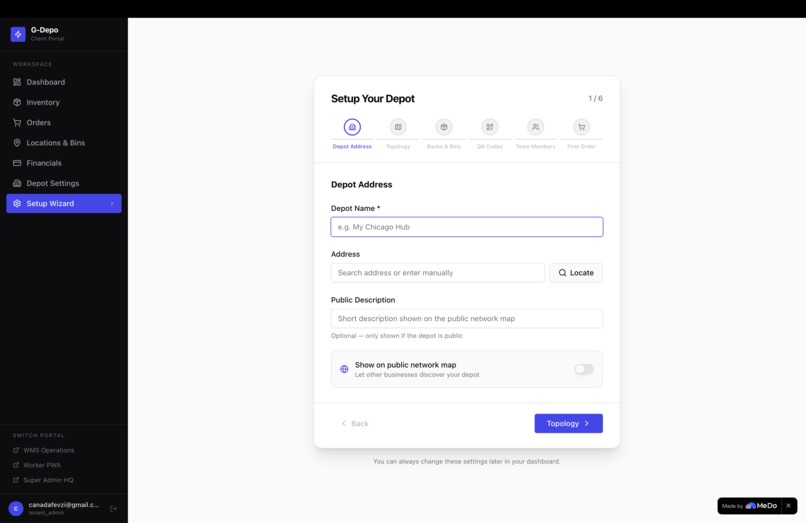
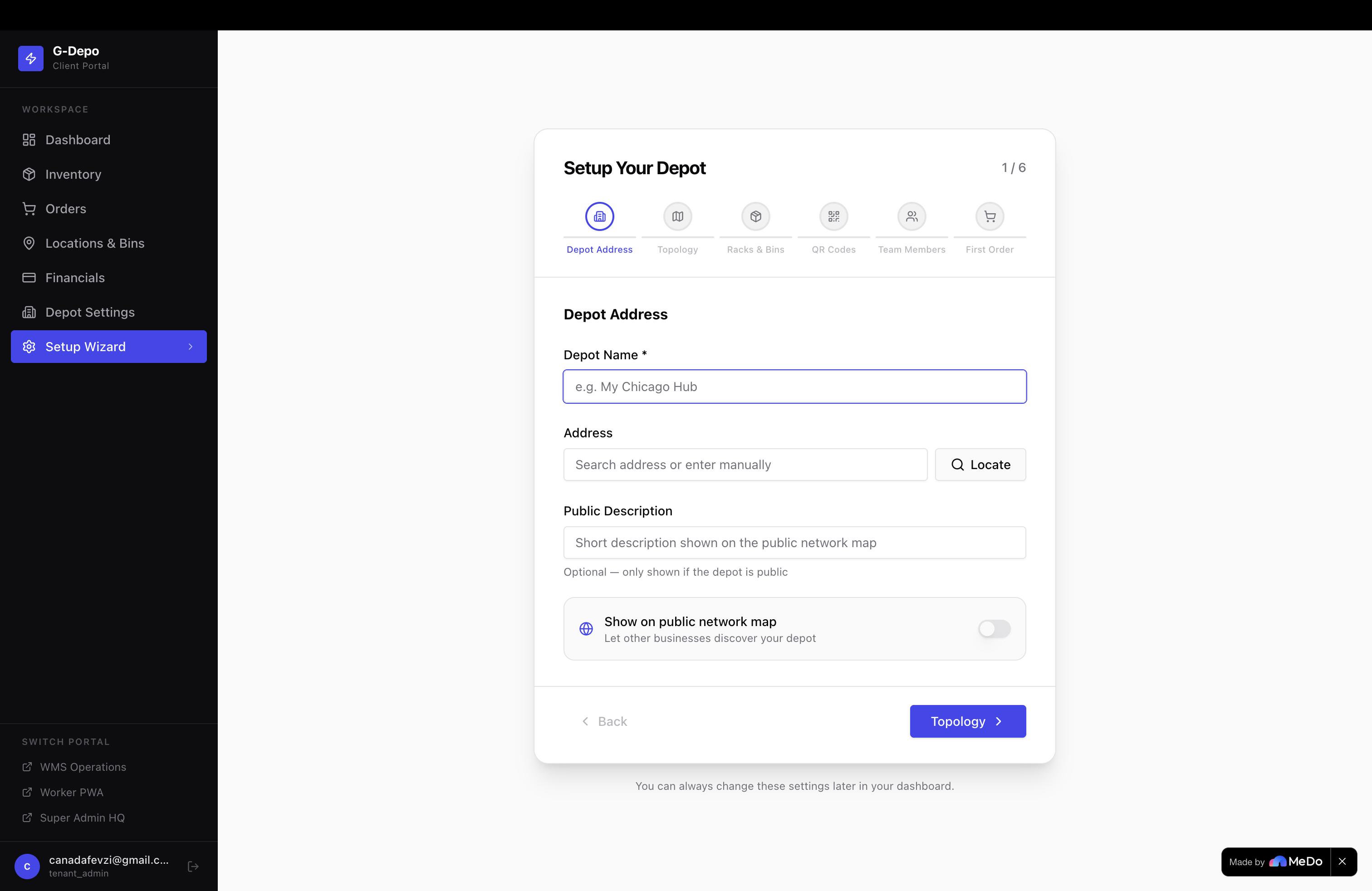
Onboarding Setup Wizard - Streamlined Configuration for New Merchants and Depot Nodes
-
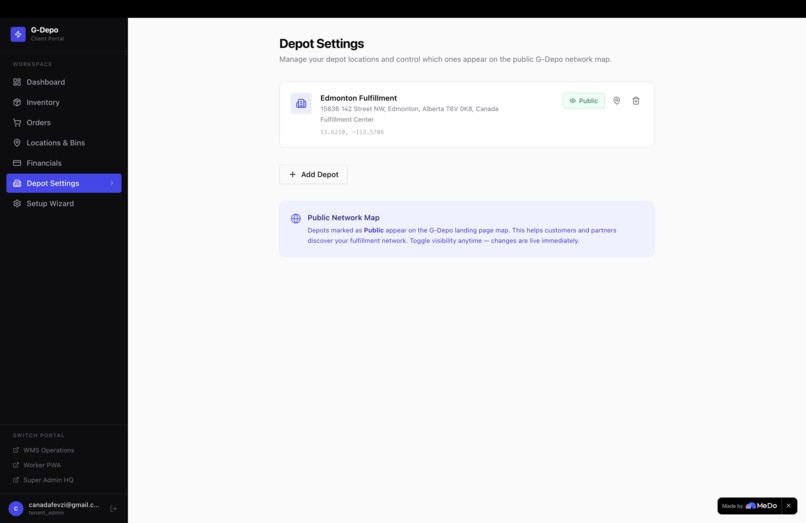
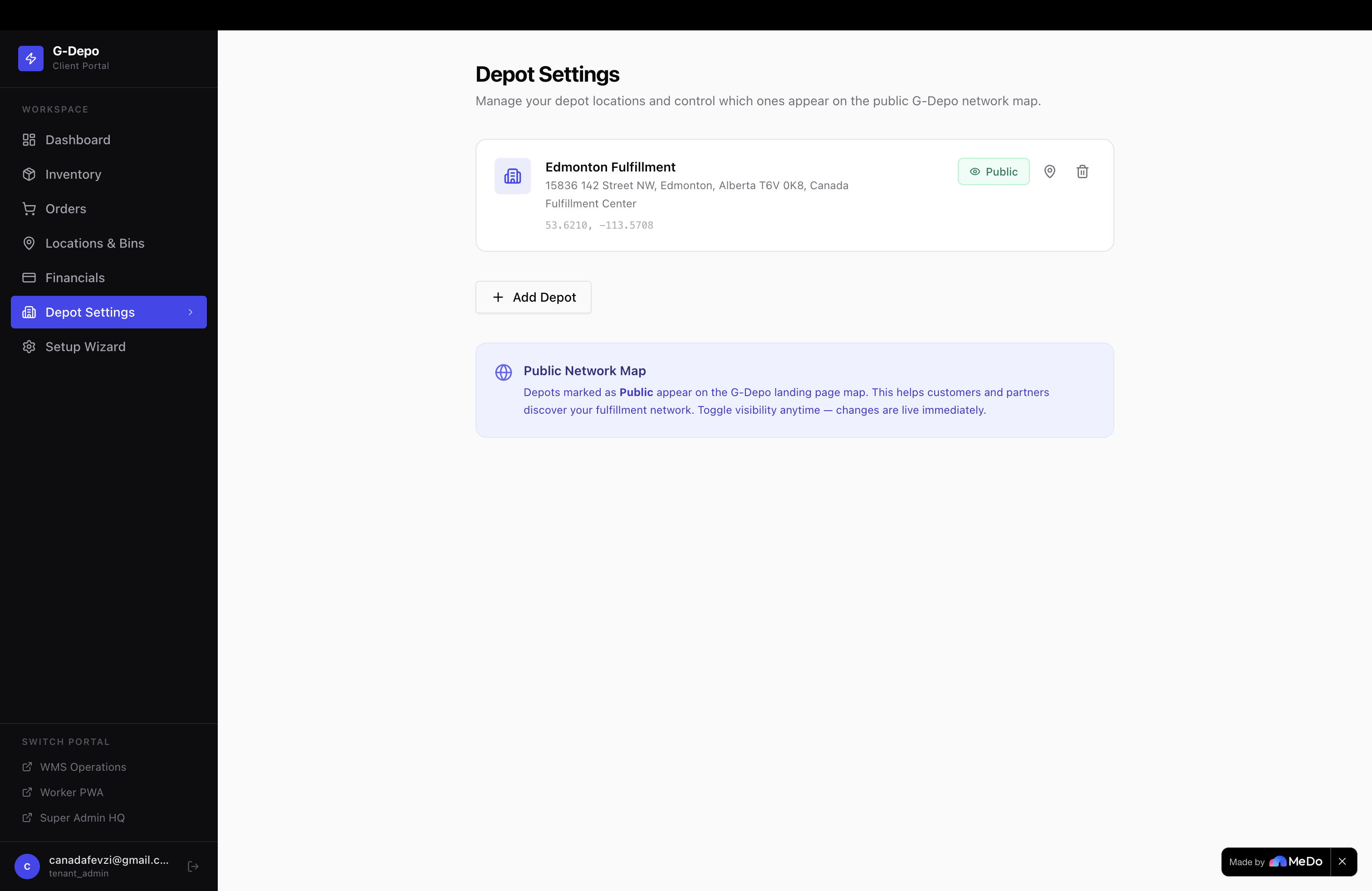
Depot Settings Panel - Configuring Multi-Tenant Facility Profiles and Public Visibility
-
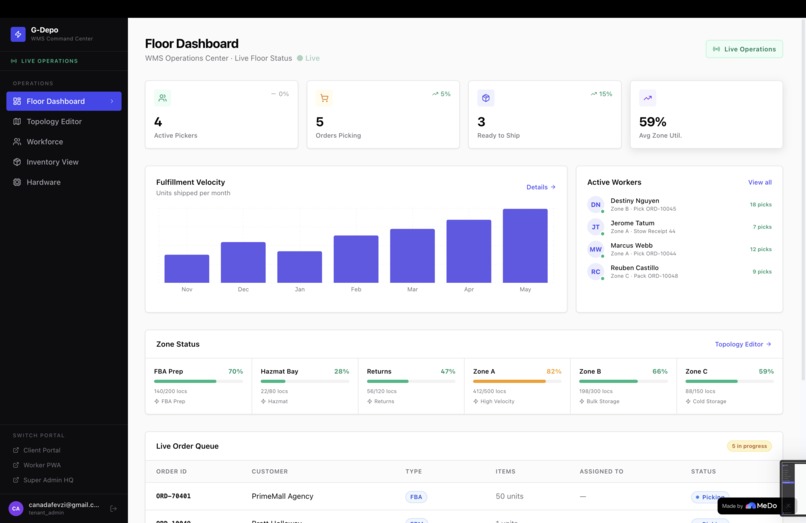
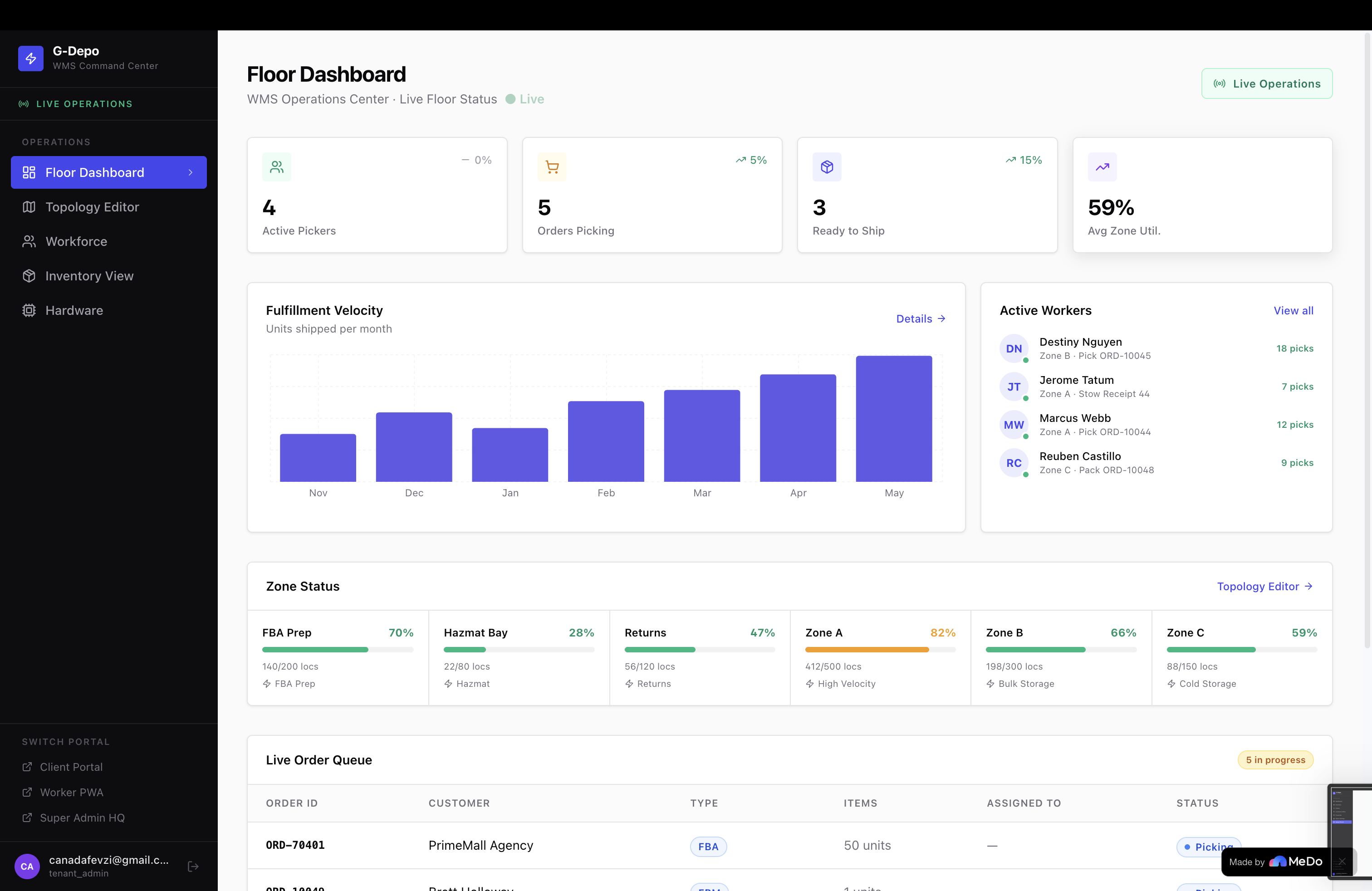
WMS Command Center - Real-Time Operational Analytics & Order Flow Dashboard
-
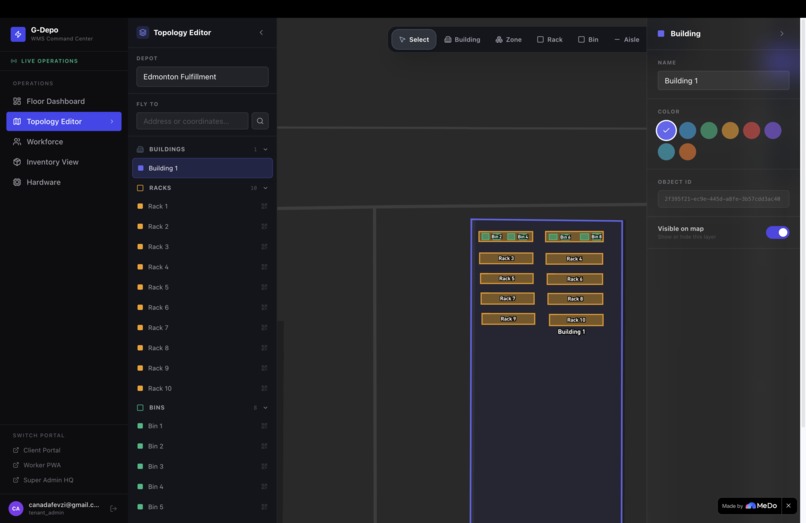
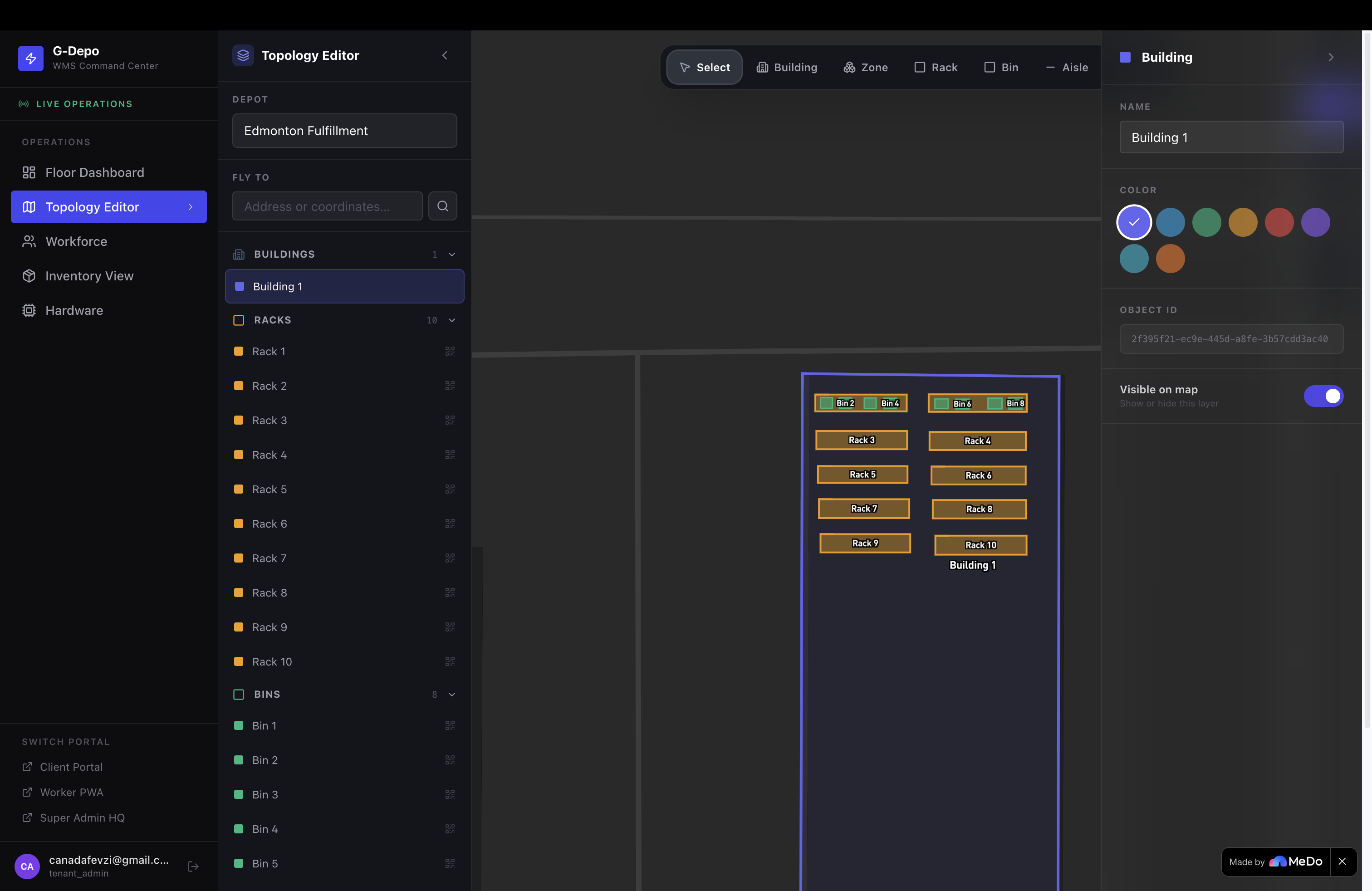
Topology Editor - 2D Coordinate-Based Warehouse Layout & Bin Planner
-
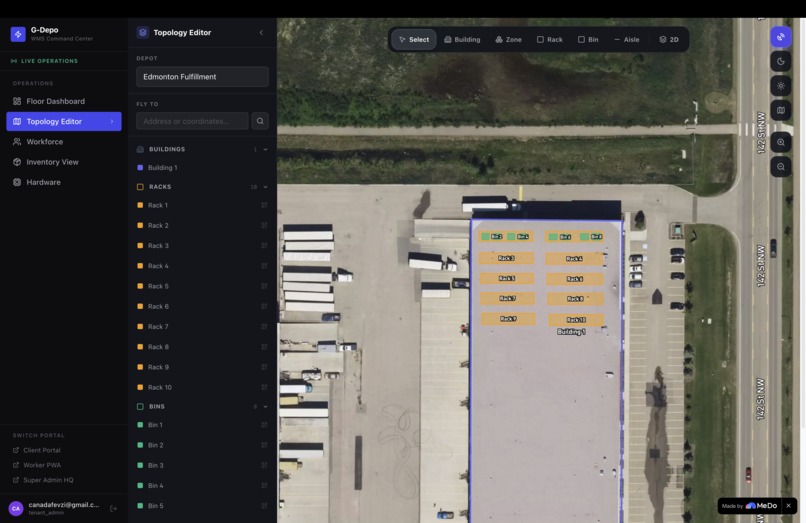
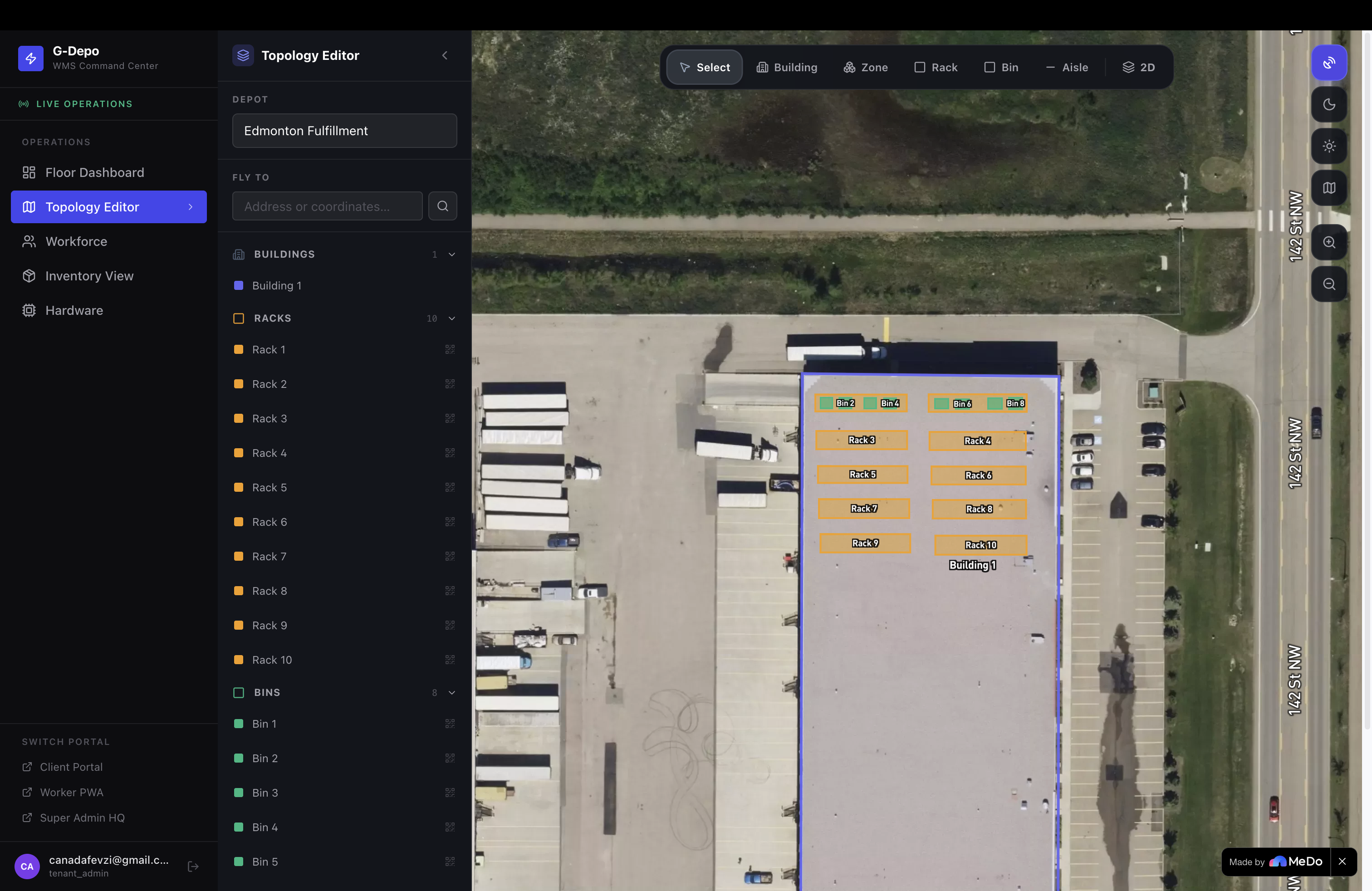
Topology Editor - High-Fidelity 3D Building Extrusion & Satellite Visualization
-
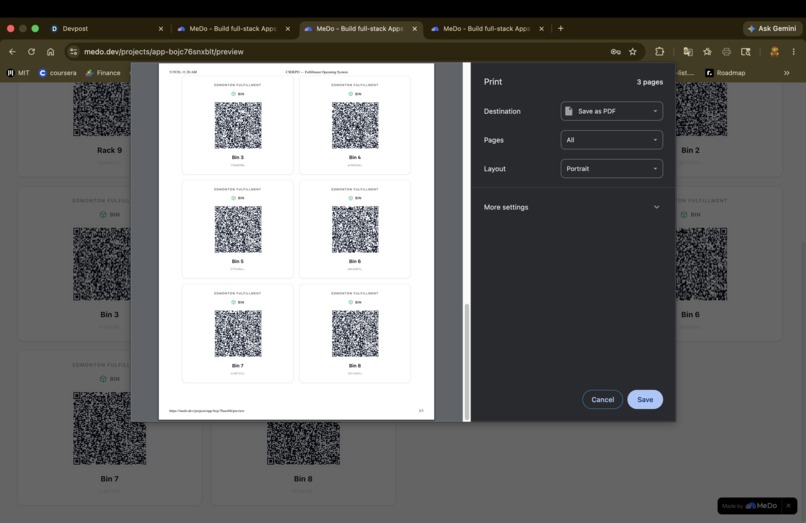
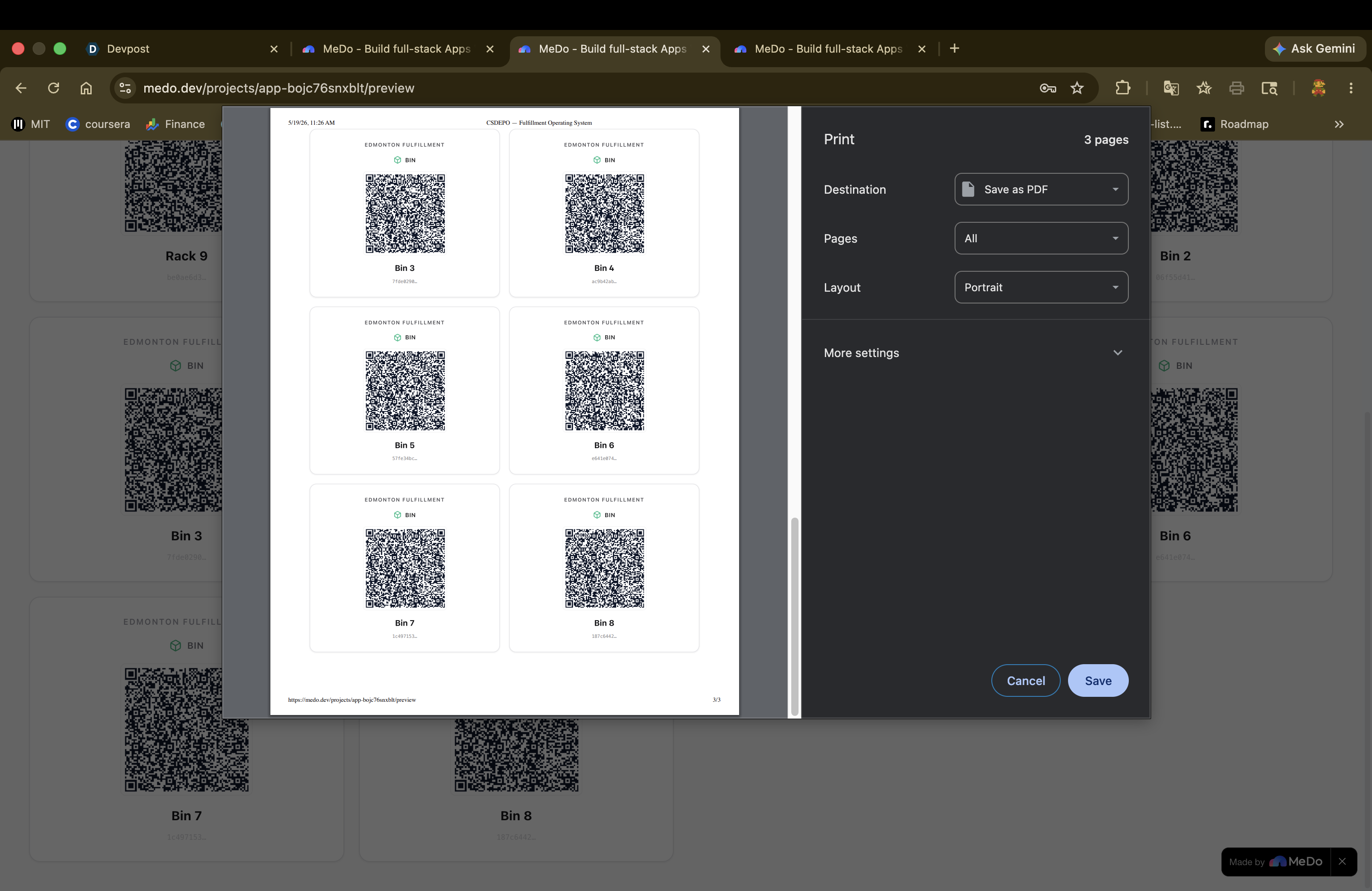
Barcode Generator - Bulk QR & Barcode Label Printing for Racks and Bins
-
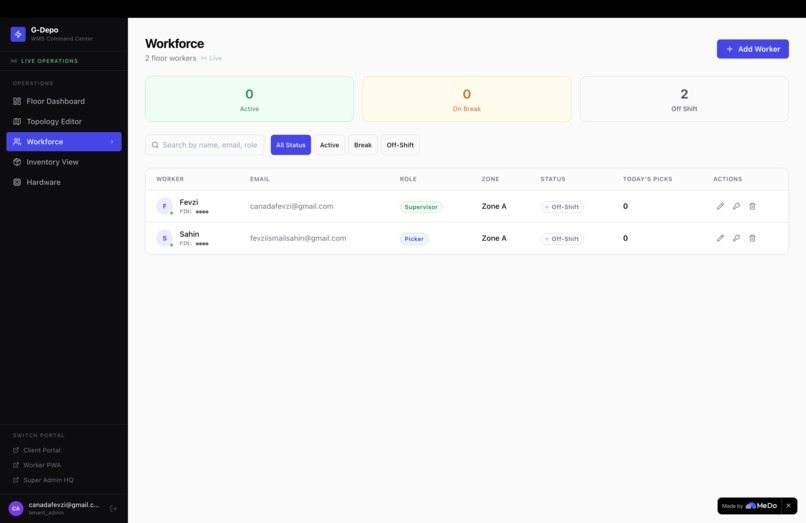
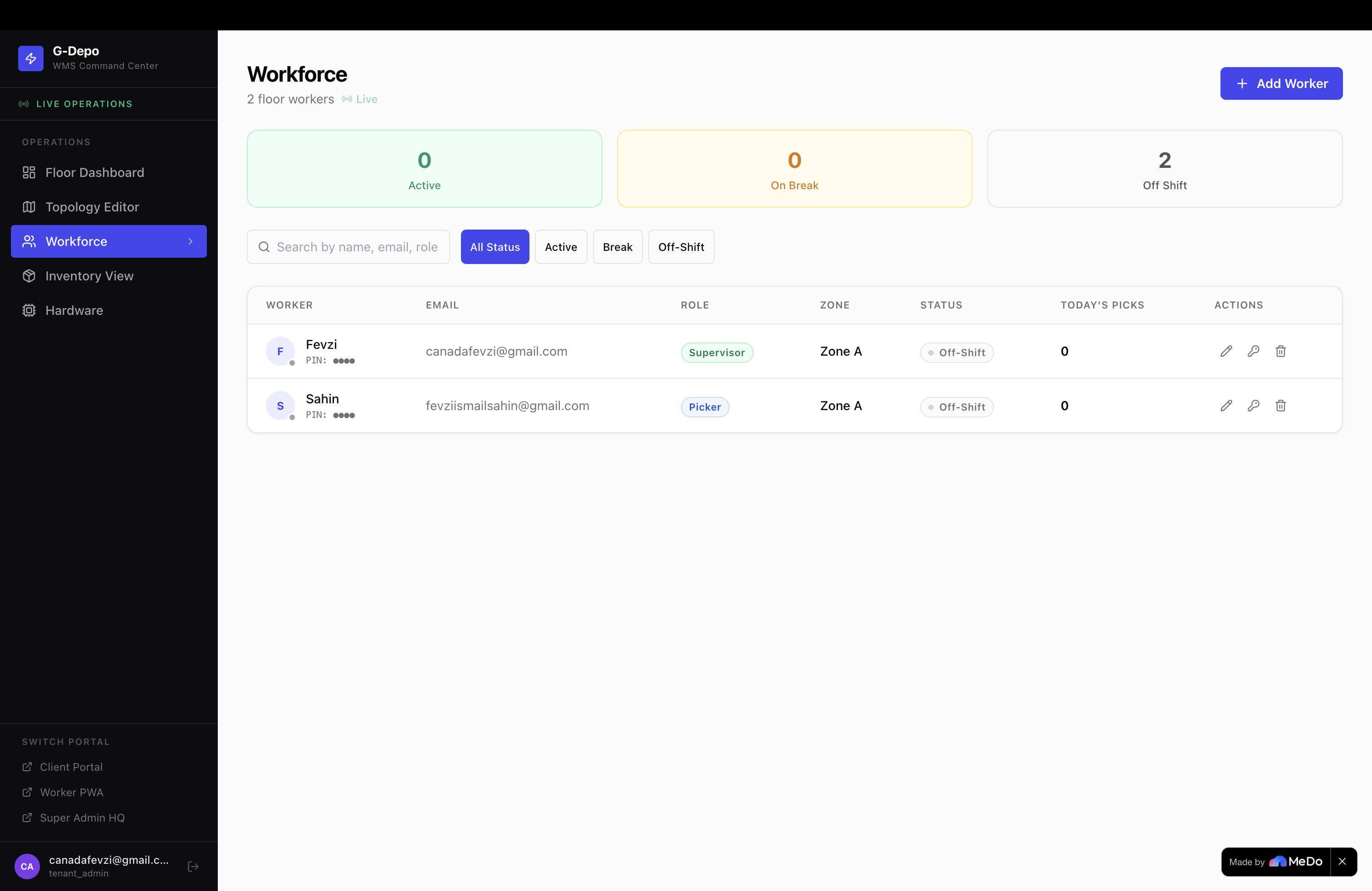
Workforce Management - Provisioning Floor Operators, Resetting Credentials, and Controlling Live Terminal Access
-
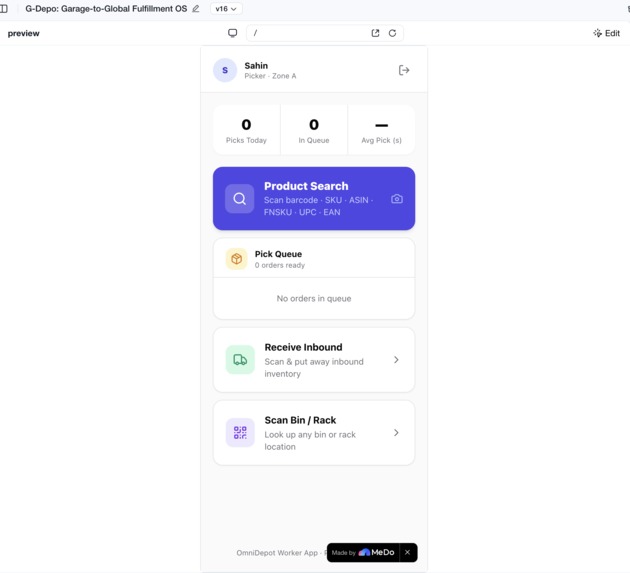
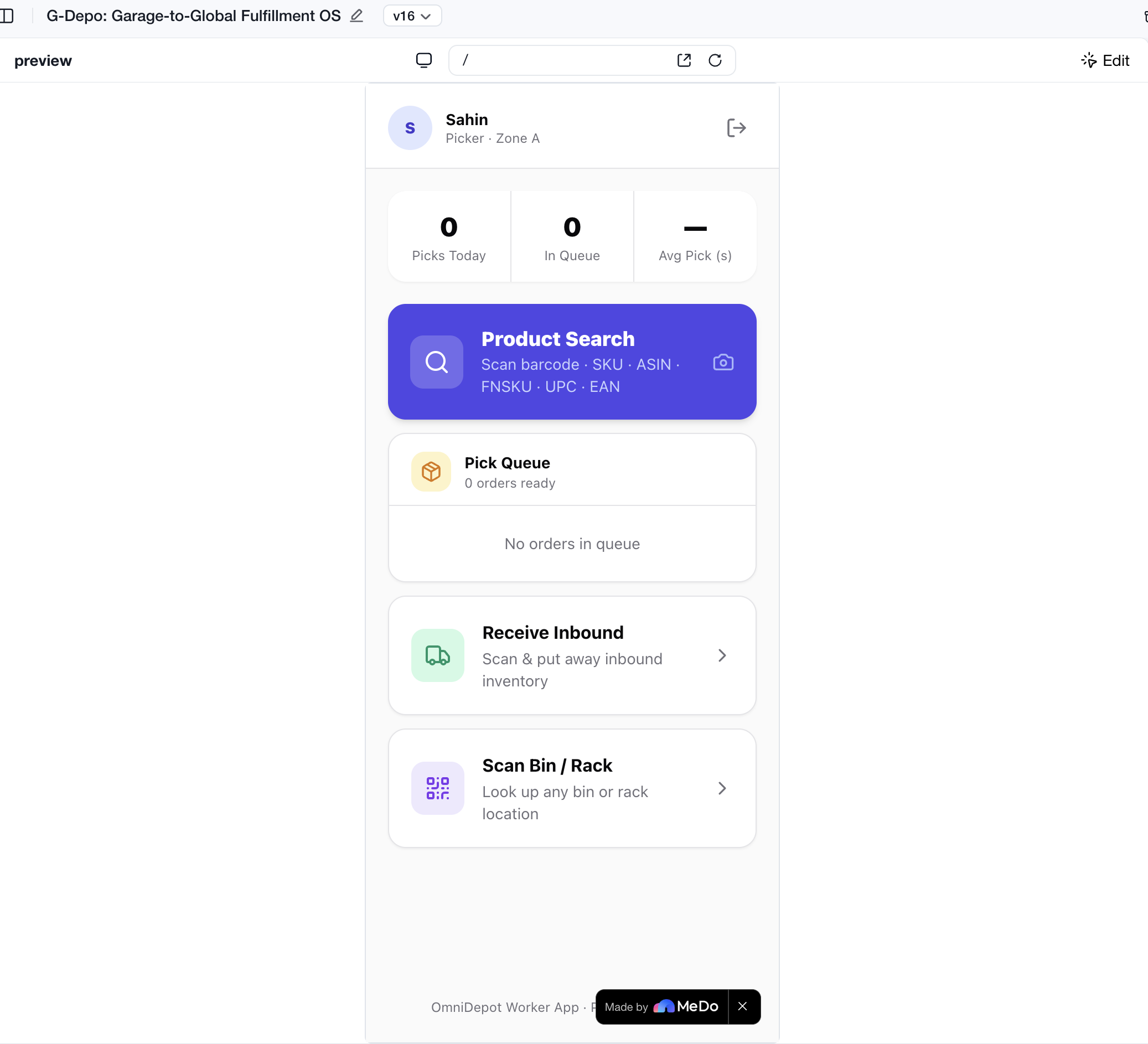
Worker PWA - Mobile Handheld Interface for Real-Time Receiving, Picking, and Barcode Scanning
-
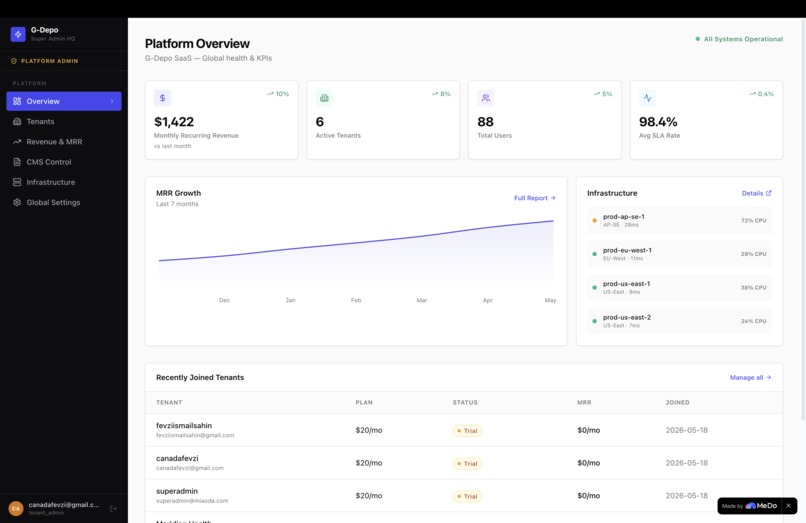
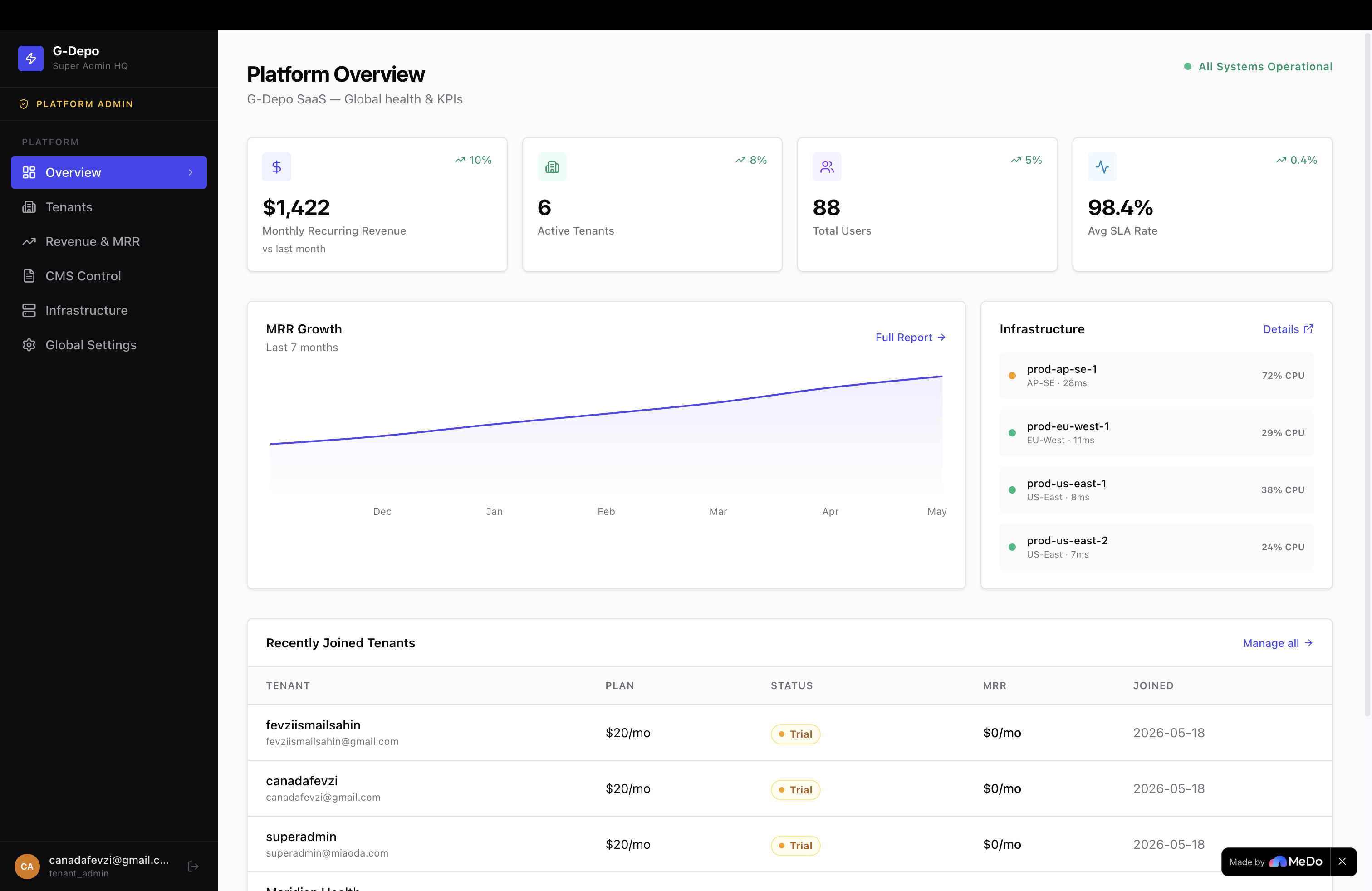
Super Admin HQ - Central Control Center for Global Platform Management & Multi-Tenant Infrastructure Analytics
-
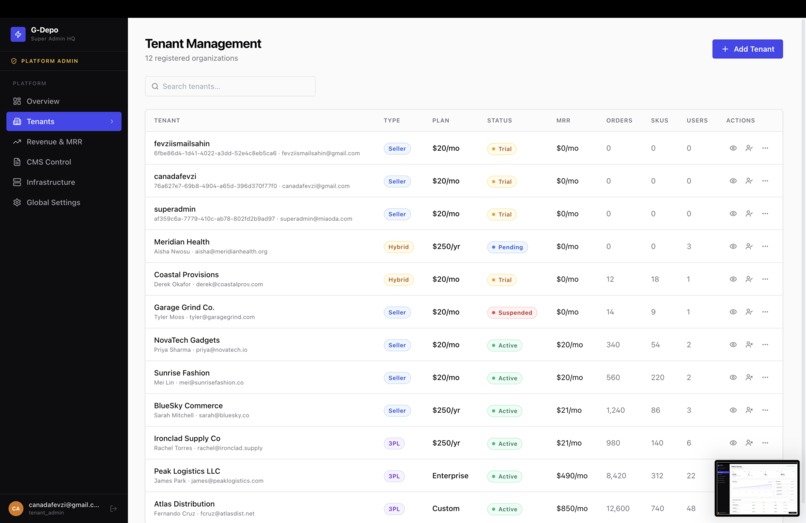
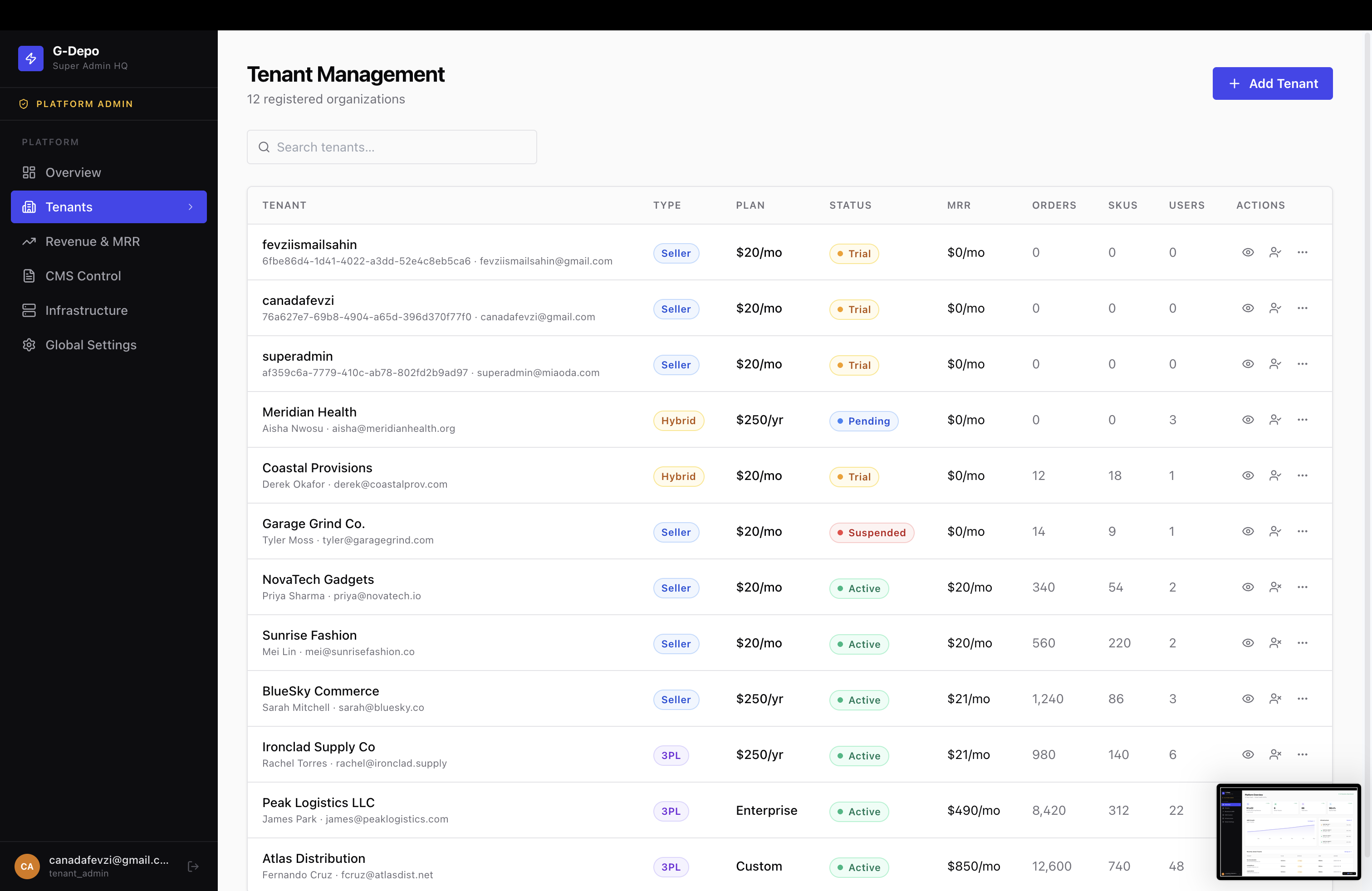
Tenant Management Deck - Real-Time Overview of Registered Merchants and Onboarded Businesses
-
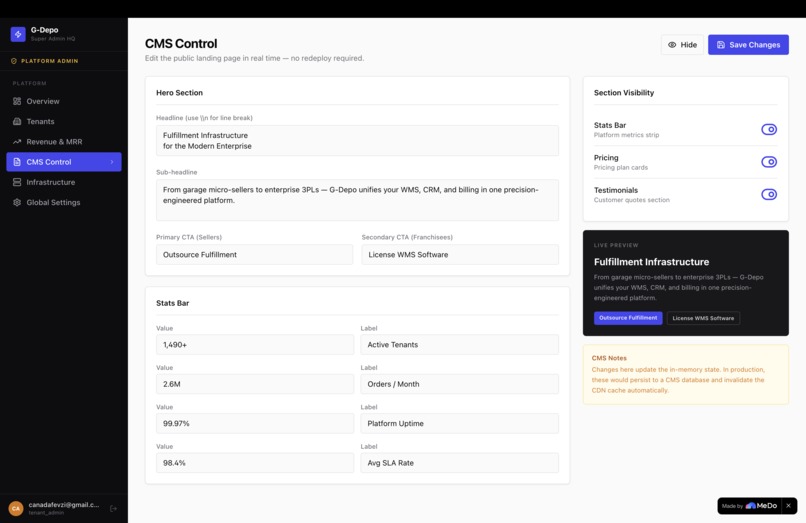
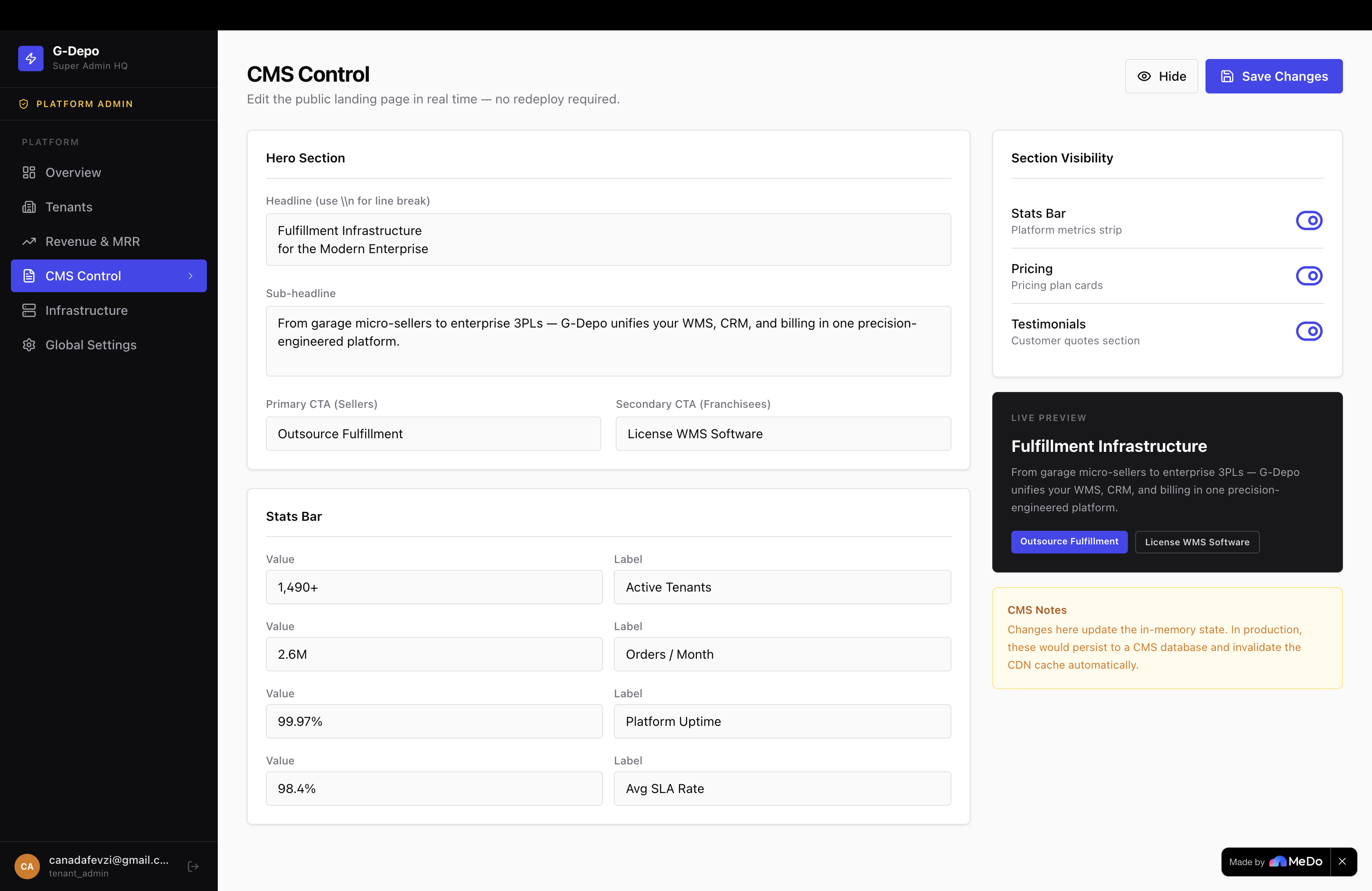
CMS Control Panel - Managing Dynamic Platform Content, Documentation, and Public Announcements
What it does
Optimized for FBA Prep & Multi-Client Logistics
Managing inventory for your own store is one thing, but running an FBA Prep service or a 3PL for multiple independent clients is an operational minefield. G-Depo was built precisely to eliminate "mixed-stock chaos."
Thanks to its absolute multi-tenant database architecture, FBA Prep businesses can securely onboard dozens of different merchants. Each client gets their own isolated view to link Amazon/Shopify stores and monitor stock velocity, while the warehouse operator uses the WMS Command Center to manage multi-owner bin allocations, orchestrate custom kitting/labeling workflows, and automate pick-and-pack fee tracking without a single spreadsheet error.
- Landing Page & Public Network: A sleek front page with an interactive map of live fulfillment hubs, real-time network capacity trackers, and clear subscription tiers ($20/mo Starter to Custom Enterprise) designed to grow with a merchant's needs.
- WMS Command Center: The central nervous system of the entire warehouse operation. This dashboard gives facility managers total oversight to track live incoming orders, monitor real-time worker pick/pack queues, handle order exceptions, manage stock reorder flags, and orchestrate daily warehouse flows instantly.
- Topology Editor: A visual layout tool where warehouse operators can create physical floor plans, set custom building boundaries, define inventory velocity zones, and assign unique rack and bin coordinates.
- Client Portal: A self-service dashboard where e-commerce merchants can easily link their Shopify or Amazon stores, track real-time order status, check SLA performance, and review automated pick and pack billing records.
- Worker PWA: A mobile-friendly web application designed for rugged Zebra and Honeywell handheld scanners. It guides floor staff through receiving, picking, and preparing Amazon FBA shipments using fast, browser-based barcode scanning.
- Super Admin HQ: An internal control center to monitor global platform metrics, track multi-tenant registrations, assess server health, and manage live feature settings.
How I built it with MeDo
Instead of spending months writing thousands of lines of code, I teamed up with MeDo to quickly create this enterprise-grade full-stack system from scratch.
I guided my development process with a careful, step-by-step prompting strategy:
- Architectural Blueprints: I shared a detailed Master Blueprint with MeDo that included my multi-tenant data models, role-based access controls (RBAC), and a clean, minimalist design based on a Zinc/Indigo color scheme.
- Database Automation: I directed MeDo to connect the entire 18-page UI to a live Supabase PostgreSQL backend, setting up automated triggers and real-time websocket channels (
wms-dashboard-rt,worker-orders-rt) to eliminate manual data polling. - Spatial Frameworks: I requested MeDo to integrate Mapbox GL JS directly into the app layout, enhancing it with custom vector tile layers and 3D building extrusions aligned with GPS coordinates.
Challenges I ran into (And how MeDo helped solve them)
Building a modern warehouse system presented significant technical challenges, but treating MeDo as a senior coding partner allowed me to implement effective solutions:
- The Mapbox Interaction Conflict: My biggest hurdle was getting the Topology Editor’s drawing engine to function smoothly. Initially, Mapbox’s global gesture engine kept stealing pointer inputs. When I tried to click and drag to create a storage rack, the entire map would move instead of drawing the shape. I explained this issue to MeDo. They quickly diagnosed the problem and modified the module to bypass Mapbox’s gesture control during drawing, disabling
dragPanthe moment a drawing tool became active. - PostgreSQL Case-Constraint Anomalies: When switching from mock data to real infrastructure, my database transaction pipelines were failing due to check constraint violations on the
locationstable. MeDo examined the backend logs and found a subtle syntax mismatch: Postgres expected Title-Cased strings ("Bin","Rack"), while the frontend was sending lowercase values ("bin","rack"). MeDo promptly ran a database update, standardized how classifications were handled, and developed an automated database trigger (handle_new_user) to smoothly manage isolated tenant rows during registration. - HMR State Breaks: During rapid iterations, Vite's Hot Module Replacement (HMR) would occasionally disrupt my authentication contexts, causing the UI to crash. MeDo suggested a smart architecture fix: moving the core
AuthProviderout of inner layouts and placing it at the global entry point (main.tsx), stabilizing the development runtime during hot reloads.
Accomplishments that I'm proud of
- The AutoCAD-Lite Spatial Editor: Designing a mapping tool where operators can easily toggle between a 2D grid and a 3D satellite view with smooth camera animations.
- Snappy Web Scanning: Creating a fast, high-contrast mobile scanning layer in the browser that reads SKU, ASIN, and UPC barcodes from device screens with no lag.
- Waterproof Tenant Privacy: Achieving complete data separation using strict PostgreSQL Row-Level Security (RLS) settings, ensuring that different businesses can safely manage inventory and print custom QR codes on the same database.
- The MeDo Workflow Velocity: Moving from a raw concept to a fully functional, production-ready platform with zero lint errors in record time.
What I learned
This project showed me that logistics software is all about workflow efficiency. A small 2-second delay or unclear button placement might seem minor in a code editor, but when a worker repeats that action thousands of times a day in a warehouse, that friction adds up quickly.
I also learned the importance of context-driven prompting. The key to getting the most from MeDo isn’t asking for general features; it’s about providing detailed business logic, clear design constraints, and letting the AI handle complex error fixes.
What's next for G-Depo
I’ll be honest—G-Depo still needs work and refinement, but my main goal remains clear: to eliminate the nightmare of inventory mistakes once and for all. To elevate this platform to the level it deserves, I am committed to investing significant time, focus, and resources into developing this project over the coming months.
The next step is moving from a web-based PWA to a dedicated, high-performance mobile app. This app will be designed specifically for standard Android smartphones and rugged handhelds like Zebra and Honeywell devices. My main focus will be optimizing mobile scanning workflows—going beyond simple camera views to handle traditional barcodes, complex QR codes, and crucially, RFID tracking. Integrating RFID will be transformative; it means workers can locate or check mixed stock just by walking down an aisle without needing a direct view of every box.
In addition to the mobile upgrade, I plan to expand the system with:
ML-Driven Slotting Optimization: An intelligent feature that examines past order patterns to suggest physical layout changes, reducing walking distances for frequently needed items.
Direct Hardware Handshakes: Native Bluetooth BLE support to instantly print shipping and bin labels to industrial thermal printers on the floor.
Predictive Analytics: Forecasting inventory depletion rates to alert merchants before they run out of stock.
Automated Amazon FBA Workflow Bundles:* Developing step-by-step UI checklists within the Worker PWA specifically for box content labeling, multipack bundling, and 2D barcode generation to guarantee 100% compliance with Amazon Fulfillment Center requirements.
G-Depo started as a personal mission to rescue my garage from chaos. It has a long way to go, but I’m ready to invest the time, money, and effort to transform it into a reliable operating system for modern fulfillment.
Built With
- android
- framer-motion
- mapbox-gl-js
- medo
- postgresql
- progressive-web-app-(pwa)
- react
- supabase
- tailwind-css
- typescript
- vite
- websockets

Log in or sign up for Devpost to join the conversation.