Inspiration
In an emergency, a few seconds can decide everything. Yet when a fire starts, people are often expected to follow the same static exit signs even if the route is unsafe. From the 2025 Altadena fire that burned 900 buildings to the small fires that happen in California every single day, fire can strike fear into the hearts of innocent civilians and cost thousands in reparations. Inspired by this, we created an app where technology lights the way out for people in danger. No one should have to guess which direction leads to safety, especially in public.
What it does
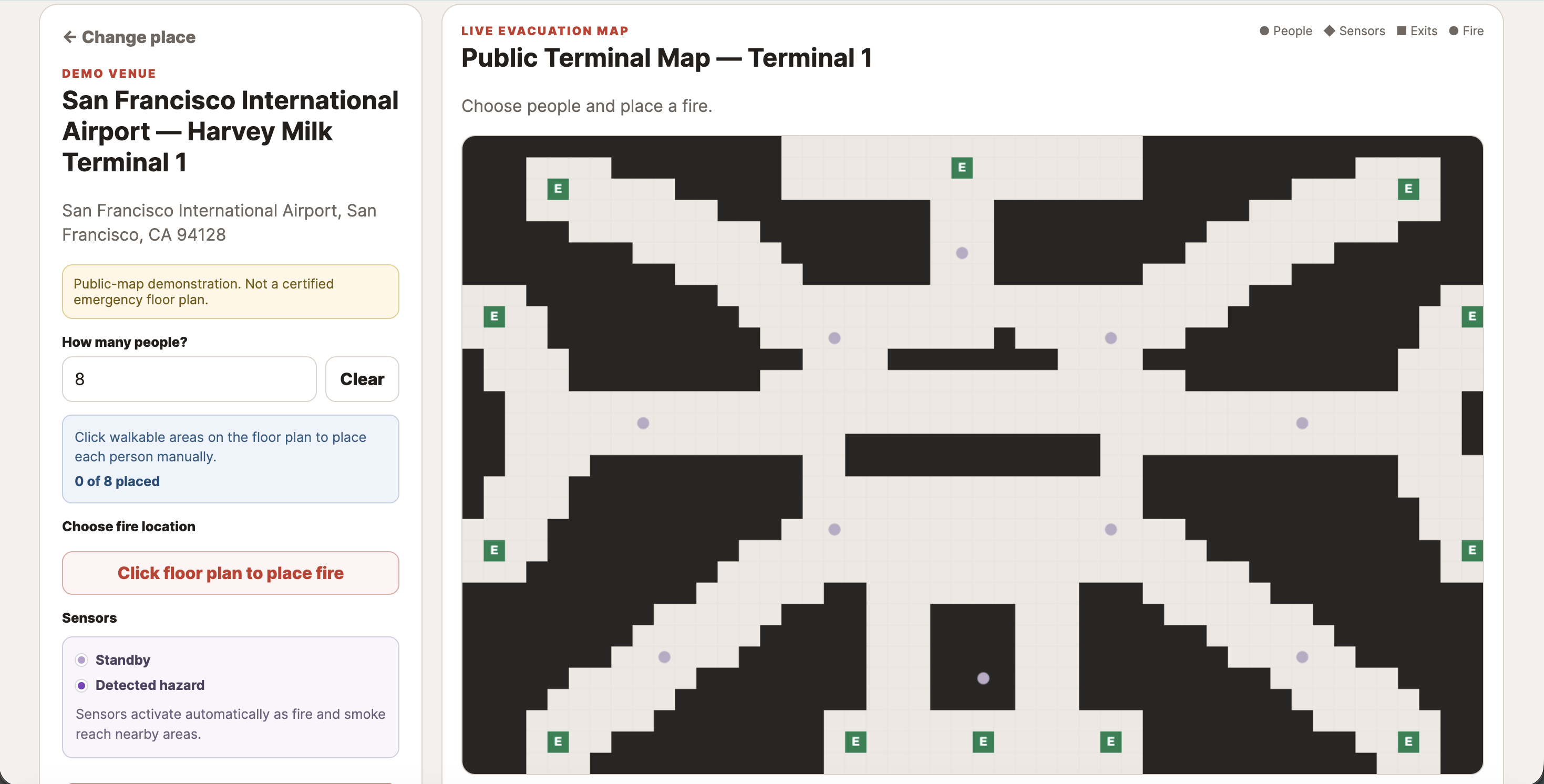
FYREFLY is designed to guide every person to the safest available exit route during a fire. Using a building's verified floor plan and data from smoke and heat sensors, this complex system detects where the danger is, how the fire spreads, and creates multiple evacuation routes. As conditions change, routes are recalculated and the system marks people who no longer have safe routes as those in critical condition. At the end of the simulation, FYREFLY provides the evacuation report including casualty rate, how much time it took for the people to escape, and how fast the fire spread.
How we built it
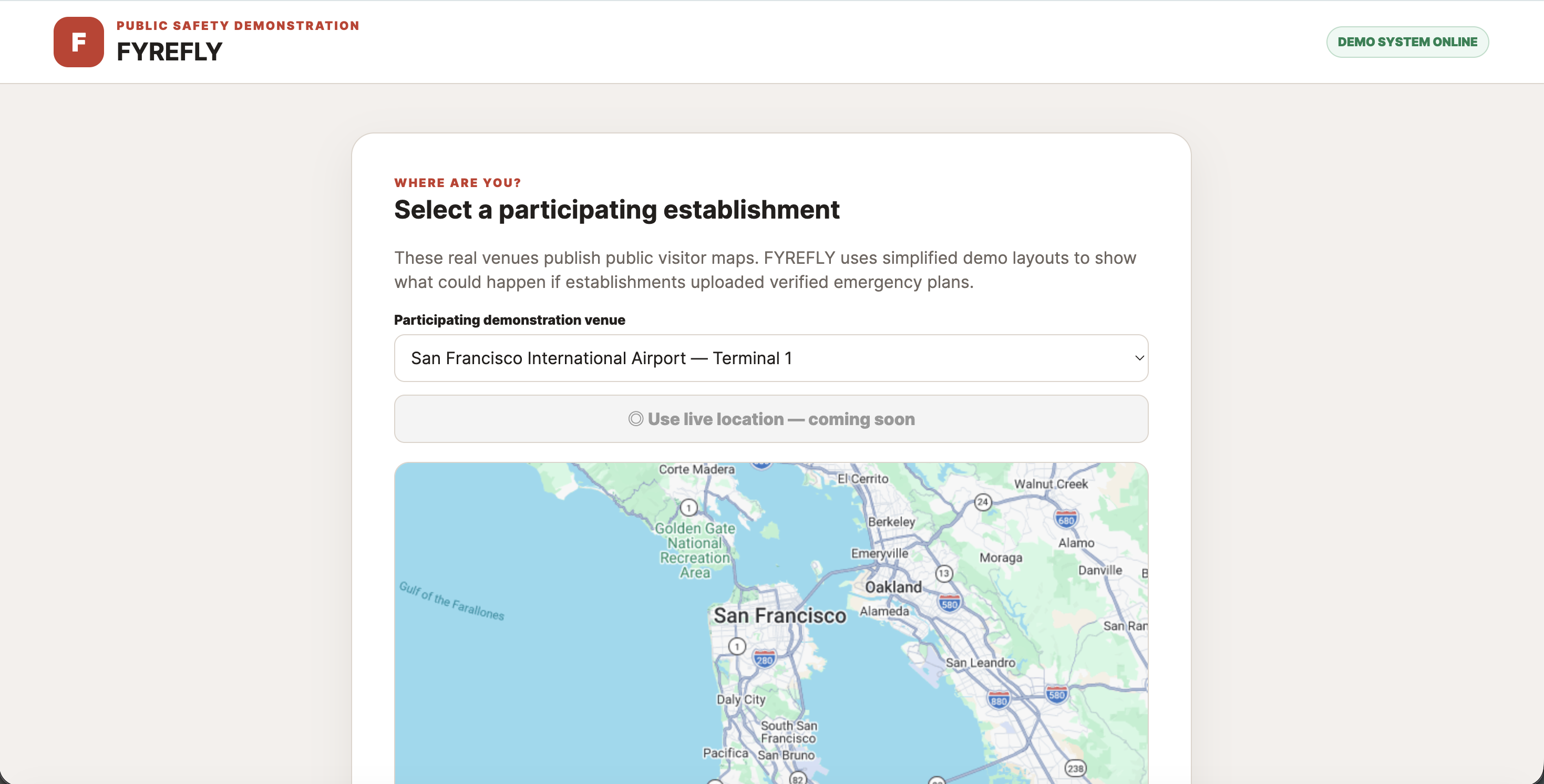
FYREFLY is a full-stack web application, using Python and FastAPI to calculate evacuation routes for backend, and HTML/CSS, Javascript, and Canvas as a front end to display the map, routes, and simulation. We used a simplified layout and UI, and implemented Google Maps and Places APIs to collect locations.
Challenges we ran into
Our biggest challenge was turning a large, real-world problem into a simple web application that could be accessible and still help people, despite being virtual. A real system would have to rely on physical signals and smoke, but we could only create a prototype. We also faced typical front-end and back-end bugs, which were promptly fixed.
Accomplishments that we're proud of
We were most proud of API connections and using third-party sources to enhance our app, a feature we became more accustomed to during this process. We were also proud of quickly adapting, as we changed many features we agreed upon in the beginning and continued to ideate the best version of our app.
What we learned
We learned that there is much more to emergency evacuation than just getting people out as fast as possible. It is multifaceted and always changing, so we needed to adapt. Our app reflected this learning process, as we tweaked many things to make it as accurate as possible. Technically, we learned more on how to backend APIs, since we mainly focused on frontend prior, and how to work together as a team to create the best product.
What's next for Fyrefly
We plan on allowing real corporations to upload their own floor plan and customizing exits and layouts to their desire, as well as verifying all exits and sensors. To make full use of our API, we also wanted to add a feature where users can upload their live location in case of extreme danger. We also plan on adding more accessible features, such as voice commands, and making dashboards for emergency responders.

Log in or sign up for Devpost to join the conversation.