Inspiration
What it does
How we built it
Challenges we ran into
Accomplishments that we're proud of
What we learned
Inspiration During my time at university, I noticed how chaotic the Final Year Project (FYP) evaluation process could be. Professors often struggled with manual grading sheets, shuffling between papers, and calculating scores manually. Students, on the other hand, often received delayed feedback. I wanted to build a solution that digitizes this workflow, making project evaluation transparent, efficient, and paperless.
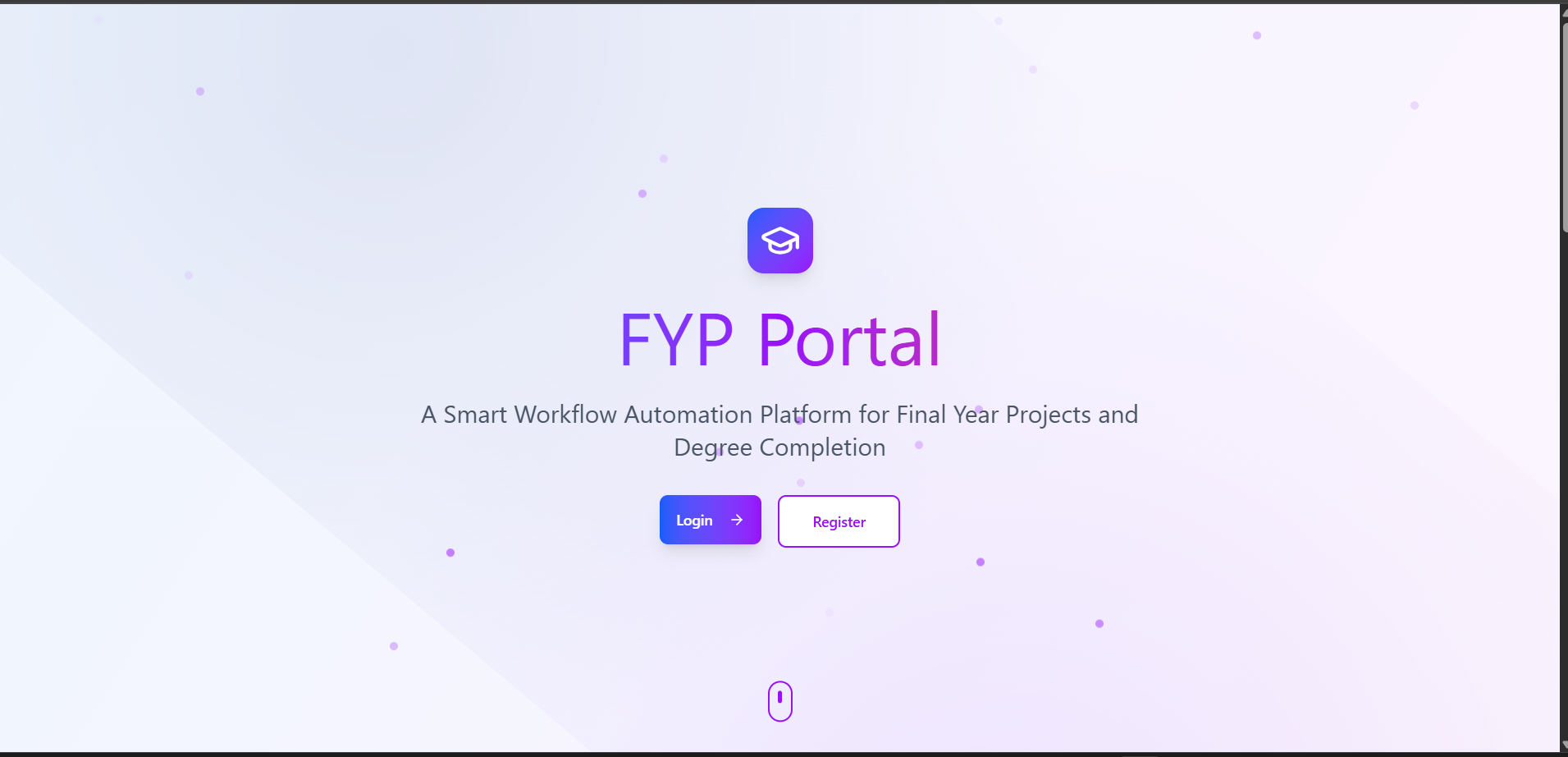
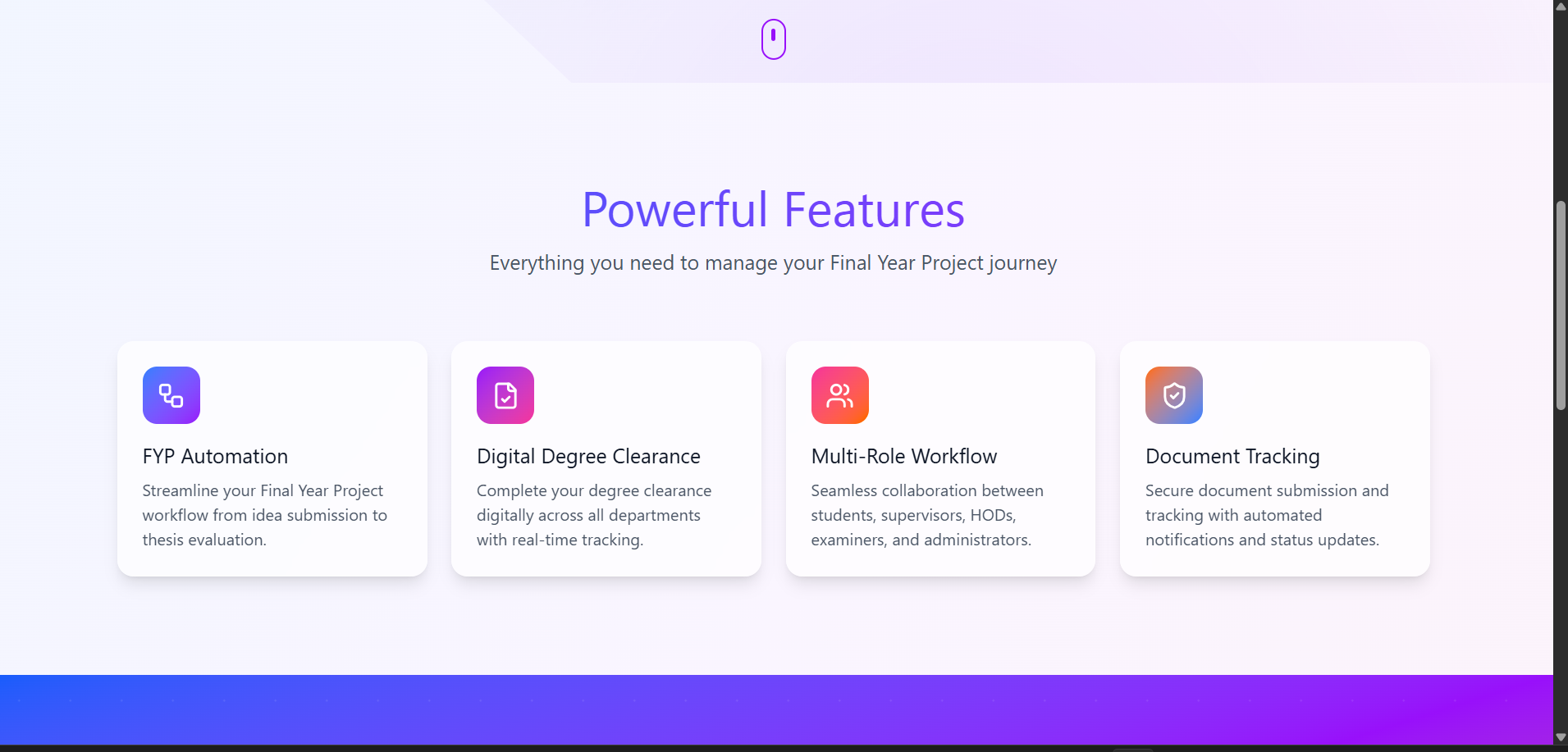
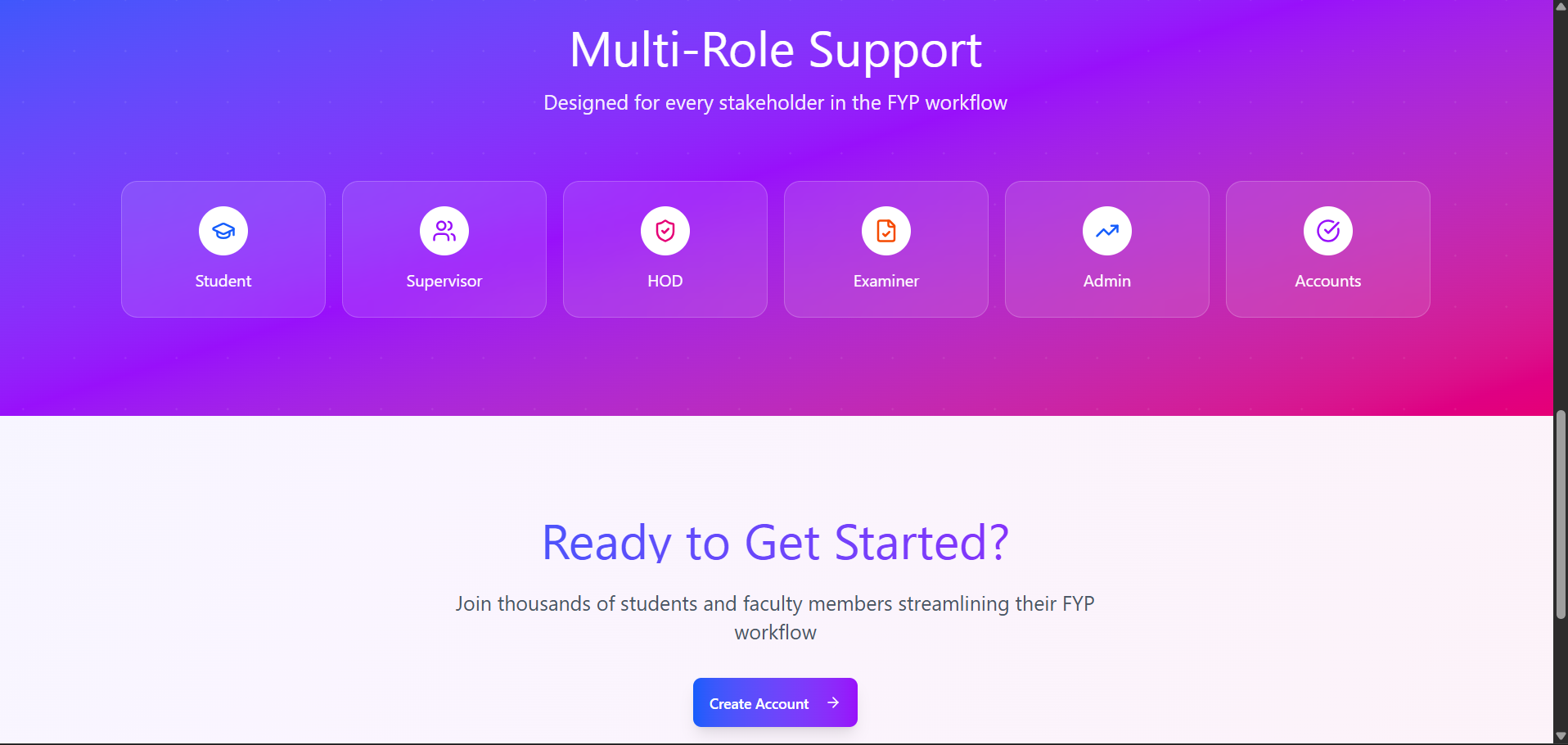
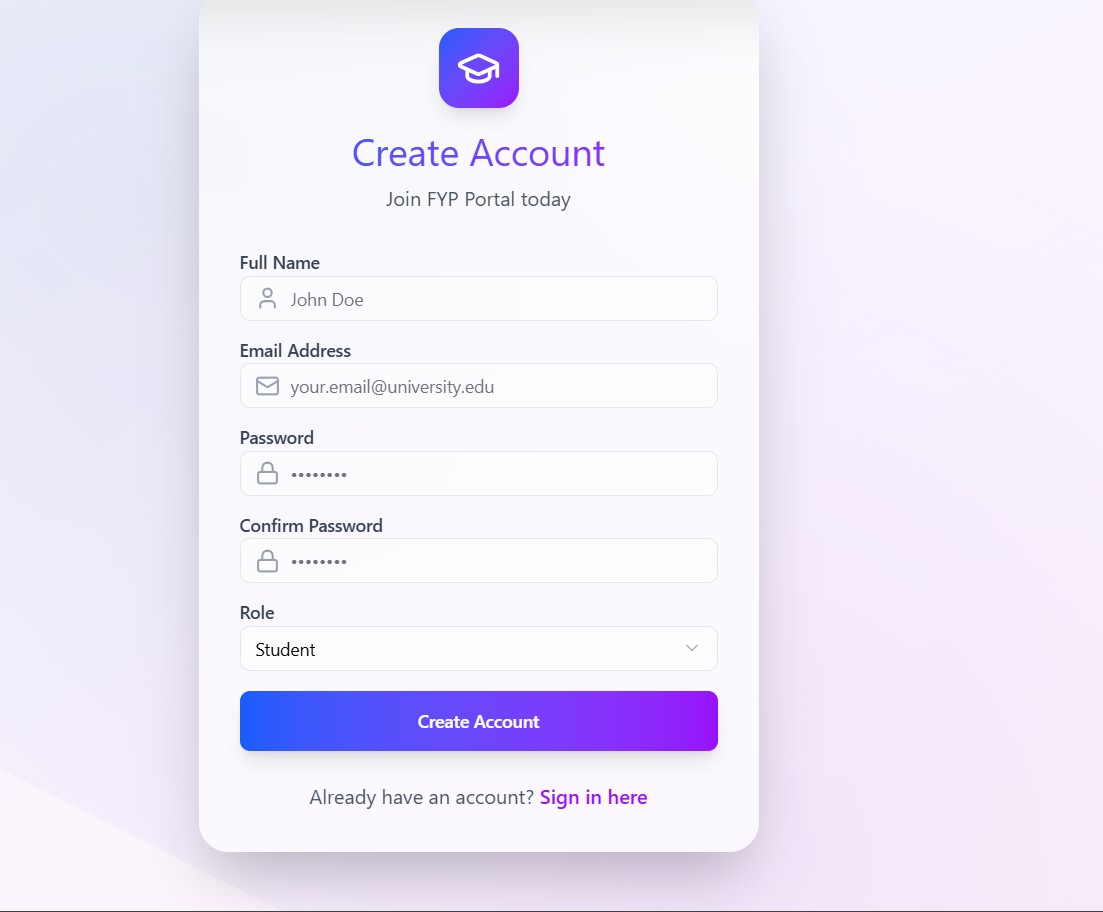
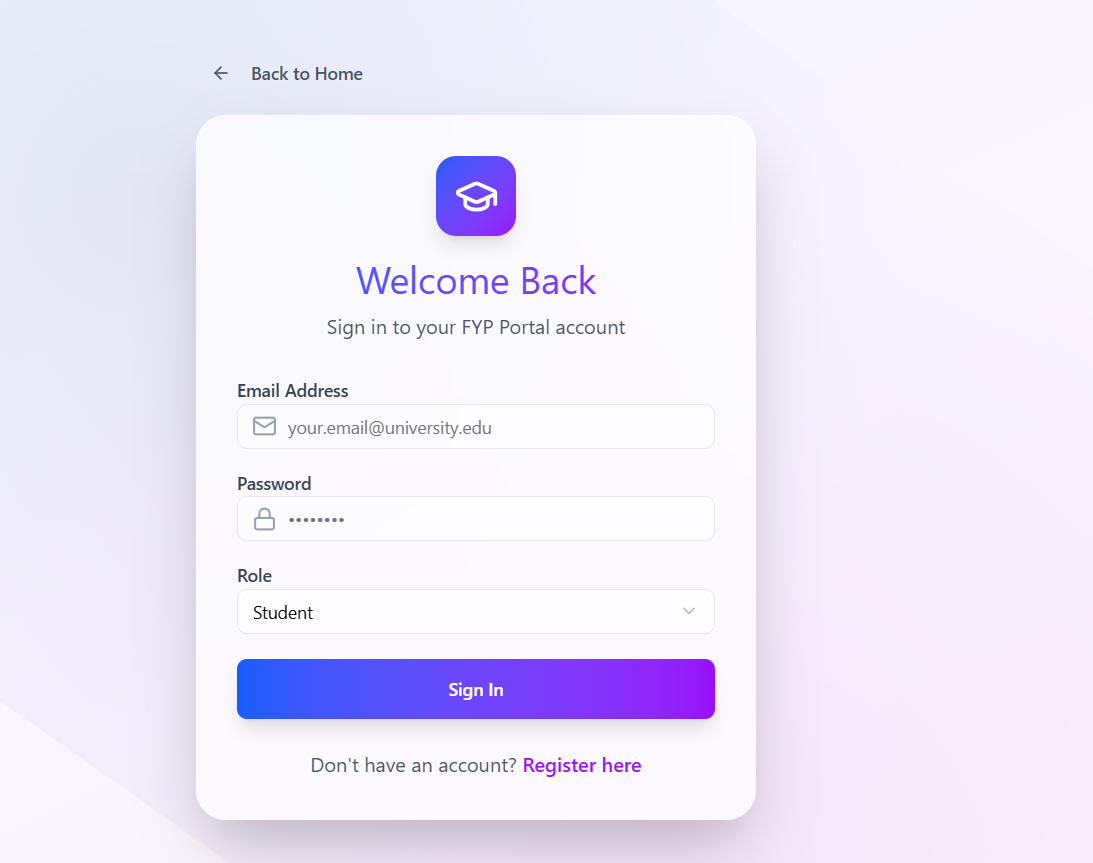
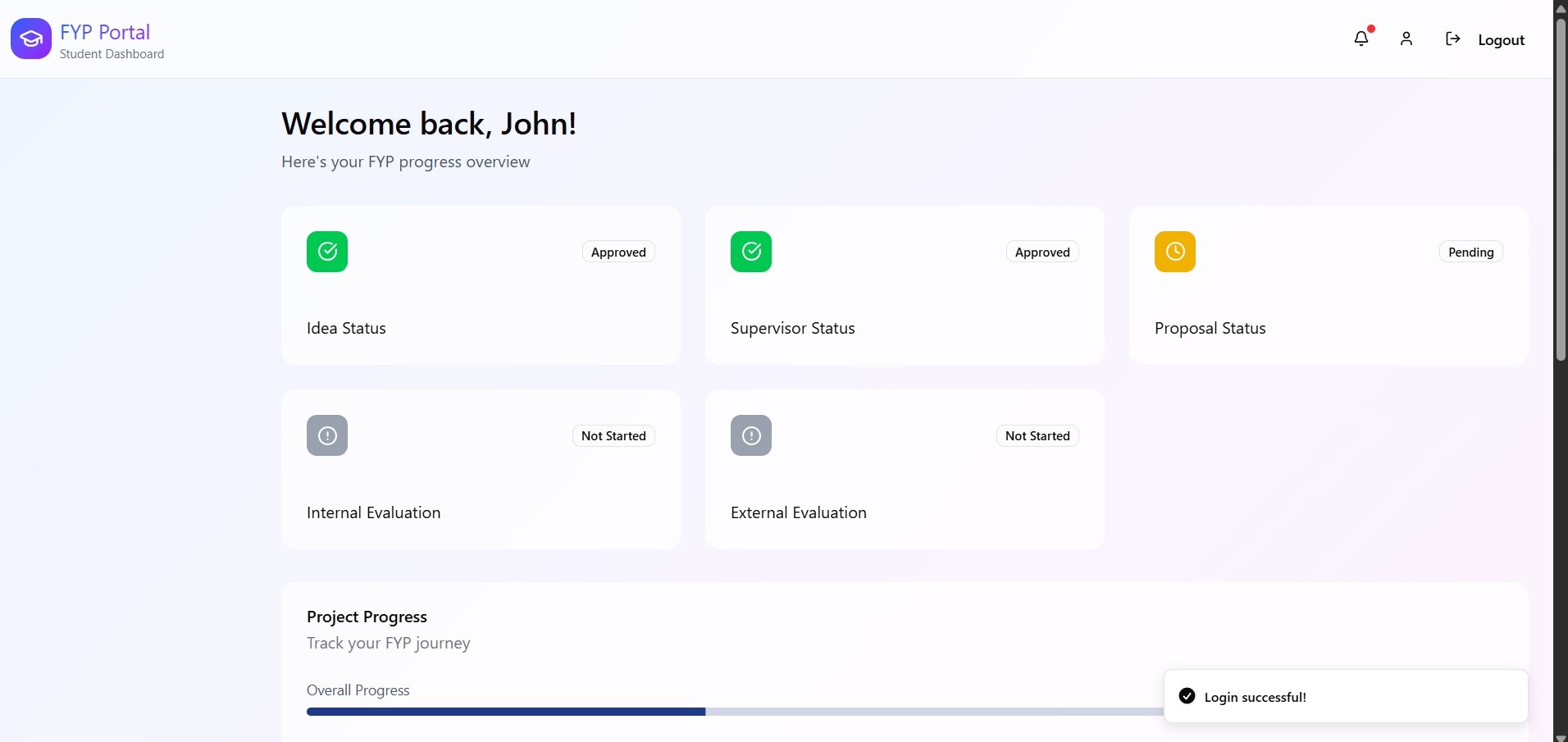
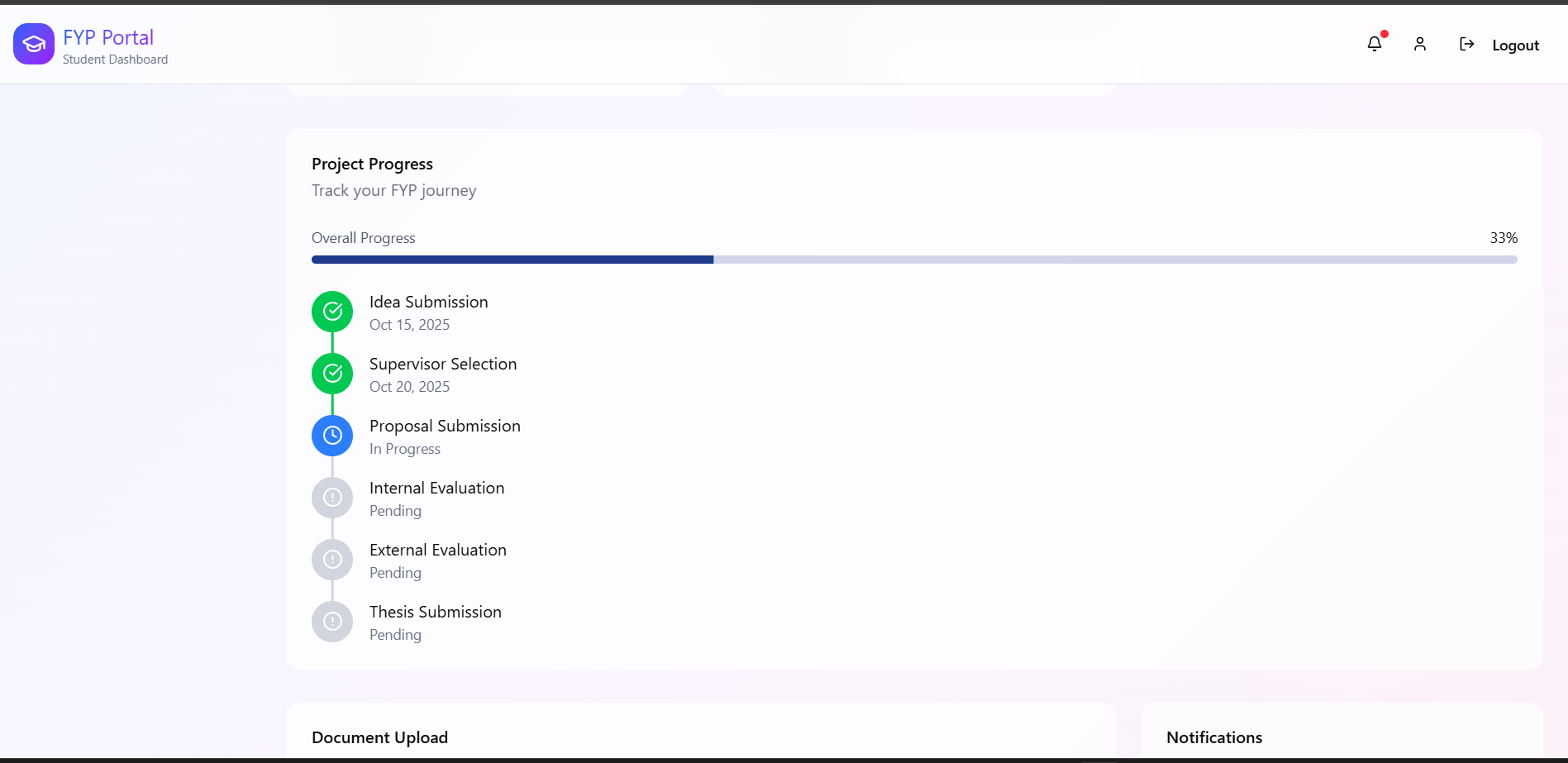
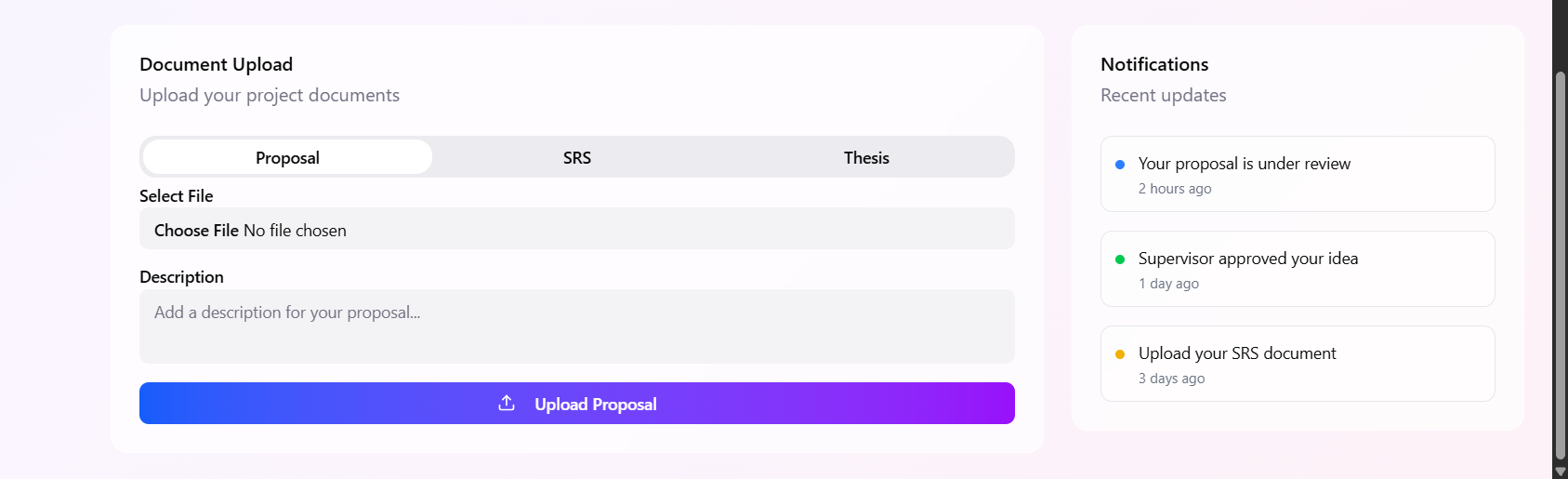
What it does The FYP Portal is a web-based evaluation dashboard. It allows faculty members to digitally grade student projects based on specific rubrics (like presentation, code quality, and documentation). It automatically calculates total scores and generates a summary report. The interface is designed to be clean and distraction-free, focusing entirely on the evaluation process.
How we built it I built this project using a modern frontend stack: React.js:Used for creating a dynamic, single-page application (SPA) experience. It handles the component structure and seamless navigation. Tailwind CSS:This was crucial for styling. I used Tailwind's utility-first approach to create a responsive design that looks great on both desktops and tablets (perfect for teachers moving around during demos). JavaScript (ES6+):Handled all the client-side logic, including real-time score calculation, form validation, and state management.
Challenges we ran into One of the main challenges was managing the State for the evaluation forms. Since there are multiple criteria for grading, ensuring that the "Total Score" updates instantly without lagging or unnecessary re-renders was tricky. I had to optimize the React hooks to ensure performance remained smooth. Additionally, learning to customize Tailwind's config to create a unique color theme instead of the default look took some time.
Accomplishments that we're proud of I am particularly proud of the UI/UX design. The portal is fully responsive, meaning professors can use it on tablets while analyzing a project, not just on laptops. I also successfully implemented a modular component system in React, making the code clean and easy to maintain for future updates.
What we learned This project gave me a deep understanding of Tailwind CSS and how it speeds up development compared to traditional CSS. I also strengthened my concepts of React Props and State, specifically how to pass data between parent and child components efficiently during complex form handling.
What's next for FYP Portal In the future, I plan to integrate a backend (like Node.js or Firebase) to save the evaluation data permanently in a database. I also want to add an "Analytics Dashboard" that visualizes class performance using charts and graphs.
Saira Batool 393 Tayyaba Kousar 397 Adeefah Ayaz 158
Built With
- html5
- javascript
- node.js
- react
- tailwind-css
