-
-

Welcome Screen
-

Where you can Fydge
-
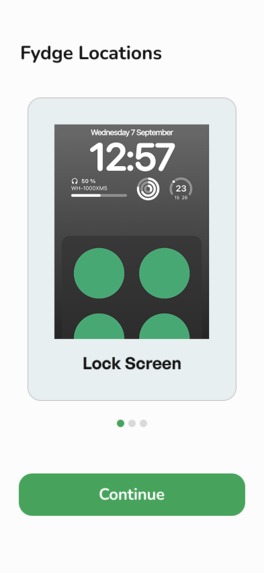
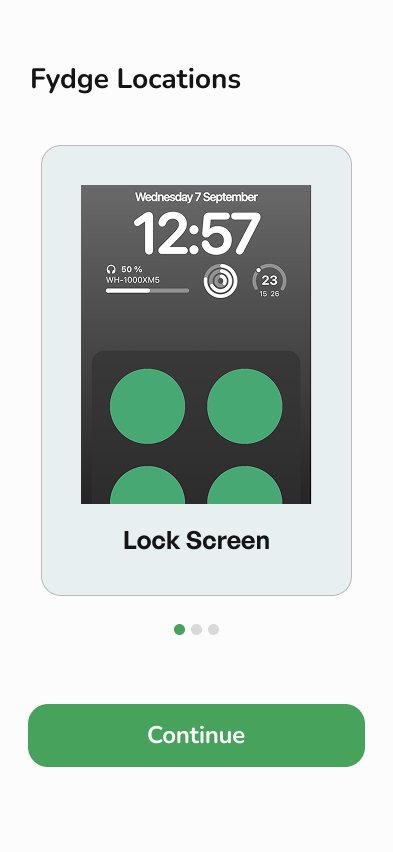
Fidget Location - Lock Screen (onboarding)
-
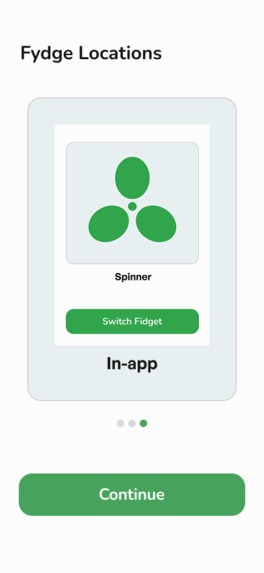
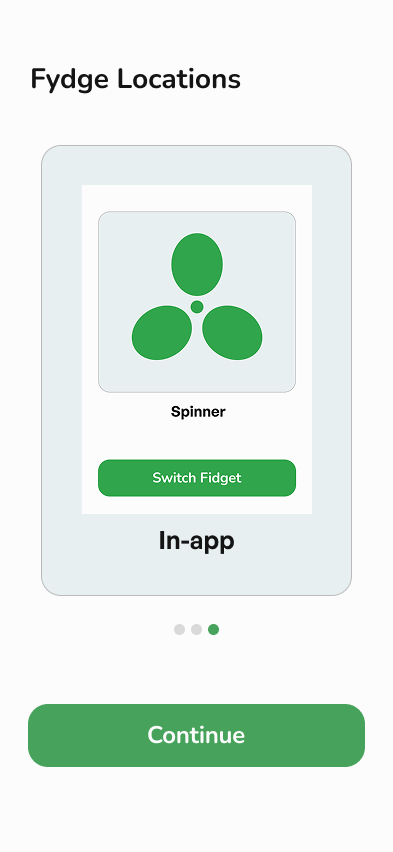
Fidget Location - In-app (onboarding)
-
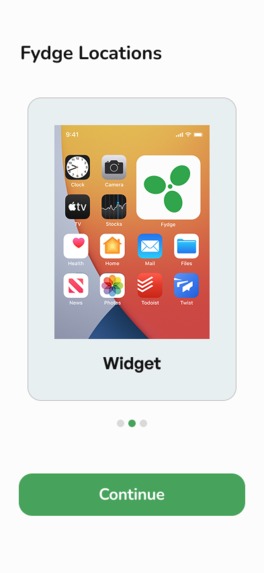
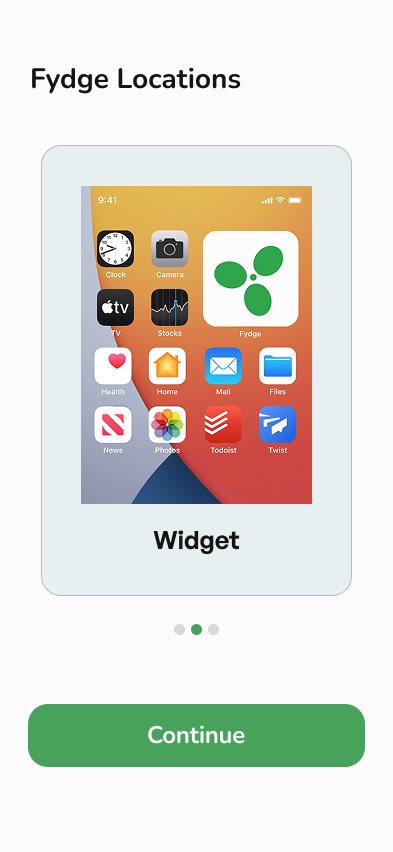
Fidget Location - Widget (onboarding)
-
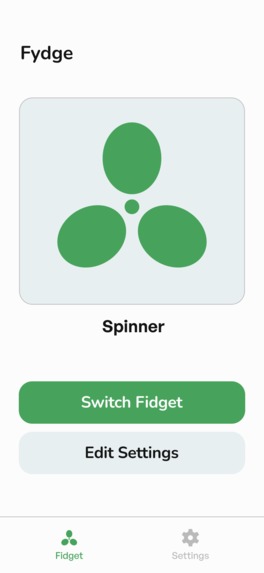
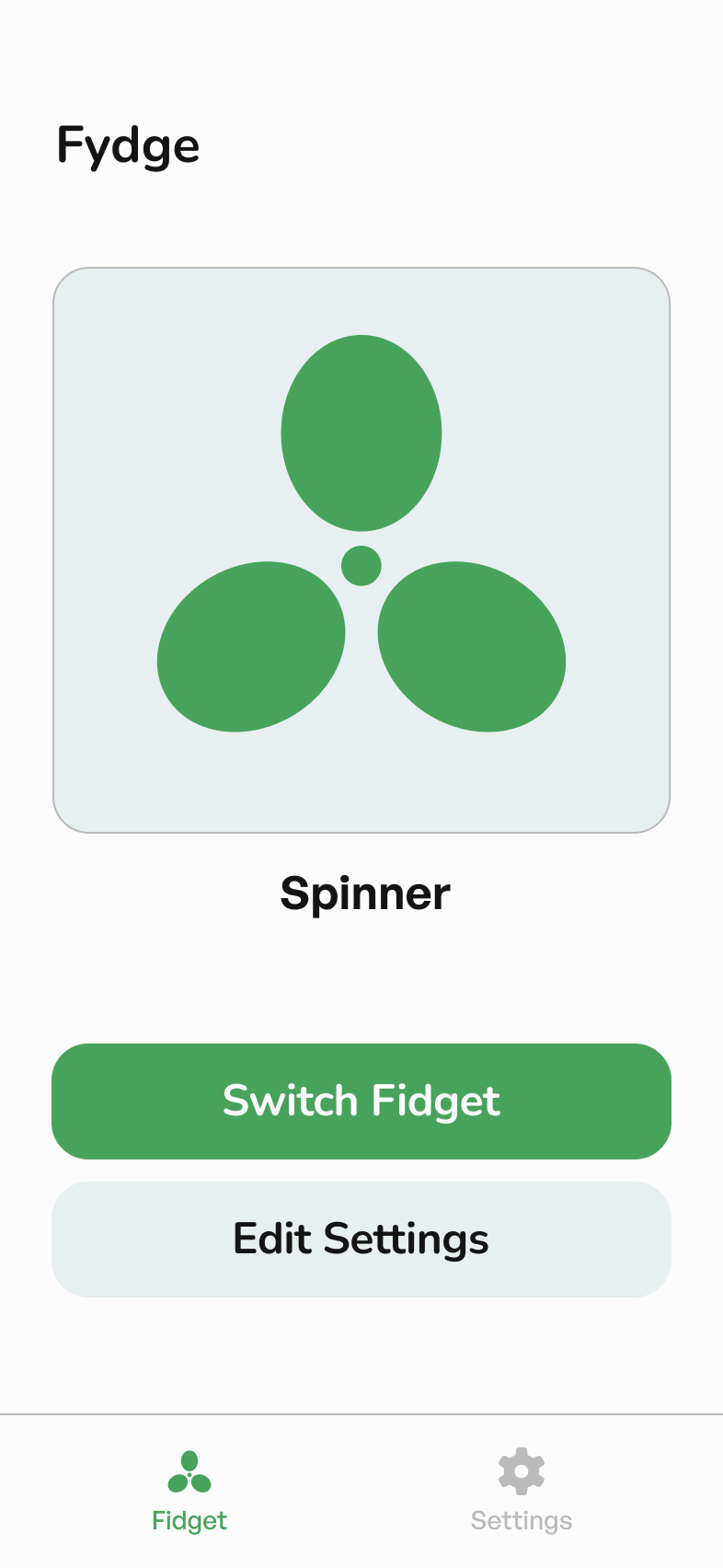
Playing with the spinner
-

Customize your fydges screen
-
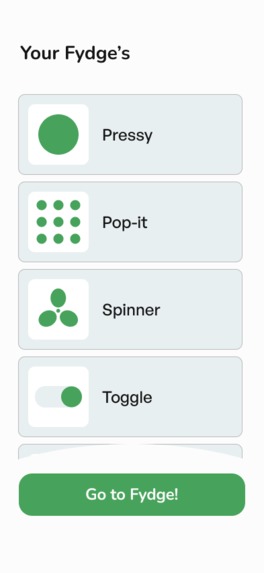
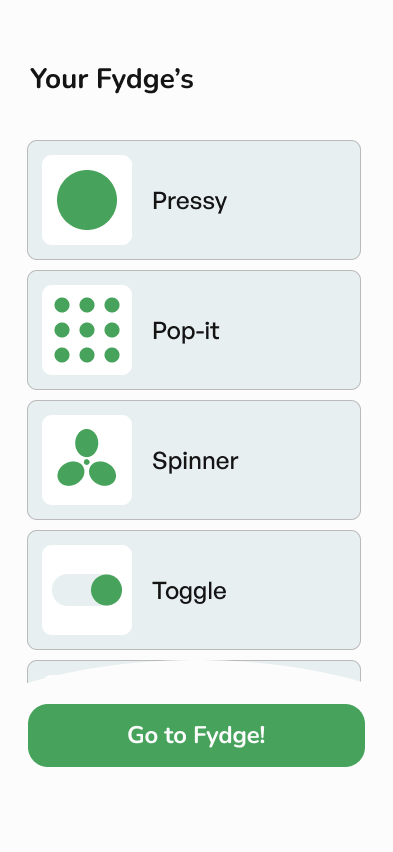
Your Fydges
-
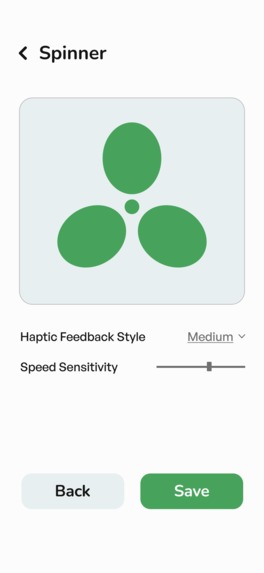
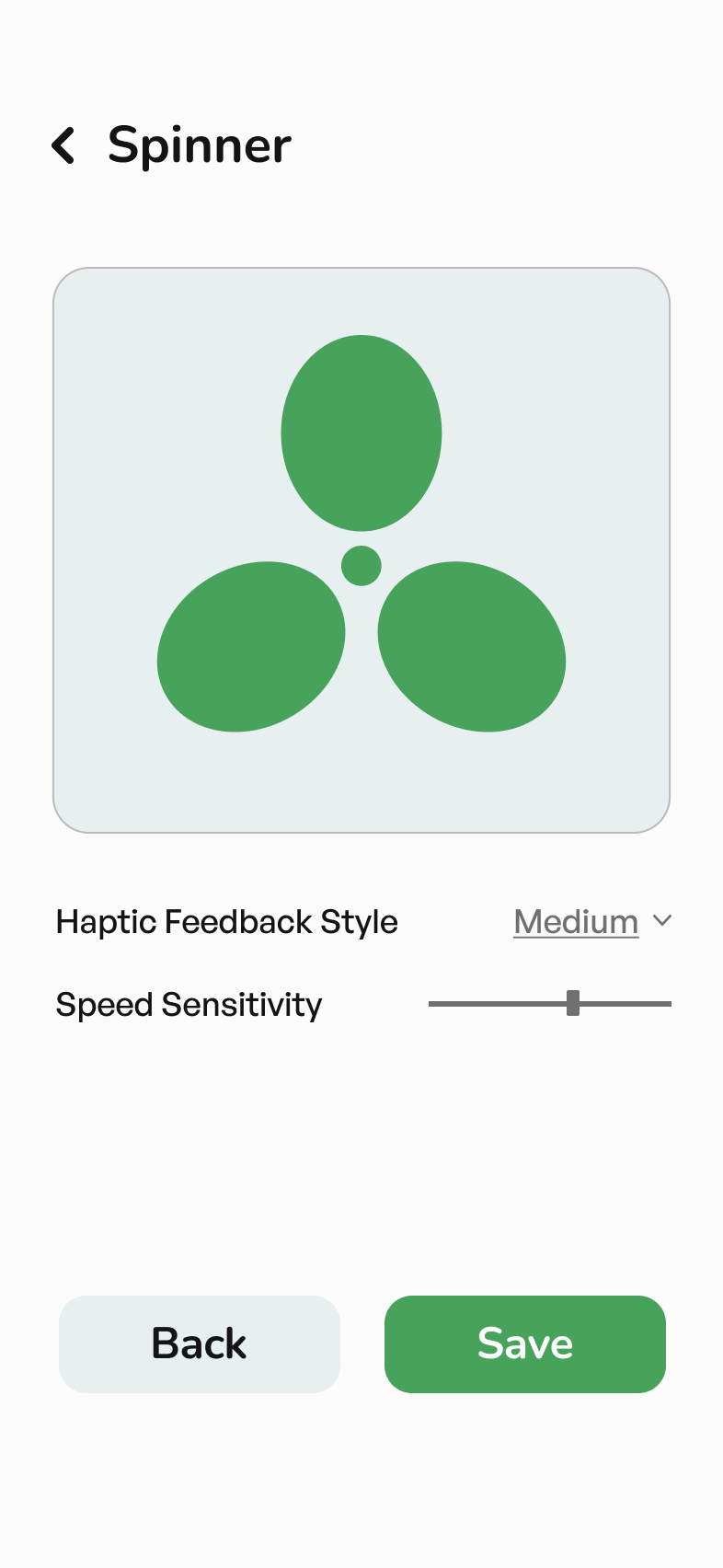
Customizing specific fidget


Intro
After a long day of ideating, researching, and designing, my team had reached the write-up portion of our CreateSC 2025 submission. The Celsius has worn off after hours of work, and I squeeze my green frog fidget toy as I begin to write about Fydge, our take on digitizing fidget toys to be more accessible to everyone.
Problem Statement
Physical fidget toys have become increasingly popular since 2017, and have been recognized amongst various age groups for their ability to aid focus, reduce stress, and regulate sensory input. It has become especially significant for neurodivergent individuals (those with ADHD, autism, etc.) as fidgeting helps compensate for their lower baseline dopamine levels and improve cognitive performance. However, physical fidget toys are not always accessible or practical in certain contexts. Whether you are in a professional setting or simply forgot your fidget toy at home, it becomes clear that the restriction of having a physical fidget toy with you at all times prevents users from having consistent access to their method of aiding cognitive function. Fydge aims to digitize the tangible experience of fidgeting while maintaining the emotional response and physical satisfaction that comes with having a physical fidget toy. Our guiding question throughout the creation of this app was:
“How might we design an app that allows users to fidget with minimal obstructions from regular phone use?”
Secondary + User Research
Our team has been aware of and actively used fidget toys, but it was important to understand why other members of the core user group were turning to fidget toys and how they were currently utilizing them. We conducted five informal interviews, with four of the interviewees attending the University of Washington while the other interviewee had 30 years of experience in the workforce. Although we came prepared with general focus topics, we benefited from the semi-structured format to enhance the participants’ comfort with sharing a less public aspect of their face, especially when it came to issues with their mental health.
The majority of our interviewees mentioned that they primarily fidget while doing work as it helped them focus and relieve stress. Another one of our interviewees mentioned that they used their fidget toy during conversations as they had anxiety. Regardless of the scenario, it became prominent that fidgeting was always a task they did in the background rather than something they actively put their mind to. On top of interviews, we sent out surveys to 15 people. Through this, we found that 100% of our respondents considered fidgeting a secondary action (i.e. not their main focus).
Despite this, all of the top fidget toy apps on the App Store force users to treat fidgeting as a primary action. These apps require users to have the app open at all times, taking away from how people usually fidget. Armed with this knowledge, our team conducted secondary research on the significance of the physical attributes of a fidget toy and how it helps with cognitive load management. Perplexity.ai was used to compile our research resources to enhance efficiency. Learning about the physical attributes would help us brainstorm what and how we could digitize the experience.
Texture provided sensory input, where soft/squishy surfaces provided a calming effect and rough/bumpy surfaces stimulated alertness. Resistance was beneficial for focus and stress relief as the squeezing and stretching engage muscles and provide proprioceptive feedback. Movement, such as spinning, flipping, or clicking, provided rhythmic inputs that helped users stay focused or calm. These were very much unique, physical sensations, but we aimed to utilize the iOS haptic feedback to recreate different feelings of texture, resistance, and movement.
Our Solution
Fydge creates a fully customizable, direct, and digital human experience with fidget toys. Our product offers three primary ways to interact with fidgets: directly from the lock screen for quick access and low cognitive load, through an iOS widget for multitasking, and within the app for full interactivity and customization options. Providing different and easy access options was a priority, as our user research had indicated how fidgeting was rarely an intentional decision. This led us to think about ways and places users could fidget on their phone, without needing to open an app.
Within our app, we categorized Fydges in order to help users make more informed decisions on the toys they wanted to use. These categories (Focus, Calm, and Energized) were based on our secondary research surrounding fidget toy use and emotional response. Fydges would also be customized within our app, providing users with added personalization.
Alongside the locations of our product, the feel of our Fydges was also important to us, leading us to generate typescript methods for our components. Perplexity AI was also used to debug during the process. While the bulk of the coding was done by us, Perplexity was prompted to help find errors in our code, in particular our fidget spinner animation code. We had issues with the component moving unintentionally as it was dragged, so the AI agent was able to identify what we needed to add to stabilize it.
Our Process
We wanted to induce a calming effect on our users while using our product, which led to us to choose a neutral color scheme with a cooling green as our primary color. We took into account the principles brought up in the ‘Designing "Feel" Into Interfaces’ to integrate peaceful animations to our bouncy components. By combining bouncy/playful with peaceful/zen, we aimed to create a low-stress feel for our users to interact with.
Additionally, since a lot of our product's unique value relies on out-of-app interactions and screens, we wanted to be explicit with how and where users would find their Fydges. This short onboarding process required minimal interactions to complete, quickly bringing users up to speed on how to use Fydge. Our goal was to create as few barriers to the product as possible to maximize the conversion and ensure users can use the product as a secondary action as soon as possible.
Limitations & Next Steps
Because this was a 24-hour designathon, there were limitations to our research and design. We were unable to directly interview users who rely on fidget toys out of necessity, such as individuals with neurodivergent conditions, so we attempted to compensate by conducting extensive secondary research to understand the psychological and emotional benefits of fidgeting for those user groups. Additionally, the submitted version of our prototype lacks actual haptic integration, a limitation of the prototyping software we used (Figma and Framer). Given more time, we would like to explore using software like Hapticlabs to increase the fidelity of our prototype and better simulate the fidgeting experience.

If we were to proceed with the development of Fydge, we would more thoroughly explore the battery drainage associated with prolonged haptics. By working with the engineering team, we would ensure that our product stayed true to our core value proposition without becoming a drain on device resources. Other future considerations include minimizing potential mobile distractions, since our users primarily use fidget toys for work, as well as further enhancing our customization options. Changing fidget colors, size, speed, and other factors will increase the personalization of our product and allow users to truly fidget their own way. On top of developmental considerations, we would also want to conduct thorough usability testing on the interactions of our product. People with disabilities were identified as a main user group for fidget toys, so testing with this group would be very beneficial.

Fydge represents our vision for digitizing the tangible experience of fidgeting through an increased accessibility, customizability, and a modern solution. As we refine and expand Fydge, we aim to continue creating a digital fidget toy that is distraction-free while being personalized and satisfying our user’s fidgeting needs.
Built With
- figma
- framer

Log in or sign up for Devpost to join the conversation.