-
-
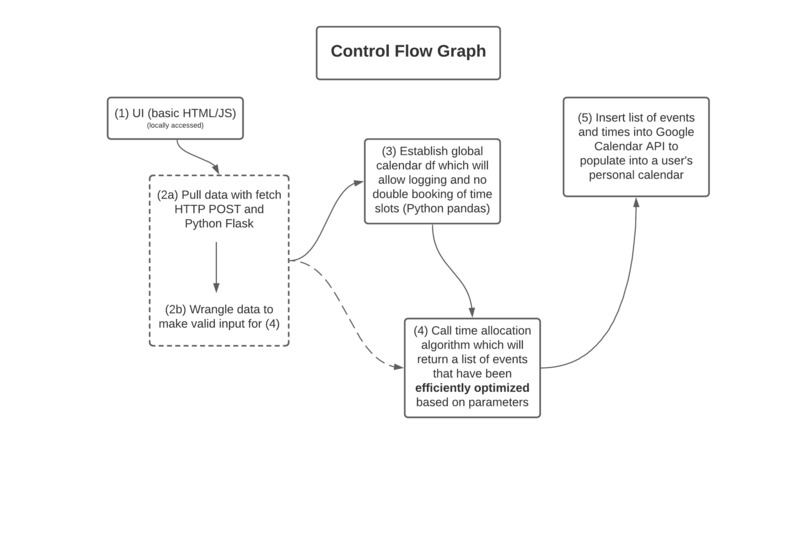
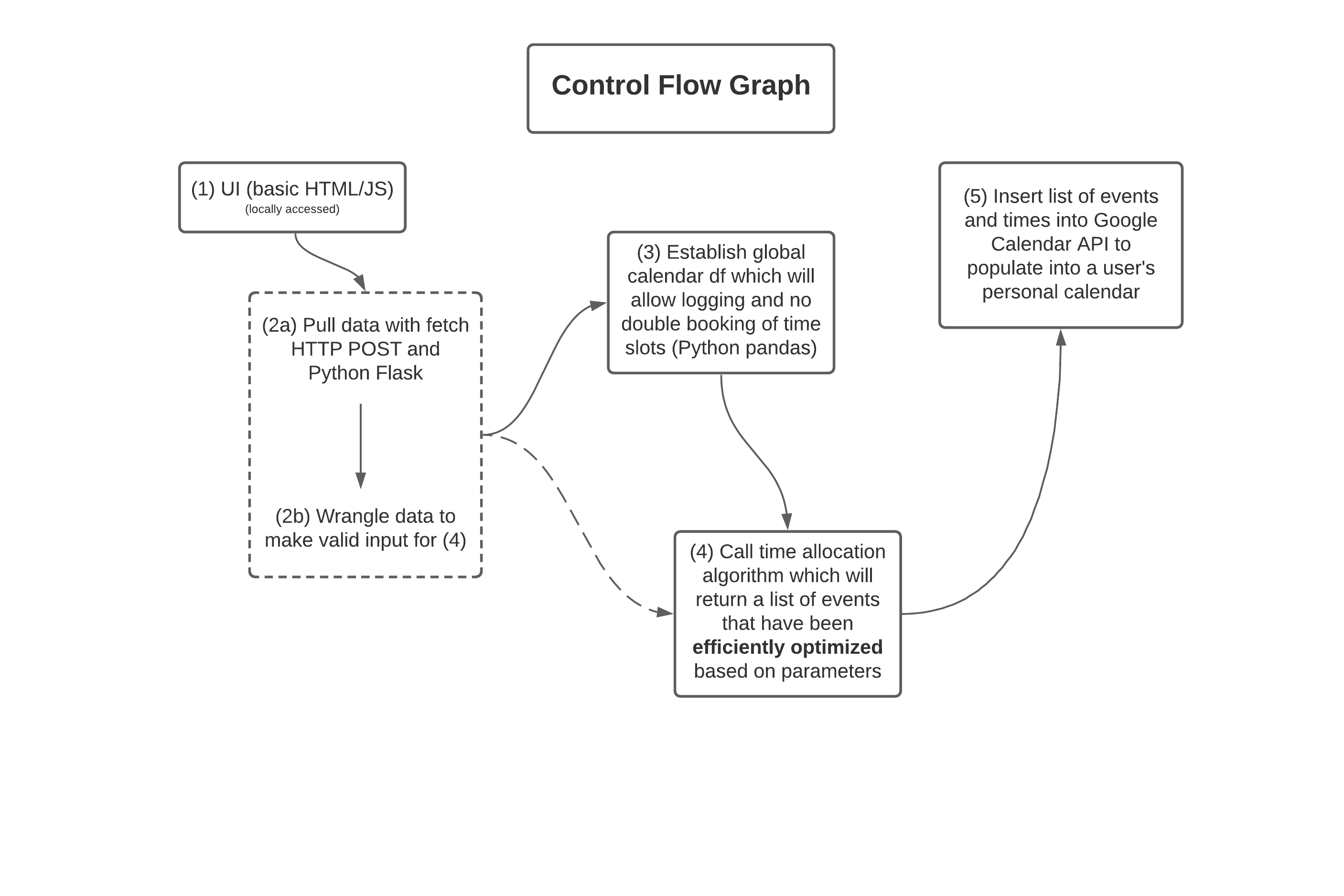
Control Flow Graph
Inspiration
We’ve all struggled with time management in our lives. Because of the fast-paced and busy nature of our days, many students barely have the time to sit down and formulate an outline or plan for their week. This is how FXMA emerged in our heads. We wanted to develop a program that would help students plan out their busy schedules and reduce the stress they face in their lives.
What it does
FXMA is a full-stack project that interacts with the Google Calendar API to take in user input and automatically populate the student’s calendar with an optimized study plan. The program allows users to input an assignment name, deadline, estimated amount of time needed to complete the assignment, and whether they want to work on it in blocks. After this, FXMA will allocate time over the next week for the student to work on the assignment.
How we built it
FXMA’s front end was created with HTML and JavaScript, and its back end was developed through Python with Flask. Flask was used to connect the front end with the back end to ensure user input was handled efficiently. FXMA’s back end was integrated with Google Calendar’s API to allow easy viewability for the schedule.
Challenges we ran into
One of the largest challenges we ran into was connecting our back-end and front-end. All of our members had pretty good back-end and functional programming experience; when it came to making a sleek looking front-end, we weren't sure how to accomplish the challenge. We spent more time than we would've preferred figuring out how to pass arguments in from our front-end to back-end using Flask and HTTP requests.
Accomplishments that we're proud of
Our team is proud of our full-stack application, and how we managed to accomplish our goals in less than 36 hours. All of our team members had the opportunity to work with a technology or language that they had no previous experience with, and we were all able to deliver a significant contribution to the project.
What's next for FXMA
Currently, FXMA is still ran locally on one's computer. We are moving FXMA to Heroku which will allow users to not have to worry about all the dependencies our back-end requires and the headache of running from command line. Moving FXMA to Heroku will allow users to use our tool non-locally while still maintaining access to their personal Google Calendar.
There's still room for improvement when it comes a proper time allocation algorithm when inputting an event. Static events are going to be called at the beginning of FXMA, so we can be sure not to overwrite a user's current calendar events.

Log in or sign up for Devpost to join the conversation.