-
HID 01
-
HID 3 - Noisy Chatter
-
Nosity/High IR
-
Aggressive Early Stint
-
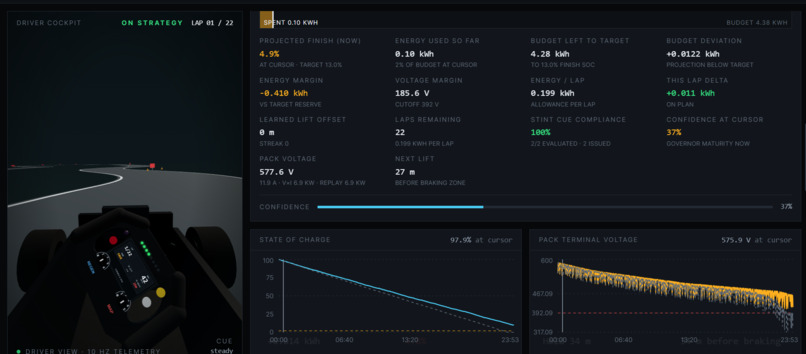
Time Optimal
-
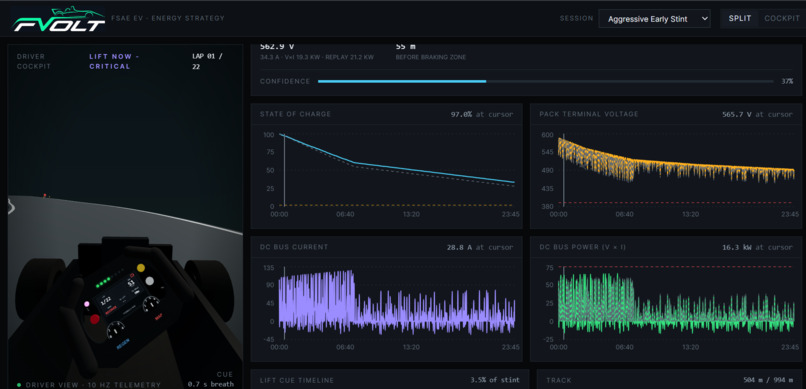
Aggressive Early Stint
-
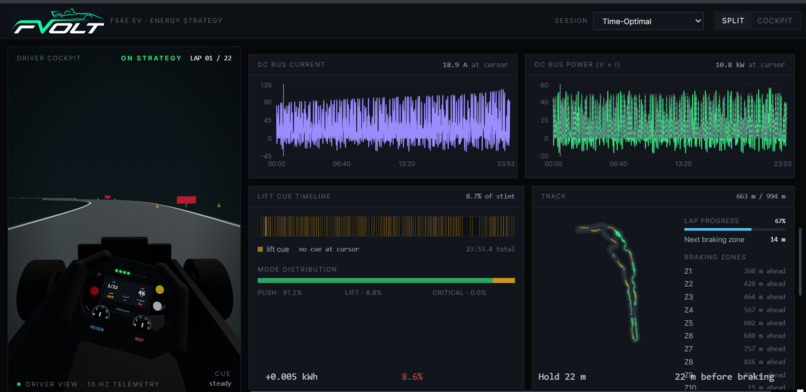
Time Optimal
-
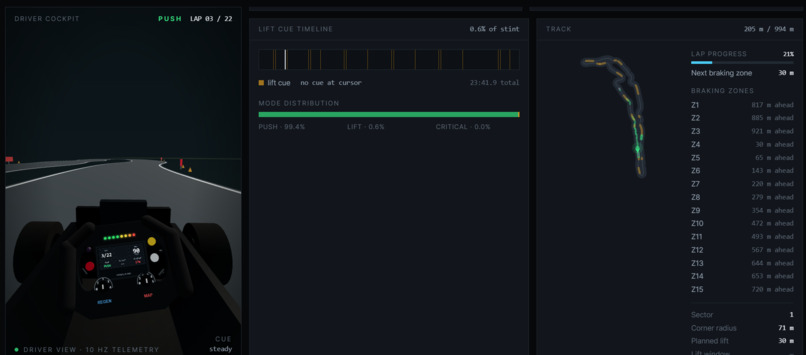
Lift&Coast Benchmark
-
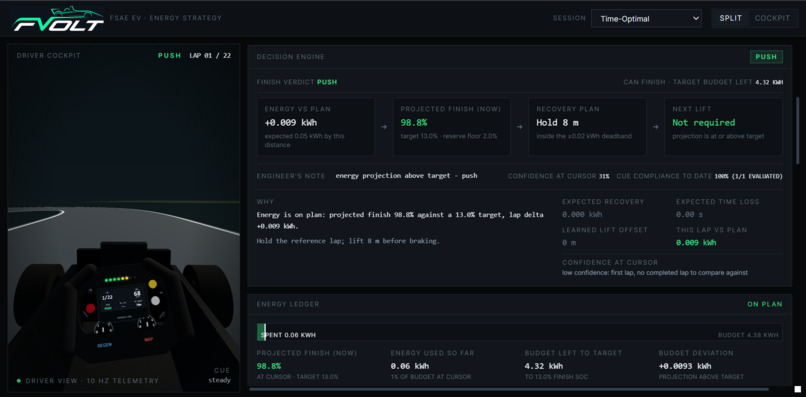
Time Optimal
-
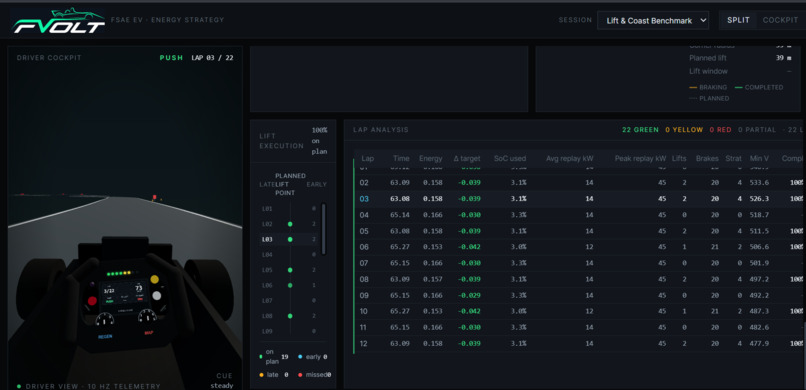
Lift&Coast Benchmark
-
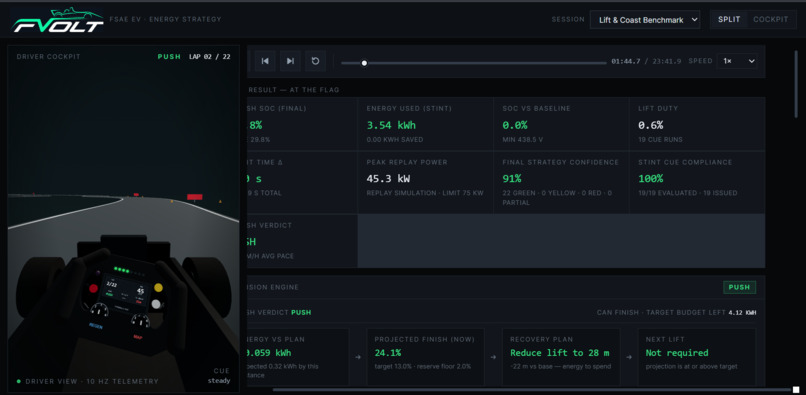
Lift&Coast Benchmark
-
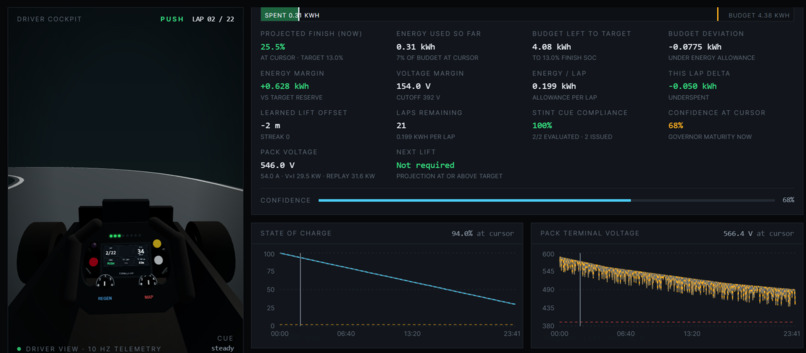
Lift&Coast Benchmark

FVolt — Adaptive Energy Optimization
Inspiration
FVolt was developed in response to a technical challenge set by UBCO Motorsports for BC Hacks 2026. The challenge focused on improving energy management in Formula SAE Electric endurance racing by designing an intelligent lift-and-coast strategy that could maximize race pace while ensuring the car completed the endurance event within its battery constraints.
Rather than stopping at the minimum competition requirements, we challenged ourselves to build a complete race engineering platform. We wanted to transform a single decision-making algorithm into an end-to-end system that combines adaptive energy strategy, an intuitive driver interface, and an engineering dashboard capable of visualizing and explaining every strategy decision in real time.
What it does
FVolt is an adaptive energy optimization platform for Formula SAE Electric race cars.
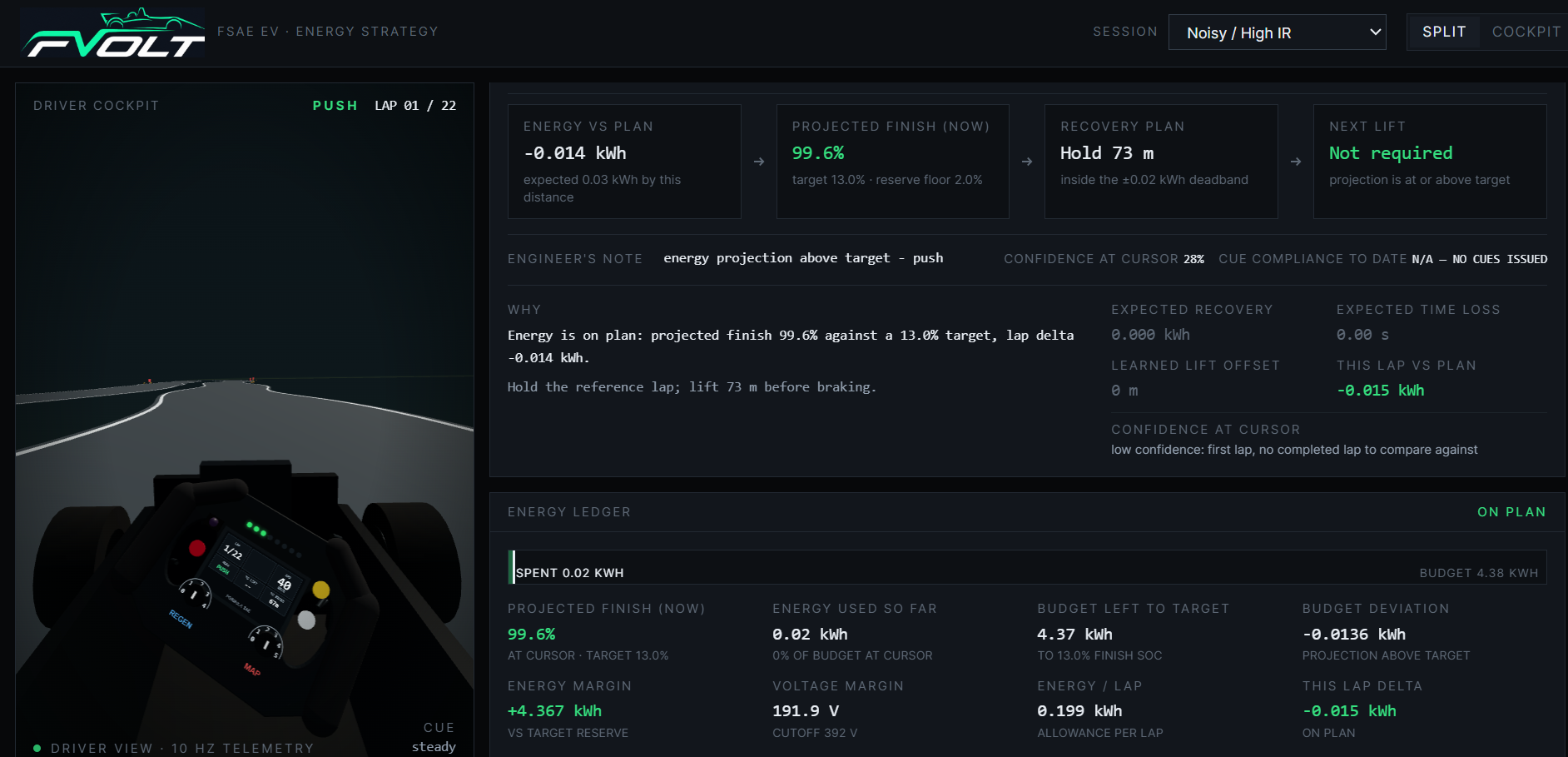
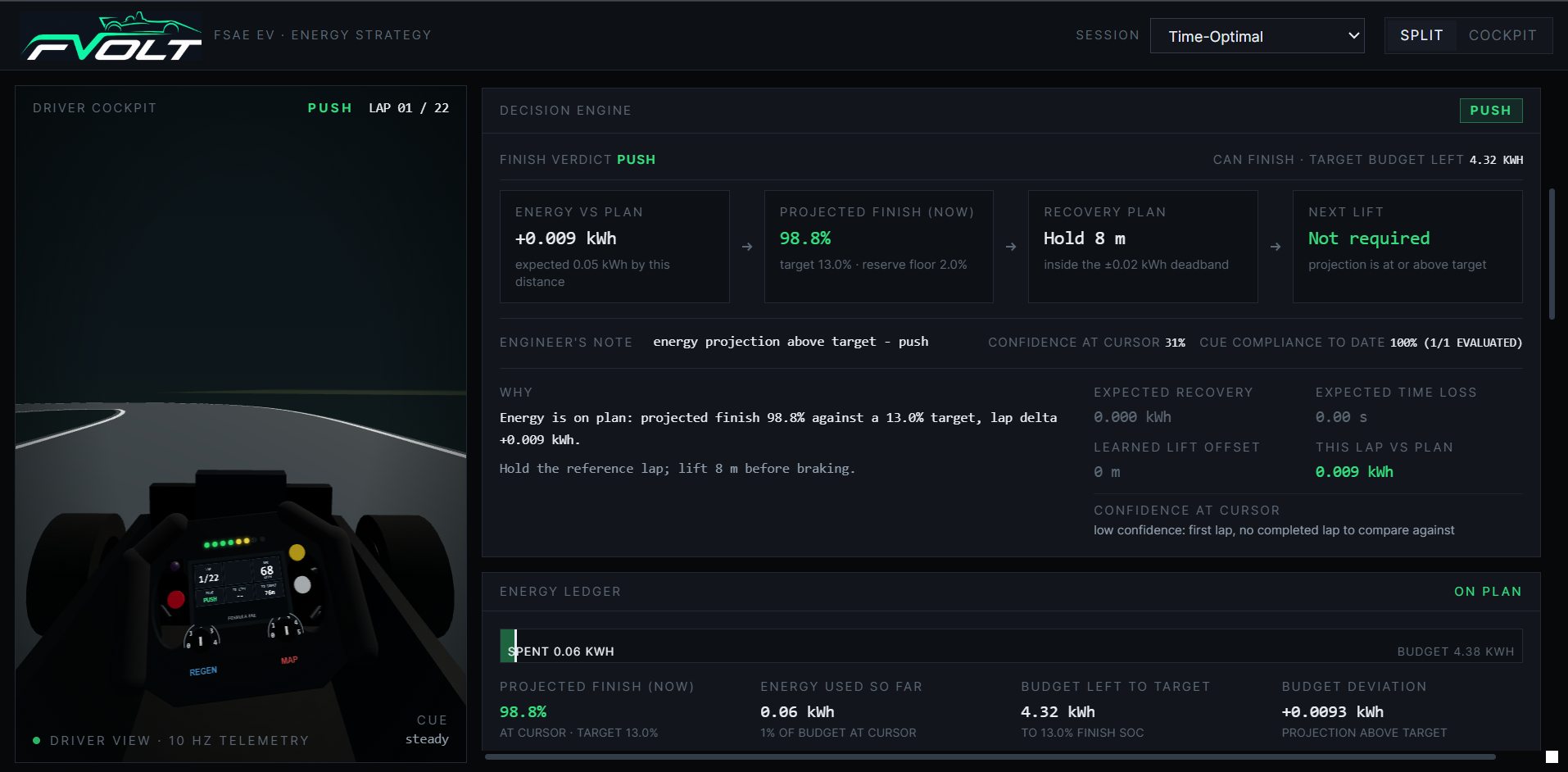
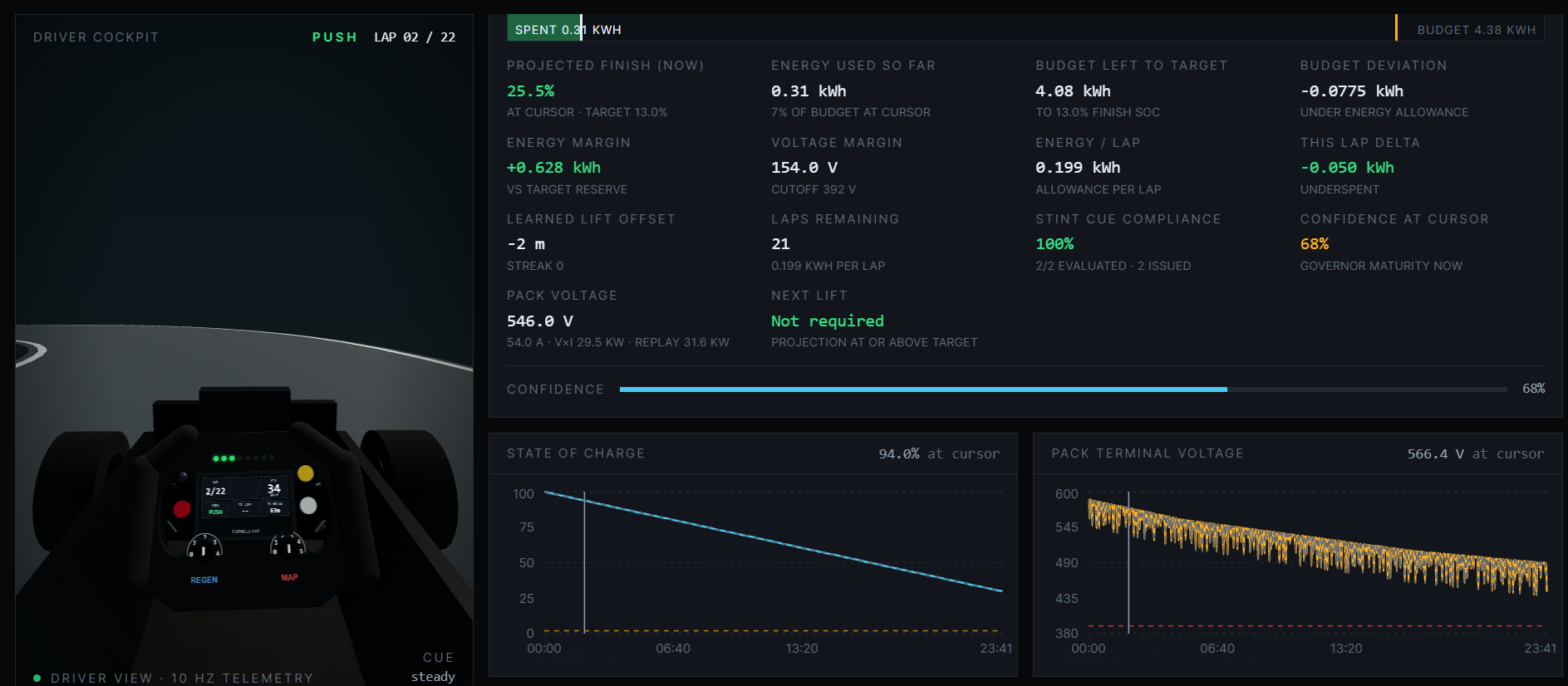
Using live vehicle telemetry, battery state, driver inputs, and track geometry, FVolt continuously recalculates the optimal energy budget for the remainder of the race.
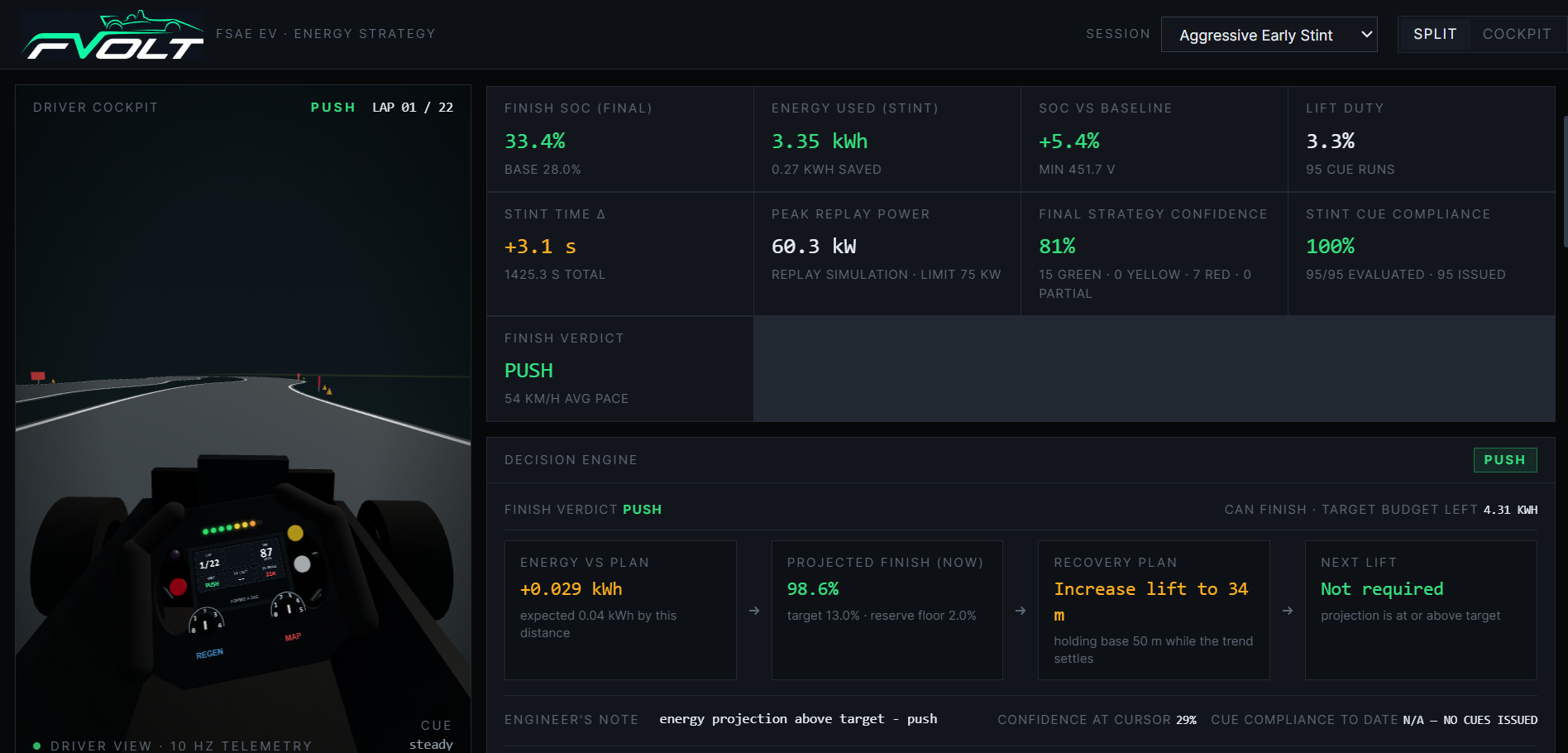
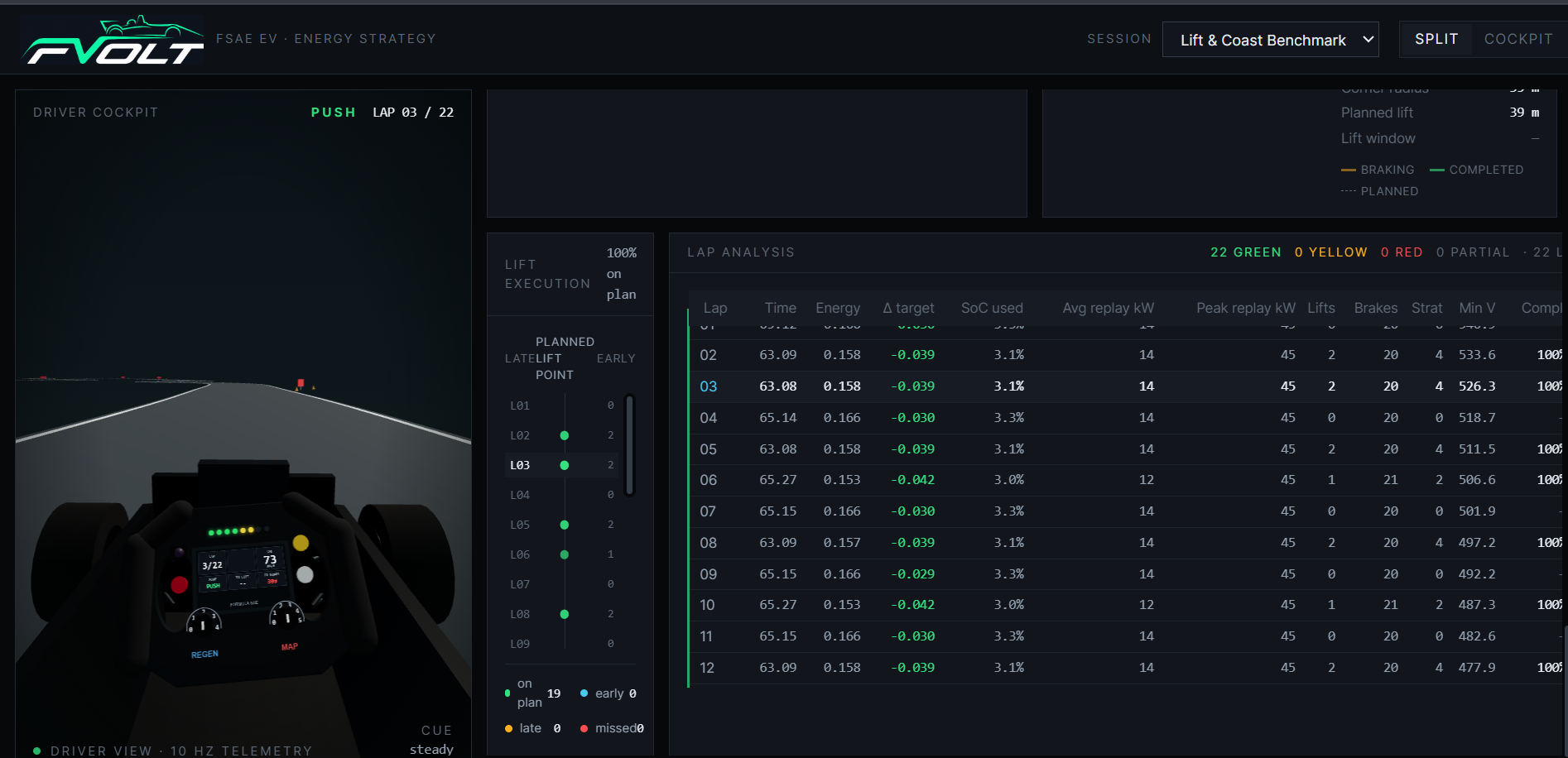
Instead of relying on a fixed race strategy, the system dynamically adjusts its recommendations based on how the driver has actually used energy throughout the stint. If the driver pushes harder than planned, FVolt compensates by modifying future lift-and-coast opportunities to recover energy while minimizing lap time loss.
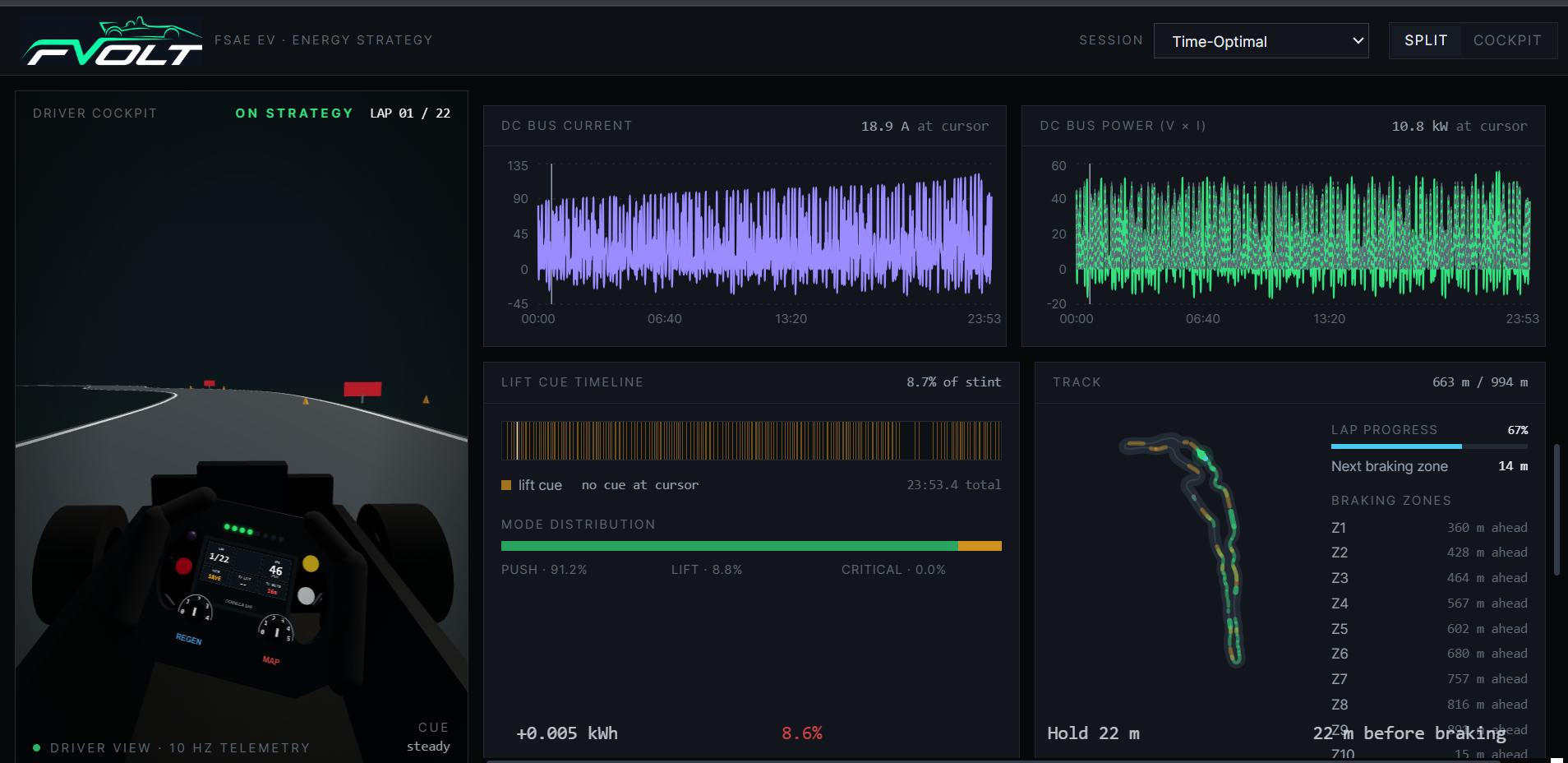
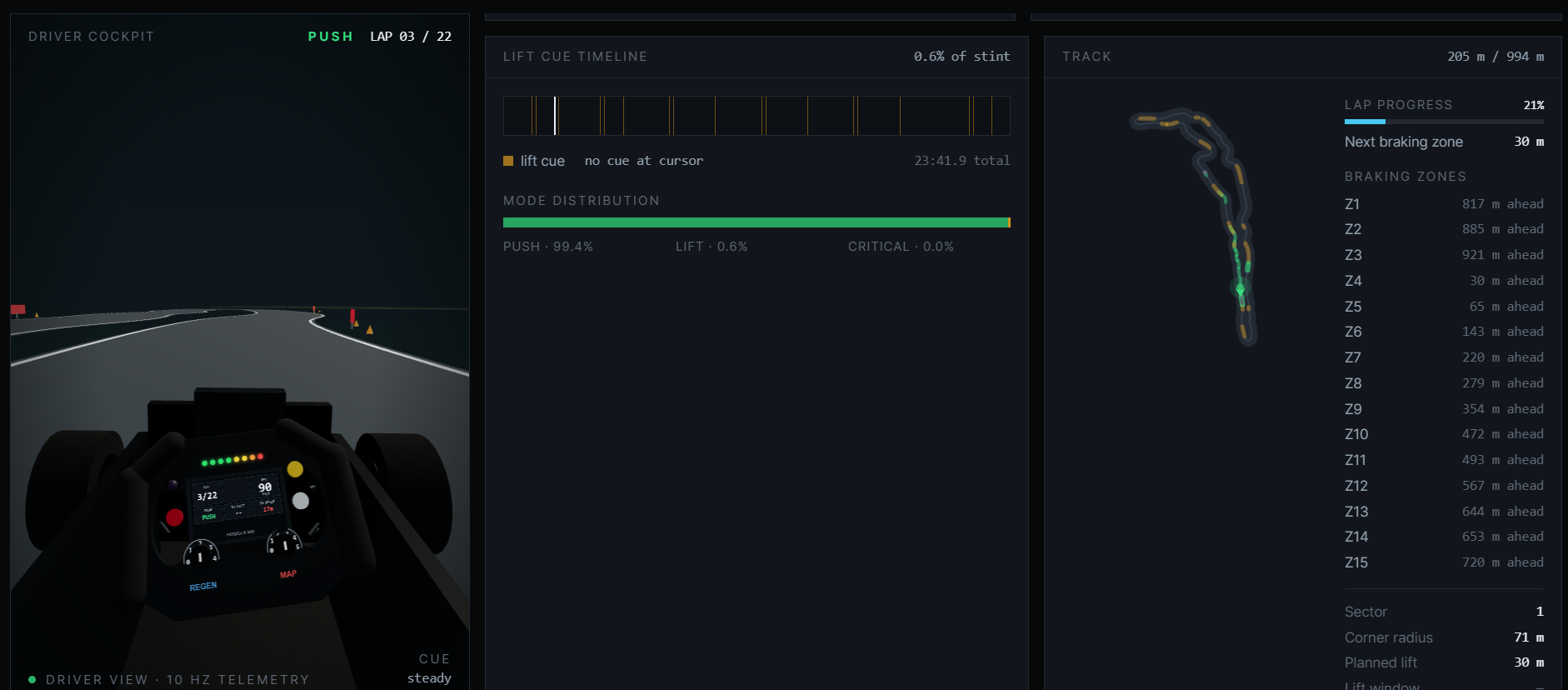
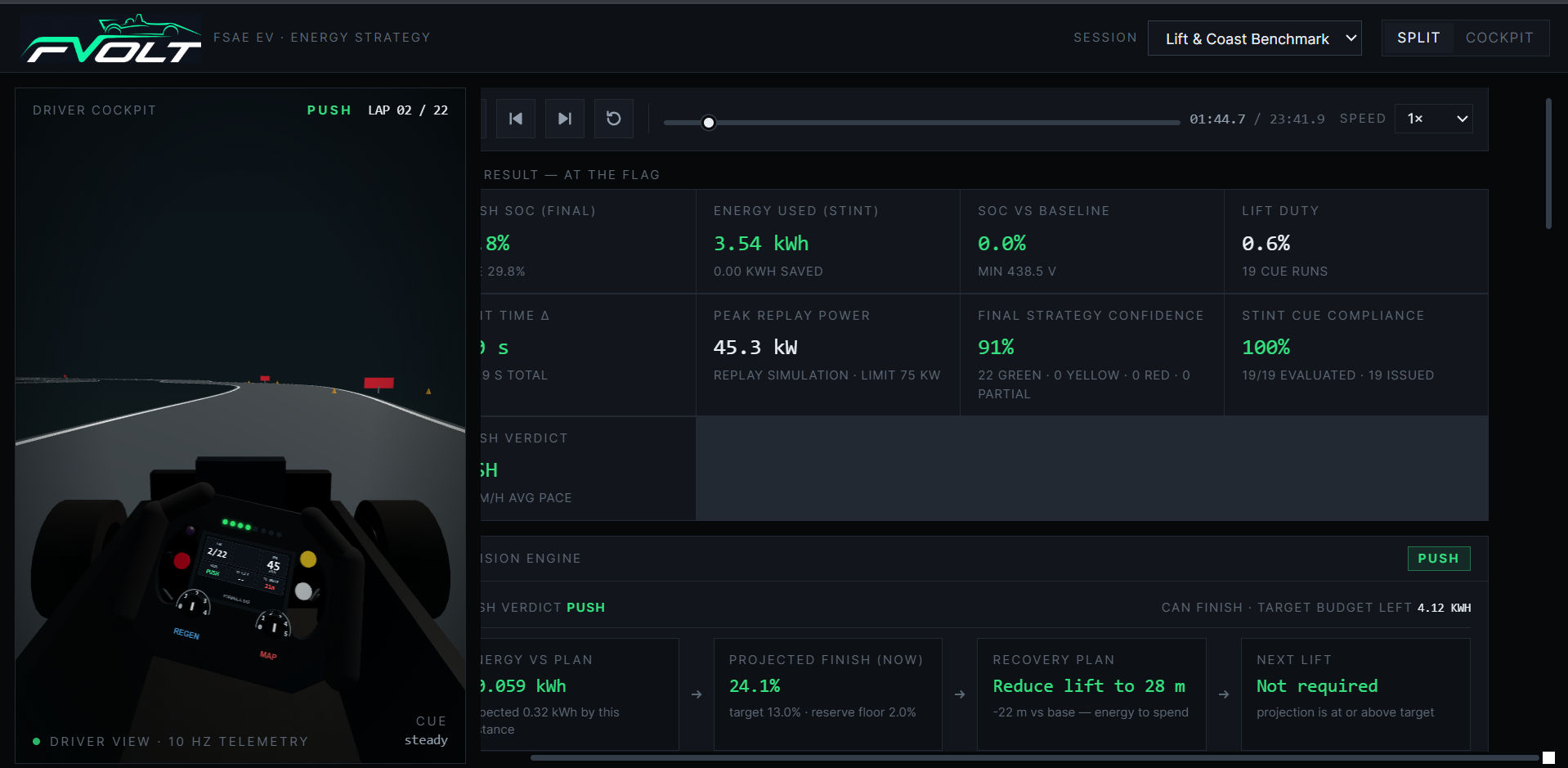
Drivers receive guidance through a subtle pulsating purple cockpit indicator that communicates the optimal moment to lift off the throttle without distracting them or conflicting with conventional warning colors.
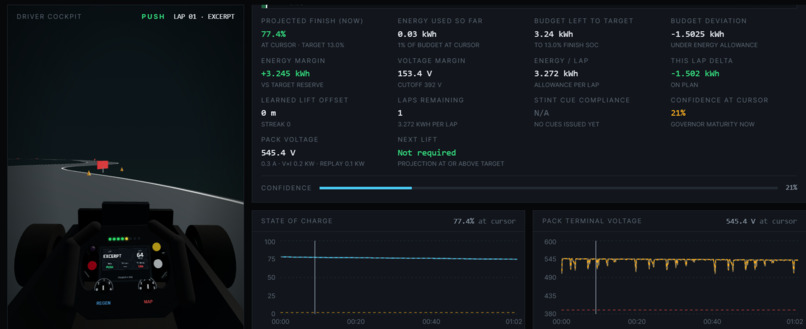
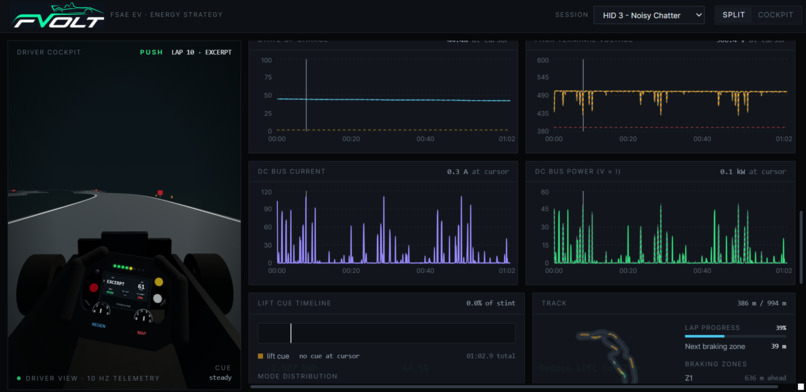
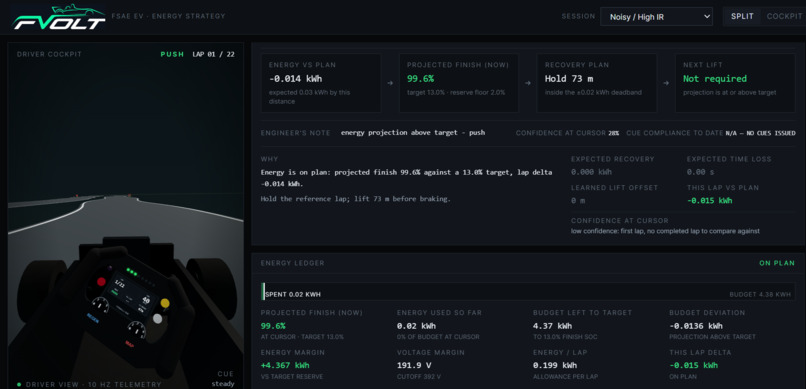
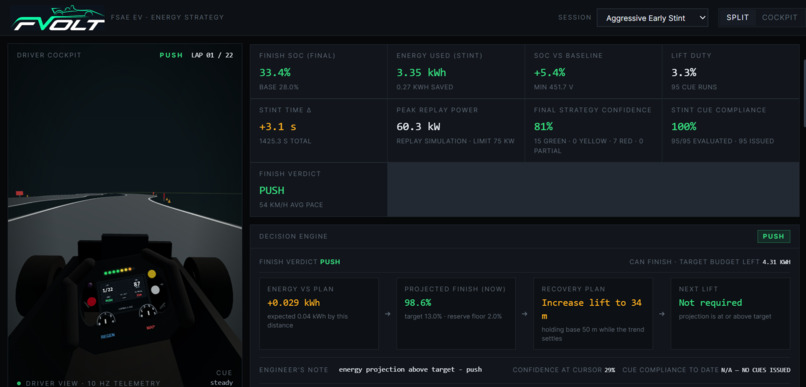
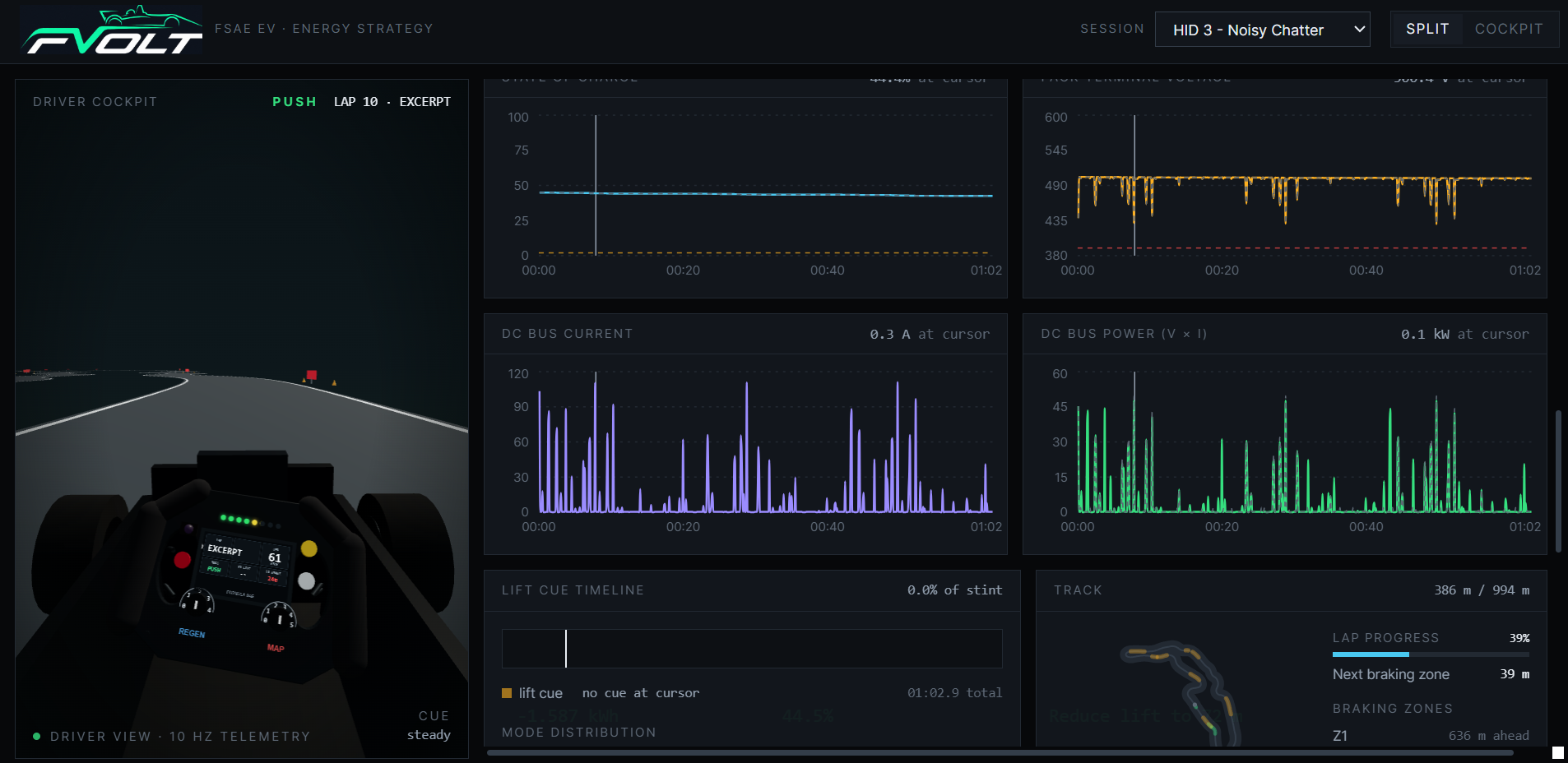
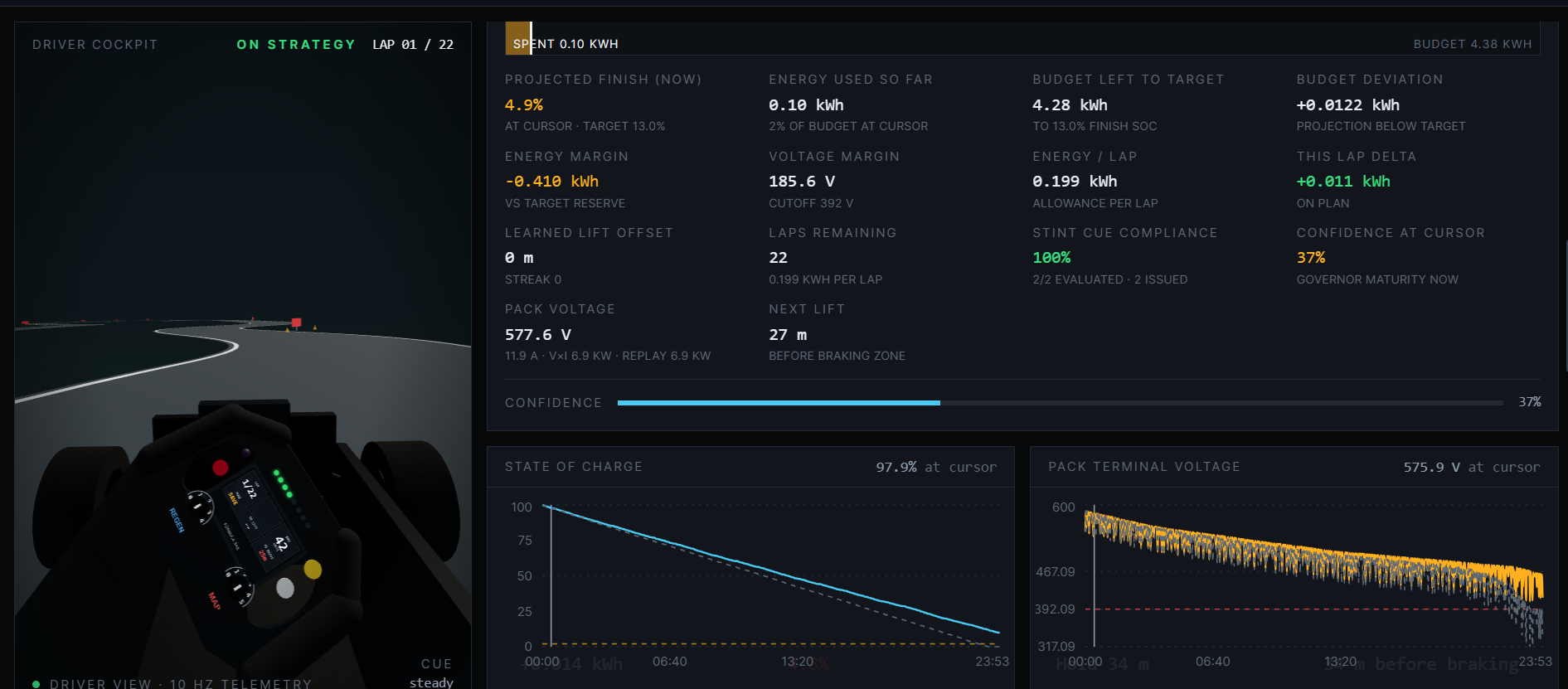
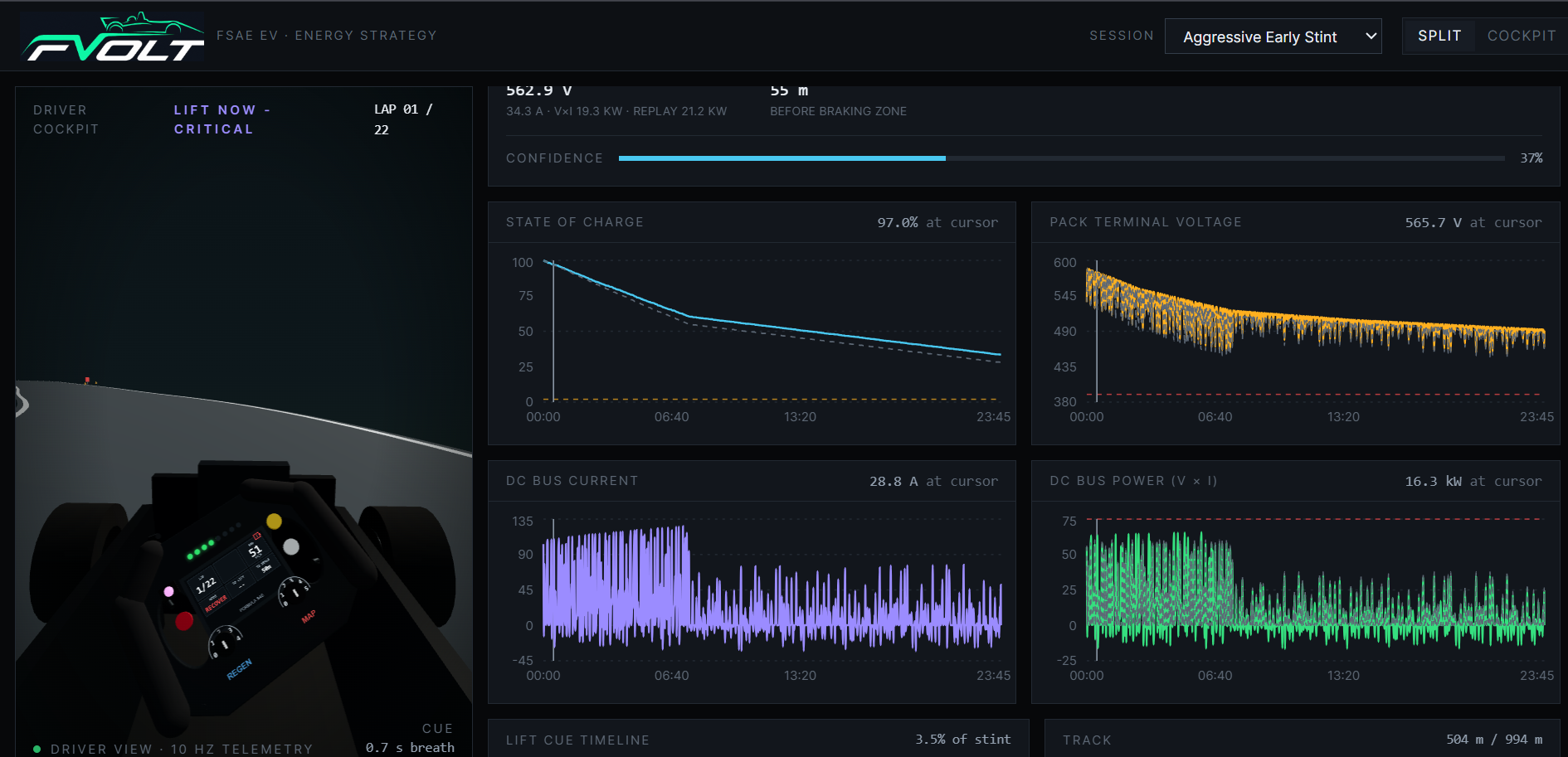
Alongside the cockpit simulation, FVolt includes an engineering dashboard that visualizes telemetry, battery performance, lap analysis, energy consumption, strategy decisions, and race replay.
How we built it
FVolt consists of three primary components:
- An adaptive energy strategy engine written in Python
- A FastAPI backend for telemetry processing and replay
- An interactive React and TypeScript dashboard with a 3D Formula SAE cockpit simulation built using React Three Fiber and Three.js
The strategy engine processes telemetry at 10 Hz and evaluates battery state of charge, voltage, current draw, vehicle speed, driver inputs, track geometry, braking zones, and remaining race distance to determine the optimal driving strategy.
Challenges we ran into
One of the biggest challenges was balancing performance with efficiency. Every lift-and-coast recommendation has to save enough energy to matter without sacrificing unnecessary lap time.
Another challenge was designing a driver interface that could communicate strategy instantly. During a race, drivers cannot constantly look at screens or detailed telemetry, so we focused on creating a simple peripheral visual cue that could be understood with minimal cognitive load.
We also spent significant time integrating telemetry replay, strategy logic, dashboard analytics, and cockpit visualization into one synchronized system.
What we learned
Through this project we gained experience with:
- Formula SAE energy strategy
- Battery and powertrain management concepts
- Real-time telemetry processing
- Human-machine interface design
- Data visualization
- Full-stack application architecture
- Building software around real motorsport engineering constraints
Perhaps the biggest takeaway was understanding how software can move beyond displaying data to actively supporting driver decision-making during endurance racing.
What's next for FVolt
We see FVolt as a foundation for future Formula SAE race engineering tools.
Future work includes:
- Learning driver-specific energy usage across multiple laps
- More advanced predictive energy budgeting
- Live CAN bus telemetry integration
- Physical steering wheel indicators using ESP32 hardware
- Predictive battery degradation and thermal modelling
- Expanded race engineering analytics and team strategy tools
Built With
- css
- fastapi
- python
- react
- react-three-fiber
- three.js
- typescript
