Inspiration
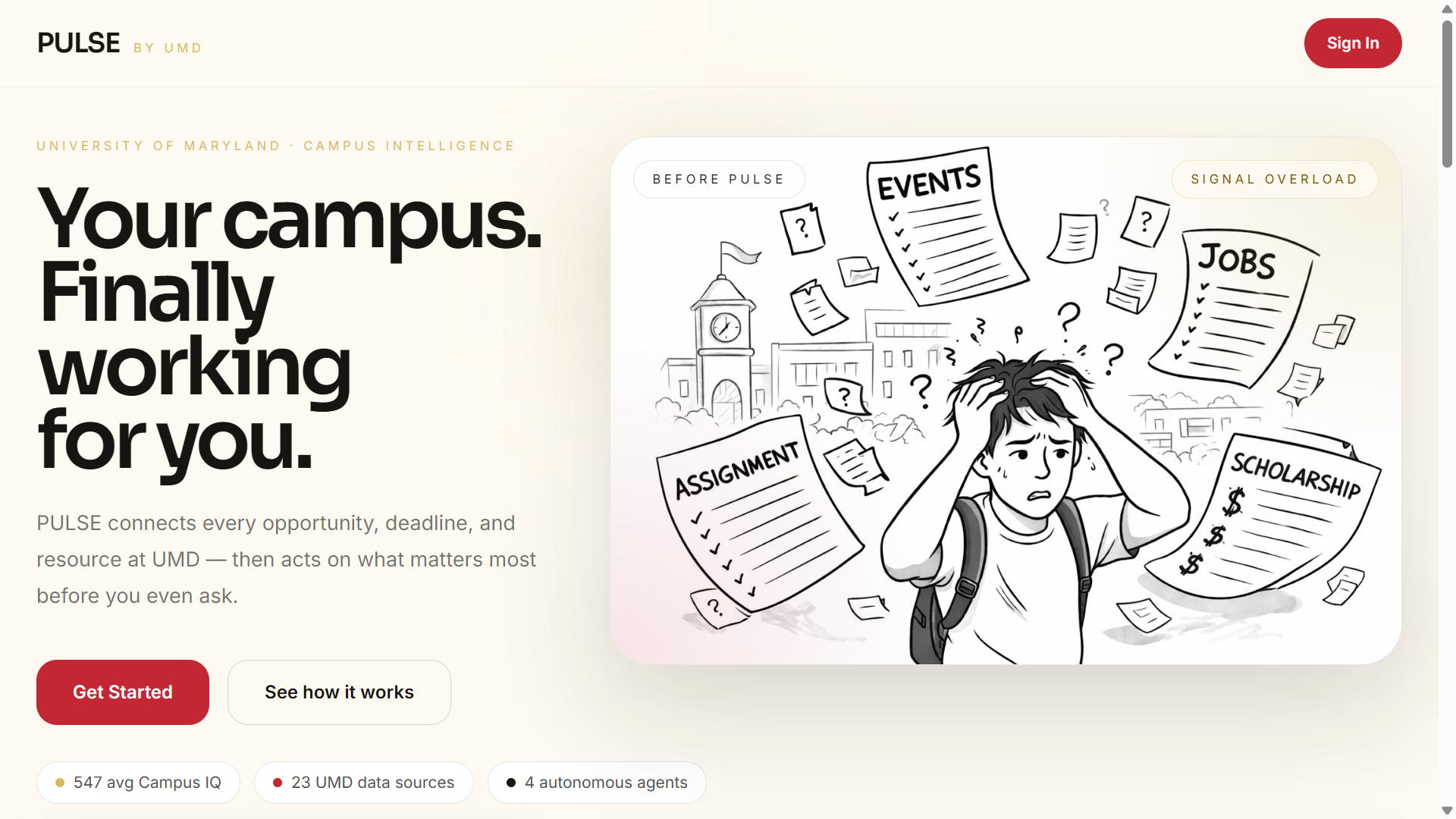
College campuses are full of opportunities — scholarships, jobs, events, research — but most students miss them.
Not because they don’t care. Because the system is broken.
Information is scattered across portals, emails, PDFs, and word-of-mouth. There’s no layer that connects:
- who you are
- what’s happening
- what you should do right now
We kept asking: What if your campus worked like a real-time intelligence system instead of a collection of static dashboards?
That’s how PULSE was designed, not as another app, but as a decision layer for student life.
What it does
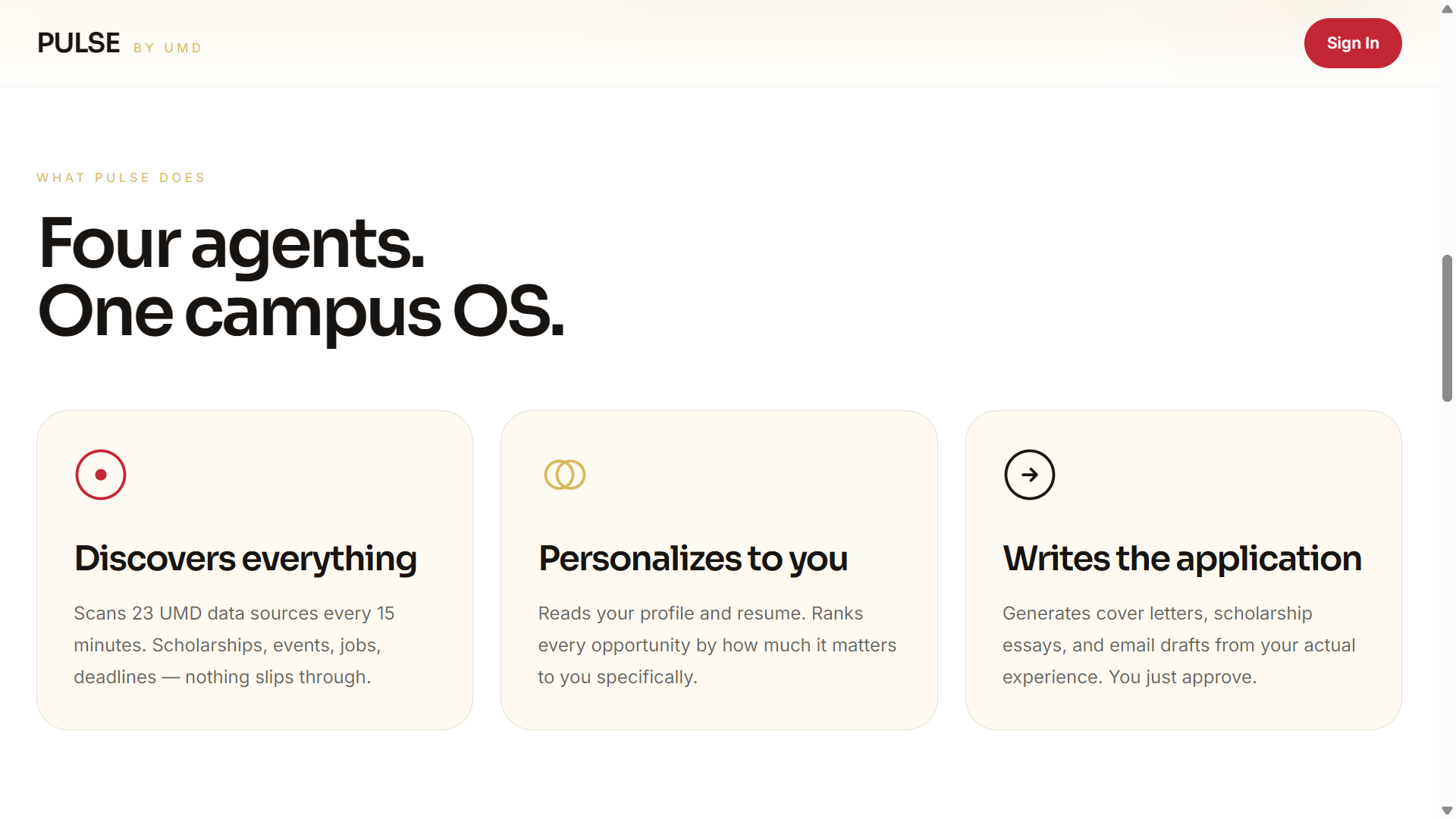
PULSE is a real-time, agent-driven campus intelligence system.
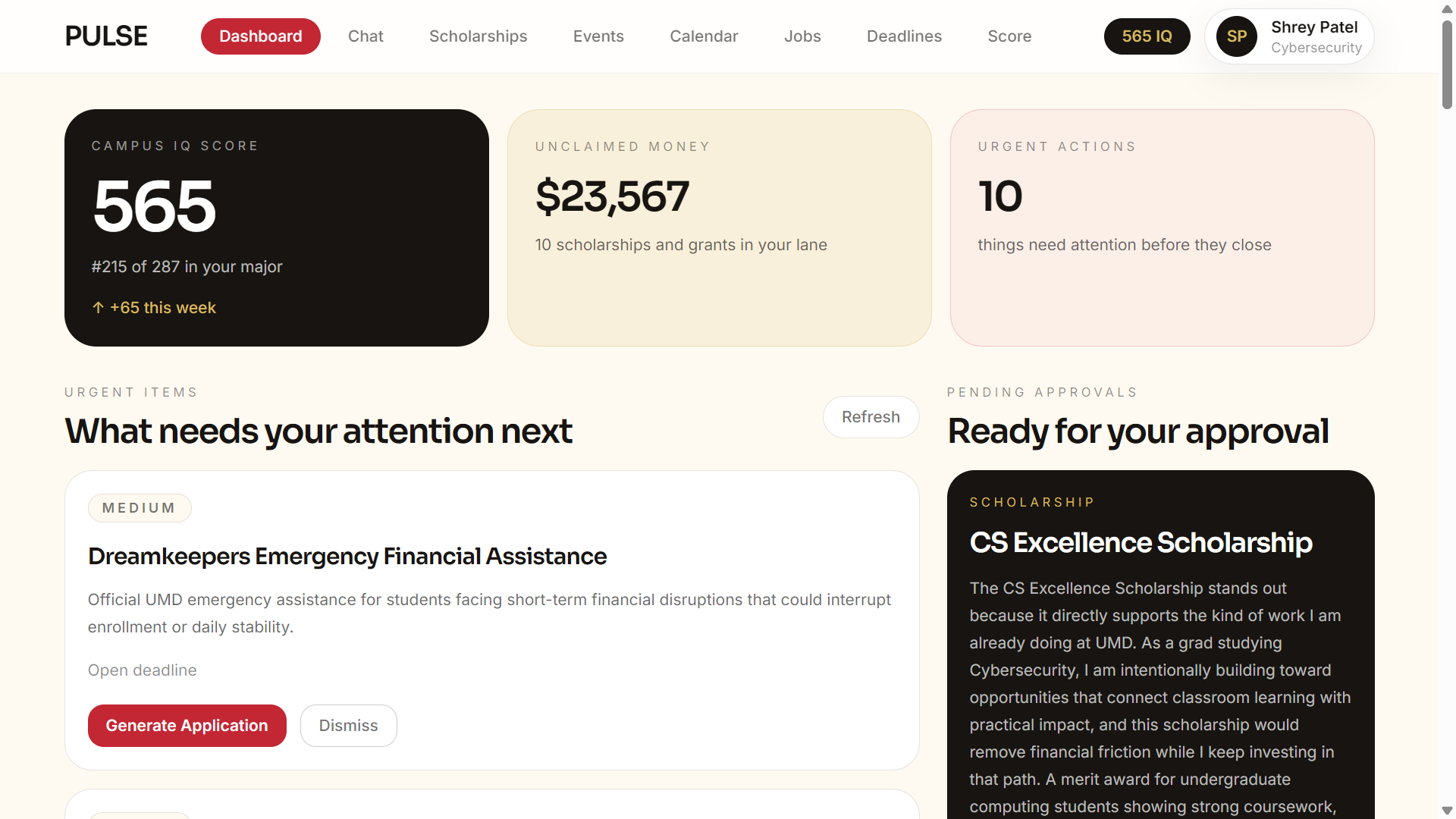
It continuously monitors campus signals and transforms them into personalized, actionable opportunities.
For students:
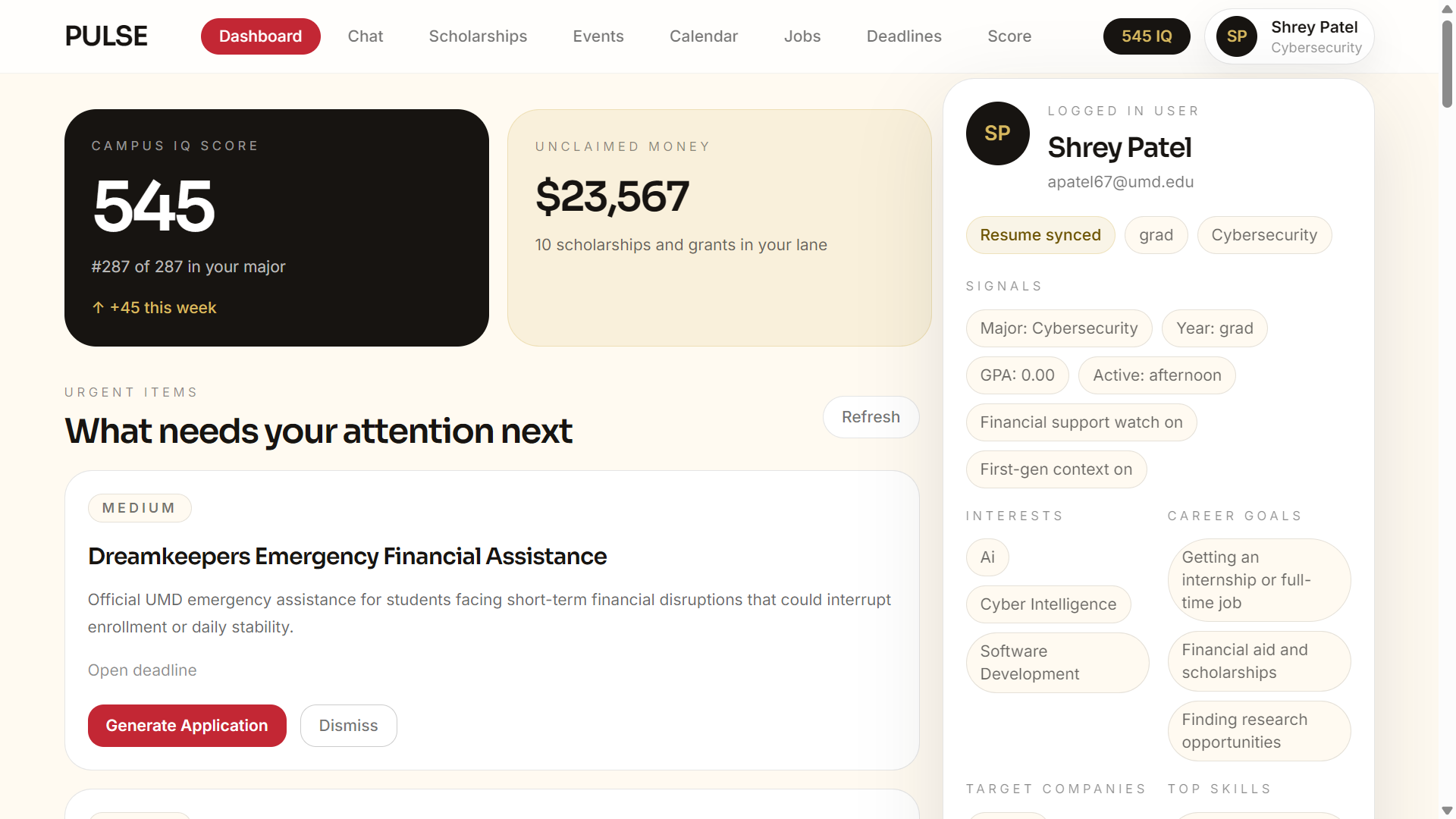
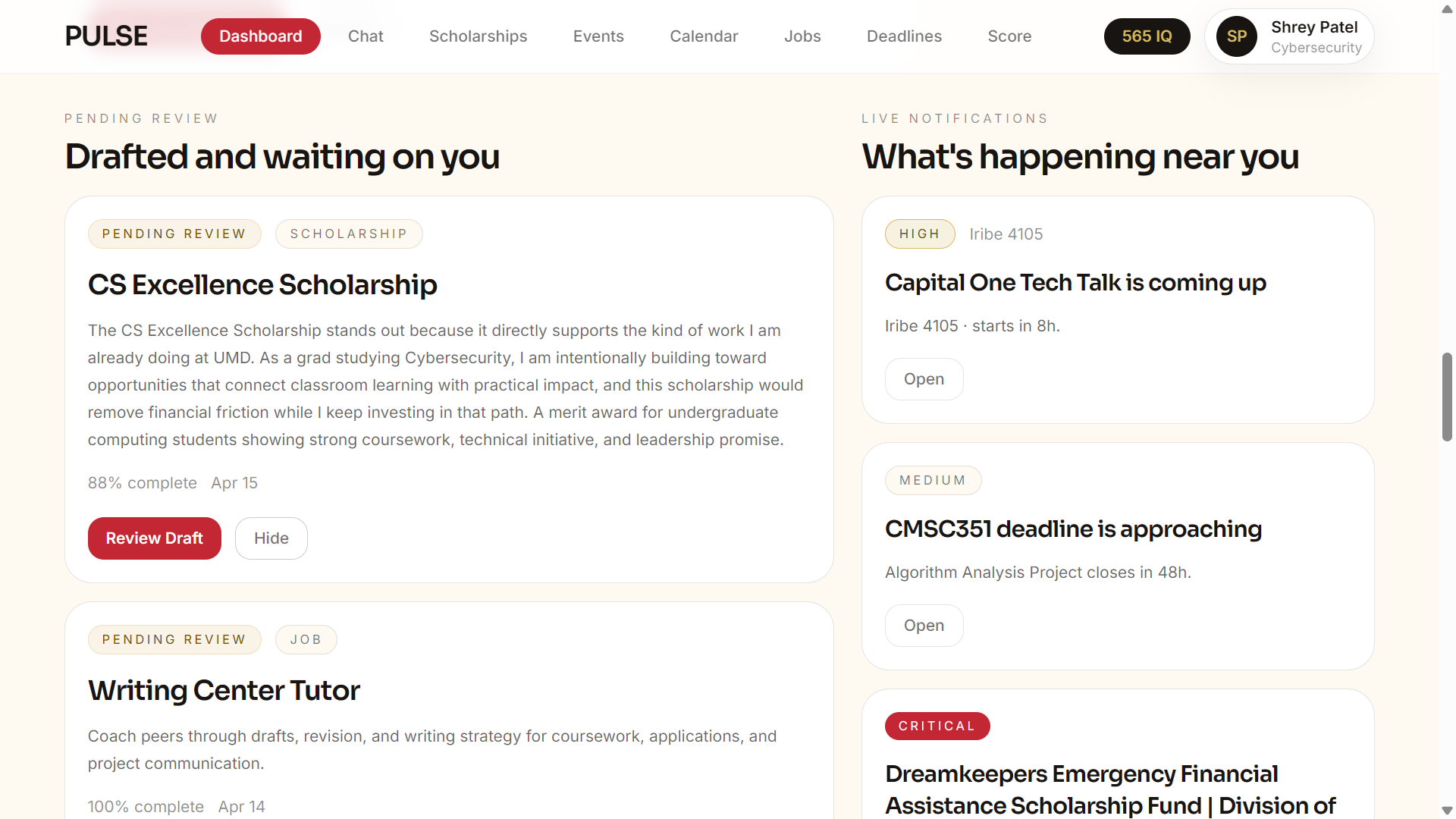
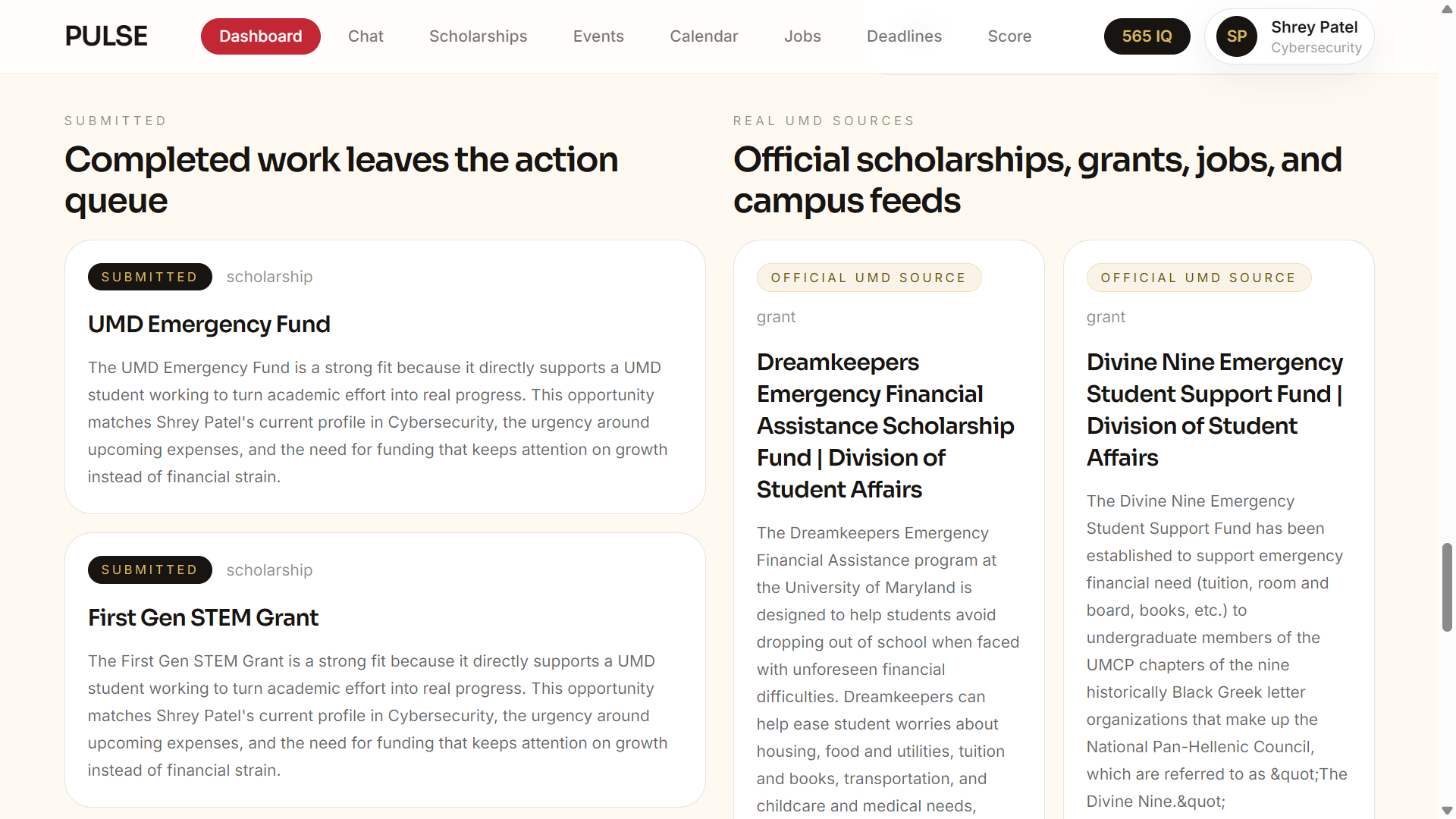
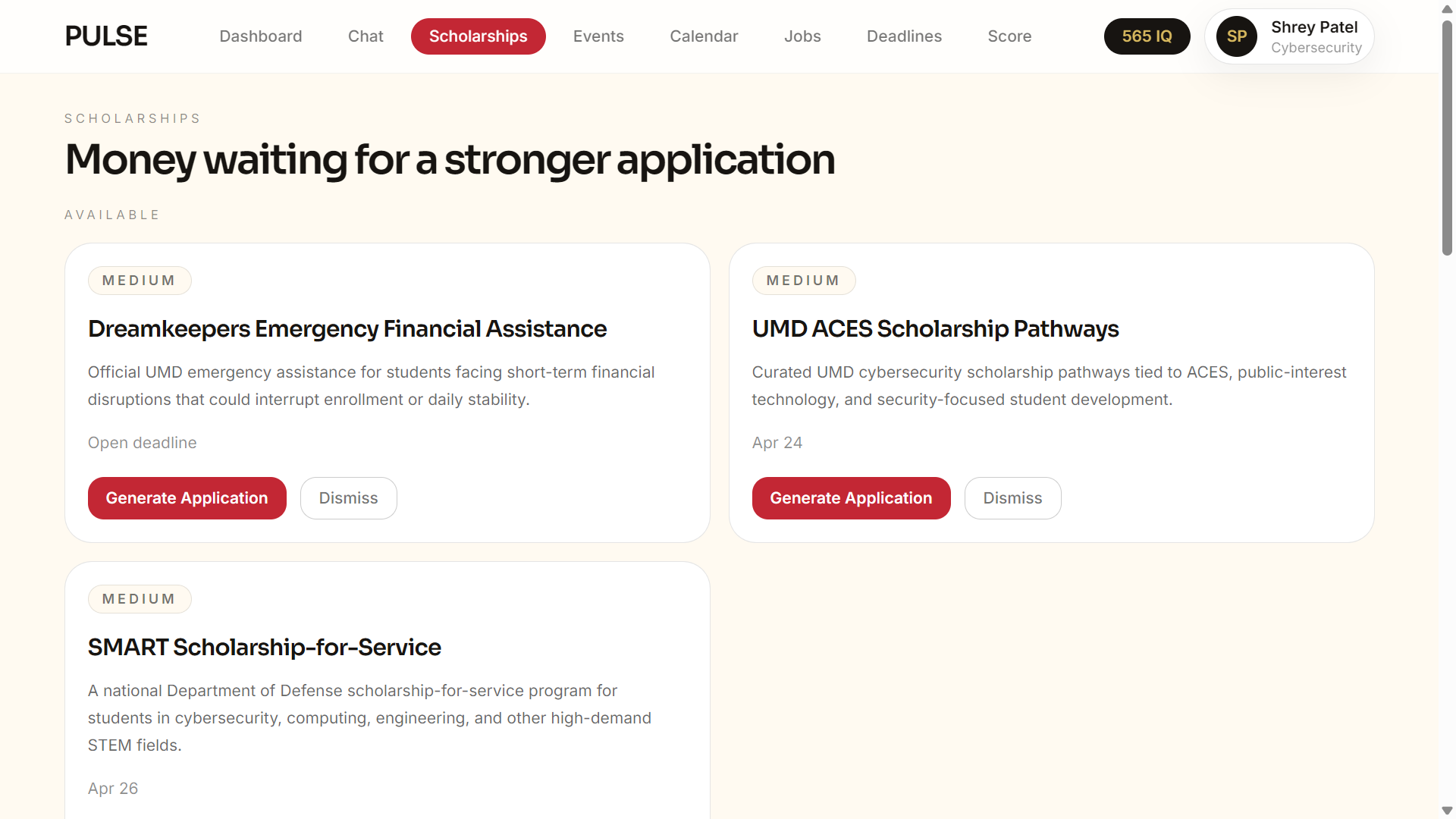
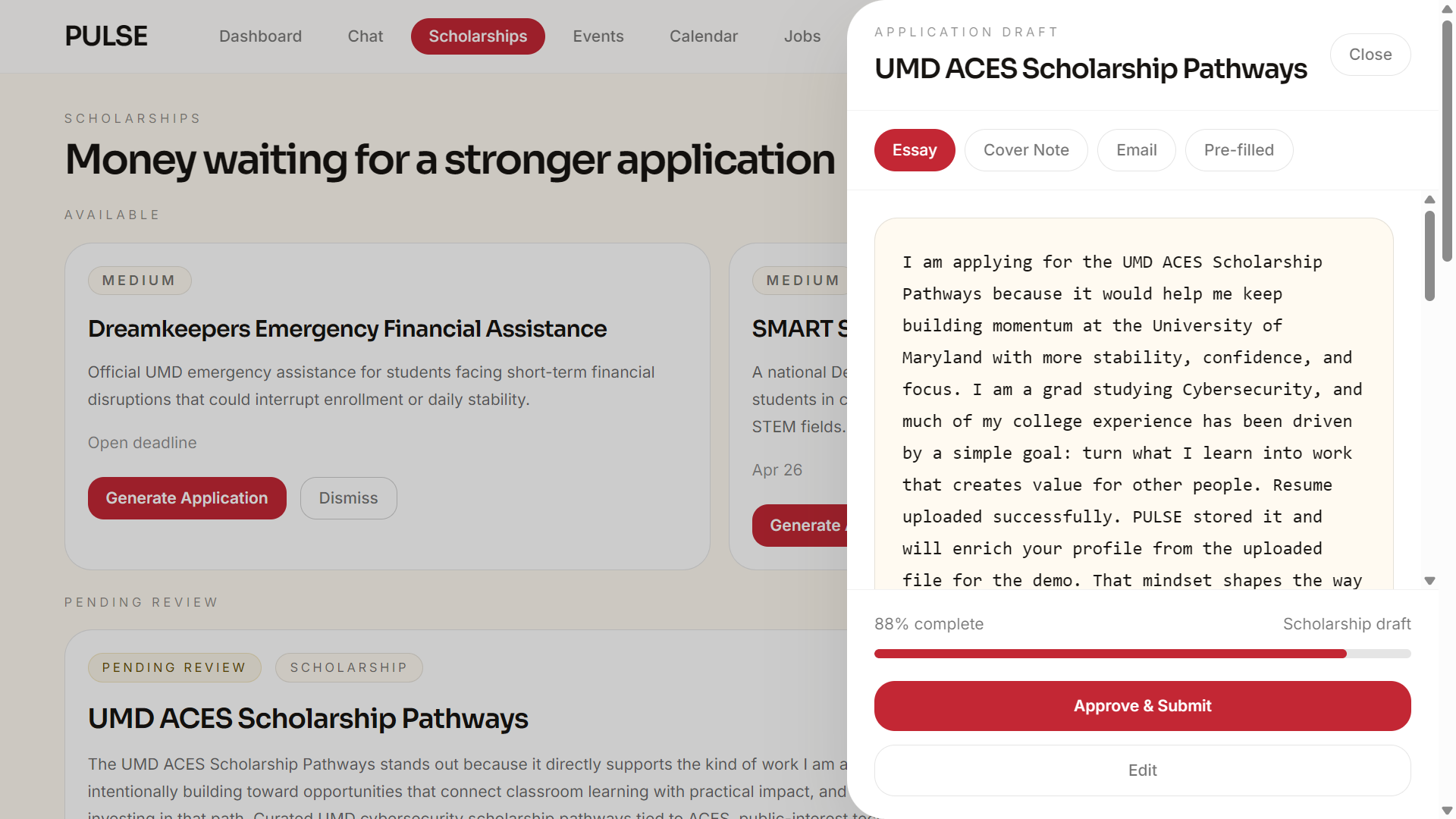
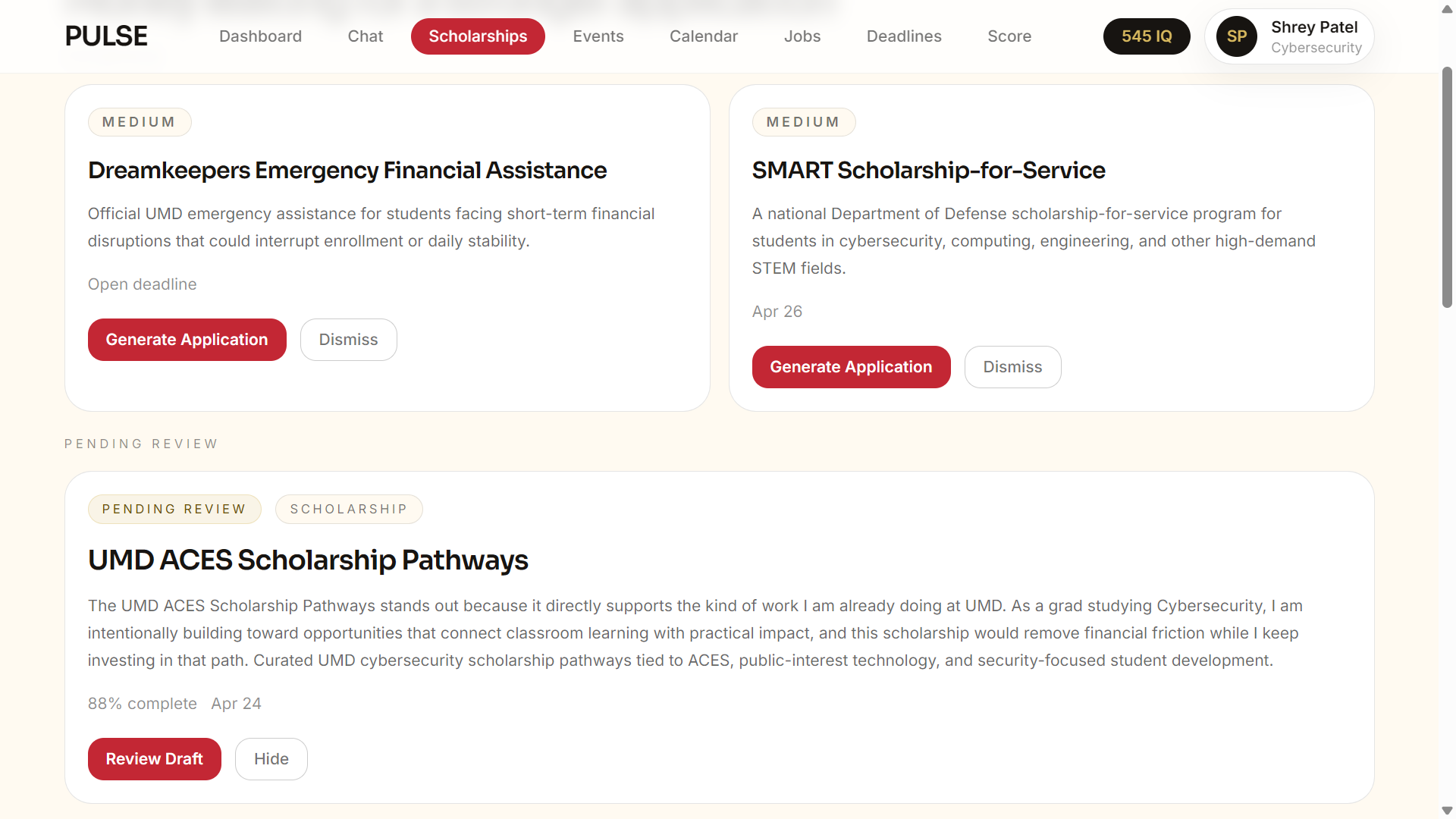
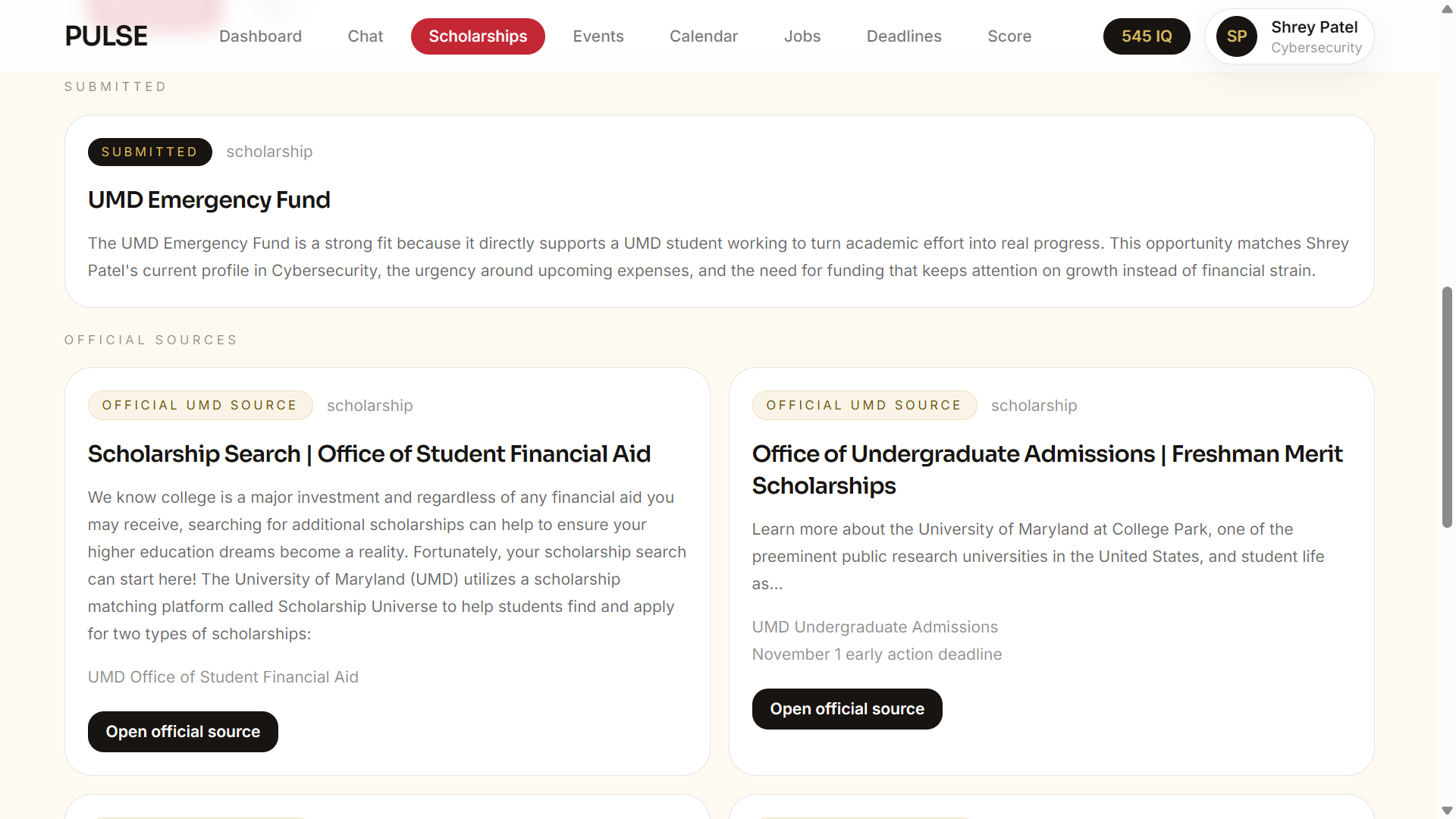
- Matches scholarships and pre-fills applications
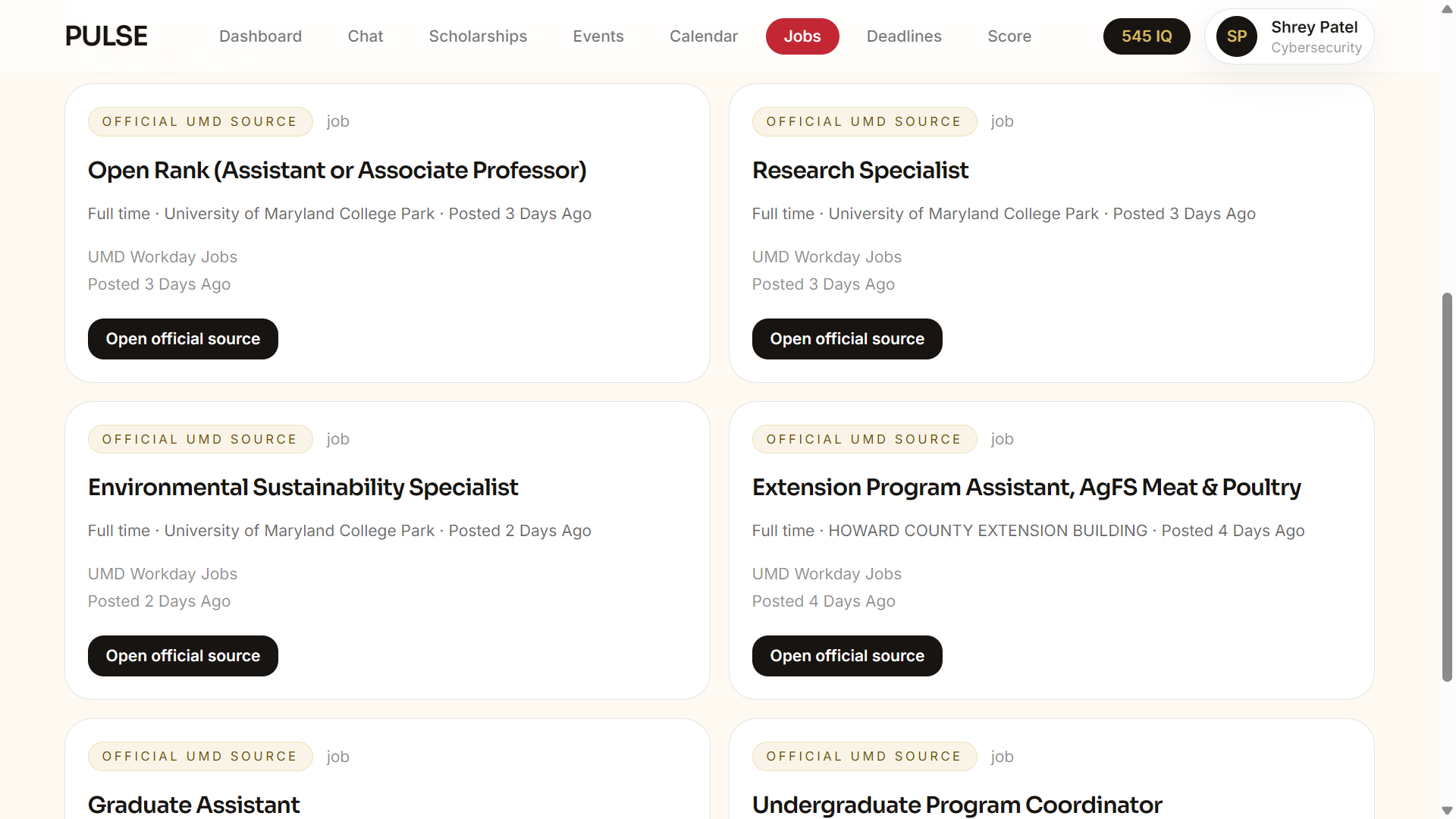
- Surfaces on-campus jobs aligned with skills
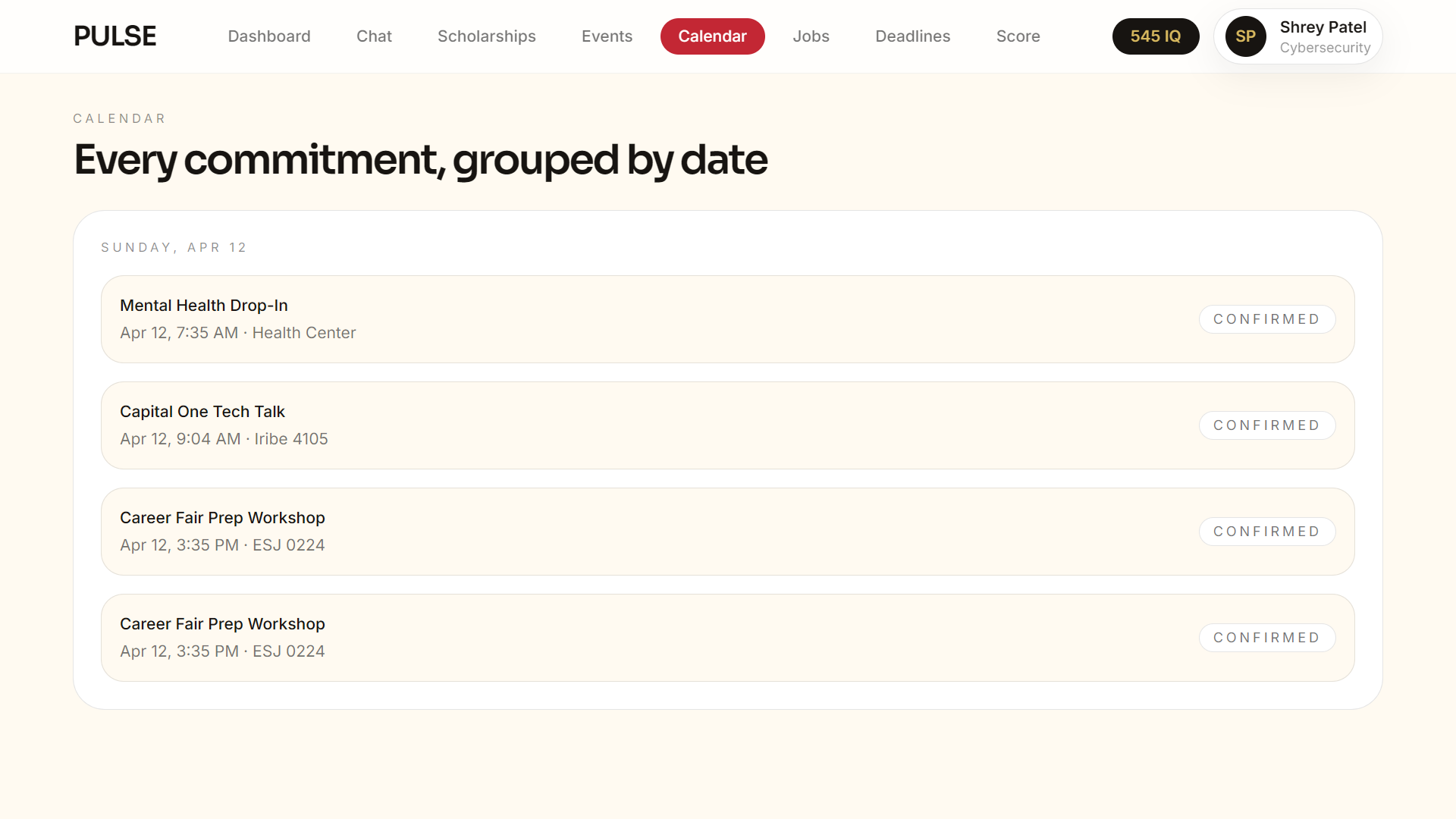
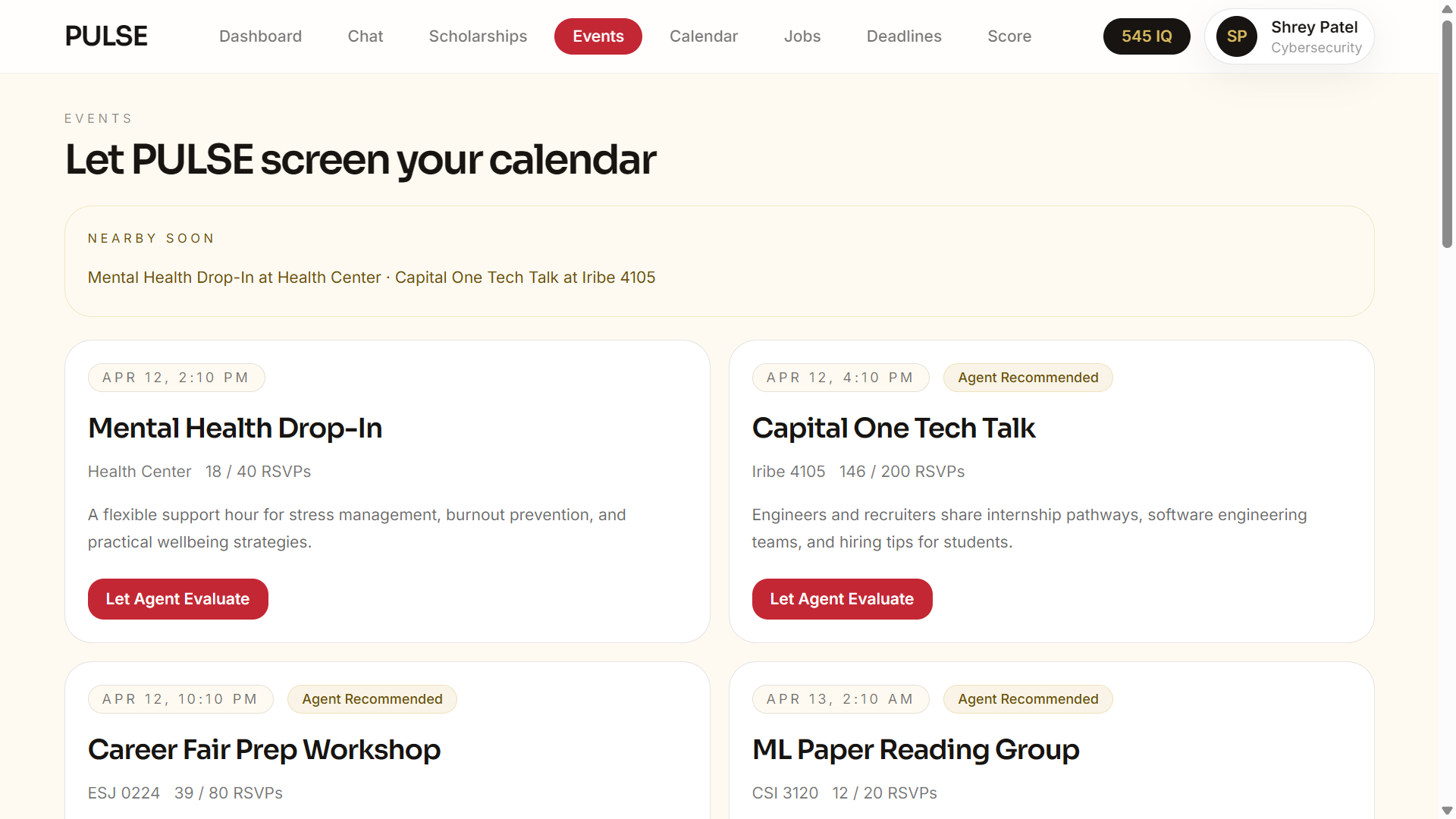
- Recommends relevant events and auto-schedules them
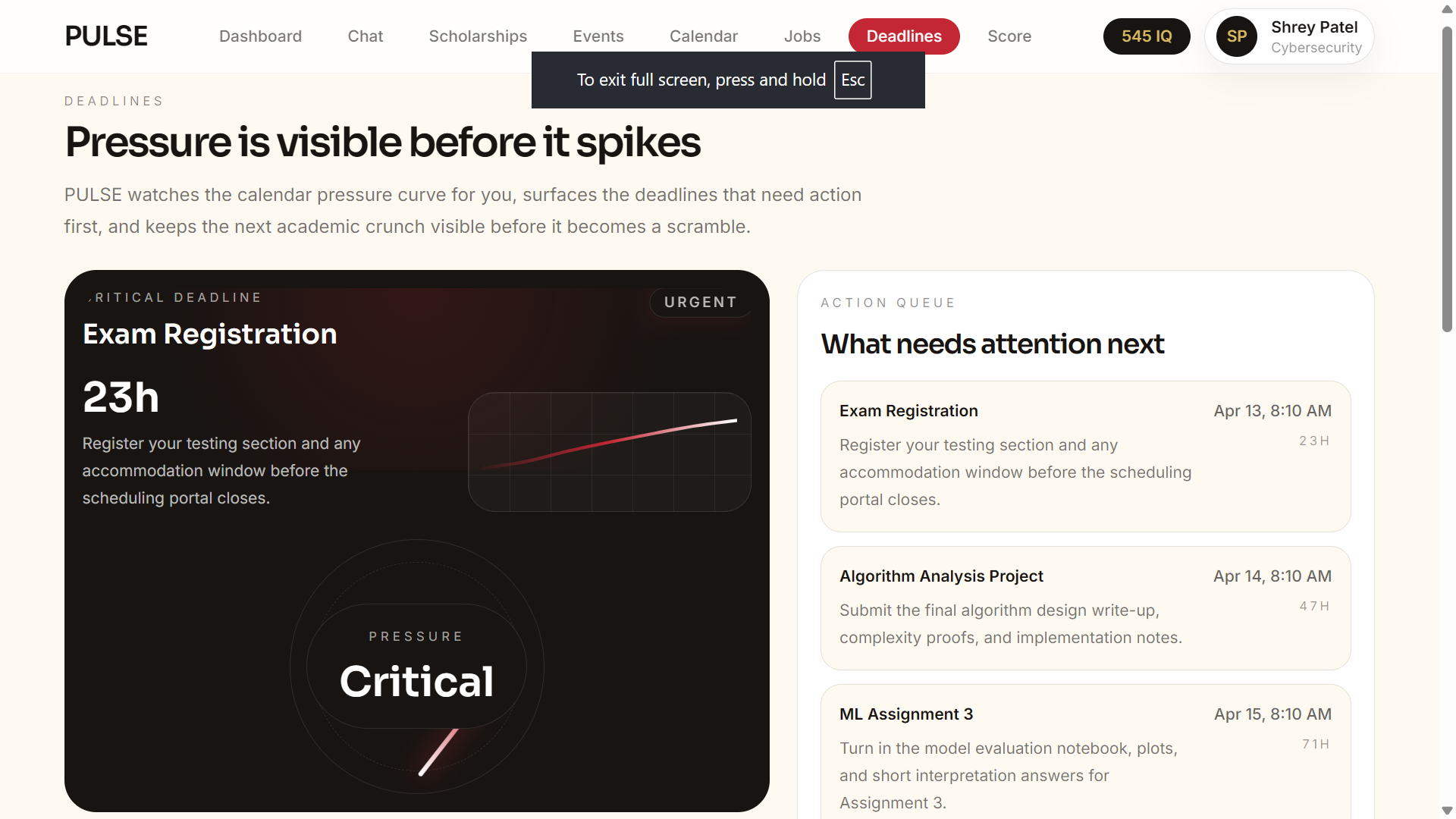
- Tracks deadlines before they become problems
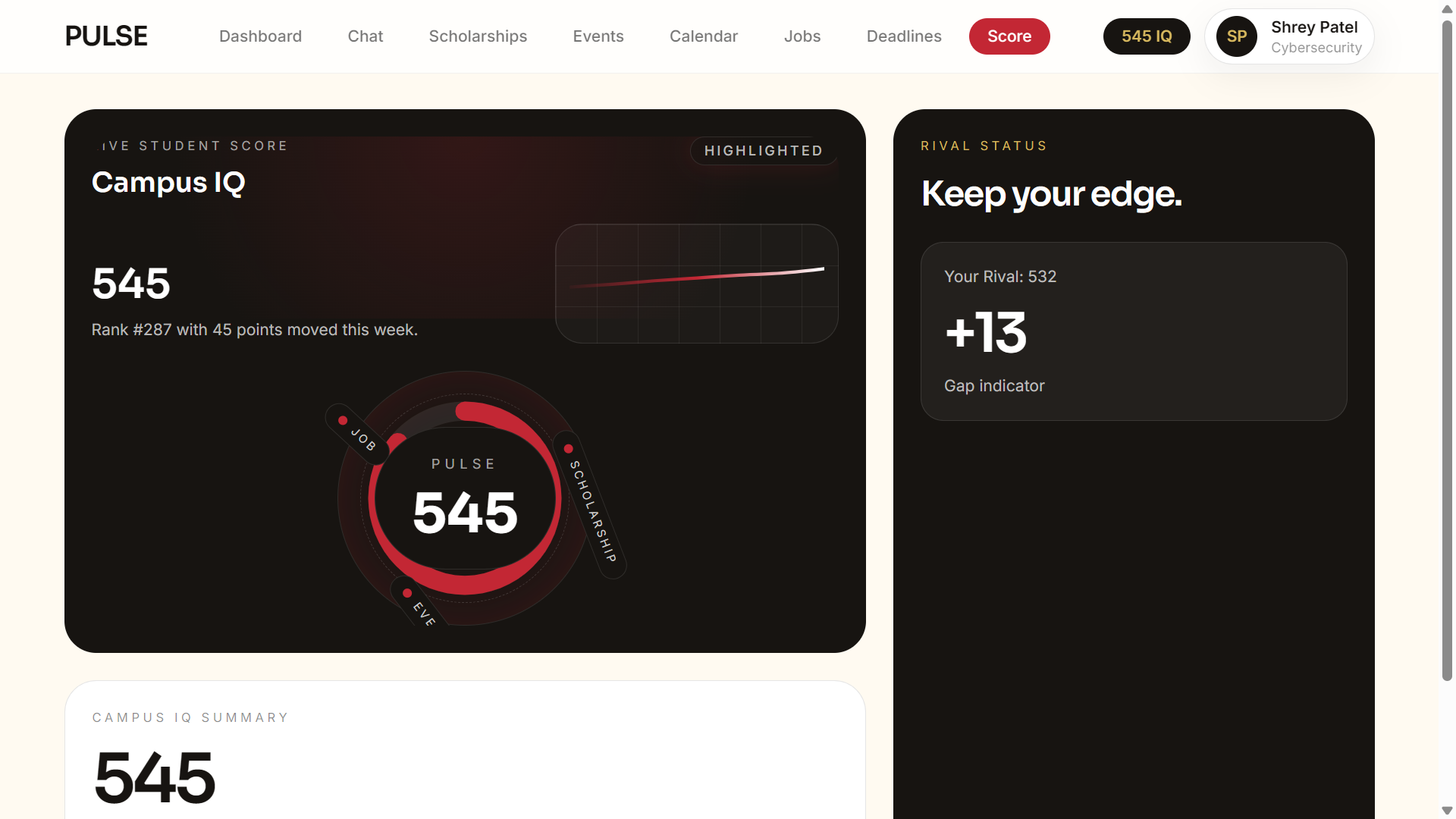
- Calculates a Campus IQ Score (engagement, momentum, opportunity usage)
For faculty:
- Flags at-risk students early
- Drafts context-aware intervention emails
- Surfaces research + funding opportunities
- Measures student engagement impact
Instead of reacting to missed opportunities, PULSE acts before they’re lost.
How we built it
We designed PULSE as a modular agent orchestration system layered on top of a campus AI platform.
Core Architecture:
- Agent Orchestrator – coordinates multiple task-specific agents
- Opportunity Agents – scholarships, jobs, events, deadlines
- Matching Engine – ranks opportunities based on relevance + urgency
- Action Layer – executes tasks (apply, RSVP, schedule, notify)
- Scoring Engine – computes Campus IQ + engagement metrics
Backend:
- Node.js / TypeScript
- Modular API layer (/pulse system)
- Agent routing + orchestration logic
Frontend:
- Next.js (App Router)
- Dynamic dashboard UI
- Real-time actionable cards
Intelligence Layer:
- LLM-powered:
- Opportunity extraction
- Application drafting
- Email generation
- Structured + heuristic matching for deterministic reliability
We intentionally built it as a non-invasive extension — plug-and-play into existing campus ecosystems.
Challenges we ran into
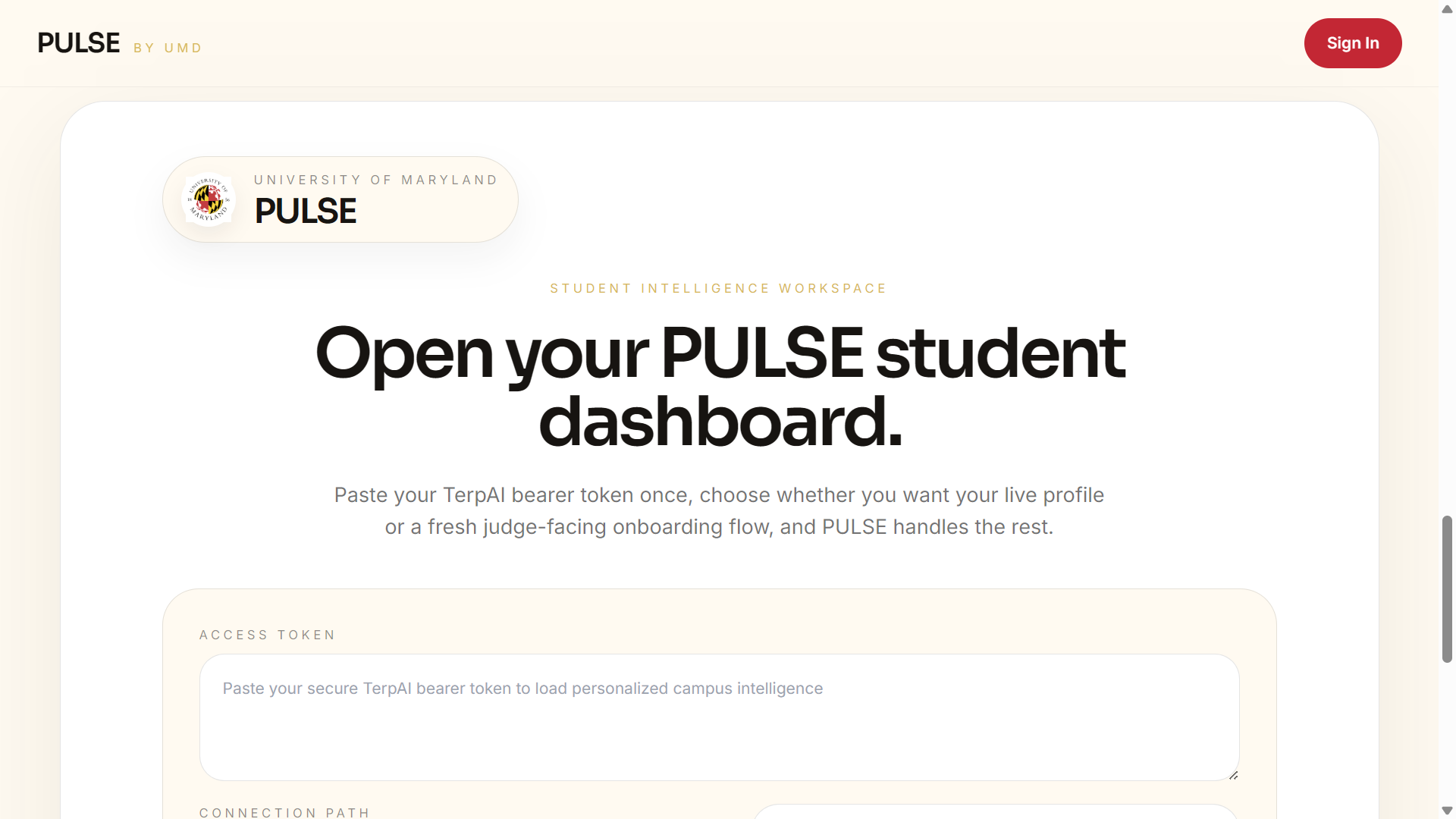
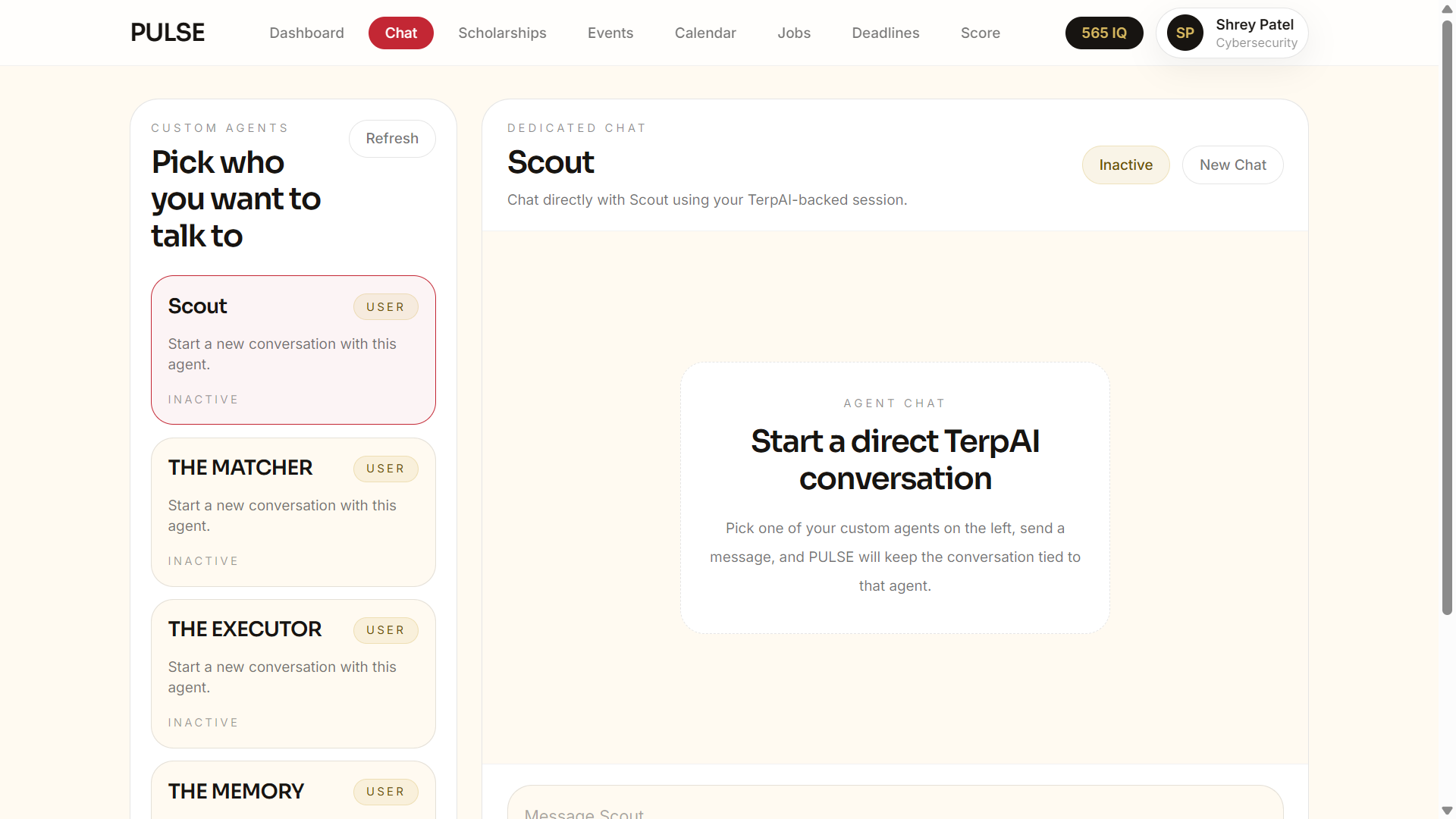
One of our biggest challenges was that TerpAI is designed as a standalone interface for UMD students, not as a developer-ready platform with public APIs that could be directly plugged into another application. Since PULSE depended on intelligence and workflows that needed to connect seamlessly into a larger system, this created a major integration barrier.
To solve this, we had to think beyond simple frontend prototyping. Instead of relying on nonexistent native integrations, we designed and developed an API layer from scratch that could interface with our system architecture and make PULSE operational. That meant building the connection logic ourselves, structuring request/response flows, and creating a clean way for PULSE to use TerpAI-driven capabilities inside a broader campus intelligence experience.
Accomplishments that we're proud of
- Building an API Architure to Export TerpAI API from Stratch, Agents Directly from your TerpAI dashboard to Anywhere you want
- Built a multi-agent campus intelligence system in hackathon time
- Designed a new paradigm: campus as an operating system
- Created actionable flows, not just insights (apply, schedule, respond)
- Introduced Campus IQ Score to quantify student momentum
- Delivered dual impact:
- Student success
- Faculty intervention
Most importantly:
- We didn’t build another dashboard.
- We built a system that changes behavior in real time.
What we learned
- Insight without action is useless:-- Systems must do, not just inform
- Personalization is everything:-- Relevance drives engagement more than features
- Agent systems > single AI models:-- Coordination creates real-world utility
- Timing matters more than availability:-- The right opportunity at the wrong time is still a miss
Built With
- next.js
- node.js
- react
- tailwind
- typescript


Log in or sign up for Devpost to join the conversation.