-
-
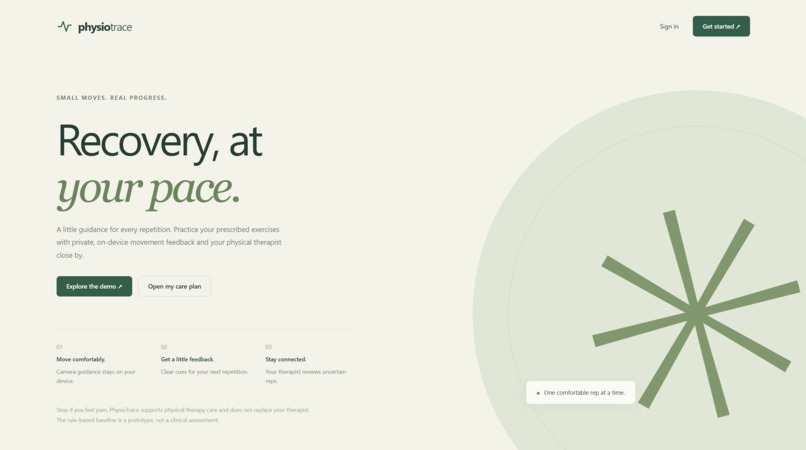
Main Page
-
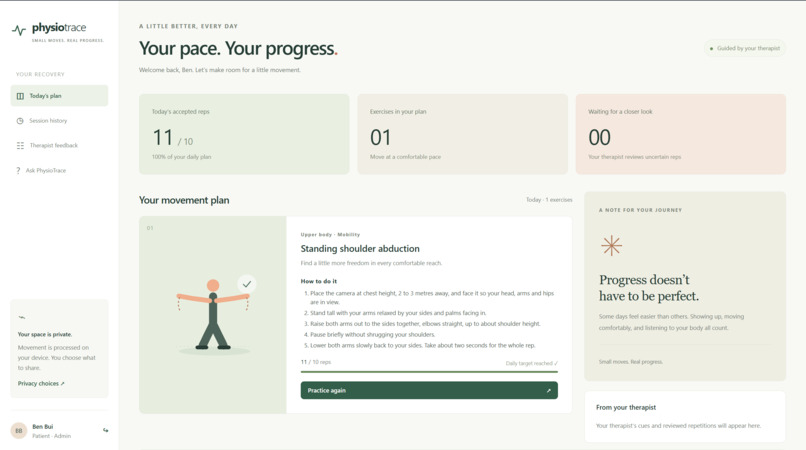
Main Patient UI
-
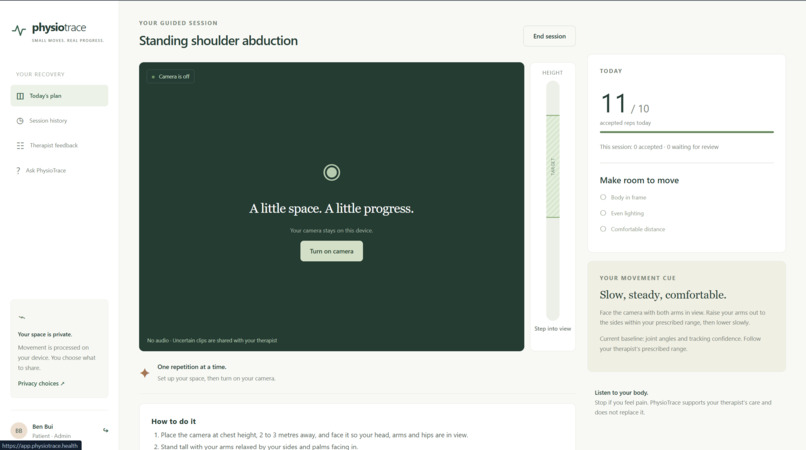
Patient Exercise UI
-
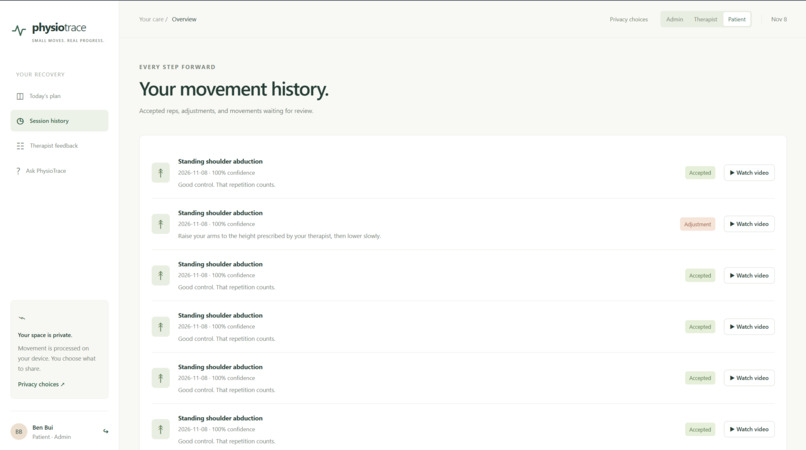
Patient Log/History
-
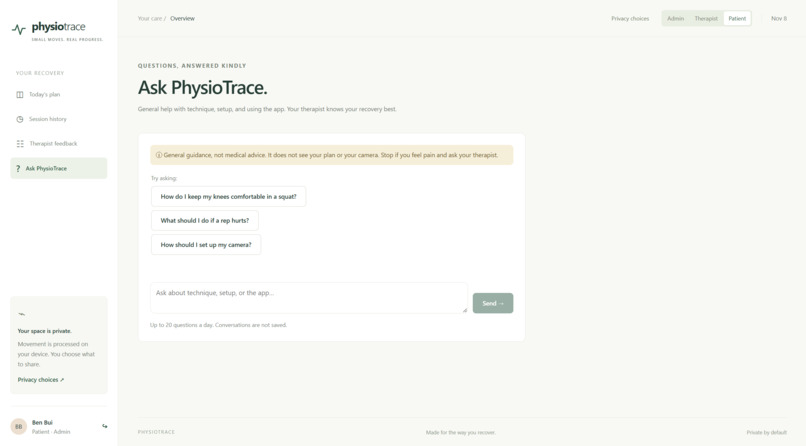
Patient Support
-
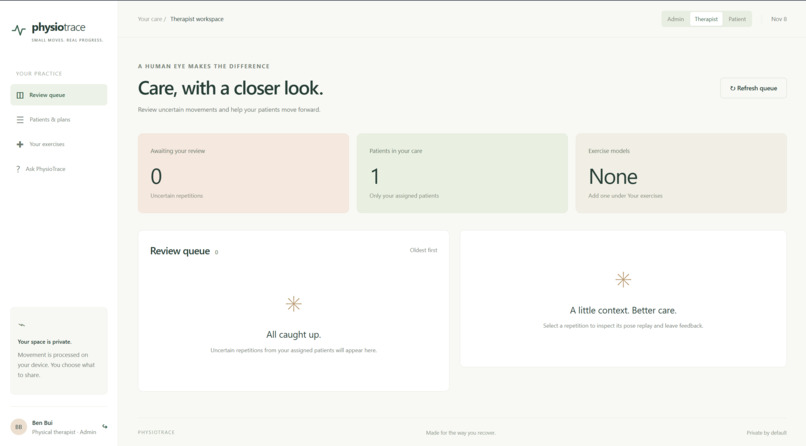
Main Therapist UI
-
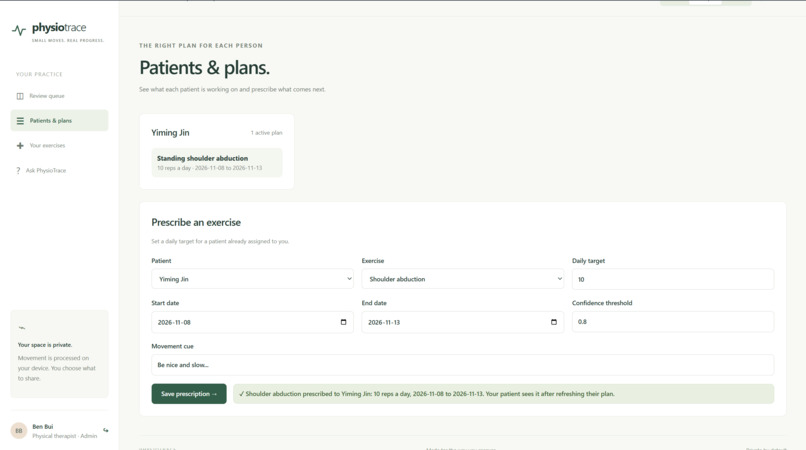
Assigning Patients
-
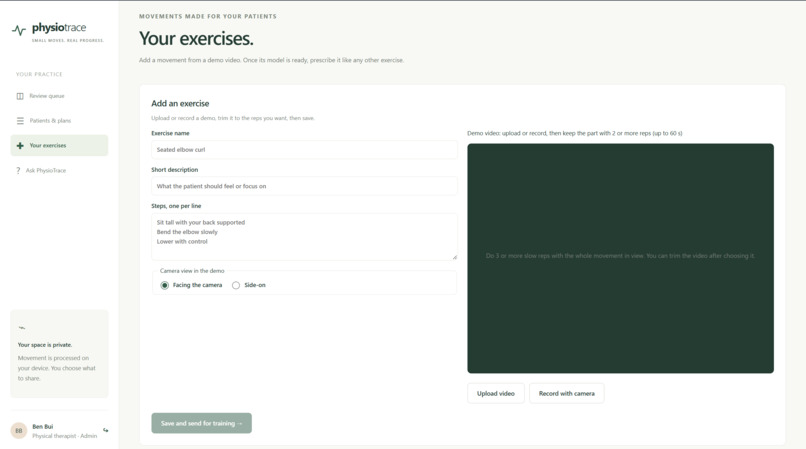
Creating an Exercise
PhysioTrace
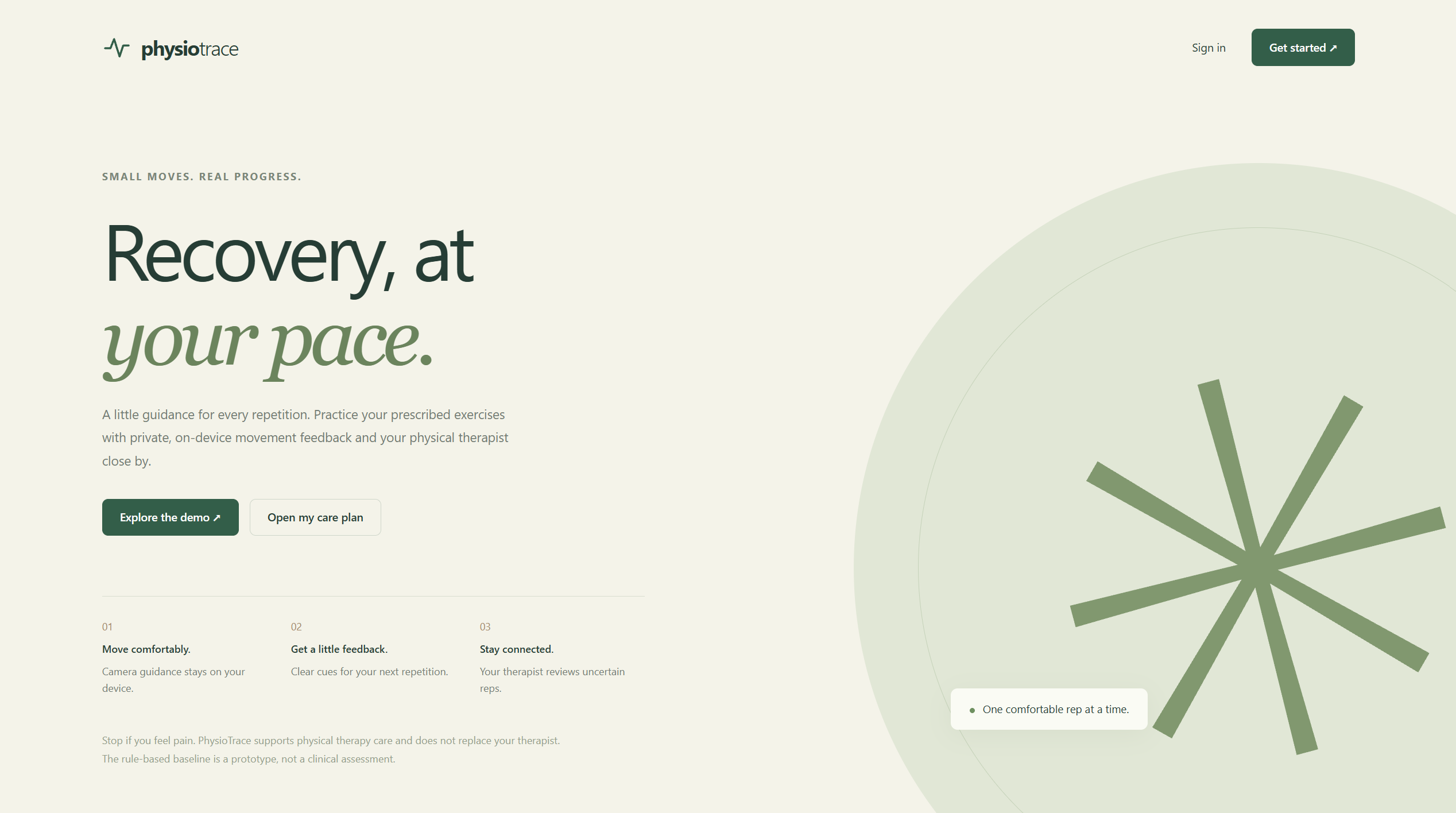
Small moves. Real progress.
Inspiration
One of our team members has a friend who regularly travels to Canmore for physiotherapy to treat a knee injury. He chose to receive treatment there because of the clinic's reputation and the quality of care he received.
But his biggest struggle wasn't necessarily the treatment itself. It was everything that happened afterward.
Between appointments, he struggled to keep up with his prescribed exercises. He often wasn't sure whether he was performing them correctly, whether he was making progress, or whether he might be developing bad habits. And with his physiotherapist so far away, getting regular feedback wasn't easy.
That got us thinking: What happens to all the patients who leave their physiotherapy appointments with a list of exercises, but no one to guide them through their recovery at home?
We realized his experience wasn't unique. Many patients face similar challenges, especially those living in rural communities, people with mobility limitations, and those who cannot easily access frequent in-person appointments.
That's why we created PhysioTrace, an AI-powered physiotherapy companion that uses computer vision to monitor prescribed exercises, provide real-time movement feedback, and connect patients with their physiotherapists whenever additional guidance is needed.
Our goal was simple: to make the support patients receive during physiotherapy more accessible beyond the clinic, so that distance and uncertainty don't have to stand in the way of recovery.
What it does
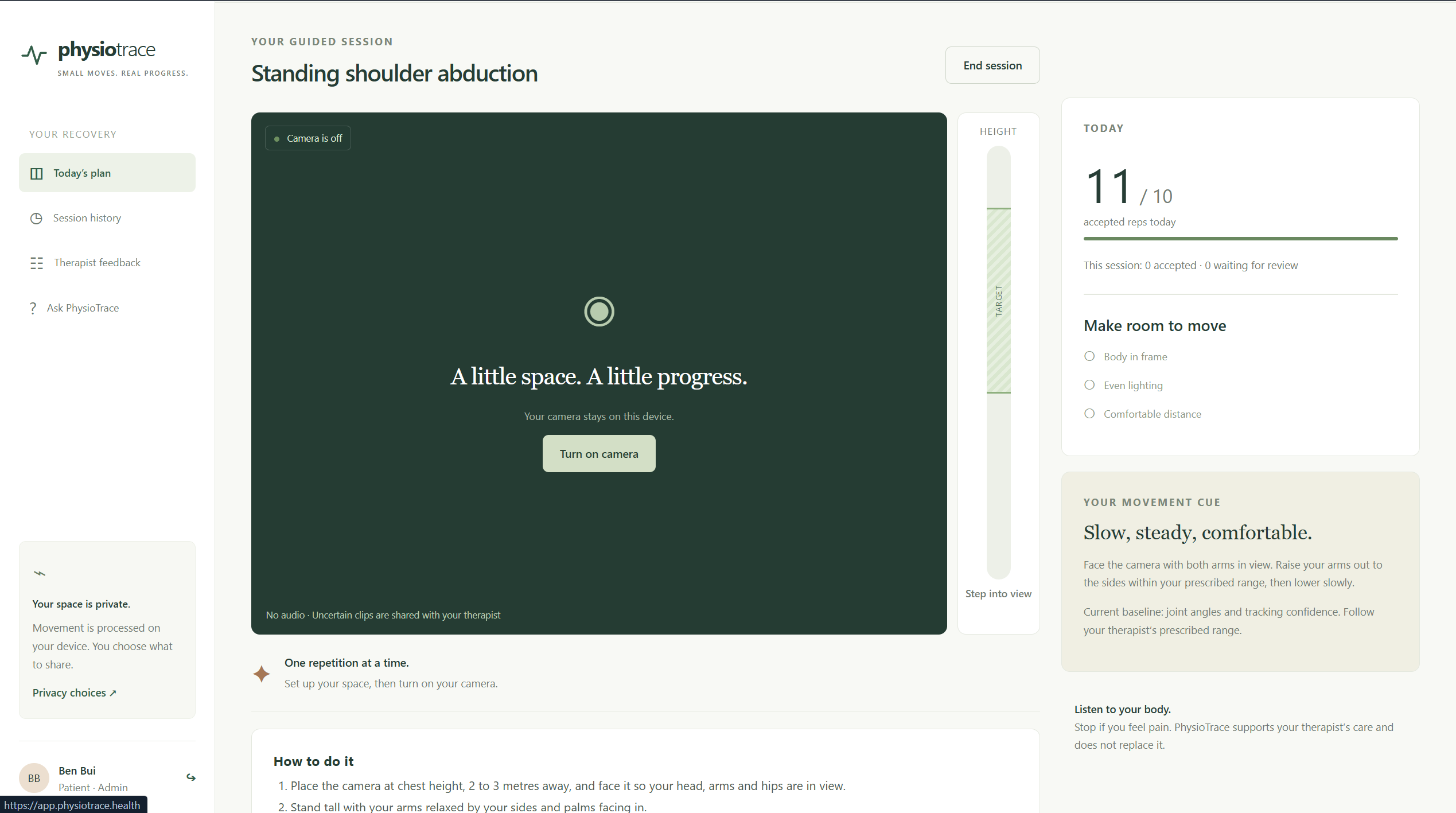
PhysioTrace transforms an ordinary phone or laptop camera into an interactive rehabilitation assistant.
Using computer vision, our application tracks a patient's body movements and analyzes individual repetitions of prescribed exercises. Instead of simply counting repetitions, PhysioTrace evaluates movements against exercise-specific criteria and provides understandable feedback to help patients improve their technique.
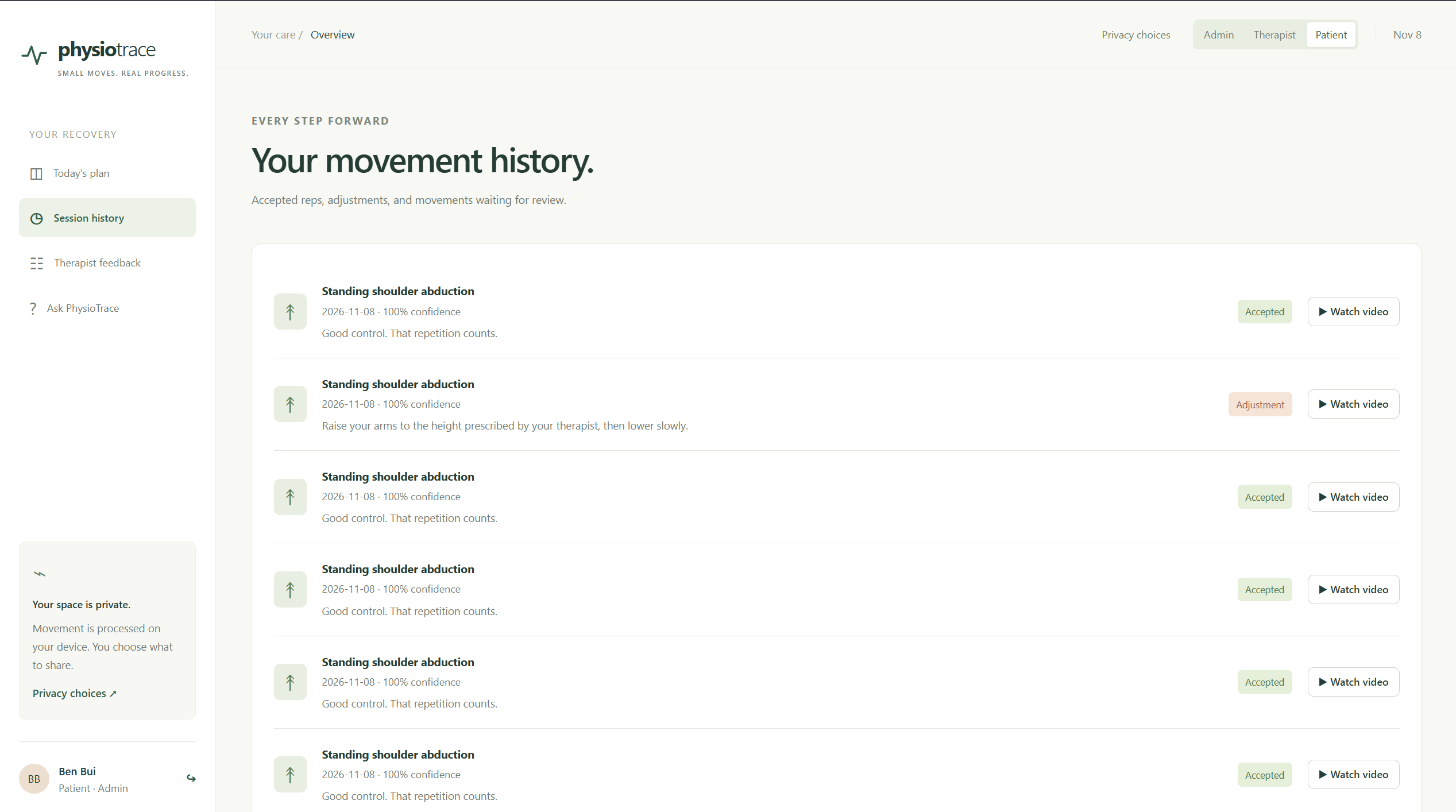
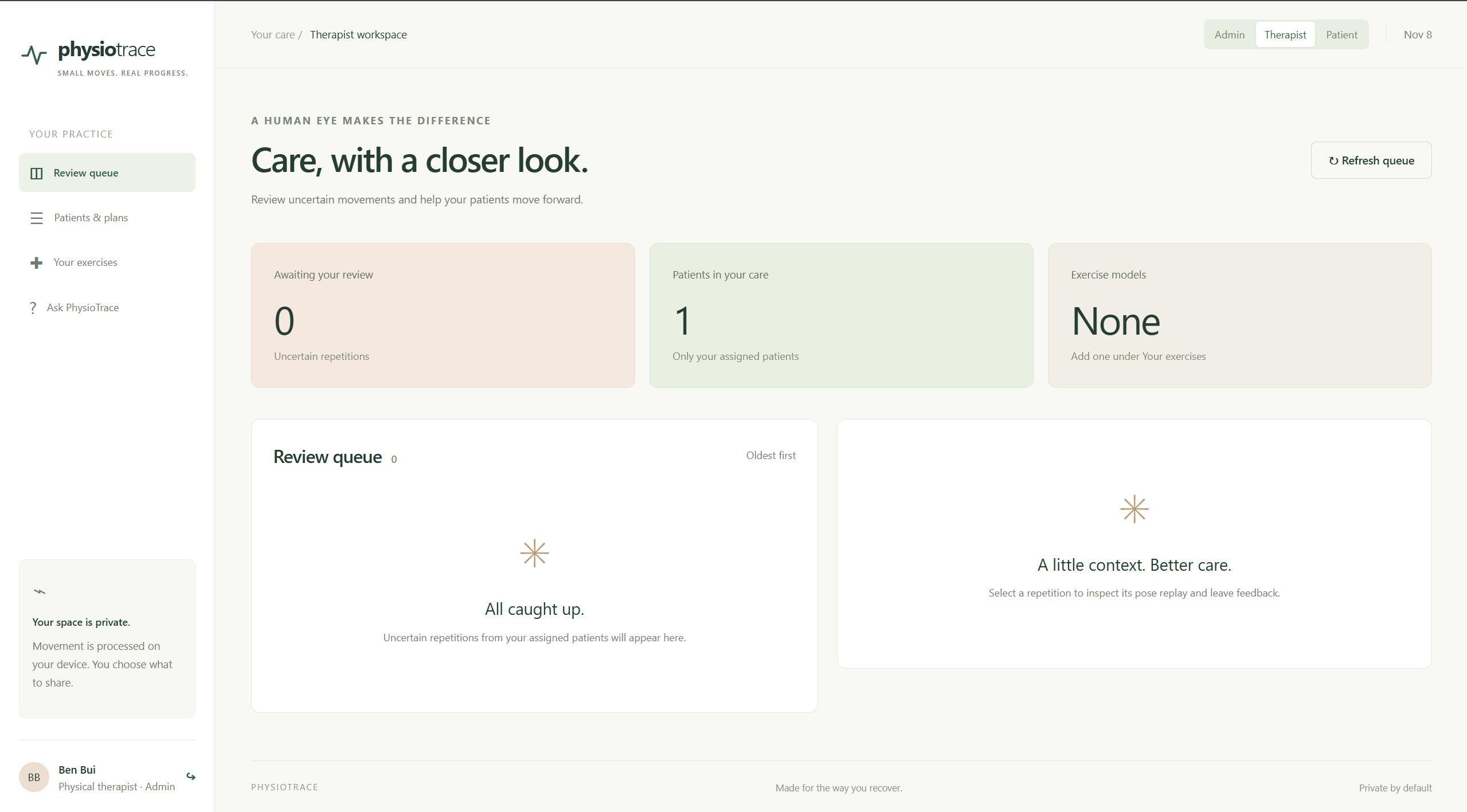
When the system cannot confidently evaluate a movement, it can flag the repetition for the patient's physiotherapist to review.
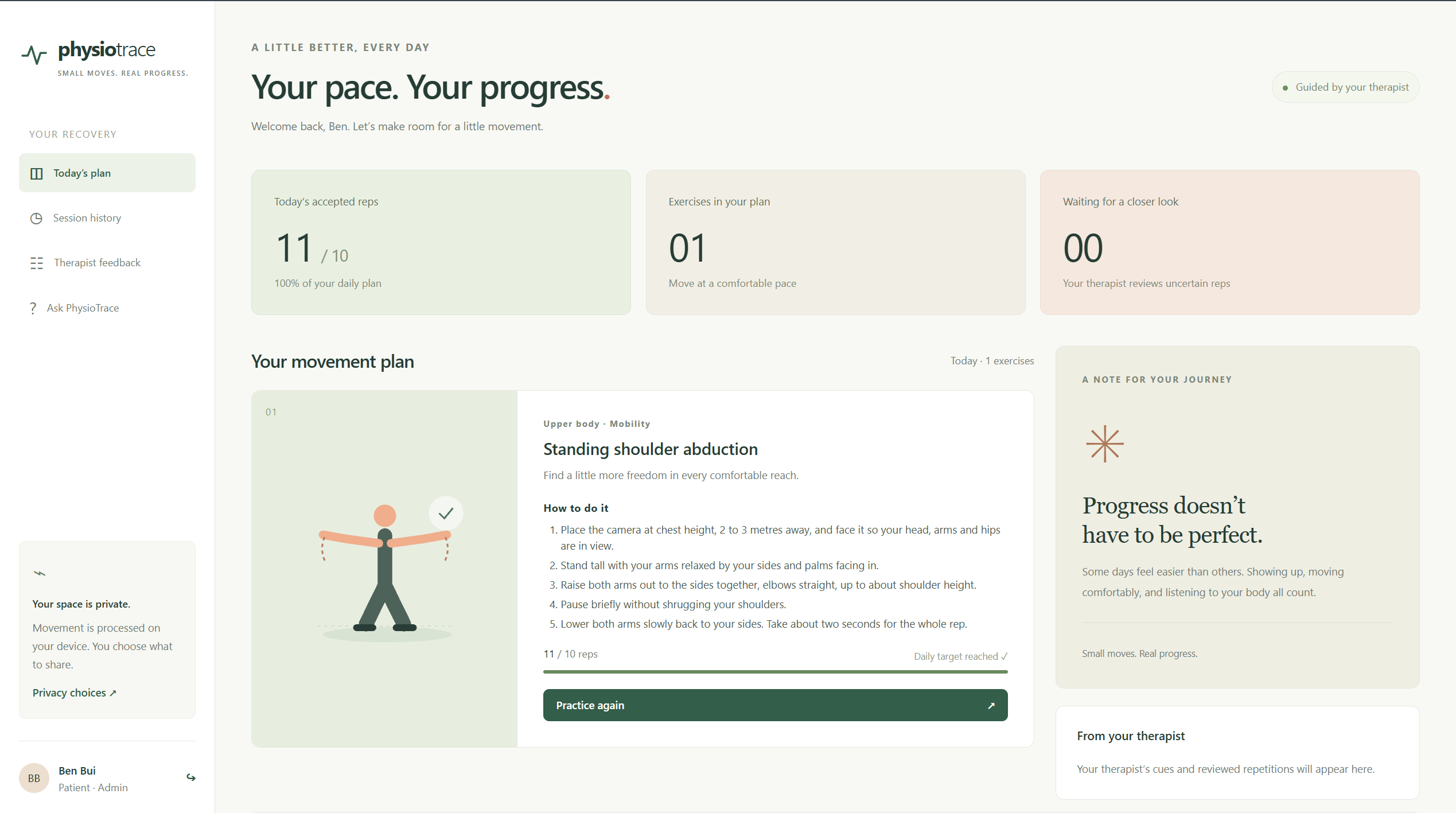
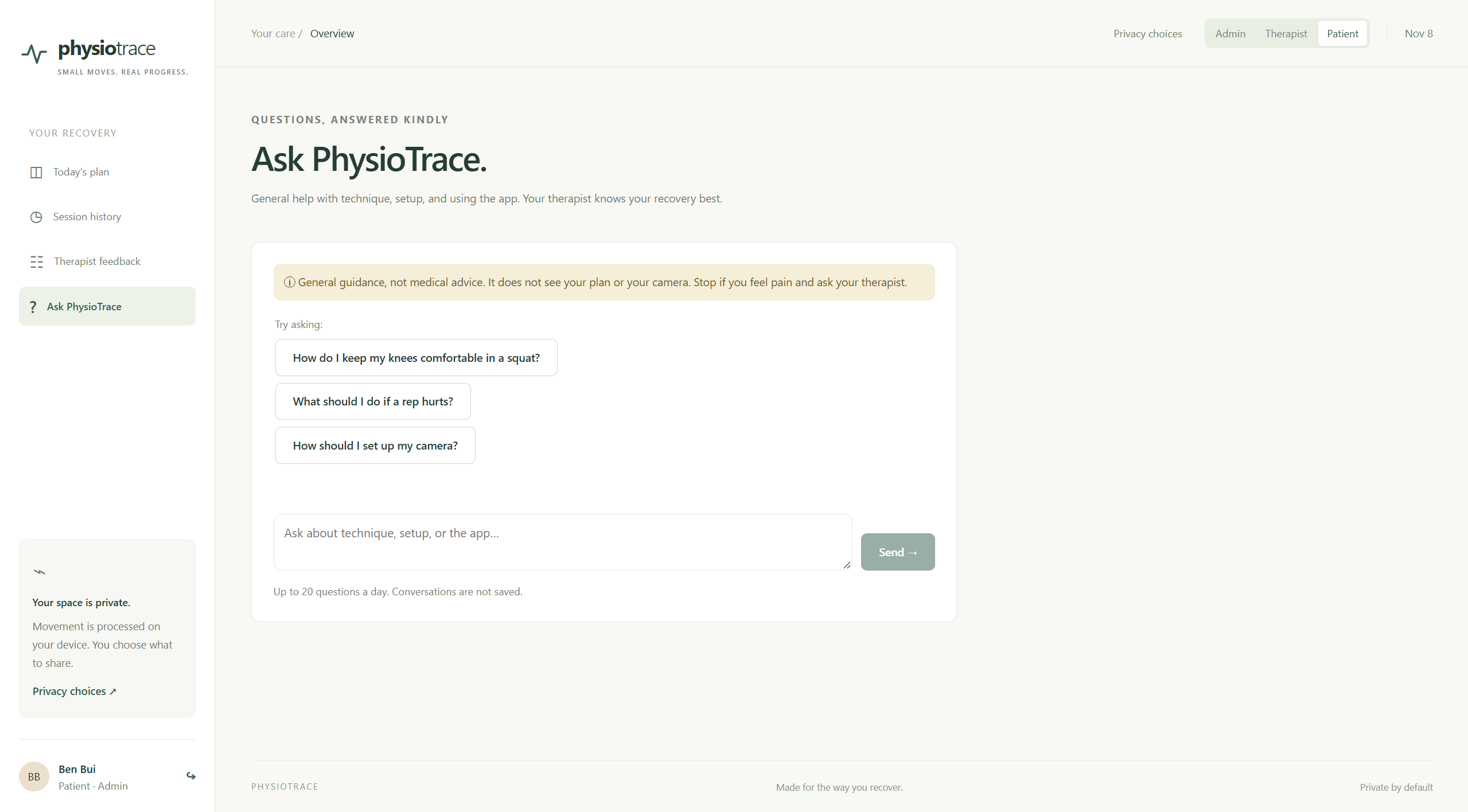
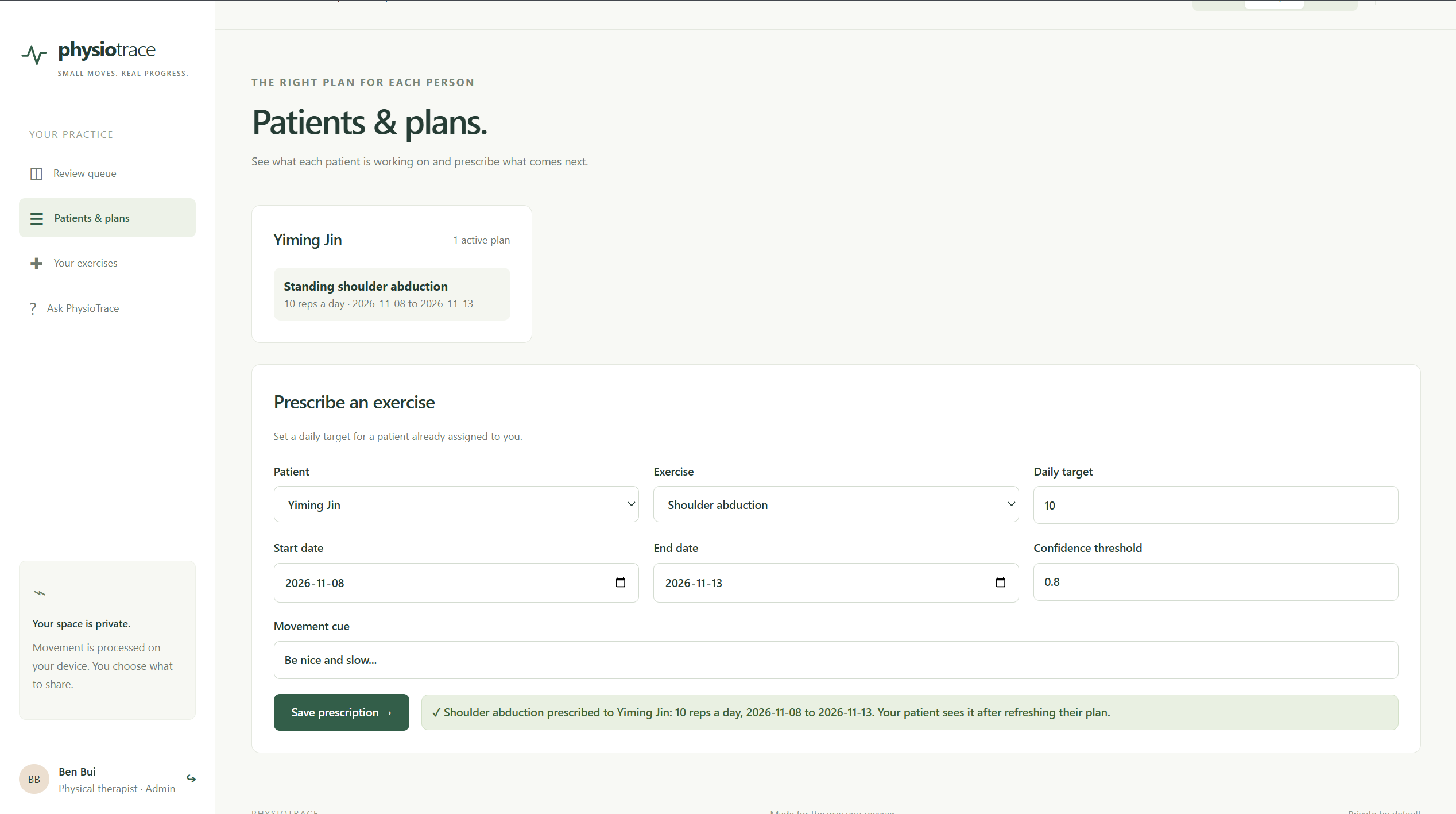
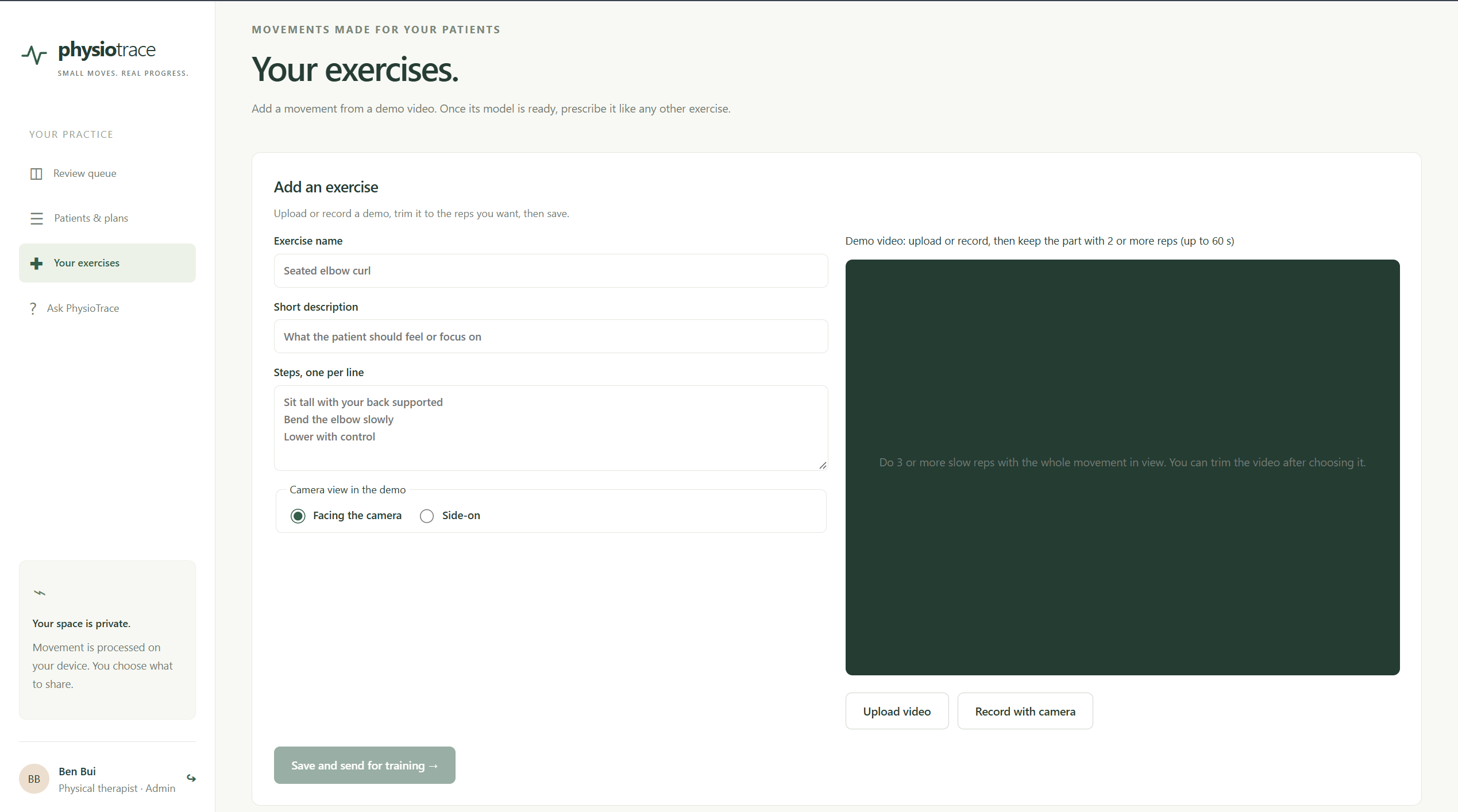
On the patient side, users can follow their prescribed exercises, monitor their daily progress, and receive feedback. On the physiotherapist side, clinicians can review flagged repetitions, identify potential technique problems, and provide personalized guidance.
We're also incorporating Google's Gemini API to transform structured movement measurements into more natural, understandable explanations, making technical feedback more accessible to everyday users.
What makes PhysioTrace different is that we're not trying to replace physiotherapists. We're trying to extend their reach.
By combining automated movement analysis with professional oversight, we hope to make at-home rehabilitation more interactive, measurable, and connected to the people responsible for guiding recovery.
How we built it
PhysioTrace combines computer vision, web development, and AI into a unified patient–physiotherapist platform.
Our frontend uses React and TypeScript to build an accessible web application for both patients and physiotherapists.
For movement tracking, we use MediaPipe Pose Landmarker, which identifies body landmarks directly in the browser. These landmarks can be converted into joint-angle measurements and sequences, allowing us to analyze movement without needing to continuously upload raw camera footage.
Our backend uses Python and FastAPI to coordinate exercise records, patient information, and physiotherapist reviews, with PostgreSQL for structured data storage.
We designed our exercise-classification system around a rule-based baseline, with the ability to introduce more sophisticated machine-learning models as the project develops.
Google's Gemini API is intended to support the communication layer by converting technical exercise results into personalized, easy-to-understand feedback.
Because of our limited development time, we also leveraged AI-assisted development tools, including Claude and other large language models, to accelerate our frontend and backend development.
These tools helped us move from concept to implementation far more quickly than we could have otherwise, allowing us to spend more of our remaining time integrating the different parts of our application.
Challenges we ran into
Surprisingly, our biggest challenge wasn't writing code, integrating AI, or implementing computer vision.
It was figuring out what we actually wanted to build.
We spent over seven hours brainstorming, evaluating, rejecting, and refining ideas before finally deciding on PhysioTrace.
With only a limited amount of time available during the hackathon, every hour mattered. We wanted to create something that went beyond an impressive technical demonstration. We wanted to identify a genuine problem, develop a practical solution, and build something that could potentially improve people's lives.
But that ambition came at a cost.
By the time we finalized our idea, we had already spent a substantial portion of the hackathon on ideation alone. We still had to build the frontend, backend, and computer vision components, with significantly less time than we had originally anticipated.
We turned to Claude and other AI development tools to accelerate our implementation. Rather than letting our late start prevent us from moving forward, we adapted our workflow, divided responsibilities, and focused on bringing the core idea to life.
Our biggest challenge ultimately became an important part of what made this hackathon so memorable.
Accomplishments that we're proud of
Looking back, what we're most proud of isn't just the technology behind PhysioTrace.
It's that we refused to settle for an idea we didn't believe in.
Spending more than seven hours developing our concept felt like a major setback at the time. We watched valuable development hours disappear while other teams were already building their projects.
Yet those hours helped us discover a problem that genuinely mattered to us.
Once we committed to PhysioTrace, we had to learn how to work efficiently under pressure, make difficult decisions about scope, and use the tools available to us to turn our vision into something tangible.
In a somewhat paradoxical way, our greatest hindrance became one of our greatest accomplishments.
What initially seemed like wasted time was what ultimately gave our project its purpose.
We're proud that we were able to take a problem inspired by someone's real experience and begin transforming it into a solution with the potential to help many more people facing similar challenges.
What we learned
This hackathon taught us far more than how to integrate computer vision, AI, and web technologies.
It taught us the importance of finding the right problem before rushing toward a solution.
At first, spending seven hours searching for an idea seemed counterproductive. But in hindsight, that process pushed us to think more critically about the people we wanted to help and the impact we wanted our work to have.
We also learned how valuable AI-assisted development can be when used purposefully. Tools like Claude helped us overcome time constraints and accelerate implementation, but they couldn't replace the human experiences, conversations, and decisions that inspired the project in the first place.
Most importantly, we learned that sometimes, a meaningful idea is all it takes to start building something that could make a real difference.
An idea alone isn't a finished product, but it can be the beginning of something much bigger.
For us, PhysioTrace is that beginning.
What's next for PhysioTrace?
We don't want PhysioTrace to end when the hackathon does.
Our long-term ambition is to turn this project into a real startup that makes rehabilitation support more accessible across Canada.
We hope to work with physiotherapists, rehabilitation specialists, and patients to refine our technology, expand the exercises we support, and validate its effectiveness in real-world rehabilitation settings.
We're particularly interested in improving accessibility for people living with physical disabilities or mobility limitations, as well as those in rural and underserved communities where frequent in-person treatment can be difficult to access.
Eventually, we want to move beyond a single exercise-tracking application and build a platform that helps patients and rehabilitation professionals stay connected throughout the recovery process.
Our vision is to bring accessible, technology-assisted rehabilitation support to as many Canadians as possible, with the potential to expand internationally.
We know there's a long road ahead. Building a reliable healthcare product requires much more than a successful hackathon, and we'll need clinical partnerships, careful validation, and continued development before PhysioTrace can achieve its full potential.
But every meaningful project has to start somewhere.
Ours started with a friend's struggle to recover from a knee injury, seven hours of brainstorming, and a team determined to create something that matters.
And we hope this is only the beginning.
Built With
- amazon-web-services
- chatgpt
- claude
- fast.api
- gemini
- machine-learning
- mediapipe
- next.js
- python
- pytorch
- shell
- sql
- supabase
- typescript
