-
-
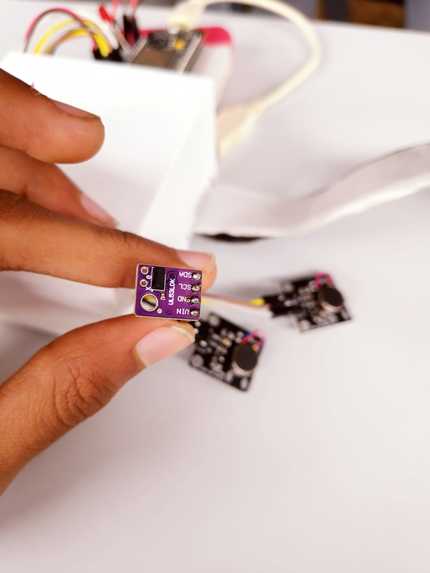
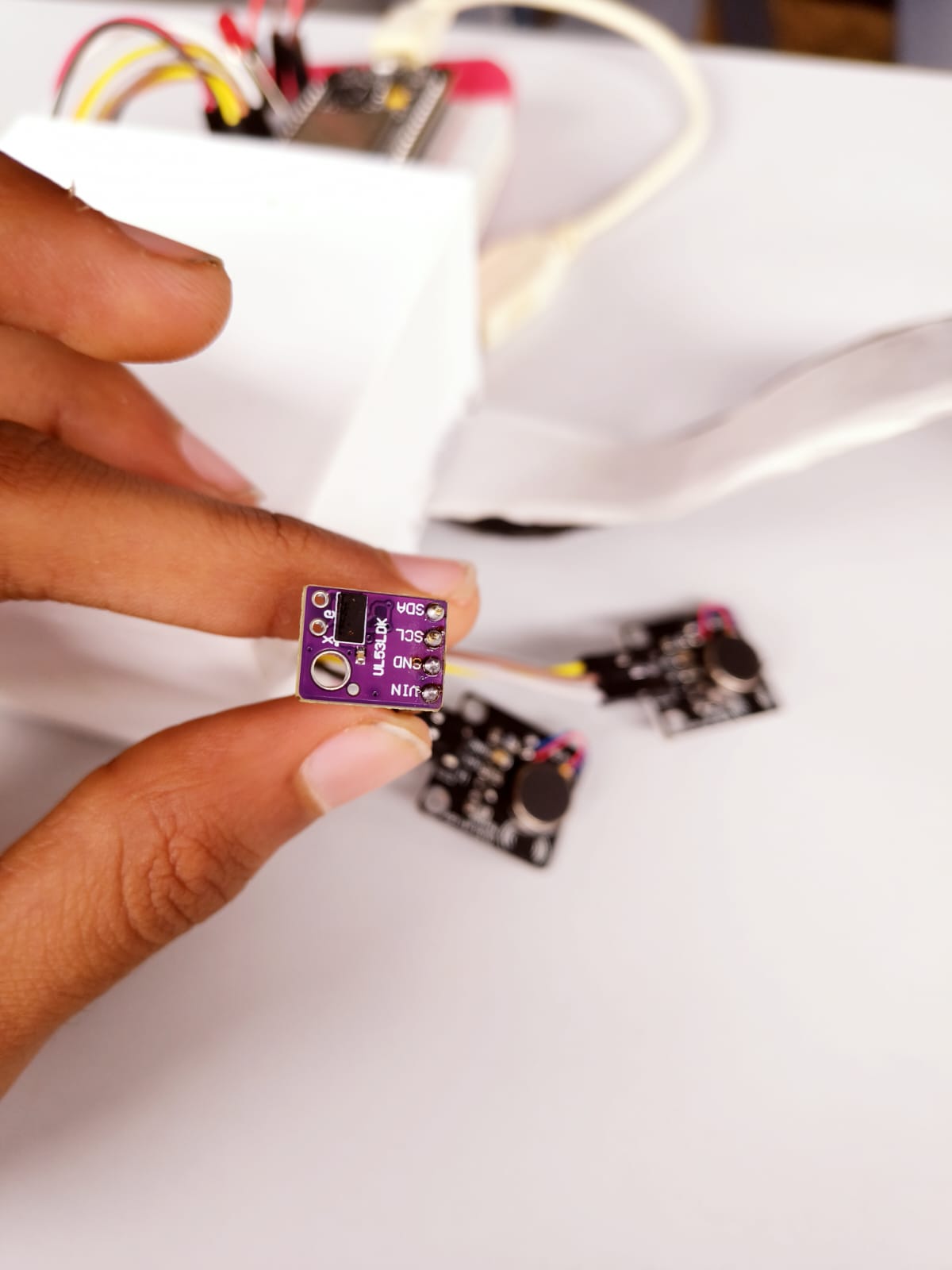
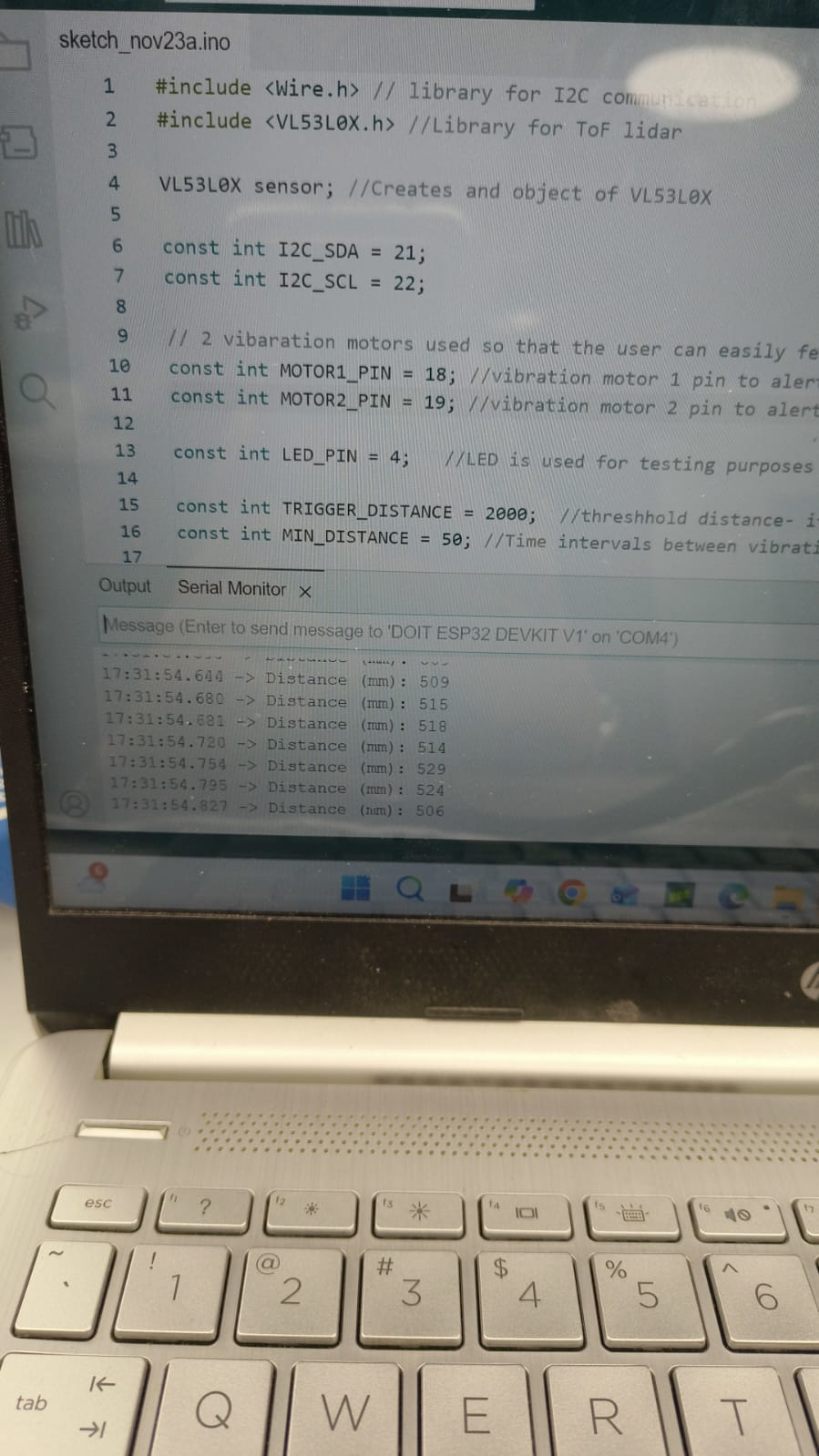
Make sure the sensor faces outwards and isn't obstructed by any things like pieces of tape.
-
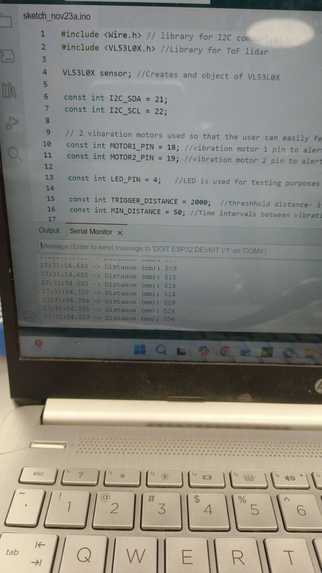
Sensor sending values of its distance from obstacles which is printed on the serial monitor.
-
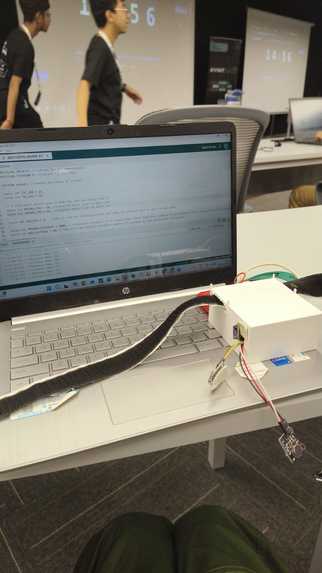
Uploading the code to the ESP32
Inspiration
Walking independently is one of the most basic freedoms, yet millions of visually impaired people still struggle with unsafe roads, unpredictable obstacles, and lack of real-time guidance. Traditional white canes work, but they cannot detect hazards above ground level—like tree branches, open windows, signboards, or vehicles approaching silently. This project was inspired by the idea of giving visually impaired individuals “superhuman senses” through technology—allowing them to detect obstacles before touching them and move with confidence, safety, and independence.
What it does The Futuristic Walking Stick uses Time-of-Flight (ToF) distance sensing to detect objects in front of the user. When an obstacle is detected: It vibrates to signal danger Alerts the user with increasing intensity based on how close the object is Allows safe navigation during day and night Works silently and reliably even in crowded areas Can detect obstacles above waist level, which normal canes cannot sense The goal is simple: prevent accidents and improve mobility.
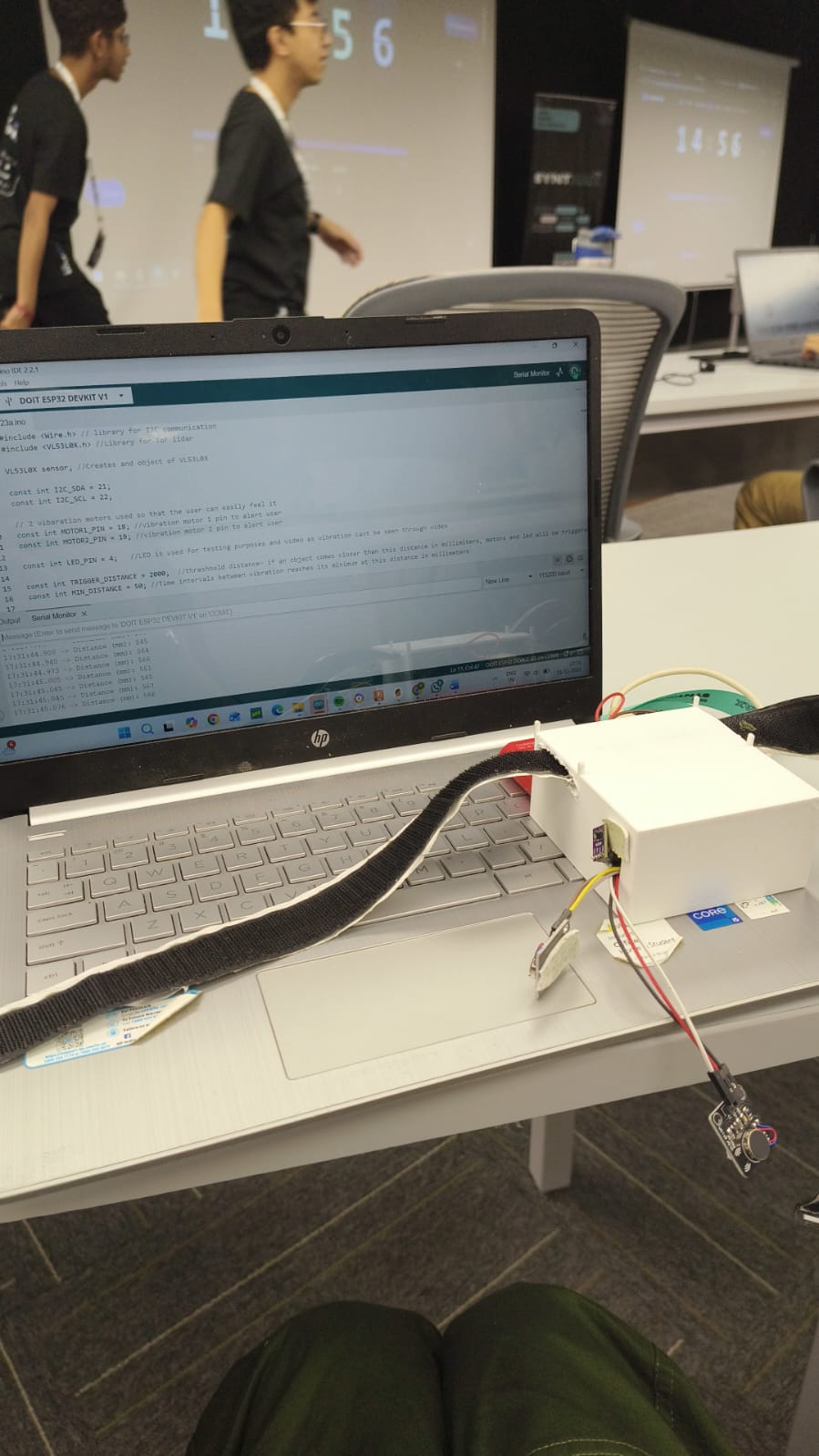
How we built it Hardware- ToF sensor (VL53L0X or VL53L1X) Microcontroller (ESP32/Arduino) Vibration motors Rechargeable power bank Enclosure for parts
Software I²C communication to read sensor values Real-time distance calculation Smart vibration patterns Power-efficient sleep cycles Modular code structure for adding more features We built a prototype capable of continuously scanning the environment and alerting the user instantly when something enters the danger zone.
Challenges we ran into Balancing accuracy vs power consumption Logic to make vibration motor vibrate in pulses Choosing a sensor that works outdoors, indoors, and in low-light
Compactly fitting all components inside an enclosure without it being cumbersome
Accomplishments that we're proud of Built a small, lightweight system that works faster and more reliably than ultrasonic sensors Achieved obstacle detection within millisecond response time Created an intuitive alert system that users can learn instantly Designed a solution that is low-cost, scalable, and beginner-friendly
What we learned How ToF sensors outperform ultrasonic sensors in accuracy and range Deep understanding of I²C, real-time sensing, and hardware integration Importance of user-centric design for assistive devices How small changes in vibration patterns can make the device easier to use Prototyping challenges when working with battery-powered systems
What's next for FUTURISTIC WALKING STICK FOR VISUALLY IMPAIRED Add GPS-based location tracking for emergencies Integrate object recognition using a tiny camera + AI Add Bluetooth to send alerts to a mobile app Improve battery life using better power management Add sensors for pothole detection Introduce voice guidance for navigation Make the design water-resistant and more durable
Built With
- communication-i2c
- framework-arduinocore
- language-c++
- libraries-wire.h+vl53l0x.h

Log in or sign up for Devpost to join the conversation.