FutureSelf started with a simple question: what if students could actually see where their daily habits are taking them? As students ourselves, we’ve all experienced late nights, stress before exams, too much screen time, and the constant pressure to “just push through.” But those small decisions add up. Burnout doesn’t happen overnight it builds slowly. We wanted to create something that helps students recognize that pattern before it’s too late.
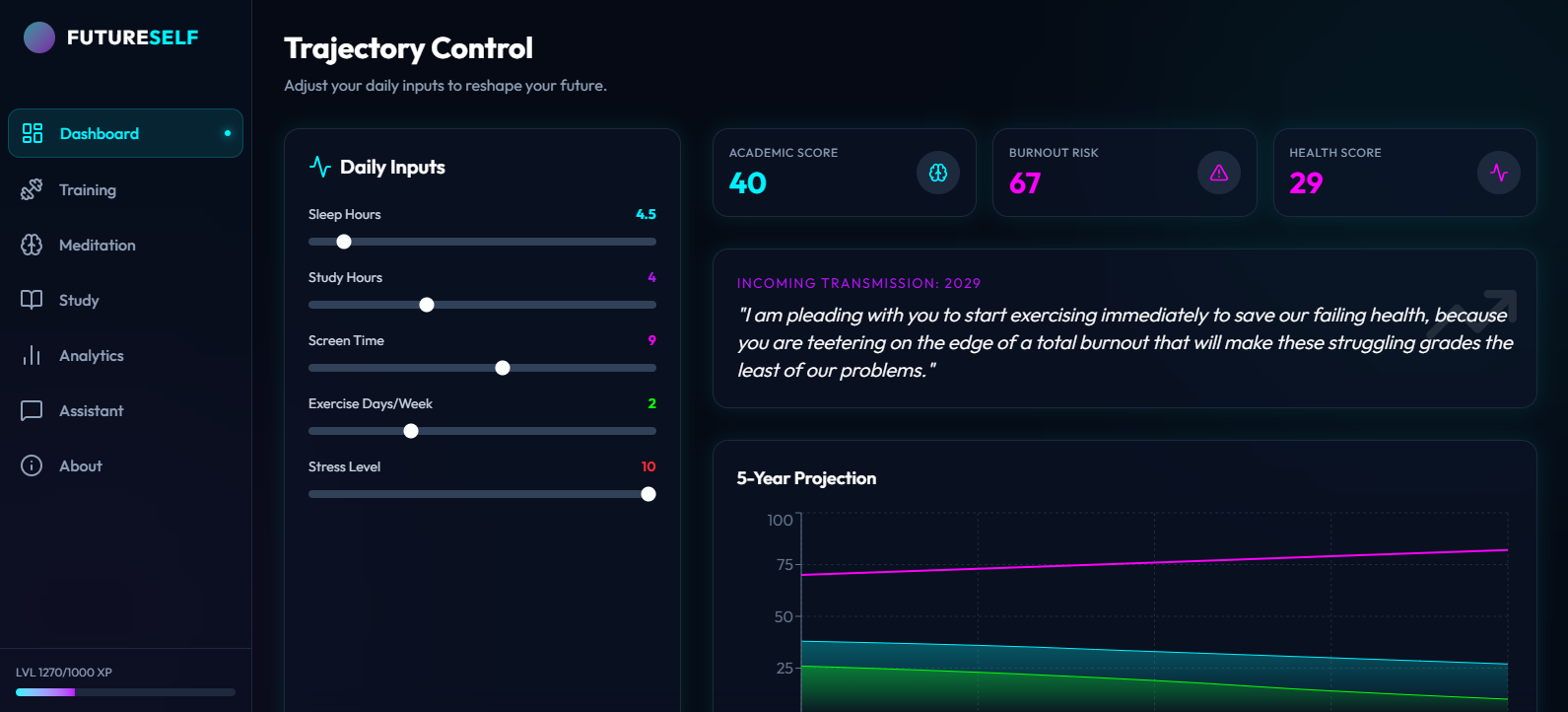
FutureSelf is an interactive simulation that shows students how their everyday habits shape their future. By entering things like sleep, study time, exercise, screen time, and stress levels, users can instantly see projected changes in their academic performance, burnout risk, and overall well-being over the next five years. Instead of giving generic advice like “sleep more” or “manage stress,” FutureSelf shows what those changes actually mean. It turns abstract consequences into something visible and personal.
We built FutureSelf around a behavioral projection model that weighs different lifestyle factors and calculates how they influence long-term outcomes. As users adjust their habits, the projections update in real time, making the cause and effect relationship clear. We also added a personalized Future Reflection that translates the data into a short message from the user’s “future self,” helping them connect emotionally with their projected path.
One of the biggest challenges was making sure the system felt motivating rather than overwhelming. Predicting long-term outcomes can feel intimidating, so we focused on presenting the data in a way that encourages positive change instead of fear. We also had to carefully design the model so it was realistic, but still simple enough to understand and interact with.
We’re proud that in such a short time, we built something that feels meaningful. FutureSelf isn’t just a tracker or productivity app it’s a tool for reflection. It combines data, visualization, and storytelling to help students make more intentional decisions.
Through this project, we learned how powerful visualization can be in shaping behavior. We also learned how to balance technical modeling with empathy, ensuring the product feels human and supportive.
Next, we plan to improve the accuracy of our projections using broader research data, introduce long-term habit tracking, and explore partnerships with schools and counselors. Our goal is to make FutureSelf a proactive guidance tool that helps students design their future instead of drifting into it.


Log in or sign up for Devpost to join the conversation.